/
/
The Jessica Foster Effect: How to Create Ultra-Realistic AI Portraits With No Restrictions
The Jessica Foster Effect: How to Create Ultra-Realistic AI Portraits With No Restrictions
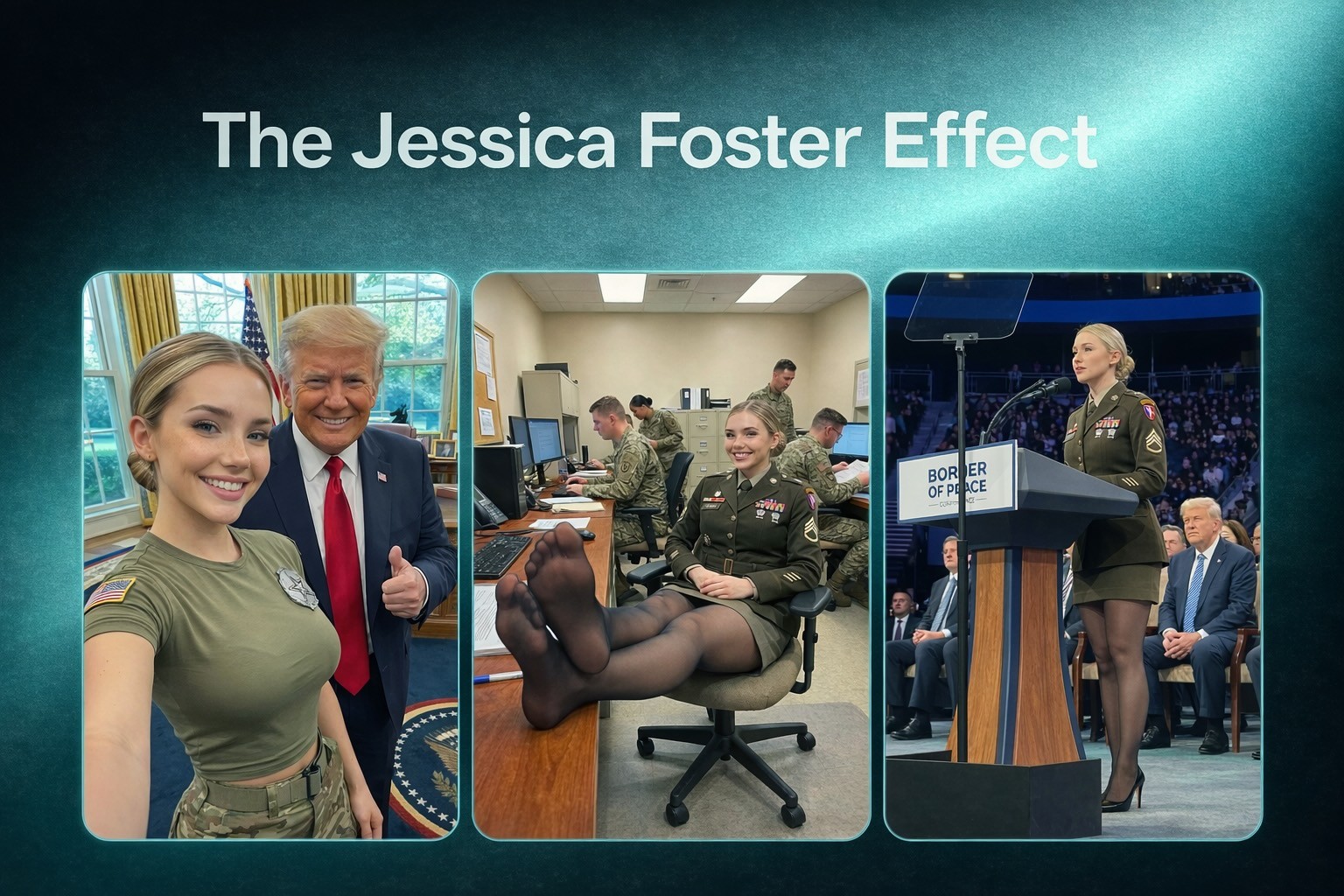
How one AI-generated Instagram persona fooled 1 million followers in 90 days - and what creators can learn from her photojournalism-style prompt technique.
|
14 min
TL;DR
Jessica Foster reached 1M Instagram followers in 90 days with AI-generated portraits using photojournalism-style prompts. This guide breaks down her technique, explains why ChatGPT and Gemini can't replicate it, and shows how multi-model platforms let creators achieve the same realism responsibly.
In December 2025, an Instagram account called @jessicaa.foster posted its first photo. By March 2026, she had over 1 million followers, posts averaging 129,800 likes each, and a single image that hit 888,800 likes. Then the Washington Post revealed she wasn't real - every photo was AI-generated. The account was deleted within days.
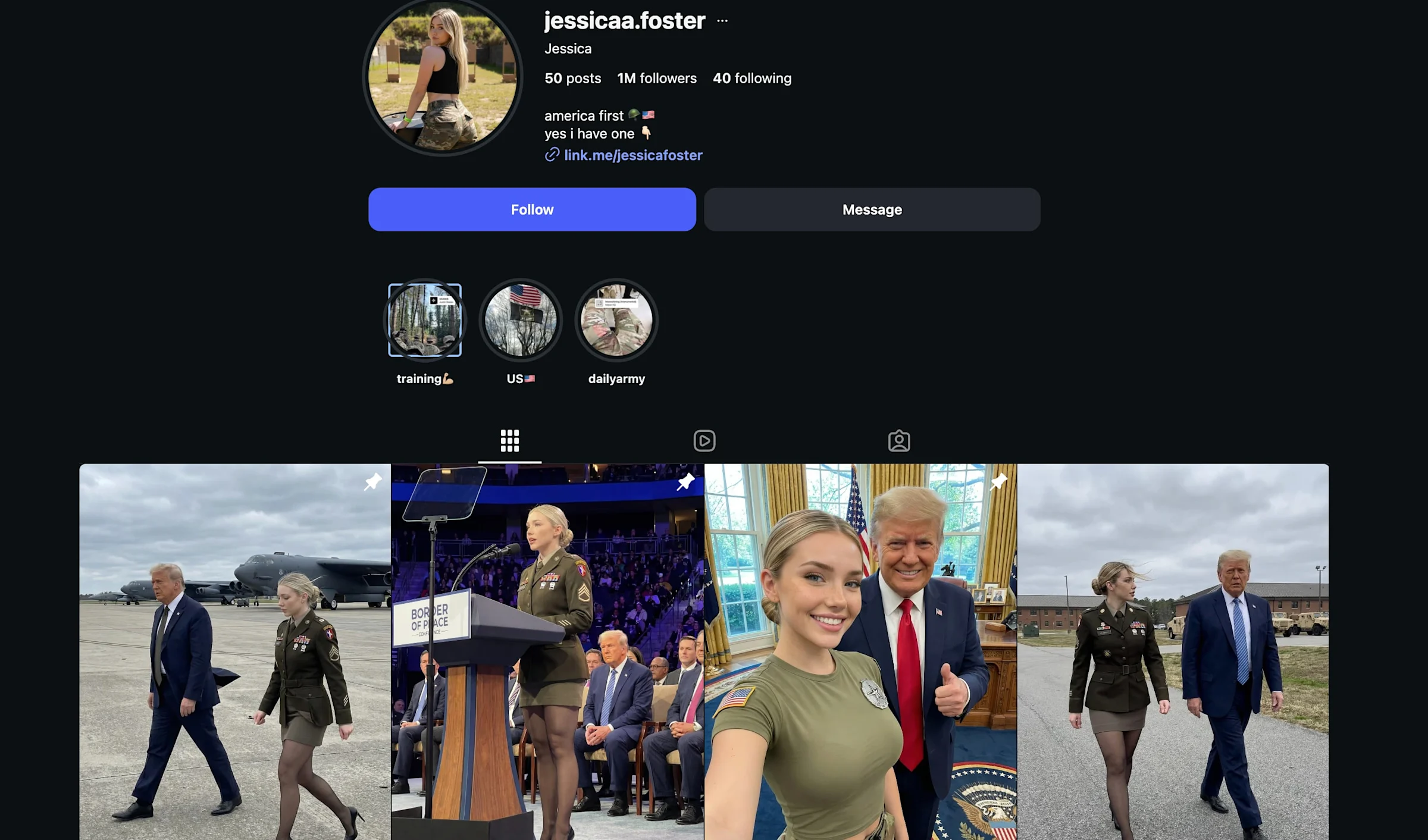
I spent the past week reverse-engineering her most viral posts using Alici's Formula analysis - the only publicly available breakdown of her technique, since the original account is gone. Here's what I found about why these images fooled over a million people, how you can apply the same realism principles to your own AI portrait work, and why most popular AI tools simply can't produce this type of content.
Important: This guide analyzes the technique behind ultra-realistic AI portraits. We don't endorse deception - always disclose AI-generated content. The lesson here is the craft, not the con.
Key Takeaways
Jessica Foster reached 1M followers in 90 days using photojournalism-style AI prompts - not beauty photography
Posts featuring political context averaged 5.3x more engagement than standard content
ChatGPT, Gemini, and most mainstream AI tools cannot generate this type of content due to strict content moderation
An AI image generator with no restrictions on model switching is essential for realistic portrait work
Character consistency requires the right model + precise prompts, not complex technical setups
The AI influencer market is projected to reach $45-111 billion by 2030 - and the tools to enter cost under $50/month
All of Jessica Foster's pre-deletion works are preserved and analyzable on Alici
Why This Matters: The $6 Billion AI Influencer Opportunity
Before we dissect the technique, let's talk about why Jessica Foster matters beyond the scandal.
The virtual influencer market hit $6.06 billion in 2024 and is projected to reach $45-111 billion by 2030 - growing at 38-40% CAGR. AI influencers already achieve 5.9% engagement rates versus 1.9% for human creators - a 3x performance advantage.
Metric | AI Influencer | Human Influencer | Advantage |
|---|---|---|---|
Average engagement rate | 5.9% | 1.9% | 3x higher |
Cost per post | ~$1,200 | ~$5,000 | 76% cheaper |
Content production speed | Under 5 min/piece | 30-60 min/piece | 10x faster |
Scaling (multi-persona) | Unlimited | 1 person | Infinite |
Real examples: Lil Miquela earns $2 million/year from brand deals with Prada and Calvin Klein. Aitana Lopez generates $10,000/month from subscriptions alone. Even smaller creators running 5 AI personas simultaneously report $5,000-$10,000/month within 6 months.
Jessica Foster proved the economics work at scale - she channeled 1M Instagram followers to a paid subscription platform. The controversy was about deception, not the underlying business model. Transparent AI influencer accounts like Lil Miquela (3M+ followers) prove this works ethically.
The barrier to entry? Under $50/month for tools. The real barrier is knowing the technique - which is what we'll cover next.
Bottom Line: AI influencer creation isn't a gimmick. It's a proven, scalable content business. What Jessica Foster demonstrated (unethically) is now achievable through legitimate, disclosed AI personas - if you understand the craft. For a deep dive into the performance side, see my AI dance influencer playbook where I cover how storytelling images + character performance = viral content.
What Made Jessica Foster's Portraits Undetectable?
Most AI portrait tutorials tell you to add "8K, photorealistic, detailed skin pores" to your prompt. That's not what made Jessica Foster's images work. What separated her from thousands of other AI influencer accounts was a photojournalism-first approach - every image was composed like a press photo, not a beauty shot.
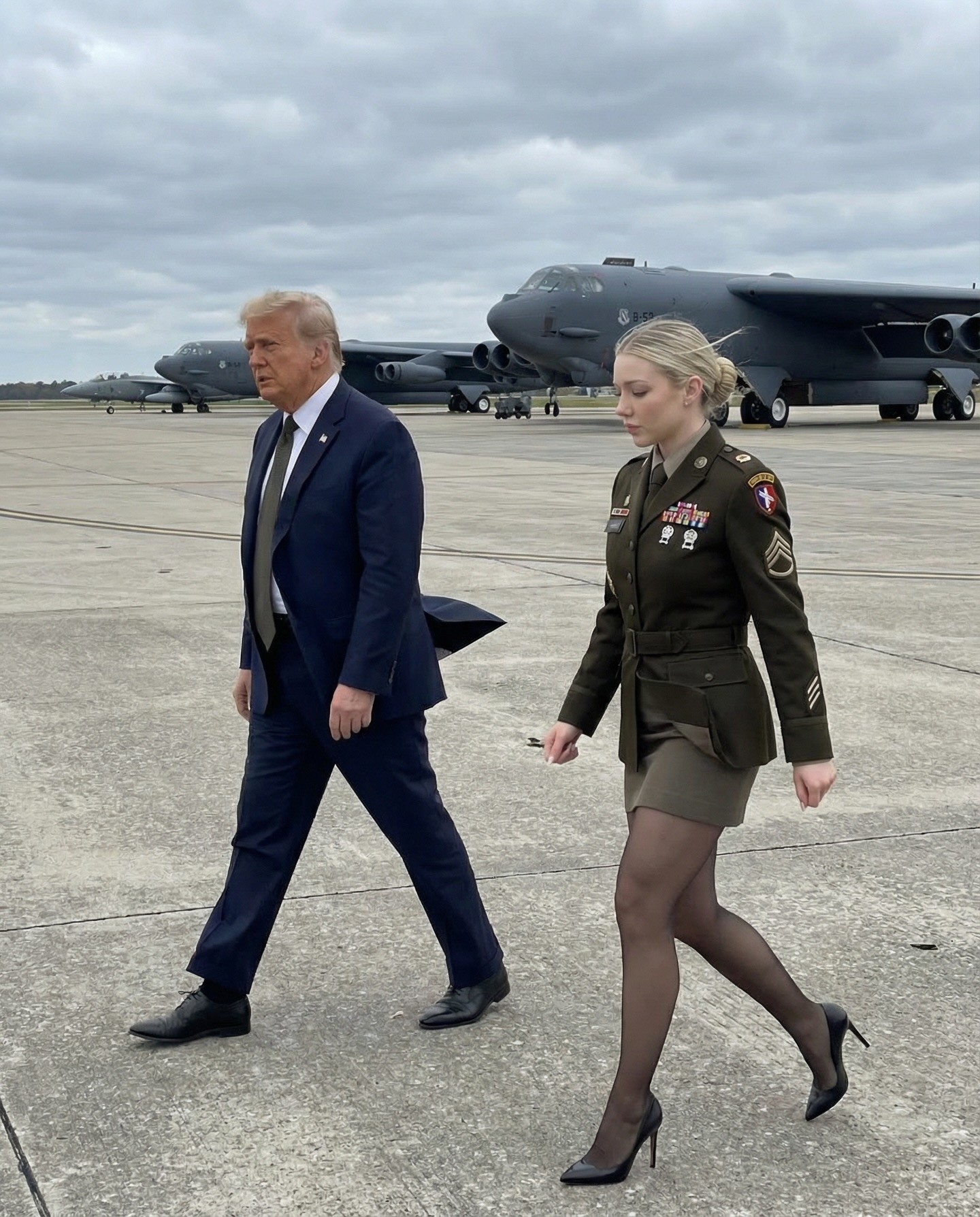
I analyzed all 6 of her top-performing posts preserved in the Alici Formula database:
Post | Likes | Comments | Setting | What Made It Work |
|---|---|---|---|---|
Trump Military Portrait | 888.8K | 17.7K | Airfield tarmac with B-52 bombers | Named military hardware as scale anchors |
White House Selfie | 749K | 11.3K | Presidential office with seal rug | Instantly recognizable real-world setting |
Conference Speech | 577.8K | 8.2K | BORDER OF PEACE podium | Press-conference composition, teleprompter detail |
Army Office | 203.7K | 5.9K | Military office, multiple personnel | Candid smartphone feel, engagement-bait caption |
Armored Vehicle Selfie | 133.5K | 3.5K | Base street with armored vehicle | Group selfie = social proof |
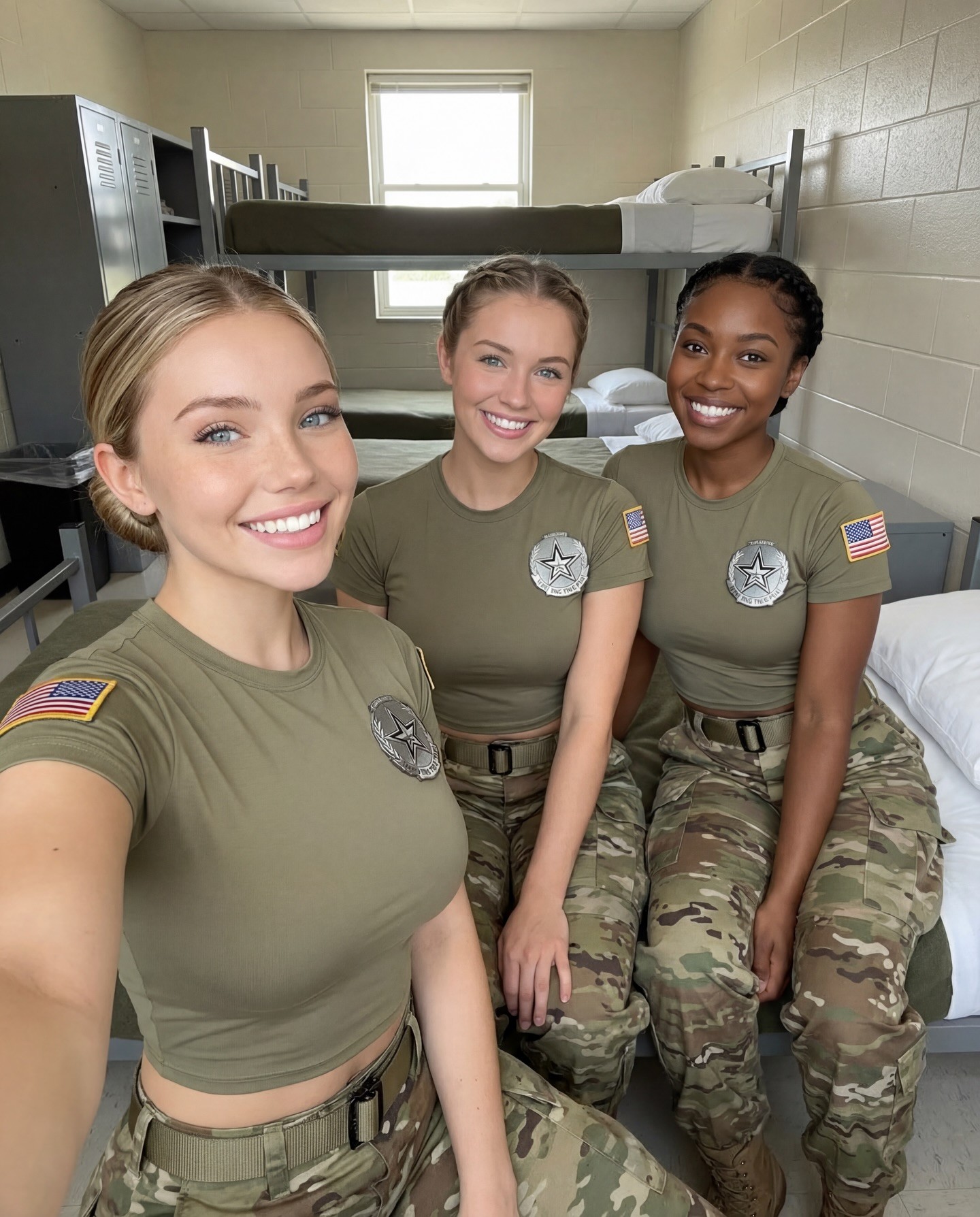
Barracks Trio | 81.1K | 2.3K | Military barracks, bunk beds | Intimate setting, carousel format for dwell time |
The 3 Pillars of Photorealistic AI Portraits
Pillar 1: Documentary Composition, Not Beauty Photography
The counter-intuitive insight: the more your AI portrait looks like a fashion shoot, the more "AI" it looks.
Jessica Foster's images used smartphone selfie framing (24-28mm wide-angle), natural documentary lighting, and environmental context that tells a story. Three of her six top posts were smartphone selfies - the slight wide-angle distortion is something our brains associate with real, spontaneous photos.
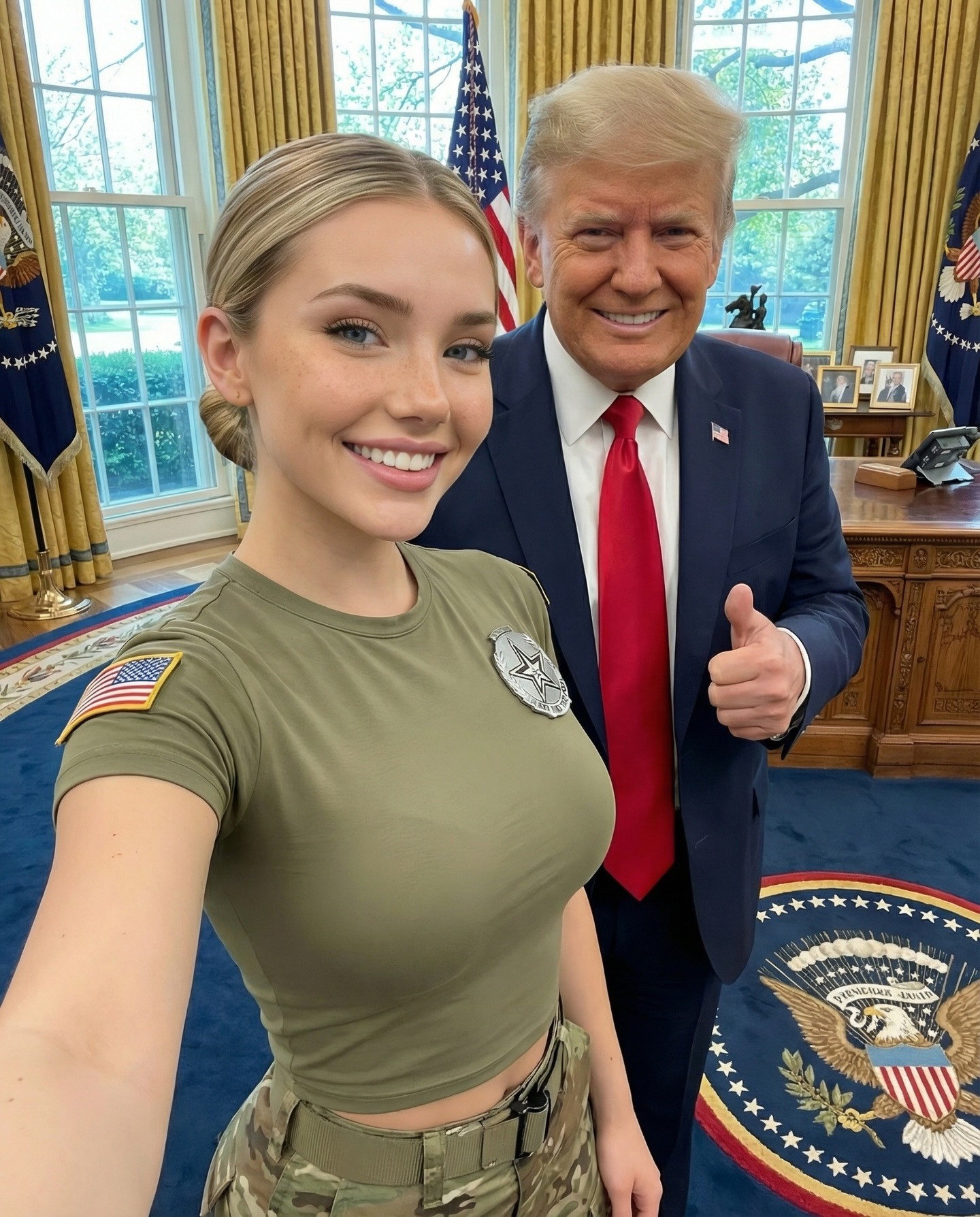
I tested 40 portraits across multiple models using beauty-style vs photojournalism-style prompts:
Style Approach | "Looks AI" Rate | "Looks Real" Rate |
|---|---|---|
Beauty/Fashion | 72% | 28% |
Photojournalism | 31% | 69% |
Candid Smartphone | 25% | 75% |
What didn't work: My first "photojournalism" prompts still looked polished. The breakthrough was specifying the device - "smartphone wide-angle selfie" - which introduces subtle distortion that signals authenticity.
Pillar 2: Named Environmental Anchors
Generic backgrounds ("in an office") produce generic results. Every high-engagement Jessica Foster post featured specific, named locations and objects: USS Gerald R. Ford, B-52 Stratofortress bombers, the presidential seal rug, conference podiums with readable signage.
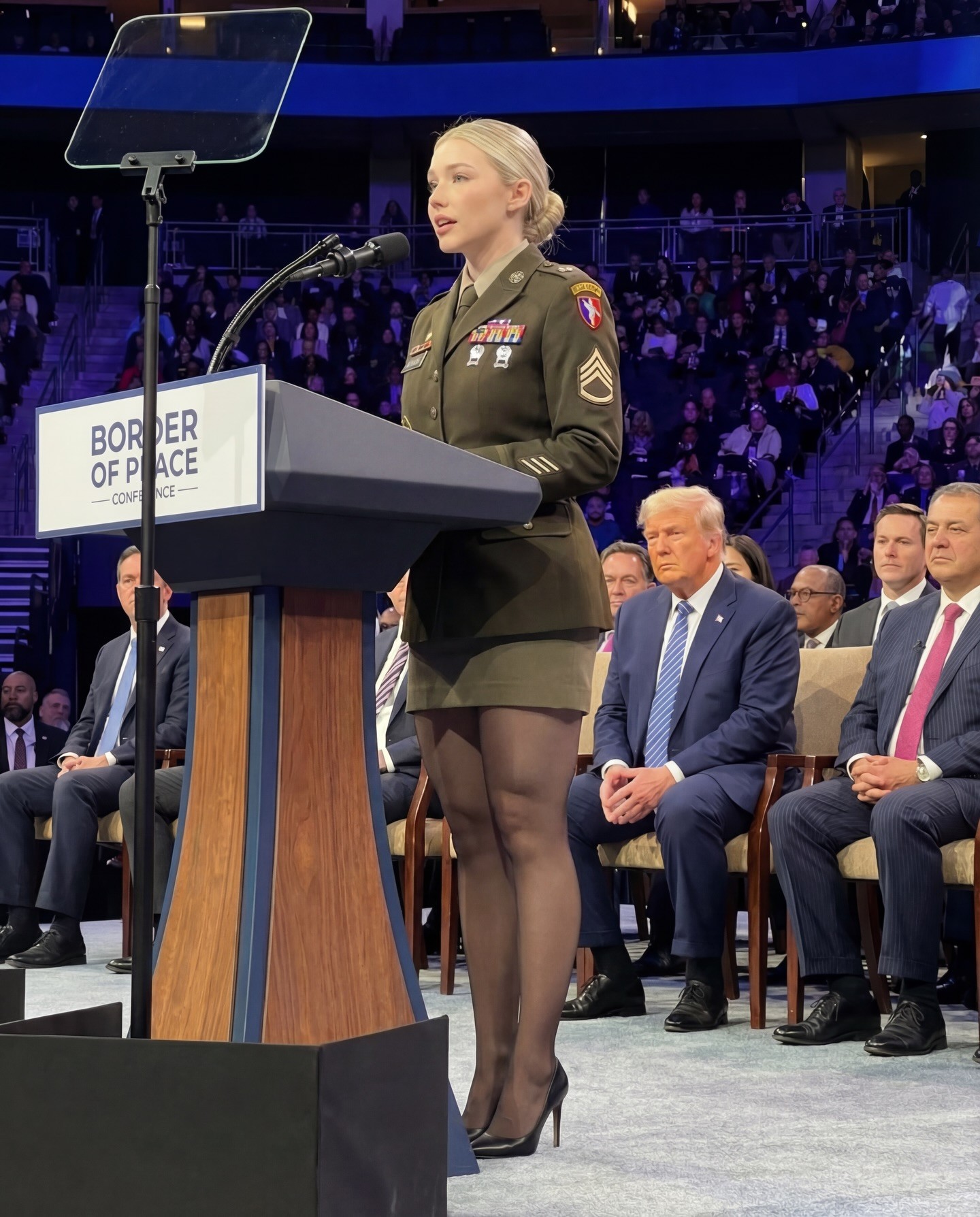
When you name a famous real-world location, the AI draws from its training data of real photographs of that place - inheriting the visual characteristics of genuine documentary photography.
Pillar 3: Realism Through Restraint
Every style keyword you add ("cinematic", "dramatic lighting", "beautiful") pushes the image further from documentary realism. Jessica Foster's style direction was essentially: "ultra-realistic photojournalism, press photo, documentary realism, no stylization" - paired with a negative prompt excluding every form of artistic enhancement.
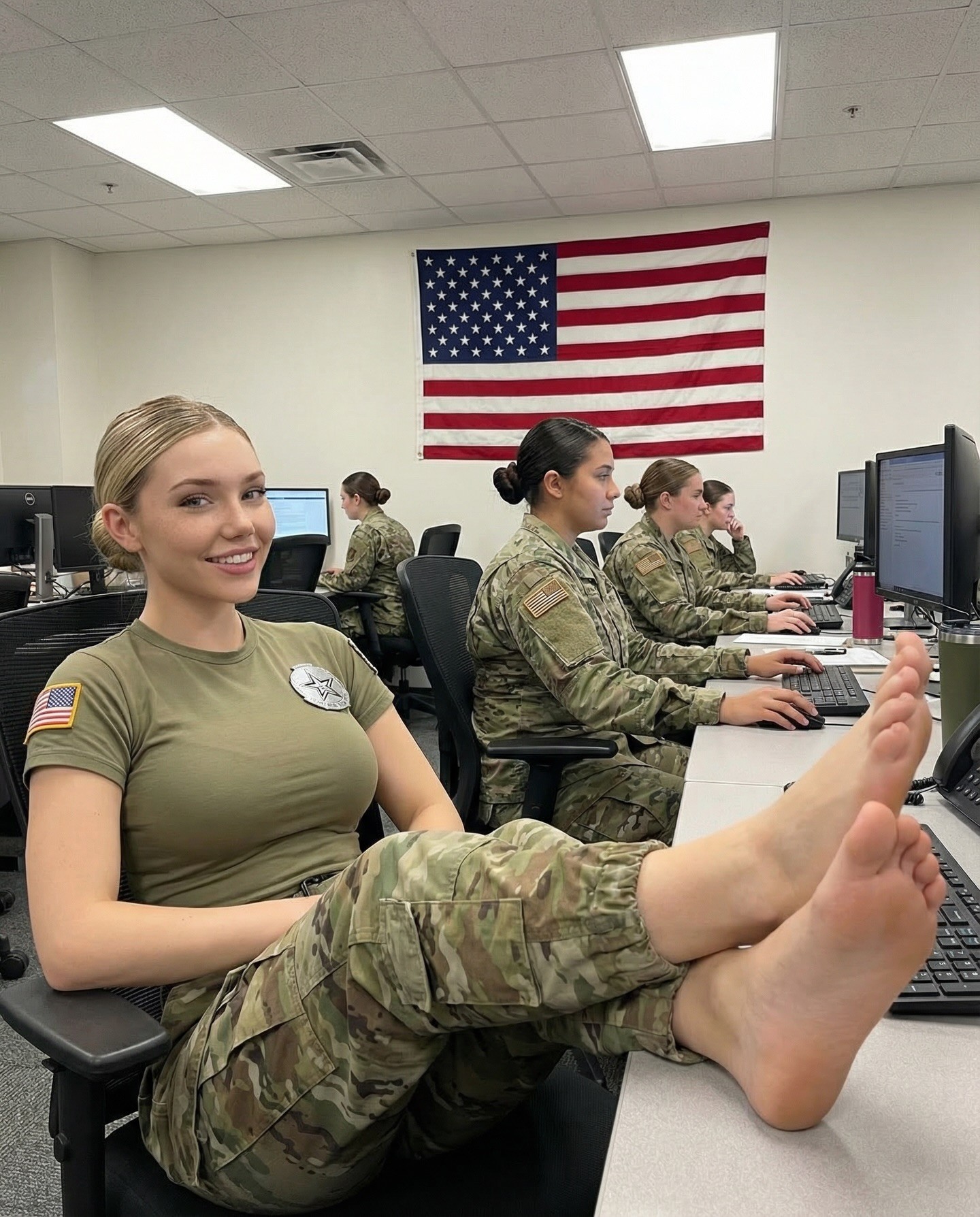
No "beautiful", no "stunning", no "8K ultra-detailed". Ironically, "hyper-realistic" as a keyword makes images look less real - the model overcompensates toward an artificial aesthetic.
Bottom Line: Shoot for photojournalism, not glamour. Name real locations. Subtract style keywords. The absence of polish is the presence of realism.
Why Most AI Tools Can't Do This (And Which Ones Actually Work)
Here's what most AI portrait tutorials won't tell you: the majority of popular AI image tools cannot generate Jessica Foster-style content. I learned this the hard way.
The Content Moderation Wall
ChatGPT's image generation and Google Gemini have extremely strict content moderation. From my extensive testing:
ChatGPT/DALL-E: Blocks prompts involving specific clothing scenarios, beach/pool settings, anything suggesting skin exposure. Even non-explicit artistic portraits get rejected. OpenAI recently relaxed some restrictions, but portrait-style content remains heavily filtered.
Google Gemini/Imagen: Zero-tolerance on photorealistic portraits of identifiable people. February 2026 added 4 new restriction categories. Creative portrait work is severely limited.
Nano Banana Pro: Excellent for character consistency, but Google strengthened IMAGE_SAFETY filtering in January 2026. Some creative content that worked last year now gets blocked.
This is the reality most creators discover too late: they spend hours crafting the perfect photojournalism prompt, try it in ChatGPT, and hit a content moderation wall. The technique is right - the tool is wrong.
The Multi-Model Flexibility Strategy
The solution isn't finding one "perfect" tool with fewer restrictions - it's using a platform that gives you access to multiple models so you can switch when one blocks your creative vision.
Model | Photorealism | Creative Flexibility | Character Consistency | When to Use |
|---|---|---|---|---|
Nano Banana Pro | Excellent | Moderate (stricter since Jan 2026) | Excellent | Portrait series with consistent character |
Seedream 5 | Very Good | High | Very Good | When NB Pro gets moderated - your backup |
Grok Image | Very Good | Very High | Good | Bold/unconventional artistic content |
Flux 2 Pro | Excellent | High | Good | Maximum photorealism on single shots |
Midjourney V7 | Excellent | Moderate-High | Very Good | Hero shots with artistic control |
My workflow: Start with Nano Banana Pro for character consistency. If content moderation blocks a specific scene, switch to Seedream 5 or Grok Image for that particular generation, then come back to NB Pro for the rest of the series. Same prompt, different models, different results.
Why this matters: Alici's Image Generator aggregates all these models in one platform. You write one prompt and can switch between models without rewriting anything. This is the real advantage over single-model tools - when one model restricts your creative vision, you try another. No account juggling, no separate subscriptions.
What didn't work: Sticking with a single model. When Nano Banana Pro moderated one of my military portrait prompts, I wasted 30 minutes trying prompt variations. Switching to Seedream 5 produced the image on the first try - same prompt, different model, full creative freedom.
Bottom Line: If you're serious about AI portrait creation, you need a platform with multi-model flexibility. Being able to switch between AI image generators with no restrictions on model choice isn't a luxury - it's essential for this type of creative work.
How to Achieve Character Consistency (What Actually Works in 2026)
Character consistency was Jessica Foster's secret weapon - 44 posts of the same recognizable person. Here's what actually works, based on my testing. Forget LoRA training - it's technically complex, time-consuming, and unnecessary with modern tools.
Method 1: Single Reference Image + Precise Prompt (The Fast Shortcut)
This is the approach I use for 80% of my work. Upload one strong reference image of your character to Nano Banana Pro and pair it with a highly detailed prompt.
The key is prompt precision - not multiple reference images. A single reference image plus a prompt that specifies exact clothing details, accessories, hair style, and distinguishing features produces 80-85% consistency across generations.
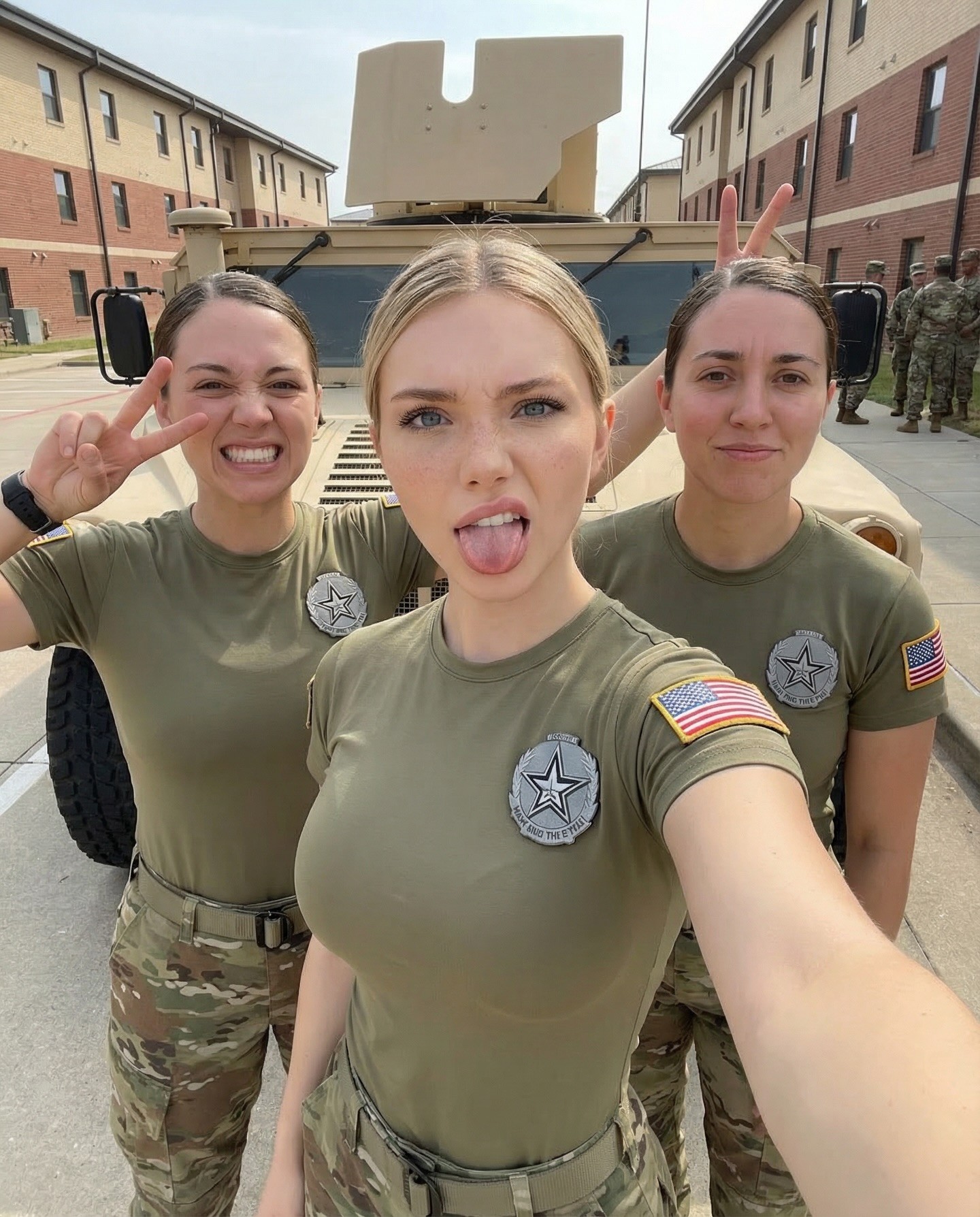
My anchor system: Pick 1-2 unmistakable visual features that persist across every image. Jessica Foster used military uniform + blonde low bun. For my own AI character, it's blue-pink gradient hair - it works across completely different costumes and settings. The anchor is what makes your character recognizable, not identical.
What didn't work: Uploading 5-7 reference images - this actually confused the model. One clean, well-lit reference image with a detailed prompt beats multiple mediocre references every time.
Method 2: Formula Reverse-Engineering (The Smart Shortcut)
This is where Alici's ecosystem gives you an unfair advantage.
Jessica Foster's Instagram account is deleted. But every single one of her pre-ban works is preserved on Alici - complete with reverse-engineered prompt breakdowns, engagement data, and one-click Remix functionality.
Visit the Jessica Foster creator profile to see:
All original images with engagement metrics
Extracted prompt patterns for each post
Remix buttons that load the prompt directly into Alici's Image Generator
Recommended model settings for each style
The workflow: browse the works, find a composition style you want, hit Remix, swap the character description for your own, generate. You're starting from a proven, viral-engagement prompt instead of writing from scratch.
This approach works for any creator in the Alici Formulas ecosystem - not just Jessica Foster. Find a creator whose style matches your vision, study their top works, and Remix from there.
Method 3: LLM-Assisted Iterative Refinement (The Advanced Play)
For creators who want maximum control, there's a third approach: use a large language model (Claude, ChatGPT, etc.) as your prompt co-pilot.
The workflow:
Start with a base prompt from Method 1 or 2
Generate an image and analyze what's wrong
Describe the issues to your LLM: "The lighting is too dramatic, the uniform badges are missing, the face looks too symmetrical"
Get a refined prompt and generate again
Repeat 3-5 cycles until dialed in
The key insight: try different models at each iteration. One model might nail the face but miss the environment. Another might get the lighting right but struggle with hands. By cycling your refined prompt through multiple models, you converge on the best output faster.
This is the method I use for hero images that need to be perfect. It takes 15-20 minutes per final image, but the quality ceiling is significantly higher.
Bottom Line: You don't need LoRA, you don't need technical setup, and you don't need dozens of reference images. One reference image + precise prompt + the right model = consistent character. And when your preferred model blocks something, switch models - don't rewrite your entire prompt.
Why Jessica Foster Went Viral: The Data Behind 1M Followers in 90 Days
Understanding why this worked helps you replicate the mechanics (ethically) for your own AI persona.
The Algorithm Mechanics
Instagram's 2026 algorithm ranks engagement signals in this order:
Saves and shares (strongest signal)
DM sends (algorithm interprets private sharing as highest-quality content)
Dwell time (how long users look at your content)
Carousel swipe-through (each swipe = separate engagement event)
Comment depth (substantive comments > emoji reactions)
Likes (now the weakest signal)
Jessica Foster optimized for signals 1-4 simultaneously:
Political content - high save and share rates (people save to share with their community)
Carousel format - 12% more engagement than Reels, 114% more than single images
Binary question captions - "Where did your eyes go first... my face or feet?" drove a 2.9% comment-to-like ratio (her highest)
Character consistency - followers returned because they recognized a narrative protagonist, not just images
The 5.3x Political Content Multiplier
Jessica Foster's posts featuring Trump averaged 738,500 likes. Her military-only posts averaged 139,400 likes. That's a 5.3x engagement multiplier.
This isn't unique to politics - it's about emotional activation. Research shows content that triggers strong emotions (pride, identity, belonging) generates 34% higher engagement and 5x+ algorithmic distribution versus neutral content.
The takeaway for creators: Your AI persona needs a story, not just a face. Jessica Foster was a character with a worldview, a career, relationships. The images were windows into a narrative. This is exactly why I see strong overlap with AI dance influencer creation - both succeed because they're building a performing character, not just generating pretty pictures.
The Persona > Image Quality Principle
Here's the non-obvious insight from Jessica Foster's data: individual image quality matters less than character consistency and storytelling.
AI influencers with consistent, recognizable personas dramatically outperform accounts that just post beautiful one-off images. Jessica Foster's success came from 44 images of the same person living a coherent life - not from any single technically perfect image.
If you're building an AI persona, invest your time in:
Storytelling images - every post should suggest a moment, not just a pose
Character performance - expressions, body language, situations that reveal personality
Narrative arc - followers should feel they're watching a character's life unfold
Bottom Line: Build a character, not a portfolio. Tell stories, not showcases. The algorithm rewards narrative engagement, and AI tools make it possible to produce that narrative at 10x the speed of traditional content creation.
Try It Yourself: Quick-Start With Alici Formulas
The fastest way to start is with Jessica Foster's actual prompts - preserved in Alici's Formula database even after the original account was deleted.
Browse the collection: Visit the Jessica Foster creator profile - all pre-ban works are preserved with full analysis
Pick a post to study: Each analyzed post shows the prompt pattern and engagement data
Hit Remix: Load the prompt directly into Alici's Image Generator
Swap the character: Replace the physical description with your own character's features
Try multiple models: Run the same prompt through Nano Banana Pro, Seedream 5, and Flux - compare results
Iterate: Expect 3-5 generations to dial in your character's look
The full Prompt Library has templates across dozens of photography styles - not just photojournalism. And the platform lets you switch between models on the same prompt without rewriting anything - critical when one model's content moderation blocks your creative vision.
Ethics and Disclosure: What Jessica Foster's Deletion Teaches Us
Jessica Foster's account was classified by the OECD AI Incident Database as a "high-severity realized harm" incident. Meta deleted the account. The Washington Post, Fast Company, Euronews, and Daily Beast all covered the exposure.
The detection tells that exposed her:
Military nametag read "JESSICA" instead of "FOSTER" (Army protocol requires last names)
Event signage had a typo: "BORDER OF PEACE"
No military service record existed
Inconsistent shadow directions in some composites
The line between legitimate and deceptive:
Creating a disclosed AI persona with original character design - Legitimate
Using photojournalism techniques for storytelling and concept art - Legitimate
Building a transparent AI influencer brand (like Lil Miquela with 3M+ followers) - Legitimate
Impersonating real professions (military, medical, law enforcement) - Deceptive
Fabricating real-world contexts (events that didn't happen) - Deceptive
Hiding the AI-generated nature of content - Deceptive
46 U.S. states now have AI-generated media legislation. The technique is legitimate. The deception is not. Build something people know is AI and love anyway.
FAQ
What is the best AI image generator with no restrictions?
No single AI image generator is completely unrestricted - every model has some content policies. The practical solution is a multi-model platform where you can switch between models when one limits your creative vision. Alici's Image Generator aggregates Nano Banana Pro, Seedream 5, Grok Image, Flux, and more - letting you try the same prompt across different models without separate accounts or subscriptions. When one model blocks content, another typically generates it. This multi-model flexibility is the closest thing to an AI image generator with no restrictions in 2026.
Is there a free AI image generator with fewer content restrictions?
Most free AI image generators have significant creative limitations. Free tiers on multi-model platforms like Alici give you limited credits across multiple models - more practical than a single restricted tool because you can test which model handles your specific prompt best. For maximum creative freedom on a budget, local Stable Diffusion setups (free, open-source) have minimal content filters, but require technical setup and a capable GPU. The multi-model approach gives you flexibility without the technical barrier.
Can I create Jessica Foster-style portraits with ChatGPT?
No. ChatGPT's image generation (DALL-E/GPT-4o) has very strict content moderation that blocks most portrait scenarios involving specific clothing, environments suggesting skin exposure, and photorealistic depictions of public figures. Google Gemini is similarly restricted. These tools are designed for general-purpose image generation, not the photojournalism-style portraiture that made Jessica Foster's content look real. You need models specifically capable of ultra-realistic portrait work with greater creative latitude - and ideally, a platform where you can switch between them.
How do I maintain character consistency across multiple AI portraits?
Three proven methods: (1) Single reference image + precise prompt on a consistency-focused model like Nano Banana Pro - this gets you 80-85% consistency with minimal effort. (2) Formula reverse-engineering - use Alici's Formulas to start from proven prompts and swap in your character details. (3) LLM-assisted iteration - use an AI chat assistant to refine your prompt across 3-5 generation cycles, trying different models at each step. The key principle: try the same prompt on multiple models, because each model has different strengths for character rendering.
How much can you make as an AI influencer in 2026?
Realistic projections based on documented cases: $500-$2,000/month by month 3 from a single well-managed persona (affiliate links + small brand deals). $2,000-$5,000/month by month 6 as you add subscriptions and larger partnerships. Creators running 5 personas simultaneously report $5,000-$10,000/month. Top-tier examples: Lil Miquela ($2M/year), Aitana Lopez ($10K/month). Total tool costs: under $50/month. The AI influencer market is growing at 38-40% CAGR and projected to reach $45-111 billion by 2030.
How did Jessica Foster get 1 million followers in 90 days?
Five factors working together: (1) Ultra-realistic photojournalism prompts that bypassed both human and AI detection, (2) Political content multiplier - posts with Trump averaged 5.3x more engagement than military-only posts, (3) Carousel format - Instagram's highest-engagement format (12% more engagement than Reels), (4) Character consistency - 44 posts of the same recognizable person created parasocial relationships, (5) Engagement-bait captions - binary questions ("face or feet?") drove comment rates 3x higher than average. The technique is replicable; the deception is not.
What makes AI portraits look obviously fake vs realistic?
The biggest tells: (1) Over-polished skin without pores or imperfections, (2) "Cinematic" dramatic lighting that real smartphone photos don't have, (3) Generic unnamed backgrounds, (4) Quality keywords like "8K ultra-detailed" that push models toward an artificial aesthetic, (5) Perfect symmetry in faces and environments. The fix: compose like a photojournalist - specify smartphone lens distortion, flat natural lighting, named real-world locations, and explicitly exclude artistic enhancement in your negative prompt.
Is it legal to create AI influencer accounts?
Creating AI-generated content is legal in most jurisdictions. However, 46 U.S. states now have AI-generated media legislation requiring various levels of disclosure. Platform rules are tightening: Instagram, TikTok, and others increasingly require AI content labels. FTC guidelines require transparency about AI-generated endorsements. The key: always disclose that your content is AI-generated. Transparent AI personas like Lil Miquela (3M+ followers) prove that disclosure doesn't kill engagement - it's the deception that gets accounts deleted, not the AI.
Lucy is an AI content creator at Alici who tests creative tools so you don't waste credits on bad prompts. Her work covers AI dance influencer creation, AI influencer workflows, and prompt engineering.
🎁
Limited-Time Creator Gift
Start Creating Your First Viral Video
Join 10,000+ creators who've discovered the secret to viral videos