
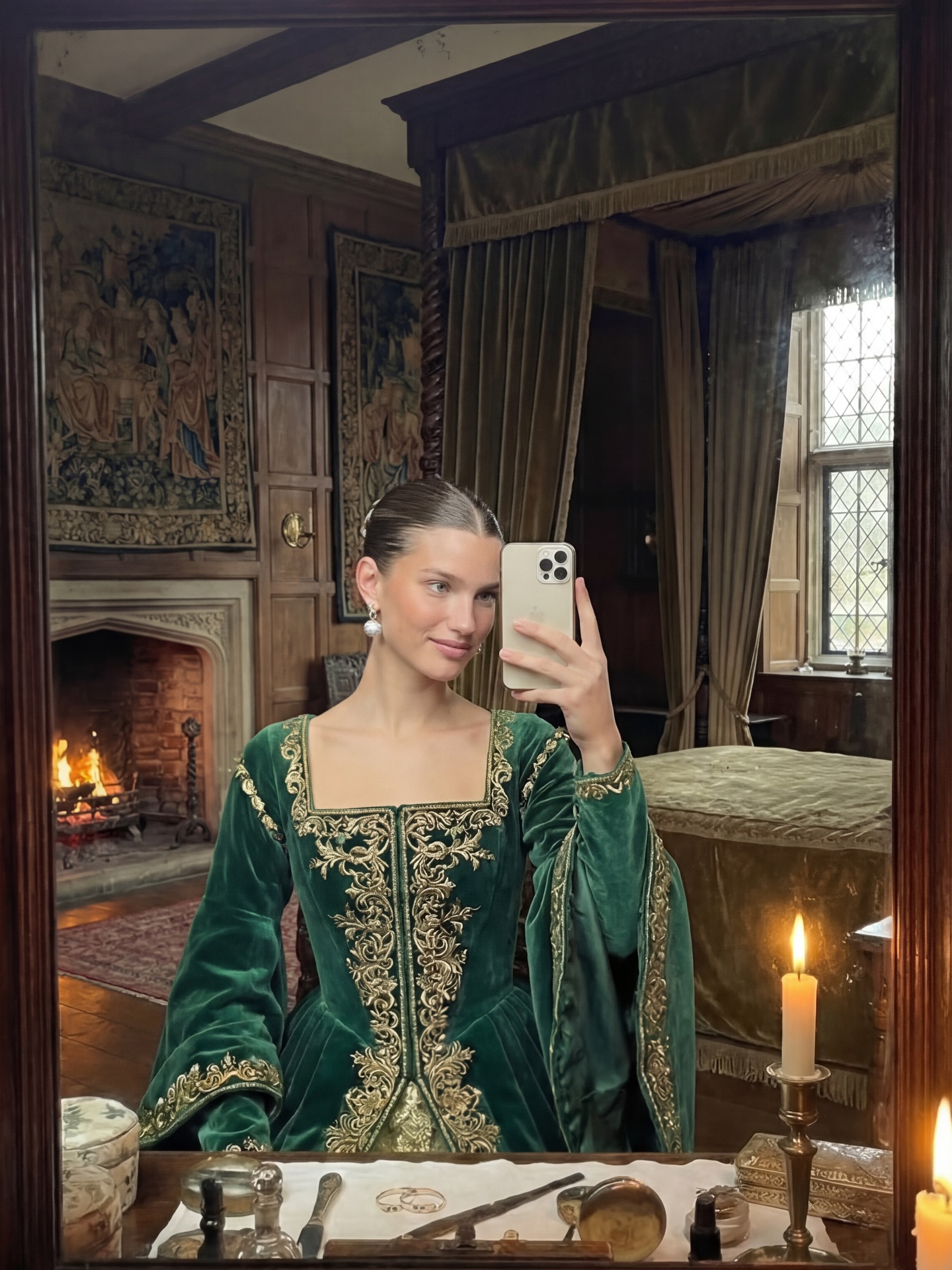
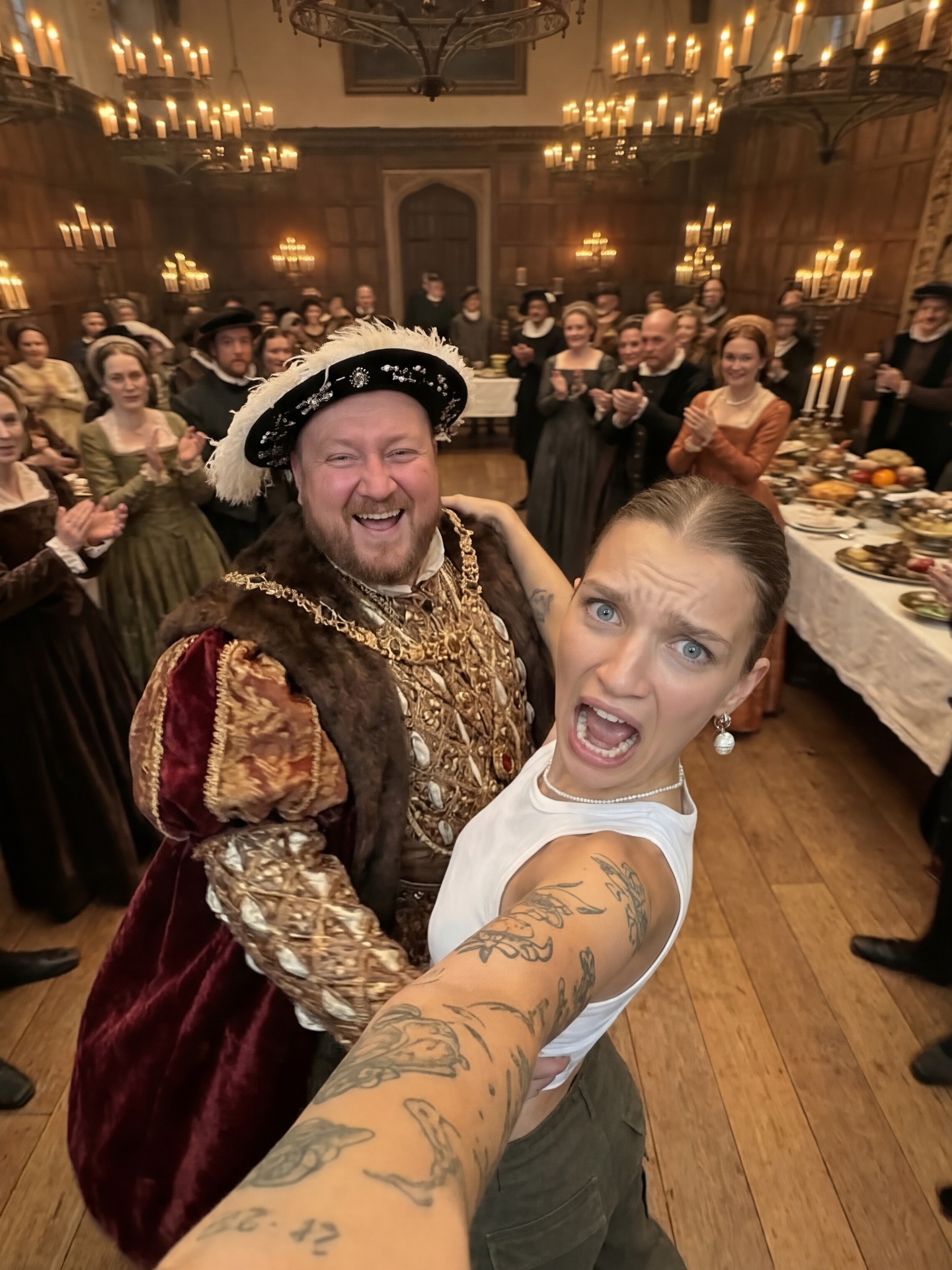
It’s been a crazy few days but I’m so blessed to have my Time Machine (it’s top secret) ⏳❤️ exciting things coming! #chloevshistory #history #timetraveller #travel
It’s been a crazy few days but I’m so blessed to have my Time Machine (it’s top secret) ⏳❤️ exciting things coming! #chloevshistory #history #timetraveller #travel
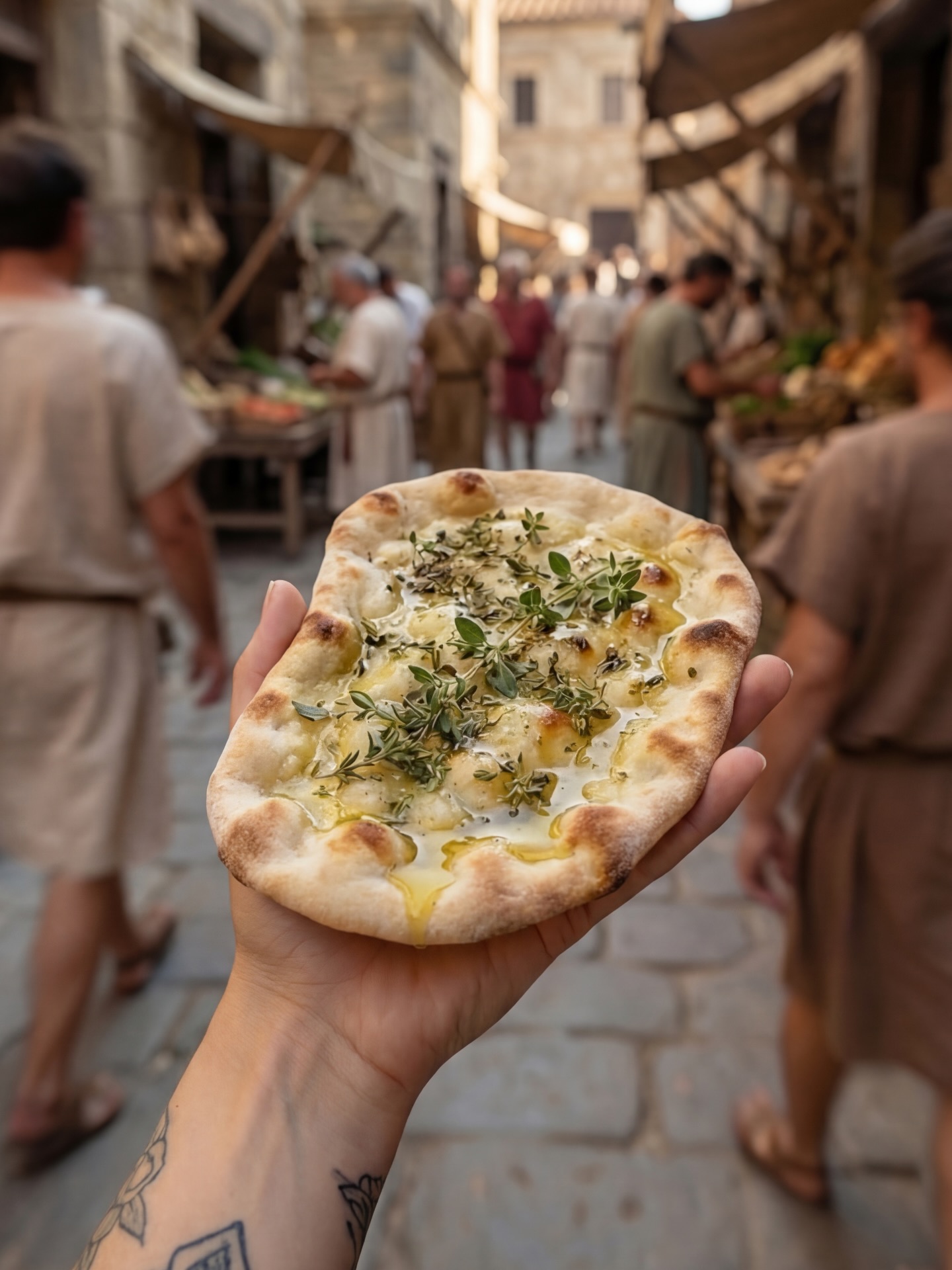
The hook is not just the bread. It is the point of view. By putting the flatbread in the viewer’s own hand, the post collapses distance immediately. You are not watching a history creator explain an old-world market. You are momentarily inside it. That shift is powerful because it turns a niche theme, historical travel fantasy, into a sensory experience anyone can understand in less than a second.
The caption pushes the same fantasy from another angle. Instead of sounding documentary or academic, it hints at a “top secret” time machine and promises more. That playful framing matters. The image gives tactile proof, blistered crust, olive oil, moving crowd, stone street, and the caption gives the viewer permission to enjoy the fiction. The result is a post that feels both cinematic and socially shareable.
| Signal | Evidence (from this image) | Mechanism | Replication Action |
|---|---|---|---|
| Embodied POV | The viewer sees one hand holding the food instead of a detached plated shot | Embodiment increases immersion and makes the scene feel personally experienced rather than merely observed | Keep one foreground body cue in frame, usually a hand, sleeve, boot, or steering grip, so the viewer enters the story physically |
| Tactile appetite | Blistered crust, melted cheese, herb texture, and visible olive oil sheen | Texture makes the image satisfying before the viewer even decodes the historical setting | When recreating, spend prompt budget on food texture first; if the object is flat, the fantasy collapses |
| Historical atmosphere without exposition | Stone alley, fabric awnings, muted garments, blurred market crowd | The setting reads “another era” instantly without requiring text blocks or costume close-ups | Use 3-4 environmental cues from the period, then blur them; suggestion is stronger than over-explaining |
| Curiosity loop | The caption references a secret time machine and hints that more is coming | Playful narrative framing gives the viewer a reason to follow the account beyond a single pretty image | Pair one high-concept visual with a light fictional premise, but keep the tone charming rather than lore-heavy |
{historical street} {handheld drink vessel} {blurred period crowd} {immersive time-travel POV}{ancient market alley} {handheld fruit cluster} {linen garments} {warm lived-in atmosphere}{historical location} {handheld artifact} {soft background figures} {curious cinematic POV}The strongest aesthetic decision here is scale. The bread is oversized in the frame, almost absurdly close, while the entire historical street recedes into softness behind it. That exaggeration is what makes the post memorable. A normal travel image would ask you to admire the location. This one asks you to feel the location through the object. Because the crust, herbs, and oil are so legible, the brain accepts the fantasy before it has time to question it.
The background is handled just as carefully. The people, stalls, and stone buildings are descriptive enough to imply an era, but not sharp enough to become a checklist. That is important. Once every tunic and brick becomes equally detailed, the frame starts reading like costume documentation. Here, the softness keeps the image romantic. The small wrist tattoos also help in a subtle way: they make the hand feel like a contemporary traveler crossing into another world, which matches the playful “time machine” premise better than a perfectly anonymous hand would.
| Observed | Why It Matters |
|---|---|
| Foreground object fills much of the lower center | Creates instant tactile focus and makes the POV readable at thumbnail size |
| Warm neutrals dominate with green herb accents | Keeps the palette edible, grounded, and era-consistent |
| People and architecture are heavily blurred | Preserves atmosphere without distracting from the hero object |
| Hand enters from the bottom edge | Anchors the viewer inside the scene instead of outside it |
| Prompt chunk | What it controls | Swap ideas (EN, 2-3 options) |
|---|---|---|
| first-person hand + object hero | Immersion and whether the image feels lived rather than observed | handheld bread / hand holding goblet / hand presenting relic |
| historical market environment | Era read and narrative context | Roman alley / medieval bazaar / Ottoman market lane |
| food texture realism | Appetite value and screenshot-worthiness | blistered crust / glossy fruit skin / aged metal patina |
| crowd blur and depth | Atmosphere without clutter | soft pedestrians / moving merchants / distant seated diners |
| warm daylight grading | Romance, nostalgia, and historical softness | late afternoon warmth / dusty noon light / dusk torch glow |
Lock the POV grammar before styling the era. If the hand-object relationship is weak, no amount of costume detail will save the image.
Baseline Lock: one foreground hand, one tactile hero object, and one blurred old-world street background.
Iteration example
1. Lock: flatbread + hand POV + stone market blur
2. Change: Roman-style alley -> medieval bazaar
3. Change: flatbread -> figs in the same hand position
4. Change: warm daylight -> dusk torch ambience