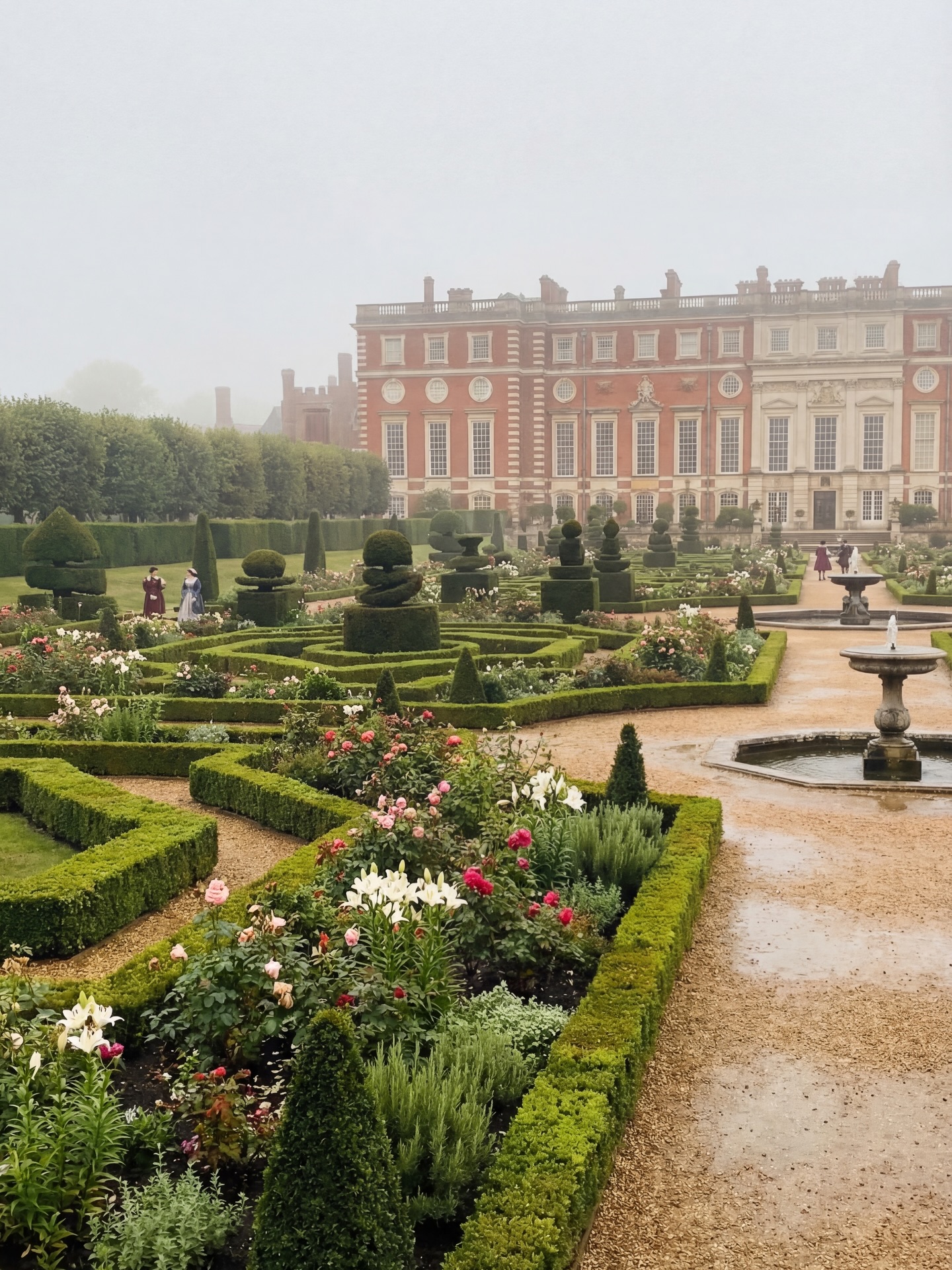
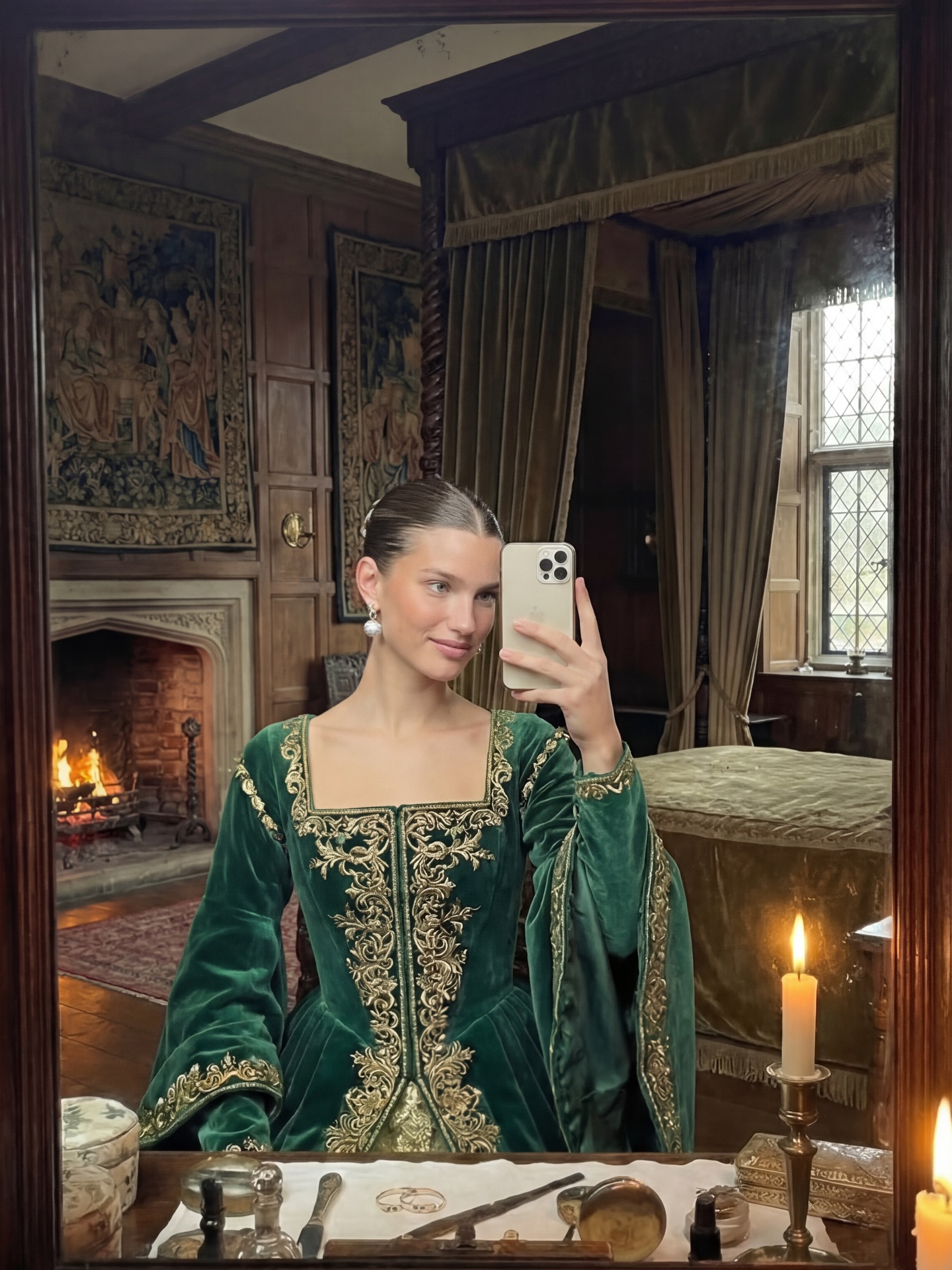
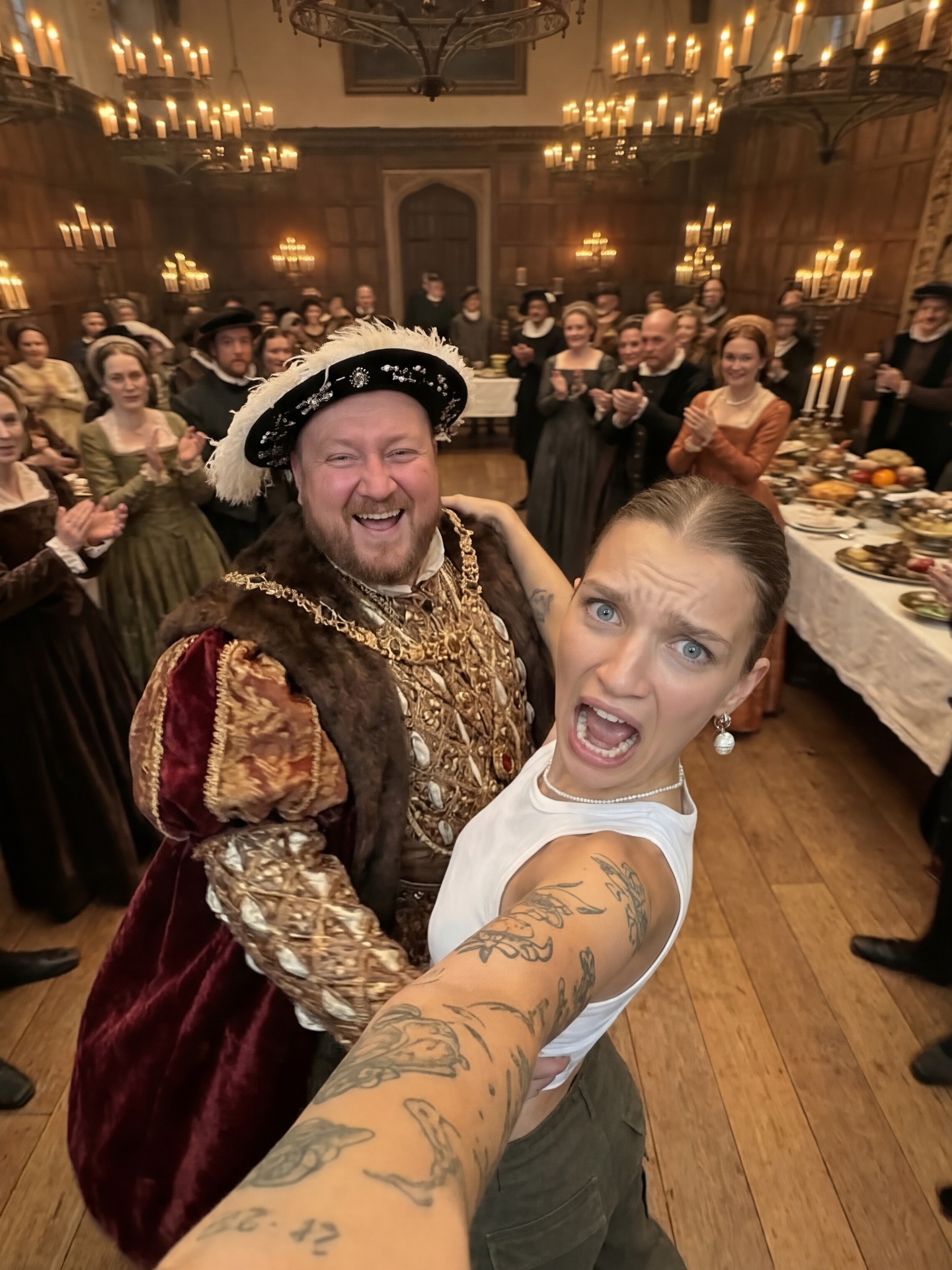
It’s been a crazy few days but I’m so blessed to have my Time Machine (it’s top secret) ⏳❤️ exciting things coming! #chloevshistory #history #timetraveller #travel
It’s been a crazy few days but I’m so blessed to have my Time Machine (it’s top secret) ⏳❤️ exciting things coming! #chloevshistory #history #timetraveller #travel
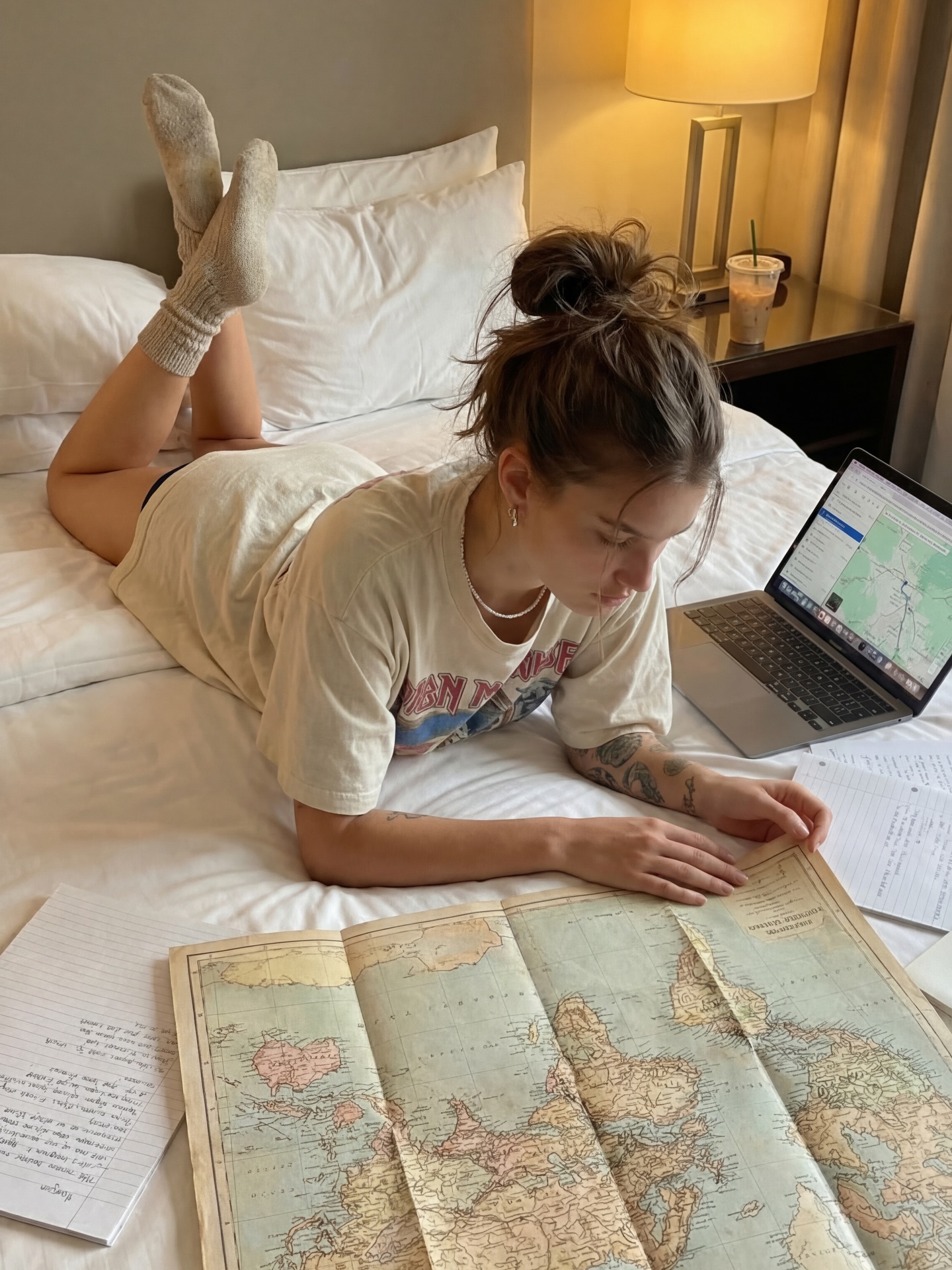
This image works because it turns research into a fantasy without losing the ordinary texture of real life. You have a woman sprawled across a hotel bed in socks and an oversized T-shirt, but the visual language around her says planning, decoding, and almost-secret travel. The antique map, handwritten notes, and laptop map screen create an immediate story engine: she is not just relaxing, she is figuring something out.
The caption about a “top secret” time machine matters because it gives the whole frame a playful narrative lens. Without that framing, the image would still be cozy, but with it, the scene becomes a soft roleplay of discovery. That combination is strong for social media. The photo stays approachable because the bed, lamp, cup, and messy bun feel familiar, while the old map introduces just enough fantasy to lift the scene above generic travel content.
This kind of image is useful when you want curiosity, coziness, and narrative all in the same frame. It does especially well for creators who need a “thinking in public” aesthetic instead of a hard sell.
This look is less ideal for luxury minimalism, high-fashion editorials, corporate productivity shots, or hyper-clean tech marketing. The charm here depends on warmth, slight mess, and mixed-era objects. Remove those and the scene collapses into a bland bedroom photo.
{creator} lying on a white bed, surrounded by {analog material}, laptop open nearby, warm lamp, candid research mood{subject} deep in {theme} research, old paper reference in foreground, modern screen on side, relaxed domestic setting{scene location}, handwritten notes, one hero reference object, one laptop map, warm ambient light, no direct camera poseThe image understands that softness can carry narrative just as well as drama. The bedding is bright but not sterile, the lamp is warm but not orange-heavy, and the color palette is mostly cream, beige, pale blue, and muted brown. That gentle palette allows the map to become the visual centerpiece without feeling forced. The old paper looks important because the rest of the room knows when to stay quiet.
The raised feet matter more than they seem. They inject informality, which protects the image from looking staged. The same is true of the cup on the nightstand and the slightly scattered papers. None of those details are glamorous, but together they create the texture of an actual evening. That is what makes the “time machine” caption feel charming instead of cheesy. The fantasy is grounded by domestic evidence.
There is also a subtle intelligence to the way the frame distributes attention. The face is not centered, and the laptop is not the star. The eye moves from map to hands to face to screen to lamp, then back down again. That circulation is useful if you are building SEO pages around creator process, because the image rewards longer looking rather than only instant recognition.
| Observed | Recreate evidence | Why it matters |
|---|---|---|
| Large folded antique map covers the lower third of the image | Keep a tactile paper object as the foreground anchor | It gives the frame historical texture and immediate narrative weight |
| Open laptop with a modern map interface sits on the right | Use a real screen-based planning tool as contrast, not decoration | The modern screen sharpens the old-versus-new story |
| Warm bedside lamp and neutral room palette | Favor one practical warm light source over stylized dramatic lighting | The room feels intimate and believable instead of editorially lit |
| Messy bun, oversized tee, visible notes, and raised socked feet | Leave in relaxed imperfections and lived-in body language | Authenticity is the reason the roleplay feels convincing |
| No direct eye contact and no smile to camera | Keep the subject absorbed in the task | The viewer feels like they are witnessing a process, not consuming a pose |
This is the kind of image that fails when creators prompt only for “cozy map aesthetic.” You need the controls to be specific, because the image depends on object relationships more than on a single style word.
| Prompt chunk | What it controls | Swap ideas (EN, 2-3 options) |
|---|---|---|
| Pose block | Keeps the image relaxed, horizontal, and task-oriented | lying on stomach; sprawled across bed; absorbed research pose |
| Hero reference object | Defines the main story anchor in the foreground | antique map; old letters; archival blueprint |
| Digital counterweight | Introduces the modern layer without overpowering the scene | open laptop map; tablet itinerary; route-planning screen |
| Room warmth | Controls emotional temperature and believability | bedside lamp glow; warm evening ambient; soft hotel-room light |
| Wardrobe realism | Prevents the scene from turning into polished loungewear advertising | oversized graphic tee; casual socks; messy-bun downtime look |
| Research clutter discipline | Adds process texture without overloading the frame | handwritten notes; loose paper pages; one drink on the nightstand |
The important thing to protect is the relationship between the objects. The map is not just “there.” It is the emotional anchor. The laptop is not just “a laptop.” It is the evidence that this scene lives in the present. If either one loses importance, the image becomes generic immediately.
Lock these three things first: the bed-level lifestyle setting, the analog-digital object pairing, and the absorbed body posture. Those are the non-negotiables.
Then iterate with restraint:
If the output starts looking too polished, reduce luxury language and increase process words like notes, working materials, spread out, and mid-task. If it becomes too messy, simplify down to one hero paper object, one screen, and two or three note pages. The image wins through selective clutter, not chaos.