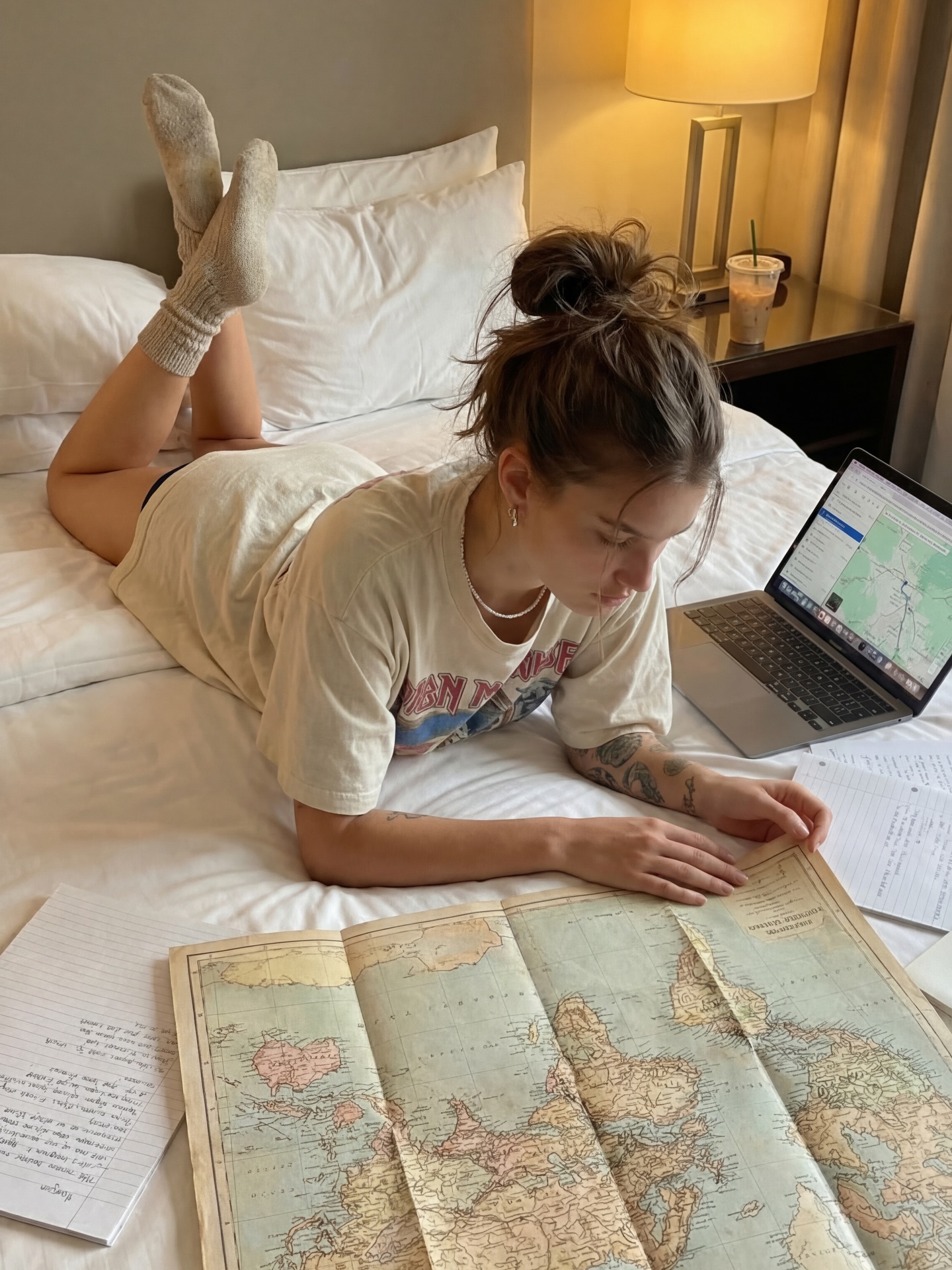
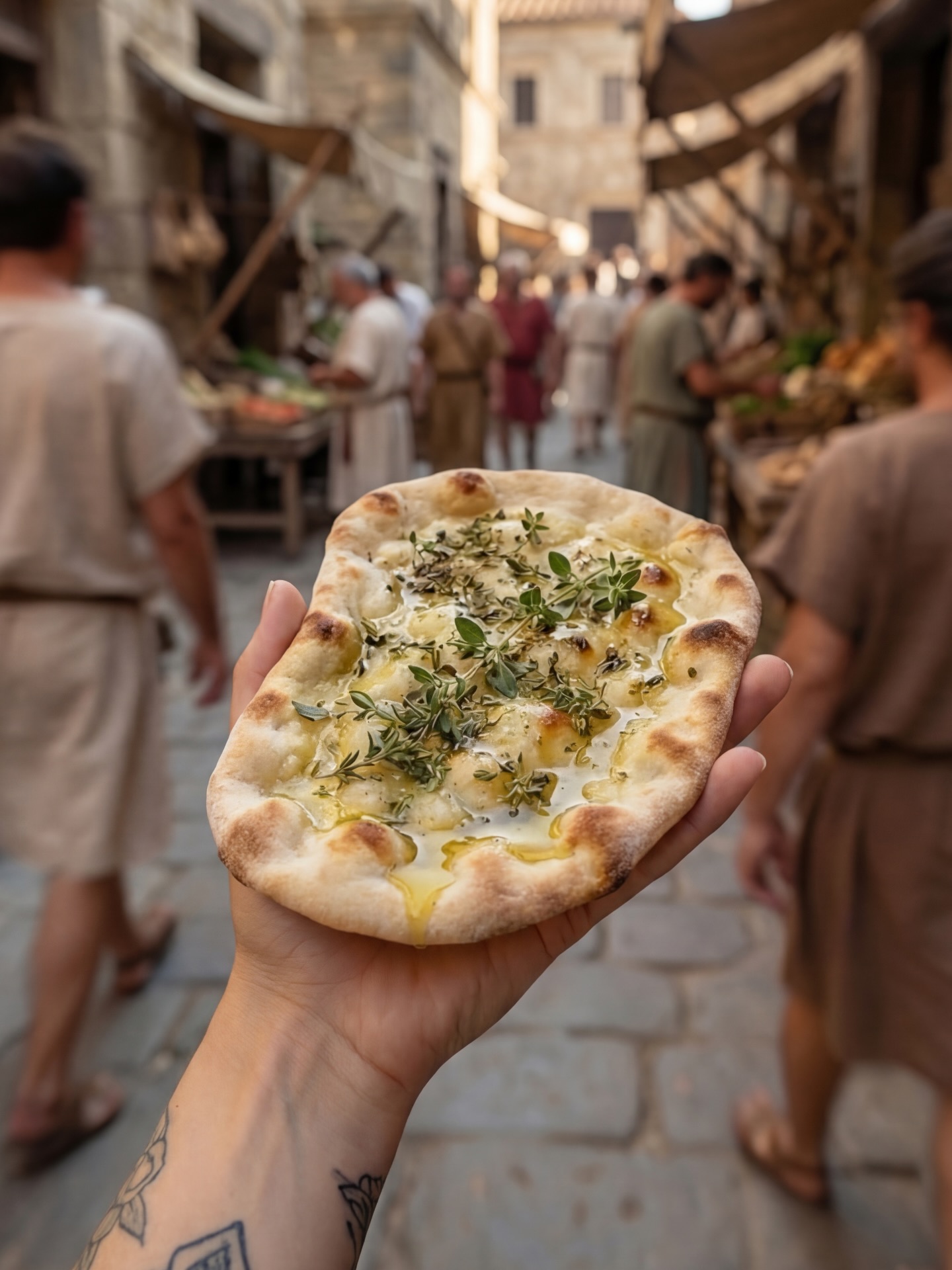
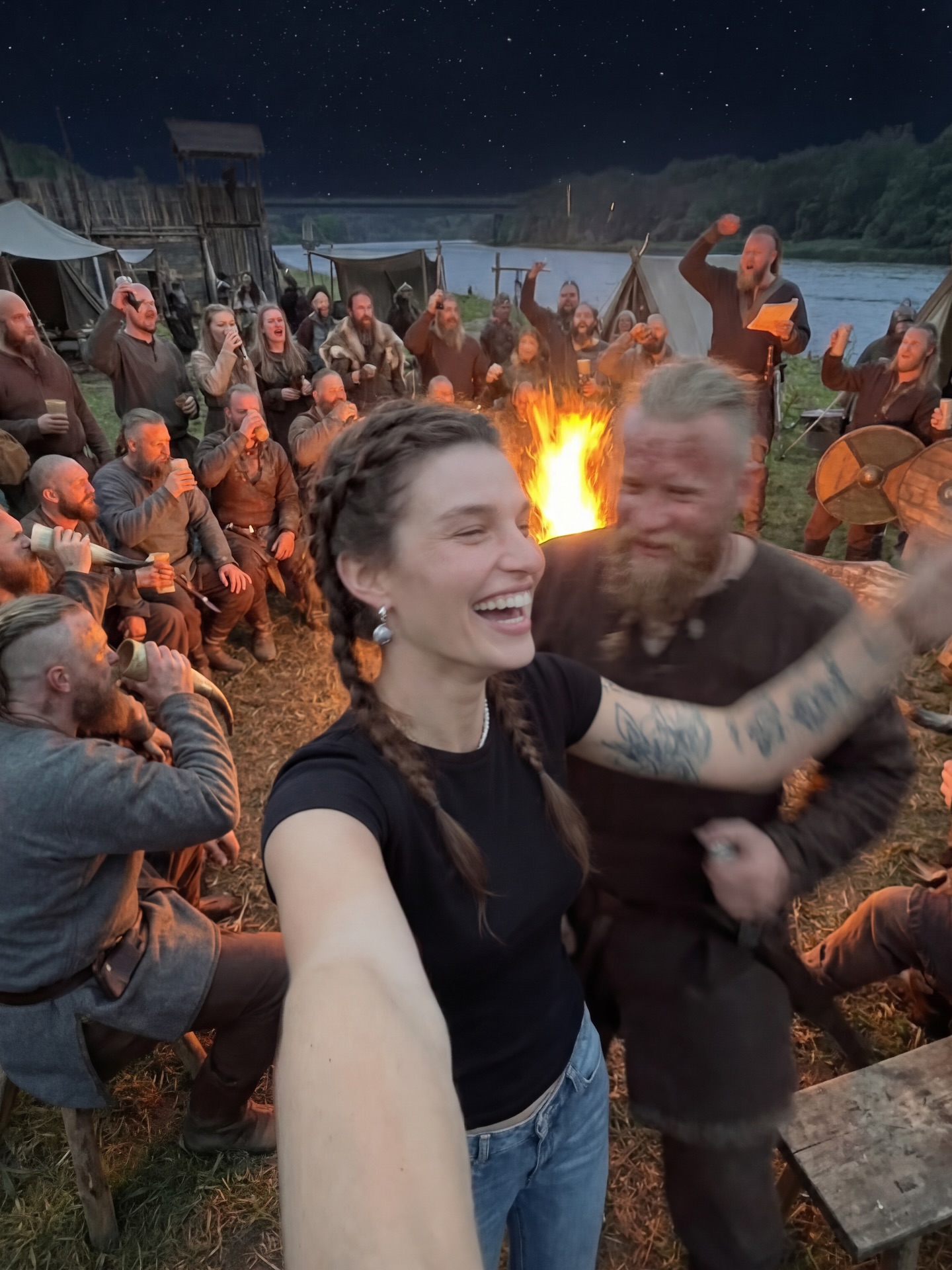
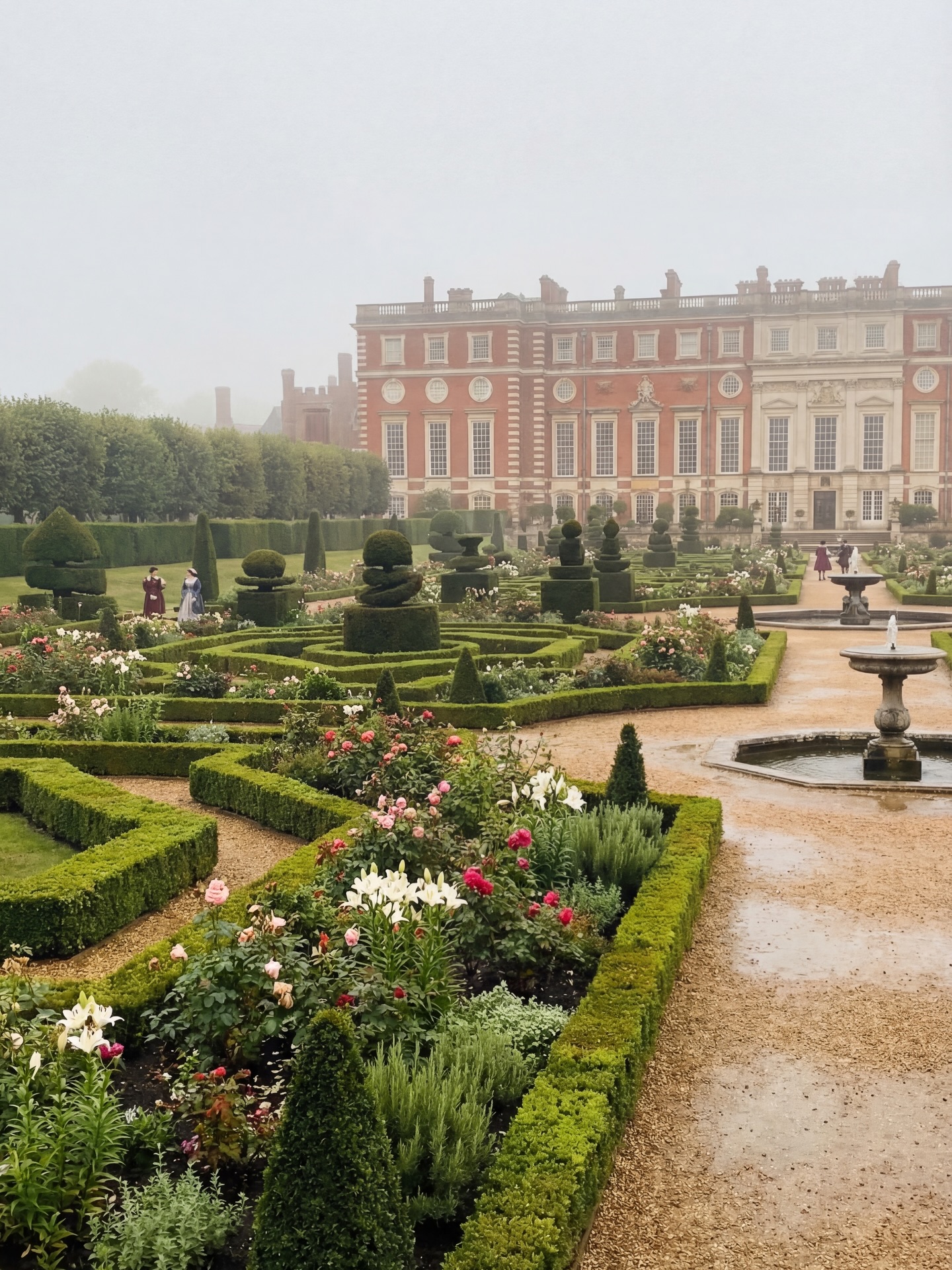
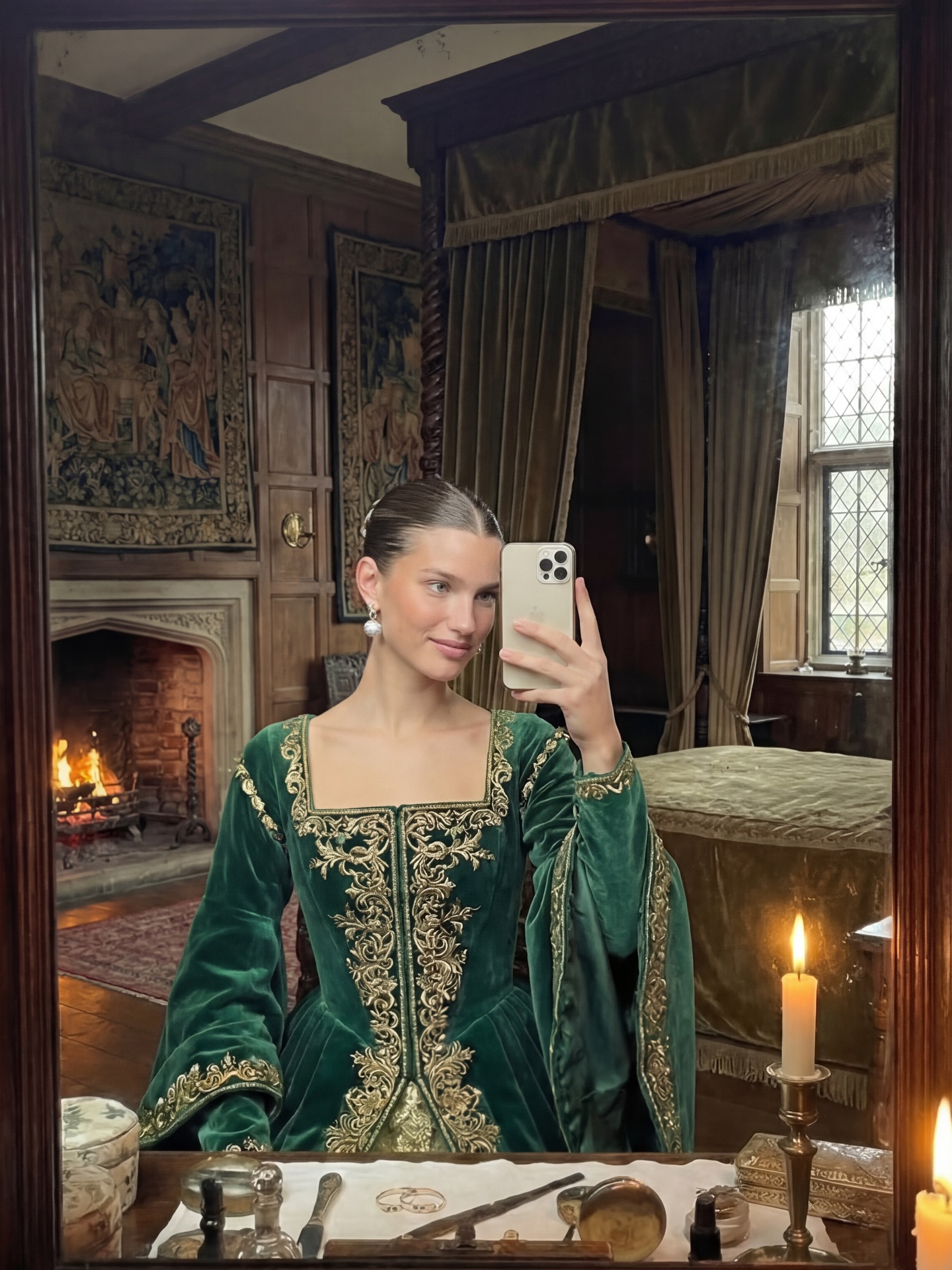
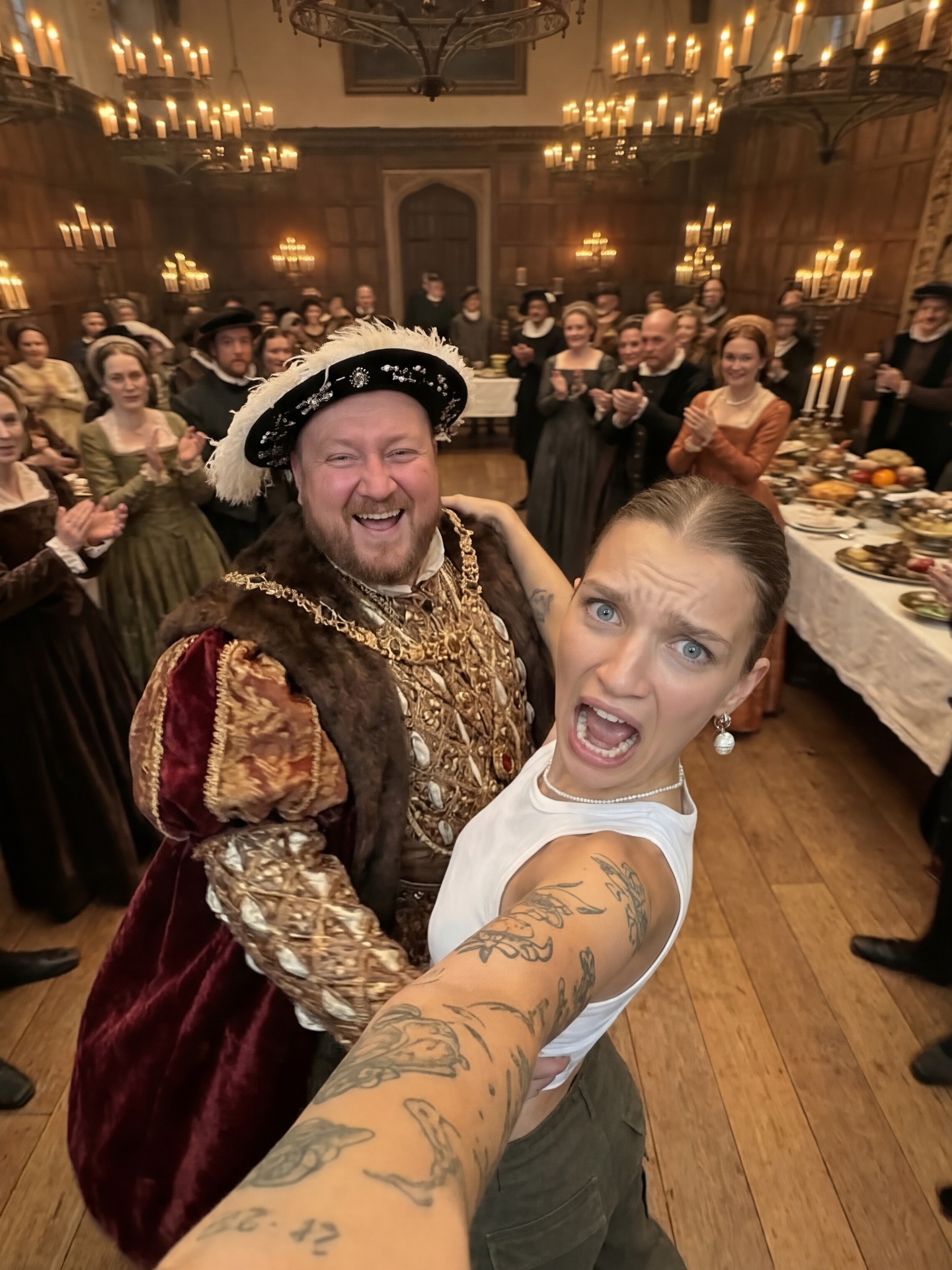
It’s been a crazy few days but I’m so blessed to have my Time Machine (it’s top secret) ⏳❤️ exciting things coming! #chloevshistory #history #timetraveller #travel
It’s been a crazy few days but I’m so blessed to have my Time Machine (it’s top secret) ⏳❤️ exciting things coming! #chloevshistory #history #timetraveller #travel
Case Study
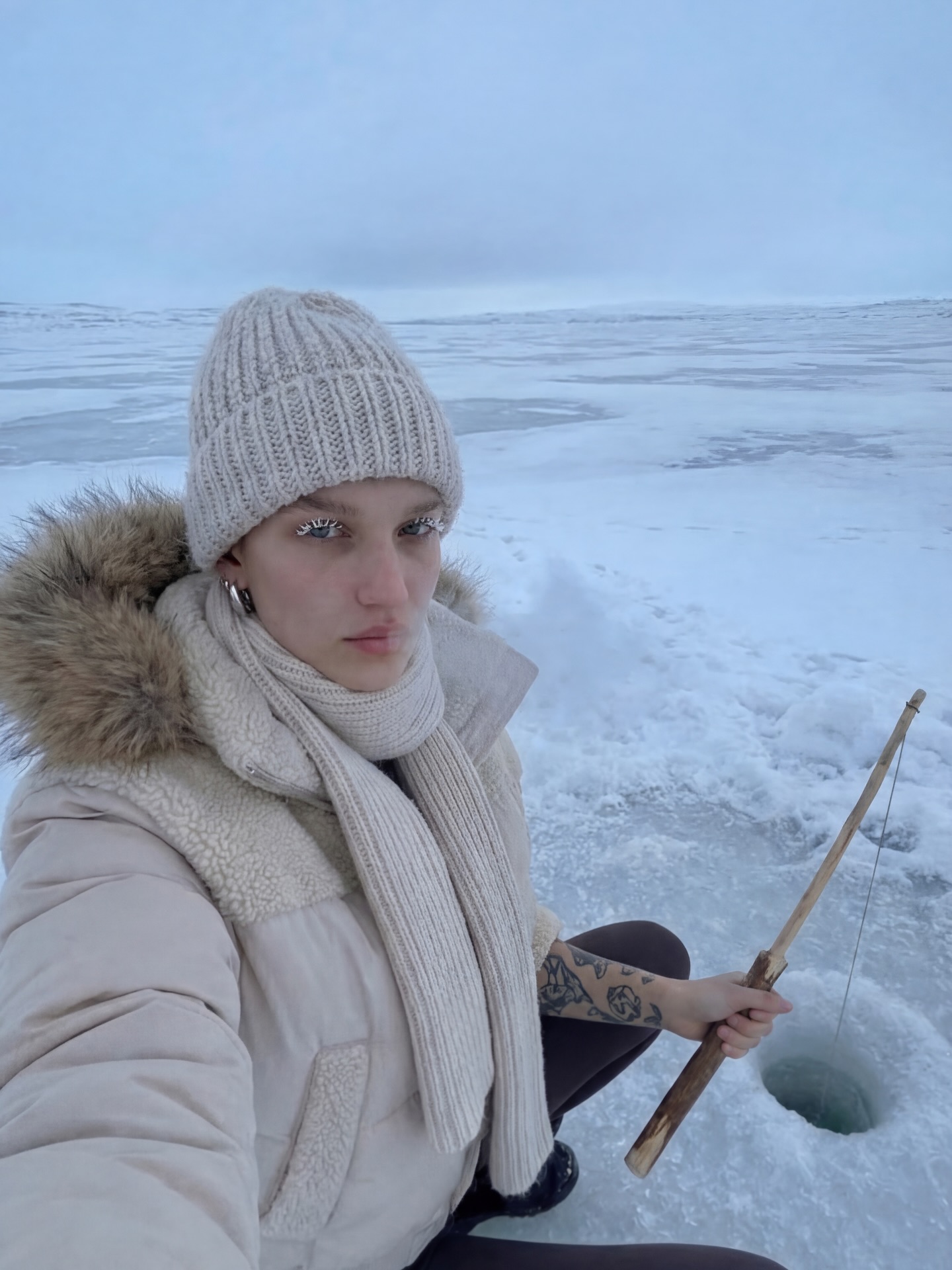
This image proves that adventure content does not need spectacle to feel cinematic. There is no dramatic mountain peak, no bright gear, and no action freeze-frame. Instead, it uses cold, emptiness, and a single human face to make the environment feel real.
The main viral mechanism is environmental proof. The frosted lashes, pale skin tones, thick knitwear, and ice hole all work together to tell the viewer that this is not a generic winter portrait. It feels physically cold. That matters because travel and lifestyle audiences respond strongly to images that make them sense the temperature, texture, or difficulty of a place.
The second reason it works is contrast between softness and harshness. The outfit is creamy, cozy, and tactile, while the setting is severe and almost empty. This gives the frame emotional richness. A lot of winter content leans either fully rugged or fully cute. This image does both at once, which makes it more memorable.
The third reason is narrative economy. One rod, one hole, one face, one giant frozen horizon. The image does not over-explain. For creators, that is a useful lesson: if the environment is strong enough, a single activity cue is often enough to make the whole story read.
| Signal | Evidence | Mechanism | Replication Action |
|---|---|---|---|
| Cold made visible | Frosted lashes, thick knits, pale sky, and frozen lake surface | Visible climate evidence makes the viewer feel the setting | Add 2-3 physical cold cues instead of relying on snow alone |
| Single-activity anchor | Wooden rod and ice hole clearly define what is happening | One simple prop is enough to convert a selfie into a story | Choose one unmistakable activity cue and keep the rest quiet |
| Soft-versus-severe tension | Cozy cream styling against a hard, empty frozen landscape | Contrast between comfort and harshness adds emotional depth | Pair tactile warm textures with a stripped-down environment |
| Selfie intimacy | Close arm-length camera angle with horizon stretching behind | The viewer feels personally invited into the location | Use a near handheld angle when the environment itself is the main flex |
This format is ideal for travel creators, slow-adventure accounts, lifestyle brands, and AI storytellers who want to make a location feel emotionally real. It also transfers well to desert, tundra, rainy-city, and ocean-cliff content. The repeatable pattern is simple: put the human close, keep the environment huge, and use one activity prop to make the moment specific.
It is less useful for luxury tourism, high-energy sports ads, or gear-heavy survival content. The image wins through restraint, not through spectacle or product emphasis.
Three transfer recipes work well from this base. Keep the selfie intimacy and severe environment; change the ice rod into a hiking map on a snowy pass. Keep the monochrome styling and open horizon; change the setting into a desert salt flat with one simple travel tool. Keep the soft knitwear and remote mood; change the niche to stormy coastline journaling or early-morning camping. A useful slot template is {remote landscape selfie} + {cozy neutral outfit} + {single activity prop} + {visible climate evidence}.
The first aesthetic strength is palette consistency. Nearly everything lives inside cream, gray-blue, and pale beige. That makes the image feel hushed and cold without needing heavy filters. The second strength is environmental scale. Even though the shot is a selfie, the horizon still gets enough room to make the person feel small inside the place.
The third strength is tactile honesty. You can read the knit ribbing, the shearling texture, the fur trim, the rough wood of the rod, and the fractured ice surface. Those material cues are what keep the image from becoming a generic “winter aesthetic” post.
For recreation, the key is not to over-beautify the face or over-dramatize the sky. The power comes from believable cold and quiet.
| Prompt chunk | What it controls | Swap ideas (EN, 2-3 options) |
|---|---|---|
| selfie on frozen lake holding ice-fishing rod | Narrative specificity and personal connection | snow hike selfie, salt-flat selfie, rainy pier selfie |
| cream knit winterwear with fur-trimmed coat | Comfort coding and tonal softness | neutral wool layers, beige parka, soft shearling jacket |
| flat frozen horizon under overcast sky | Scale, emptiness, and emotional quiet | foggy seashore, salt desert line, tundra plain |
| frosted lashes and muted skin tones | Climate realism and sensory proof | wind-reddened cheeks, misty breath, damp rain texture |
| soft diffuse cloud light | Low-contrast realism and cold atmosphere | fog light, winter overcast, soft polar daylight |
Baseline lock first: keep the handheld selfie distance, keep the flat remote landscape, and keep one small activity prop. Those three decisions are the structure. Once they are stable, you can change the environment and niche.
Use one-change iteration. If the image loses adventure, fix the horizon and environmental emptiness first. If it loses emotional softness, fix the knitwear and face detail only. The success of this format comes from atmosphere discipline.