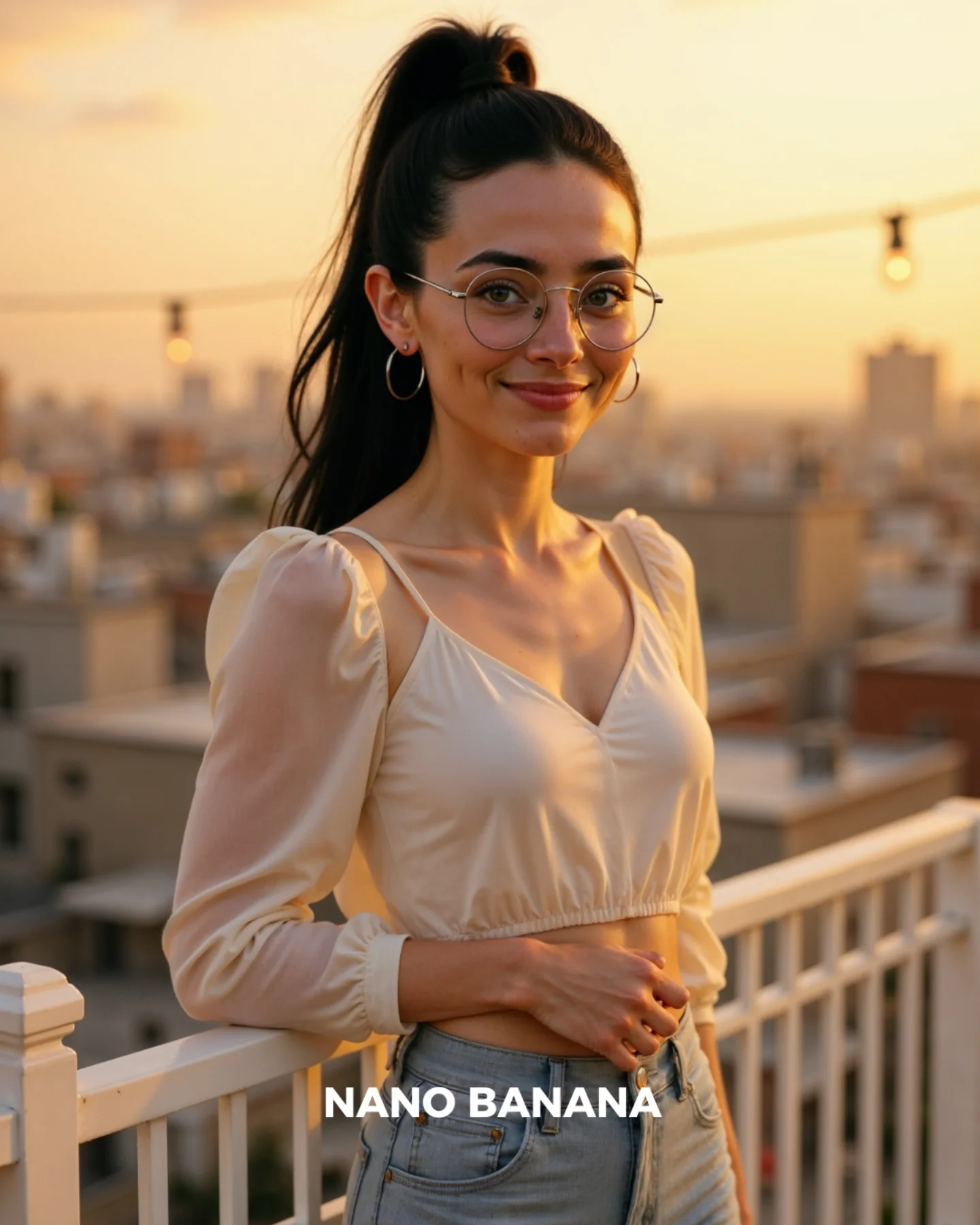
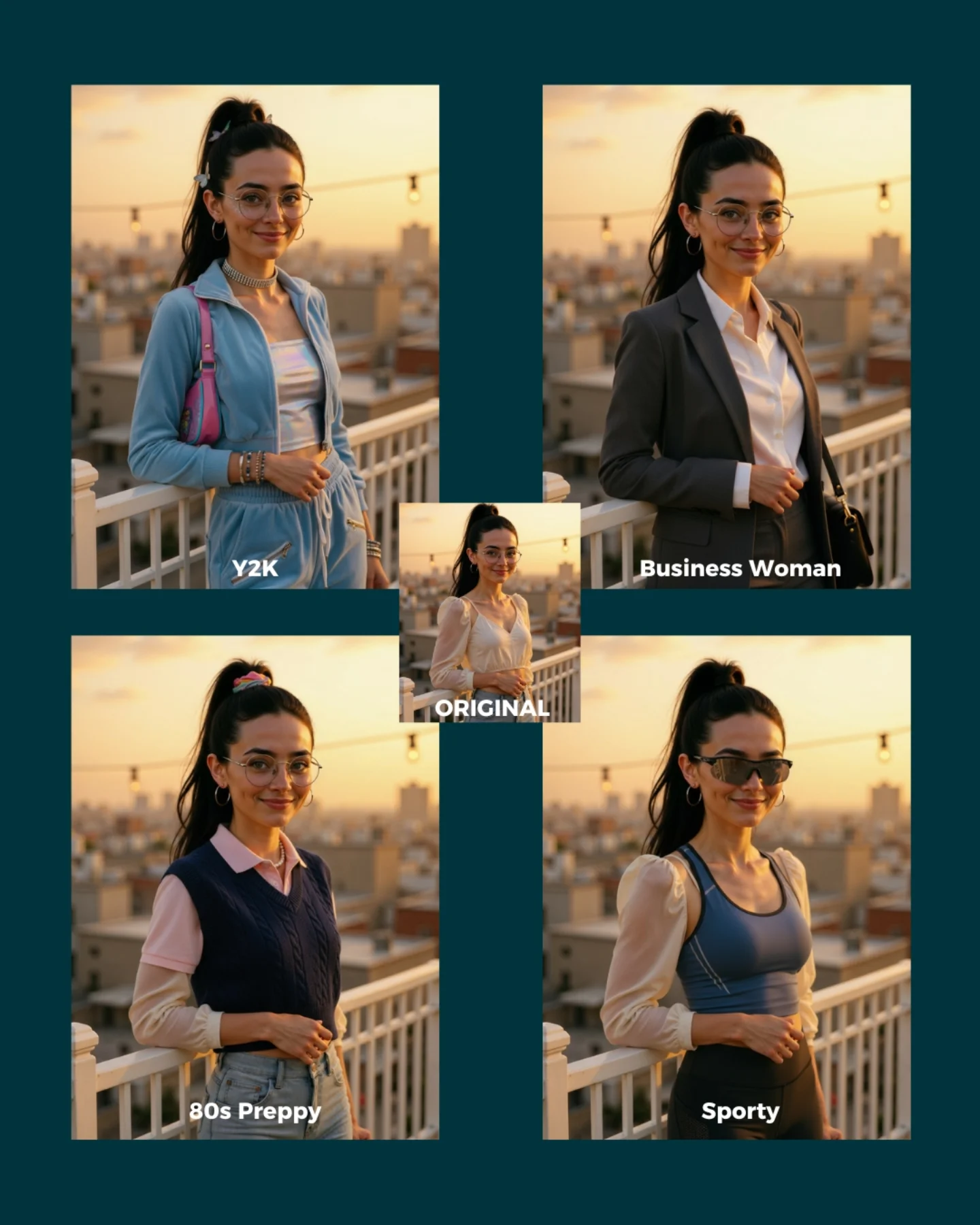
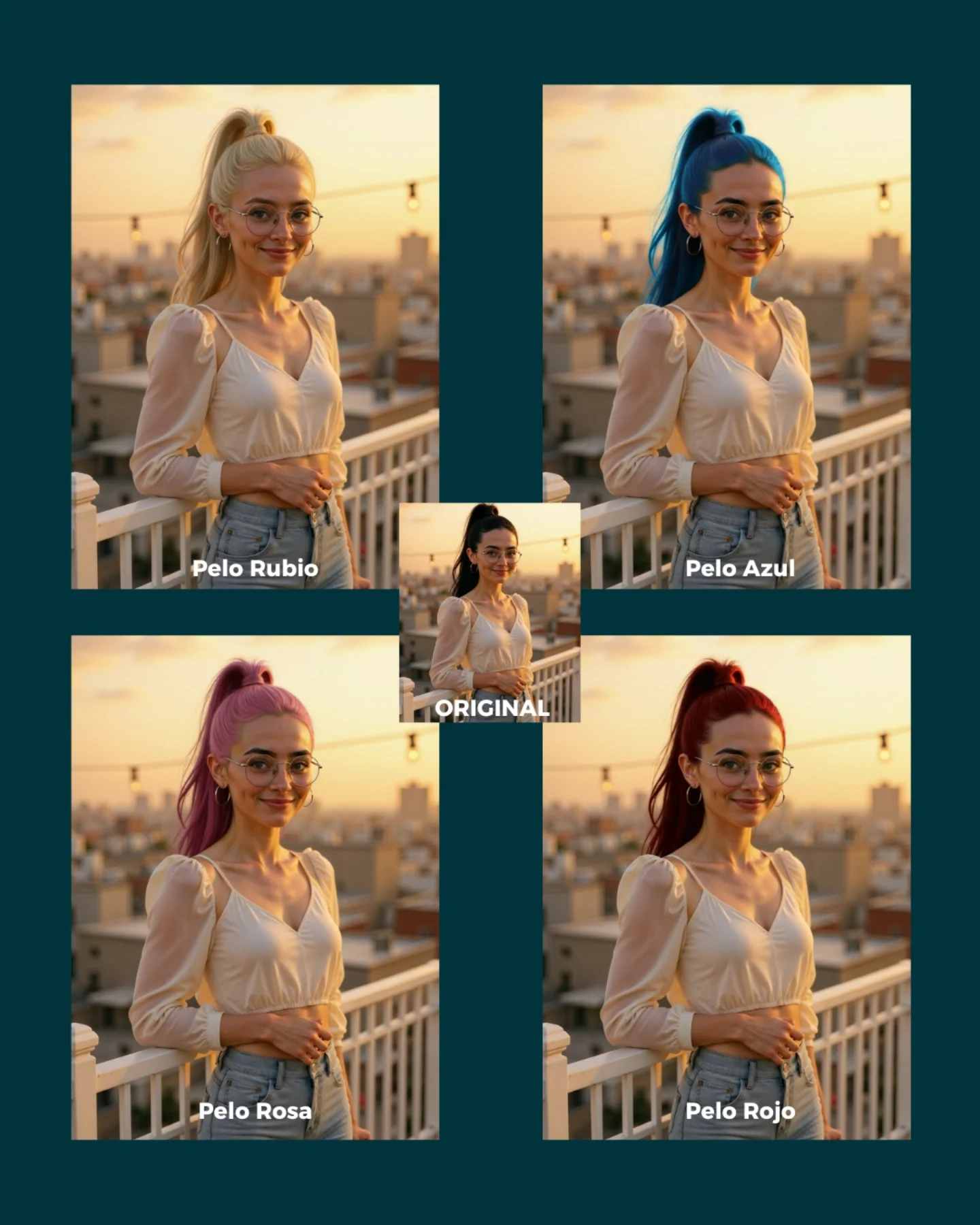
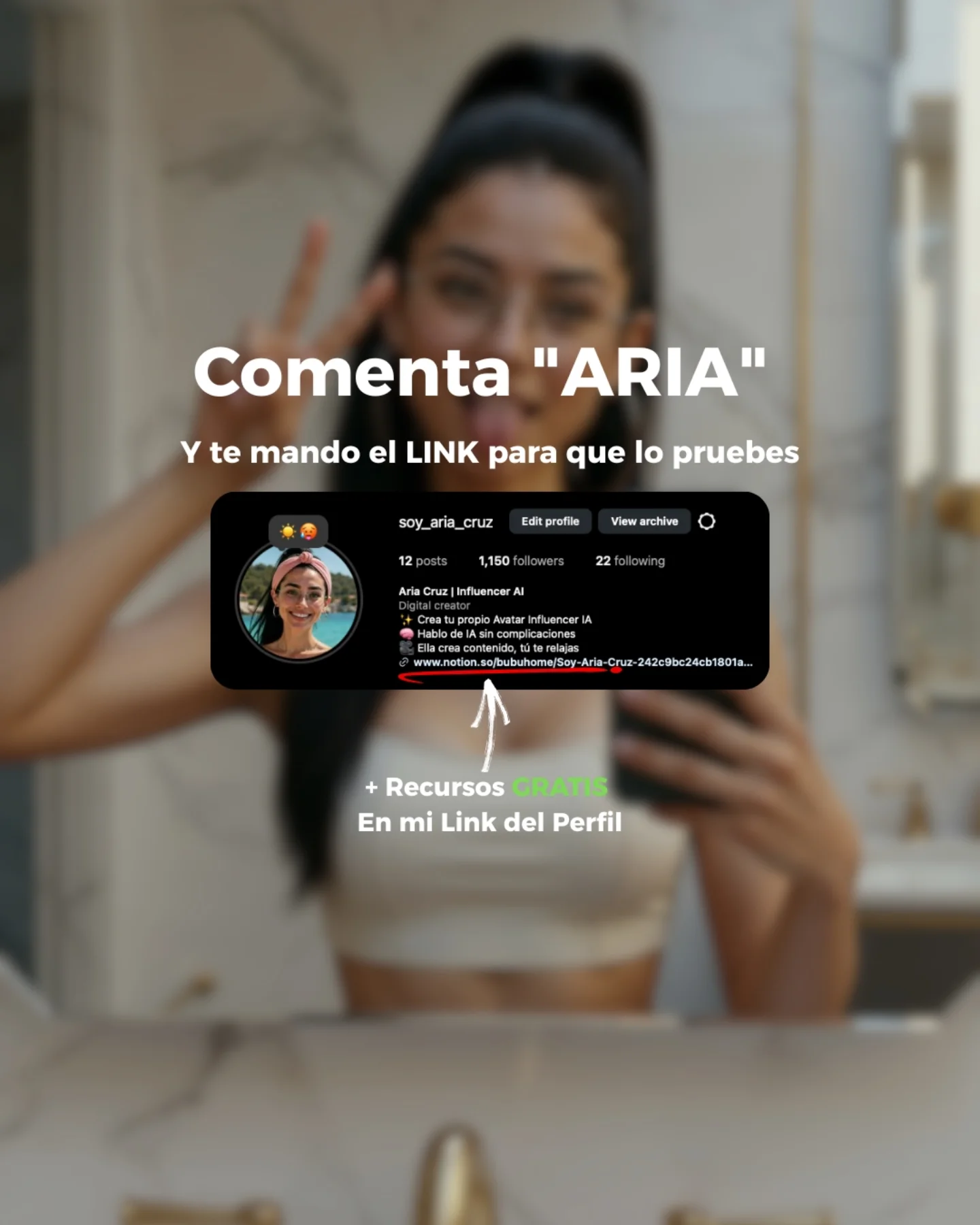
How soy_aria_cruz Made This Bathroom Mirror Selfie Image — and How to Recreate It
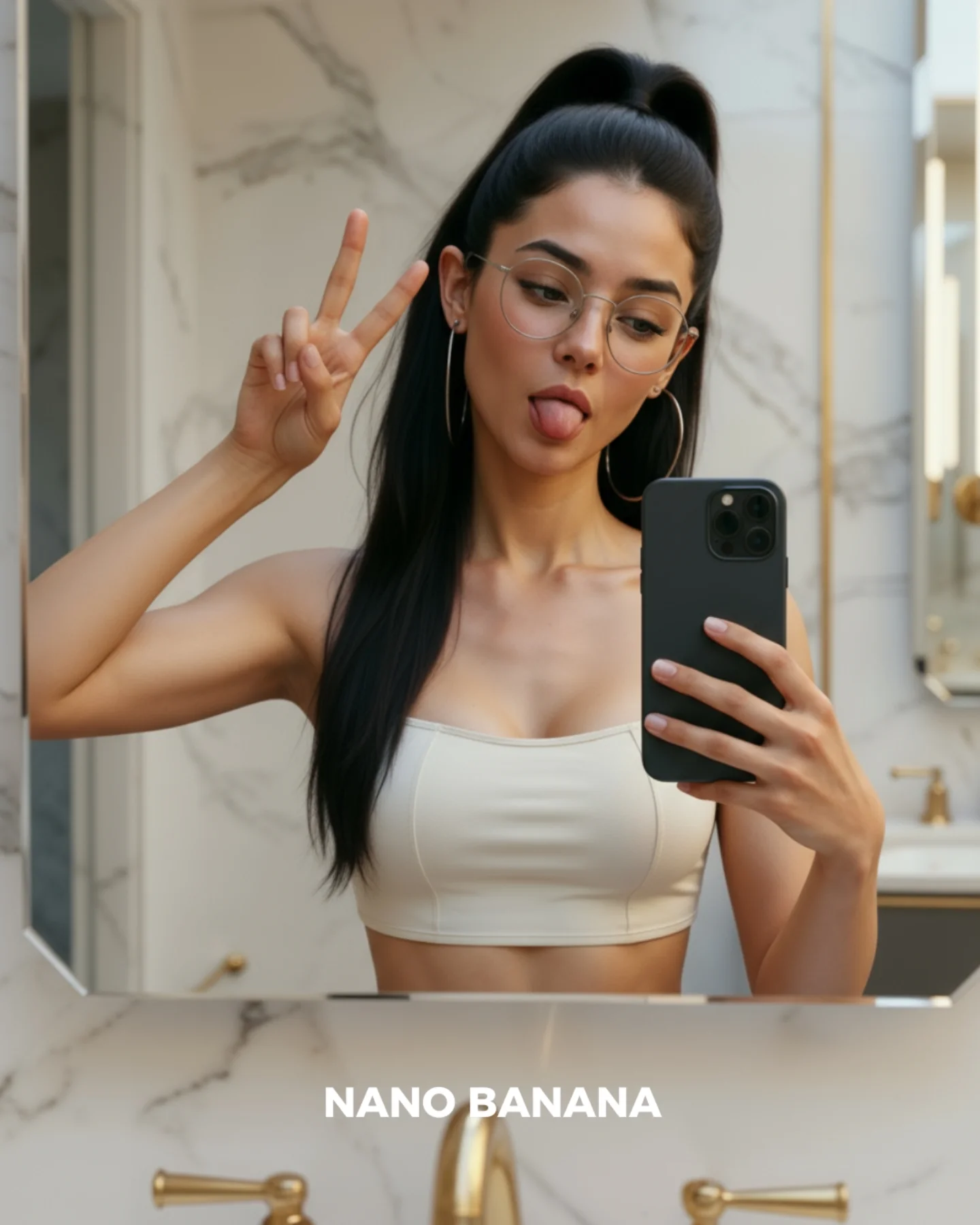
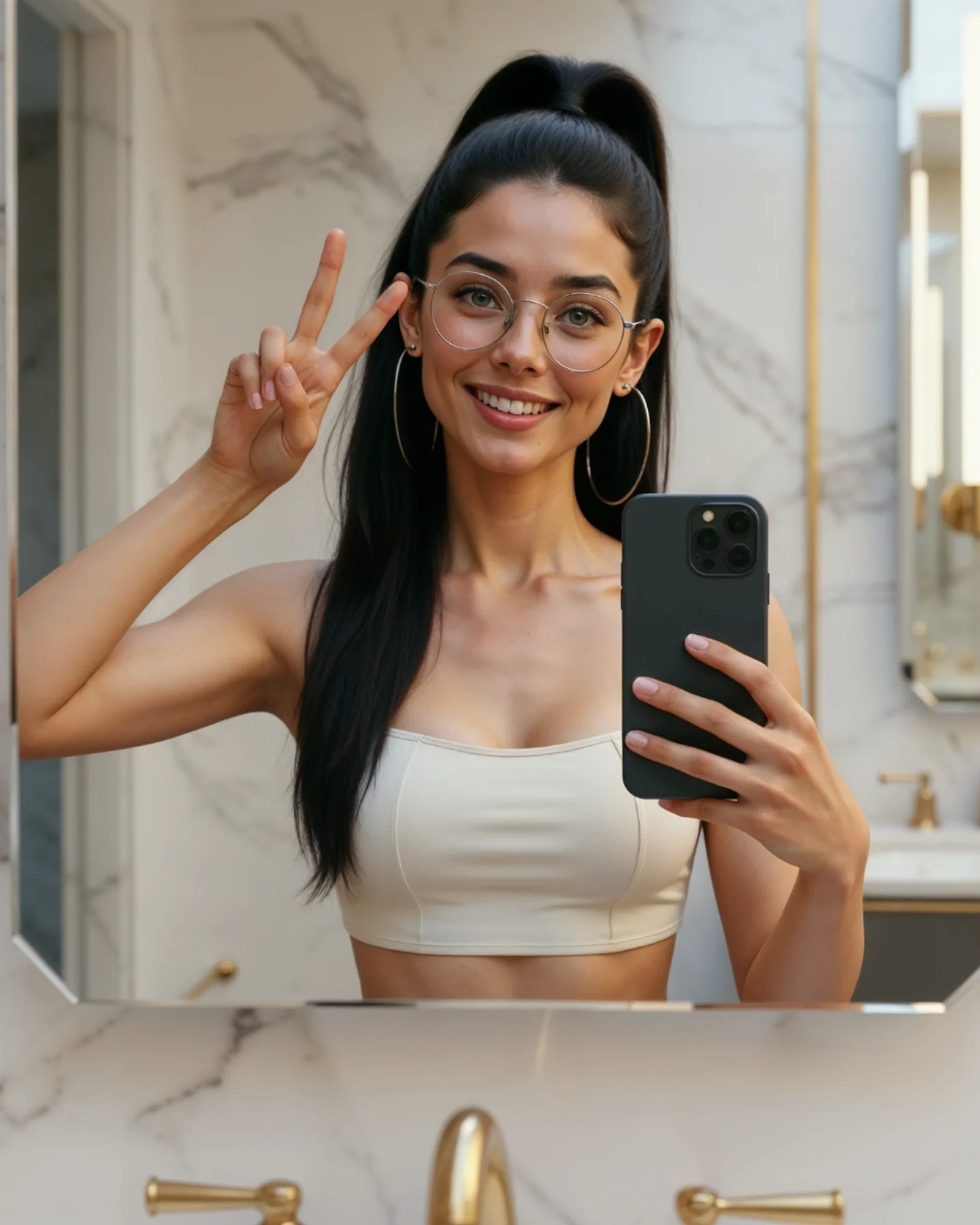
This post does more than show a pretty AI selfie. It sells the promise of consistency. The image feels instantly familiar because it uses the most legible social format possible: a bathroom mirror selfie with a clear pose, readable outfit silhouette, and a playful facial expression. That makes the viewer believe the tool can preserve identity through a very ordinary creator scenario, which is exactly the kind of proof people want before they test an image-variation model.
The visual choices are also efficient. The marble bathroom gives the frame a premium but low-noise backdrop, the white tube top separates the body shape from the environment, and the black phone plus black ponytail create contrast anchors. The result is a sample image that is clean enough to study and specific enough to remember. Combined with the caption about simple prompting and strong consistency, the post turns a single selfie into a product demonstration.
Signal Table
| Signal | Evidence (from this image) | Mechanism | Replication Action |
|---|
| Instantly readable selfie setup | Mirror selfie, phone in hand, centered subject, bathroom context | Viewers decode the scene in one second, so attention stays on the AI result rather than on figuring out the composition | Lock a familiar selfie scenario before testing style changes or identity edits |
| Identity anchors | Round glasses, high ponytail, hoop earrings, tongue-out pose | Memorable anchor traits make consistency claims feel believable | Choose 3 to 4 traits that must survive every variation and state them explicitly in the prompt |
| Premium but uncluttered background | White-gray marble walls, gold faucet accents, soft beige tones | A clean background makes the subject easier to compare across generations | Use low-clutter interiors with one or two luxury cues instead of messy rooms |
| High contrast wardrobe logic | White top against dark hair and black phone | Strong separation improves readability on mobile and makes the output look more deliberate | Pair one light garment with one dark anchor object when building demo shots |
Where this aesthetic transfers well
This format is best for AI tool demos, creator education posts, before-and-after variation examples, and lead-generation content that promises a quick workflow win. It also works for avatar-consistency tutorials because the expression and accessories give the model something concrete to preserve. It is less ideal for cinematic storytelling, brand campaigns that need a custom set, or fashion posts where the clothing itself should dominate the frame.
Three useful transfer recipes emerge from this image. Keep the mirror-selfie composition, soft bathroom lighting, and identity anchors; change the wardrobe, room material, and expression for a beauty tutorial template: {mirror selfie} {beauty outfit} {signature accessory} {clean bathroom mood}. Keep the phone, pose clarity, and premium interior cues; change the subject styling for an app demo variant: {creator selfie scene} {hair detail} {outfit color} {tool showcase vibe}. Keep the eye-level framing and low-noise background; change the prop and gesture for a dating-profile or persona remix: {selfie setting} {gesture} {accessory anchor} {flirty or casual mood}.
What gives the image its aesthetic strength
The frame works because it balances polish and immediacy. The lighting is soft enough to flatter skin but not so stylized that it feels fake. The composition fills most of the vertical frame with the subject, which is important for mobile attention. The palette stays narrow: black, white, beige, pale gray, and muted gold. That restraint makes the playful expression stand out even more. Another strong choice is the slight background softness. It keeps the marble bathroom recognizable while still letting the face, glasses, and hand gesture do the heavy lifting.
If you want to recreate this look, the key is not “pretty girl in bathroom.” The key is “clear identity markers inside a normalized social-media scene.” That is why the image feels replicable rather than random.
Prompt technique breakdown
| Prompt chunk | What it controls | Swap ideas (EN, 2-3 options) |
|---|
| young woman mirror selfie with tongue out and peace sign | Core pose, social energy, gesture readability | duck-face mirror selfie; soft smile mirror selfie; wink and peace sign selfie |
| long black high ponytail, round glasses, hoop earrings | Identity anchors and repeatable character cues | pink loose waves with cat-eye glasses; blunt bob with tiny hoops; dark braid with no glasses |
| white cropped tube top, black phone | Wardrobe contrast and prop simplicity | black tank top with silver phone; pastel hoodie with white phone; satin slip top with mirror compact |
| luxury marble bathroom with gold faucet accents | Scene quality and background cleanliness | minimal hotel bathroom; modern concrete washroom; glossy pink vanity room |
| soft even bathroom mirror lighting | Skin finish and low-drama realism | bright daylight window fill; warmer vanity bulb glow; cooler LED mirror light |
Execution playbook for remixing this concept
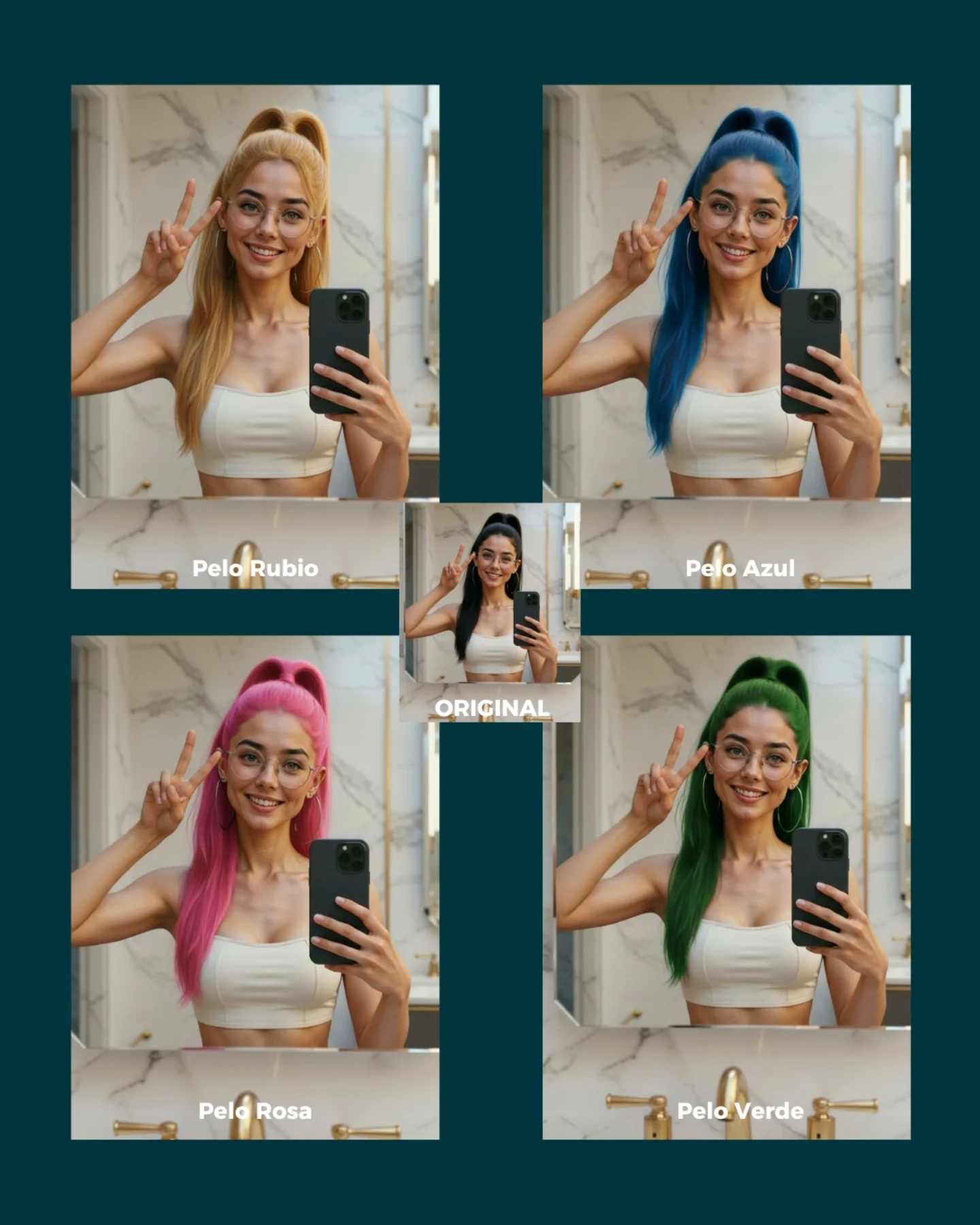
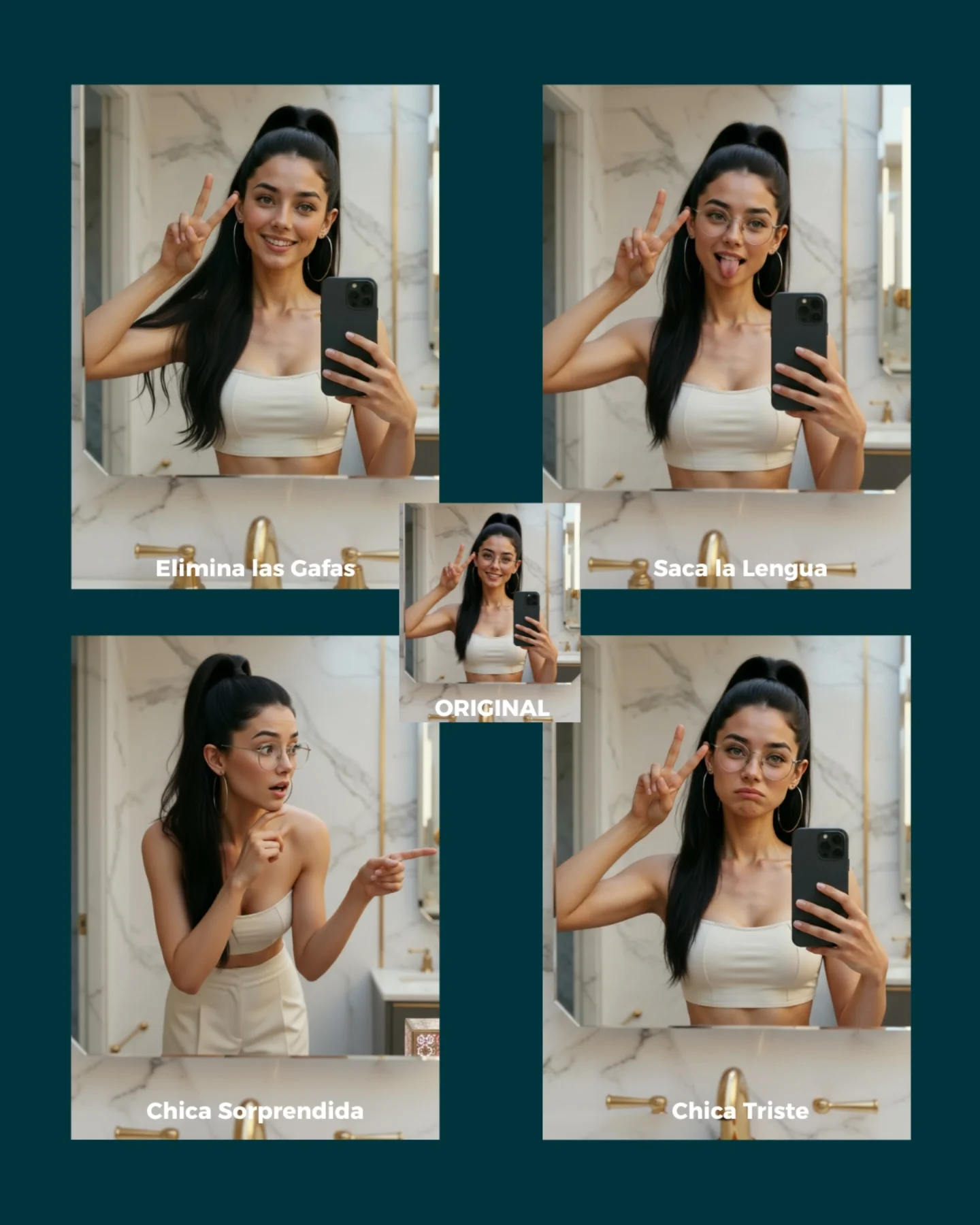
Start by locking three things first: the mirror-selfie composition, the identity anchors, and the soft frontal lighting. After that, change only one or two variables per run. A practical sequence looks like this: run one establishes the exact pose and bathroom scene; run two changes only hair color or accessory choice; run three changes only wardrobe color and keeps everything else fixed; run four introduces a new environment material while preserving pose, phone placement, and facial attitude. That one-change rhythm is what makes consistency claims believable instead of accidental.
For small creators, this is the real lesson from the post. The image succeeds because it teaches by showing a controlled example, not because it tries to impress with complexity. When the sample is easy to read, the audience can immediately imagine using the workflow on their own photos.