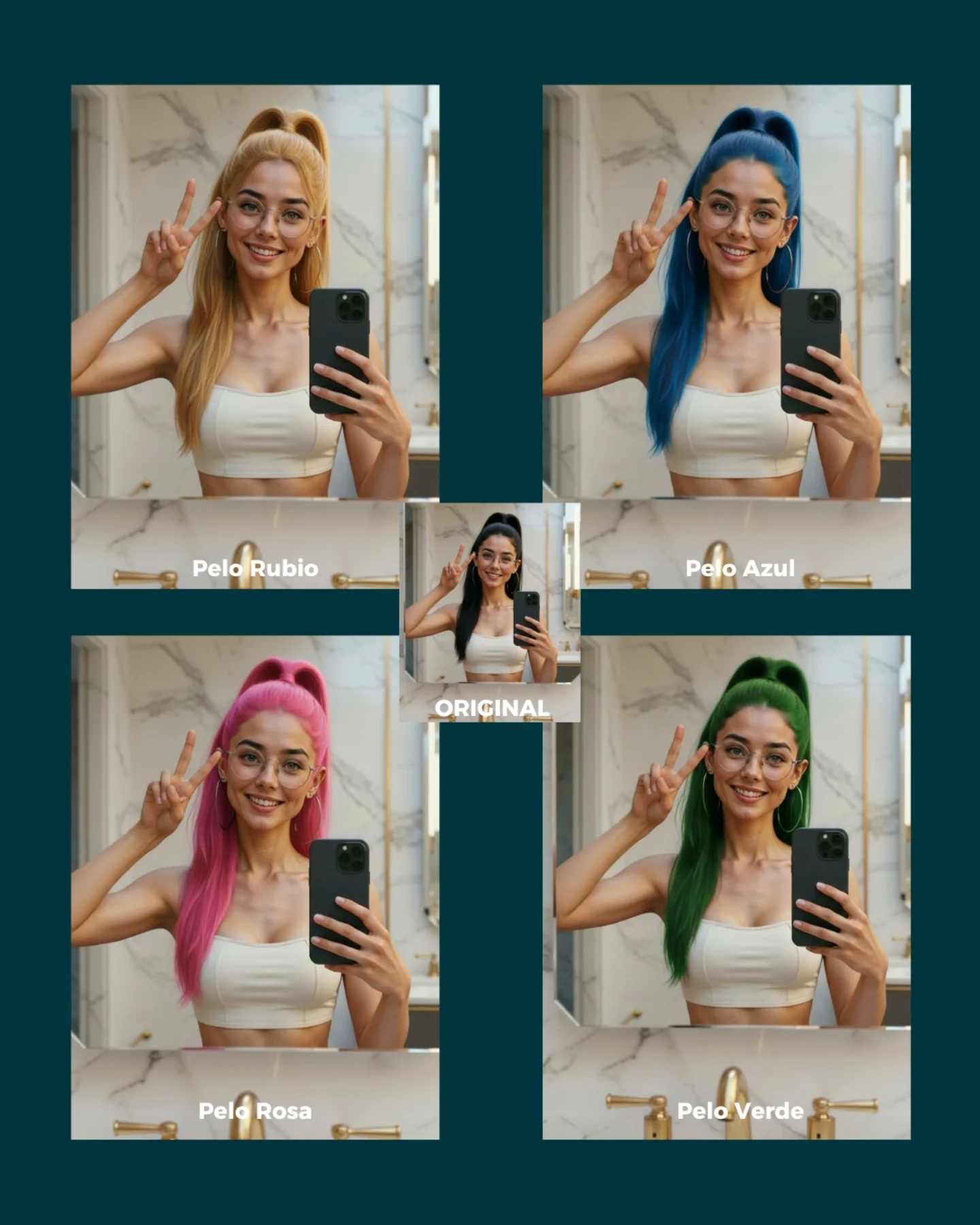
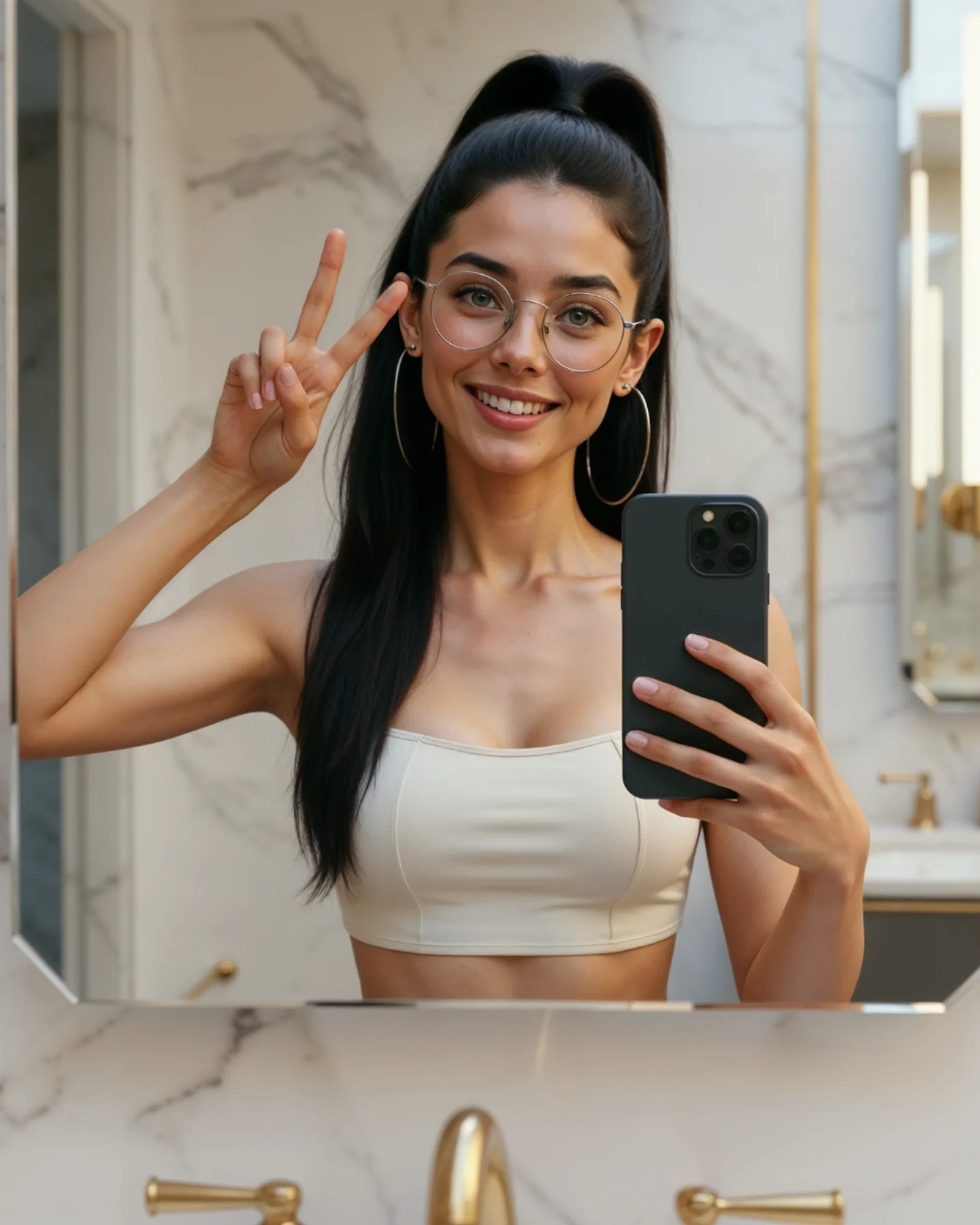
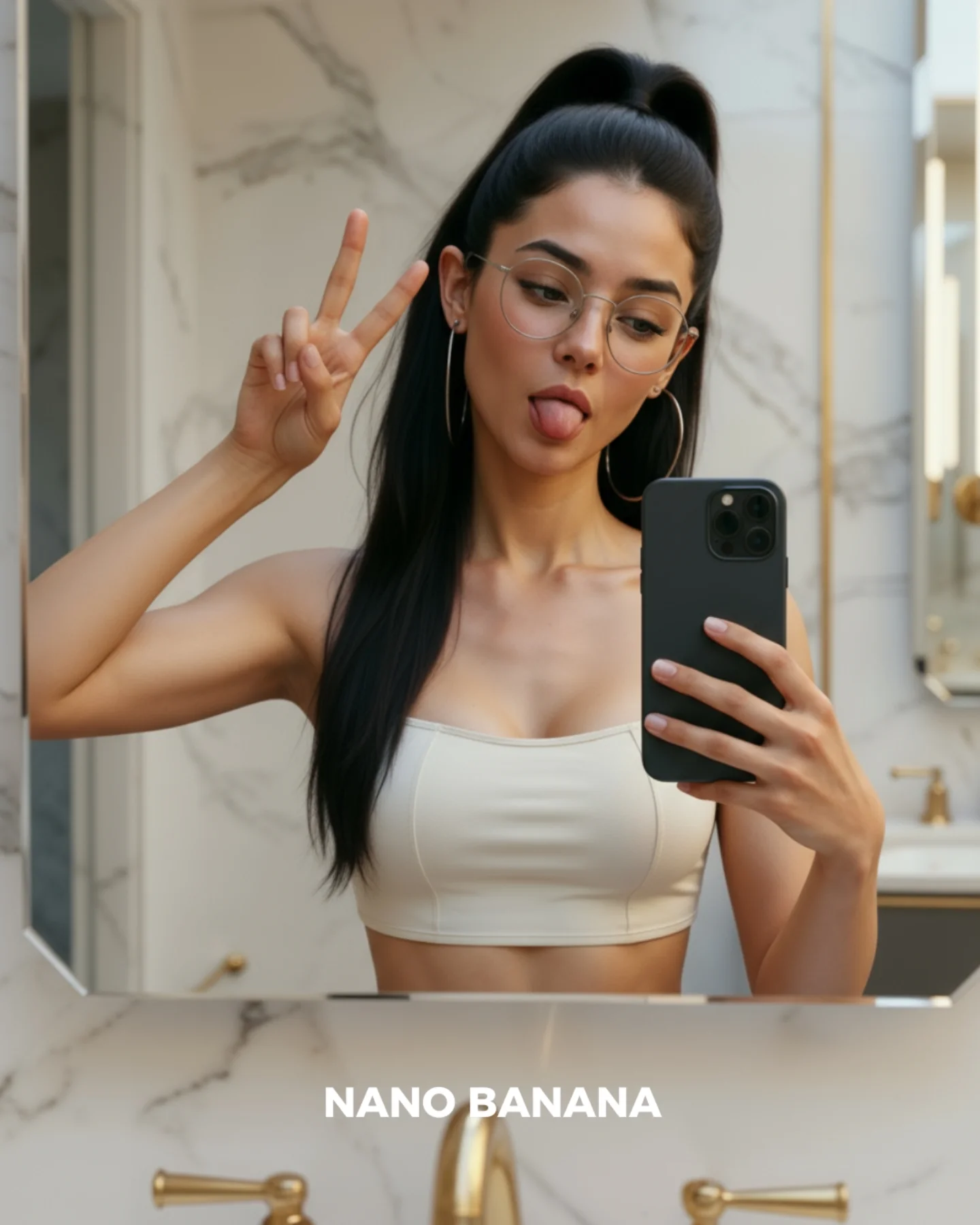
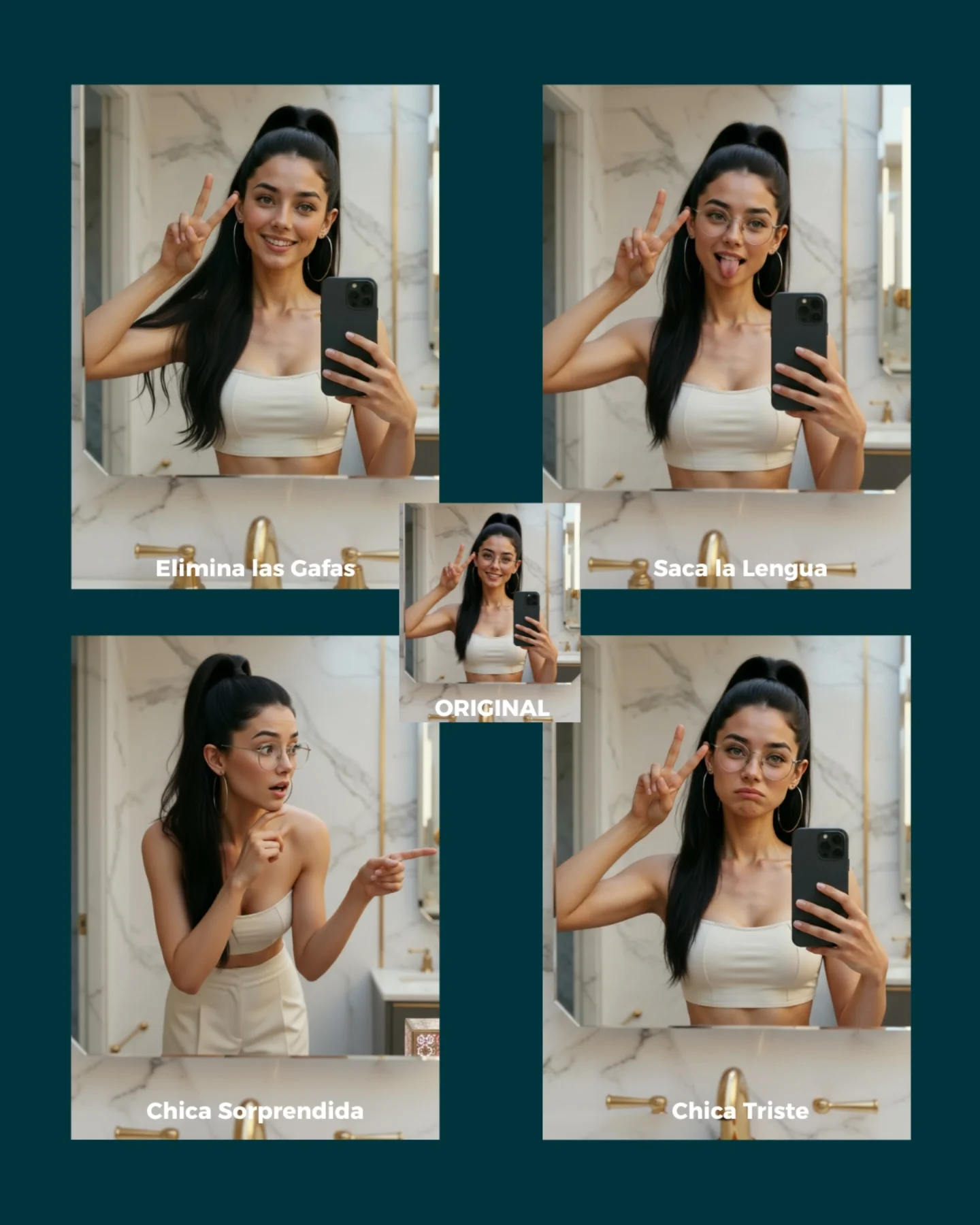
This image is a strong consistency test because the scene is not rebuilt from scratch. The recognizable creator-room setup stays intact: the same intimate desk-side framing, the same cool blue room ambience, the same glasses, the same microphone placement, and the same subject identity. The obvious variation is concentrated in one high-signal attribute, the vivid pink hair, which makes the result easy to read as a deliberate controlled edit rather than a new character.
That is exactly why this kind of frame works well for prompt design. If you want stable recurring characters, you should avoid rewriting every visual variable at once. Instead, lock the identity anchors and the environment anchors, then introduce one precise edit knob. Here the hair color does the work. Because the room, wardrobe silhouette, expression energy, and face structure remain stable, the image communicates continuity even though the palette shift is dramatic.
| Signal | Observed in the image | Why it matters |
|---|
| Identity anchor | Same youthful face, glasses, and creator-room posture | Prevents the model from drifting into a different person |
| Single-variable edit | Hair changes to bright pink | Makes the transformation readable and reproducible |
| Environment anchor | Blue-lit streamer room with visible microphone | Keeps continuity across a series of images |
| Wardrobe stability | Black off-shoulder top remains simple and controlled | Stops fashion noise from competing with the intended change |
Aesthetic balance also matters here. Pink hair against blue ambient light creates an immediate complementary-color contrast, but the frame still feels believable because the lighting is soft and the room remains grounded in ordinary creator-space details. The image is stylish without turning into fantasy art. That is a useful lesson if you are trying to make AI influencer content look polished while remaining socially plausible.
| Observed cue | Prompt implication |
|---|
| Round glasses with clear facial visibility | Keep eyewear explicit so facial identity remains stable |
| Microphone entering from frame left | Describe one concrete environmental prop, not a generic studio |
| Cool blue background glow | Specify ambient room color instead of vague “cinematic lighting” only |
| Relaxed smile and seated desk posture | Anchor mood and pose so the character still feels like the same person |
Why soy_aria_cruz's Pink Hair Streamer Room Consistency Portrait Went Viral — and the Formula Behind It
| Prompt layer | Role in this image |
|---|
| Subject | Defines one recurring female creator character with stable facial identity |
| Environment | Locks the streamer-room context and microphone cue |
| Composition | Maintains medium close-up portrait framing for continuity |
| Lighting | Preserves soft frontal beauty light plus cool ambient fill |
| Delta instruction | Changes only hair color to vivid pink |
| Negative prompt | Removes split-screen, overlays, tutorial graphics, and text artifacts |
How To Transfer This Logic
If you want to create your own consistency series, start with a base portrait that already defines the person, room, and framing. Then apply only one targeted mutation per version. Hair color is one of the cleanest variables because it reads instantly and does not usually break anatomy. Other safe single-variable edits include lipstick color, jacket material, room light hue, or facial expression intensity.
| Goal | Recommended edit strategy |
|---|
| Keep the same person | Repeat face shape, glasses, room, lens feel, and body framing |
| Create a noticeable difference | Change one bold attribute such as hair color |
| Avoid model drift | Do not rewrite age, location, clothing category, and camera angle at once |
| Improve reliability | Use a delta instruction that explicitly says what must stay fixed |
In short, this frame works because it treats variation as a controlled edit, not a full reset. The pink hair is visually loud, but everything else is disciplined. That balance is what makes the image useful both as a finished asset and as a template for reproducible prompt engineering.