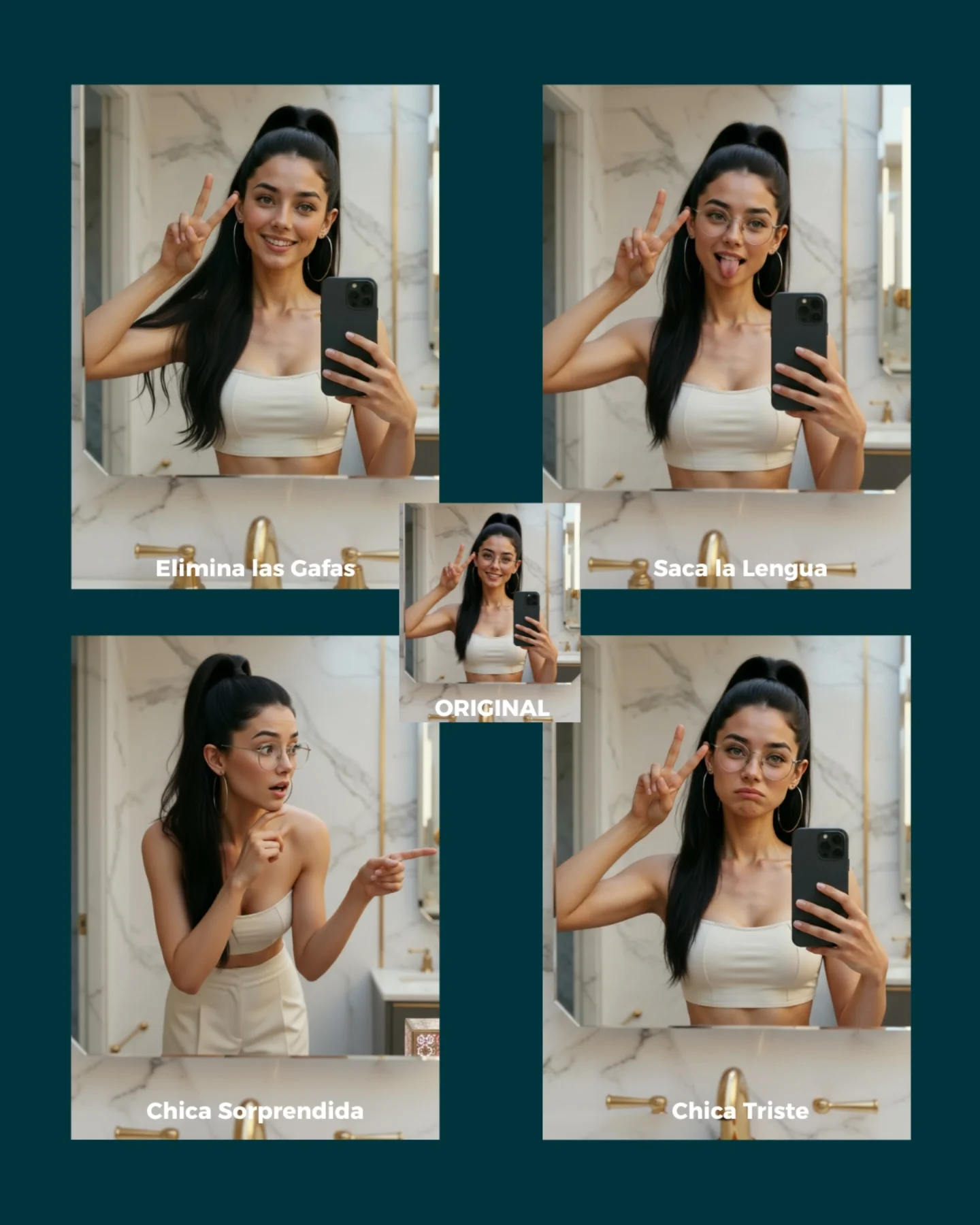
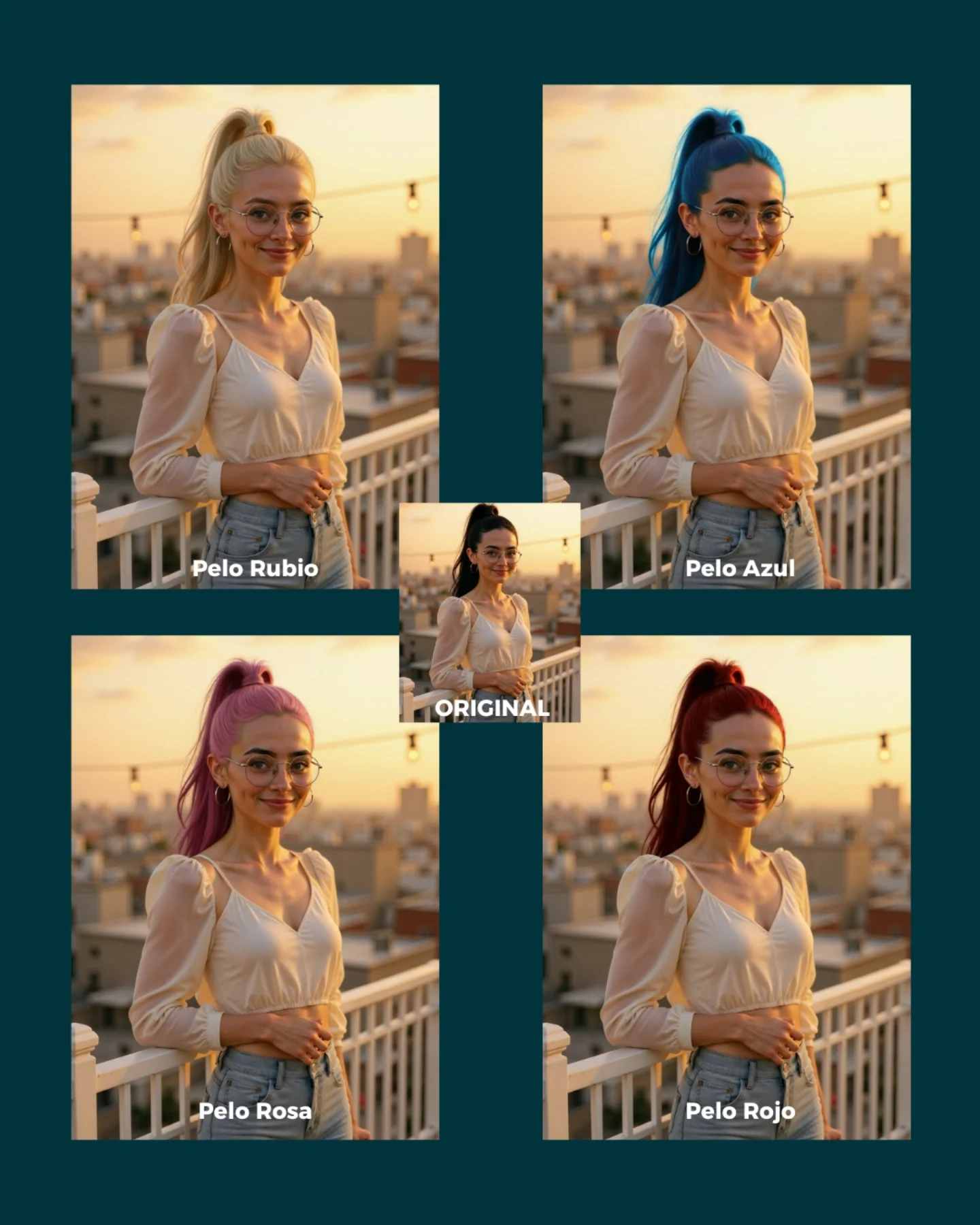
How soy_aria_cruz Made This Nano Banana Style Remix AI
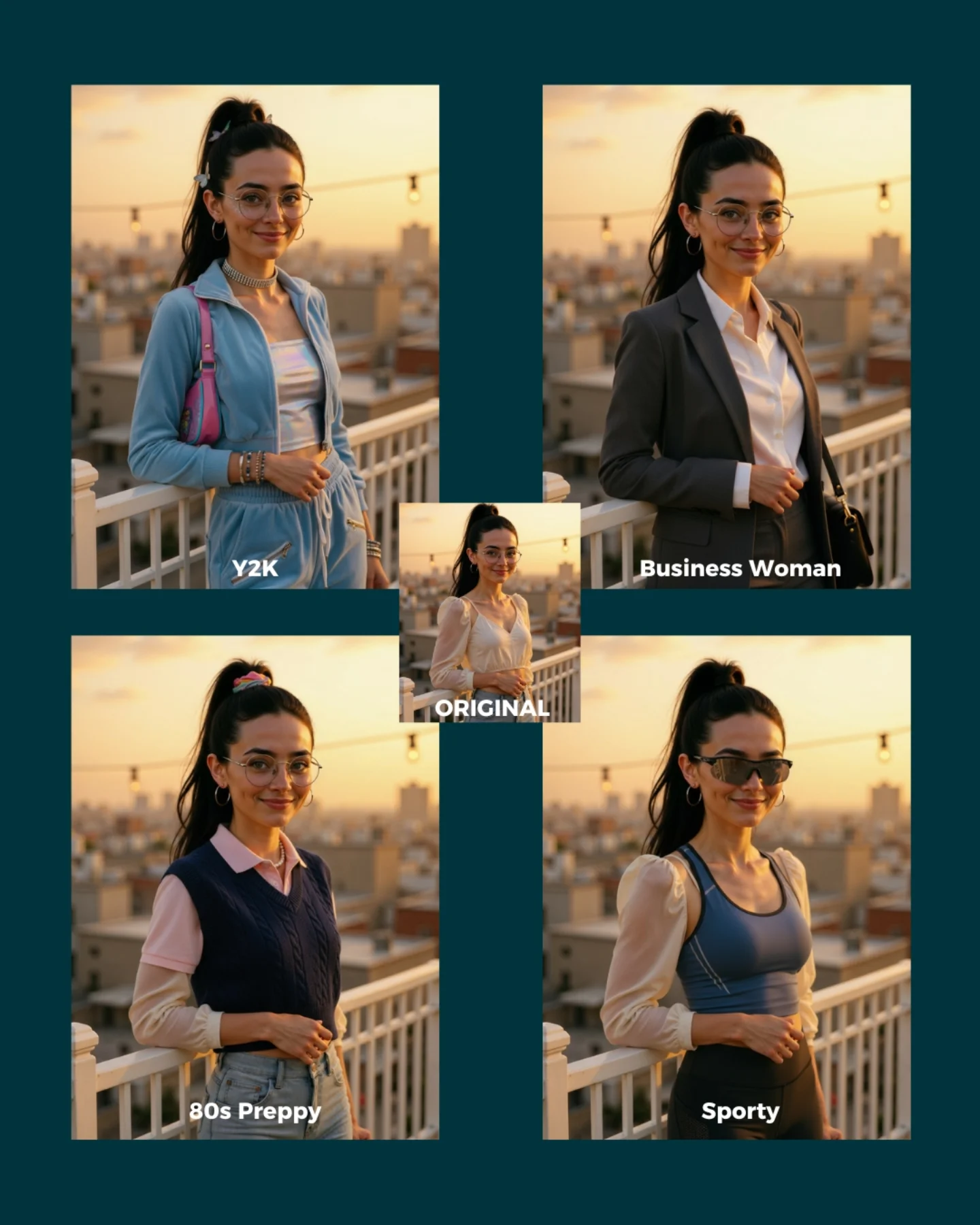
This image works because it isolates one variable cleanly: styling. The same woman, same rooftop, same sunset, and nearly the same pose are used across multiple fashion identities. That makes the comparison instantly useful. Instead of asking viewers to compare unrelated photos, the cover turns wardrobe and accessory changes into the main lesson. For creators, that is exactly what makes a comparison image educational rather than decorative.
The layout is also doing important work. By keeping the original in the middle and letting the four larger variants surround it, the viewer immediately understands the before-and-after logic. This is not just a fashion mood board. It is a style transformation framework. That makes it a strong cover for prompt pages, AI style-transfer explainers, and content about fashion identity testing.
Why The Cover Performs Well
The strongest hook is recognizable transformation. People instinctively want to compare. When the face stays the same and the styling changes, the eye starts scanning for what moved: neckline, jacket shape, eyewear, bag, color palette, and level of formality. That scanning behavior increases dwell time, which is exactly what a useful comparison cover should do.
| Signal | Evidence (from this image) | Mechanism | Replication Action |
|---|
| Single-subject consistency | Same rooftop pose and same woman across all panels | Makes the style differences easy to judge | Lock pose, face, and location before testing style changes |
| Clear fashion categories | Y2K, Business Woman, 80s Preppy, and Sporty are visibly distinct | Improves educational value and shareability | Choose style labels that are broad but visually different from one another |
| Original reference in the center | Small ORIGINAL image anchors the transformation logic | Gives viewers a baseline for the edits | Always include the starting image when doing style-transfer comparisons |
| Consistent golden-hour setting | Same railing, skyline, and sunset light in every panel | Prevents the environment from confusing the comparison | Keep lighting and background fixed when testing wardrobe concepts |
Aesthetic Read: Why The Comparison Is So Clear
The cover is visually strong because it does not let the environment compete with the styling. The rooftop and sunset are attractive, but stable. That stability makes each wardrobe shift more visible. The dark teal outer background also helps by framing the collage cleanly and separating the panels from one another.
Another smart choice is the range of categories. The styles are not minor variations of the same fashion language. They are meaningfully different: youthful Y2K, professional tailoring, nostalgic preppy layering, and sporty athleisure. That range gives the cover a stronger educational payoff because viewers can understand how dramatically one identity can shift without changing the face or the location.
| Observed | Why It Matters | How To Recreate |
|---|
| Same rooftop pose repeated across panels | Keeps the comparison fair | Use one base image and vary styling only |
| Four strongly separated style archetypes | Makes the transformation obvious | Pick categories with different silhouettes, accessories, and social signals |
| Small original panel in the center | Clarifies the editing logic | Include the untouched source image in the layout |
| Consistent golden-hour light | Maintains visual harmony while emphasizing clothing changes | Do not change time of day or color temperature between variants |
Best Use Cases And Transfers
- AI style-transfer explainers: Ideal for showing how one photo can be reinterpreted across fashion identities.
- Fashion prompt education: Strong for teaching how wardrobe, accessories, and layering change the whole read of a character.
- Creator transformation covers: Useful for thumbnails where comparison logic needs to be visible instantly.
- Not ideal for single-look campaigns: The entire point is variation, so it is less useful when one look needs to dominate.
- Not ideal for mood-heavy editorial storytelling: The layout prioritizes comparison clarity over cinematic immersion.
Three transfer recipes
- Keep: same subject, same pose, same location. Change: style categories. Slot template: {style A} {style B} {style C} {style D}
- Keep: center original panel and four outer remixes. Change: setting from rooftop to cafe, hallway, street, or studio. Slot template: {base location} {consistent lighting} {remix categories} {identity lock}
- Keep: clear label structure and fixed face identity. Change: comparison theme from fashion to profession, subculture, season, or age styling. Slot template: {comparison theme} {shared pose} {shared face} {panel labels}
Prompt Technique Breakdown
| Prompt chunk | What it controls | Swap ideas (EN, 2-3 options) |
|---|
| same woman on the same rooftop shown in four different style variations | Main comparison logic | 'same subject style remix collage', 'multi-look fashion transfer cover', 'single-pose wardrobe comparison' |
| Y2K, Business Woman, 80s Preppy, and Sporty labeled panels | Category separation | 'old money, streetwear, cottagecore, futuristic', 'coquette, officecore, skater, luxury', 'casual, formal, retro, athletic' |
| small centered ORIGINAL panel | Baseline transformation anchor | 'before image inset', 'source photo panel', 'original reference thumbnail' |
| golden-hour rooftop with railing and skyline | Environmental consistency | 'sunset balcony', 'city terrace', 'rooftop lounge rail' |
| same face, same glasses, same pose in every panel | Identity lock for fair comparison | 'same identity preserved', 'same expression across variants', 'locked facial features' |
Execution Playbook
Lock three things first: identity, pose, and lighting. Those are the controls. Then change only wardrobe and accessory language for each panel. Start with the original source image. Build the most minimal remix first, then the most formal, then the most nostalgic, then the most sporty. This order helps you see whether the identity survives increasingly different style systems. If identity starts drifting, pull back and re-lock face, hair, and posture before adjusting clothes again.