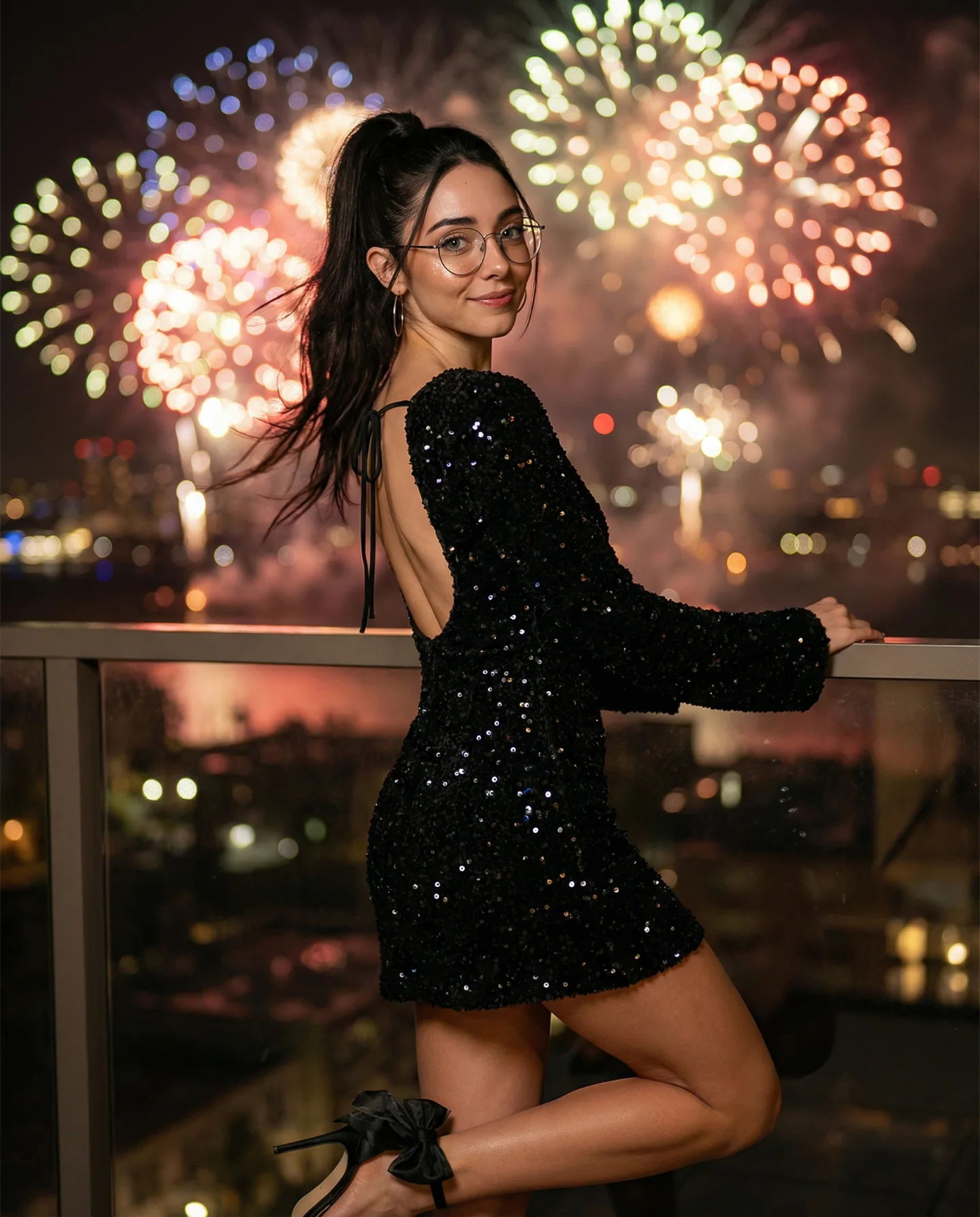
How soy_aria_cruz Made This New Year Club Party AI Portrait — and How to Recreate It
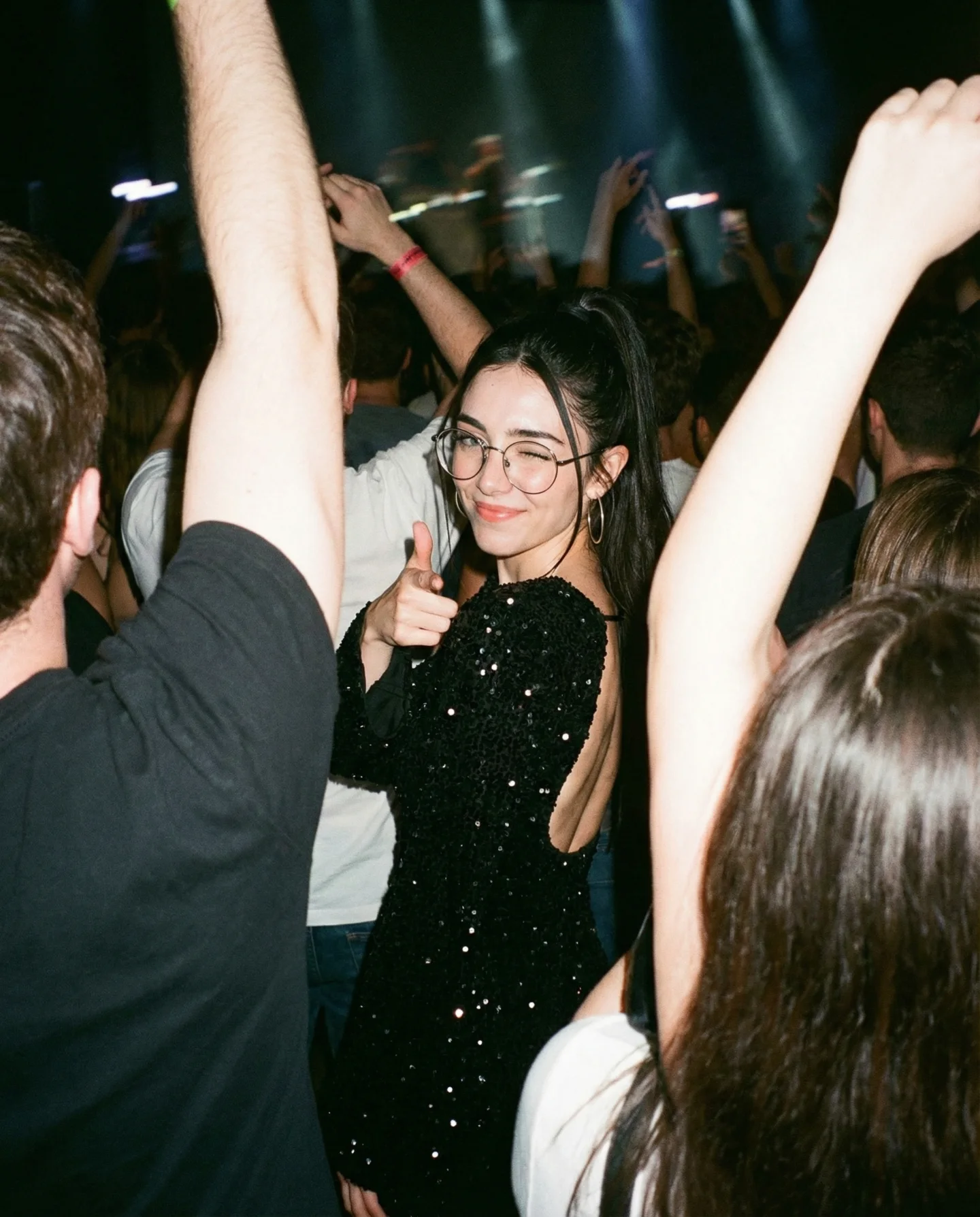
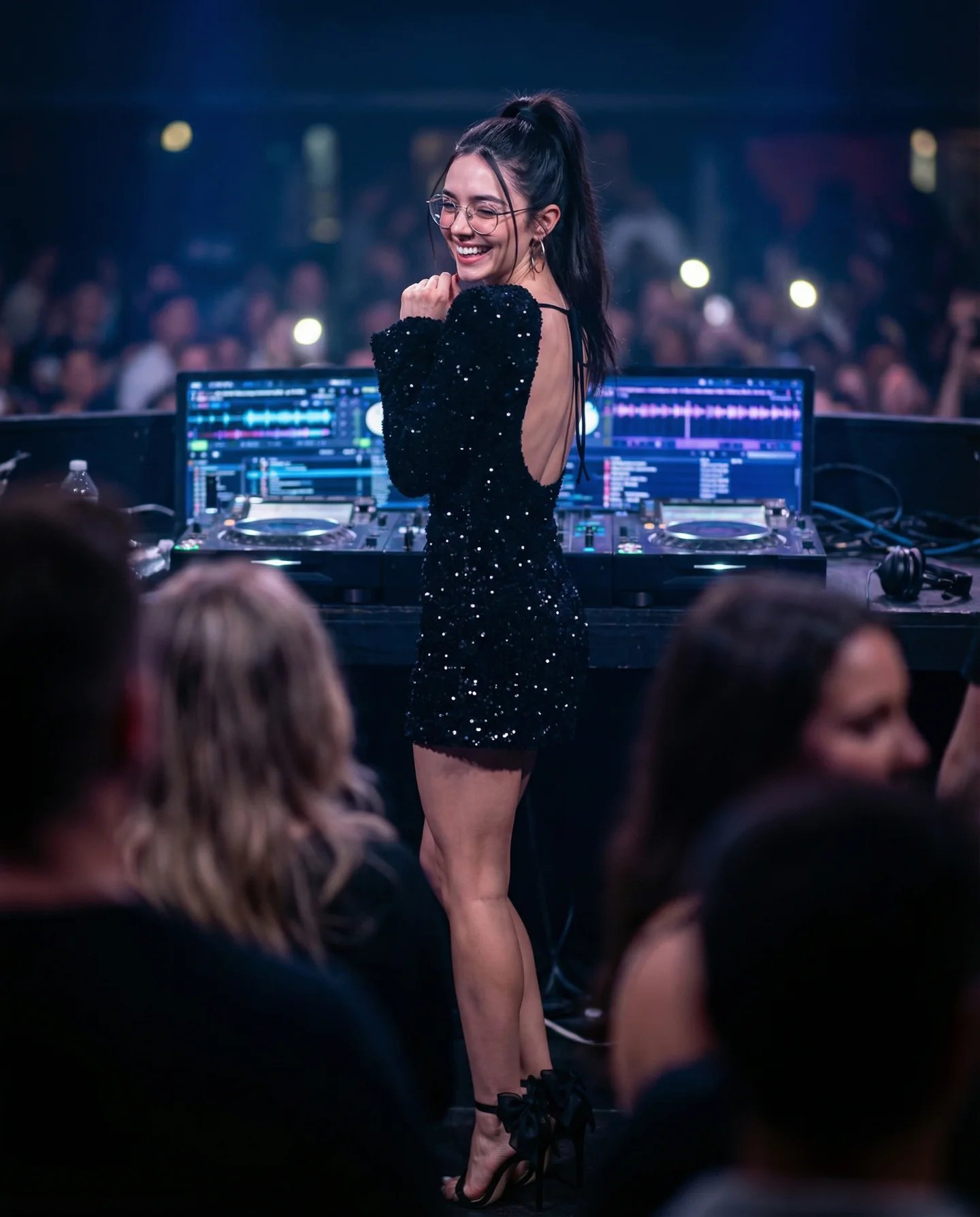
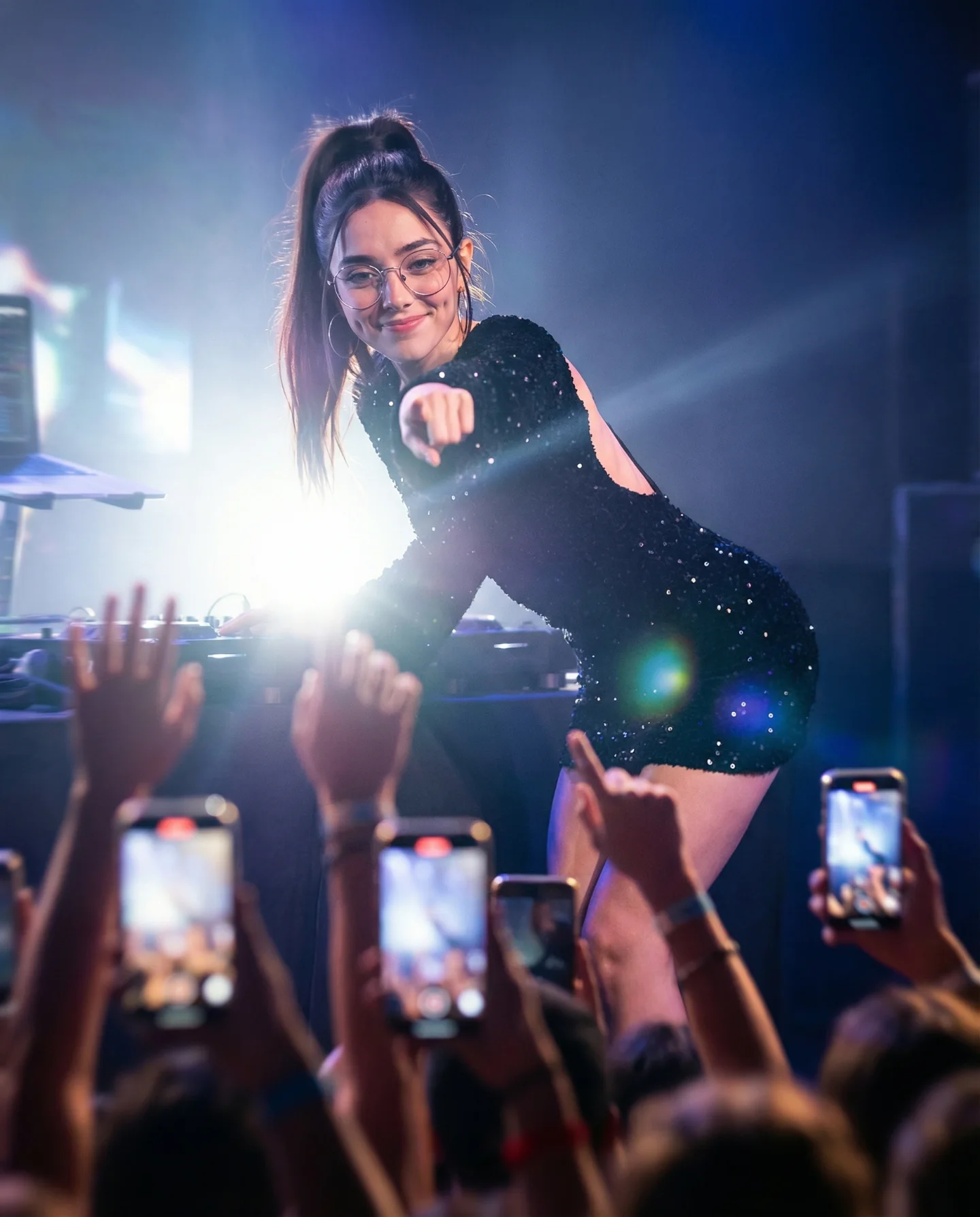
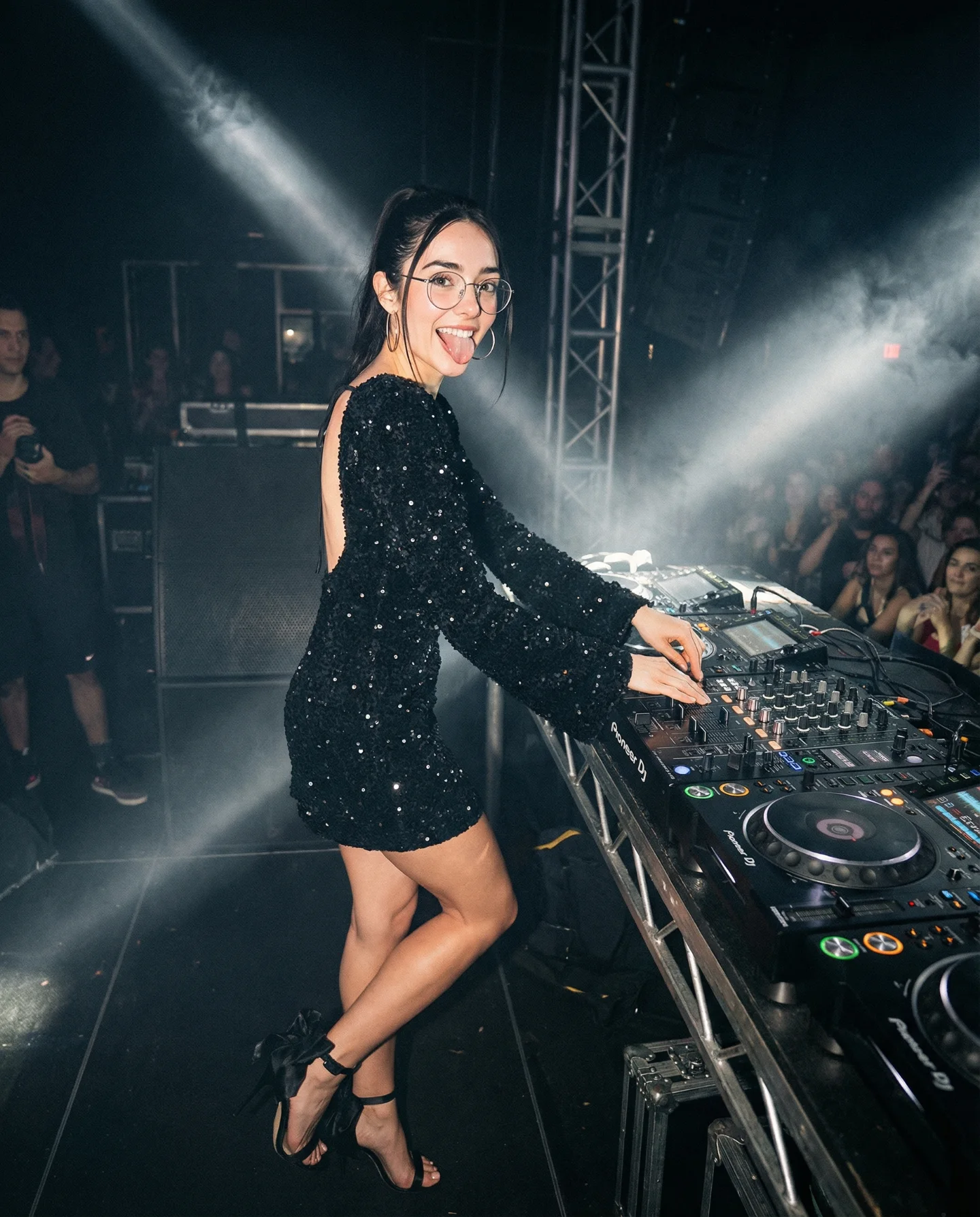
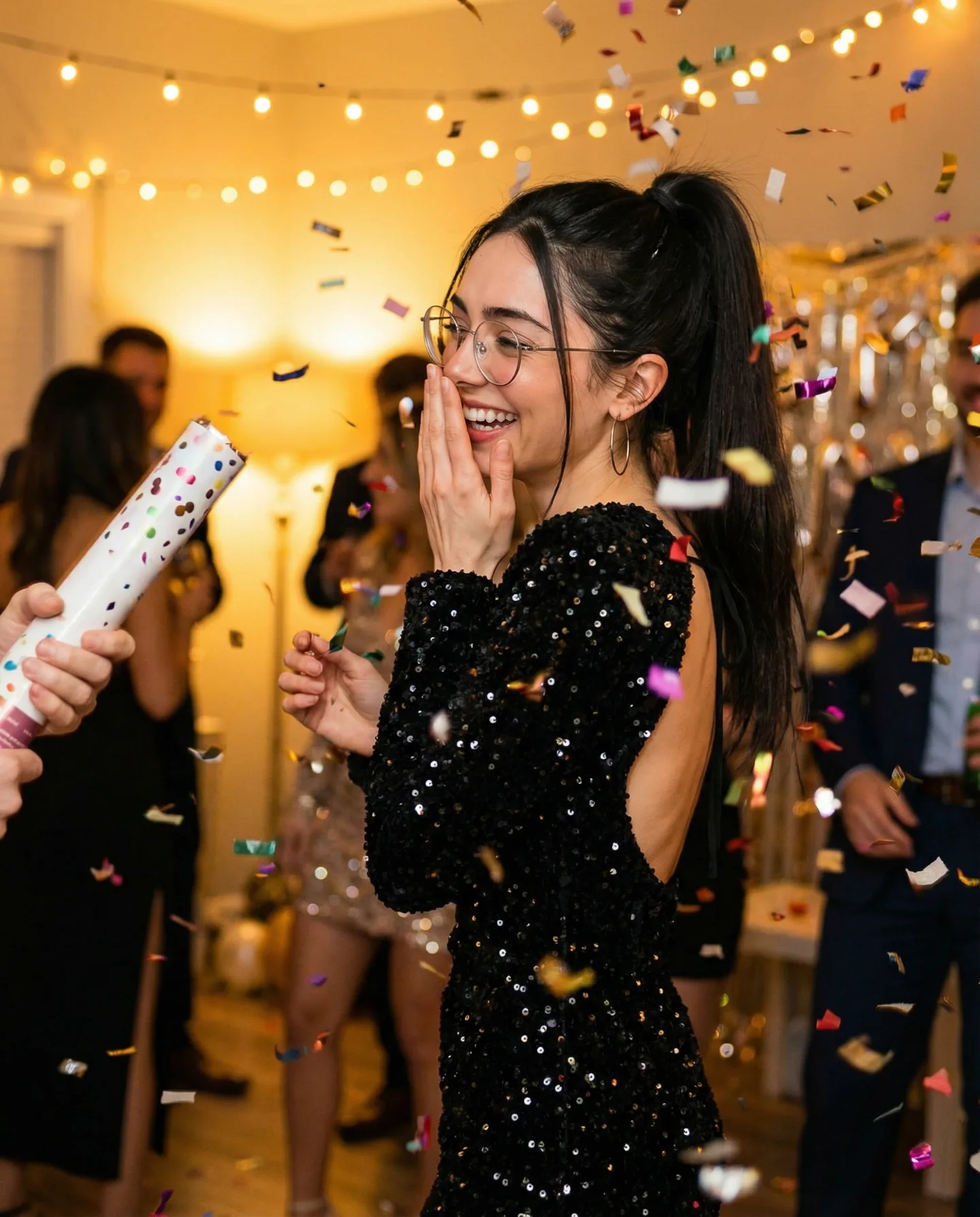
This image works because it captures celebration from inside the crowd instead of looking at the party from a distance. The subject is not standing on a stage or posing in an empty corner. She is fully embedded in the dance floor, framed by raised arms, dark space, and stage beams, then frozen by direct flash at exactly the right second. That creates a much stronger feeling of presence than a polished event portrait.
The other reason it lands is attitude. The wink and finger-gun gesture give the image a social spark that the environment alone could never provide. For creators, this is important. Club or party visuals often look interchangeable unless the subject contributes one strong, legible expression cue. Here, that cue turns the shot from “crowded nightlife scene” into “memorable New Year moment.”
Why this image holds attention
The strongest growth mechanism is controlled chaos. There is a lot happening in the frame, but the flash forces a clear hierarchy. The woman in the black sequin dress becomes the focal lock, while the crowd and beams create energy around her. That combination makes viewers stop, then scan. They first catch the face and gesture, then notice the sparkly dress, then understand the party context.
The second mechanism is timing. This is not a neutral smile-to-camera pose. It feels like the camera caught a tiny slice of personality in motion. That matters because social audiences respond strongly to expressions that look spontaneous but still flattering. The image feels lived, not arranged, which makes it more believable and easier to engage with emotionally.
| Signal | Evidence (from this image) | Mechanism | Replication Action |
|---|
| Embedded perspective | Foreground arms and shoulders partially block the frame | Viewers feel like they are inside the party rather than watching it from outside | Use nearby bodies as framing devices instead of keeping the subject isolated in empty space |
| Flash focal lock | Subject is bright while the club remains dark behind her | Strong subject separation keeps a busy nightlife shot readable | Prompt direct on-camera flash and let the background stay darker and softer |
| Personality cue | Wink plus finger-gun gesture | Expression creates memorability and social warmth | Give the subject one clear, playful gesture rather than a generic smile |
| Texture signal | Black sequins sparkle under harsh flash | Reflective fabric adds glamour without needing loud color | Choose one flash-reactive wardrobe material like sequins, satin, or metallic knit |
Aesthetic read: why the photo feels real and stylish
The image feels authentic because the flash is not being softened into editorial polish. Nightlife photos often lose impact when they are made too cinematic. Here, the direct flash gives the skin, sequins, and nearby crowd a blunt realism that feels closer to memory than to advertising. That is a strength, not a flaw. It matches the emotional logic of a New Year celebration.
The wardrobe also plays its role well. A black sequin dress is visually efficient in dark rooms because it can absorb the scene while still producing sparkle when light hits it. That means the subject looks festive without requiring bright colors. The glasses help again here, because they keep the face identifiable and slightly nerd-chic instead of generic club glamour. That small contradiction makes the image more personal.
| Observed | Why it matters for the look | How to recreate it |
|---|
| Direct flash on face and dress | Creates immediate subject separation in a dark environment | Use frontal event flash and avoid softbox-like lighting |
| Foreground crowd limbs | Adds immersion and social density | Let nearby bodies partially crop the edges of the frame |
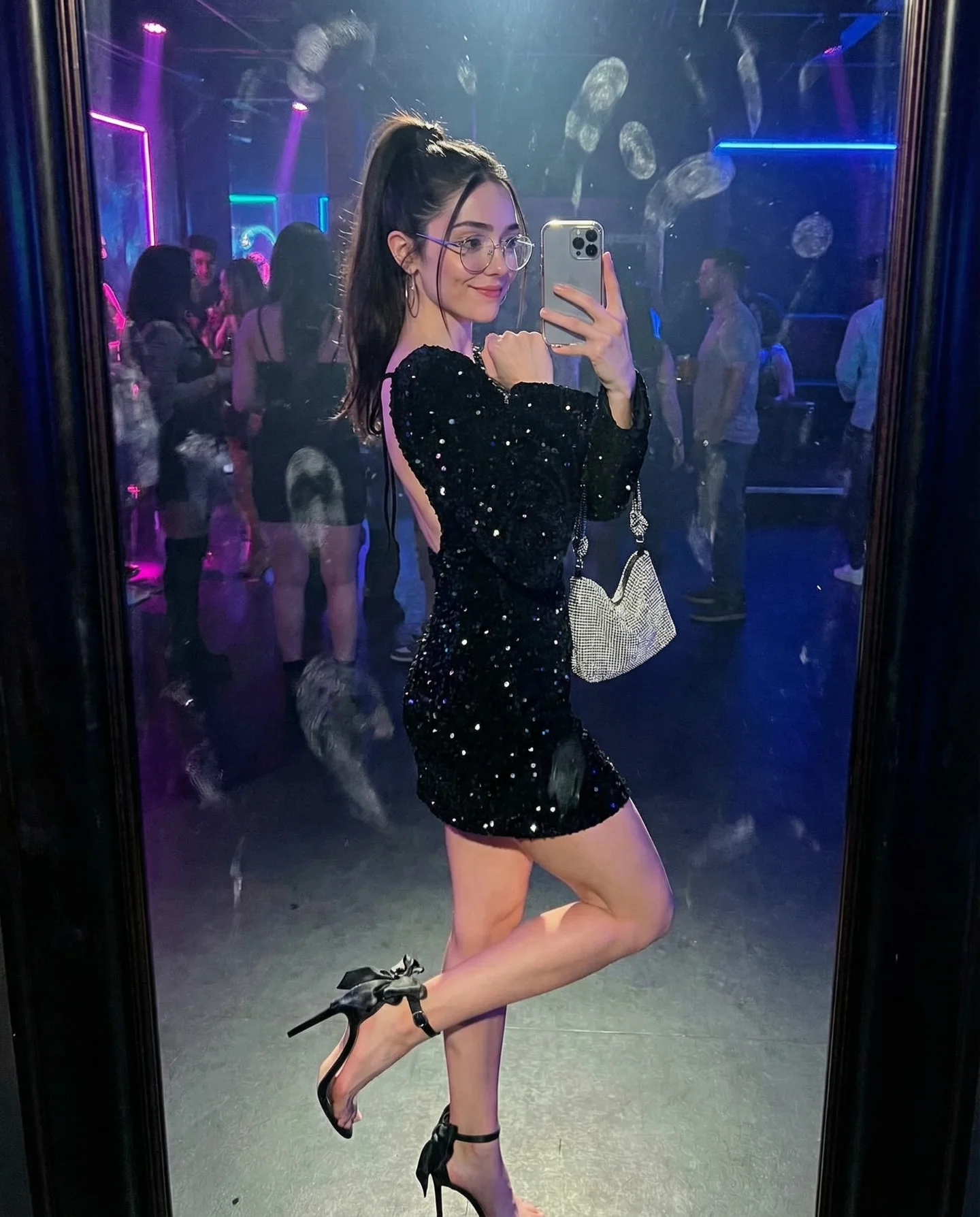
| Black sequin dress with open back | Balances glamour with club realism | Choose one reflective dark garment that flashes well without flooding the palette |
| Cool white beams in background | Signals club energy without distracting color clutter | Keep overhead stage lights visible but secondary |
| Playful glance-back pose | Gives the image a moment-based story | Prompt an over-the-shoulder turn with a wink or teasing expression |
Best-fit uses and transfer value
- New Year or celebration content: this format works especially well because it feels timely, social, and emotionally immediate.
- Lifestyle creators who need “I was there” energy: the crowd framing gives the post authenticity that staged party shots often lack.
- Prompt-sharing around nightlife aesthetics: it is useful because it demonstrates how flash, gesture, and crowd density interact.
- Milestone or gratitude posts: the mood pairs well with captions about celebration, growth, or community because the image already feels communal.
This approach is weaker if the subject expression is flat or if the crowd disappears. It also loses power when the lighting becomes too polished, because the raw event-photo feeling is part of the appeal.
Three transfer recipes
- Keep: crowd framing, direct flash, one strong personality gesture. Change: the venue from club dance floor to concert pit, rooftop party, or backstage event corridor. Slot template:
{subject expression cue} {crowded event setting} {flash-lit outfit texture} {foreground people framing} - Keep: dark environment and bright flash separation. Change: black sequin dress into silver metallic, satin red, or sharp monochrome tailoring depending on brand tone. Slot template:
{party subject} {hero garment texture} {direct flash nightlife photo} {packed social energy} - Keep: over-the-shoulder turn and center-of-crowd placement. Change: celebration type to birthday, launch event, or festival afterparty while preserving the same event-photo honesty. Slot template:
{candid glance back} {raised-arms crowd} {dark venue} {momentary flash capture}
Prompt technique breakdown
Nightlife images drift easily into either empty fashion editorials or unreadable chaos. The fix is to separate the prompt into subject gesture, crowd density, flash behavior, and wardrobe texture. Those are the four levers that make this style work.
| Prompt chunk | What it controls | Swap ideas (EN, 2–3 options) |
|---|
| candid nightclub flash photo | Documentary realism and lighting style | event snapshot; direct-flash party capture; nightlife candid |
| woman turning back, winking, finger-gun gesture | Personality and memorability | playful wink; cheeky glance-back; teasing pose to camera |
| black sequin open-back dress | Hero texture and festive wardrobe read | sparkly mini dress; glittering cocktail dress; reflective party outfit |
| packed crowd with raised arms in foreground | Immersion and social density | dance-floor bodies; celebratory crowd framing; hands in the air around subject |
| dark club with white stage beams | Venue identity and atmosphere | DJ light beams; concert-style club lights; moody dance-floor background |
| glasses and hoop earrings | Subject-specific identity details | round clear glasses; subtle hoop jewelry; smart-glam accessory cue |
Remix steps that keep the image effective
Start by locking three things: flash behavior, crowd density, and the gesture. Those are the backbone of the frame. After that, change only one layer at a time. If you change venue, outfit, and pose together, the result often loses the clear event-photo energy that makes this image work.
- Baseline run: keep direct flash, crowded dance-floor framing, and the over-the-shoulder pose.
- Identity run: refine glasses, smile shape, wink intensity, and hairstyle so the subject feels recognizable.
- Wardrobe run: tune sparkle density, dress cut, and back shape for stronger flash texture.
- Mood run: adjust beam visibility, darkness level, and background blur without weakening the raw snapshot feel.
If the output becomes too polished, reduce editorial language and bring back flash harshness and crowd obstruction. If it becomes too chaotic, simplify the background and strengthen the subject pose. The best version feels like a real memory someone would want to keep, not a perfect promo image.