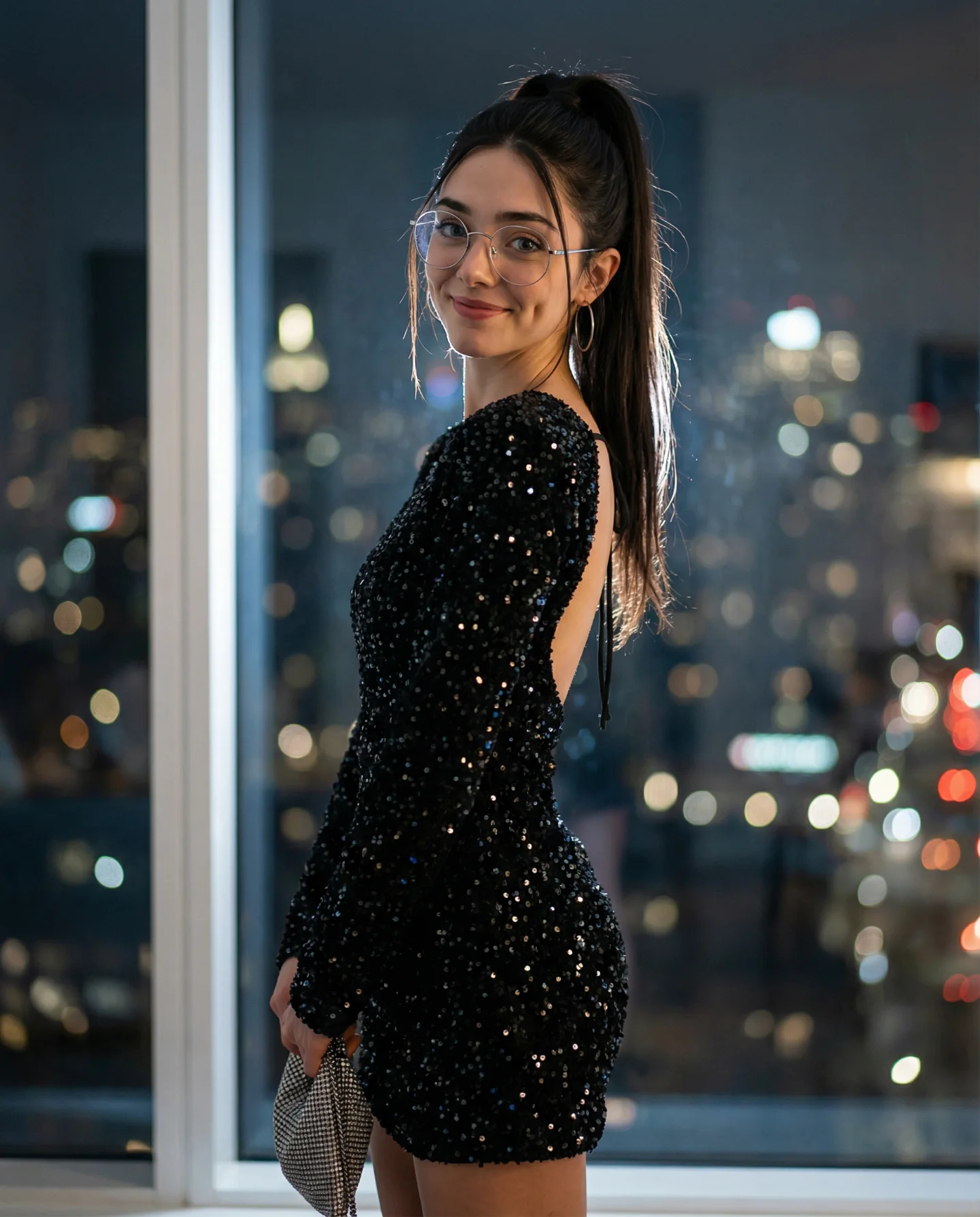
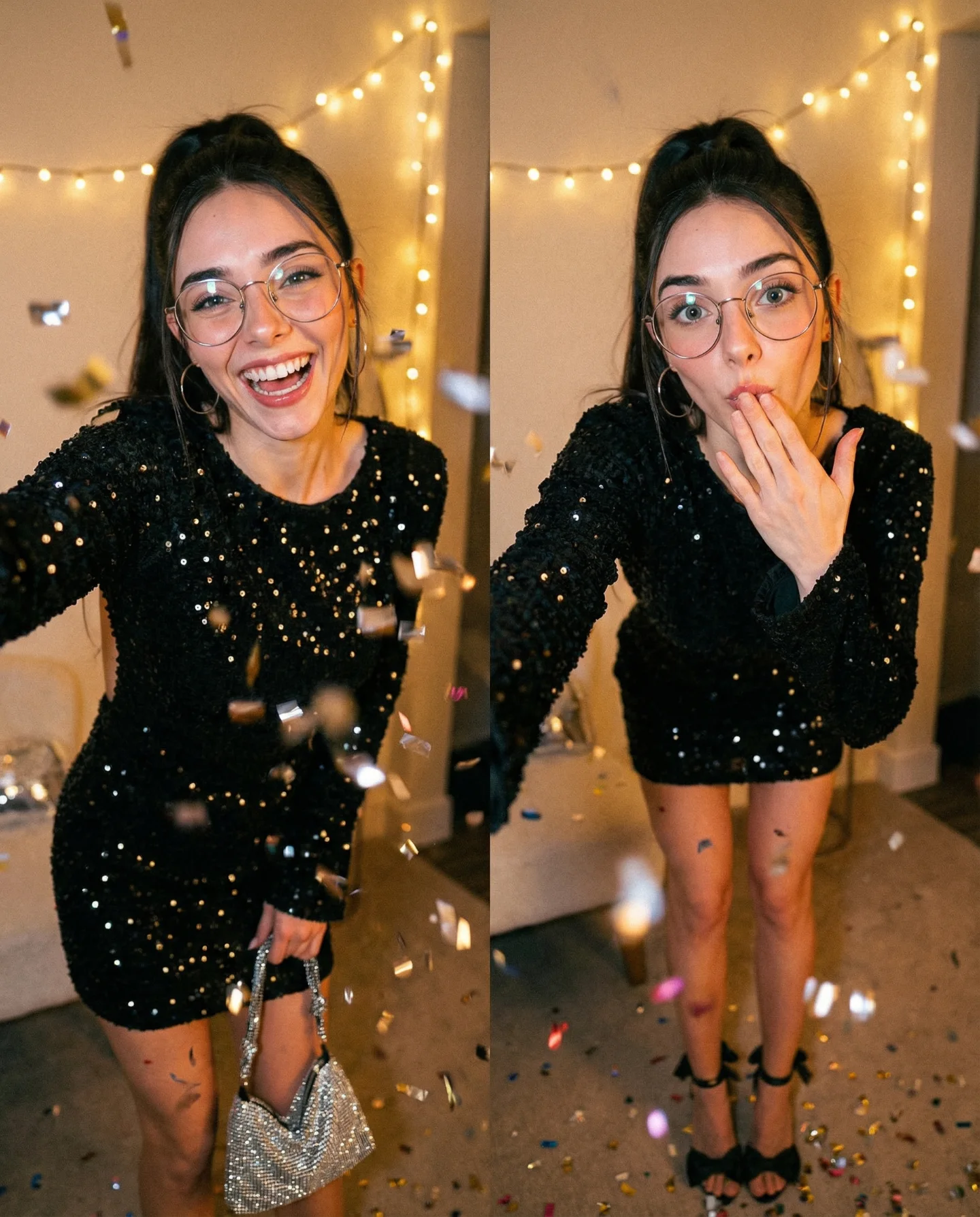
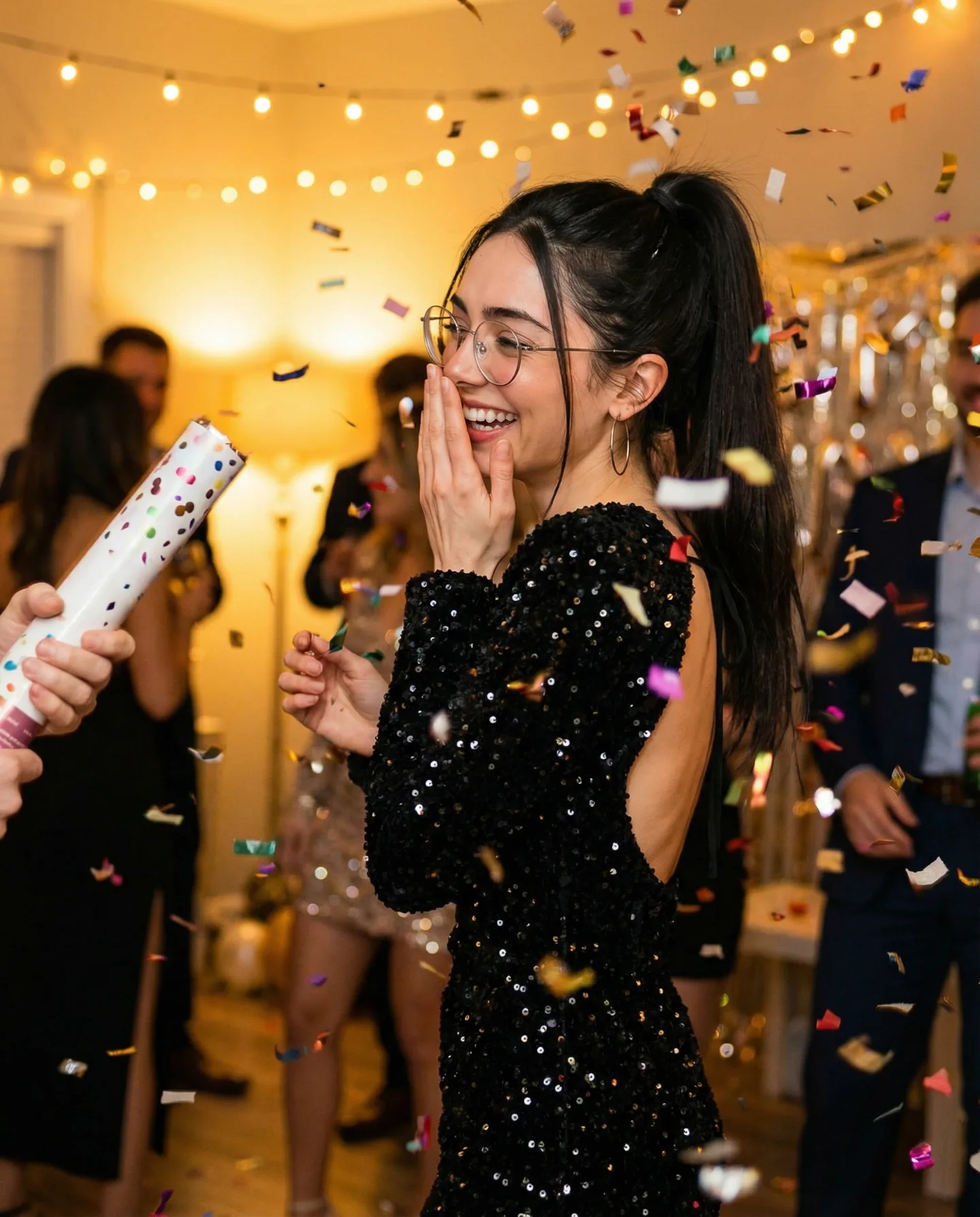
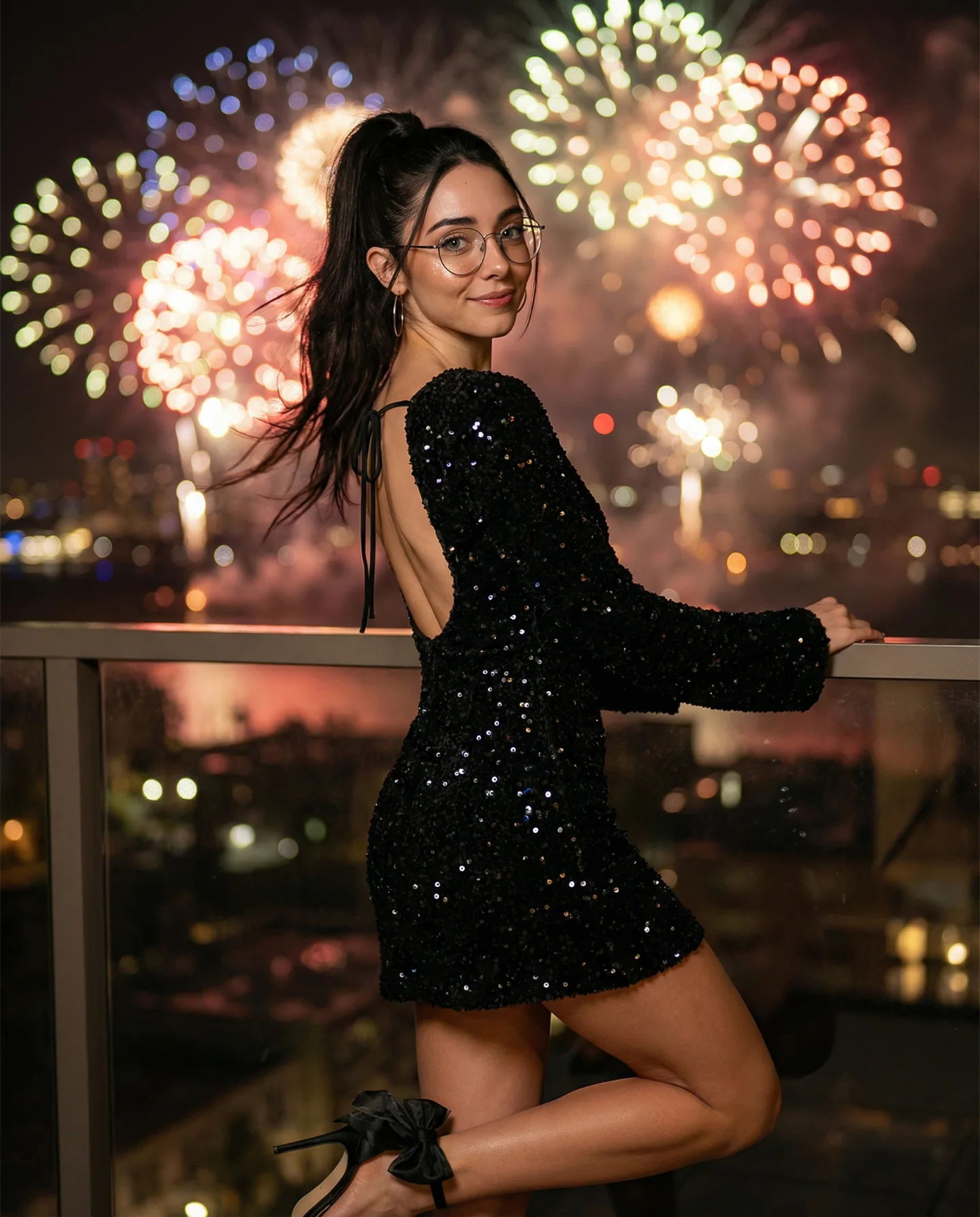
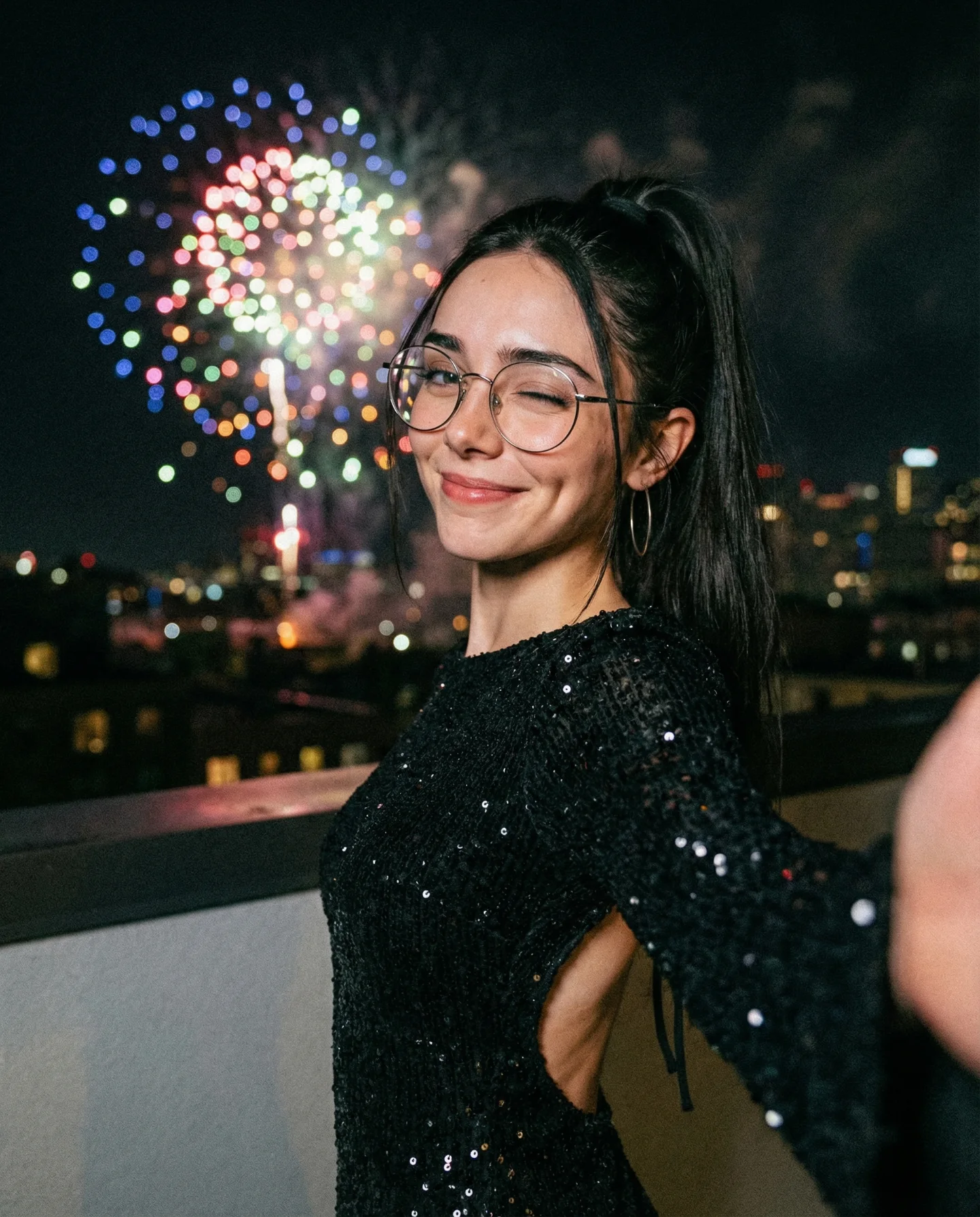
Feliz 2026 ✨💕
Quiero daros las gracias a todos los que me estáis apoyando en este proyecto 🙏🏽 sois la mejor comunidad que he tenido!! ❤️🩹
No me lo esperaba para nada pero este año hemos logrado llegar hasta los 50mil seguidores empezando esta cuenta desde cero tan solo hace 6 meses 🥹
Me encanta compartir con vosotros todos mis aprendizajes y tengo muchísimo más preparado para este nuevo año 2026 🙊
Quiero desearos, de todo corazón, mucha salud, amor y sobretodo mucha felicidad y buenas vibras ✨💕 Desconecta de internet y disfruta de este bonito día con la familia y amigos!!
Os quiero mucho!! 🫶🏽
Y como siempre que comparto algo, si comentas Aria, te paso todos los prompts 💌
How soy_aria_cruz Made This New Year Party AI Portrait
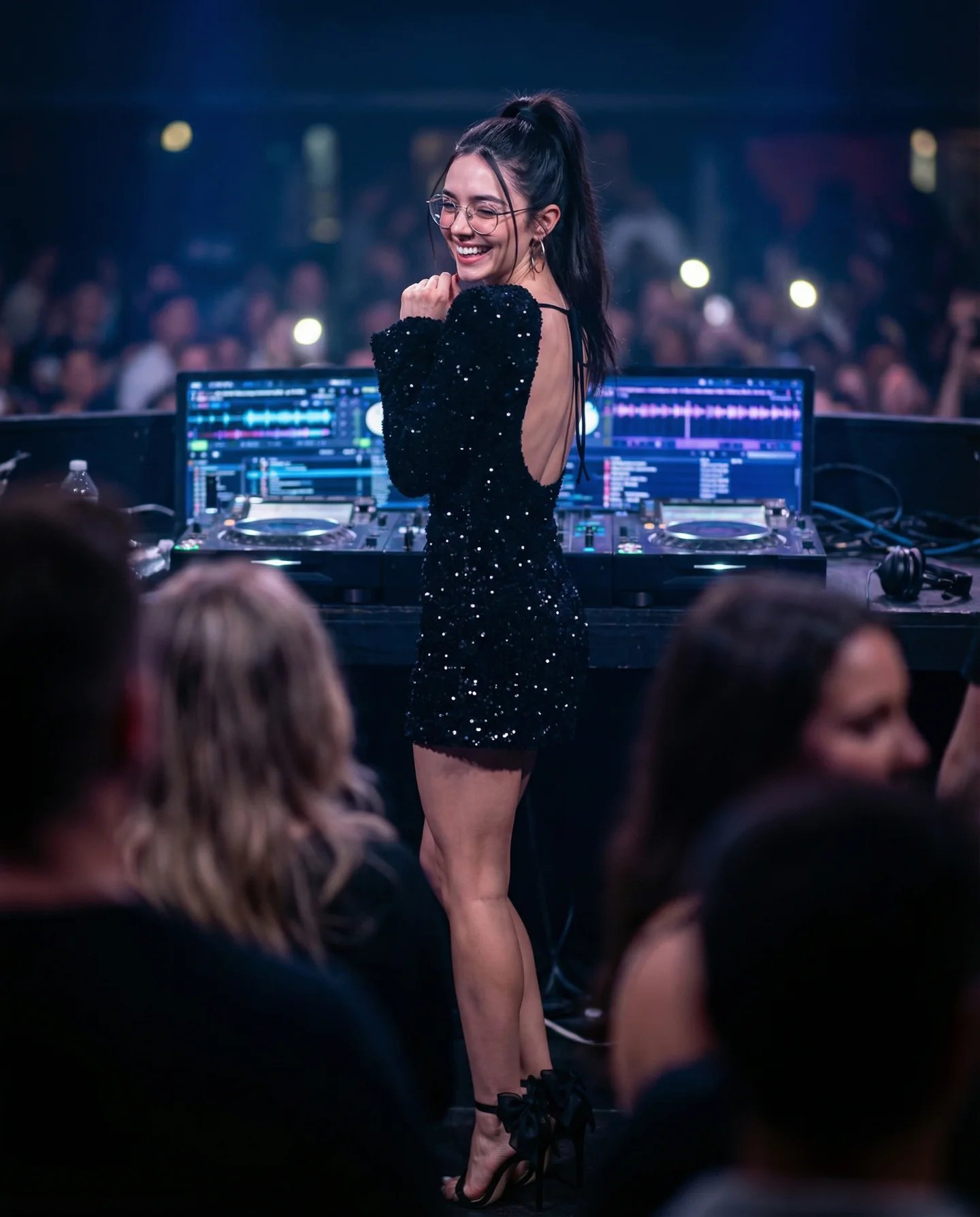
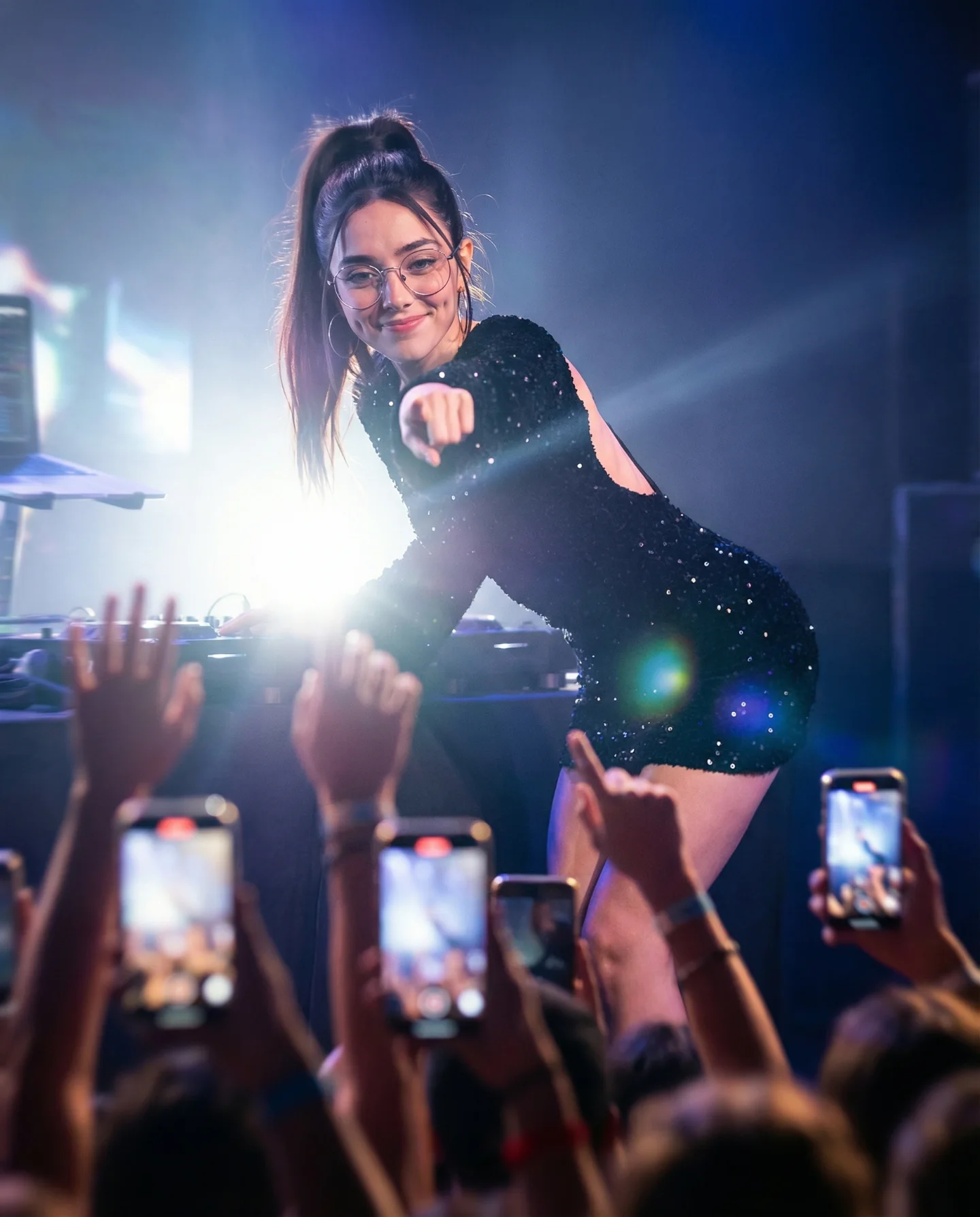
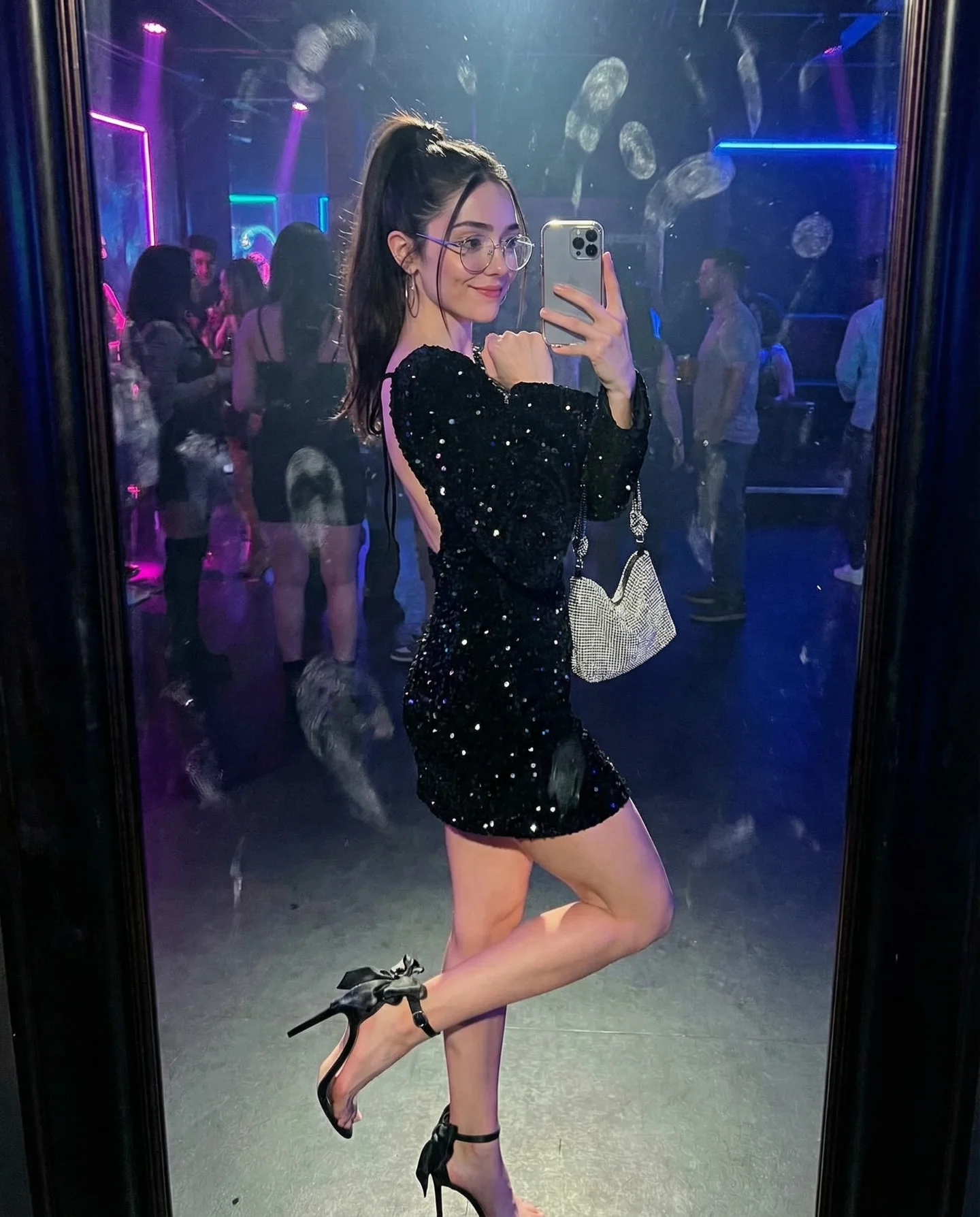
New Year visuals often lean on easy symbols like fireworks, champagne, or giant numerals. This image takes a better route. It frames celebration through social energy: the booth, the crowd, the smile, the lights, and the over-the-shoulder moment. That makes it feel lived rather than manufactured.
The caption matters here as well. This is a thank-you post tied to growth, community, and entering 2026 with gratitude. That emotional context makes the image stronger. The subject is not only dressed for a party; she is visibly enjoying a milestone moment. That combination of glamour and sincerity tends to perform well because viewers feel both aspiration and warmth.
Why the image likely connected with people
The first reason is social proof. The crowd, phones, and DJ equipment all say that something real is happening. Even if the audience is blurred, their presence gives the image weight. It feels like a public moment, not a private photoshoot.
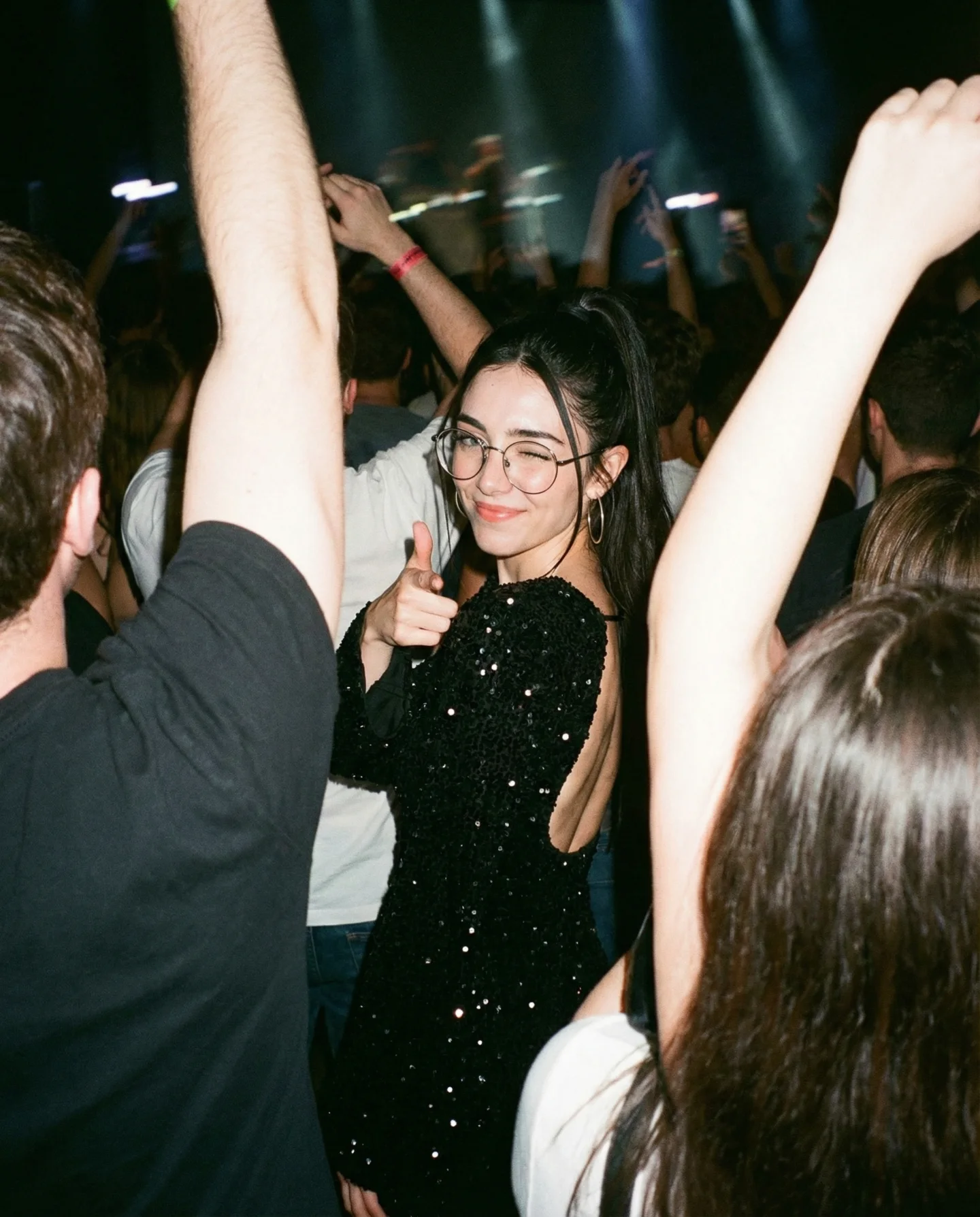
The second reason is the pose. The body is turned away, but the face comes back toward the camera with a genuine smile. That creates a candid, mid-event feeling that is much more engaging than a straight-on club portrait. It feels like the viewer caught a real second of happiness.
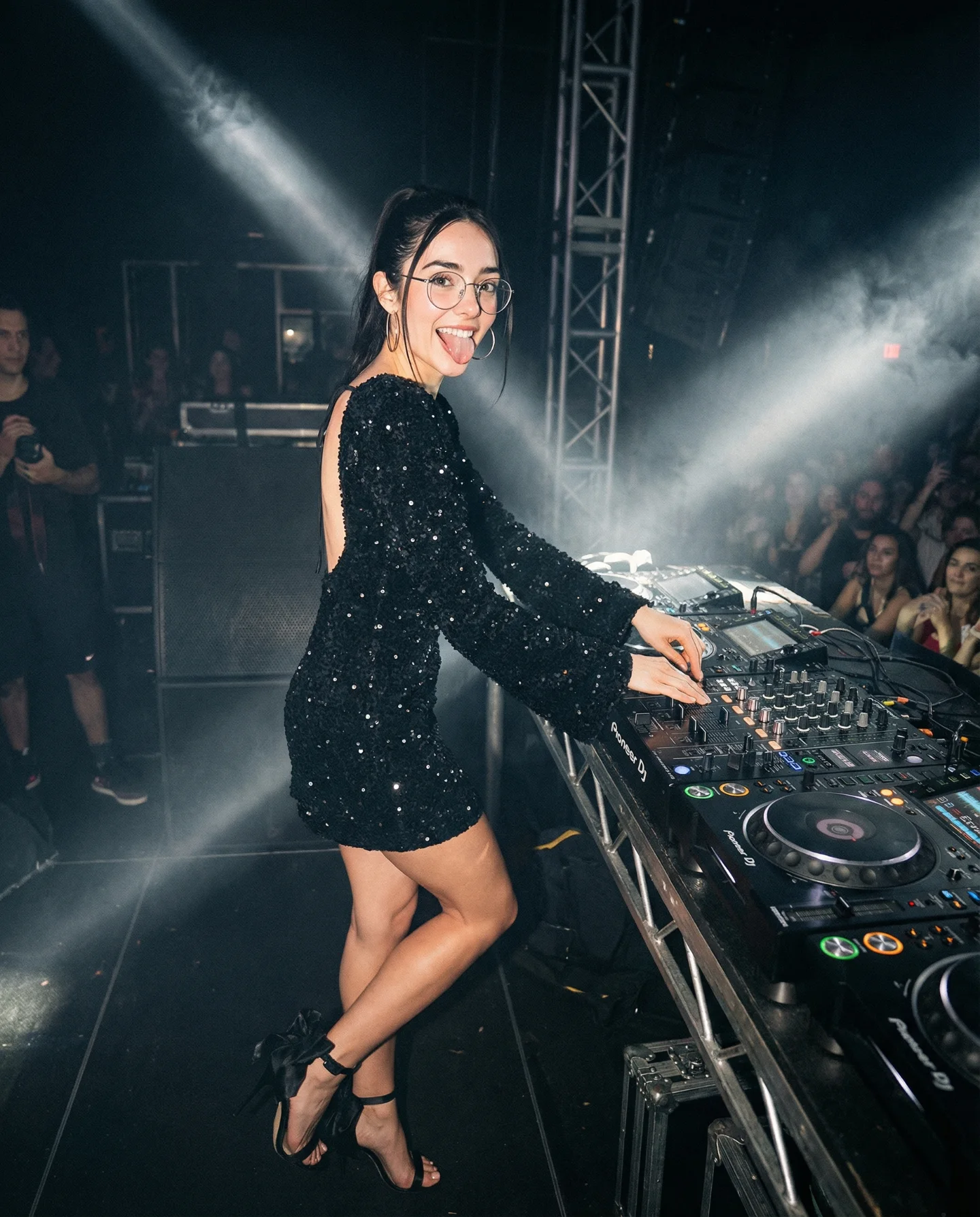
The third reason is wardrobe clarity. The black sequin dress is exactly right for the setting. It catches light in small controlled sparkles without becoming costume-like. That makes the image elegant and party-coded at the same time.
Signal
Evidence (from this image)
Mechanism
Replication Action
Public celebration context
DJ booth, crowd silhouettes, and phone lights indicate a real nightlife event
Social atmosphere increases aspirational value and perceived authenticity
Use 2 to 4 event cues behind the subject instead of isolating the portrait in empty darkness
Candid over-the-shoulder pose
The subject looks back smiling while already turned away from the camera
This creates motion and emotional immediacy without needing action blur
Prompt a transitional body pose rather than a fully posed front-facing stance
Controlled sparkle
The black sequins catch light subtly across the dress
Texture adds glamour while preserving sophistication
Choose one reflective wardrobe surface and let low club light do the rest
Milestone-friendly mood
The image feels celebratory but personal, fitting a gratitude caption
Emotionally aligned visuals support stronger comment behavior than generic party scenes
Match the image tone to the caption intention, not just the calendar moment
Where this style works best
This visual format works especially well for milestone posts, year-end recaps, community thank-you messages, nightlife-themed launches, and social content tied to live events. It is also useful for creators who want to look elevated without drifting into overly formal editorial territory.
Best fit: New Year or milestone posts. Why fit: the scene feels festive and personal at the same time. What to change: keep the crowd-and-booth logic while updating the message or event type.
Best fit: creator celebration content. Why fit: the image supports captions about audience growth or gratitude. What to change: preserve the candid pose and live-event setting even when the outfit changes.
Best fit: nightlife moodboards. Why fit: the composition captures glamour through environment rather than heavy styling tricks. What to change: adjust the booth type, crowd density, or light palette.
Best fit: launch or party recap covers. Why fit: the image reads quickly and carries obvious event energy. What to change: simplify the background screens if the platform layout adds too much visual noise.
This style is less ideal for product-detail promotions, intimate portraiture, or minimalist branding. The power comes from social atmosphere. Remove the crowd and the image loses much of what makes it special.
Three transfer recipes are especially useful. Keep the over-the-shoulder event pose, the visible equipment or stage context, and the blurred crowd foreground. Change the event type. A fashion-launch version can replace the DJ booth with a backstage styling station. A creator-awards version can trade the booth for stage monitors and a trophy moment. A rooftop-party version can keep the dress and smile while swapping the club interior for city lights and a small deck setup. Slot template: {celebration event} + {glam outfit} + {turned-away smiling pose} + {visible event equipment} + {blurred crowd layer}.
The aesthetic lessons worth noticing
The strongest choice here is perspective. The image is shot from within the audience rather than from a clean empty space. That instantly makes the photo feel more immersive. The viewer is inside the event, not outside observing it.
Another strong move is keeping the dress dark and reflective instead of bright and flashy. In a venue full of lights, a black sequin dress gives structure and elegance. It holds shape while still participating in the glow.
The booth screens are also doing important compositional work. They frame the subject's waist and back, signal the setting, and add just enough tech color to contrast with the skin and dress. That makes the middle of the frame feel alive.
Observed
Why it matters
How to recreate it
Audience-level camera angle
Creates immersion and social energy
Shoot through blurred foreground heads or shoulders to place the viewer in the crowd
Black open-back sequin dress
Adds glamour while keeping the silhouette clean
Use one reflective dark garment that catches point light elegantly
Visible DJ equipment and screens
Instantly codes the scene as a live nightlife moment
Keep one or two readable event tools behind the subject
Warm smile with turned body
Makes the image feel candid and emotionally open
Prompt a body-turned pose with the face reconnecting to camera
Small phone lights in the crowd
Add a celebratory social texture without clutter
Include a few bright handheld light points in the background
Prompt technique breakdown
To reproduce this reliably, separate the prompt into subject pose, event context, outfit texture, crowd layer, and lighting family. Party images become generic very quickly when the creator describes only “club scene” and forgets the behavior and perspective that make the frame feel real.
Prompt chunk
What it controls
Swap ideas (EN, 2-3 options)
Pose block
Determines whether the image feels candid or staged
blue club haze, soft stage light, warm event spot accents
Identity markers
Keep the creator recognizable inside the event scene
round glasses, ponytail, hoop earrings
A practical remix sequence
Baseline lock first: keep the crowd-perspective framing, keep the over-the-shoulder smile, and keep the DJ-booth context. Those three choices create most of the image's value. After that, change only one or two variables per run.
Run 1: solve the body turn, smile, and booth placement until the event moment reads instantly.
Run 2: refine dress sparkle, background screen color, and low-light skin rendering without changing the composition.
Run 3: test one event variation, such as rooftop or backstage, while preserving the same emotional pose.
Run 4: build a celebration-series template by keeping the composition stable and rotating only outfit texture and event type.
The larger lesson is that milestone content works best when celebration feels social, not symbolic. This image understands that. It shows not just a glamorous look, but a lived moment around other people, and that is what makes it resonate.