How soy_aria_cruz Made This Night Car Selfie AI Portrait - and How to Recreate It
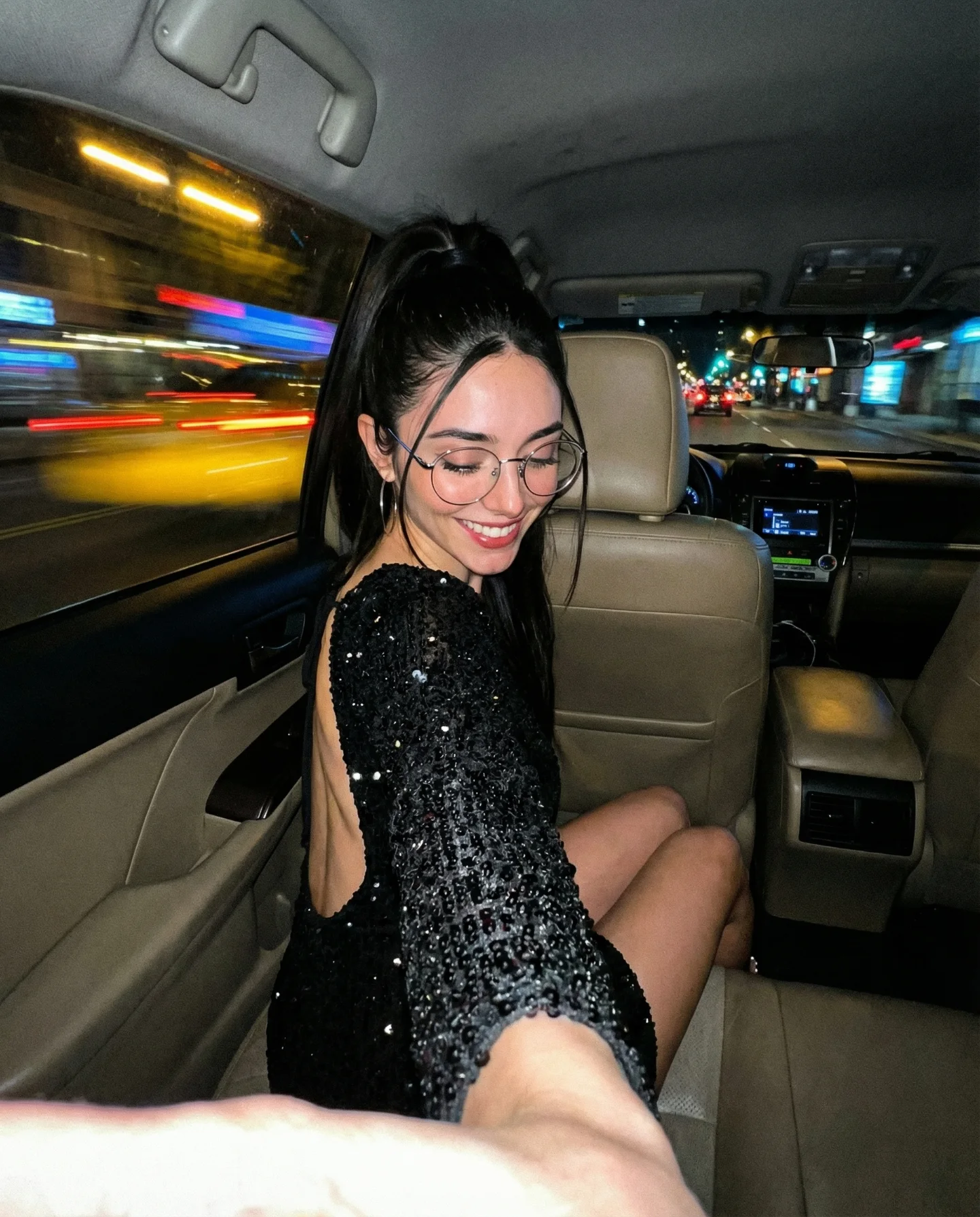
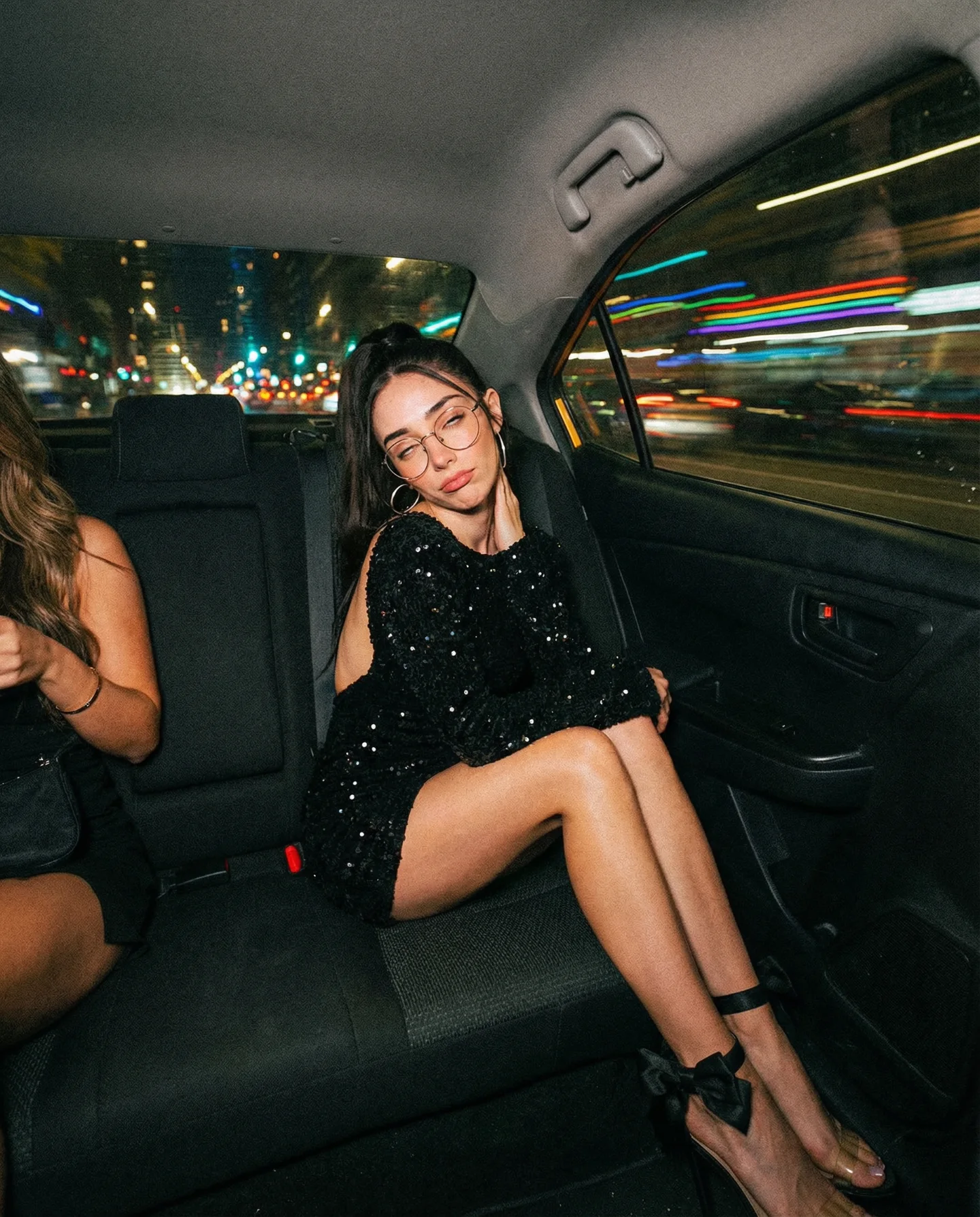
This image works because it captures celebration without showing the celebration directly. There are no fireworks, no champagne glasses, and no countdown props. Instead, the image uses three signals to imply New Year’s energy: sequins, city lights at night, and a candid in-transit flash photo. That is often a smarter content move. It feels more personal and more believable than a fully staged party setup.
The second reason it performs is the balance between glamour and motion. The dress is glamorous, but the car ride and blurred street lights keep the frame from becoming static. That movement is important. It tells the viewer this is part of a night unfolding, not just a posed before-and-after portrait.
Why This Nightlife Snapshot Reads So Fast
The sequined dress is the first hook because it immediately codes the image as special-occasion or party-night content. Then the city-light streaks outside the car windows push the scene into movement and nighttime urban energy. Finally, the direct flash confirms that this is a real social snapshot, not a polished campaign image. That three-step read is very efficient.
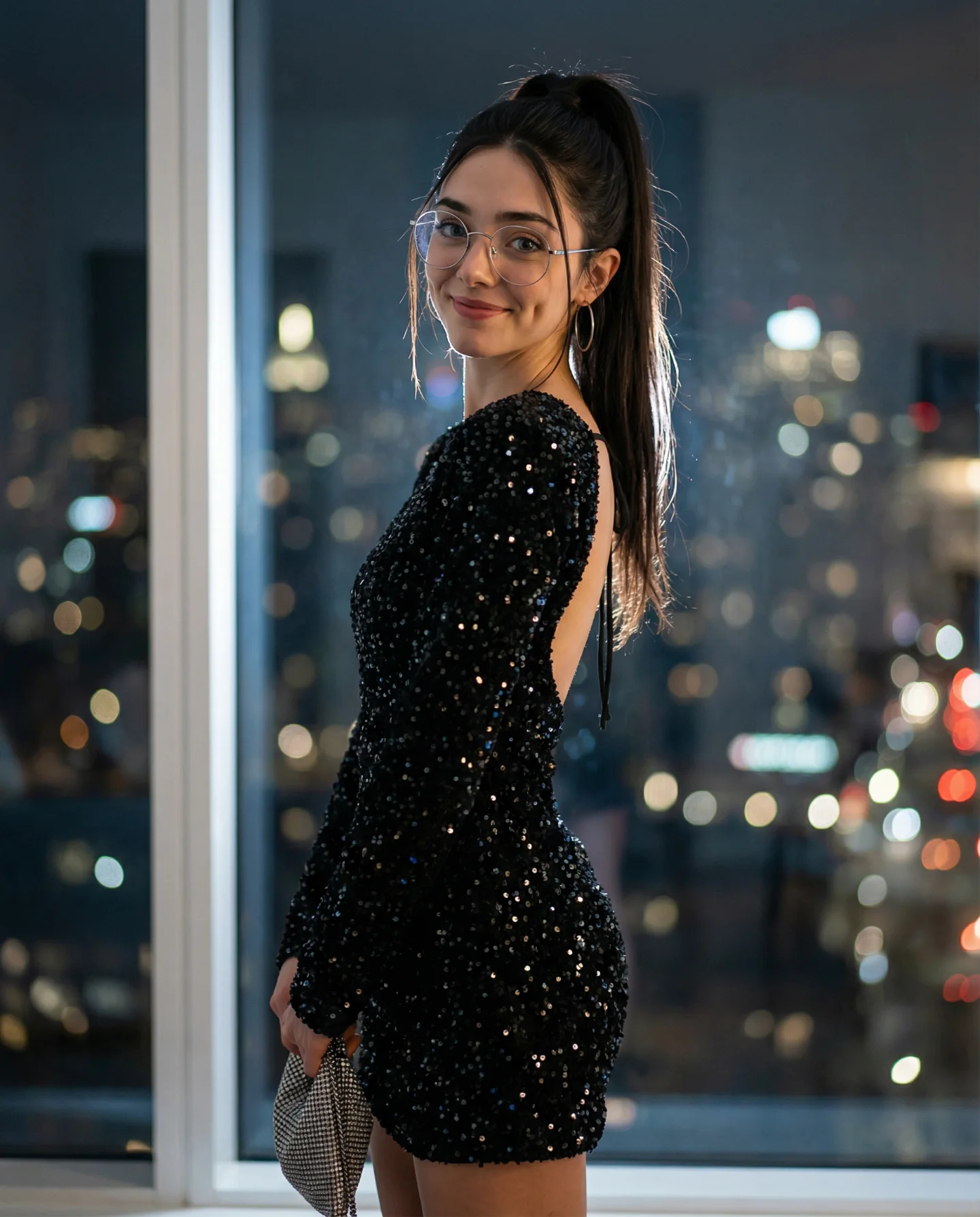
The over-the-shoulder smile also helps a lot. It makes the image feel like the subject is being caught in a good moment instead of posing too formally. This kind of semi-candid body turn is especially effective for creator content because it feels flattering without looking frozen.
| Signal | Evidence (from this image) | Mechanism | Replication Action |
|---|
| Party coding without props | The sequined dress and nighttime car ride imply an event context. | Suggesting the occasion can feel more stylish than spelling it out. | Use wardrobe and environment to imply celebration instead of adding literal party accessories. |
| Motion in a contained space | Street lights blur outside while the subject stays crisp inside the car. | Movement adds energy without making the frame chaotic. | Keep the subject flash-lit and let only the exterior world streak. |
| Social-native realism | The image clearly uses direct flash and an imperfect candid angle. | Snapshot language feels personal and more relatable than studio polish. | Lean into flash, spontaneity, and slight compositional asymmetry. |
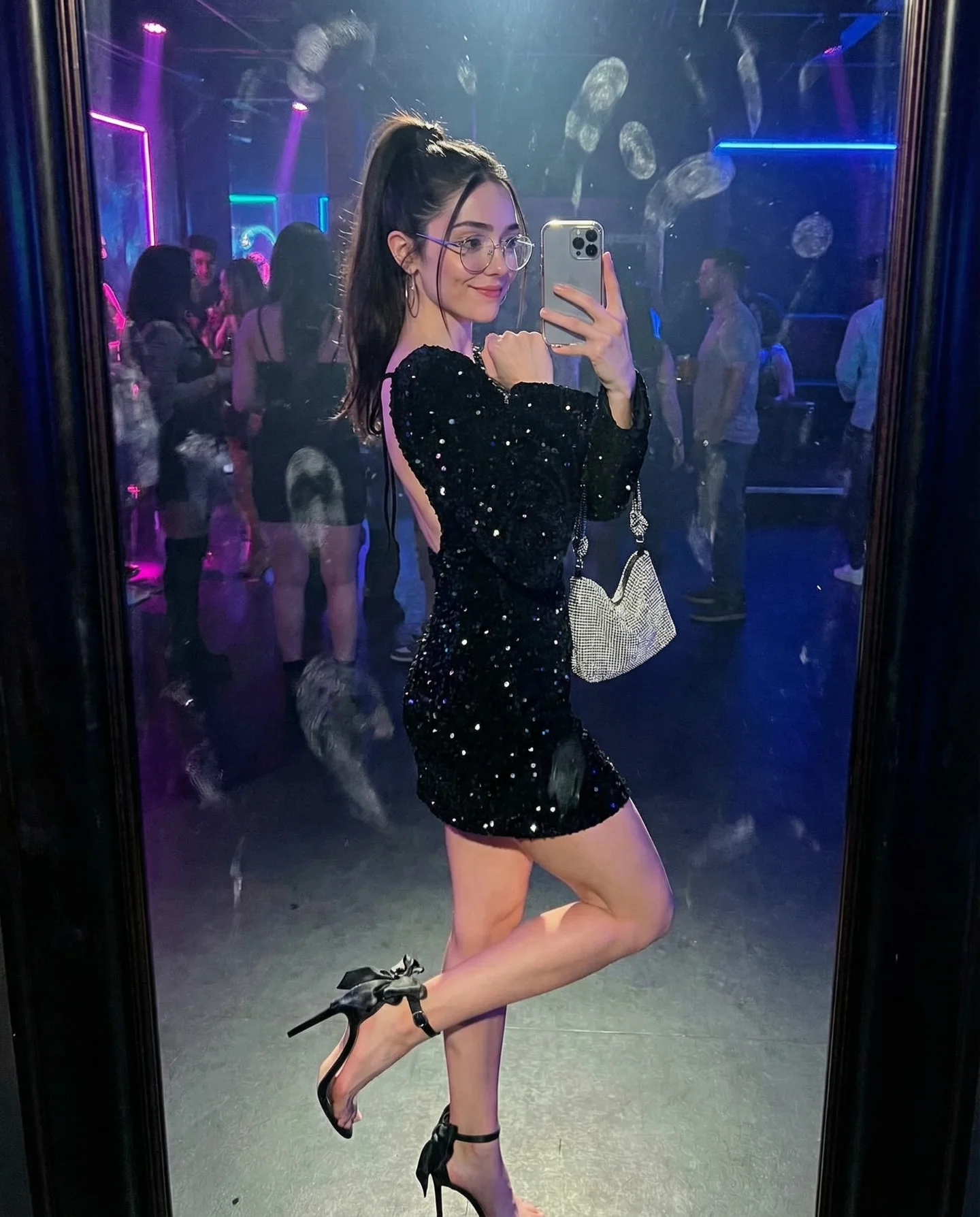
| Glamour-personality balance | The open-back dress is elegant, but the smile and glasses keep the subject approachable. | High appeal comes from blending polish with recognizability. | Pair one glamorous wardrobe choice with clear personal face markers. |
Best Use Cases and Transfers
This format is ideal for New Year’s Eve prompt pages, nightlife transit aesthetics, going-out creator content, and urban evening mood boards. It also transfers well to taxi selfies, post-dinner rides, concert-night car moments, and after-party transitions. The core pattern is simple: one dressed-up subject inside an ordinary moving car, with the city providing motion and mood outside.
- Best for celebratory-night prompts: the frame implies an event without relying on clichés.
- Best for nightlife creator branding: the image feels social, glamorous, and intimate at once.
- Best for urban mood boards: the car interior plus blurred lights create a compact city-night narrative.
- Best for SEO around “party-ready” images: the visual signals are clear and reusable.
It is less effective for luxury chauffeur fantasy, quiet reflective portraiture, or explicit party-documentation scenes. The strength here is the in-between moment. If you add too much event clutter, the image loses its elegant ambiguity.
- Not ideal for maximal party visuals: the car ride atmosphere works because it stays restrained.
- Not ideal for soft natural-light glamour: the flash is essential to the mood.
- Not ideal for group-night-out storytelling: one subject keeps the frame personal and readable.
Three Transfer Recipes
- Night-out transit shot. Keep: dressed-up subject, flash-lit car interior, and blurred exterior lights. Change: dress color and city density. Slot template (EN):
{glamorous subject} photographed in the back seat of {moving city car} with {flash-lit candid energy} - Occasion implied, not stated. Keep: no obvious celebration props, only wardrobe and mood cues. Change: event type and light colors. Slot template (EN):
{special-occasion look} captured during {urban transit moment} with {motion-blurred nightlife outside} - Over-the-shoulder social glamour. Keep: turned body, open-back or statement outfit, and warm human expression. Change: seating angle and transport type. Slot template (EN):
{subject turning back toward camera} in {statement evening outfit} inside {moving vehicle at night}
Aesthetic Read
The image succeeds because it lets flash flatten the interior just enough to feel spontaneous, while the outside remains alive with motion and color. That contrast between frozen interior and moving exterior gives the frame its pulse. It says “this night is happening now.”
The black sequins also help because they catch the flash without overpowering the face. A shinier or brighter dress could have stolen too much attention. Here the dress reads as luxe, but the face and body language still lead the image.
| Observed | Why it matters for recreation |
|---|
| Black sequined open-back dress | The wardrobe instantly codes the image as special-occasion and nightlife-oriented. |
| Color streaks outside the windows | The moving city context adds energy and keeps the car scene from feeling static. |
| Direct flash on subject and upholstery | The candid social-photo language is a core part of the image’s charm. |
| Over-the-shoulder smiling pose | The body language feels flattering, human, and slightly caught-in-the-moment. |
| Beige leather interior | The car remains readable and warm without turning into a luxury cliché. |
Prompt Technique Breakdown
To recreate this image well, start with “woman in sequined dress in a moving car at night” rather than “New Year’s party girl.” The latter often produces obvious props and generic party scenes. This image wins because it captures the transit moment around the celebration, not the celebration itself. After that, add the flash, the over-the-shoulder turn, and the city-light blur.
| Prompt chunk | What it controls | Swap ideas (EN, 2-3 options) |
|---|
| young woman sitting in the back seat of a moving car at night | The base scene and urban-transit logic | night taxi snapshot; city ride candid; after-party transit moment |
| black sequined open-back dress with long sleeves | The glamour signal and texture | evening mini dress; statement nightlife outfit; party-coded wardrobe |
| round glasses, high ponytail, hoop earrings, warm smile | The repeatable identity markers | approachable glam portrait; creator face cues; flattering nightlife identity |
| direct flash with colorful motion blur outside the windows | The social-native mood and energy | night snapshot lighting; moving city streaks; candid flash realism |
| beige leather car interior and visible front seats | The transport context and scale | real car cabin; ordinary premium interior; grounded in-transit environment |
| no party props, no extra people | Keeps the image elegant and avoids cliché overload | implied celebration only; one-subject intimacy; restrained nightlife scene |
Remix Steps
Baseline lock the moving-car environment, the sequined dress, and the flash behavior first. Those are the structural controls. Then solve the over-the-shoulder pose and the subject’s expression. Only after that should you refine the outside light streaks or seat details.
- Run 1: establish the subject in the back seat of a moving car at night with flash-lit interior and blurred city lights outside.
- Run 2: correct the dress silhouette, open back, sequins, and the over-the-shoulder turned pose.
- Run 3: refine the face markers: glasses, high ponytail, hoop earrings, and soft downward smile.
- Run 4: tune upholstery texture, dashboard visibility, and colored light streaks while keeping the scene clean and candid.
Keep the one-change rule strict. If the scene stops feeling like a moving car, fix the windows and blur before changing the outfit. If the image becomes too editorial, strengthen the flash and spontaneity before touching the background. This frame wins because glamour stays inside a very ordinary moment.