How soy_aria_cruz Made This Hollywood Premiere Photocall Black Dress Image — and How to Recreate It
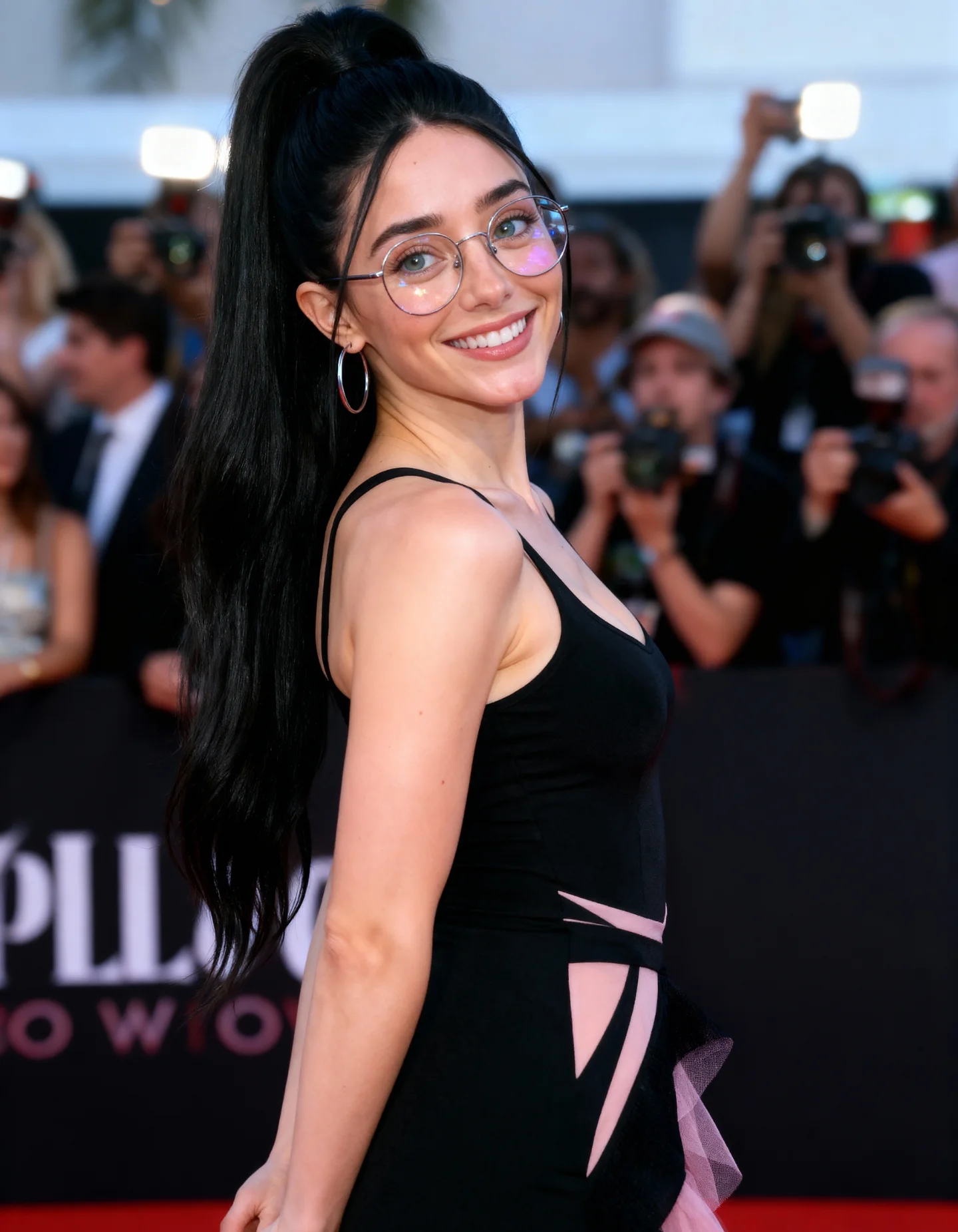
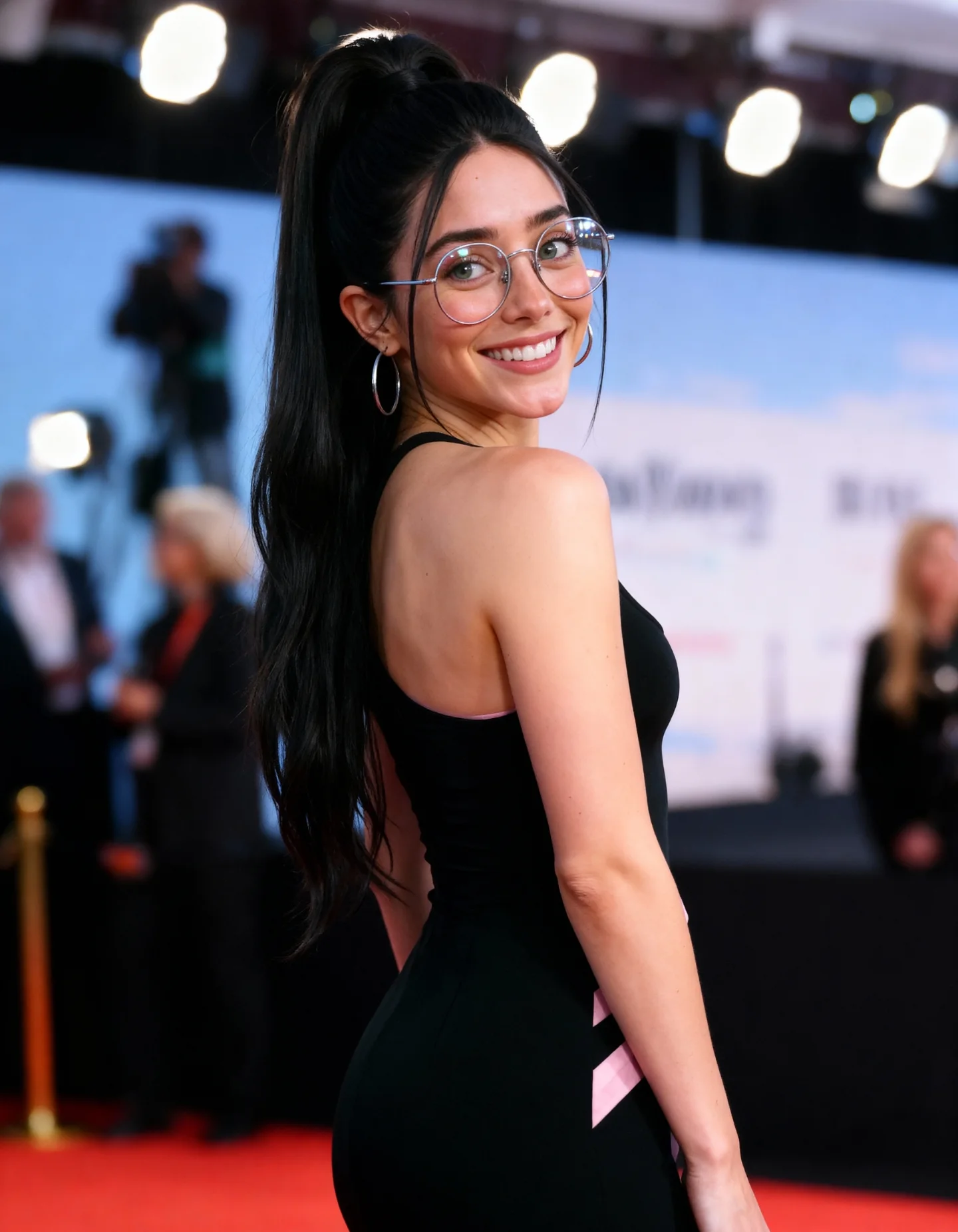
This image works because it looks public, not private. The photographers, flashes, blurred sponsor wall, and red-carpet strip all tell the viewer that this is a moment of attention. Social images often gain power when the frame itself implies that many other people are already looking. That is one reason red-carpet-style portraits remain so effective even in AI creator content.
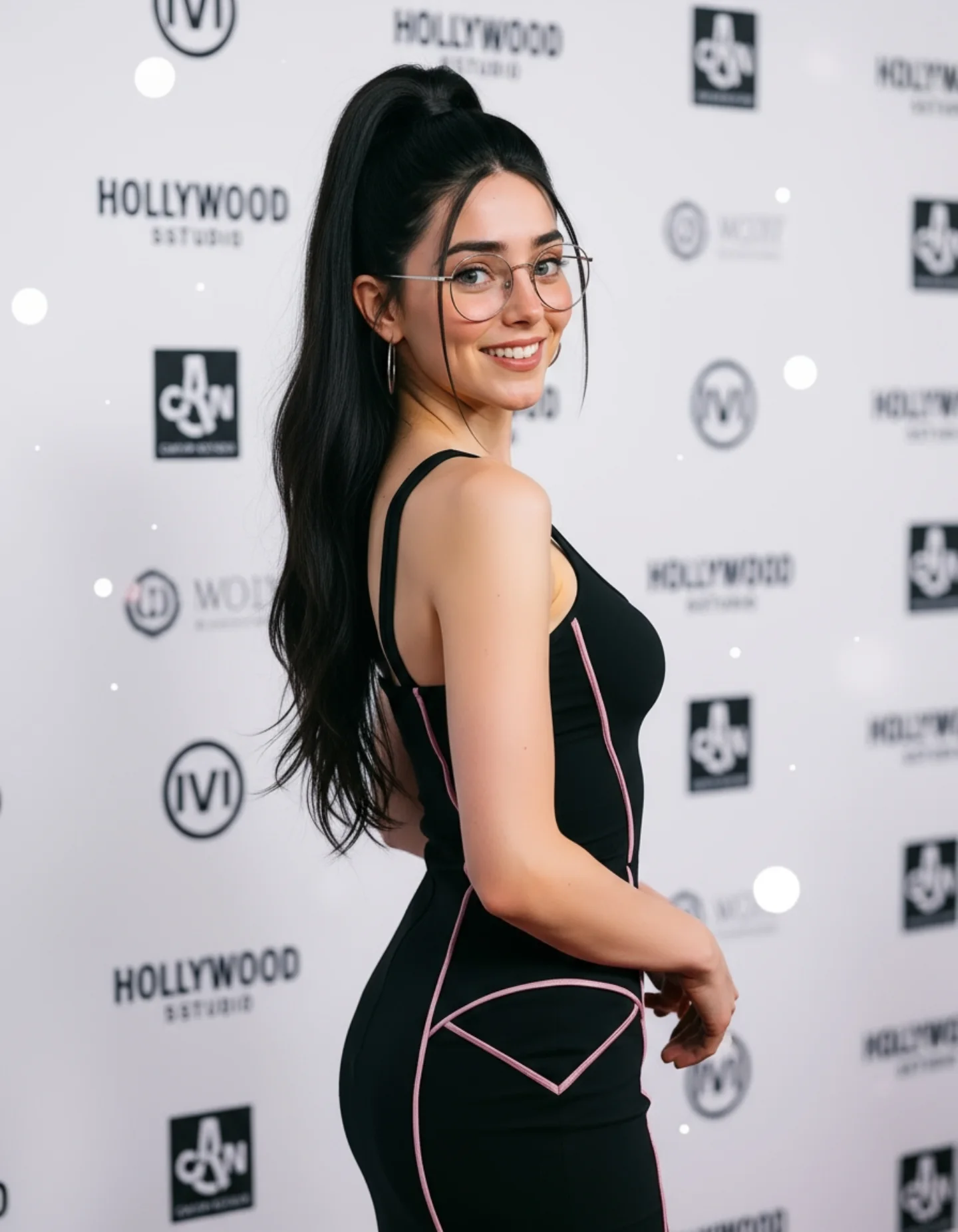
For creators, the strongest lesson here is that the glamour does not come from the dress alone. It comes from the relationship between the subject and the crowd. The woman is smiling back over her shoulder, which gives the portrait a feeling of motion and acknowledgment. She is not simply standing in front of a backdrop. She is interacting with a public-facing moment.
The styling also stays disciplined. The black dress carries the main structure, while the pink waist accents add just enough personality to make the outfit memorable. That restraint is important. If the dress had too many embellishments, the image would lose some of its clean premiere-photocall sophistication. Here, the look feels modern, polished, and still easy to read at thumbnail size.
Why This Red-Carpet Style Performs
The first reason is instant status signaling. A crowd of photographers and visible flash units create implied importance. Even before a viewer knows anything else, the image communicates “this person is being watched.” That perception raises curiosity and can make the post feel more share-worthy.
The second reason is over-the-shoulder warmth. Red-carpet portraits can sometimes feel distant or overly posed, but this one avoids that by keeping the smile open and friendly. The result is glamour without emotional coldness. That is a powerful middle ground for creator-led content, where beauty alone is not always enough.
The third reason is silhouette clarity. The high ponytail, slim dress shape, and angled pink cutout details each contribute to an immediately recognizable outline. Good social portraits usually have one fast-read shape and one secondary detail reward. This image has both.
| Signal | Evidence (from this image) | Mechanism | Replication Action |
|---|
| Public-status cue | Photographers and flash units fill the blurred background | The frame implies attention and importance before the viewer reads anything | Include visible press activity whenever you want a portrait to feel event-worthy |
| Friendly glamour | Bright smile over the shoulder softens the formal dress and event context | Warmth makes aspirational content more approachable and engaging | Use an over-the-shoulder pose with a genuine smile instead of a blank red-carpet stare |
| Memorable outfit logic | Black dress with restrained pink geometric details reads quickly and cleanly | Small accent contrasts improve recall without cluttering the image | Keep the base outfit simple and let one accent color or cutout system do the work |
| Social-native readability | The portrait remains easy to read despite a busy event background | Clear subject hierarchy improves feed performance | Blur the crowd and keep the subject bright, central, and emotionally open |
Where This Aesthetic Fits Best
This style is ideal for glamour prompt covers, celebrity-inspired creator portraits, event-night content, generator realism tests around fashion and crowd blur, and posts meant to suggest prestige without becoming inaccessible. It works especially well when your audience enjoys a mix of beauty, status, and creator personality.
- Best fit: premiere-style prompt showcases. The setting adds immediate context and desirability.
- Best fit: creator-brand glamour posts. The subject still feels personable despite the high-status environment.
- Best fit: realism tests. Glasses, skin, black fabric, crowd blur, and flash lighting all expose output quality.
- Best fit: social covers with CTA potential. The image already feels attention-worthy before text is added.
- Best fit: fashion-adjacent feeds. It borrows prestige cues without needing full editorial complexity.
It is less useful for minimal luxury campaigns, documentary street work, or deeply emotional narrative scenes. The strength here is public-facing elegance, not intimacy or realism-for-realism’s sake.
Transfer Recipes
- Award-night version. Keep: over-the-shoulder pose, visible photographers, slim subject hierarchy. Change: gown cut, flash intensity, backdrop branding. Slot template:
Hollywood event portrait, smiling over shoulder, {dress details}, press photographers blurred behind, elegant public glamour - Film-festival version. Keep: red-carpet logic and event energy. Change: outerwear layer, color accent, sponsor wall tone. Slot template:
premiere photocall portrait, {subject styling}, cameras and flashes in the background, approachable glamorous smile - Fashion-week arrival version. Keep: public attention cue and clean silhouette. Change: location type, crowd density, wardrobe material. Slot template:
celebrity-style event capture, over-the-shoulder glance, {fashion look}, blurred media crowd, realistic event lighting
The Aesthetic Read
The strongest visual choice is the balance between a high-glamour setting and a low-friction expression. The event itself implies prestige, but the smile keeps the portrait from feeling defensive or overly curated. That balance is one reason the image works well for creator content rather than only celebrity mimicry.
The pink accents are another smart choice. They break up the black dress just enough to create rhythm and specificity. Without them, the image would still look elegant, but less memorable. Accent geometry is often more useful than heavy ornamentation because it survives mobile viewing better.
The blurred press crowd also matters aesthetically, not just contextually. It turns the background into a texture field of cameras, faces, and flash points. That gives the portrait energy while preserving the subject as the only truly readable figure. It is a good reminder that background chaos can work if it is kept soft.
| Observed | Why it matters | How to recreate it |
|---|
| Over-the-shoulder smile | Adds motion and warmth to an otherwise formal event portrait | Pose the body away and return only the face with an open expression |
| Long high ponytail | Creates a clean silhouette and elegant line through the frame | Use one strong hairstyle shape that reads instantly on mobile |
| Black dress with pink geometry | Builds memory through controlled contrast rather than excess decoration | Anchor the outfit in one neutral and one accent, then keep the rest minimal |
| Flash-filled photographer background | Signals event energy and implied status | Stage visible media attention but blur it enough to protect subject priority |
| Round glasses catching soft reflections | Add subtle identity and realism detail | Include one reflective accessory that helps the face feel specific |
Prompt Technique Breakdown
To recreate this image effectively, think in four systems: pose, event context, outfit logic, and lighting realism. Many weak red-carpet prompts only describe the dress and forget the crowd, or they describe the crowd but lose the warmth in the face. This image works because all four systems support one another.
| Prompt chunk | What it controls | Swap ideas (EN, 2-3 options) |
|---|
| Pose language | Whether the portrait feels stiff or socially alive | over-the-shoulder smile; graceful turned body pose; red-carpet glance back |
| Event evidence | Status and public-energy cues | photographers and flashes; blurred sponsor wall; media crowd behind subject |
| Dress architecture | Memorability and silhouette clarity | black fitted gown with pink cutouts; sleek evening dress with soft accent color; minimal couture geometry |
| Identity anchors | Stops the image from becoming a generic celebrity clone | round glasses; silver hoops; long high ponytail |
| Lighting logic | Whether the image reads as event photography or studio | soft premiere lighting; public-event flash glow; bright red-carpet portrait exposure |
| Background softness | Energy without distraction | press crowd bokeh; blurred photographers; soft media-wall depth |
The most common drift point is crowd handling. If the background becomes too sharp, it competes with the subject. If it disappears entirely, the image loses its event meaning. Keep the press layer alive, but soft.
How to Iterate Without Losing the Red-Carpet Effect
Lock three things first: the over-the-shoulder pose, the black-and-pink dress system, and the photographer background. Once those are stable, refine flash glow, hair polish, or smile intensity. If you change too many elements at once, the portrait can drift into either generic studio glamour or noisy event chaos.
Use a one-change rule. If the image feels too plain, strengthen the press activity. If it feels too busy, blur the background more instead of removing it. If it feels too cold, soften the facial expression before touching wardrobe. Small adjustments preserve the balance between prestige and warmth.
- Run 1: Solve the body angle, smile, and ponytail silhouette.
- Run 2: Add the crowd of photographers and red-carpet environment.
- Run 3: Refine the dress cutouts, pink accents, and fabric tension.
- Run 4: Tune glasses reflections, flash brightness, and background blur while keeping the same composition.
If the output becomes too editorial, append a correction like public-event photocall portrait, realistic premiere atmosphere, approachable glamorous smile. If it becomes too generic, reinforce the media-wall and camera-flash cues. The image works because it feels looked at, not just dressed up.