How lilmiquela Framed This Paris Fashion Week Runway AI Portrait — and How to Recreate It
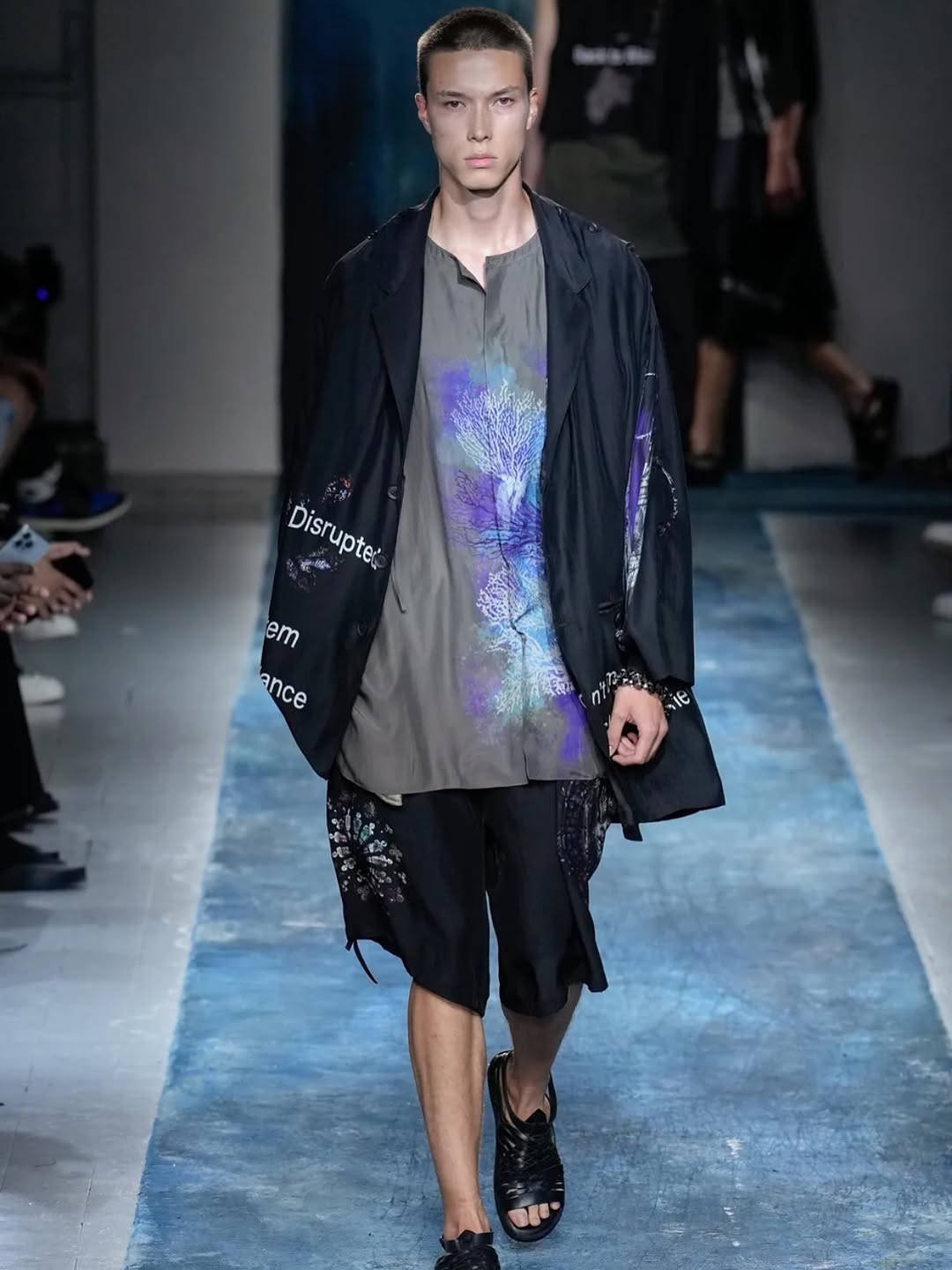
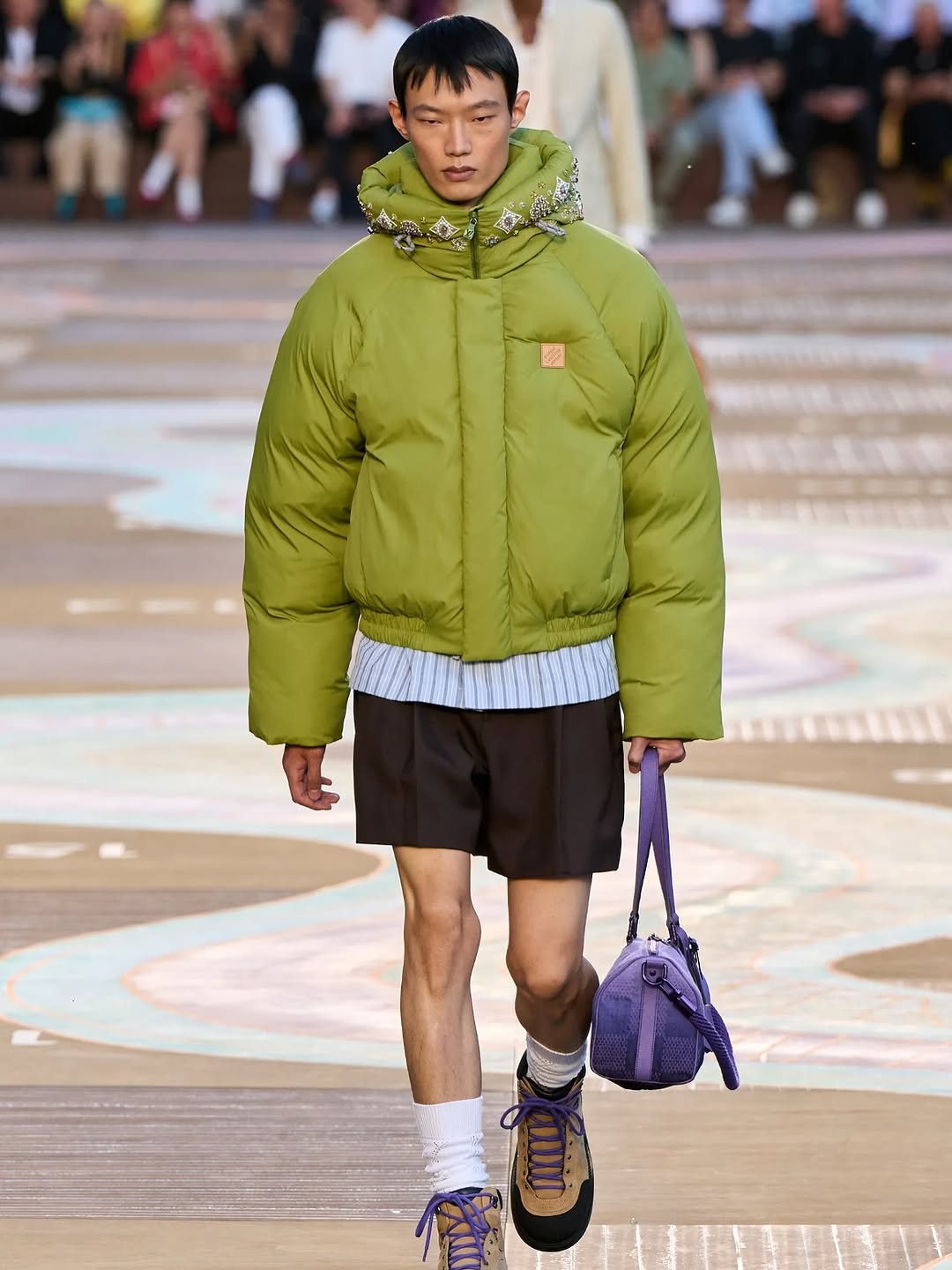
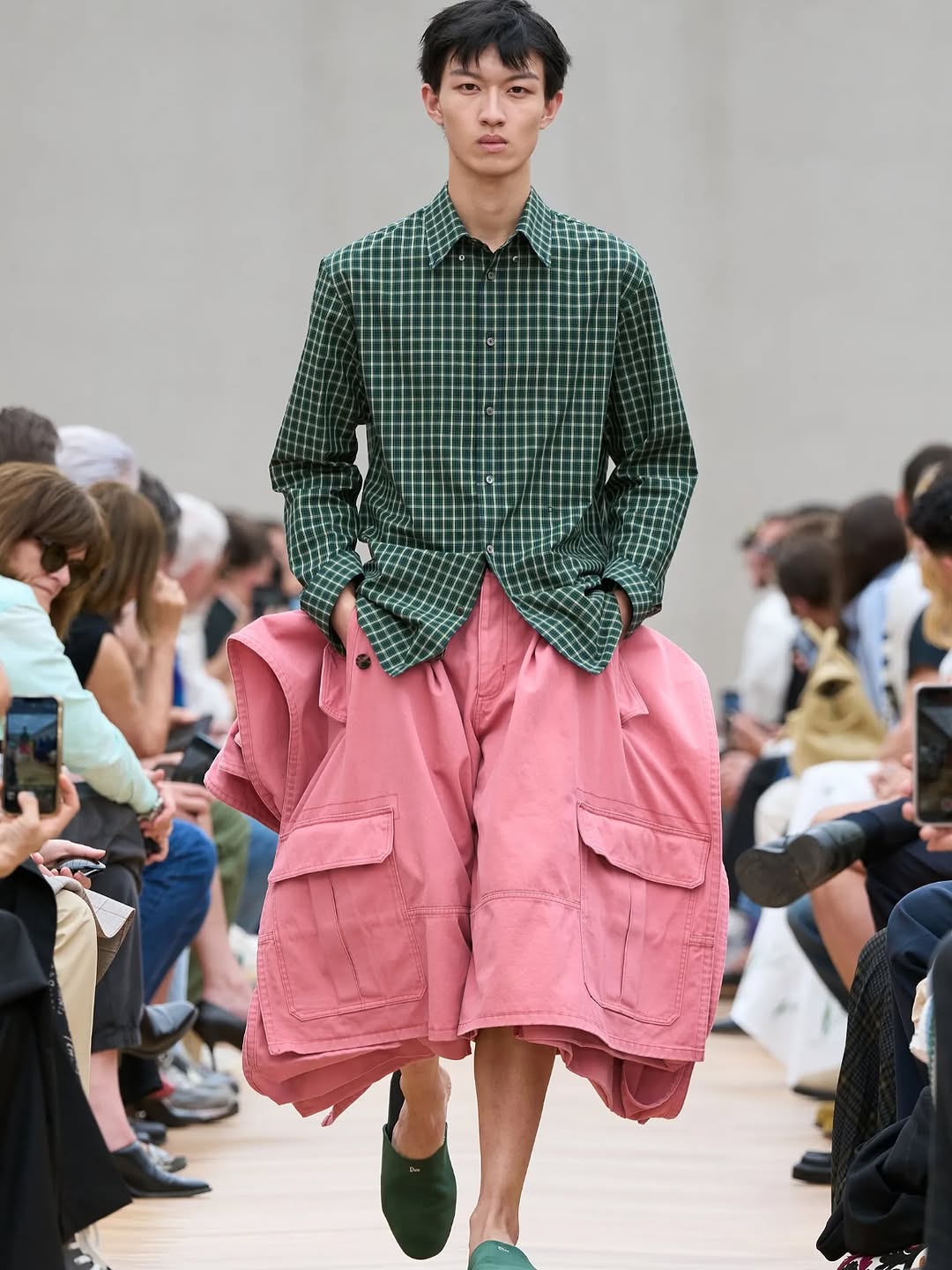
This image performs because it is restrained but distinctive. The silhouette is relaxed, the palette is dark and cool, and one blue-purple print on the inner top adds just enough visual intrigue. It feels curated, not loud.
For creators, this is a useful fashion lesson: you do not need maximal styling to stand out. You need clear structure, confident walk energy, and one controlled visual accent.
Why It Went Viral
The post reads quickly at thumbnail size: centered model, clear stride, and runway geometry. The audience is present but subdued, so social proof exists without clutter. The look also blends streetwear ease with runway discipline, which broadens relevance across fashion communities.
| Signal | Evidence (from this image) | Mechanism | Replication Action |
|---|
| Centerline authority | Model walking directly toward camera in runway center | Symmetry and direct approach project confidence | Shoot from runway endpoint and align subject with center strip |
| Controlled accenting | Single blue-purple print area on muted gray top | One focal detail improves memory without visual overload | Keep one highlighted pattern area within mostly neutral outfit |
| Hybrid styling language | Tailored outer layer + relaxed shorts + sandals | Cross-category styling expands audience interpretation | Mix one formal layer with one casual silhouette element |
Best-fit Scenarios and Adaptation
- Runway recap carousels: ideal for “key looks from show” highlights.
- Menswear styling pages: useful for analyzing layer balance and proportions.
- Trend reports: strong visual for discussing relaxed tailoring and utility silhouettes.
- Creator fashion shoots: reference frame for clean, serious editorial tone.
Not ideal: bright commercial product pushes, playful meme fashion posts, or ultra-romantic aesthetics.
Three Transfer Recipes
- Street-night remix - Keep: centerline stride and single accent print. Change: runway to wet city street with reflected lights. Template:
{dark layered outfit} + {forward walk} + {single color accent} + {clean linear path}. - Gallery corridor remix - Keep: serious expression and muted palette. Change: audience to white gallery walls with minimal observers. Template:
{editorial menswear look} + {corridor symmetry} + {calm lighting} + {full-body front walk}. - Studio editorial remix - Keep: silhouette proportions and accent hierarchy. Change: catwalk texture to seamless gray floor, remove crowd. Template:
{neutral set} + {layered outfit} + {direct stance/walk} + {single print focal point}.
Aesthetic Read: Why the Simplicity Works
The image relies on proportion and lane geometry. The outfit’s volume distribution (looser top and shorts) pairs with a straight walk line, creating steady visual rhythm. The runway strip acts as a guiding spine through the frame, while side audiences remain low-detail to avoid distraction. Color strategy is disciplined: blacks and charcoal dominate, then a controlled blue-violet graphic introduces signature character. This balance gives the look editorial credibility and makes it easy to remix into different menswear contexts.
| Observed | Recreate |
|---|
| Runway lane symmetry | Maintain strong central vanishing alignment |
| Serious model expression | Avoid smile; keep neutral fashion-show face |
| Muted base palette with one accent zone | Build outfit around black/gray then add one color print focal |
| Audience as soft context layer | Keep side spectators visible but not dominant |
Prompt Technique Breakdown
| Prompt chunk | What it controls | Swap ideas (EN, 2-3 options) |
|---|
| Silhouette block | Trend direction and body-line impact | oversized jacket + shorts; long coat + wide pants; cropped jacket + loose trousers |
| Accent print placement | Visual memory point | center chest motif; sleeve print band; hem-side graphic patch |
| Footwear tone | Formality level | open-toe sandals; chunky derbies; minimalist sneakers |
| Runway lighting style | Editorial mood | cool frontal; warm spotlight; high-contrast dramatic side light |
| Camera distance | Proportion readability | full-body runway shot; knee-up look focus; wide venue overview |
Remix Steps (Convergent Workflow)
Baseline lock: (1) centerline full-body framing, (2) muted base palette, (3) one accent print decision.
One-change rule: alter one key styling variable each run.
- Run 1: lock current silhouette and lighting.
- Run 2: keep silhouette, change only accent print color family.
- Run 3: keep color system, change only footwear category.
- Run 4: keep outfit, test camera distance (full body vs knee-up) for feed performance.
This process gives menswear creators a repeatable, data-friendly iteration loop.