How soy_aria_cruz Made This Seated Ponytail Pose Image — and How to Recreate It
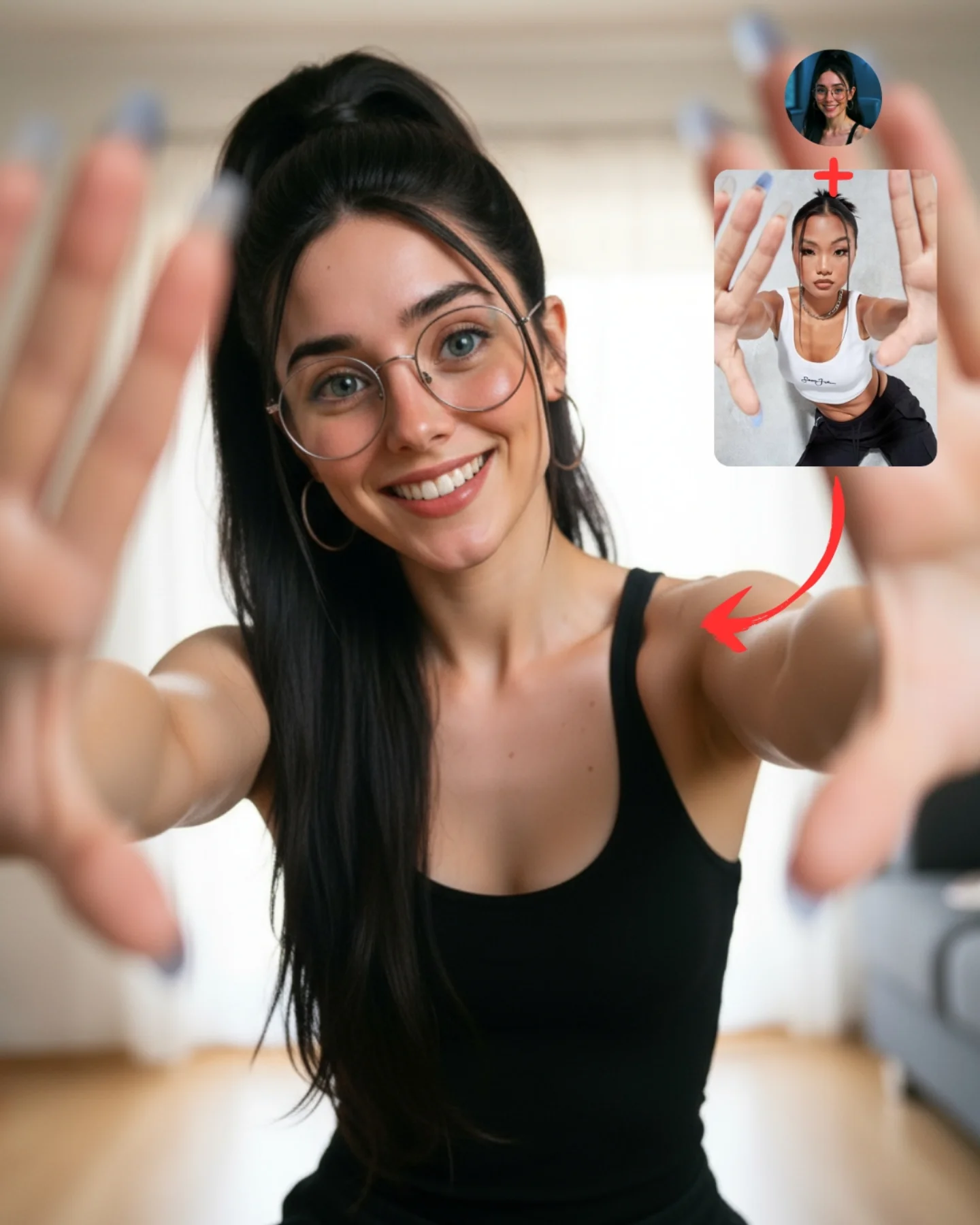
Pose reference images succeed when they remove ambiguity. That is exactly what this one does. The body line is easy to read, the limbs are separated clearly enough for recreation, and the styling is simple without becoming visually dead. For creators who build prompts, tutorials, or reference boards, this matters more than decorative complexity. A good pose reference is not supposed to impress only through fashion. It is supposed to communicate structure fast.
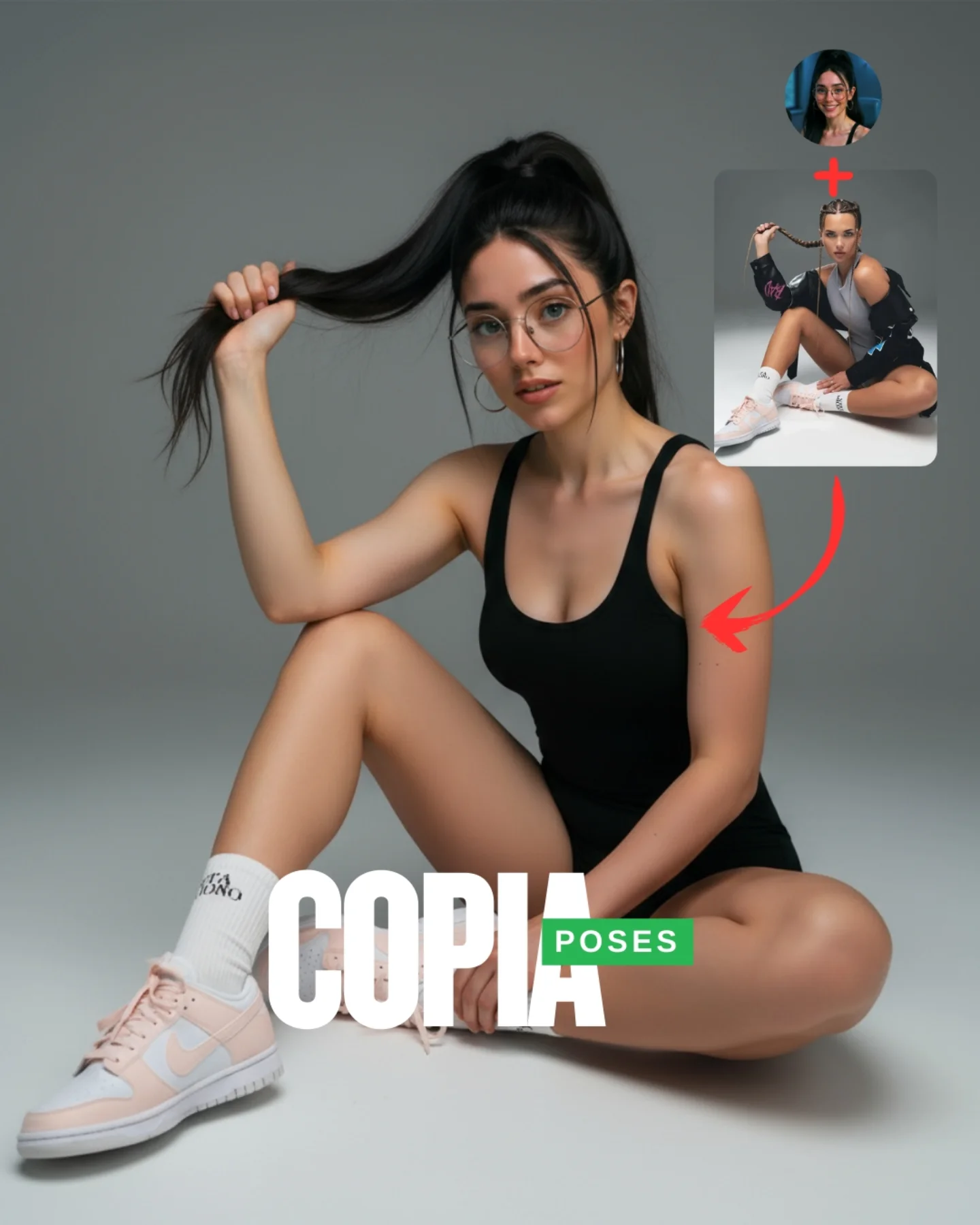
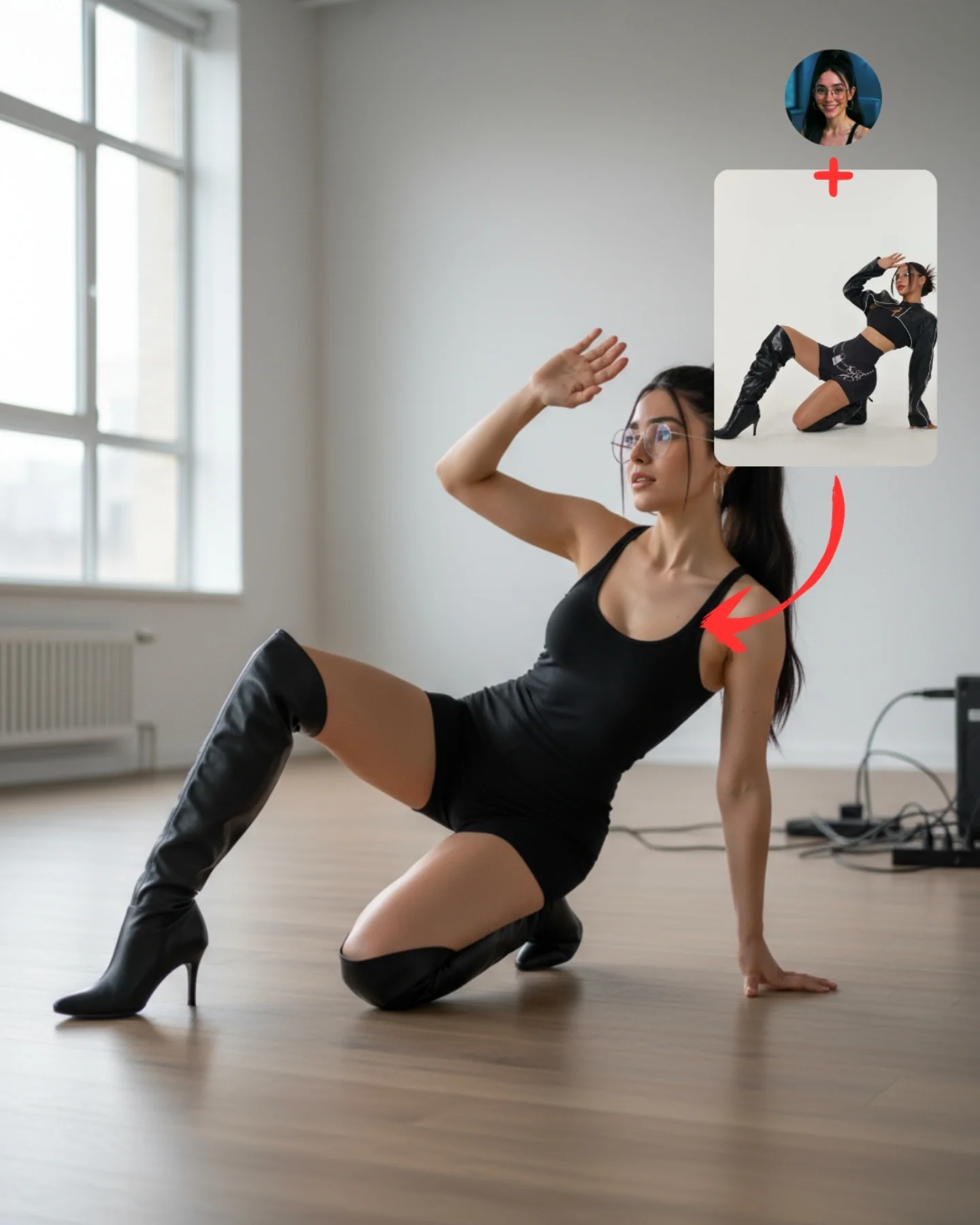
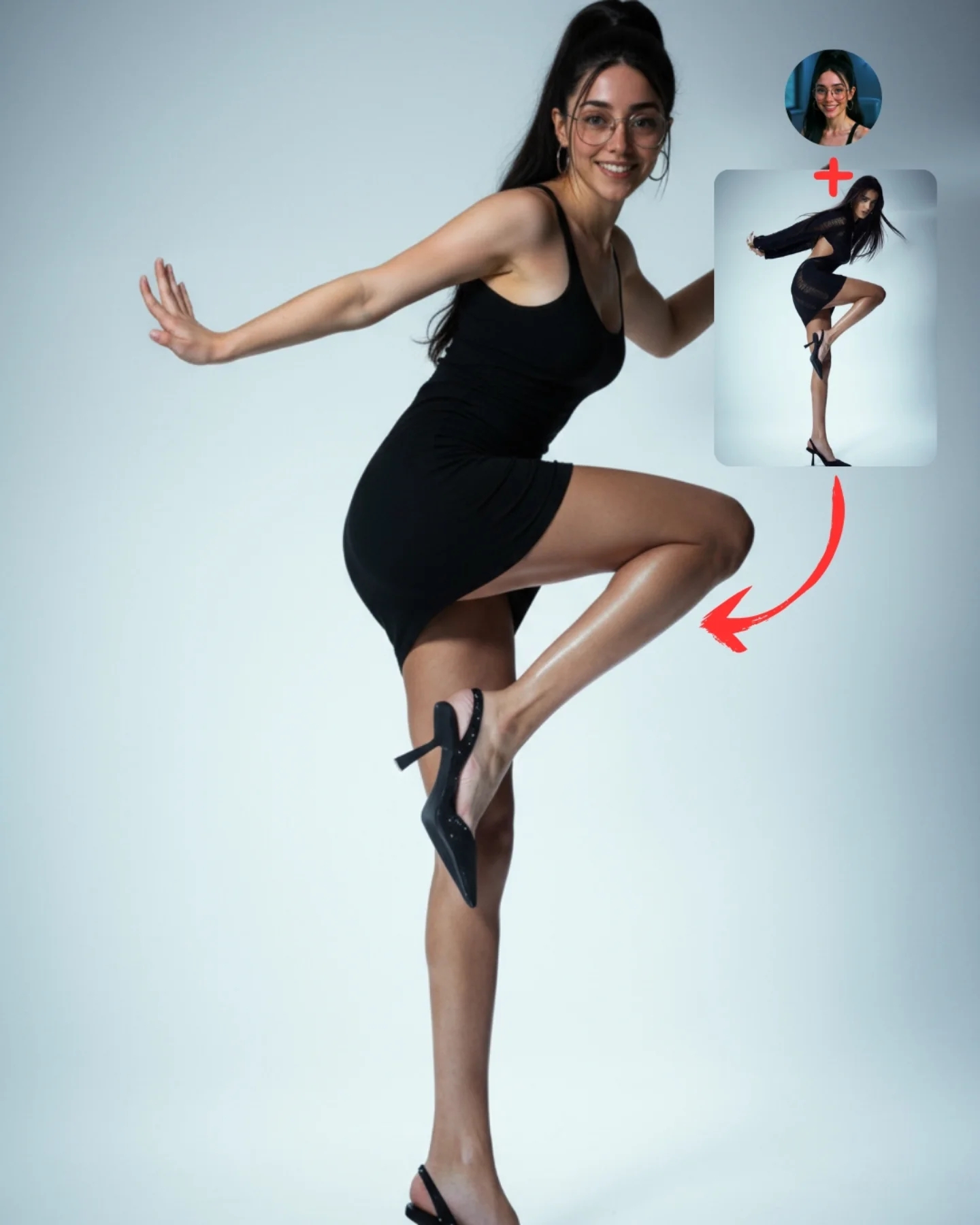
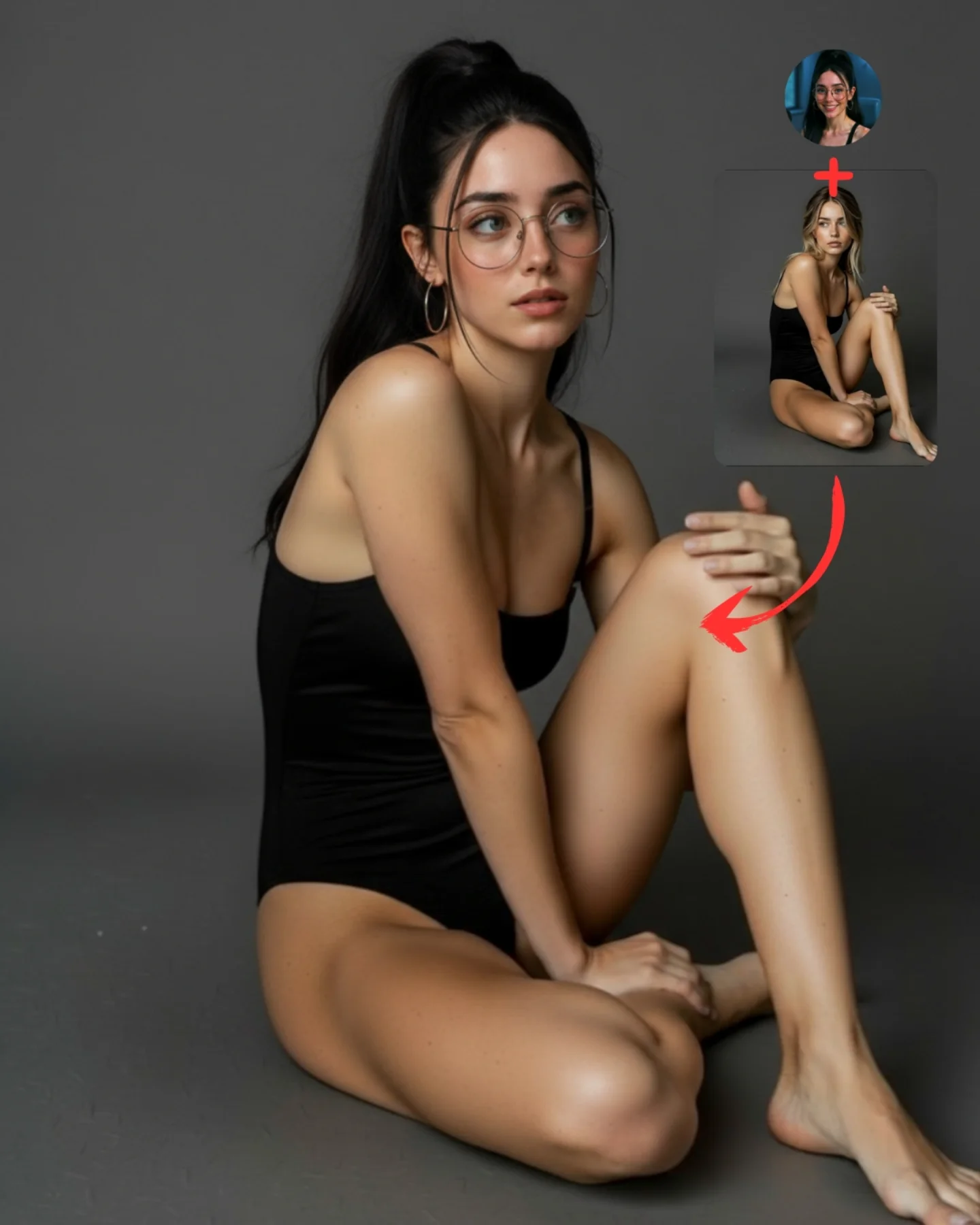
The strongest part of this image is the silhouette logic. One knee is lifted, the other leg folds outward, one arm pulls the ponytail sideways, and the torso stays upright enough to keep the whole shape readable. That combination creates multiple asymmetries without making the pose confusing. In practice, that means it is highly transferable for AI image prompting, editorial posing references, and creator education posts.
Why The Image Is Useful And Shareable
This frame performs because it solves a real creator problem: people want poses that look stylized but still feel buildable. Many pose boards fail because the body overlaps too much or the clothing hides the line of the torso and hips. Here, the fitted black one-piece keeps the pose anatomy visible, while the pink sneakers add just enough visual personality to stop the image from feeling sterile. The result is educational content that still has social appeal.
| Signal | Evidence (from this image) | Mechanism | Replication Action |
|---|
| Readable limb separation | One knee raised, one leg folded, one arm up holding ponytail | Makes the pose easy to decode and reproduce | Prioritize poses where each limb has a distinct direction and purpose |
| Simple body-revealing wardrobe | Black fitted one-piece | Keeps the silhouette clear without wardrobe noise | Use solid-color fitted clothing when the pose is the main lesson |
| Anchor accessory detail | Pink-and-white sneakers and glasses | Adds memorability without complicating the anatomy | Keep one or two identity details that do not obscure the pose |
| Minimal environment | Seamless gray studio with no distractions | Directs all attention to body geometry | Strip away background clutter when building pose reference content |
Aesthetic Read: What The Pose Is Really Doing
The image feels modern because it uses fashion styling to support instructional clarity. The high ponytail creates a vertical line that extends the pose upward, while the raised hand holding the hair adds motion and asymmetry. The sneakers ground the frame and make the seated posture feel casual rather than balletic. The glasses also help. They give the subject a recognizable face without stealing attention from the body arrangement.
There is also a smart balance between softness and control. The light is even, the background is neutral, and the pose is composed rather than spontaneous. That makes the image ideal for creators who want reliable reference material instead of mood-only inspiration.
| Observed | Why It Matters | How To Recreate |
|---|
| High ponytail held to the side | Adds movement and breaks symmetry | Give one hand a job so the upper body does not go static |
| Seated asymmetrical leg shape | Creates a fashionable but understandable silhouette | Lift one knee and let the opposite leg open sideways |
| Fitted dark outfit on light backdrop | Improves pose readability | Use a solid dark garment against a pale seamless background |
| Statement sneakers at the base of frame | Stops the image from feeling too plain | Add one grounding accessory with soft color contrast |
Where This Pose Transfers Best
- AI pose prompt tutorials: Excellent because the body geometry is easy to describe and lock.
- Fashion pose boards: Strong for sporty or streetwear references where the pose should feel casual but designed.
- Creator education posts: Useful when teaching how to build better seated poses without tangling the limbs.
- Not ideal for luxury eveningwear: The sneakers and floor pose create a casual athletic signal.
- Not ideal for romantic softness: The posture is more graphic and editorial than dreamy.
Three transfer recipes
- Keep: seated asymmetry, one arm occupied, simple backdrop. Change: outfit category and shoe style. Slot template: {outfit type} {shoe style} {hair gesture} {studio mood}
- Keep: raised ponytail gesture and one-knee-up posture. Change: background color and facial expression. Slot template: {background tone} {expression} {pose tension} {accessory detail}
- Keep: full-body educational framing. Change: genre from sporty to editorial, casting, dance, or campaign reference. Slot template: {reference genre} {wardrobe fit} {seated leg shape} {lighting softness}
Prompt Technique Breakdown
| Prompt chunk | What it controls | Swap ideas (EN, 2-3 options) |
|---|
| young woman seated on the floor with one knee raised and one leg folded outward | Core body geometry | 'cross-legged seated pose', 'one knee up squat sit', 'side-sit fashion pose' |
| one arm raised holding a high ponytail | Upper-body gesture and motion cue | 'hand on head', 'touching glasses', 'resting elbow on knee' |
| black fitted one-piece on a gray seamless background | Silhouette clarity and contrast | 'white bodysuit on beige backdrop', 'athletic set on white seamless', 'black mini dress on gray floor' |
| pink-and-white sneakers with white socks | Base styling and casual tone | 'chunky sneakers', 'combat boots', 'barefoot studio pose' |
| soft even studio lighting | Instructional cleanliness | 'high-key beauty light', 'diffused frontal softbox', 'flat editorial studio light' |
Execution Playbook
Lock three things first: the leg arrangement, the raised-hand hair gesture, and the fitted outfit silhouette. Those are the non-negotiables. Then iterate one knob at a time. First run: establish the seated anatomy. Second run: refine the ponytail direction and hand placement. Third run: tune the sneaker color and sock length. Fourth run: adjust facial expression only after the pose is stable. That order keeps the image useful as reference material instead of drifting into vague fashion portrait territory.