How soy_aria_cruz Made This Seated Knee-Up Pose Image — and How to Recreate It
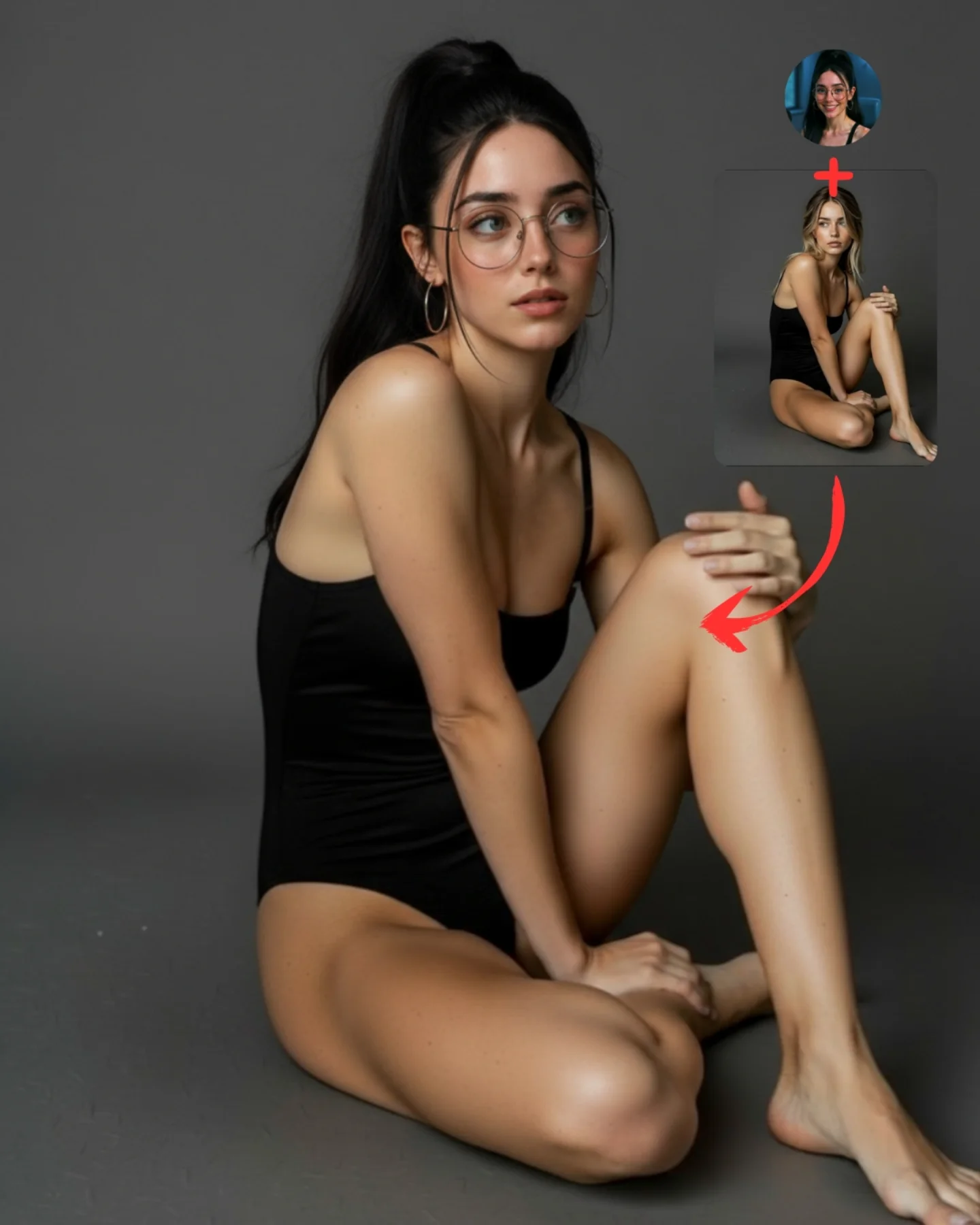
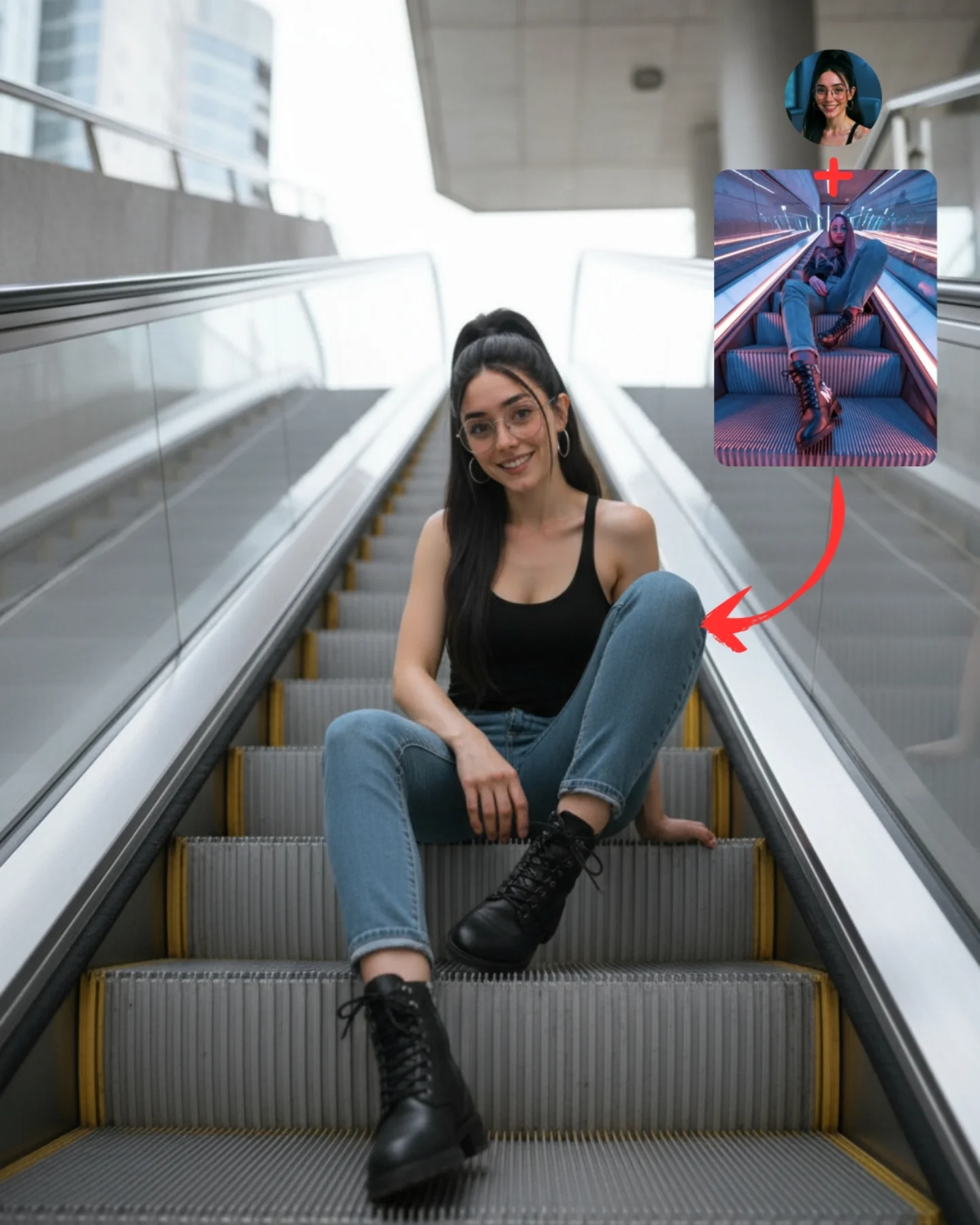
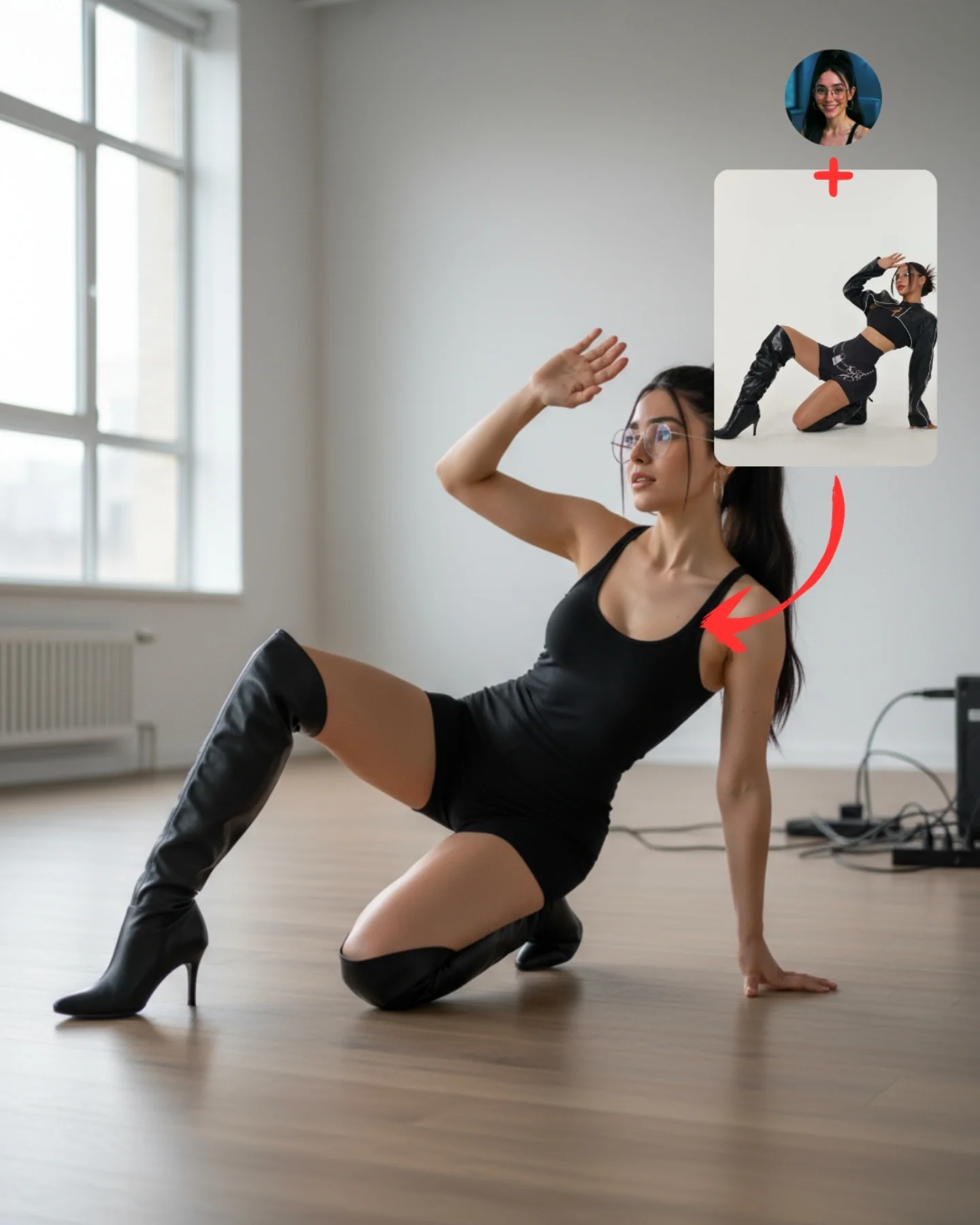
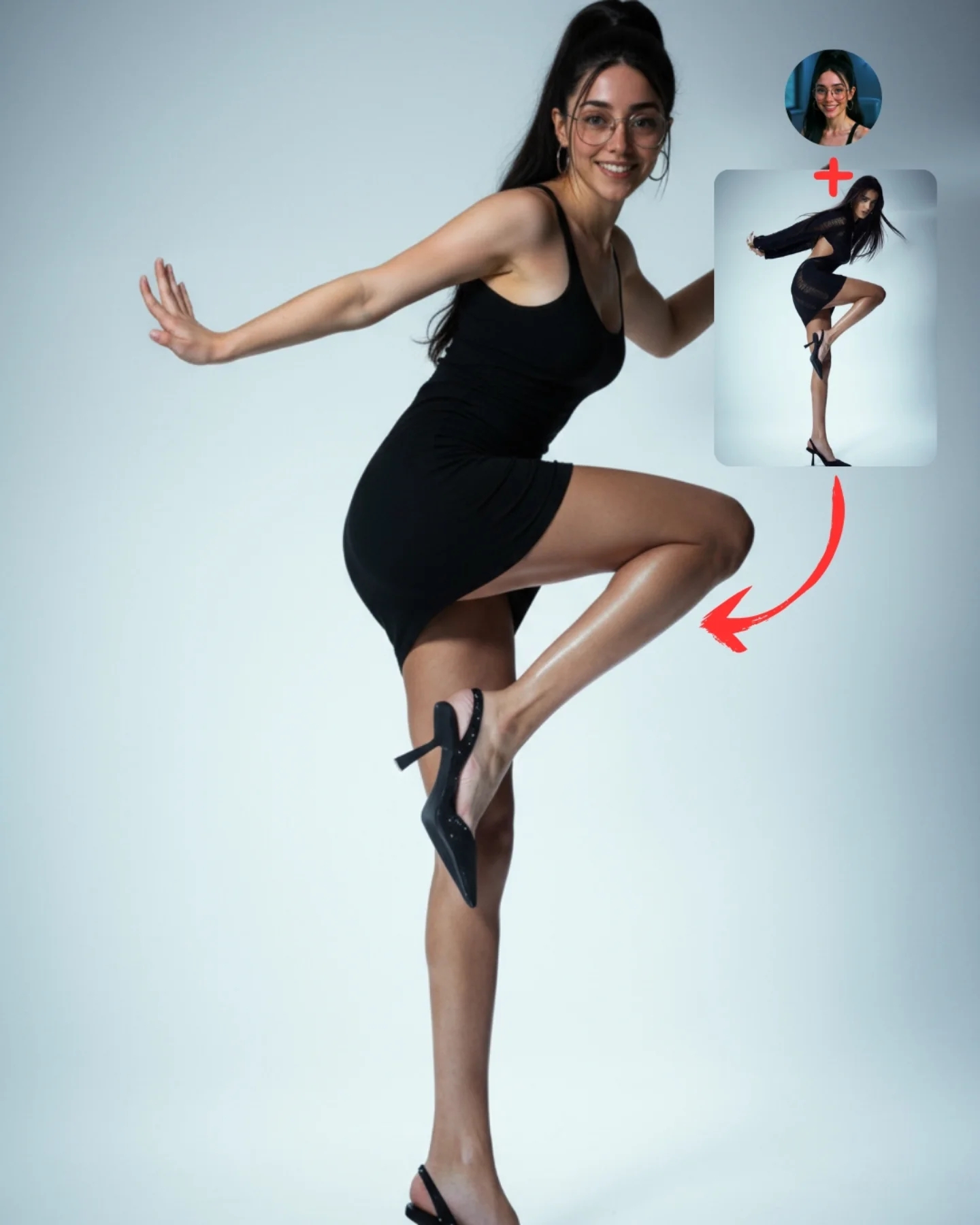
This image is strong for the same reason many viral pose boards are strong: it simplifies complexity without becoming boring. The pose has enough asymmetry to feel stylish, but not so much that it becomes hard to describe. One knee is lifted, one leg folds beneath the body, the hands each have a clear job, and the face turns away just enough to create mood. That balance makes the image both aesthetically pleasing and technically reusable.
For creators who build prompts or teach pose recreation, this kind of reference is more valuable than a louder fashion image. The wardrobe stays quiet, the background stays empty, and the body line stays legible. That means the pose itself becomes the content. When a viewer can understand the structure immediately, the image becomes easy to save, copy, and adapt.
Why This Pose Board Style Performs
The frame works because it solves a visual instruction problem. Many seated poses collapse into overlapping limbs and unclear balance points. This one does not. The raised knee creates an obvious front anchor, the folded leg shapes the base, and the hand on the knee gives the upper body a natural resting point. Even the side gaze helps. It makes the image feel more editorial while preserving the pose geometry.
| Signal | Evidence (from this image) | Mechanism | Replication Action |
|---|
| Clear seated architecture | One knee upright, opposite leg folded under, hands separated | Makes the pose easy to decode and rebuild | Choose seated references where each limb direction is clearly readable |
| Quiet wardrobe | Black fitted one-piece with no distracting details | Keeps attention on anatomy and posture | Use solid fitted clothing when the pose is the main teaching element |
| Editorial mood | Soft side gaze and clean gray studio | Adds sophistication without reducing clarity | Turn the face slightly off-camera after the pose structure is locked |
| Minimal environment | No props, no furniture, no competing objects | Improves instructional usefulness | Remove every nonessential object when creating pose reference assets |
Aesthetic Read: Why The Image Feels Balanced
The pose feels elegant because it combines openness and containment. The raised knee opens the shape forward, while the folded leg and bent arms keep the body compact. That creates a clear silhouette without making the subject appear stiff. The high ponytail and round glasses give the portrait a recognizable character, but those details stay secondary to the pose itself.
The lighting also helps. It is soft enough to keep the skin smooth, but directional enough to define the leg planes, shoulder line, and jaw. That is exactly the sweet spot for reference imagery. Too flat, and the body loses form. Too dramatic, and the pose becomes harder to copy accurately.
| Observed | Why It Matters | How To Recreate |
|---|
| Raised knee closest to camera | Creates depth and a stable anchor point | Bring one knee forward so the pose reads immediately in silhouette |
| Side gaze instead of direct eye contact | Adds mood while keeping the face calm | Ask the subject to look slightly past the camera rather than into it |
| Barefoot styling on plain floor | Removes distractions at the base of the frame | Skip footwear if the goal is pure pose readability |
| Dark outfit against gray seamless background | Improves edge definition and body clarity | Pair a dark fitted garment with a neutral studio backdrop |
Best Use Cases And Transfers
- Pose reference tutorials: Ideal because the anatomy is clear and the composition is simple to explain.
- Editorial casting studies: Strong for clean, minimal, fashion-adjacent pose boards.
- AI prompt engineering examples: Useful for showing how to lock leg structure, hand placement, and gaze direction.
- Not ideal for energetic sports imagery: The pose is composed and seated, not kinetic.
- Not ideal for maximal styling campaigns: The image is intentionally too minimal for costume-led storytelling.
Three transfer recipes
- Keep: raised-knee seated base, soft side gaze, clean backdrop. Change: outfit category and hair finish. Slot template: {outfit type} {hair styling} {gaze direction} {studio tone}
- Keep: one knee forward and one leg tucked under. Change: mood from calm to stern, dreamy, or alert. Slot template: {emotion} {leg geometry} {hand placement} {lighting softness}
- Keep: minimalist studio and fitted wardrobe. Change: genre to beauty editorial, campaign pose board, or dance reference. Slot template: {reference genre} {bodysuit style} {camera height} {background shade}
Prompt Technique Breakdown
| Prompt chunk | What it controls | Swap ideas (EN, 2-3 options) |
|---|
| young woman seated on the floor with one knee raised and one leg folded underneath | Main pose geometry | 'cross-legged seated pose', 'side-sit floor pose', 'compact fashion sit' |
| calm side gaze looking left | Emotional tone | 'direct eye contact', 'downward thoughtful look', 'soft upward glance' |
| black fitted one-piece on dark gray seamless background | Silhouette clarity and contrast | 'white bodysuit on beige seamless', 'athletic set on gray studio floor', 'black slip dress on taupe backdrop' |
| barefoot styling with no props | Minimalism and instructional cleanliness | 'socks only', 'simple sneakers', 'bare legs with studio floor contact' |
| soft front-left studio lighting | Form definition without harsh drama | 'diffused frontal light', 'soft beauty light', 'low-contrast editorial light' |
Execution Playbook
Lock three things first: the leg arrangement, the gaze direction, and the fitted one-piece silhouette. Those are the image anchors. Then iterate one knob at a time. First run: stabilize the seated anatomy. Second run: refine hand placement on the knee and near the floor. Third run: adjust the face angle and side gaze. Fourth run: only then tune the background darkness and skin highlight softness. That sequence keeps the image valuable as a reusable reference rather than drifting into a generic portrait.