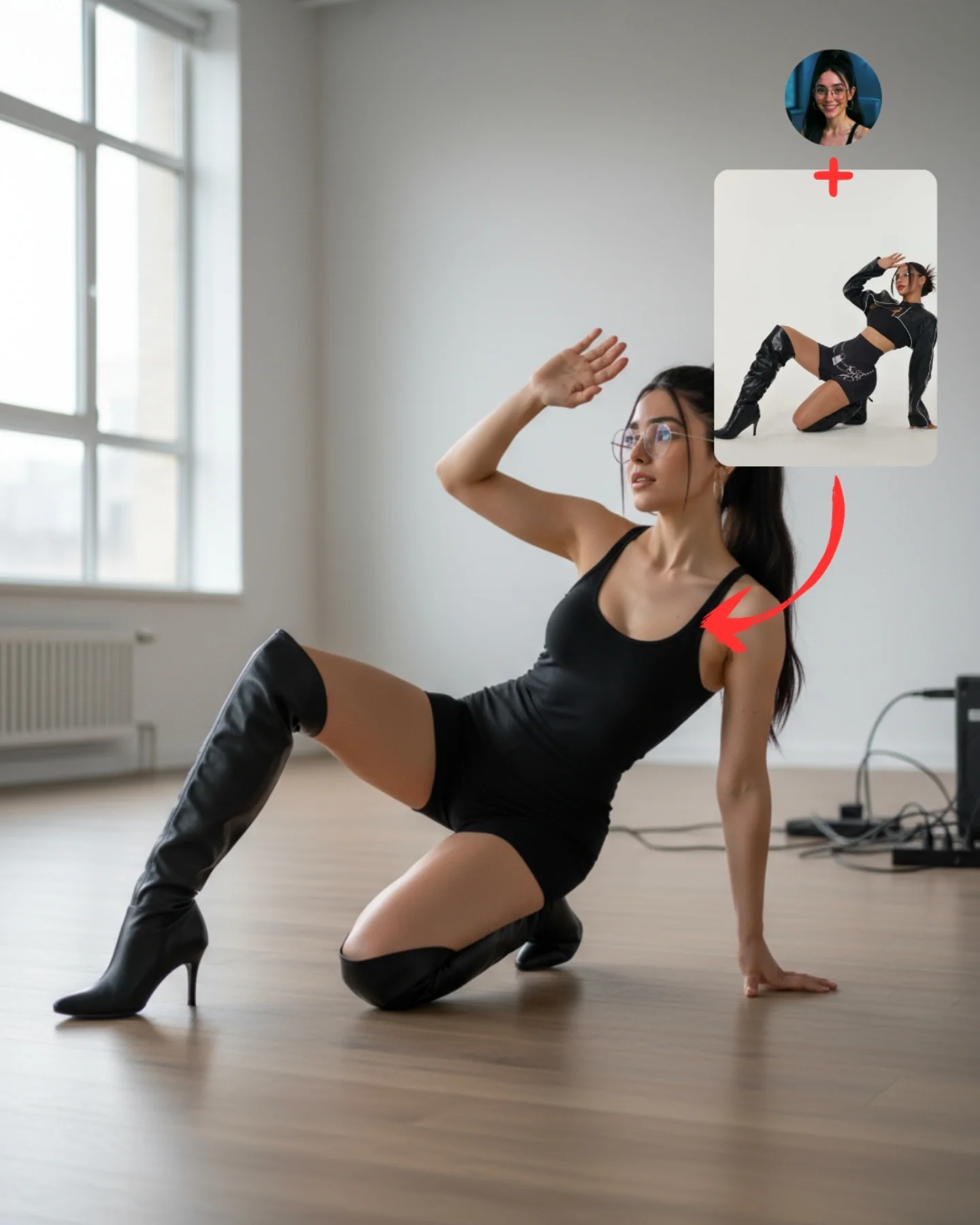
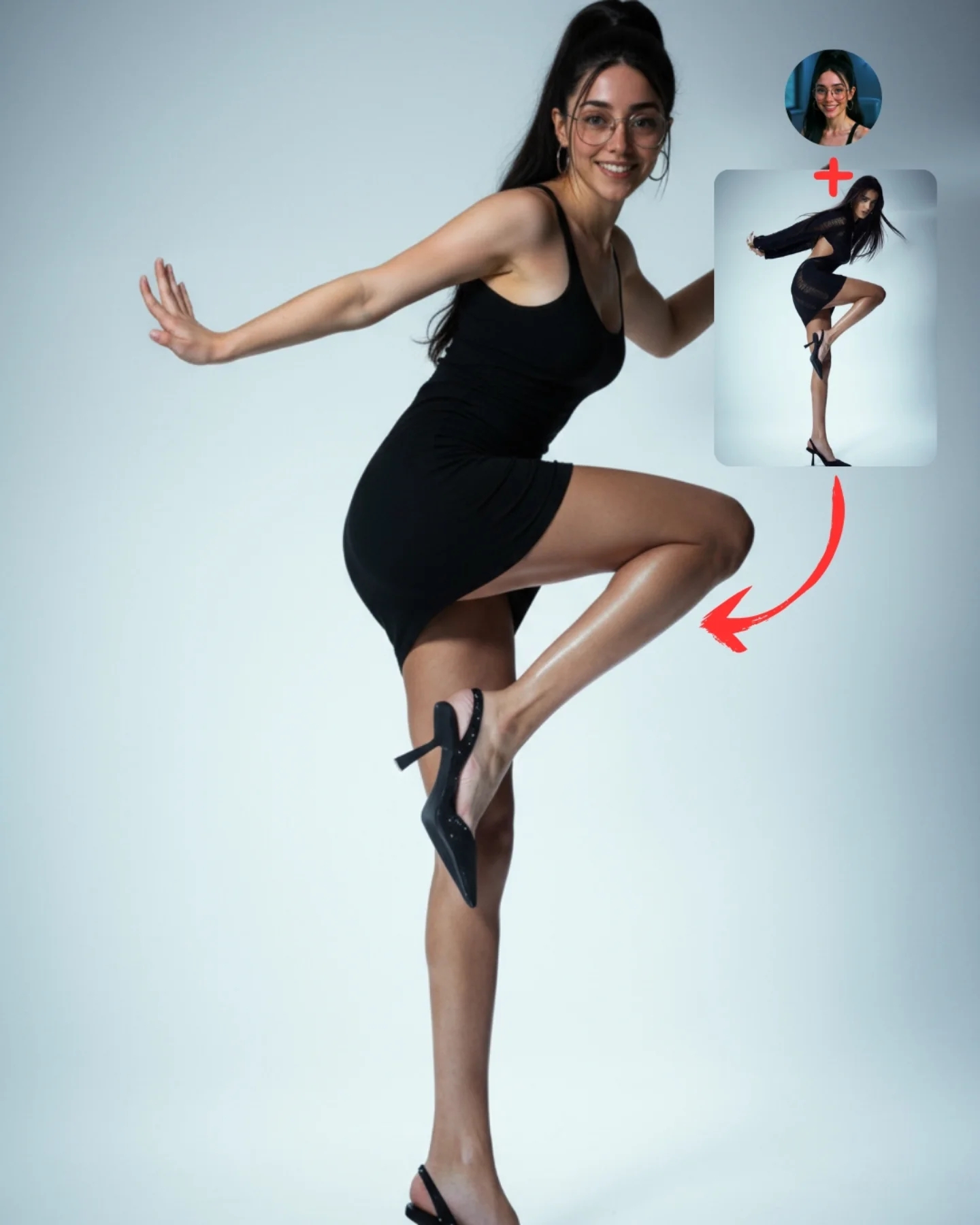
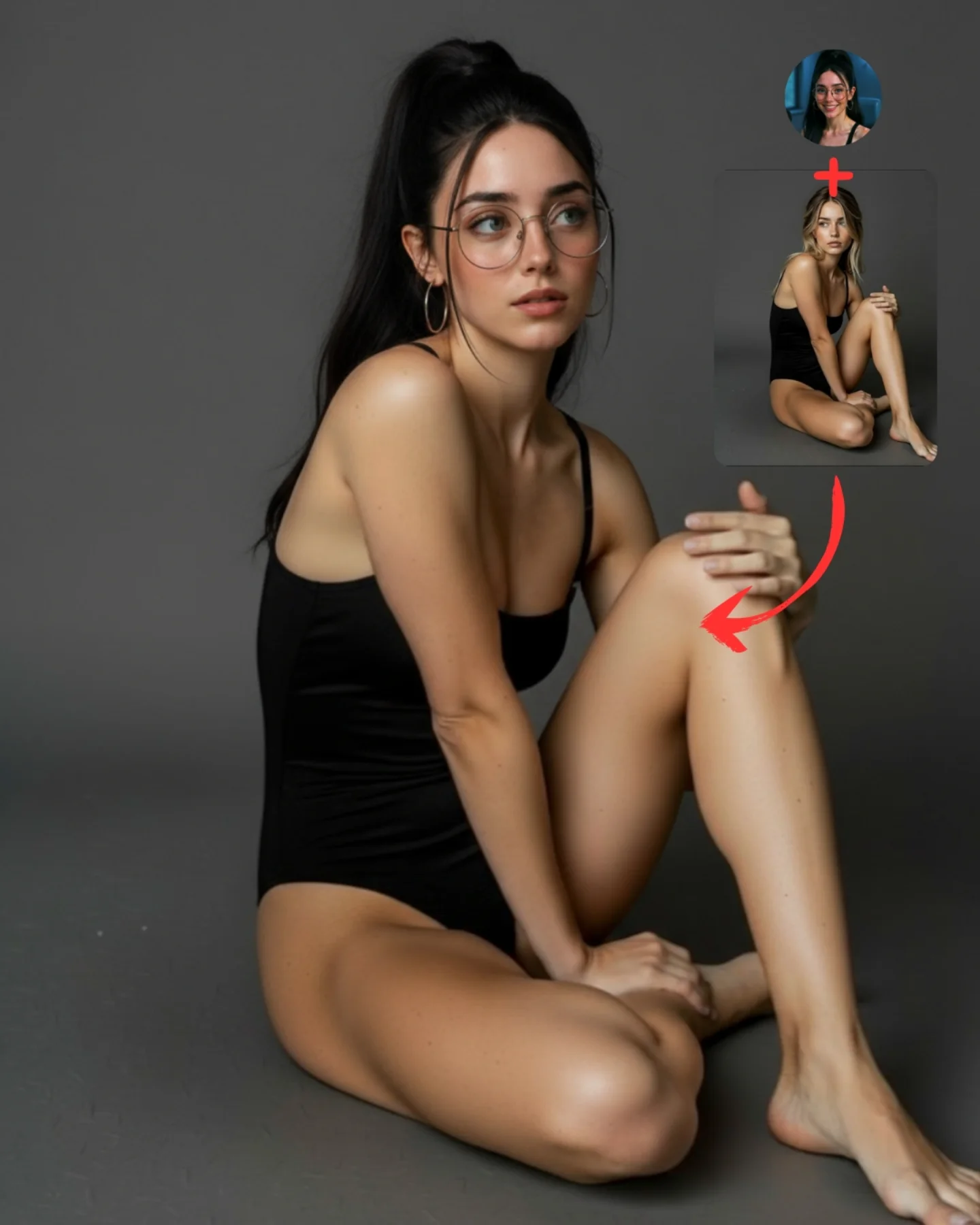
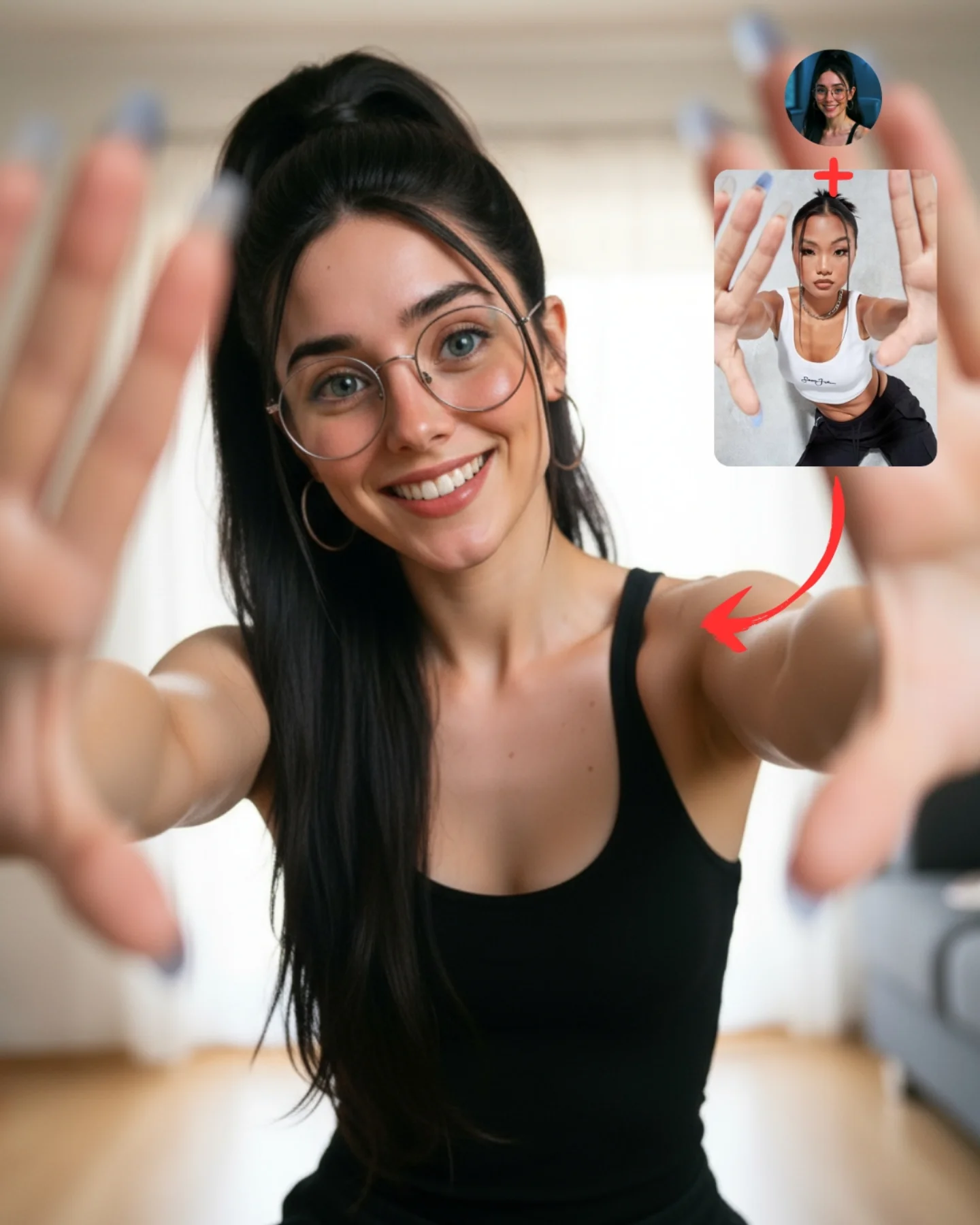
How soy_aria_cruz Created This Escalator Sitting Pose AI
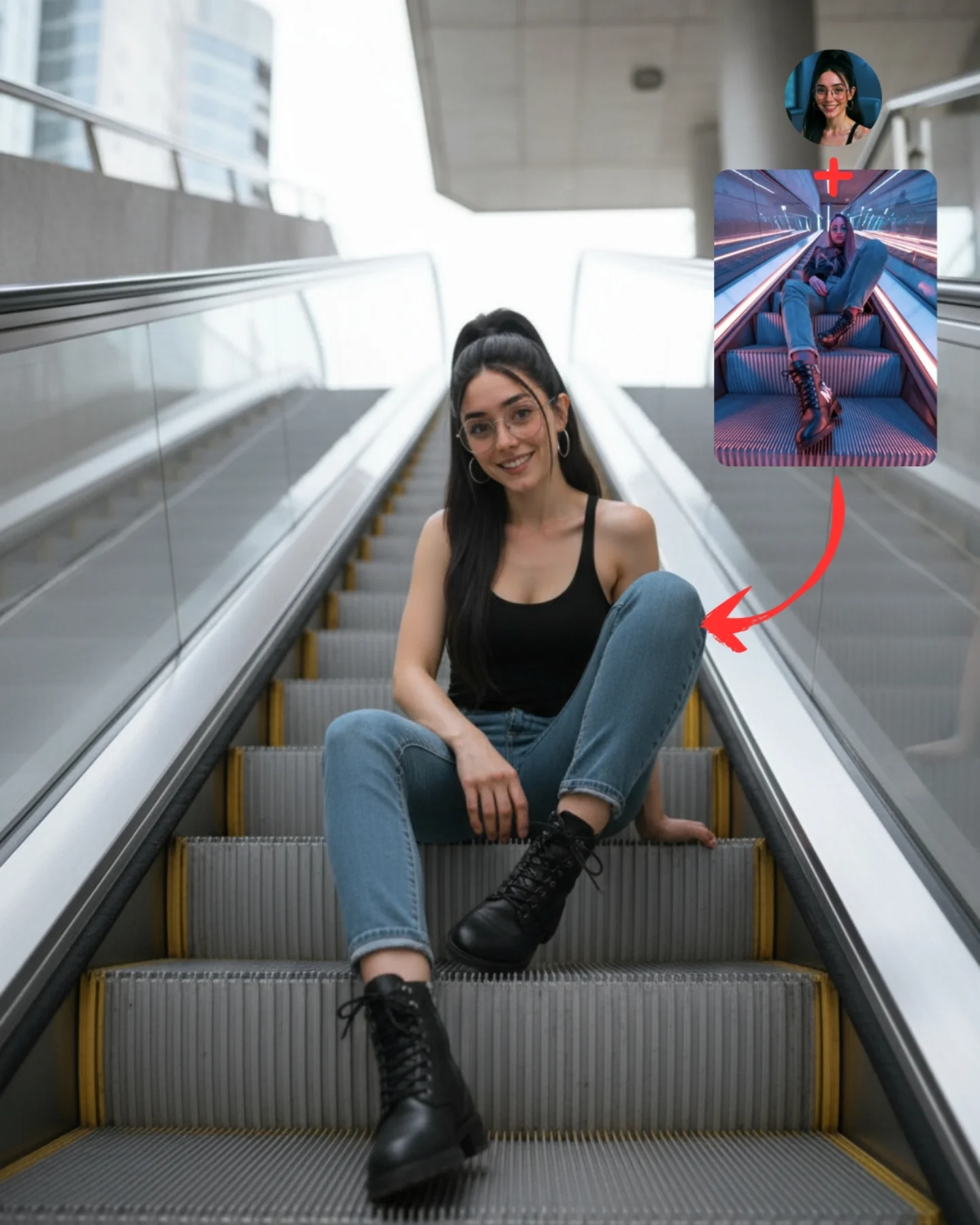
This image works because the pose feels casual without losing structure. The subject is placed dead center inside a strong escalator corridor, so the relaxed seated posture reads clearly while the architecture gives the frame built-in drama. For prompt design, the key is to separate the real photographic scene from the tutorial overlays that sit on top of the source image.
Signal Breakdown
| Element | What to keep | What to remove |
|---|
| Pose | One knee raised, one leg extended, relaxed seated balance on escalator step | Do not reference the pose tutorial arrow as part of scene content |
| Wardrobe | Black tank top, light blue jeans, black combat boots, hoop earrings | No wardrobe replacement unless intentionally remixing |
| Setting | Modern escalator, metal rails, open-air urban architecture, daylight | No collage framing or picture-in-picture reference box |
| Graphics | None | Remove avatar bubble, inset image, red arrow, red plus sign, and tutorial text logic |
Prompt Construction
| Prompt Layer | Recommended phrasing |
|---|
| Subject | Young woman with long black ponytail, smiling, seated casually on escalator steps |
| Pose | One knee raised near chest, one leg extended lower, relaxed hands, natural seated posture |
| Scene | Clean urban escalator with symmetrical rails and soft outdoor daylight |
| Look | Photorealistic lifestyle fashion portrait with realistic skin, denim, and leather textures |
| Negative space | No text overlays, no reference inset, no red arrows, no UI markers |
Aesthetic Reading
The visual appeal comes from contrast: casual body language against rigid architectural symmetry. That makes this a strong source for influencer, streetwear, transit-lifestyle, and “captured in motion but composed” prompt families. The soft daylight also keeps the mood natural rather than cinematic, which helps if the goal is realism instead of spectacle.
How To Reuse The Prompt
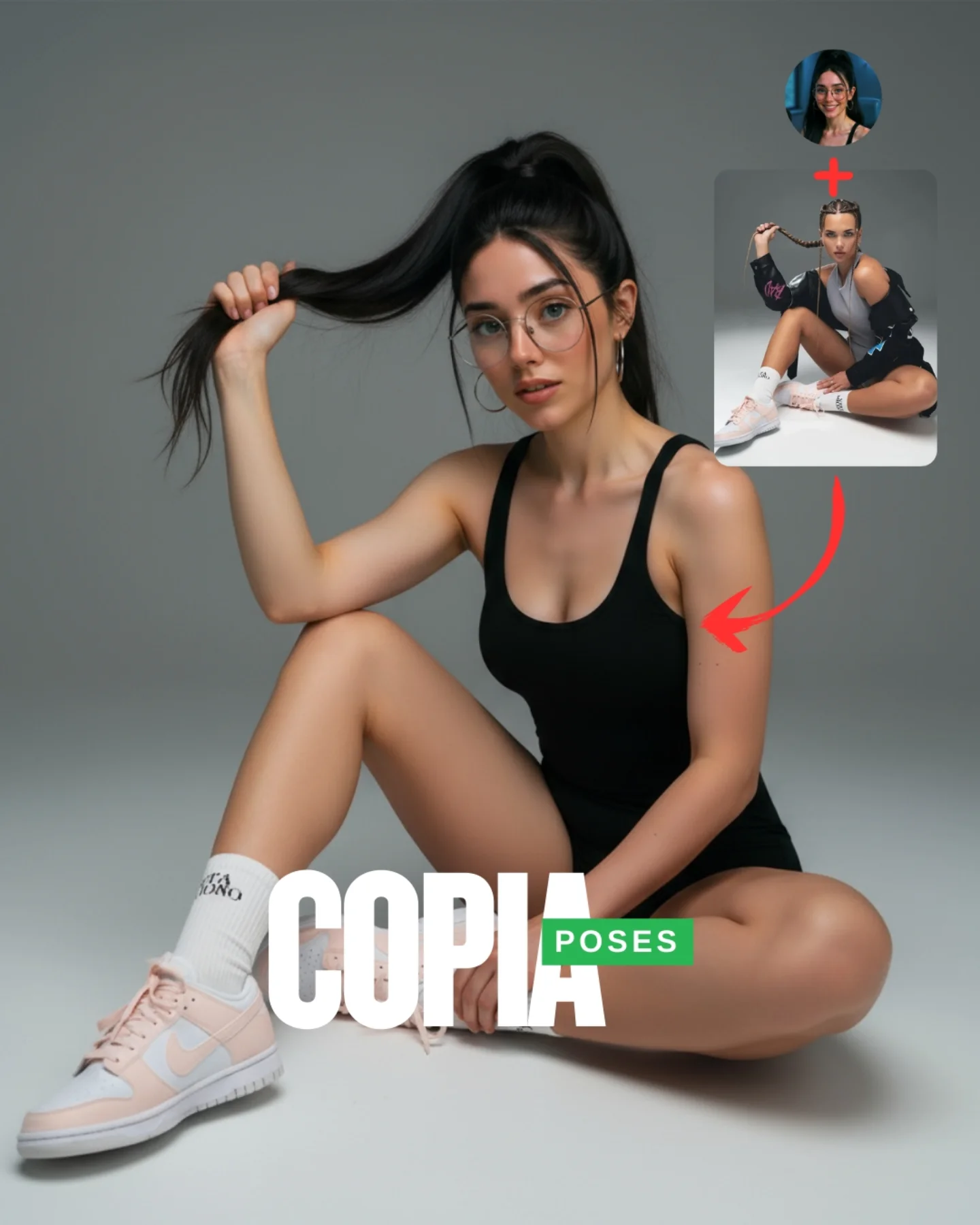
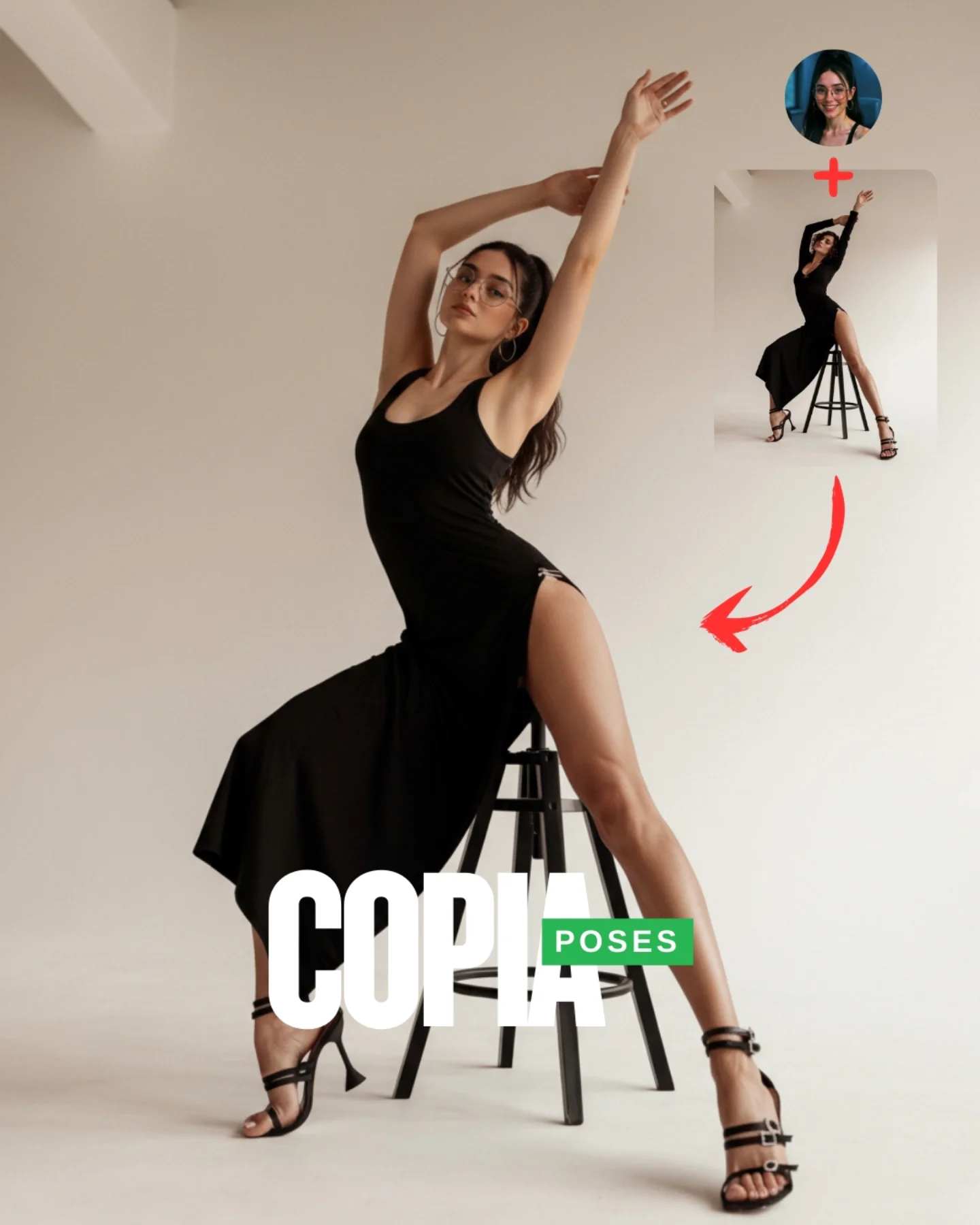
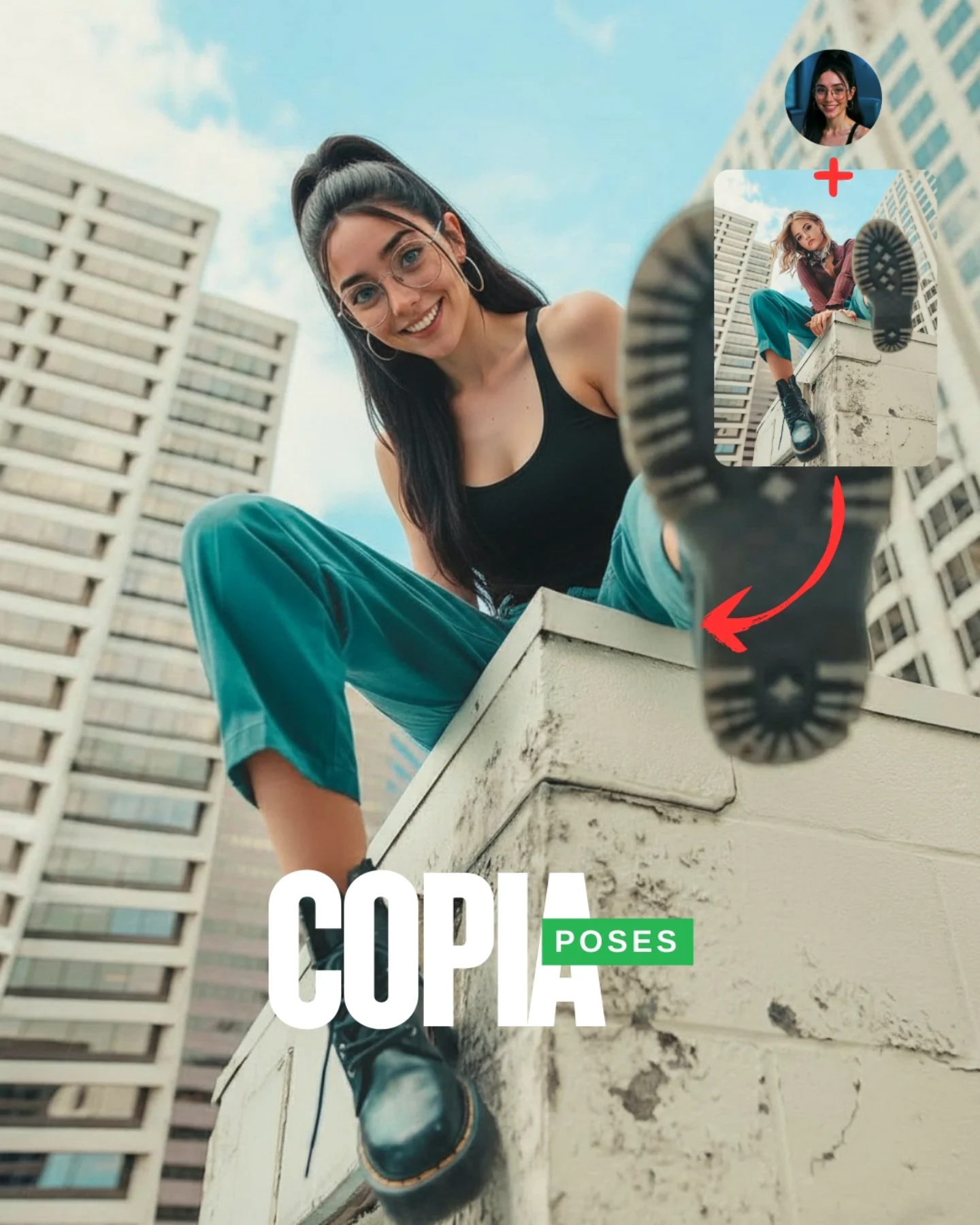
You can transfer the same body arrangement into different scenes by preserving the seated asymmetry and swapping only the environment. Examples include subway stairs, rooftop bleachers, museum steps, parking structure ramps, or backstage arena corridors. If you want stronger editorial energy, tighten the crop and increase contrast; if you want a friendlier social-media look, keep the wider full-body framing and diffuse daylight.
Execution Notes
For best results, describe the pose before the environment gets too complex. Then explicitly subtract all tutorial artifacts in the negative prompt. If the model keeps reintroducing graphics, reinforce that the output must be a single clean photograph with no inset images or symbols. This usually stabilizes both realism and composition.