How curiousrefuge Made This Medieval Knight Mountain Peak AI Portrait -- and How to Recreate It
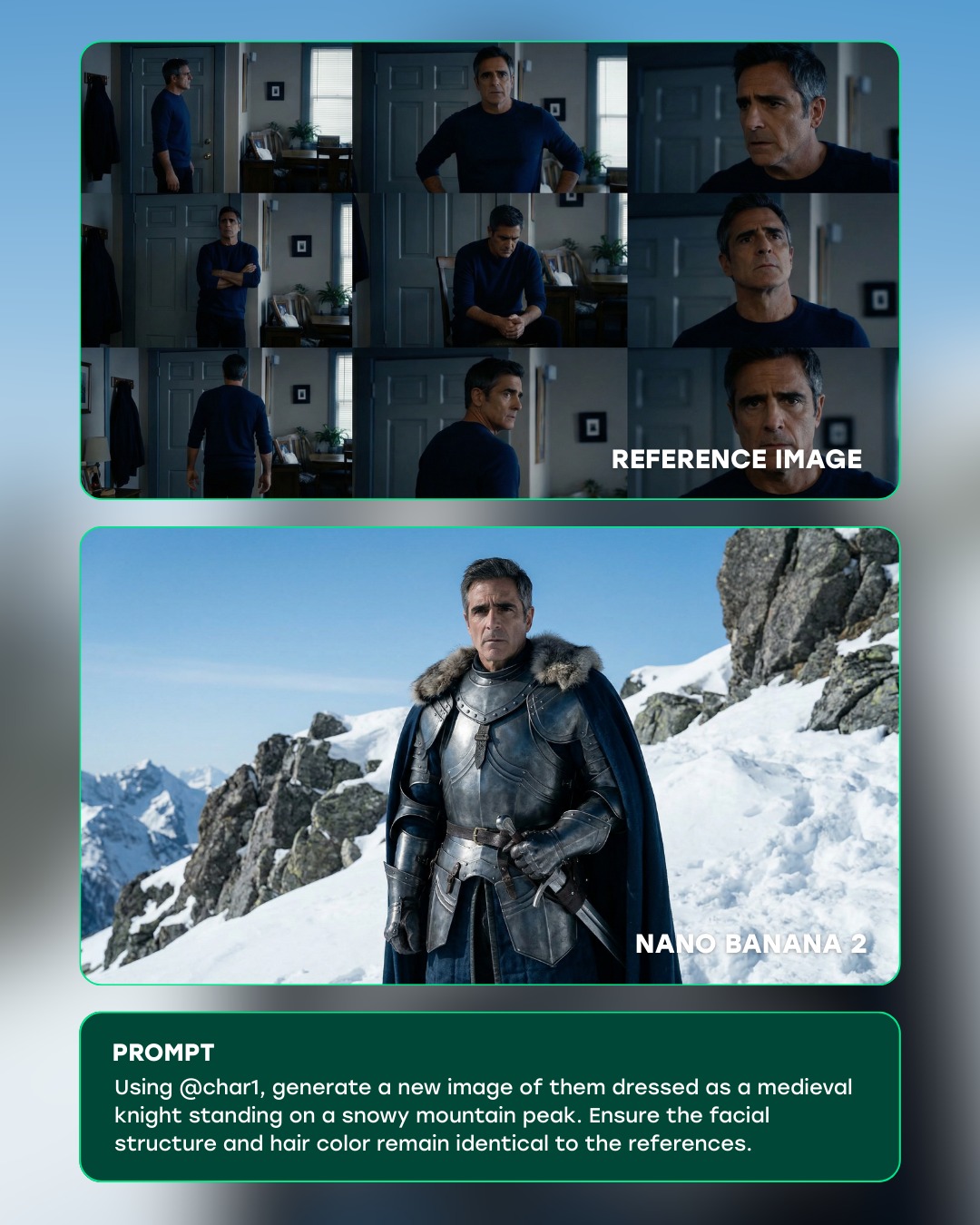
This image is useful because it is not just a fantasy portrait. It is a complete visual teaching asset about AI transformation. The layout presents a multi-angle reference collage of an older man, a generated medieval knight result, and a visible prompt panel that explains the transformation logic. That three-part structure turns the image into something more valuable than a single before-and-after comparison. It shows process, not just outcome. For prompt writers, educators, and creators building tutorial content, that distinction matters.
At the center of the piece is a familiar challenge in generative imaging: changing the world around a person without changing who the person is. The source subject appears indoors wearing everyday clothing, while the result reimagines him as a medieval knight on a snowy mountain ridge. If the transformation succeeds, the viewer should still recognize the same mature face, hair color, age, bone structure, and expression logic. That is the core task. The armor, cape, alpine setting, and cinematic treatment are all secondary to the primary requirement of identity preservation.
This makes the image especially strong for educational use because it demonstrates that prompt quality is not just about visual flair. A transformation prompt has to manage continuity. It must tell the system what can evolve and what cannot. When creators fail to do that, the result often becomes a face swap rather than a transformation. This image is a reminder that good prompting is often about protecting sameness as much as generating novelty.
Why the Three-Panel Layout Works So Well
The first reason the layout succeeds is that it gives the viewer enough context to judge the transformation honestly. The reference grid shows the subject from multiple angles inside a normal domestic interior. That matters because one polished headshot would not provide enough grounding. The 3x3 arrangement gives the model a stronger likeness base and gives the viewer a stronger basis for comparison. It also visually communicates that identity was established through reference breadth rather than guesswork.
The middle panel is where the fantasy transformation happens. Here the subject appears as a knight in dark metallic armor with fur-trimmed layers and a mountain backdrop. The image is cinematic, but it still feels like the same person because the face remains mature, the hair stays salt-and-pepper, and the expression is serious in a recognizable way. That continuity is what turns the image from generic fantasy output into a useful case study in prompt control.
The bottom prompt panel completes the educational loop. Without it, the image would still be attractive, but it would be less instructive. Showing the instruction text transforms the piece into a reusable prompt asset. It invites creators to inspect how the transformation was framed and to think critically about how to reproduce similar results in other genres. This is why workflow-board layouts are often better than single-image showcases when the goal is learning rather than passive admiration.
Identity Preservation Is the Real Achievement
Many transformation prompts fail because they over-emphasize costume, environment, and genre while under-defining the human identity that must remain consistent. In this example, the subject’s maturity is preserved, and that is essential. The face does not become younger, smoother, or more conventionally heroic than the source. The hair color remains true to the input. The nose shape, brow structure, jawline, and overall facial rhythm stay aligned with the reference. That is what makes the final knight image convincing.
When writing a prompt for this type of transformation, it helps to separate identity traits from styling traits. Identity traits include age category, facial structure, hair color, hair density, skin tone, brow line, nose shape, eye spacing, and general expression family. Styling traits include armor design, fur trim, cape color, mountain weather, and fantasy rendering quality. If those two categories are not clearly handled, the model may protect the armor and lose the man.
That is why mature transformation prompts often need explicit likeness instructions. It is not enough to say “make him a medieval knight.” A stronger prompt would state that the same middle-aged male face must remain recognizable, with consistent facial lines and unchanged salt-and-pepper hair, while the clothing and setting shift into dark steel fantasy armor on an alpine ridge. The clearer those limits are, the better the result tends to be.
How the Fantasy Layer Adds Drama Without Replacing the Person
The generated knight image works because it adds narrative gravity without breaking identity. The armor is dark, weighted, and believable. The fur collar adds texture and visual status. The mountain ridge introduces environment-based drama through snow, rock, and sky. These details build a medieval fantasy story around the subject rather than turning him into an anonymous costume mannequin. That distinction is easy to miss, but it is central to why the result feels premium.
In many poor transformations, the costume swallows the face. Helmets, extreme shadows, or overly stylized rendering can obscure the very features that need to remain recognizable. This image avoids that. The face remains visible and central. The armor supports the subject instead of replacing him. For prompt engineers, this is a reminder that fantasy detailing should enhance role and setting without overpowering likeness.
The mountain environment also helps because it is specific enough to add narrative scale without becoming crowded. Jagged rocks, snow, and clear cold sky are enough to establish an alpine battlefield or ceremonial fantasy atmosphere. There is no need for castles, armies, dragons, or a dozen extra props. The more controlled the environment, the easier it is to keep the face as the primary anchor of the scene.
What Makes the Reference Grid Valuable
The reference panel is not just there to prove that the source existed. It performs technical work. Multiple angles reduce ambiguity. They teach the model what the face looks like in profile, three-quarter view, and front view. They also help preserve head shape and facial volume, which are often lost when models rely on one flattering angle. For likeness-heavy transformations, reference diversity matters more than reference glamour.
The indoor setting of the reference sheet is also useful because it stays visually neutral. A soft room with doors, walls, and houseplants gives enough context to feel natural while remaining subordinate to the person. If the source images were overly stylized or already cinematic, they might confuse the relationship between identity and transformation. Here, the subject begins in a plain, everyday context, making the fantasy conversion more legible.
From an educational writing standpoint, this panel also teaches creators not to underestimate prep material. Many prompt workflows focus on the instruction and ignore the importance of source quality. But a well-built transformation result is usually the product of both a good prompt and good references. The board format visualizes that truth clearly and elegantly.
How to Write a Better Prompt for This Type of Image
A strong prompt for this category should open by defining the subject in identity terms first: older man, short salt-and-pepper hair, serious expression, consistent facial structure, realistic mature skin, same head shape and features as the provided references. Only after that should the prompt introduce the transformation target: medieval knight, dark steel armor, fur collar, heavy cape, snowy mountain ridge, photoreal fantasy styling. That order matters because it tells the system what is foundational and what is ornamental.
It is also useful to specify the desired visual grammar of the board itself. This image is not just a transformation prompt; it is a creator tutorial layout. So the prompt should include three stacked panels, rounded cards, a clean gradient background, clear labels, and a visible prompt section beneath the output image. Without those instructions, a model may produce a fantasy portrait but fail to preserve the workflow-board design that makes the piece educational.
Negative constraints should be equally direct. You do not want a younger version of the subject, a random beard added, a face-obscuring helmet, messy typography, unreadable prompt text, low-detail armor, cartoon simplification, or duplicate people. These instructions are not optional. They are what keep the board from collapsing into generic fantasy art or broken educational UI.
Why This Image Works for Creator Education
This format is ideal for creator education because it compresses an entire lesson into one frame. The viewer sees the input, the transformed output, and the textual instruction that connects them. That makes the asset reusable in carousels, blog articles, workshops, internal prompt libraries, and creator tools. Instead of only showing off a cool result, it teaches a method. That is the difference between portfolio content and educational content.
For blog writing, the image could support topics like how to preserve identity in AI image generation, how to build fantasy transformations from realistic references, how to format an educational before-and-after post, or how to write stronger transfer prompts. It is useful for these topics because the design itself already contains the logic of instruction. The writing only needs to make that logic explicit.
For social media, this image could anchor a tutorial thread on the difference between likeness retention and costume replacement. It could also illustrate why multiple input angles matter or why the best prompt demonstrations are often the ones that expose their own process. In short, the image is not just content. It is a framework for teaching content.
Common Prompting Mistakes This Example Avoids
One common mistake is treating transformation as pure aesthetic replacement. When that happens, the model swaps the entire person instead of the setting and clothing. Another mistake is hiding the face under armor or cinematic darkness. That may look dramatic, but it defeats the educational goal. This image avoids both problems by keeping the face central and readable while letting the costume and environment carry the fantasy layer.
Another problem in weaker workflow graphics is cluttered layout. Too many badges, arrows, icons, or panels can make a prompt board feel chaotic. This example uses rounded panels and clean spacing, which gives it a premium product-demo feel. That restraint improves readability and helps the viewer understand the sequence immediately. In a tutorial context, clean structure is not just a design preference; it is part of the pedagogy.
Finally, many creators forget that believable armor is part of likeness preservation too. If the costume is low-detail, plastic-looking, or visually inconsistent with the subject’s scale and age, the transformation feels fake. Here, dark metal textures and layered fabrics give the image enough physical credibility to support the fantasy. That is another reason the output feels professional instead of gimmicky.
Practical Takeaway
If you want to produce better transformation boards like this one, start by defining three pillars: source clarity, identity lock, and transformation layer. Source clarity comes from multi-angle references. Identity lock comes from explicit facial continuity instructions. Transformation layer comes from costume, environment, and rendering detail. If you build prompts around those pillars, your results will usually be more stable and more educationally useful.
This image demonstrates that good AI content is not just about getting a cool fantasy scene. It is about making the transformation legible, repeatable, and instructive. The best transformation assets do not hide how they were made. They reveal just enough structure that another creator can study the board and learn from it. That is why this format has long-term value beyond immediate visual appeal.
In the end, the image succeeds because it respects both sides of the equation: the original human identity and the new imaginative setting. It does not sacrifice one for the other. That balance is exactly what makes identity-preserving prompt design worth learning, and exactly why this workflow board is a strong example of thoughtful AI image education.