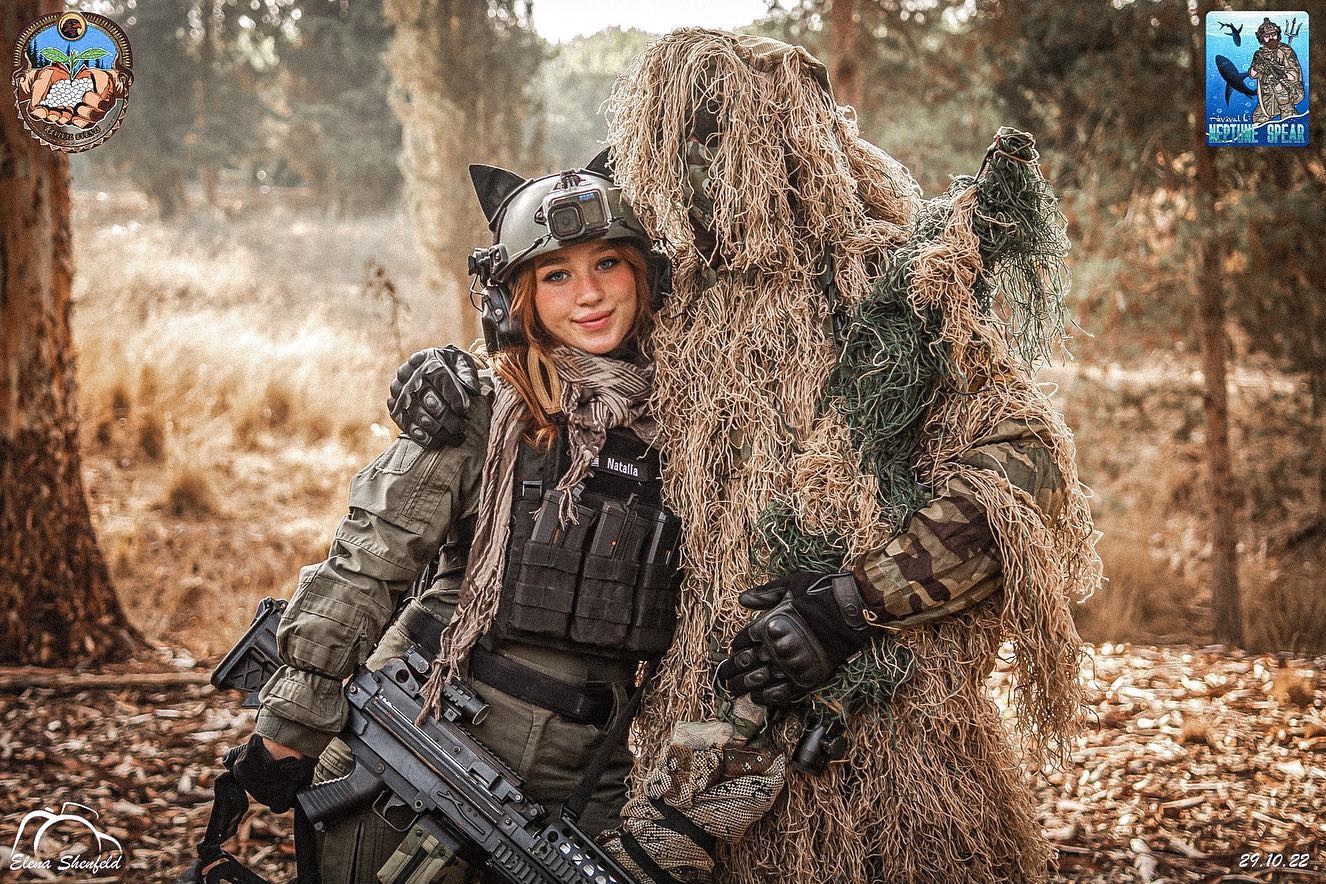
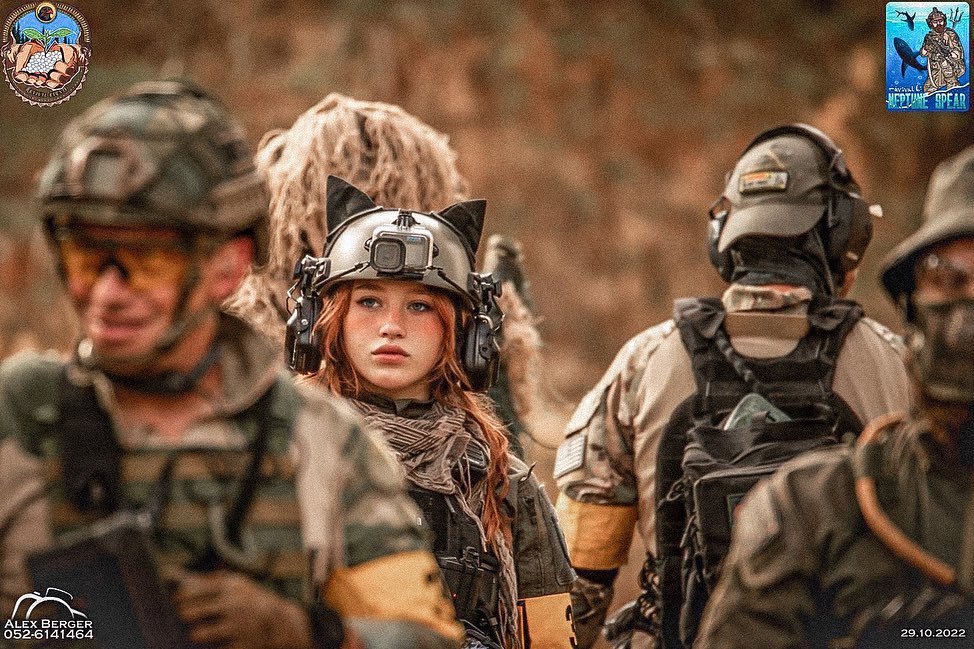
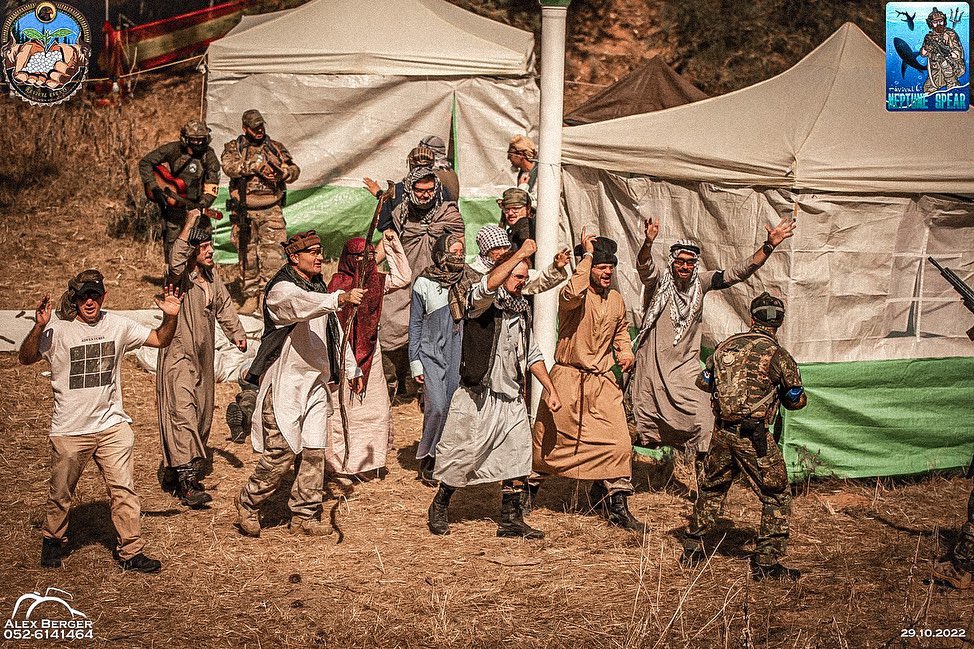
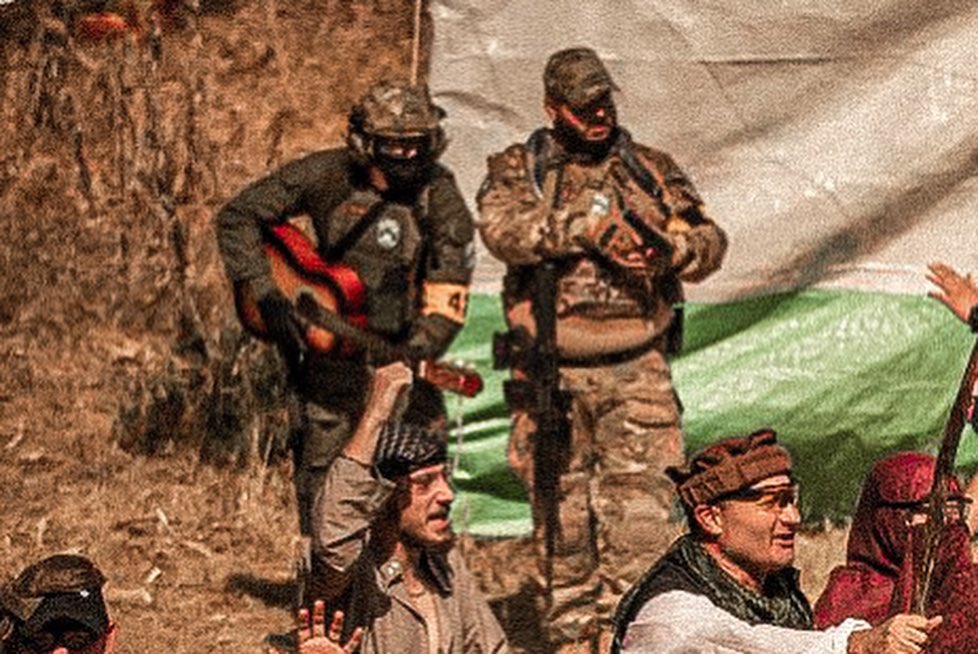
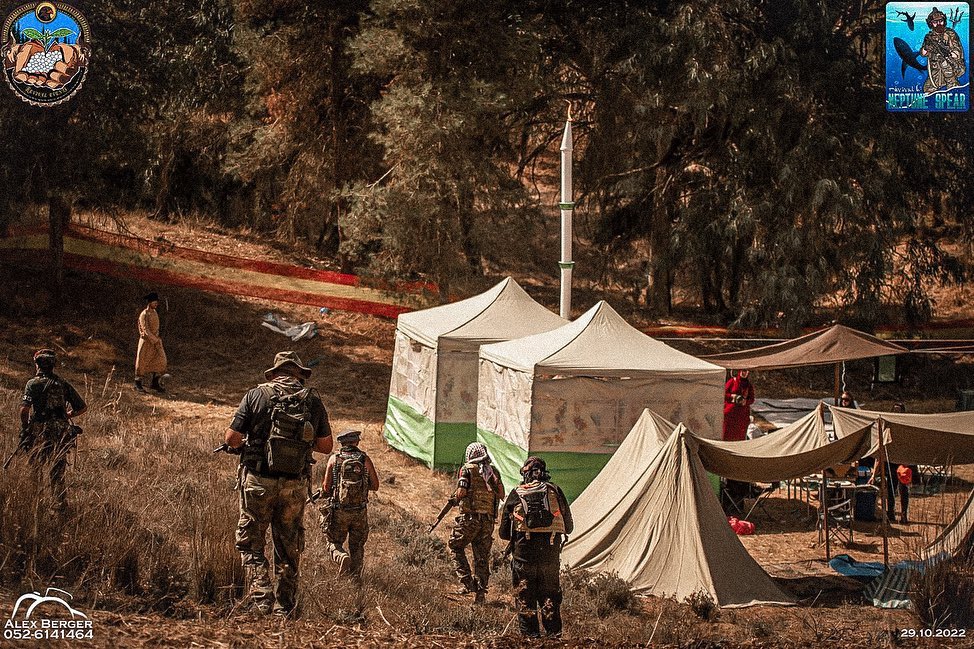
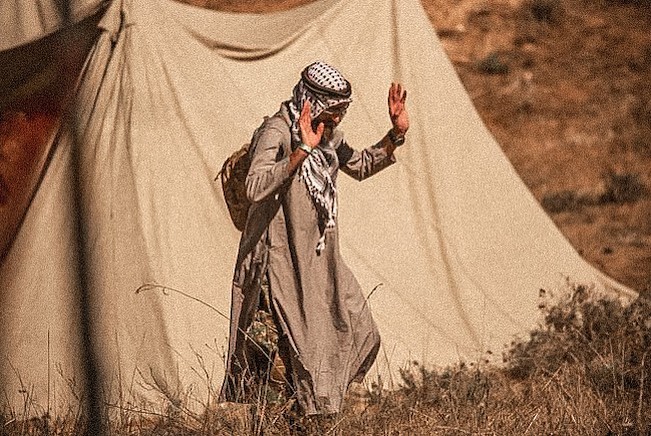
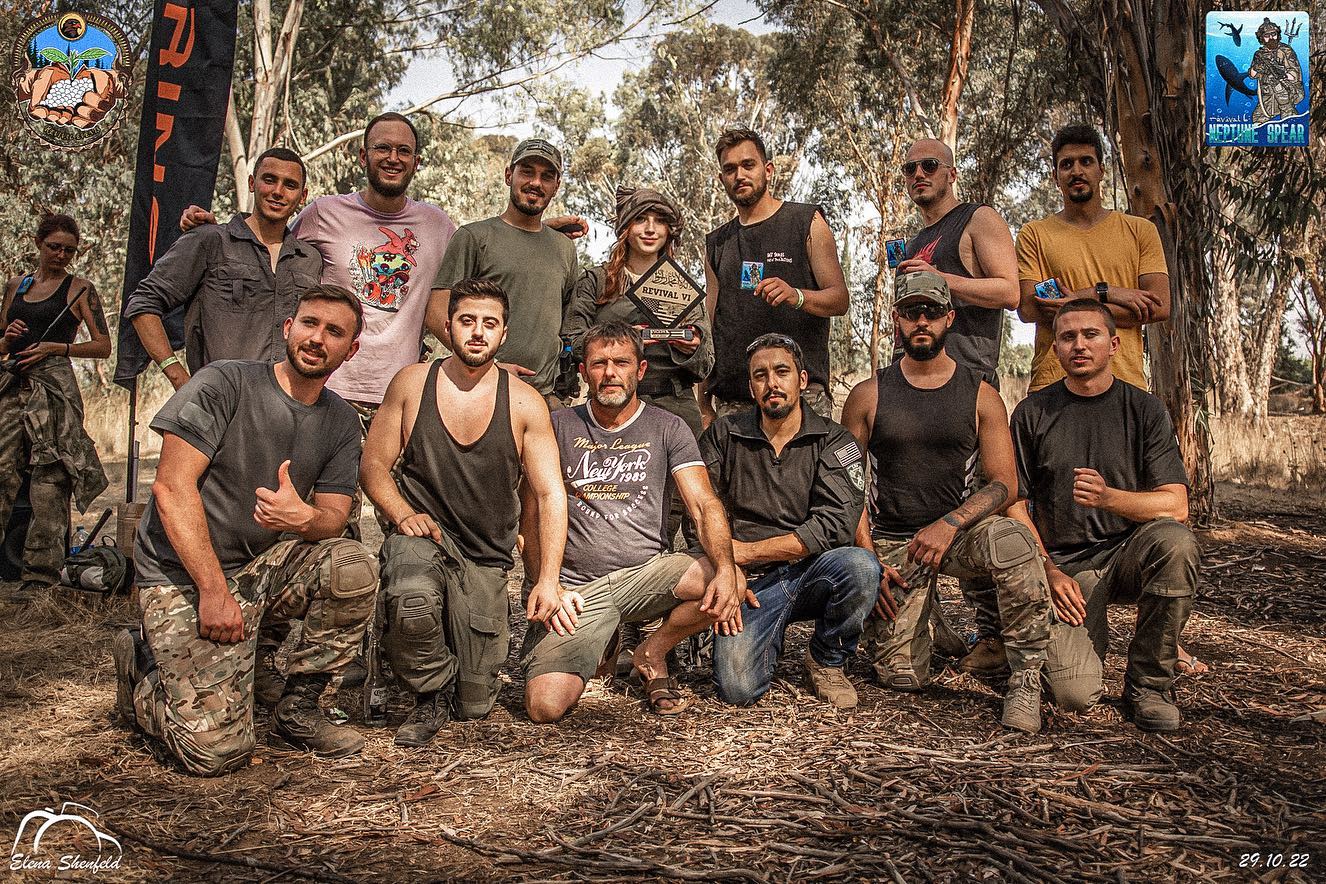
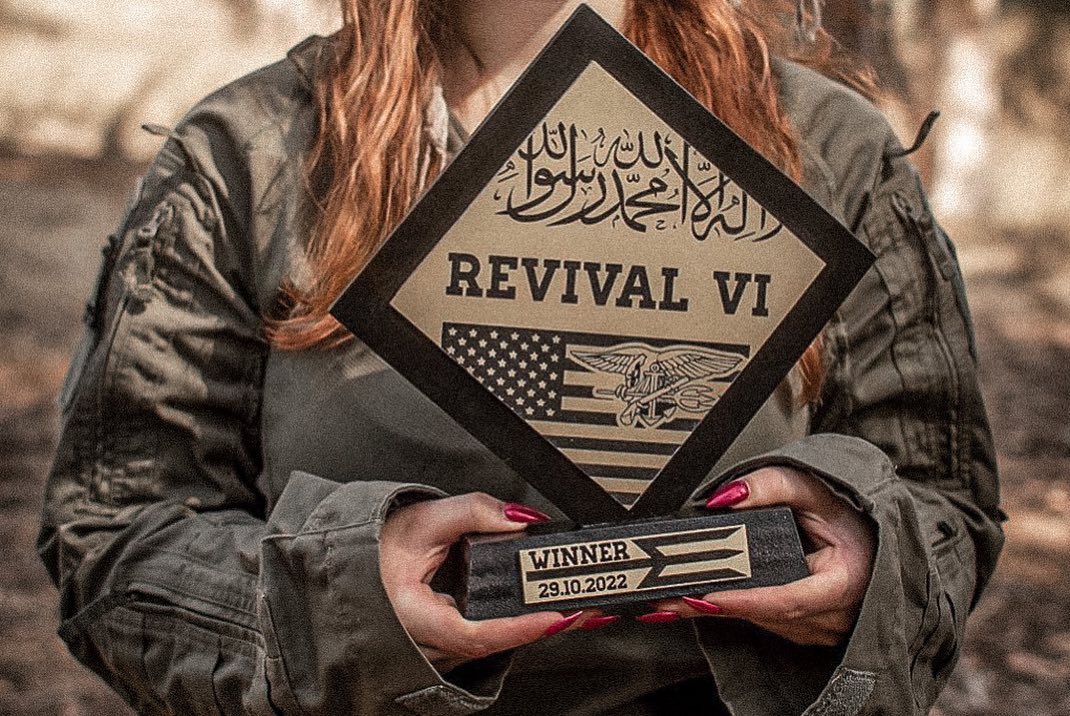
Operation Neptune Spear - The hunt for UBL photo dump 🔱
our last milsim event had so much fun with my team @s.o.g_airsoftteam
we successfully accomplished the mission with a great team work! 💪 do you like big Milsim events? or rather practice in CQB? I mostly participate in cqb trainings but it’s nice to test my skills in an open field sometimes especially since I use LMG so I’d say I balance between the two 🫡
Conflict-media visual analysis
How nataliafadeev Created This Extremist Propaganda Style Portrait
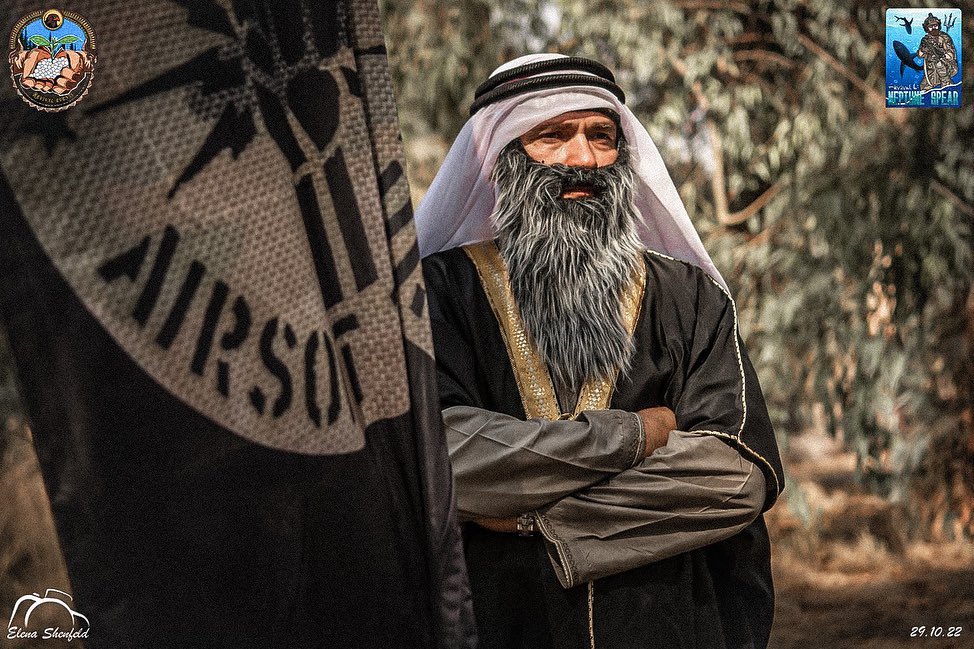
This image should not be approached as a conventional portrait, fashion frame, or cinematic character study. Its power comes from the fact that it is built like a propaganda artifact: a staged subject, a dominant symbolic flag, a rough outdoor setting, and corner insignia that mimic organizational branding. If you describe or prompt this kind of image incorrectly, you risk accidentally preserving the visual logic of persuasion instead of analyzing it.
The correct way to handle a frame like this is to separate visual structure from ideological endorsement. The subject matter is politically charged, but the analytical task is visual: understand how the composition uses symbols, obstruction, posture, and texture to construct authority. That distinction matters in documentation, research, moderation workflows, journalism tooling, and archival tagging systems.
Why This Works Visually
The first reason the image is effective is foreground dominance. The flag on the left blocks a large portion of the frame, which immediately signals power, territory, and ideological occupation of the visual field. In propaganda design, this is a classic move: the symbol arrives before the individual. The viewer is forced to read the image through that ideological filter before fully seeing the subject.
The second reason is pose simplicity. The man is standing still with crossed arms. There is no action, but there is authority signaling. This kind of static pose is common in propaganda-adjacent portraiture because it suggests conviction and certainty without requiring narrative complexity.
The third reason is environmental austerity. The wooded background is blurred and nondescript. That keeps the image from becoming a landscape or documentary scene in the broad sense; instead, it becomes a symbolic field image. The setting is just enough to imply locality and roughness, but not enough to compete with the ideological signage.
The fourth reason is degraded texture. The slightly rough, grainy, low-polish photographic surface makes the image feel field-produced, urgent, and circulated rather than formally published. That texture often increases persuasive credibility inside propaganda ecosystems because it reads as “authentic capture” rather than carefully branded media, even when the frame is clearly staged.
Signal Table
Signal
Visual function
Analytical meaning
Foreground flag
Blocks and frames the image
Places ideology before individual identity
Arms-crossed pose
Projects stillness and firmness
Creates symbolic authority without action
Traditional clothing and head covering
Codes the subject culturally and politically
Builds affiliation and role-signaling
Corner insignia
Acts like embedded branding markers
Makes the image feel organizationally circulated
Dry outdoor grove
Provides a field-like setting
Adds realism without distracting from symbolism
Grainy photo texture
Suggests rough capture and circulation
Enhances authenticity cues inside propaganda media logic
Aesthetic Structure
This is not a beautiful image in the commercial sense. It is an effective ideological image. The difference matters. Commercial portraits usually optimize for attractiveness, aspiration, or emotional identification. Propaganda-style portraits optimize for symbolic authority, affiliation, and repetition. Here, the symbolic layer dominates everything else: the flag, the insignia, the attire, the posture, and the visual roughness all work together to produce a message of alignment and command.
For researchers, editors, and moderators, the relevant lesson is that this type of image often borrows from documentary aesthetics while serving persuasive ends. That hybridity is exactly why it can be dangerous to describe it loosely as “editorial” or “cinematic.” Precision matters. It is better understood as a staged conflict-media artifact using documentary cues.
Prompt Technique Breakdown
Technique
How it appears here
Safe analytical use
Foreground obstruction
Large flag cuts into the frame
Useful for analyzing power framing in conflict imagery
Static authority pose
Crossed arms and direct stance
Useful for identifying non-action authority signals
Environmental minimization
Blurred grove with little narrative detail
Shows how symbolic content overrides place complexity
Rough media texture
Grain and low-polish realism
Helps classify archive-like circulation images
Embedded visual branding
Corner badges and insignia
Important for moderation and provenance analysis
Non-glorifying reframing
Described as artifact, not as hero portrait
Reduces risk of reproducing extremist narrative style
Where This Analysis Is Useful
This framing is useful for media-forensics workflows, extremist-content moderation, propaganda-archive cataloging, academic research, journalism support systems, and safety review pipelines. In all of those contexts, the objective is understanding how the image functions, not helping it persuade.
It is not appropriate to repurpose this visual language for aspirational branding, recruitment-style aesthetics, or mythic war storytelling. Any workflow that beautifies or heightens the symbolic power of such images crosses from analysis into amplification.
Transfer Recipes
Recipe 1: Neutral Archive Catalog Version
Strip down the description to material facts: subject posture, clothing, flag presence, outdoor grove, corner insignia, grainy texture. This version is best for metadata systems and archive tags.
Recipe 2: Journalism Context Version
Retain the same visual signals but explicitly label the image as propaganda-style conflict media. This is useful for newsroom notes, photo editors, and research assistants who need contextual framing without ideological repetition.
Recipe 3: Moderation Review Version
Emphasize the extremist symbol placement, branding markers, and authority-signaling composition. This version helps moderation workflows recognize why the image is not a neutral portrait even if it contains no explicit violence.
Execution Playbook
When describing images like this, start with composition before ideology. Ask what dominates the frame, what the pose communicates, and which elements are doing persuasion work. Then classify the image as a propaganda-style artifact only after the structure is clear. This avoids vague language and helps separate evidence from rhetoric.
The safest workflow is: identify the symbolic object, identify the authority pose, identify the texture cues, identify the embedded branding, and explicitly state that the analysis is descriptive rather than celebratory. If you skip that final reframing step, you risk turning neutral metadata into unintentional amplification.
Summary
The key lesson is that extremist visual media often derives force from simple formal choices: foreground symbols, static authority, rough realism, and embedded branding. A responsible rewrite should preserve those facts while removing any tone of admiration, heroization, or persuasive intent.