How nataliafadeev Made This Milsim Team Group AI Photo — and How to Recreate It
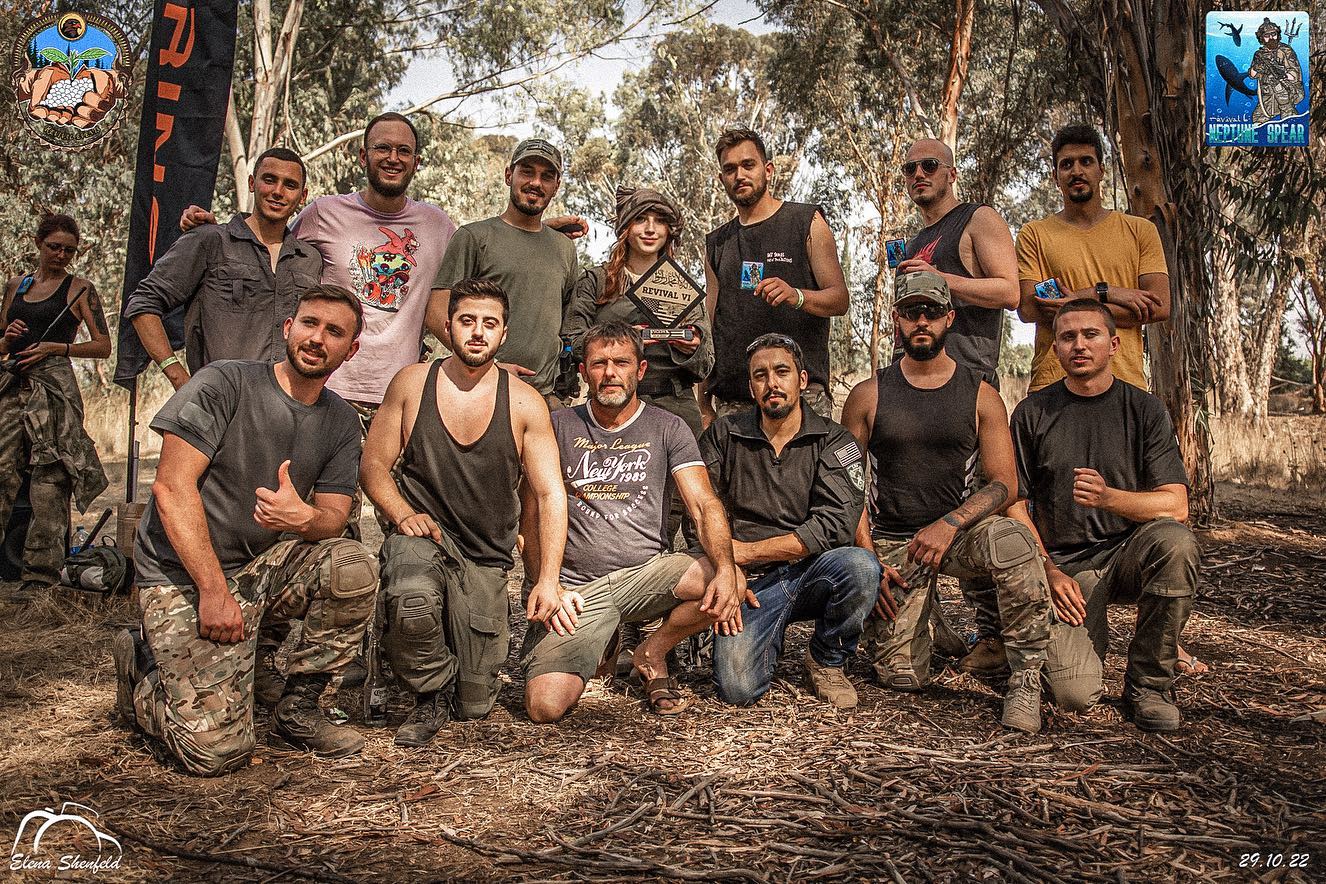
This image works because it proves participation at scale. A single portrait can communicate style. A group photo communicates belonging, event credibility, and shared effort. That is why this kind of frame is so useful in recap content. It tells the audience, immediately, that this was not just a personal outfit shoot. It was a real organized event with a real team and a real social environment around it.
The caption supports that interpretation clearly: Operation Neptune Spear, a team, a successful mission, and a comparison between open-field milsim and CQB training. For blog content, this is valuable because it gives the page more than aesthetics. It gives it community context, practical interest, and niche legitimacy.
Why Group Photos Strengthen Creator Pages
Creator feeds often over-index on solo hero shots. Those are useful, but they can make the creator feel detached from the culture they claim. This image does the opposite. It positions the creator inside a larger subculture and shows the social structure around the experience. That is important if the site is trying to build trust, not just visual intrigue.
| Signal | Evidence (from this image) | Mechanism | Replication Action |
|---|
| Community proof | A large mixed group is gathered together after the event. | Visible participation signals legitimacy and shared culture. | Include at least one real group frame in recap-driven creator pages. |
| Achievement cue | A plaque or award is held near the center. | Small recognition objects create a narrative of outcome, not just attendance. | Capture one image that documents a result: award, patch, banner, or team marker. |
| Subculture texture | The clothing mix combines tactical, athletic, and casual gear in a field setting. | Real niche communities look layered and imperfect, which increases trust. | Do not over-clean group images; keep enough real-world variation in clothing and posture. |
Where This Kind of Image Fits Best
This style belongs in event recaps, community blog posts, team pages, creator timelines, and SEO pages that want to prove real participation rather than only aesthetic intent. It is especially useful for subcultures like milsim, cosplay, sports clubs, and workshop communities where belonging is part of the appeal.
- Best fit: event recap pages that need one strong "we were really there" image. Keep the group intact and the location visible.
- Best fit: community-oriented creator pages where the audience should see team context. Keep both standing and kneeling rows for scale.
- Best fit: prompt pages explaining how to make group photos still feel organized and readable. Keep one central marker like a plaque or banner.
- Not ideal: fashion-first pages, because group dynamics reduce styling control.
- Not ideal: highly polished editorial campaigns, because this image wins through authenticity more than refinement.
Three transfer recipes
- Keep: two-row group arrangement, one central award cue, natural field setting. Change: niche from milsim to cosplay club, sports team, or workshop crew. Slot template: "{community group} {post-event marker} {outdoor setting} {tone}"
- Keep: one central differentiator and broad participation. Change: award to patch, banner, or event prop. Slot template: "{team size} {recognition object} {gathering format} {environment}"
- Keep: documentary realism and practical body language. Change: location from woods to range, field, or convention courtyard. Slot template: "{subculture meetup} {group pose} {location proof} {social energy}"
The Aesthetic Read
The image is effective because it avoids trying too hard. The people are arranged well enough to read, but not so perfectly that the scene feels manufactured. That is exactly the right balance for community proof photography. You want structure, but you also want visible personality differences, stance differences, and clothing differences.
The earthy grading helps unify the image. Tree trunks, dry ground, olive clothing, black shirts, and dusty light all sit inside a narrow color family. That makes a large group easier to process. The eye lands on the plaque and the central figure because the rest of the frame behaves as one broad field of related tones.
| Observed | Recreate |
|---|
| Two-row arrangement keeps many faces readable | Use kneeling front rows and standing back rows for large outdoor groups. |
| One object gives the group a center | Place an award, sign, or banner near the middle. |
| Natural spacing preserves authenticity | Avoid over-symmetry; let poses vary slightly. |
| Earth-tone palette unifies many subjects | Keep the environment and clothing inside a related tonal range. |
| Open field setting proves the event type | Show enough ground, trees, or range context to anchor the niche. |
Prompt Technique Breakdown
To recreate this image well, the real formula is not "team photo." It is "community proof image with one clear central story cue."
| Prompt chunk | What it controls | Swap ideas (EN, 2-3 options) |
|---|
| group structure | Whether the image feels readable or chaotic | "two-row arrangement", "kneeling front row", "standing back row" |
| center cue | What organizes the viewer's attention | "plaque", "banner", "trophy or patch" |
| environment proof | How clearly the event category is understood | "wooded field", "range edge", "outdoor staging area" |
| tone | Whether the group feels corporate, authentic, or celebratory | "post-event team pride", "community recap", "casual mission success photo" |
| variation | How human the group appears | "mixed clothing", "relaxed poses", "different stance energies" |
How I Would Iterate It
Baseline lock the group size, the plaque or center object, and the two-row composition first. Those three parts make the image legible and useful. Then refine only what is necessary.
- Run 1: make sure every face remains readable and the center object is visible.
- Run 2: adjust only spacing between subjects so the group feels tighter but not stiff.
- Run 3: test one location shift while preserving the same documentary group energy.
- Run 4: swap one niche identity marker, such as banner or patches, without changing the community-proof structure.
The repeatable lesson is simple: if you want a recap page to feel real, include at least one image where the creator is clearly part of a larger human network.