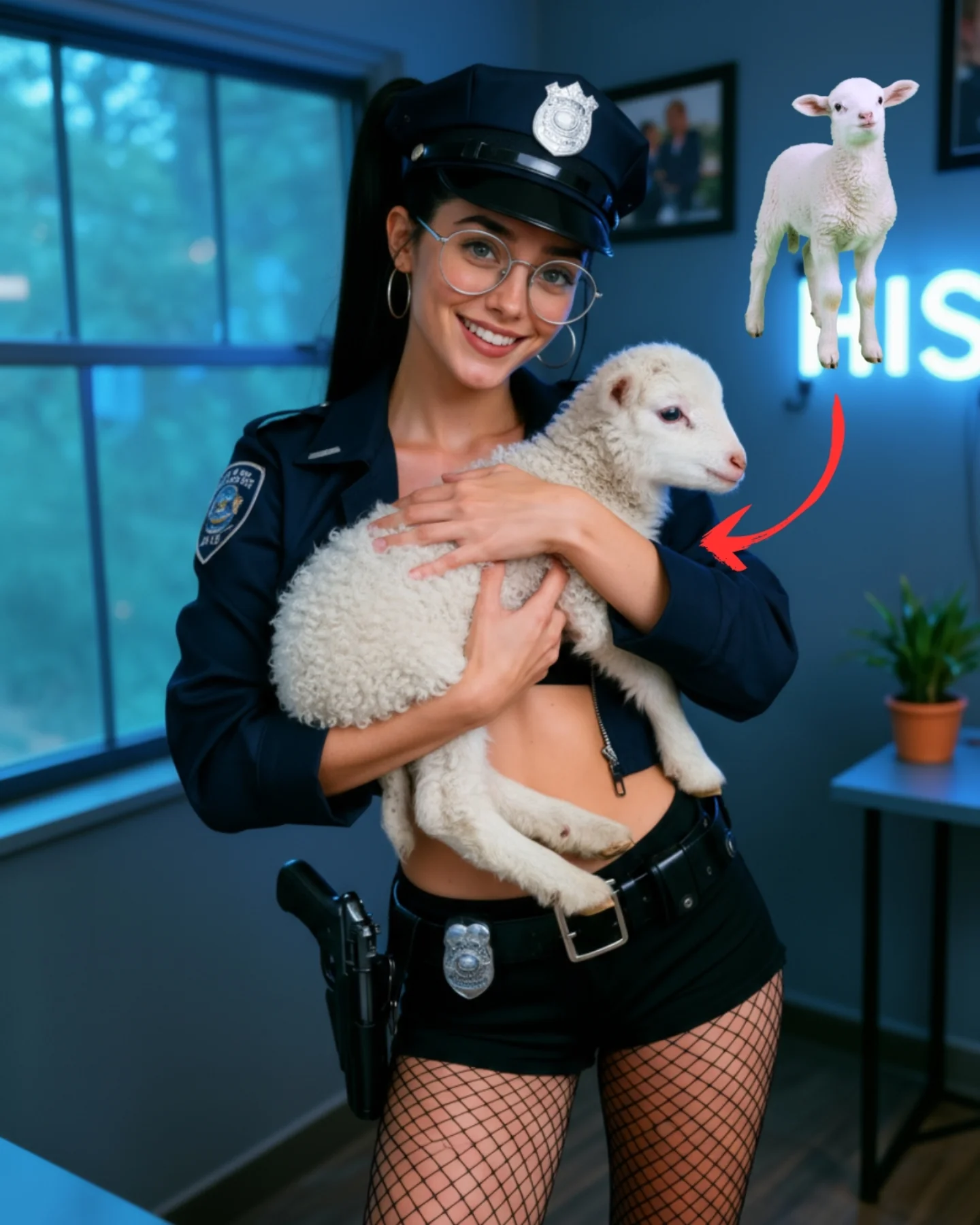
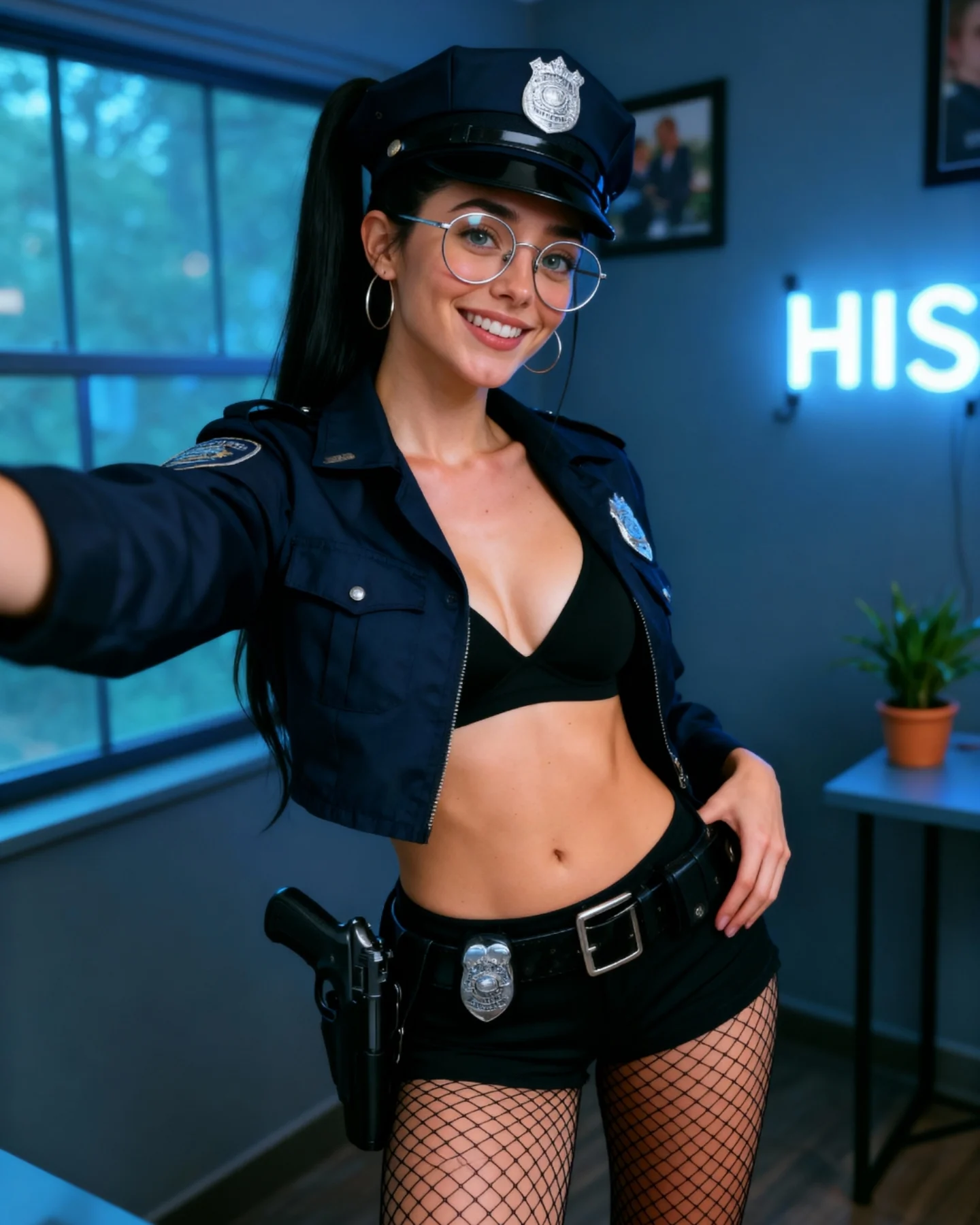
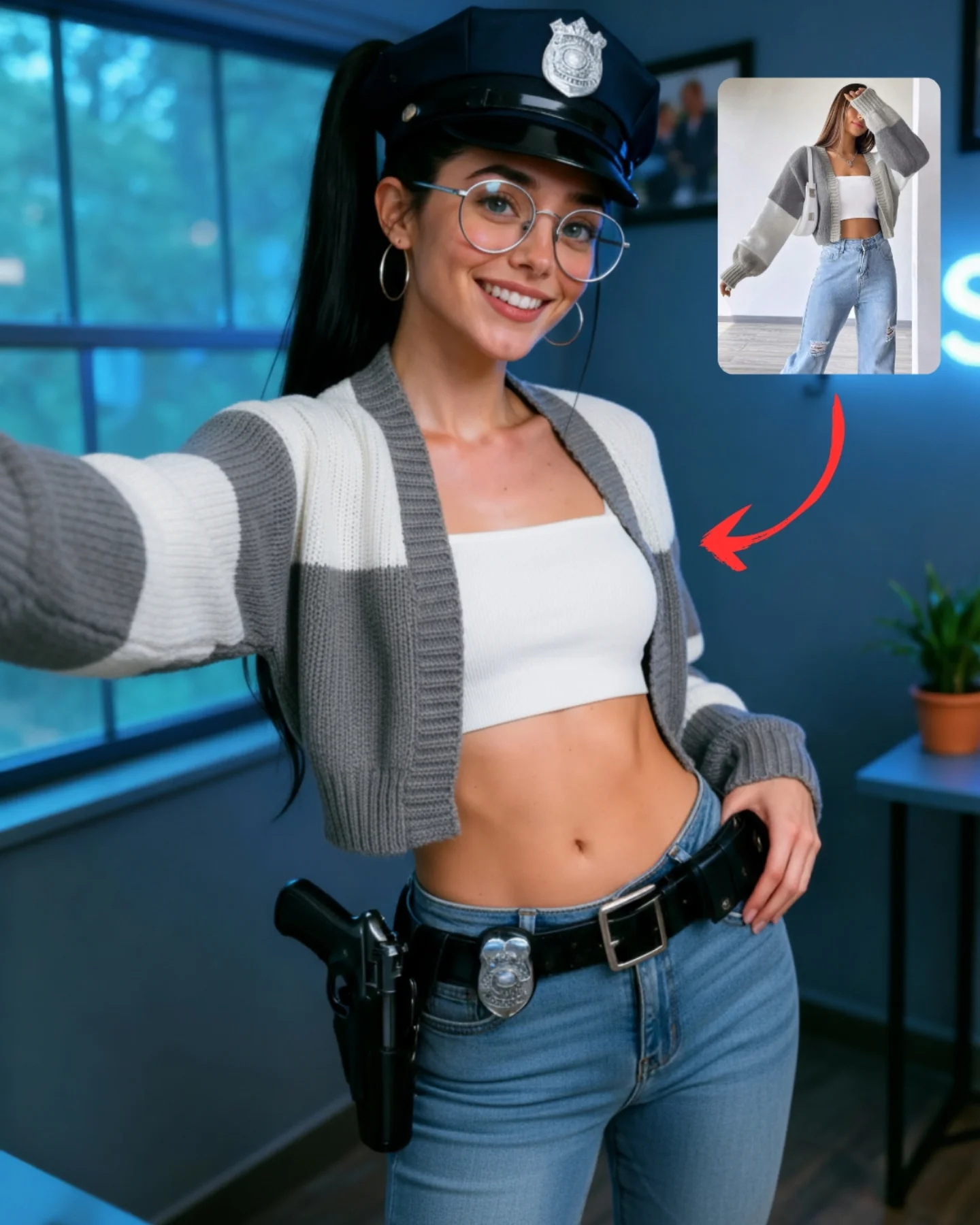
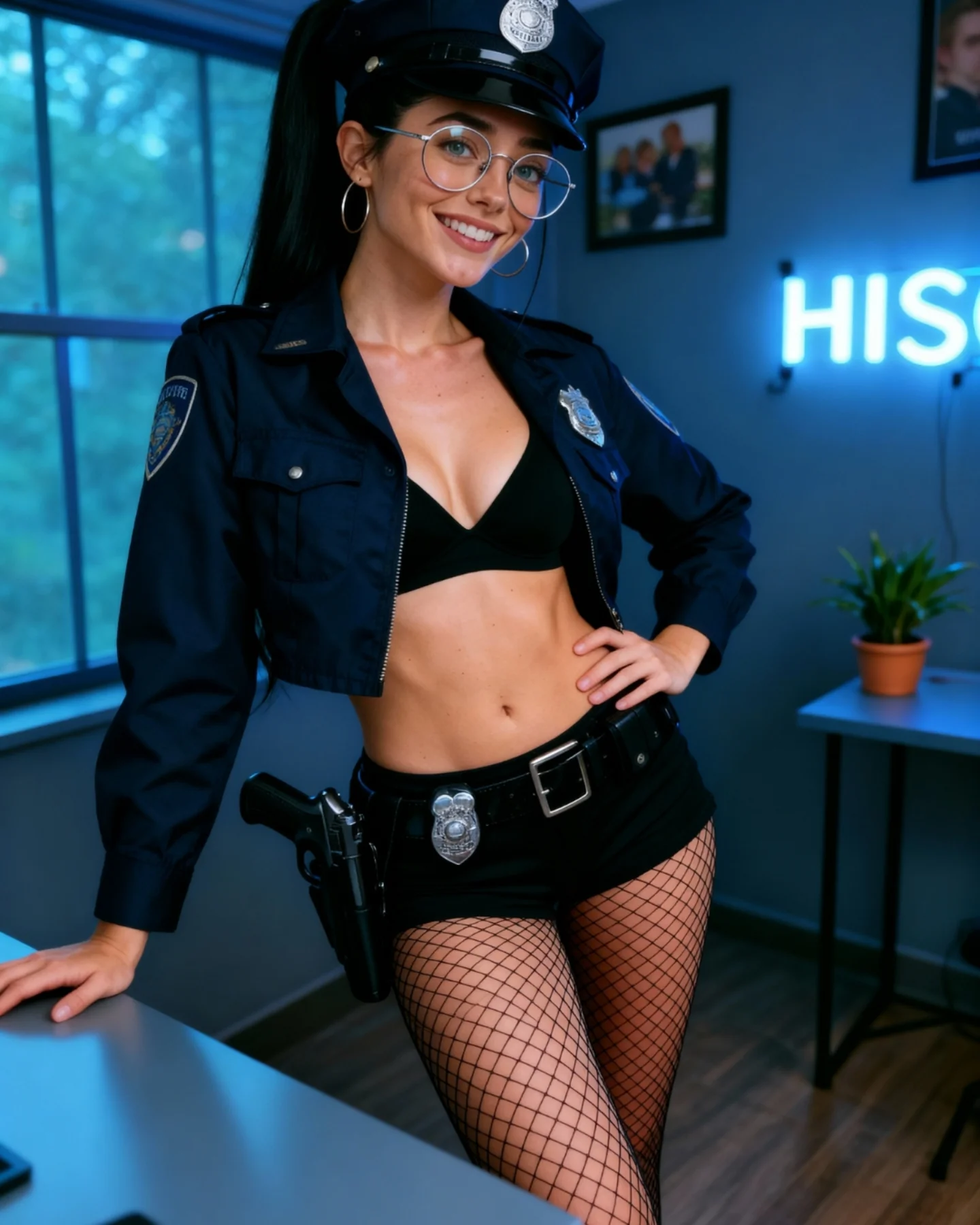
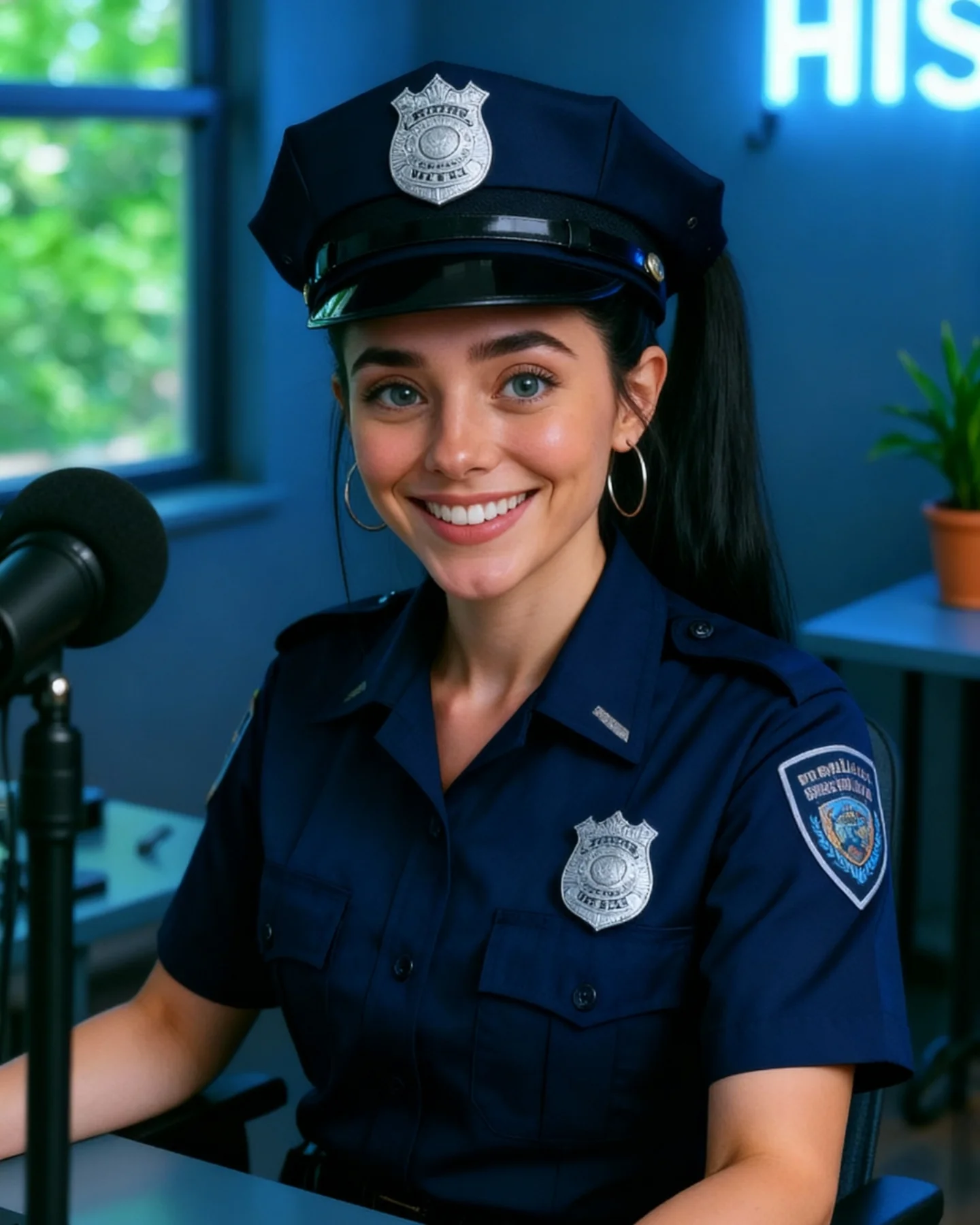
Buen fin de semana a todos 💕
Ayer os publiqué una encuesta para saber qué queréis ver más en mis videos... Si generación de imágenes o de vídeos. Los resultados me dicen que queréis aprender más sobre videos 🎬😍
Mi idea también fue centrarme en enseñaros a hacer videos pero tenéis que tener en cuenta que un buen video empieza siempre con una buena imagen 🫶🏽
Gracias por seguirme y por estar ahí!! Gracias por esta bonita comunidad que estamos formando juntos aquí ☺️🙏🏻
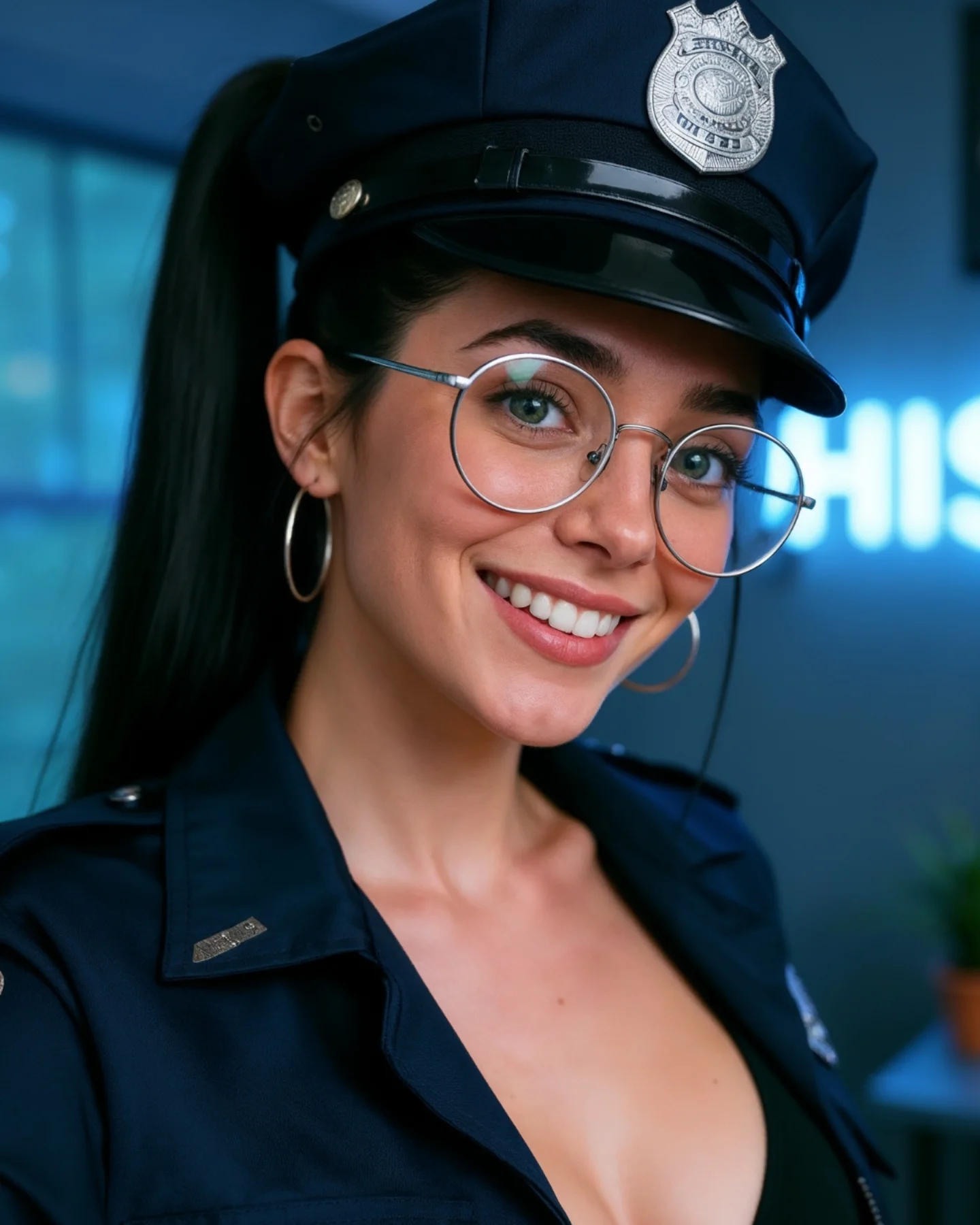
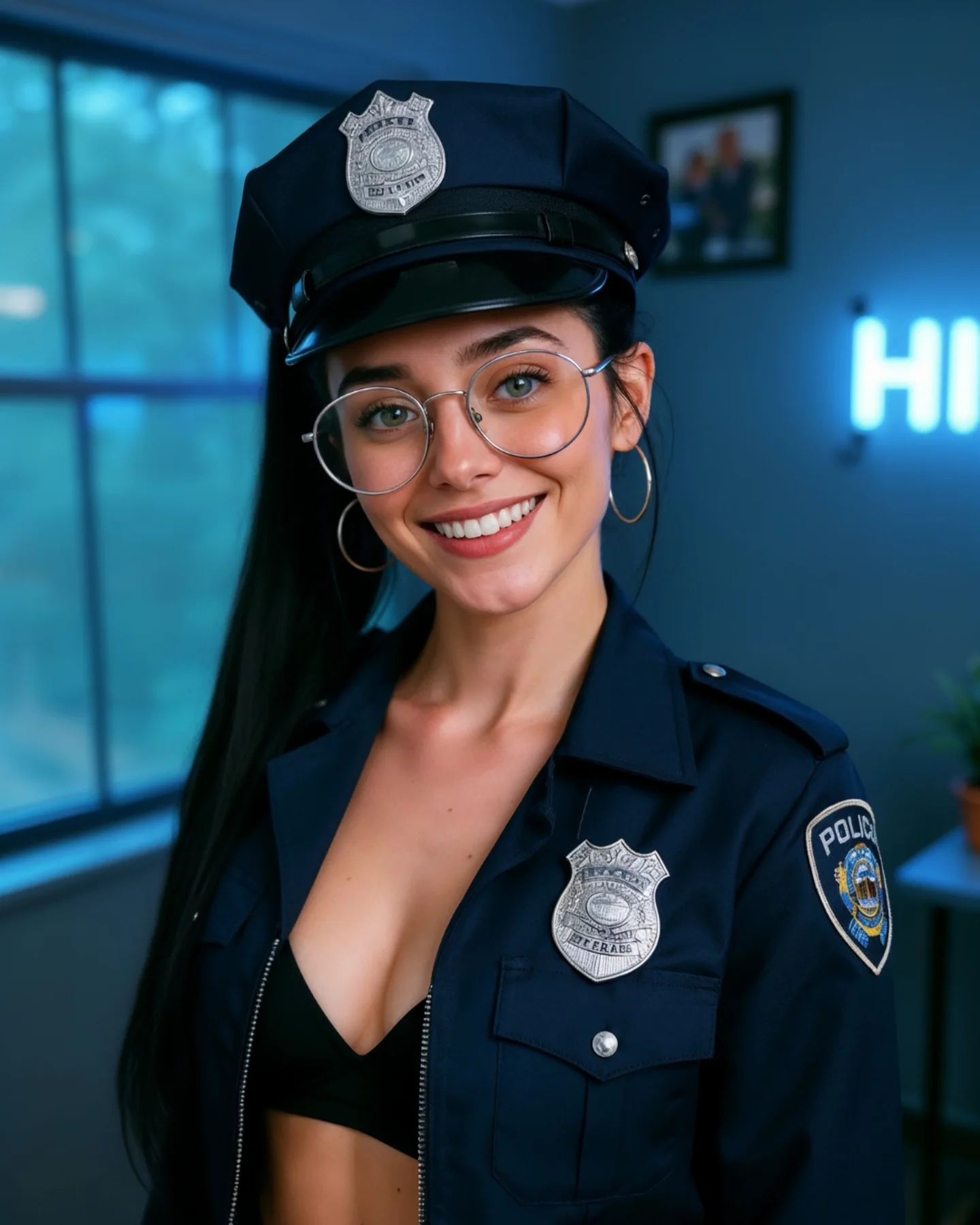
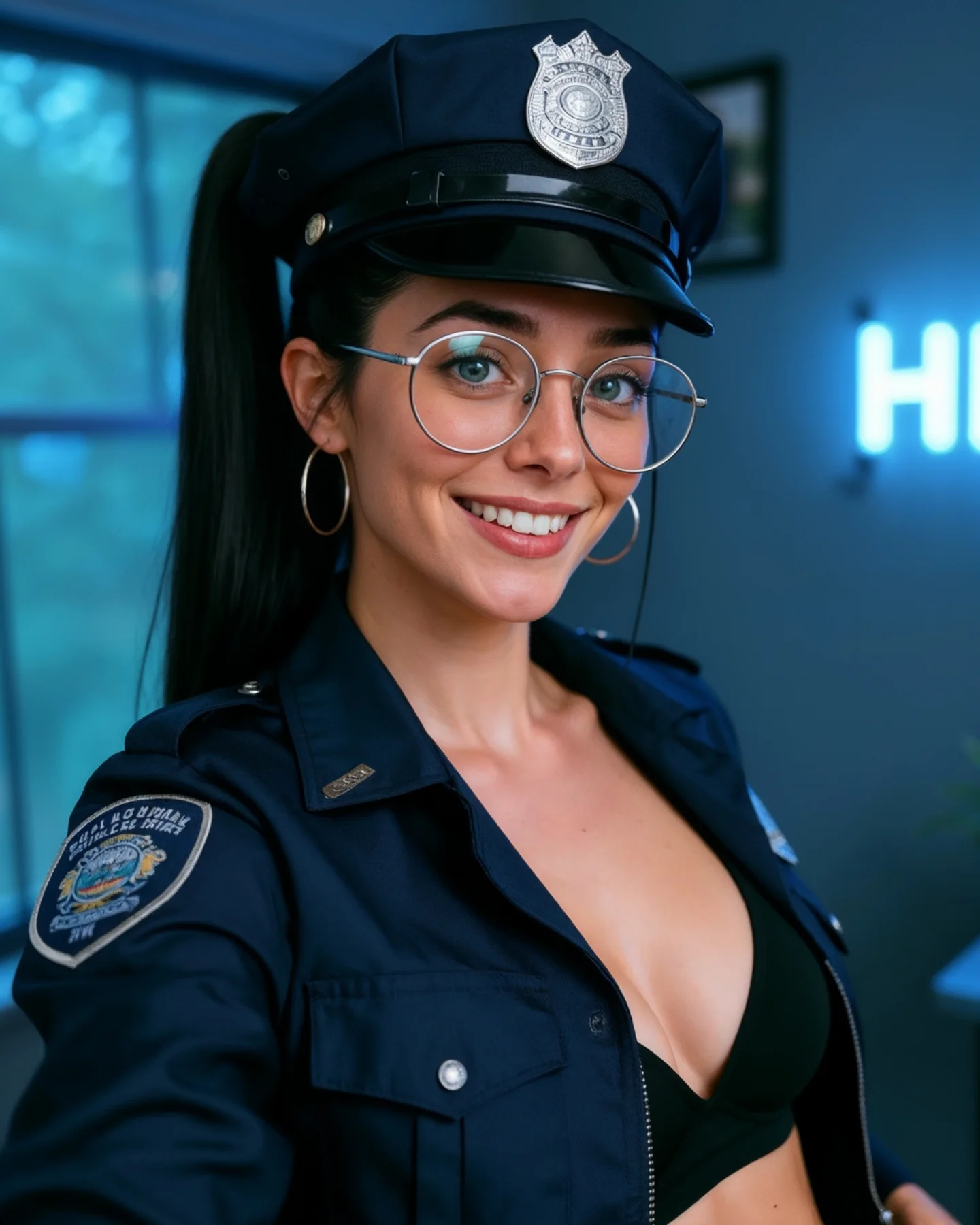
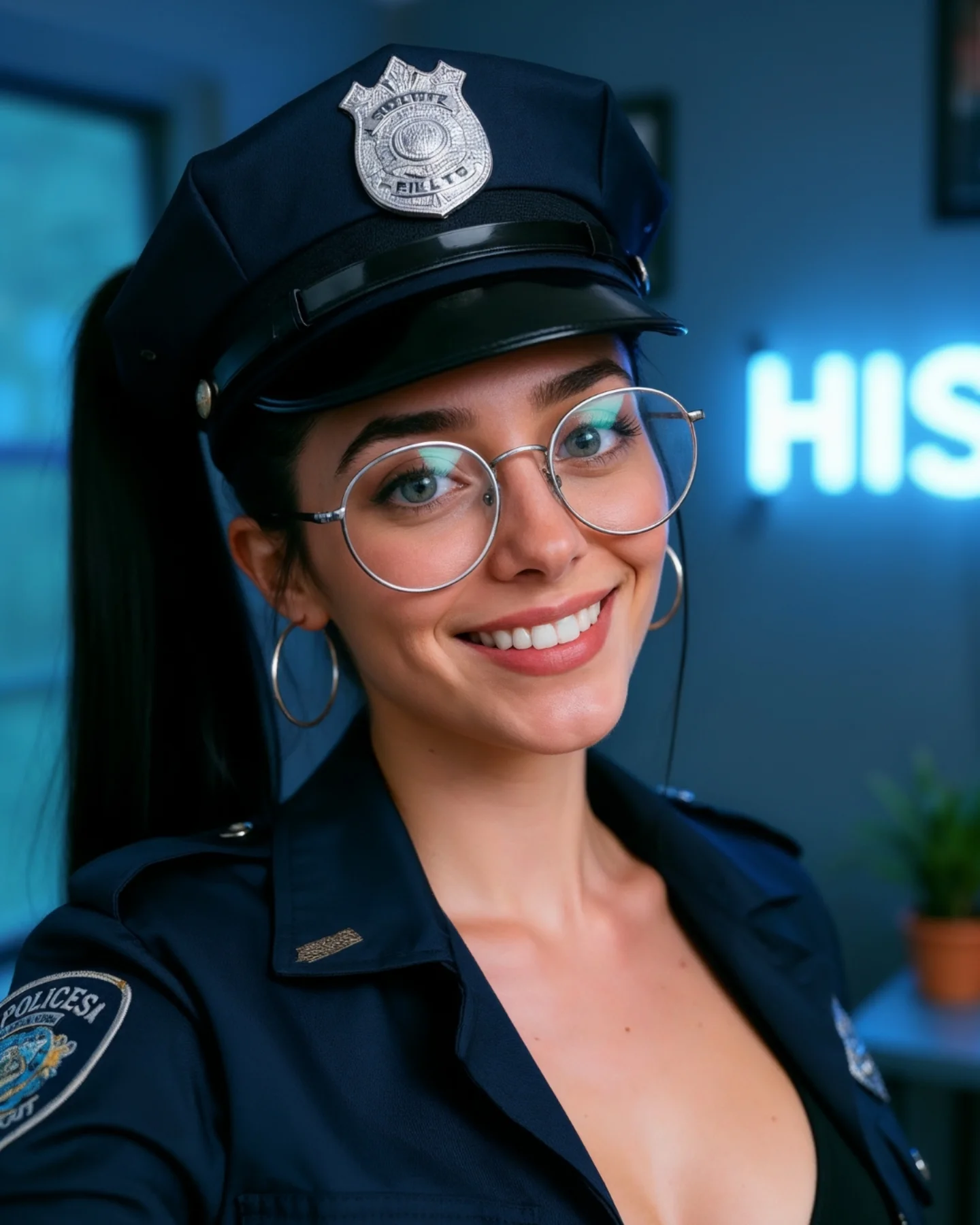
This image works because it uses costume-coded signals without turning into narrative roleplay. The cap, badge, dark shirt, and blue background establish a clear visual theme immediately, but the shot remains a portrait first. That distinction matters. The photo is readable in one second because the face and expression still control the frame.
How soy_aria_cruz Made This Police Cosplay Portrait Image — and How to Recreate It
The strongest quality here is balance. The styling is specific enough to be recognizable, but the mood stays light and socially legible. Large round glasses, hoop earrings, and the warm smile soften what could otherwise become overly rigid costume imagery. That keeps the image usable as beauty, creator, cosplay-lite, or internet character portrait content.
Why This Works
The portrait succeeds because the expression interrupts the stiffness of the uniform code. A peaked cap and badge naturally suggest formality, but the smile, glasses, and soft blue background reframe the image as approachable rather than authoritative. That makes the styling feel playful and portrait-led instead of performative.
The second reason it works is cropping. The image stays close enough that the viewer reads face first, styling second. If the frame were wider, the costume would become more important than the person. By staying tight, the image preserves emotional accessibility while still delivering the costume concept.
Signal Table
Signal
What It Does
Why It Matters
Peaked cap and badge
Creates immediate uniform-coded recognition.
Provides the theme without needing a full narrative setup.
Round eyeglasses
Softens the image and adds personality.
Prevents the portrait from feeling too stern or generic.
Warm smile
Humanizes the styling instantly.
Keeps the frame in the social-portrait category.
Blue background blur
Adds modern separation and color atmosphere.
Supports polish without distracting from the face.
Hoop earrings and ponytail
Introduce casual fashion elements.
Balance the rigidity of the uniform-coded costume.
Aesthetic Read
This image belongs to the social-character-portrait category: real-person portraiture that borrows from recognizable costume language without needing full scene-building. It is not cosplay in the maximal convention sense, and it is not documentary realism. It sits in the middle, where styling acts as a concept layer over an otherwise friendly, personal portrait.
That middle zone is useful because it keeps the image flexible. It can function as creator content, playful role-coded styling, or mood-board inspiration. The cool background gives it a little cinematic separation, but the face remains soft and casual enough that the image never turns into a dramatic role-performance.
Prompt Technique Breakdown
Technique
Application In This Image
Practical Use
Identity coding
The cap and badge establish the theme quickly.
Useful when you need instant recognition without a full costume scene.
Softening contrast
Glasses and smile offset the formal costume cues.
Helps keep portraits approachable and socially shareable.
Close crop control
The frame focuses tightly on face and upper styling.
Best when expression should dominate over full-body costume reading.
Ambient color field
The cool blue blur modernizes the portrait.
Adds polish without requiring a detailed background build.
Costume without narrative scene
The image avoids cars, sirens, and action context.
Important when the visual theme should stay symbolic rather than literal.
Use Cases
This structure works well for costume-inspired portrait concepts, creator branding experiments, playful uniform-coded styling references, character-study mood boards, and AI prompt work that needs recognizable signals without scene complexity. It is especially useful when the brief wants “clear theme, friendly face, low narrative burden.”
It is less suitable for serious documentary imagery or action-themed storytelling. The image is too soft, too portrait-focused, and too lightly staged for those purposes. Its value lies in readable styling and approachable expression.
Transfer Recipes
Recipe 1: Noir-Shift Variant
Keep the cap and close crop, but remove the glasses, darken the background, and make the expression more neutral. This pushes the image toward cinematic character study.
Recipe 2: Playful Creator Variant
Retain the glasses and smile, but simplify the uniform details and make the background brighter and cleaner. This turns the portrait into soft internet personality content.
Recipe 3: Editorial Costume Variant
Preserve the same styling cues but widen the frame slightly and add one or two more wardrobe details. This makes the image more suitable for fashion-editorial interpretation.
Execution Playbook
When prompting this kind of image, define the face and mood before the costume context. If you overdescribe the costume first, the output often drifts into roleplay or action-photo territory. Start with “friendly close portrait,” then add the peaked cap, dark shirt, glasses, and cool background. That keeps the hierarchy correct.
Next, explicitly remove narrative clutter. Cars, weapons, sirens, and tactical accessories all change the category of the image. Finally, give the background one simple emotional job. Here, the cool blue blur provides atmosphere without asking to be interpreted as a place.
Quick Summary
This portrait works because it uses costume-coded signals as a visual theme while keeping the image anchored in warmth, personality, and close facial engagement. The strongest prompts for this look specify the cap, glasses, smile, and cool ambient background while excluding action-heavy context.