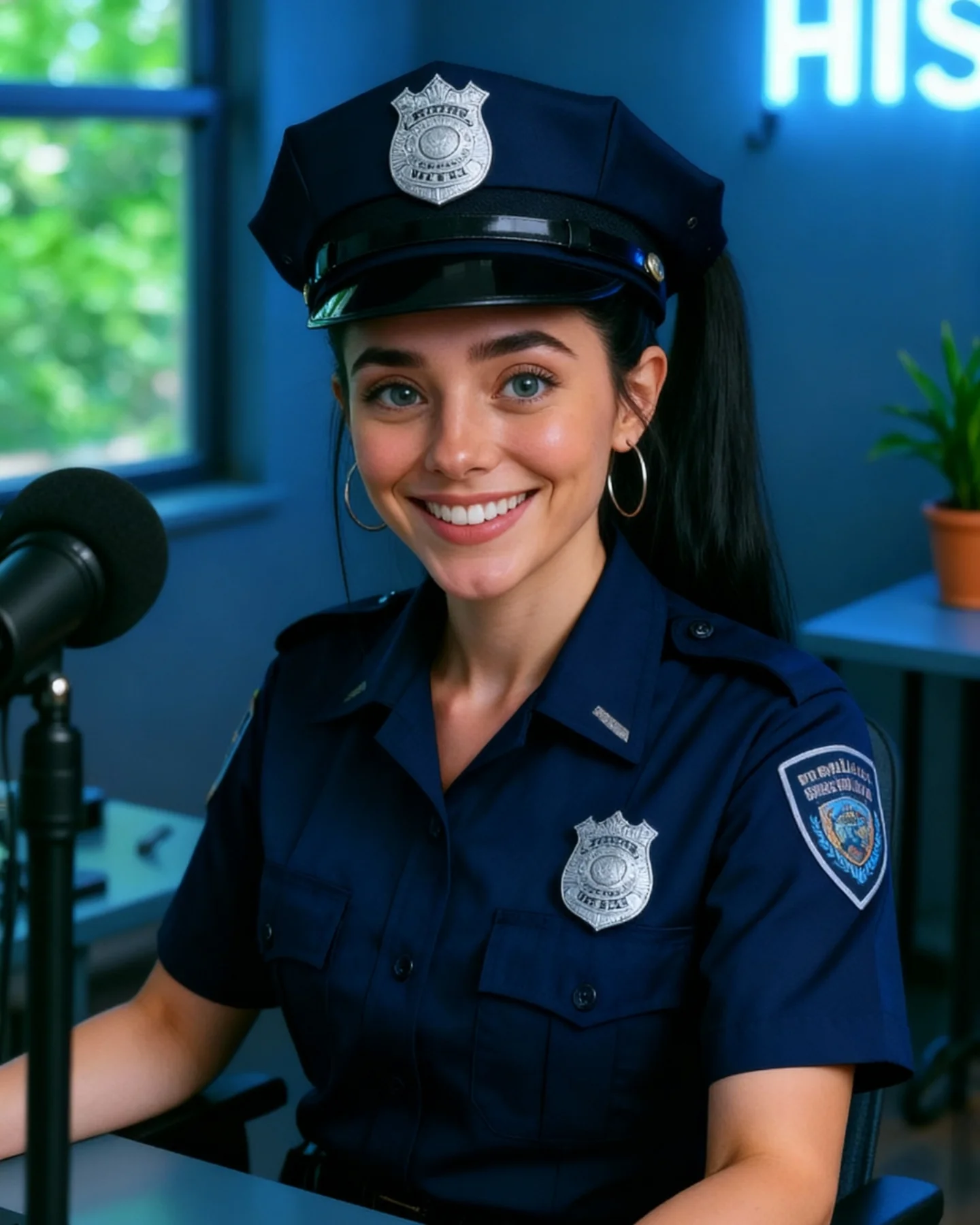
How soy_aria_cruz Made This Police Cosplay Selfie Image — and How to Recreate It
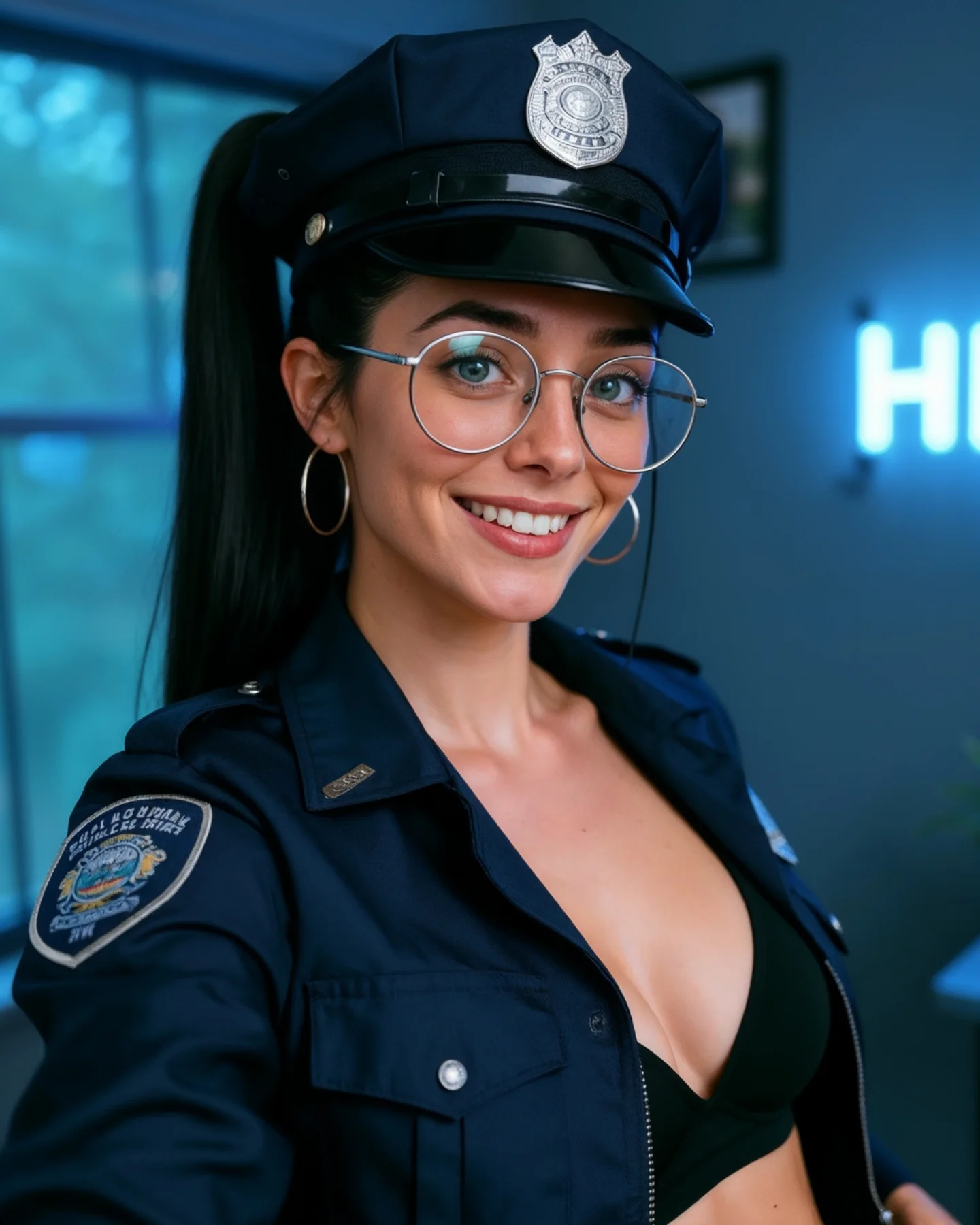
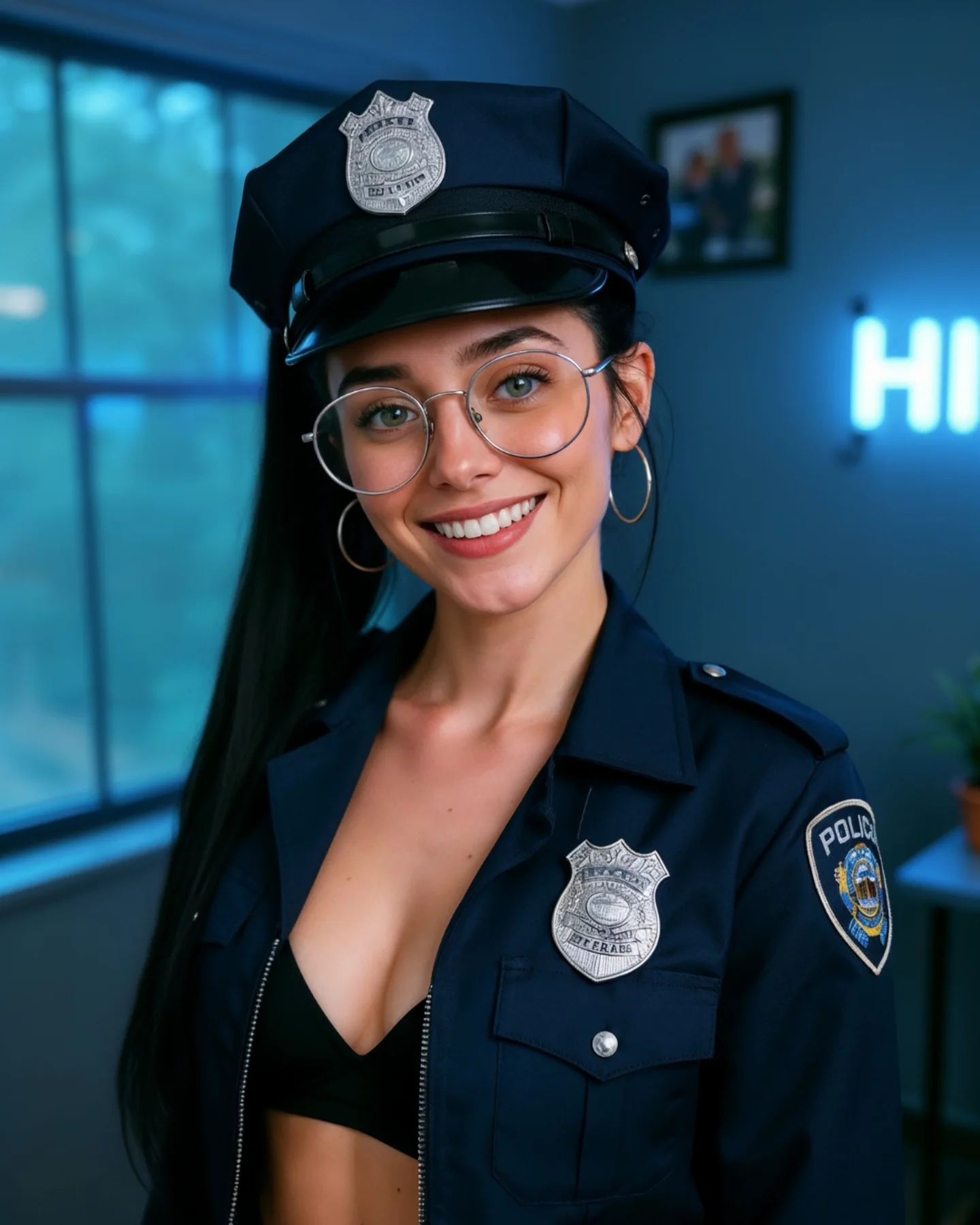
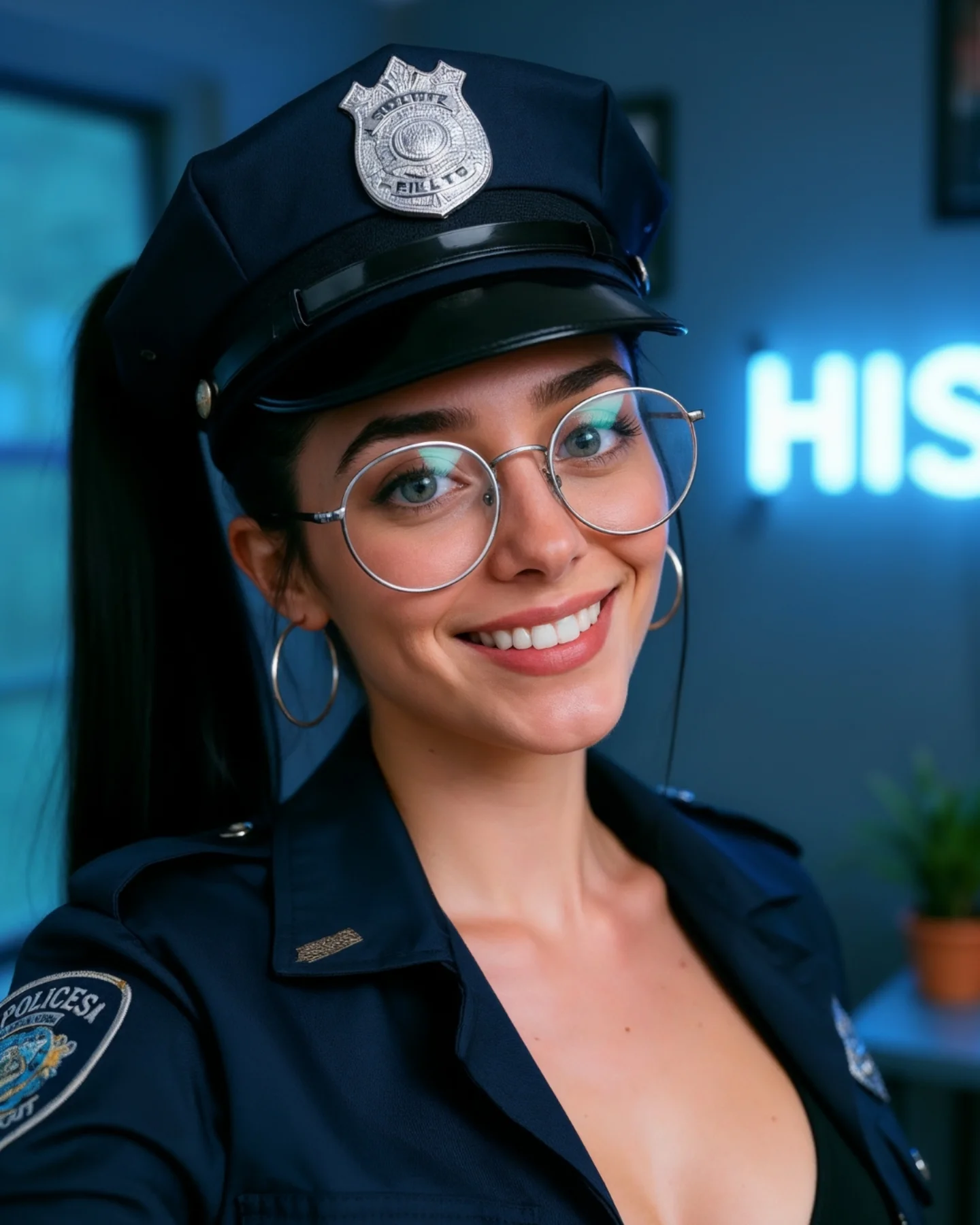
This image works because it sits in a very specific middle zone. It is clearly a costume look, but it is presented through the language of an ordinary selfie instead of a dramatic roleplay scene. That matters. The cap, badge, and uniform cues create immediate identity, while the close framing, smile, and room lighting keep the image grounded in familiar creator behavior.
For AI creators, this is a useful pattern. Costume images often fail because they lean too far into either fantasy seriousness or empty prettiness. This one avoids both. It treats the theme as a playful visual hook, but still frames the person as someone casually posting from their room.
Why the image gets attention quickly
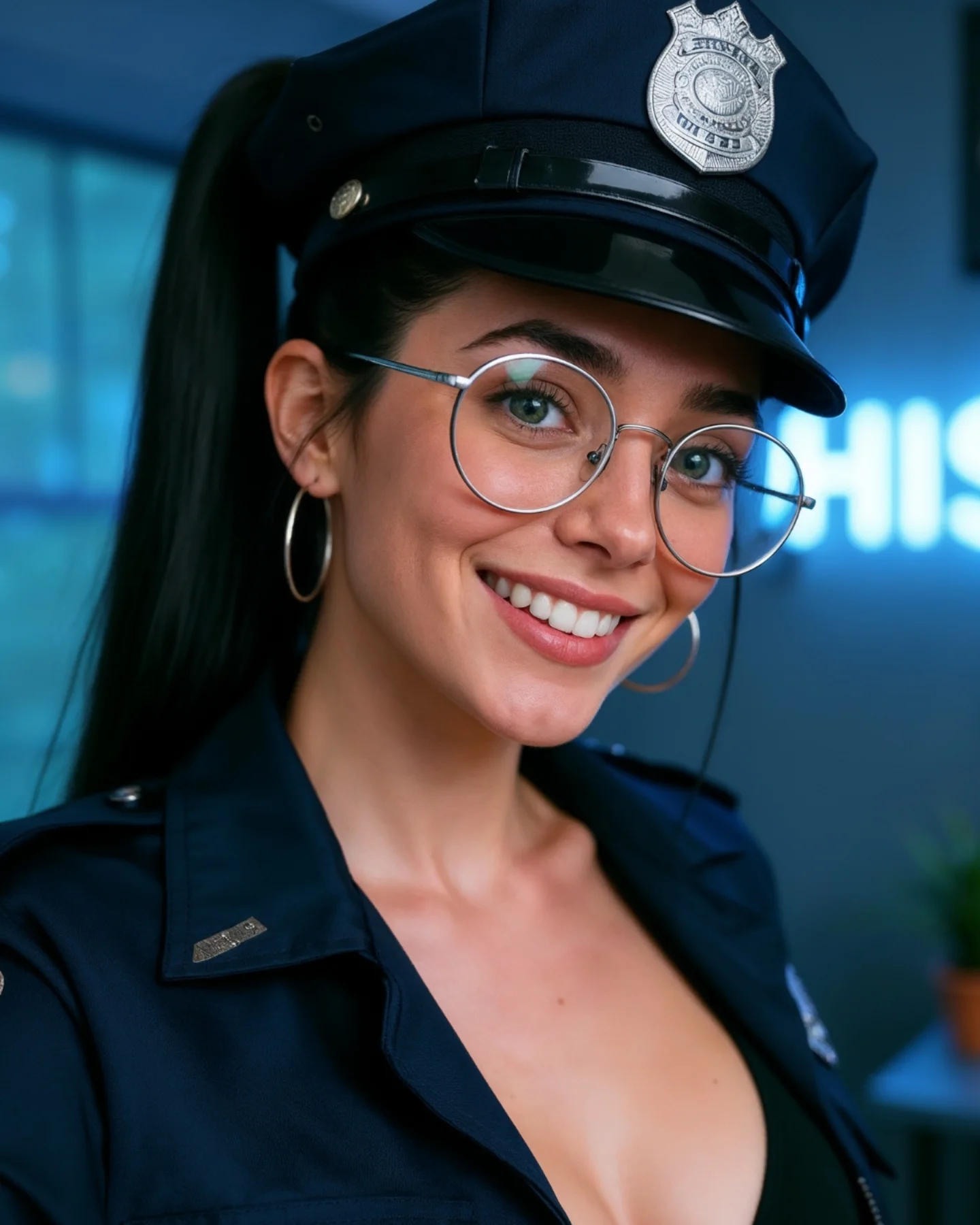
The strongest mechanism here is contrast between costume and behavior. Uniform cues carry authority and roleplay energy, but the expression and phone-camera closeness make the whole thing feel personal and approachable. That tension makes the frame more interesting than a plain portrait, without forcing the viewer into a full narrative setup.
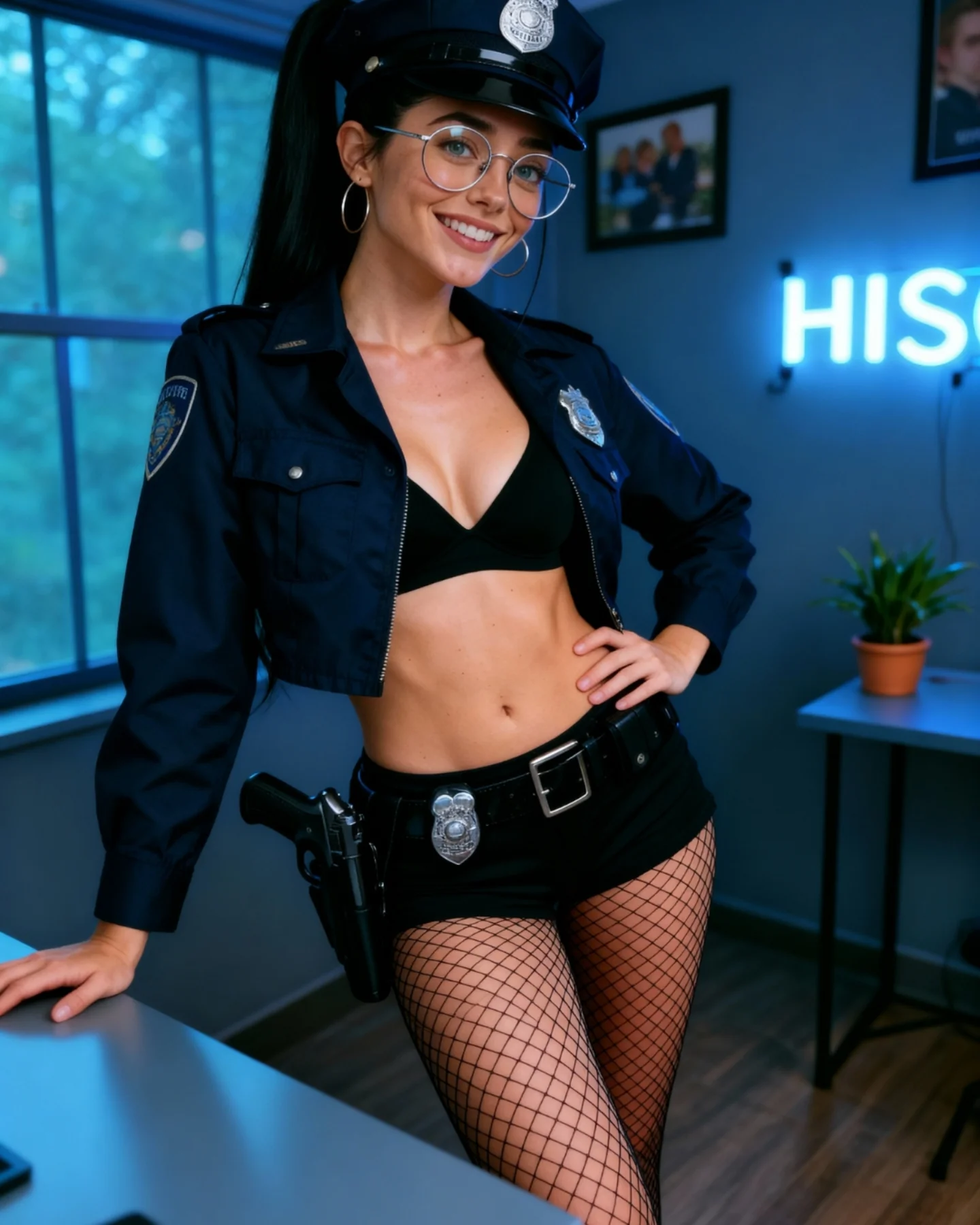
The second strength is the room context. The window and cool neon glow keep the image from floating in abstract space. Those details make it feel like a real selfie taken in a real place, which helps the cosplay land as social content rather than as a costume catalog image.
| Signal | Evidence (from this image) | Mechanism | Replication Action |
|---|
| Themed identity | Cap badge, shoulder patch, and navy uniform shirt instantly signal a role | Quick visual coding makes the image easy to understand | Use a few high-signal costume markers instead of overloading the frame |
| Selfie-native framing | Close crop and direct phone-camera feel make the image socially believable | Viewers read it as personal content rather than a polished promo shot | Present themed looks through familiar selfie behavior when you want relatability |
| Room realism | Window light and partial glowing sign create a believable indoor environment | The backdrop supports the subject without becoming a separate narrative | Give cosplay images a lived-in setting instead of an empty studio or overbuilt scene |
Where this style fits best
This structure is ideal for playful AI influencer content, themed selfie prompt packs, creator-room cosplay posts, and pages that want visual novelty without losing social-media authenticity. It is especially useful when the goal is to make a costume look feel casual and repeatable.
It is less effective for cinematic storytelling or for creators who want true uniform realism. The image is intentionally framed as a light social post, not a serious narrative scene.
- Best fit: cosplay-lite creator content. Why fit: the outfit is themed, but the presentation remains approachable. What to change: rotate costume archetypes while keeping the same selfie logic.
- Best fit: AI influencer prompt packs. Why fit: the image shows how to make themed content still feel native to Instagram-style posting. What to change: vary room lighting and outfit openness depending on tone.
- Best fit: visual-hook posts. Why fit: the cap and badge grab attention, but the room context keeps the image grounded. What to change: keep the costume signal strong and the environment simple.
- Not ideal: cinematic genre pages. Reason: the casual selfie framing works against dramatic narrative immersion.
- Not ideal: strict realism accounts. Reason: the look is costume-coded and intentionally playful, not documentary.
Transfer recipes
- Keep: close selfie crop, strong costume marker, and casual room background. Change: police theme to pilot, mechanic, chef, or gamer cosplay. Slot template: "{subject} taking a casual selfie in {themed outfit} inside {simple room setting}"
- Keep: playful smile and cool ambient room light. Change: the hair, accessory set, and costume color family. Slot template: "{creator-room selfie} with {costume archetype} and {lighting mood}"
- Keep: one bold identity cue plus ordinary phone-camera behavior. Change: the concept from costume to branded uniform or fandom homage. Slot template: "{social selfie} built around {single strong role cue}"
What the image gets right aesthetically
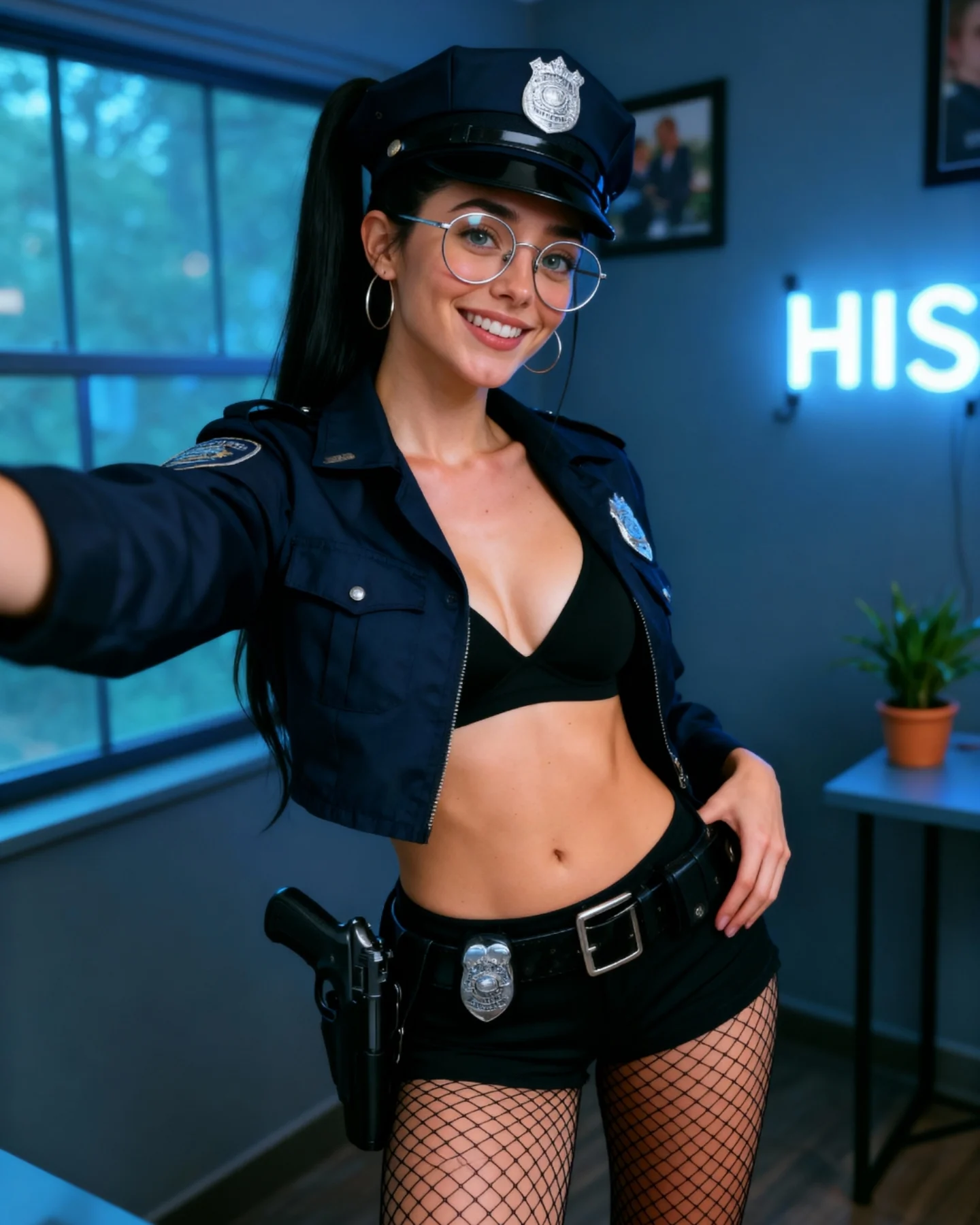
The image succeeds because it knows exactly where to stop. The cap and shirt do enough to signal the concept, so the room and pose do not need to work harder than they should. That restraint makes the frame feel more believable. It also keeps the viewer focused on the face and the overall vibe rather than on costume detail overload.
The cool blue room tone is also effective. It gives the portrait a little mood and color identity without pulling it into full stylization. That is a good reminder for prompt writing: a small environmental tone shift can do more for atmosphere than adding a lot of props.
| Observed | Why it matters for recreation |
|---|
| Police-style cap and shoulder patch | Deliver fast thematic recognition with minimal costume complexity |
| Close upper-torso selfie framing | Make the image feel personal and feed-native |
| Cool room lighting with a visible window and glow sign | Ground the image in a believable creator-space atmosphere |
| Bright smile and direct eye contact | Keep the costume from becoming too serious or roleplay-heavy |
| Minimal but readable outfit layering | Preserve theme while keeping the image clean |
Prompt chunks worth locking first
If you want to recreate this style, begin with the selfie behavior and one clear costume marker before you add more visual ideas. The image works because its role cue is strong, but everything else stays socially normal.
| Prompt chunk | What it controls | Swap ideas (EN, 2–3 options) |
|---|
| close indoor selfie with themed cap and glasses | Core social behavior plus identity hook | pilot selfie, chef-hat selfie, themed room selfie |
| navy uniform-style shirt over black inner top | Costume read and layering | buttoned jacket, cropped themed top, casual uniform shirt variation |
| cool blue room with window and neon glow | Atmosphere and realism | warm bedroom lamp light, streamer setup glow, office-window light |
| friendly smile and relaxed creator energy | Tone control | soft grin, mischievous smile, calm confident look |
| thin round glasses and hoop earrings | Identity continuity | clear-frame glasses, studs instead of hoops, cat-eye frames |
| photoreal casual cosplay selfie | Overall realism target | social-media room portrait, natural themed selfie, casual costume realism |
An iteration path that keeps the image believable
Lock these three things first: the close selfie crop, the strong cap-and-badge cue, and the simple room lighting. Those are the anchors. After that, refine smile, uniform texture, and room blur one variable at a time.
- Run 1: stabilize face identity, glasses, hat shape, and selfie perspective.
- Run 2: refine the shirt texture, badge readability, and natural smile.
- Run 3: improve the room context with clearer window light and subtle sign glow.
- Run 4: remix the theme while preserving the same casual social framing.
If the result feels too staged, reduce costume complexity. If it feels too plain, strengthen one visual role marker rather than adding more environmental clutter.