How soy_aria_cruz Made This Underwater Portrait Model Comparison AI and How to Recreate It
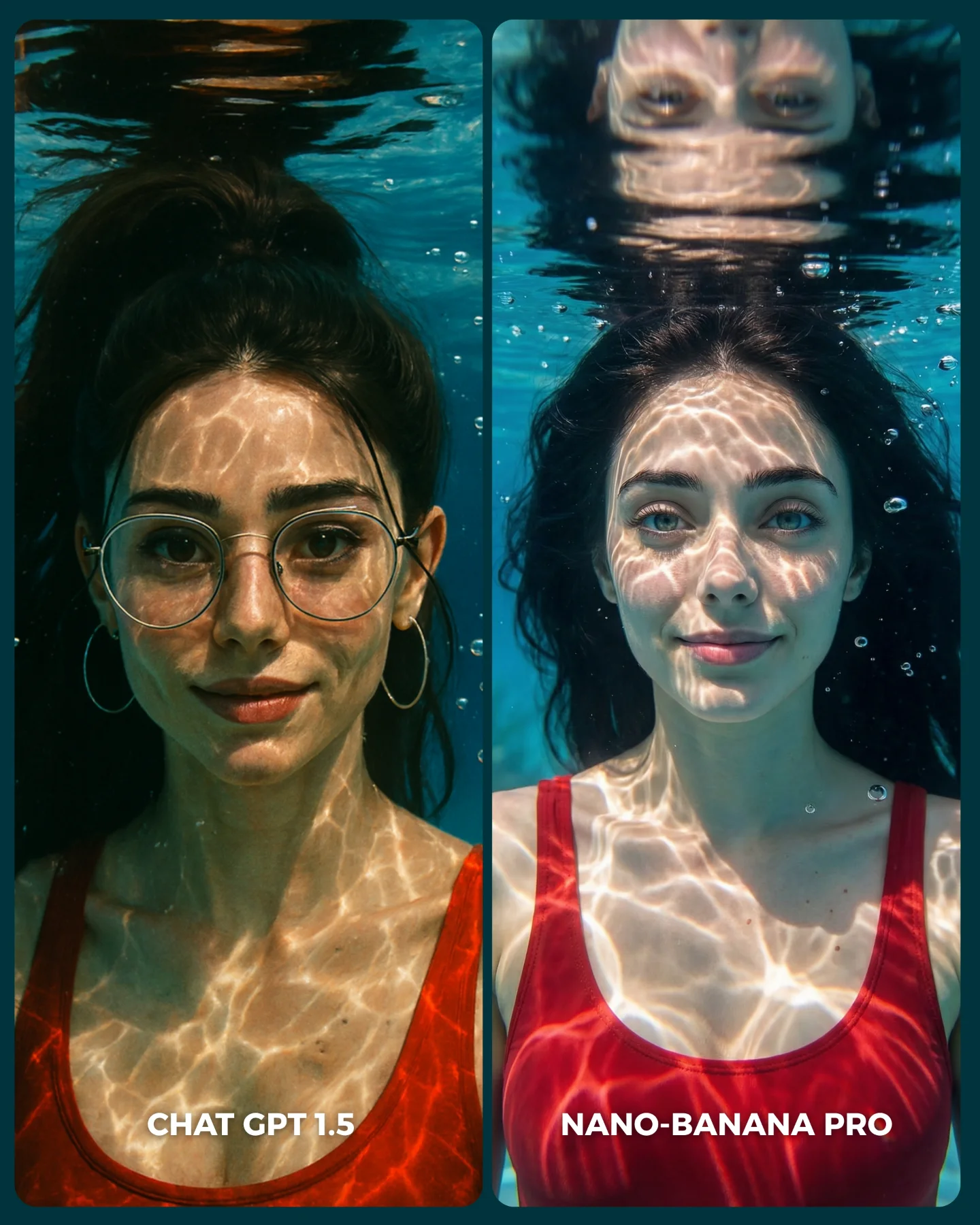
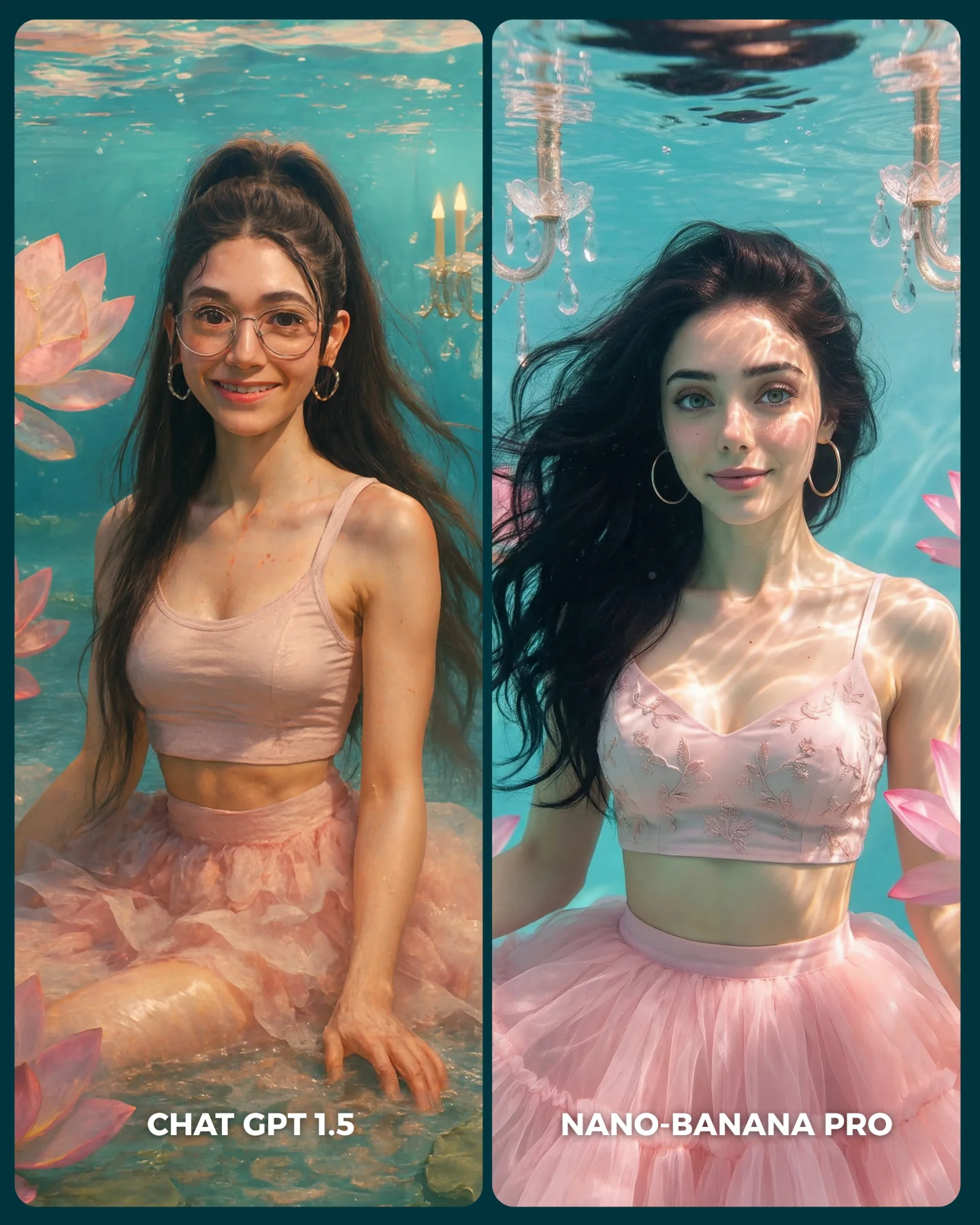
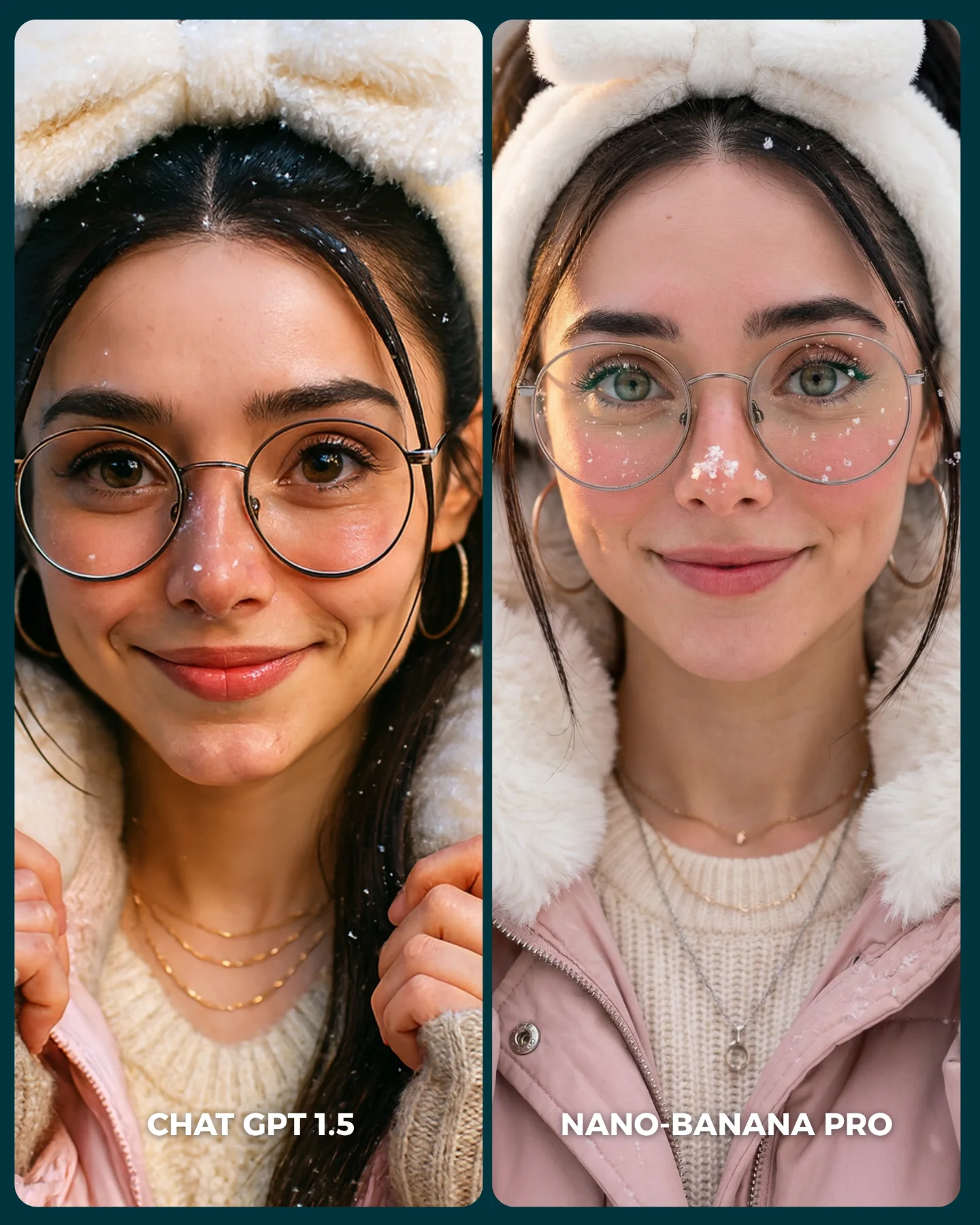
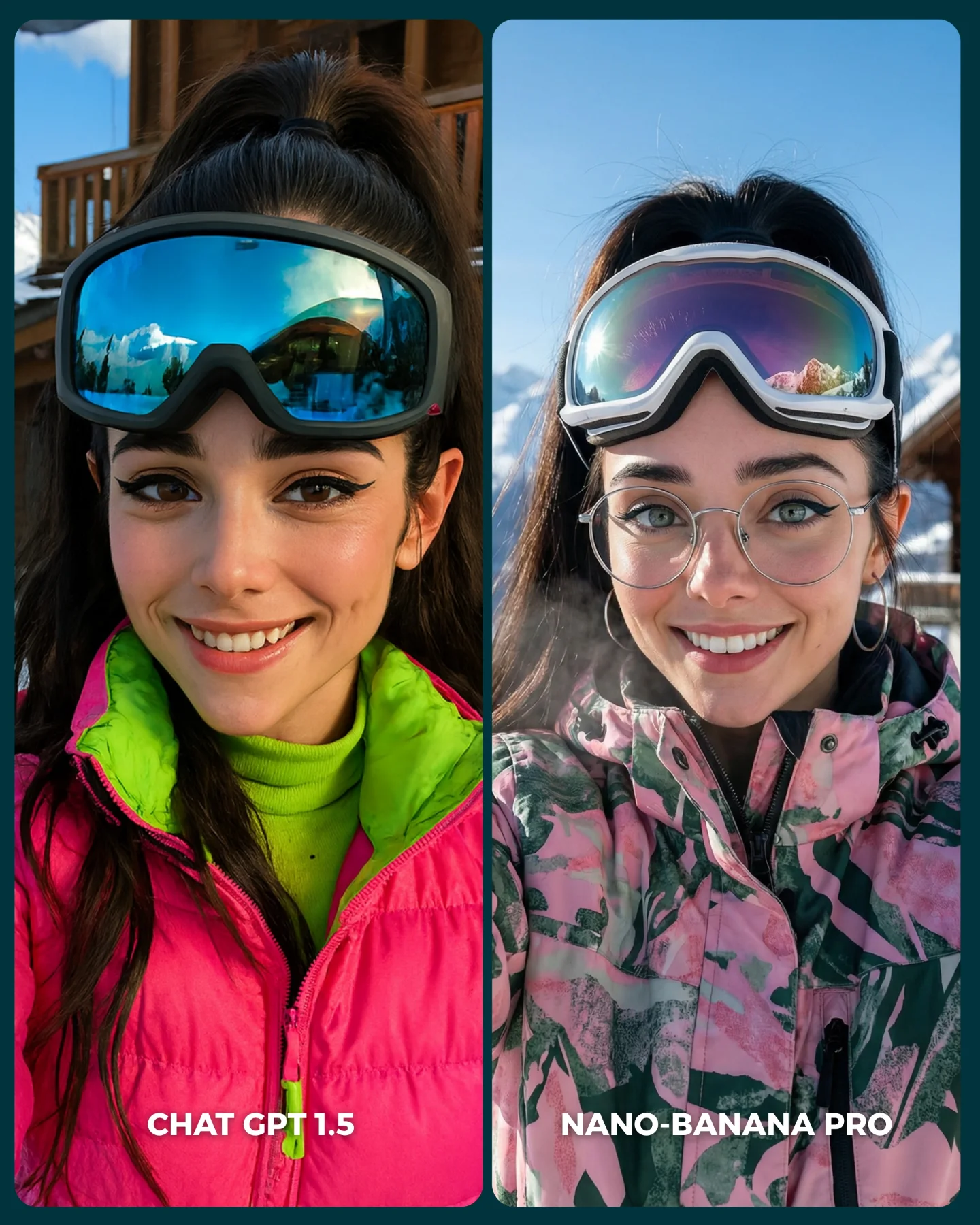
This image works because it compares more than faces. It compares how two image systems handle a difficult visual environment: underwater refraction, moving light patterns, water-surface reflections, bubbles, and subtle hair behavior. That makes the frame useful for creators in a way a plain portrait comparison would not be. It tests realism under stress, which is exactly where weak models usually start to fall apart.
The red swimsuit is a smart choice here. Against blue water, it gives the comparison a strong visual anchor, while the faces remain the true benchmark. The split layout also helps because it encourages viewers to inspect specific details rather than only react emotionally. This is the kind of image that gets attention from both casual viewers and prompt-focused creators, because it is attractive and diagnostic at the same time.
Why This Comparison Format Feels So Effective
The strongest element is controlled difficulty. Water is one of the best stress tests for AI image generation because it introduces distortions that must still look believable. Here, the surface reflection, the caustic lighting, and the small bubbles all create tiny opportunities for a model to fail. That makes the comparison meaningful. It is not just about who makes the prettier face. It is about who survives the complexity more cleanly.
Another reason it works is that the panels are tightly standardized. Similar crop, similar wardrobe, same setting class, same lighting logic. That keeps the viewer focused on rendering differences instead of design differences. For creators, this is a useful lesson: if you want a model comparison to feel credible, constrain the variables hard.
| Signal | Evidence (from this image) | Mechanism | Replication Action |
|---|
| Controlled side-by-side structure | Both portraits use nearly identical framing, waterline position, and wardrobe color | Consistency isolates rendering quality instead of letting composition differences distract | Lock crop, color, and scene class when building comparison tests |
| High-difficulty environment | Underwater caustics, reflections, and floating hair challenge realism | Complex surfaces reveal where models break under visual stress | Use water, glass, smoke, or reflective materials when you want a tougher benchmark |
| Readable visual anchor | The bright red swimsuit contrasts cleanly with the blue water | One stable color target helps viewers compare texture and skin handling more clearly | Choose one high-contrast wardrobe color to stabilize side-by-side tests |
| Immediate label clarity | Each panel is named at the bottom with bold text | Clear labeling reduces confusion and makes the image easier to discuss or repost | Put model names directly on the image if the point is evaluation |
Best Uses and Transfer Paths
- AI model comparison posts: ideal for showing how different systems handle difficult lighting and environmental physics.
- Prompt-engineering education: useful because the image makes abstract rendering differences easy to see.
- Beauty realism benchmarks: strong for creators who want to compare skin, eyes, hair, and specular light handling at once.
- Social-native test graphics: good because it remains visually attractive even while functioning as a benchmark.
This setup is less ideal for narrative photography, soft emotional portrait series, or product imagery. Its strength comes from controlled comparison and visual testing. If the goal is storytelling, the split-panel format can feel too analytical.
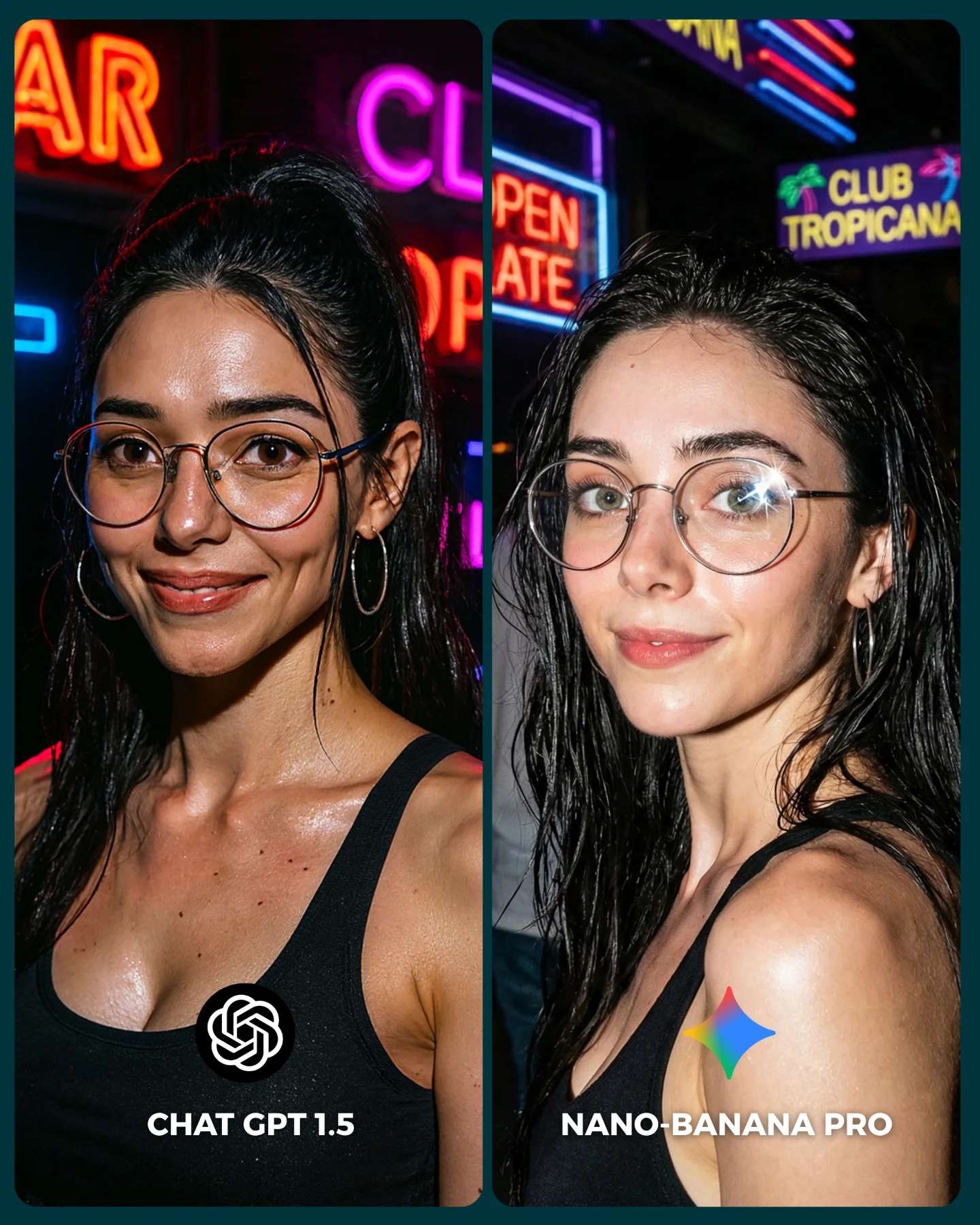
Transfer recipe one: Keep the split-panel structure, one wardrobe color anchor, and one difficult environment. Change the scene from underwater to rain, fogged glass, or neon reflections. Slot template: {stress-test environment} {matched portrait crop} {consistent wardrobe cue} {model labels}.
Transfer recipe two: Keep the side-by-side symmetry and direct labels. Change the subject styling variables such as glasses, hair texture, or age cues while preserving the same light logic. Slot template: {comparison layout} {paired portrait condition} {stable setting} {benchmark goal}.
Transfer recipe three: Keep the waterline reflection and light-caustic challenge. Change the wardrobe, pose, or camera distance while making sure both models receive the exact same brief. Slot template: {matching prompt} {high-difficulty lighting} {one controlled variation} {evaluation graphic}.
What This Image Tests Aesthetically
The image is not only comparing realism. It is also comparing taste. Good underwater beauty imagery needs technical coherence and visual restraint. The reflections should be interesting, but not chaotic. The hair should float, but not tangle into nonsense. The skin should catch the water-light pattern, but still feel human. That balance between effect and face is what separates a compelling comparison from a gimmick.
The mirrored faces at the top are especially important. They create a second realism challenge without overwhelming the composition. For creators, this is a strong takeaway: comparison images become more valuable when they test more than one fragile phenomenon at once, as long as the layout remains easy to read.
| Observed | Recreate |
|---|
| Water-surface reflection appears above each face | Include one secondary optical effect so the comparison tests more than basic portrait rendering |
| Sun-caustic patterns stay believable across skin and fabric | Use strong overhead light in water scenes and watch whether the pattern placement remains coherent |
| Panel symmetry keeps the comparison honest | Align crop, scale, and subject posture as closely as possible between outputs |
| One side includes glasses while the other changes hair behavior | Use small controlled differences if you want to compare how systems handle accessories versus natural textures |
Prompt Technique Breakdown
| Prompt chunk | What it controls | Swap ideas (EN, 2–3 options) |
|---|
| two vertical underwater portrait comparison panels | Core evaluation layout and readability | rain-window split test; fog-glass portrait comparison; neon-reflection side-by-side |
| clear blue pool water with visible surface reflections | Environmental stress and optical realism | green lake water; chlorinated pool with sharper reflections; darker aquarium tone |
| bright red swimsuit as shared wardrobe anchor | Color stability and contrast benchmark | white swimsuit; black swim top; metallic silver straps |
| left with glasses and ponytail, right with loose floating hair | Feature differentiation and texture handling | both with glasses; both loose hair; curly versus straight hair test |
| caustic sunlight patterns on face and chest | Lighting difficulty and realism challenge | softer light caustics; stronger noon shimmer; shallower water glow |
| bottom labels naming each model | Clarity of comparison and repost utility | small corner labels; top labels; no labels for blind test version |
How to Iterate Without Breaking the Benchmark
Lock three things first: the side-by-side structure, the underwater optical challenges, and the stable crop/wardrobe logic. Those are the load-bearing parts. If one changes too much, the comparison stops being trustworthy.
- Start with the exact setup: matched underwater portraits, visible waterline reflections, red swimsuit anchor, and bold bottom labels.
- Change only one subject variable, such as glasses, hair texture, or expression, while keeping the environment fixed.
- Change only the environment stressor, moving from clear pool water to murkier water or stronger refraction while preserving panel symmetry.
- Change only the label strategy if you want a blind-test version, but keep everything else identical.
The repeatable takeaway is simple: comparison graphics become far more useful when they test hard visual conditions under tightly controlled framing.