How soy_aria_cruz Made This Neon Club Portrait Model Comparison AI and How to Recreate It
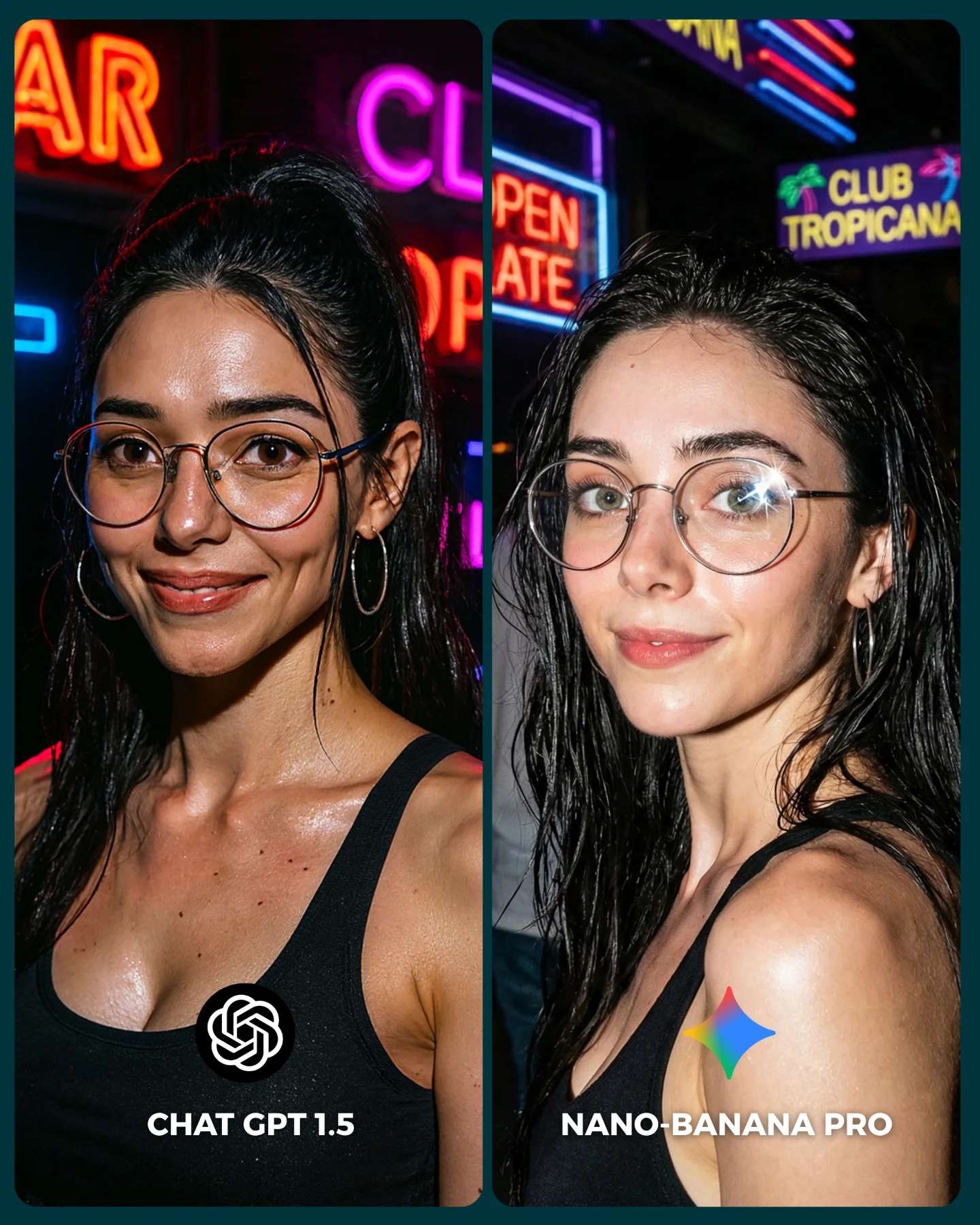
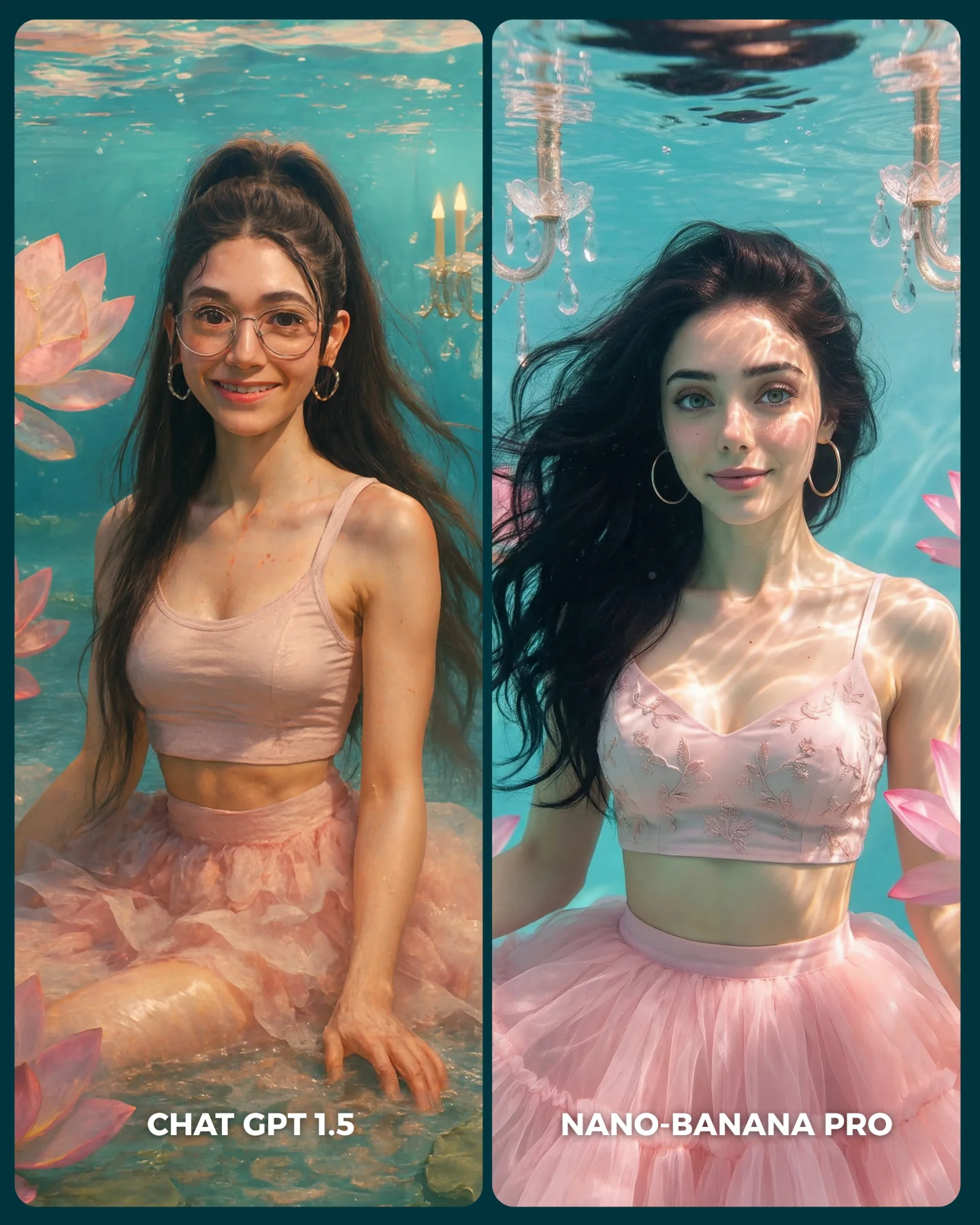
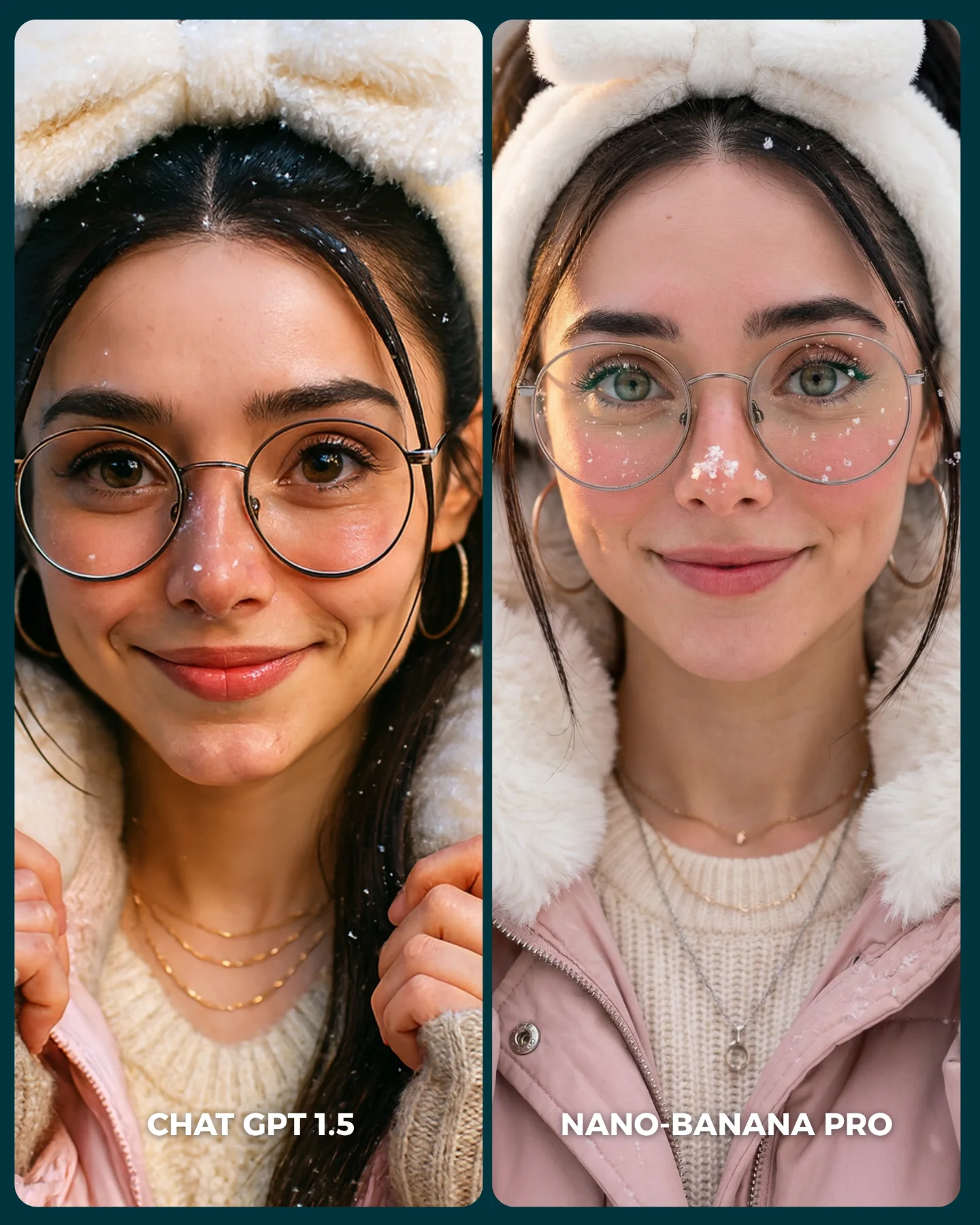
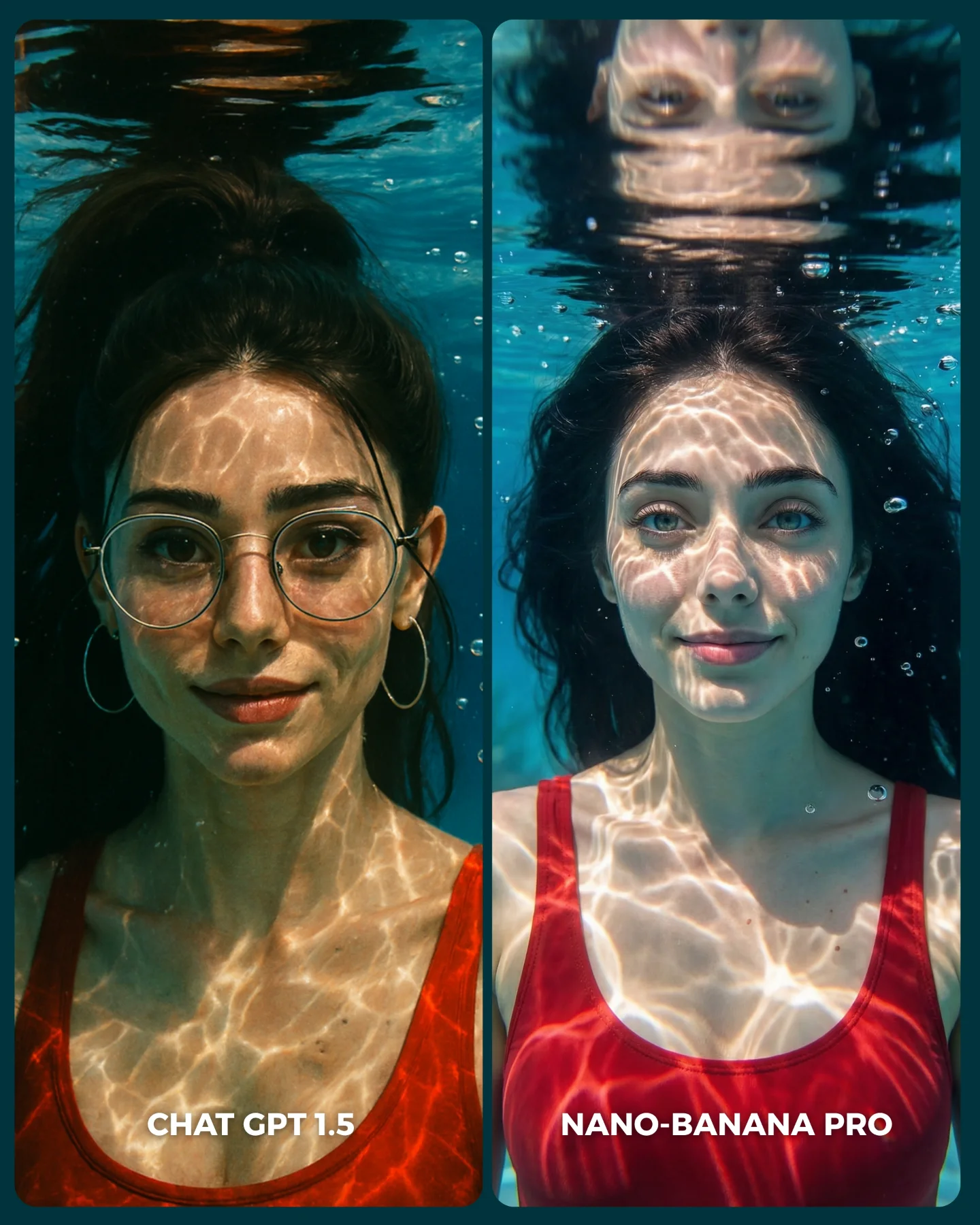
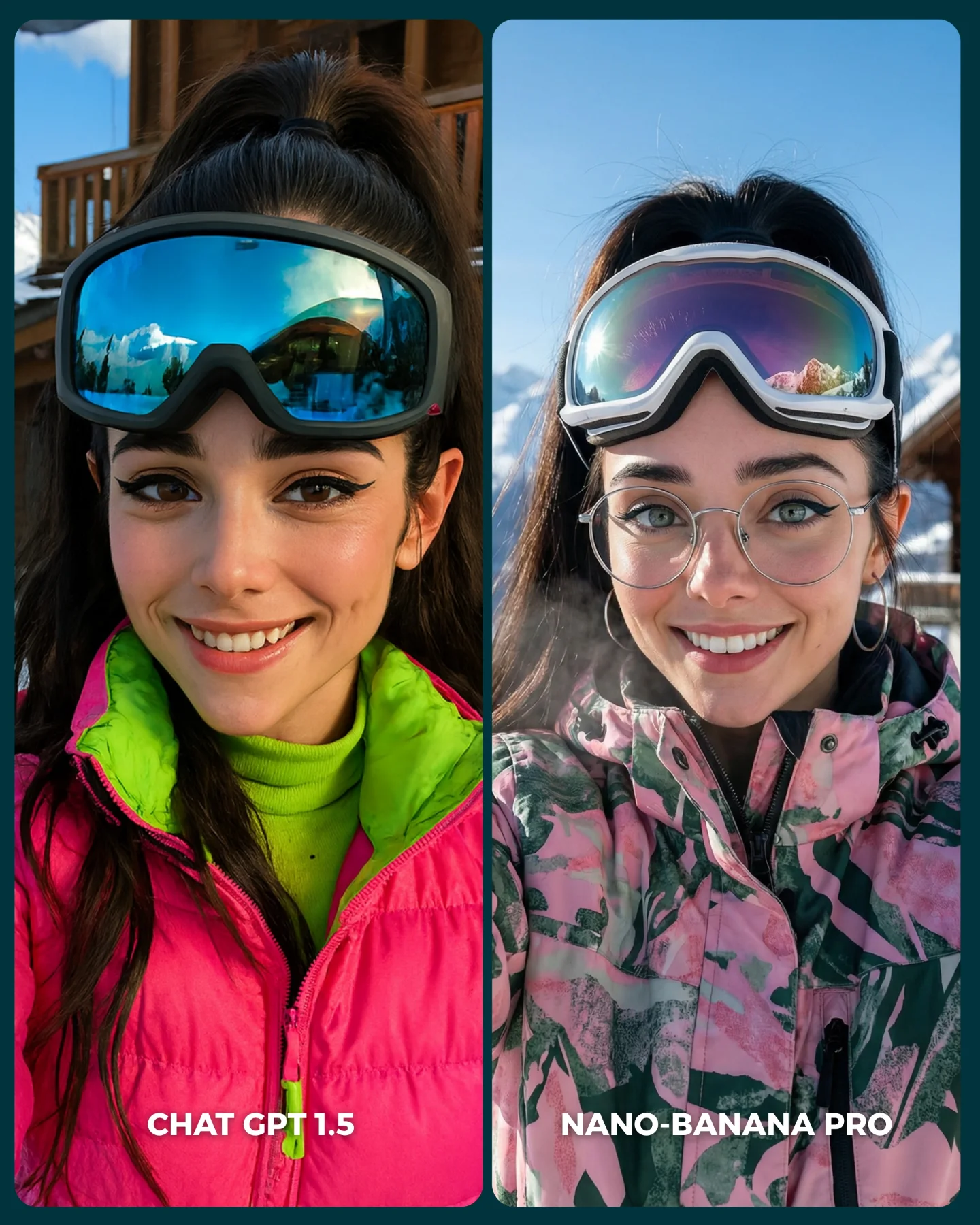
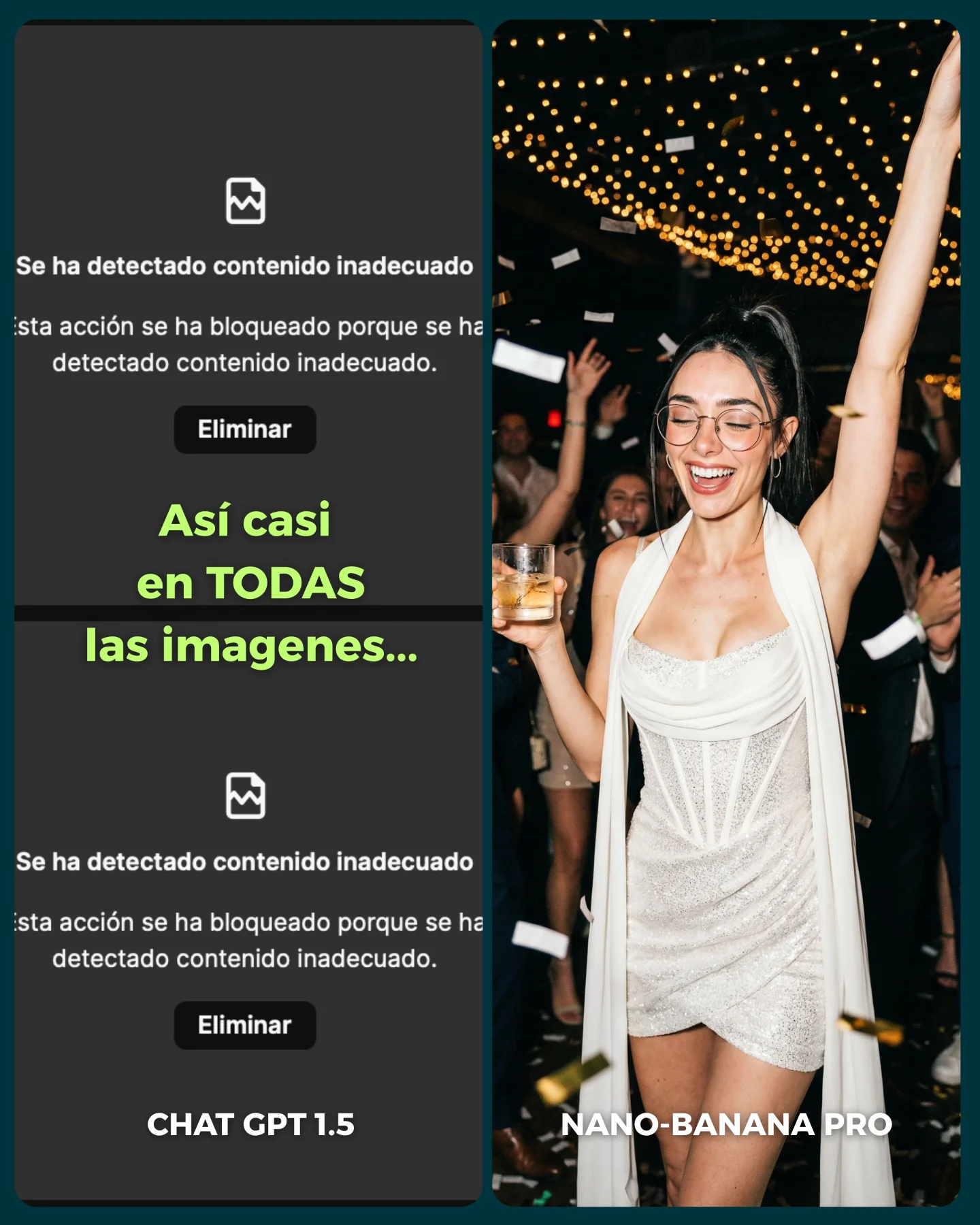
This image works because it compares two outputs inside a setting where rendering differences become obvious very quickly. Neon signage, reflective glasses, skin sheen, and wet hair are all excellent stress points for image models.
Why it works
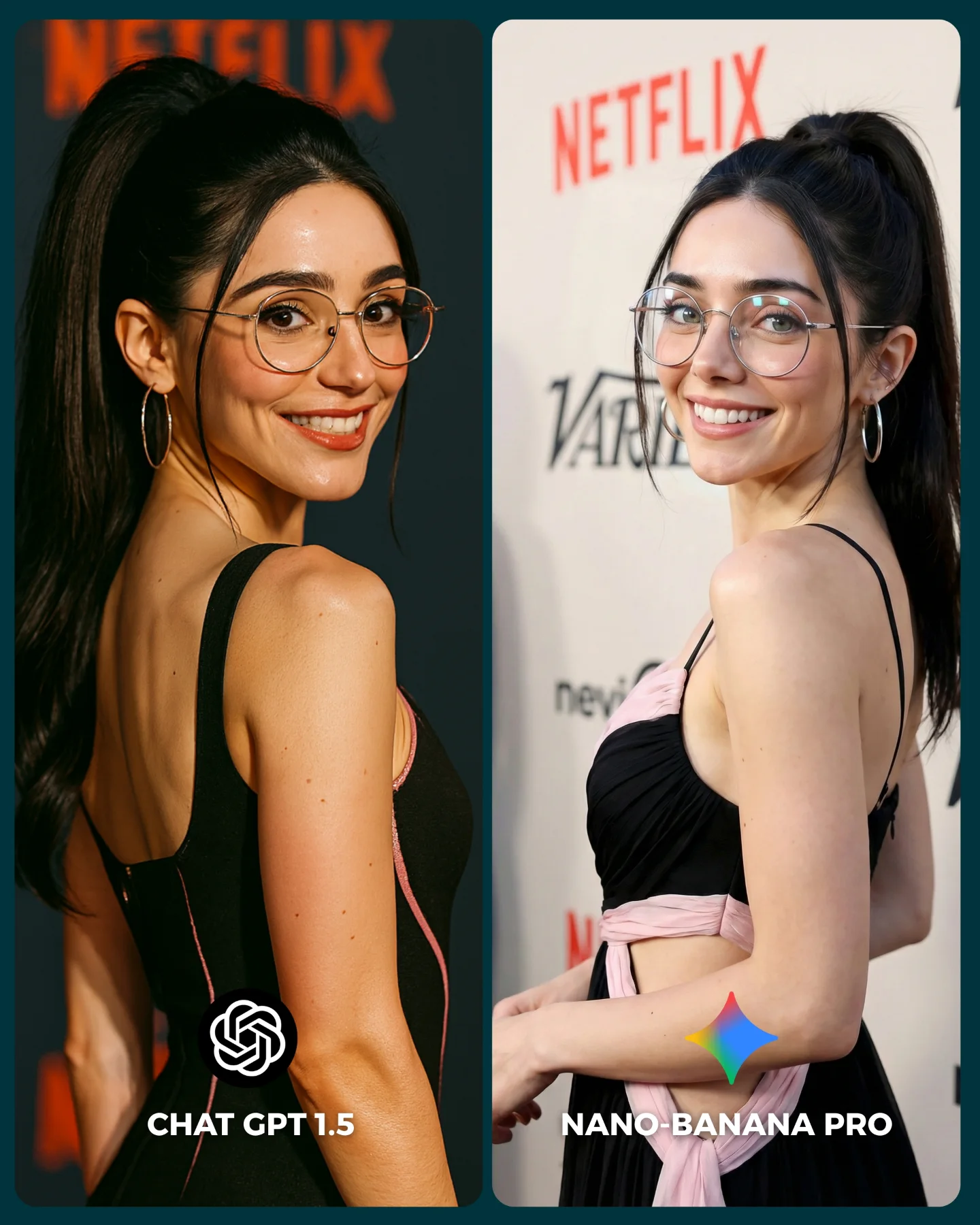
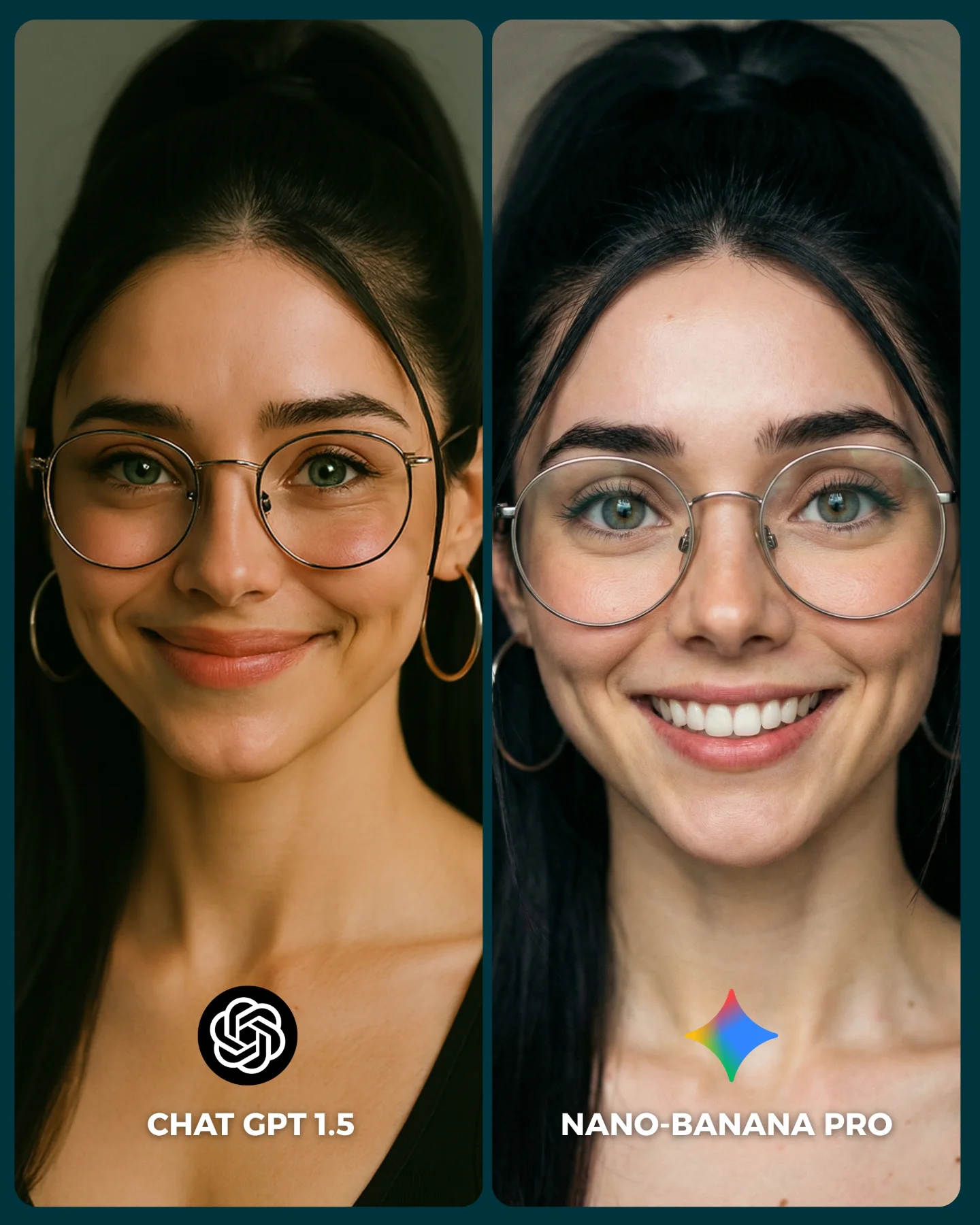
The split-screen layout is doing the heavy lifting. It allows the viewer to compare mood, lighting, skin treatment, and environmental realism at a glance without needing extra explanation.
The black tank top is a good stabilizer. Because the clothing is simple, the comparison naturally shifts toward face, lighting, and environment, which is exactly where the meaningful differences live.
The nightclub signage gives the image character. It keeps the comparison from feeling dry or technical by embedding it in a visually exciting world.
Use cases
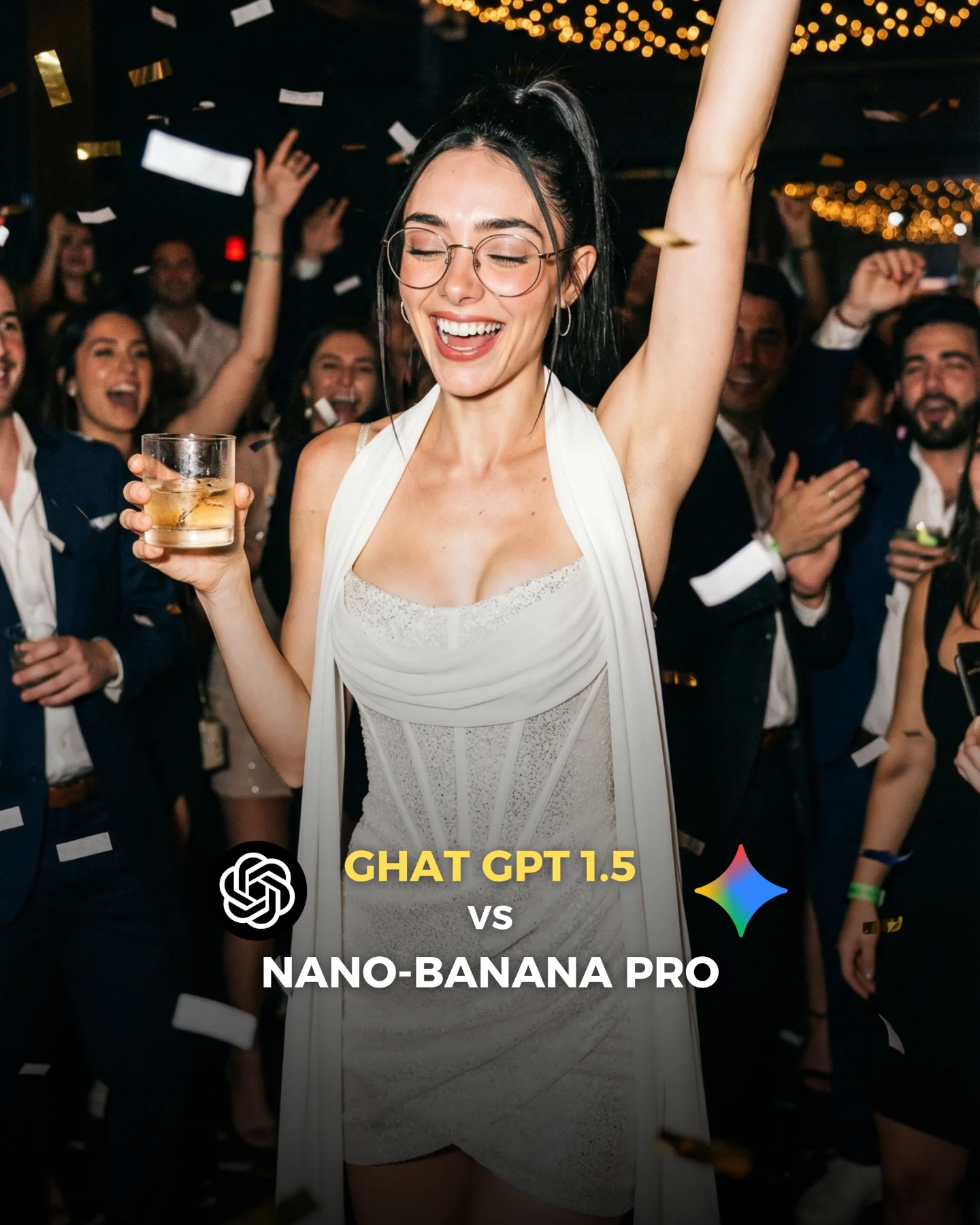
This prompt is ideal for AI model-comparison posts, nightlife portrait benchmark covers, carousel thumbnails, creator tool demos, visual-testing social graphics, and side-by-side prompts designed to highlight lighting and texture performance.
Aesthetic read
The aesthetic sits between beauty portrait comparison content and neon nightlife editorial. It is more stylish than a plain benchmark and more informative than a single aesthetic portrait.
Prompt technique breakdown
To recreate this image well, the prompt should specify the two-panel format, black tank top, round glasses, neon signs, left-versus-right label treatment, wet hair difference, and club-night color palette. Those details are what make the comparison both readable and visually compelling. If the signage or labeling disappears, the graphic loses much of its usefulness.
It also helps to keep the crop tight and the subject consistent across both panels. The comparison only works when the differences stay focused.
Remix playbook
You can remix this concept by changing the venue from nightclub to rain street, diner, or arcade, swapping model names, or comparing more than two outputs in a carousel or grid. You can also use different styling variables like makeup intensity or camera flash. The concept remains useful because nightlife environments are full of subtle rendering challenges that reveal model quality quickly.
That is what makes this prompt effective. It turns technical evaluation into a stylish visual experience.