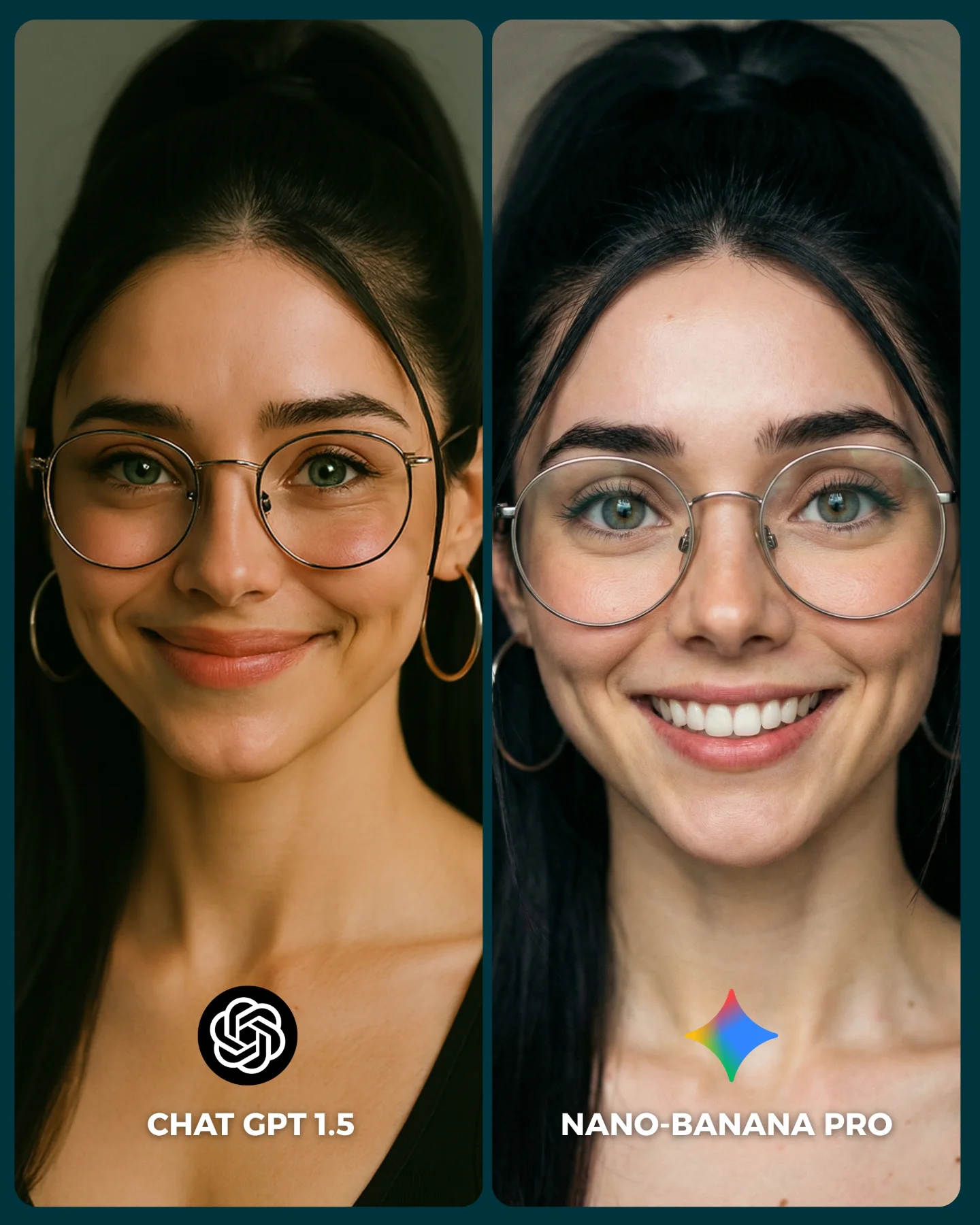
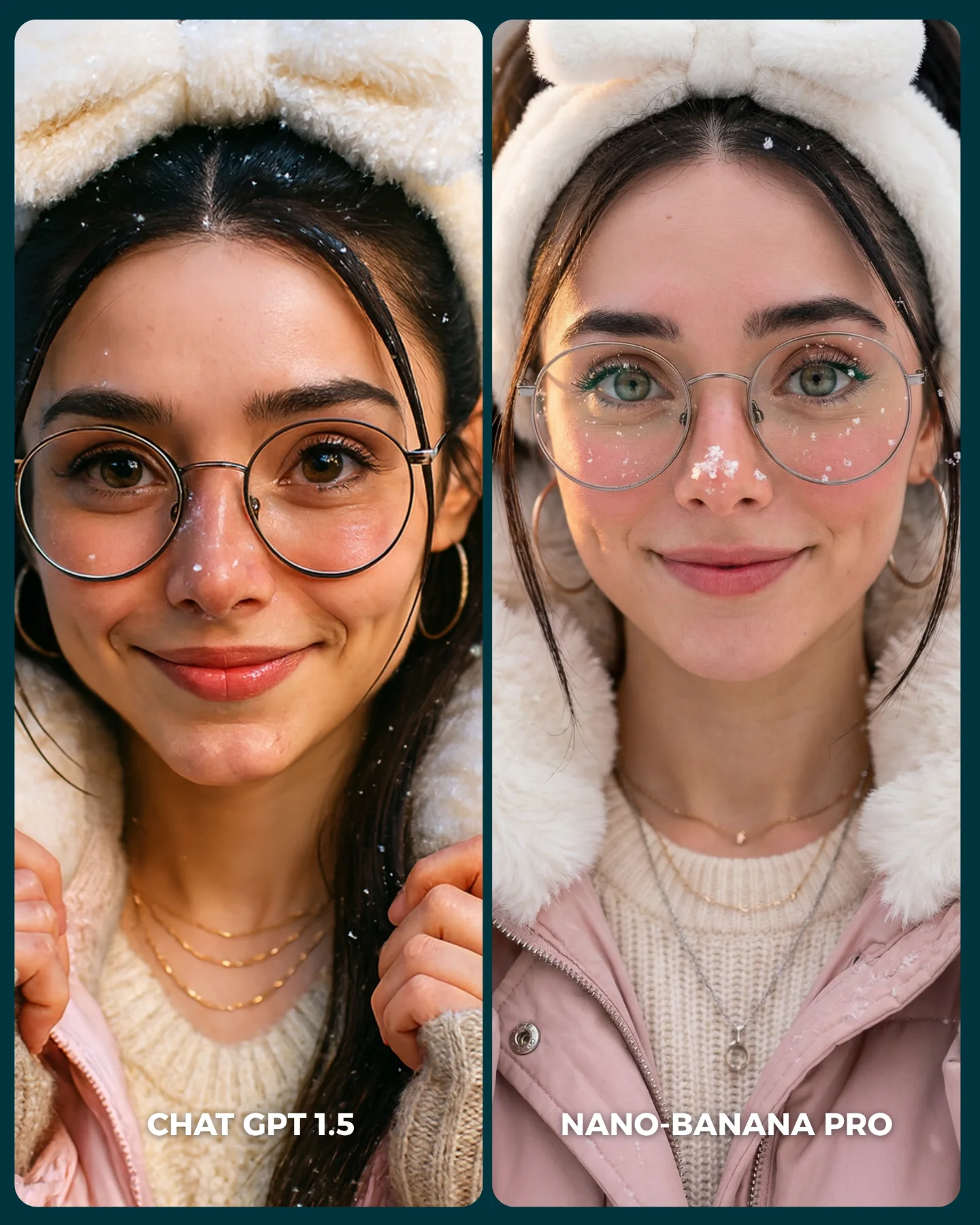
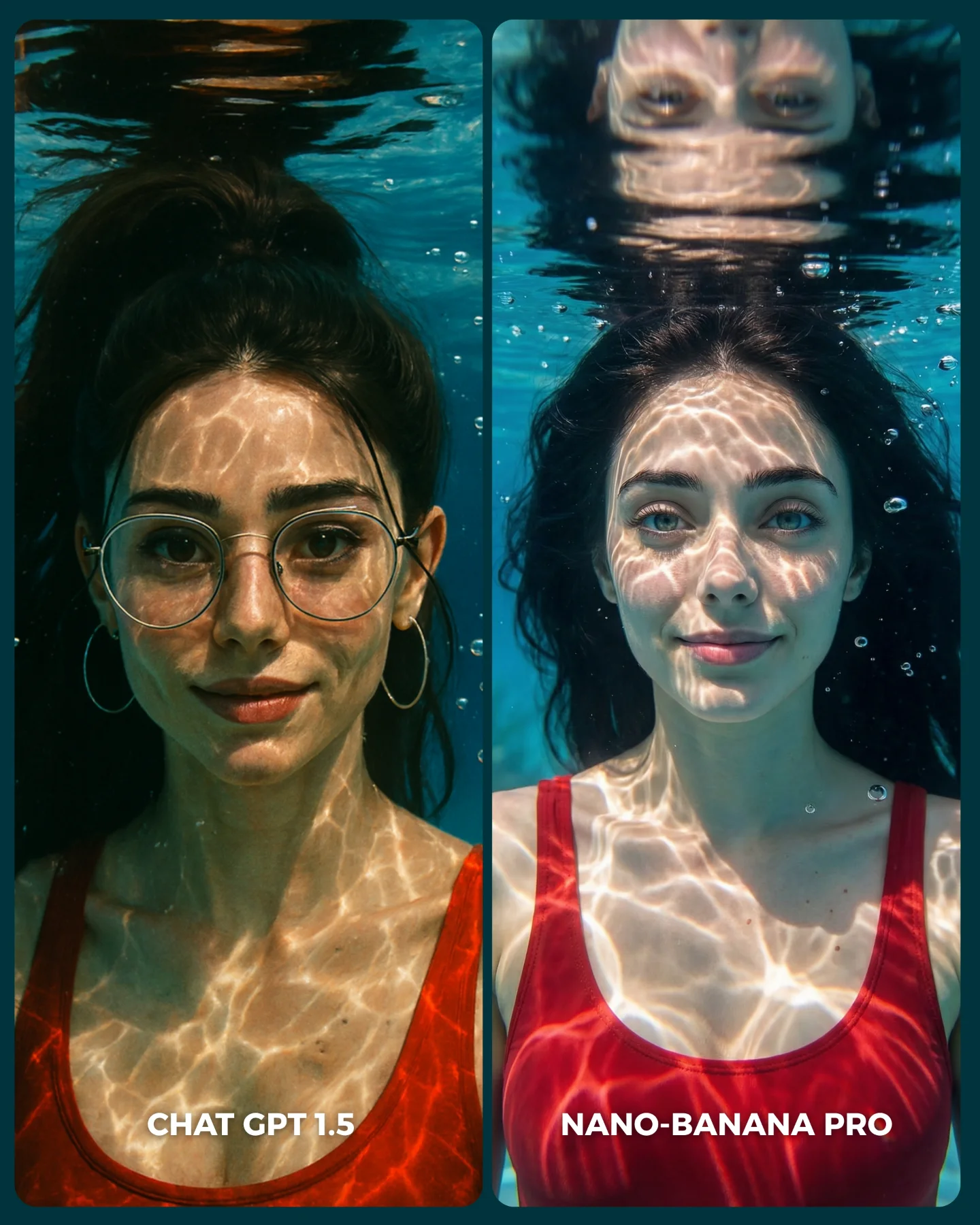
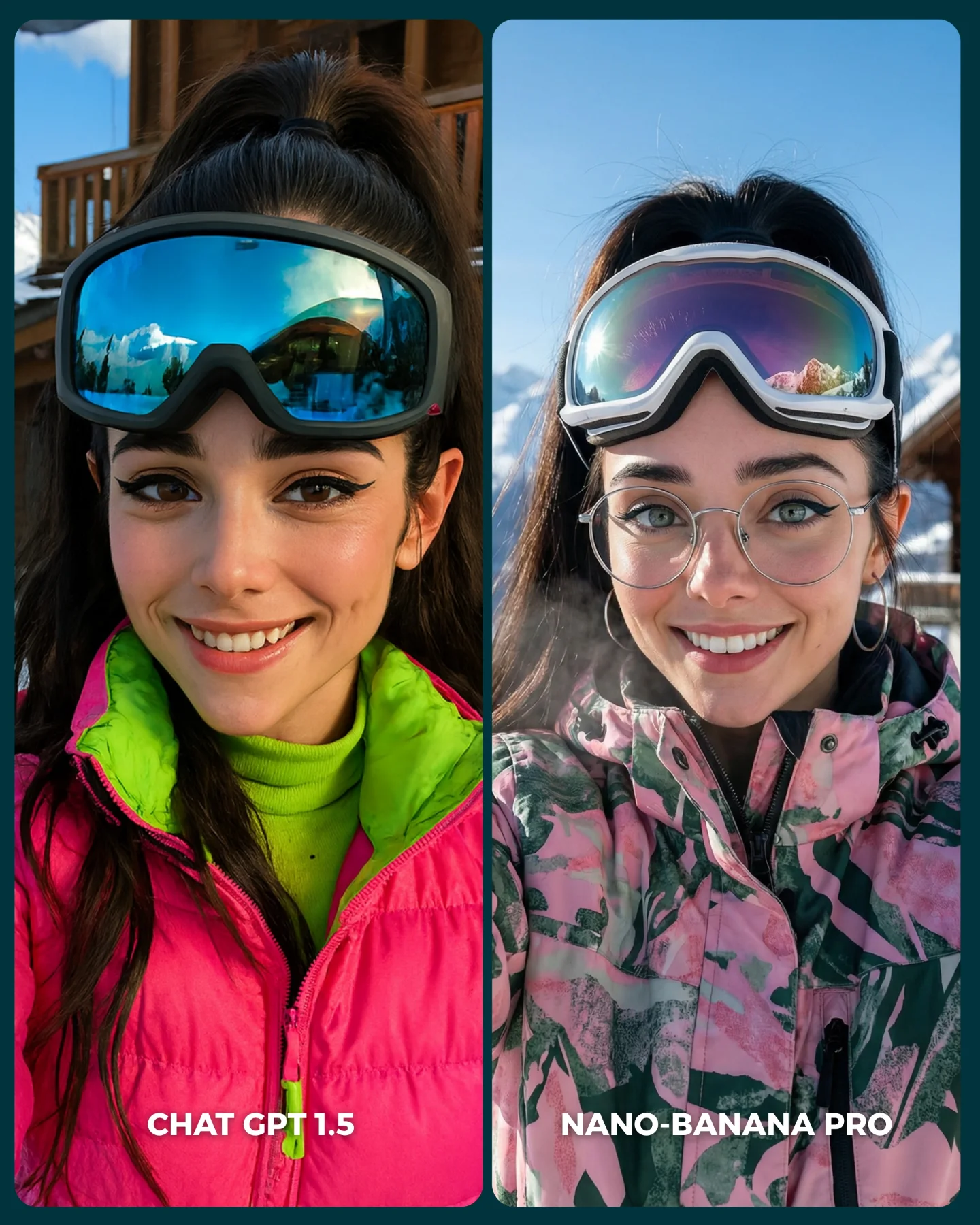
How to Create a ChatGPT vs Nano Banana Underwater Comparison AI Image
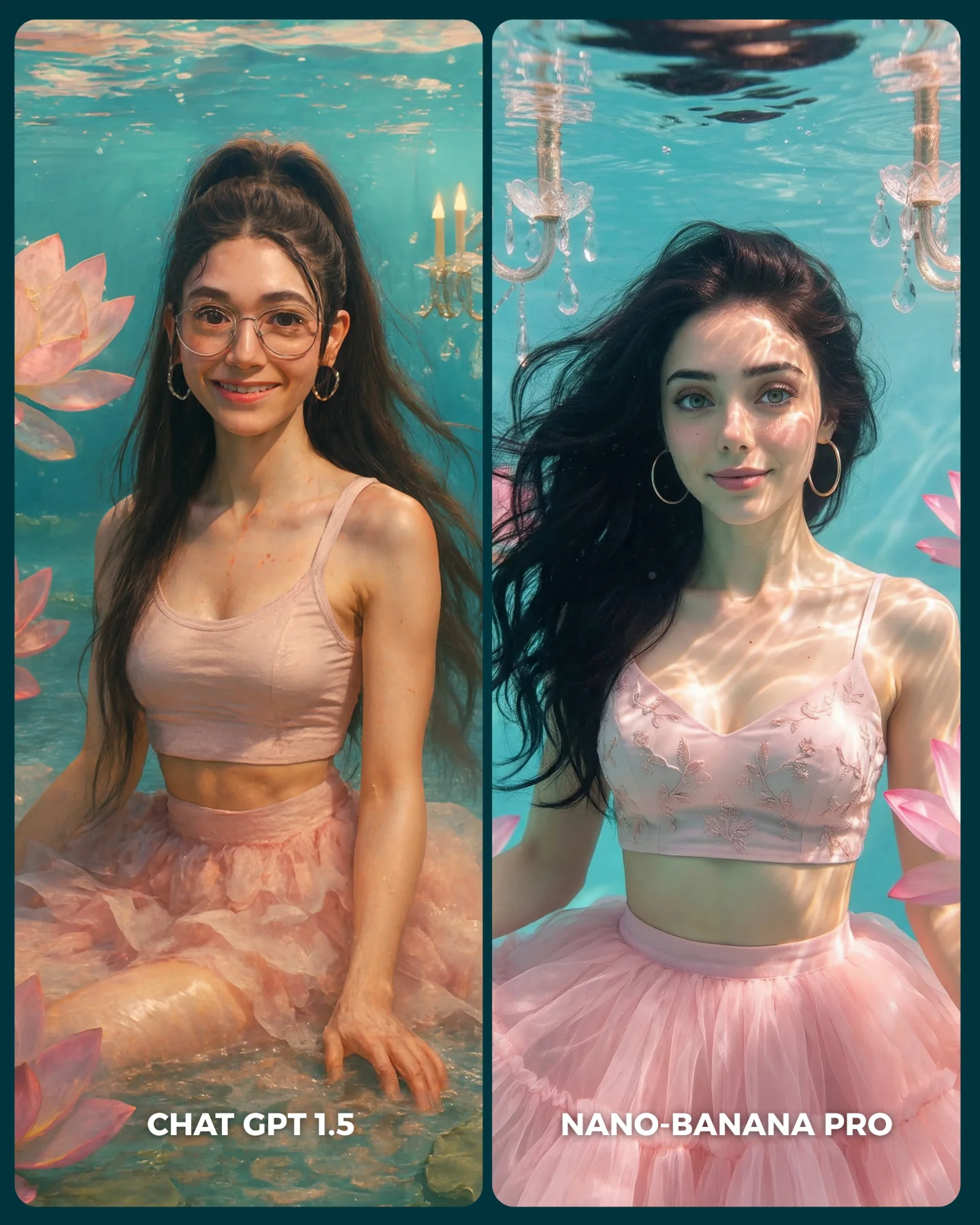
This is a strong comparison concept because it uses a fantasy setup that is visually rich but still controlled. Water, floating hair, tulle fabric, flowers, chandelier reflections, and soft facial beauty all create enough complexity to expose model differences quickly. At the same time, the scene is simple enough that the audience can still compare both sides without getting lost.
For creators, this is exactly the kind of benchmark setup that works on social. It is not boring like a plain studio test, but it is not so chaotic that the comparison stops being meaningful. The audience gets beauty and evidence at the same time, which is why posts like this invite both saves and opinions.
Why this image is effective as a benchmark
The strongest mechanism here is controlled fantasy. Both sides use the same visual ingredients: pink outfit, underwater lighting, soft floral framing, and the same general pose. That sameness makes the quality gap easier to read. If one side handles face polish, water physics, or fabric better, the viewer notices it quickly because the rest of the structure stays constant.
Another advantage is that underwater beauty scenes are naturally demanding. Hair movement, waterline distortion, skin caustics, and transparent lighting are all places where weaker models often lose coherence. That makes the setup more revealing than a normal portrait. The fantasy layer is not just for aesthetics. It is also a stress test.
| Signal | Evidence (from this image) | Mechanism | Replication Action |
|---|
| Same concept, different execution | Both panels share the same pink underwater fantasy scene and composition logic | Viewers can compare refinement instead of deciphering different prompts | Hold the environment constant when testing beauty-focused models |
| High-difficulty realism cues | Floating hair, water ripples, tulle texture, and reflective decor all appear in frame | Complex materials expose rendering quality differences fast | Use one fantasy setup that still contains real physics challenges |
| Scroll-stopping softness | Pastel pink styling and clear aqua tones create immediate visual appeal | The image attracts attention before the benchmark logic even registers | Choose benchmark scenes that are beautiful enough to compete in a social feed |
Where this format fits best
This structure is ideal for AI comparison creators, beauty-prompt educators, and social accounts that want to compare outputs without sacrificing aesthetics. It is especially strong when the goal is to test how different models handle elegance, atmosphere, and subtle realism under non-standard conditions.
It is less useful if your audience prefers hyper-practical, plain benchmark scenes. Underwater fantasy is still a stylized context. That is part of its appeal, but it also means the image is best for visually literate audiences who enjoy aesthetic comparisons as much as technical ones.
- Best fit: beauty-comparison creators. Why fit: the setup reveals skin, face, and fabric quality differences clearly. What to change: vary lighting complexity or hair movement while keeping the frame constant.
- Best fit: prompt educators. Why fit: one image can teach control over water, fabric, and soft fantasy composition. What to change: isolate which prompt block affects realism the most.
- Best fit: social AI showcase pages. Why fit: the scene is visually charming enough to attract broad attention. What to change: rotate the fantasy environment while preserving the side-by-side structure.
- Not ideal: plain realism benchmark pages. Reason: the stylization may distract audiences who want only neutral tests.
- Not ideal: minimal design feeds. Reason: flowers, chandeliers, and water reflections intentionally create a lush look.
Transfer recipes
- Keep: two-panel comparison, same pastel styling, and same floating-hair challenge. Change: underwater flowers to clouds, soft fog, or ice palace reflections. Slot template: "{same beauty subject} in {fantasy environment} for {model A} vs {model B}"
- Keep: one elegant outfit and one physically demanding medium. Change: water to rain, smoke, or wind-driven fabric. Slot template: "{same portrait setup} stress-testing {material or environmental physics}"
- Keep: romantic color palette and matched pose. Change: the decor from chandelier-lotus to pearls, crystals, or sheer drapery. Slot template: "{side-by-side beauty comparison} with {soft luxury decor} and {physics challenge}"
What the image gets right aesthetically
The image works because it balances fantasy richness with frame discipline. The lotus flowers and chandelier details add wonder, but they stay at the edges and in the background. The subject remains central. That is a crucial design choice. In benchmark imagery, decorative elements should support the comparison, not compete with it.
The pastel palette is also strategic. Pink clothing against aqua water creates a strong but gentle color contrast that flatters the face and makes differences in tone mapping easier to see. This is a useful prompt lesson: benchmark scenes can still be beautiful if the color story stays controlled.
| Observed | Why it matters for recreation |
|---|
| Two closely matched underwater beauty panels | Make it easy to isolate rendering differences |
| Pink tulle outfit in blue water | Creates a soft high-contrast palette that flatters the subject |
| Floating hair and visible waterline | Introduce useful physics challenges for model evaluation |
| Lotus blooms and chandelier decor at the edges | Add fantasy atmosphere without distracting from the face |
| Bottom labels naming each model | Make the comparison immediately understandable in-feed |
Prompt chunks worth locking first
If you want a comparison like this to work, start with the physics and frame consistency before you obsess over beauty adjectives. The beauty comes from how well the model handles water, light, and soft materials under the same setup.
| Prompt chunk | What it controls | Swap ideas (EN, 2–3 options) |
|---|
| two equal underwater comparison panels | Benchmark structure and fairness | dual-column beauty test, left-right fantasy benchmark, model-vs-model split layout |
| same woman in pale pink crop top and tulle skirt | Subject and wardrobe consistency | same silk dress, same ballet leotard, same pearl-toned outfit |
| clear aqua water with visible caustic light | Physics challenge and atmosphere | glassy pool water, soft rain reflections, translucent mist light |
| floating hair and calm direct gaze | Beauty realism and motion control | gentle hair swirl, profile drift, slow-turn head pose |
| lotus flowers and chandelier decor | Fantasy luxury framing | crystal orbs, candle sconces, sheer drapery underwater illusion |
| clear model labels at the bottom | Instant social readability | MODEL A / MODEL B, TOOL 1 / TOOL 2, PRO / BASE |
An iteration path that keeps the comparison meaningful
Lock these three things first: the two-panel structure, the same pink outfit, and the underwater physics cues. Those are the benchmark anchors. After that, refine face quality, hair flow, and decor density in small steps.
- Run 1: stabilize the split-screen layout and subject identity across both panels.
- Run 2: improve water caustics, hair movement, and the visibility of the waterline.
- Run 3: refine tulle texture, flower placement, and chandelier reflections.
- Run 4: remix the fantasy environment while preserving the same comparison logic.
If the result feels beautiful but not useful, simplify the decor. If it feels technical but dull, improve the color story and softness of the scene. The best benchmark is both readable and desirable.