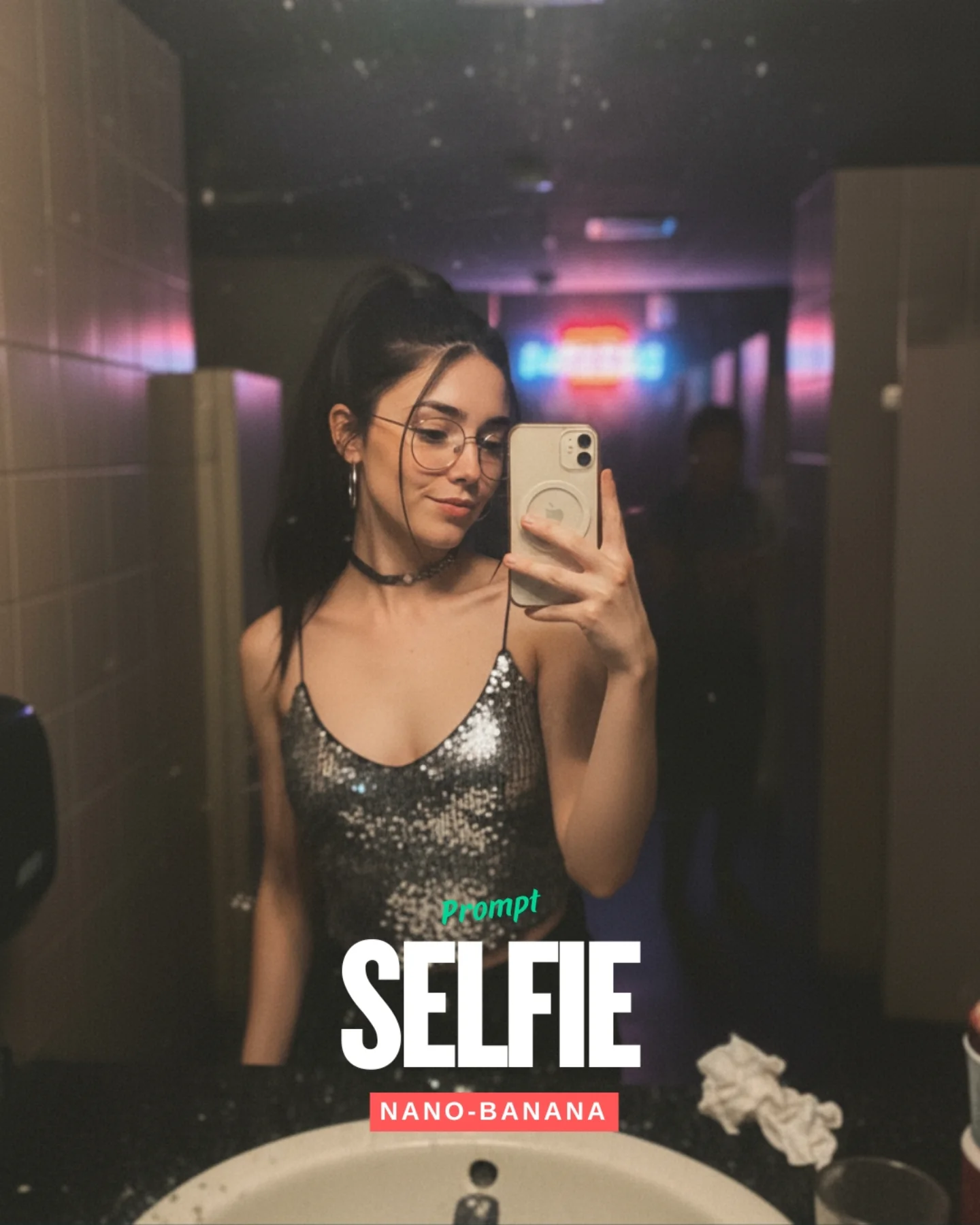
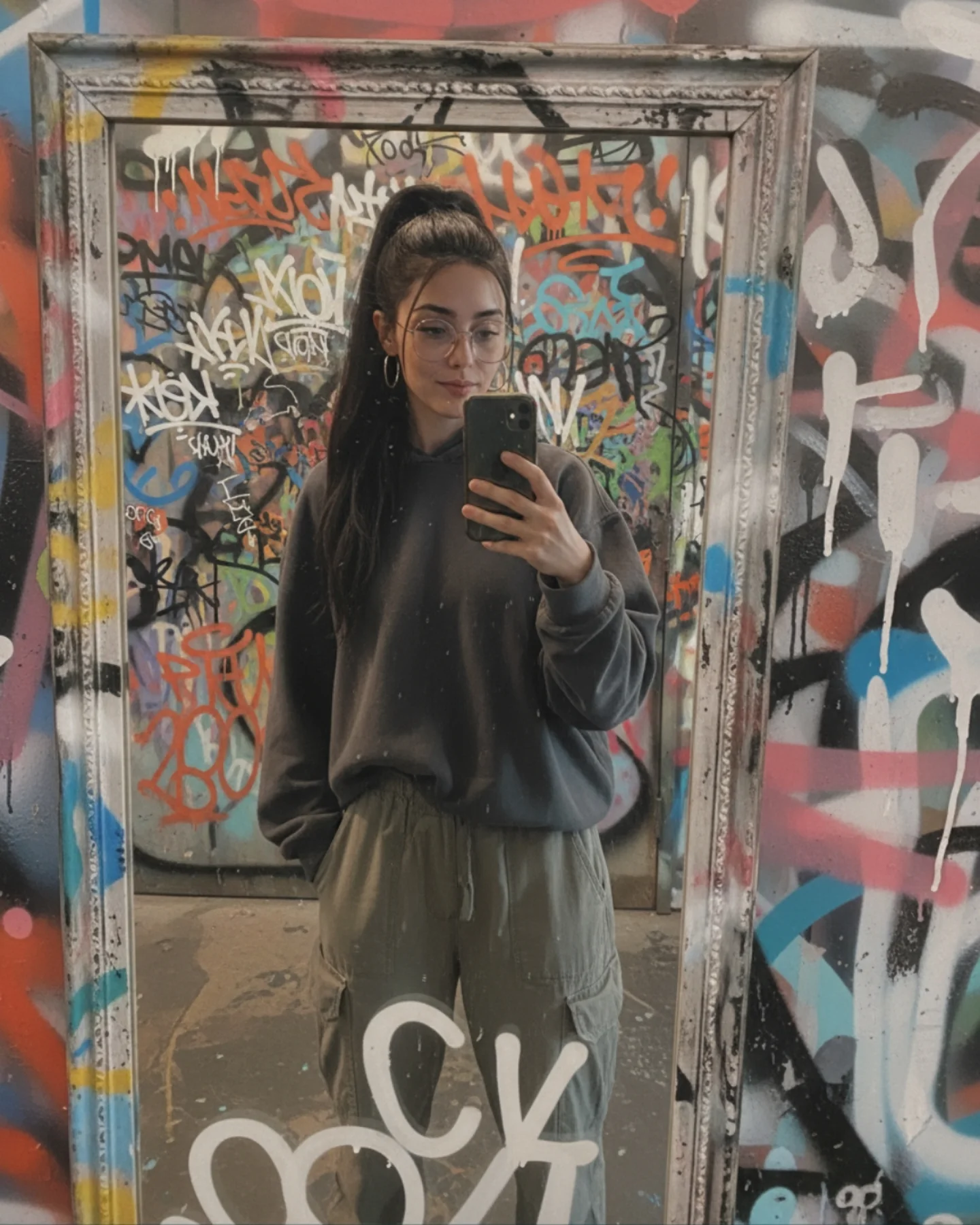
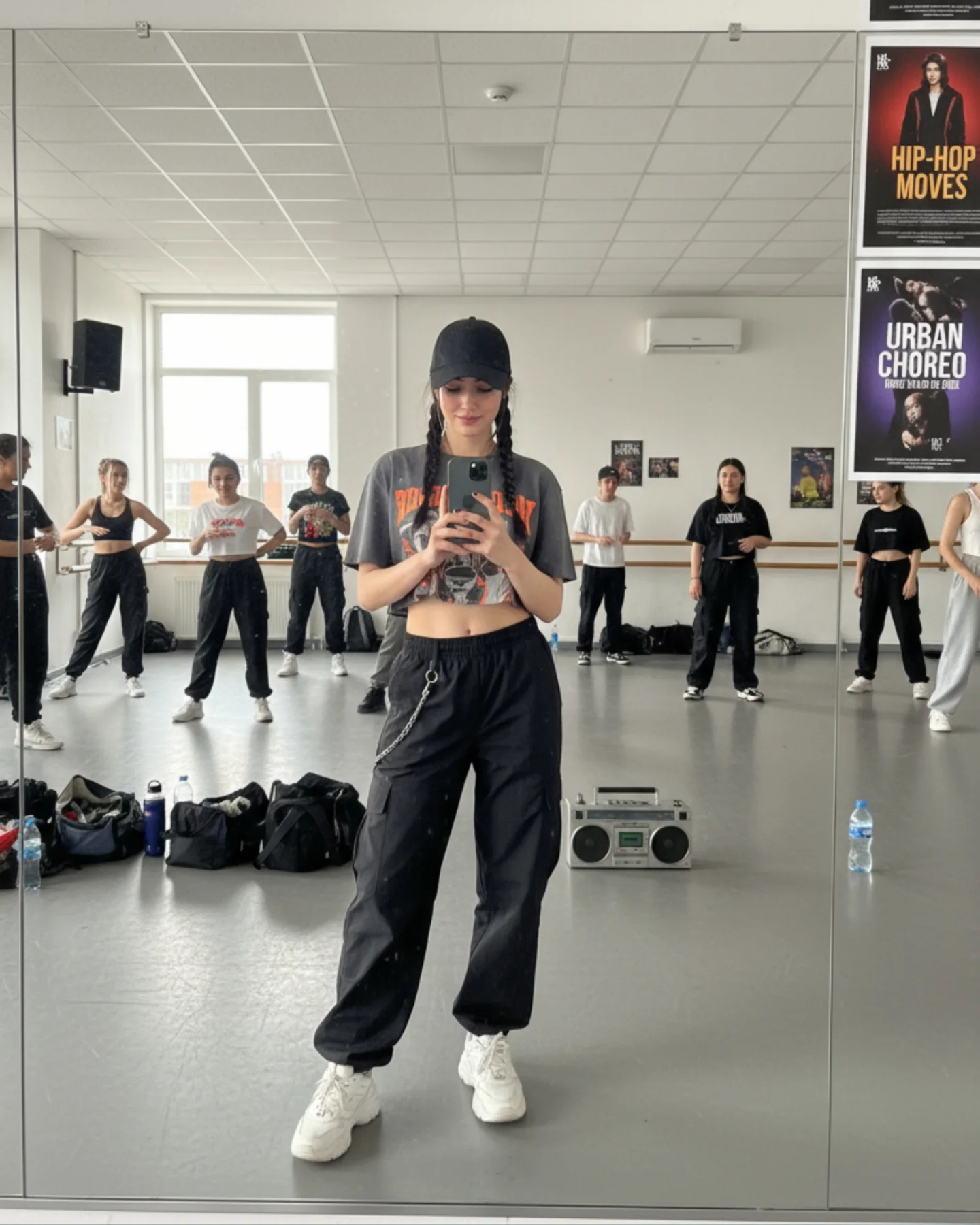
This image works because it keeps the language of a real mirror selfie intact. It does not over-clean the mirror, erase the sink, or pretend the bathroom is a studio. That honesty is what makes the fashion styling land harder.
How soy_aria_cruz Made This Sequined Dress Bathroom Selfie Image — and How to Recreate It
The strongest part of this frame is its balance between polish and imperfection. The sequined dress, glasses, ponytail, and distant neon give the image aesthetic intent, while the dusty mirror and sink remind the viewer that this was captured in an actual lived space. That tension is the whole appeal.
Why This Works
Bathroom selfies fail when they try to look too premium or too accidental. This one sits in the useful middle. The styling is clear enough to feel deliberate, but the environment stays messy enough to feel believable.
The sequined dress gives the frame a visual reason to exist. Without that reflective texture, the image would just be another dim mirror shot. With it, the outfit becomes the light source’s best partner and gives the photo immediate nightlife identity.
The glasses and ponytail also matter. They create a readable face silhouette, so the image still feels like a person with taste and attitude rather than a generic body-and-phone composition.
Signal Table
| Signal | Function | Effect |
|---|
| Dusty mirror | Preserves realism | Prevents the image from feeling over-edited |
| Sequined dress | Creates texture and light response | Makes the frame feel nightlife-specific |
| Distant neon glow | Builds mood without stealing focus | Adds club-after-hours atmosphere |
| Glasses and ponytail | Clarify identity | Improve recognizability and styling memory |
| Sink edge foreground | Anchors place | Confirms authentic bathroom setting |
Aesthetic Direction
The aesthetic is not luxury editorial. It is elevated candid. That distinction matters because the image depends on feeling shareable and immediate, not distant and untouchable. The styling says “night out,” while the location says “real moment.”
The palette is simple: black, silver, skin tone, and a little neon. That is enough. The image does not need more color complexity because the social utility comes from quick readability and personal presence.
Prompt Technique Breakdown
| Technique | Use Here | Prompt Advice |
|---|
| Authenticity lock | Keep bathroom imperfections | Specify dusty mirror, sink edge, dim restroom |
| Style anchor | Use one defining clothing signal | Name the silver sequined dress explicitly |
| Mood accent | Use distant light only | Add blurred neon glow instead of visible signs |
| Identity detail | Support face memory | Call out glasses, ponytail, hoop earrings |
| Candid framing | Avoid studio polish | Use upper-body mirror selfie language |
Use Cases
This structure is useful for nightlife portraits, creator-lifestyle posts, fashion-selfie campaigns, moodboards for real-phone aesthetics, and social cards that need to feel stylish without losing candidness.
It is not a good structure for product catalog photography, luxury beauty campaigns, or any visual that requires perfect cleanliness and strict brand-control surfaces.
Three Transfer Recipes
Transfer Recipe 1
Keep the same bathroom mirror structure but swap sequins for satin or leather. This changes the mood while preserving the candid-nightlife logic.
Transfer Recipe 2
Keep the styling but move from bathroom to elevator mirror. The social energy stays similar, but the geometry becomes cleaner and more vertical.
Transfer Recipe 3
Keep the dusty mirror realism but change the look to morning-after casual makeup and oversized tee. This preserves authenticity while changing the emotional tone.
Execution Playbook
Start with the place signal first. If the generator loses the bathroom or mirror realism, the image collapses into generic portrait territory. Then lock the styling anchor, which here is the sequined dress. After that, restore small human identifiers like glasses and hair structure. Finally, tune the mood with distant neon rather than front-facing colored light.
When correcting weak outputs, remove any studio cues, reduce cleanup, and push authenticity back in. This image type gets stronger when it admits imperfection.
Summary
The image succeeds because it treats realism as part of the aesthetic, not as something to erase. The bathroom, mirror grime, and sink are not mistakes. They are the structure that makes the styling feel lived-in and convincing.