How soy_aria_cruz Made This Museum Hall Mirror Selfie Image — and How to Recreate It
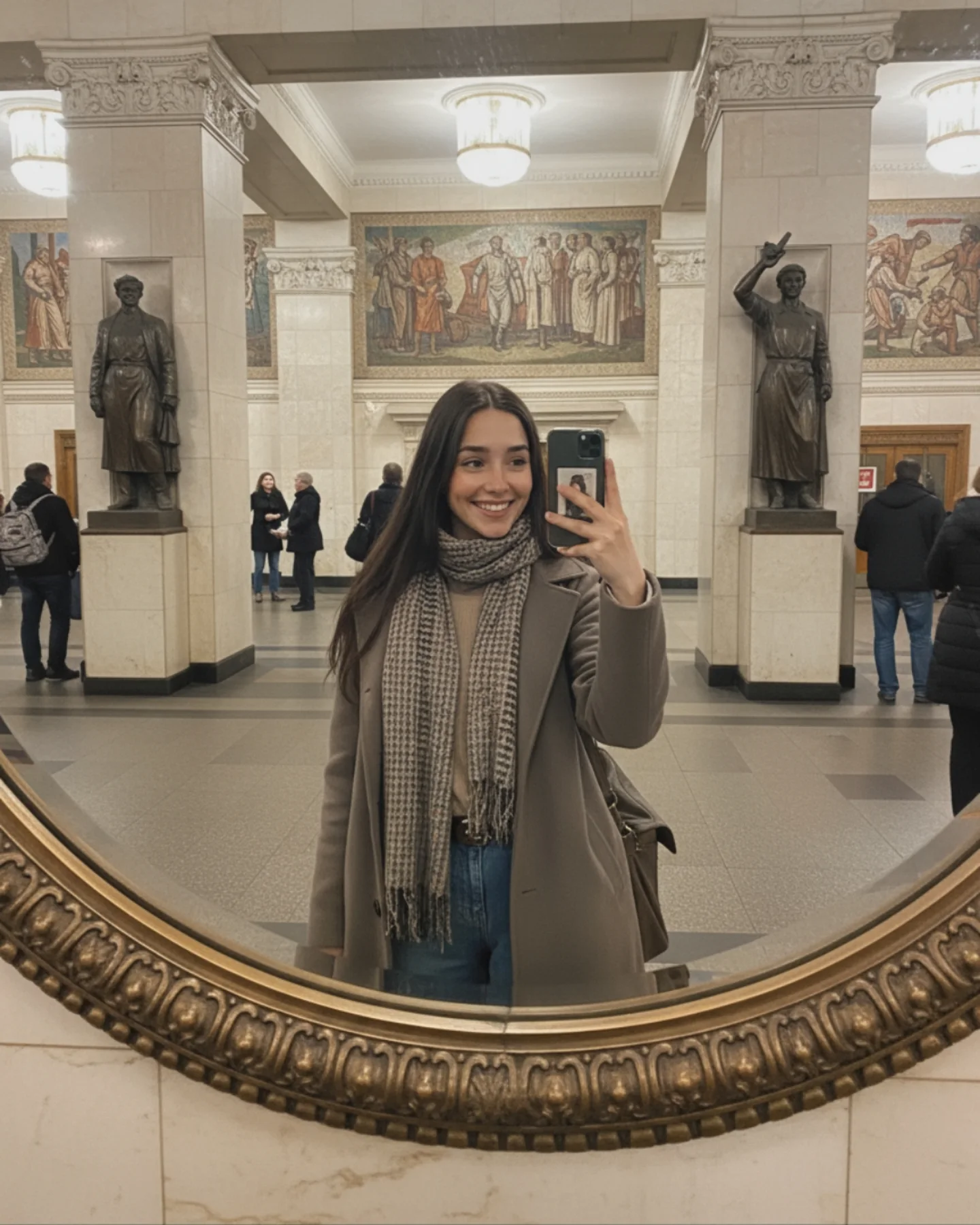
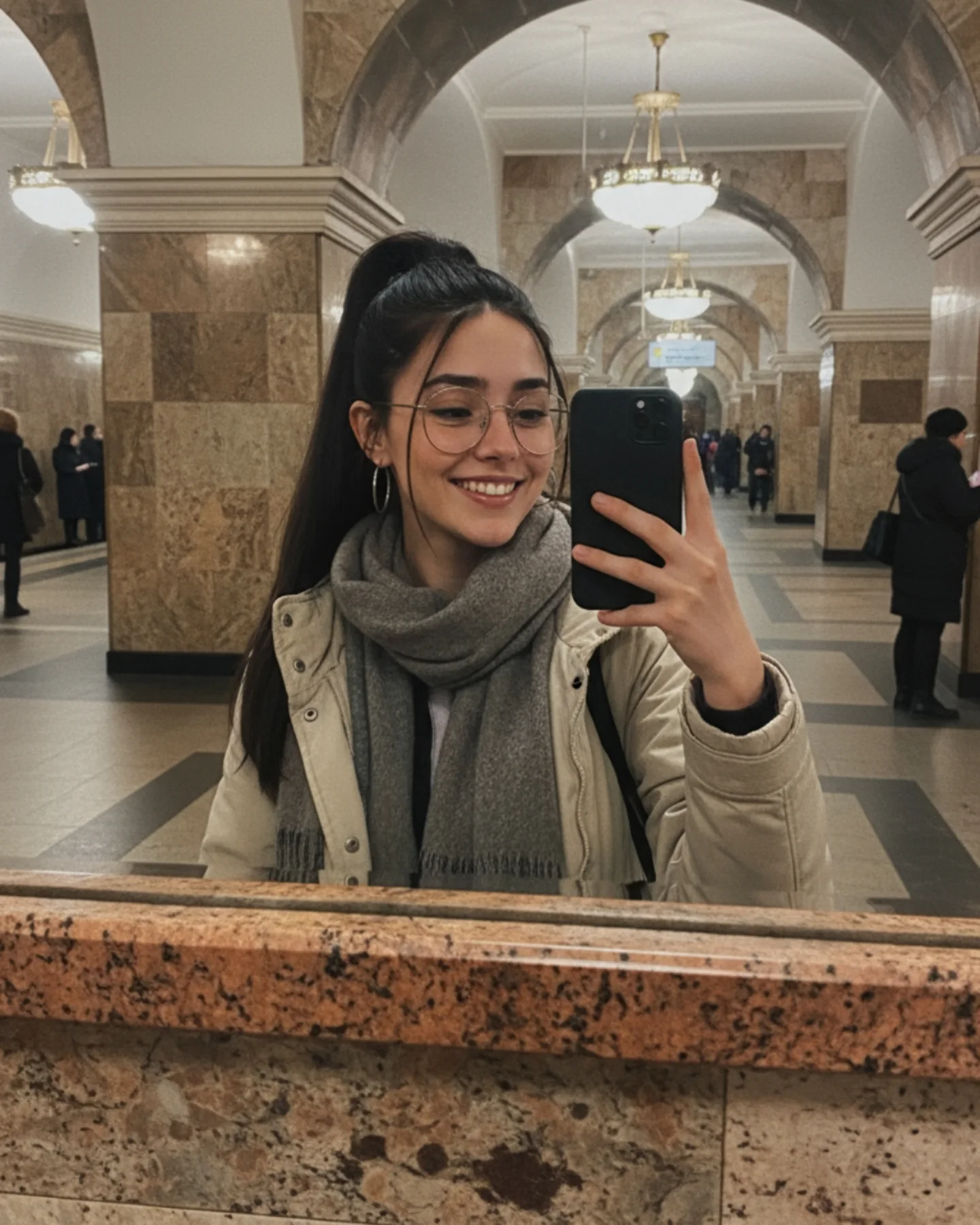
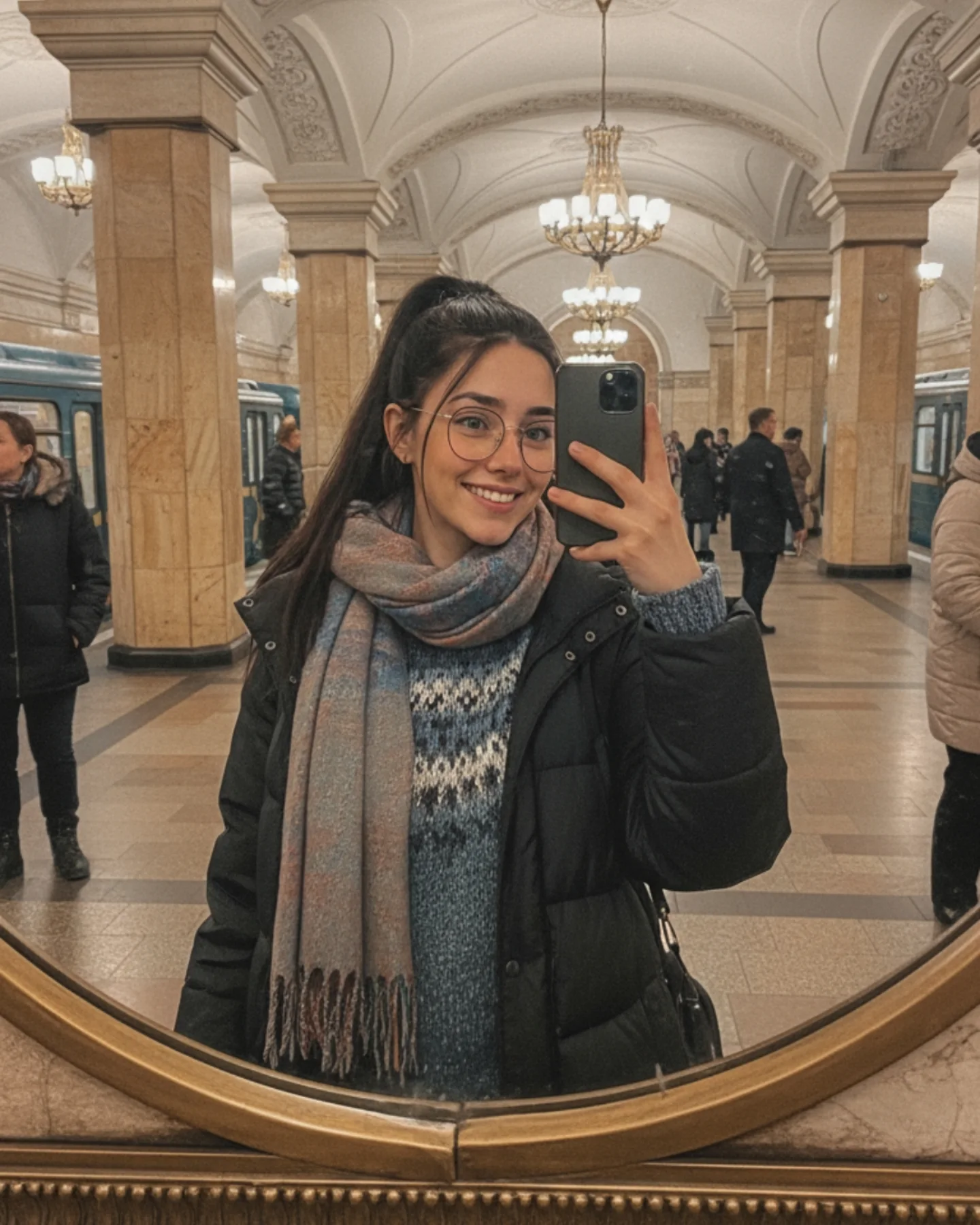
This image works because it proves a simple point many AI creators forget: not every strong social image needs styling excess. The subject is not surrounded by dramatic props or high-fashion cues. She is just taking a mirror selfie in a beautiful public hall. That ordinary behavior, placed inside an extraordinary location, creates a very effective balance between relatability and visual interest.
For creators, this is a useful lesson in tone control. The image feels approachable because the pose is casual, the smile is natural, and the outfit reads like real city clothing. But it still feels elevated because the architecture behind her gives the frame weight. That combination often performs better than images that try too hard to look luxurious or cinematic.
Why the image holds attention
The strongest mechanism here is contrast between everyday action and monumental setting. A phone selfie is one of the most familiar gestures on social media. A hall filled with statues, murals, and polished stone is not. When those two things meet, the image gains both intimacy and scale. The viewer gets a personal moment without losing visual richness.
The second strength is framing. The large circular mirror gives the image a natural boundary, which makes the selfie feel composed even though it is casual. That is an important trick for creators: a strong framing device can make a low-effort moment look much more memorable without making it feel fake.
| Signal | Evidence (from this image) | Mechanism | Replication Action |
|---|
| Relatable behavior | The subject is simply taking a phone mirror selfie in everyday outerwear | Viewers immediately recognize the social gesture and trust the image | Use familiar actions instead of over-directed poses when aiming for lifestyle realism |
| Architectural lift | Columns, statues, murals, and hanging lights create grandeur behind the subject | The background makes the image feel elevated without changing the subject’s behavior | Pair casual poses with location-rich settings to increase visual value |
| Natural frame device | The ornate round mirror organizes the whole composition | A strong frame makes the image feel intentional and save-worthy | Use mirrors, doorways, or windows as built-in composition tools for casual content |
Where this style fits best
This type of image is ideal for AI lifestyle creators, influencer-base prompt packs, city-diary content, and social pages that want approachable beauty rather than heavily produced glamour. It is especially effective when you want the subject to feel like a real person moving through real spaces.
It is less useful for creator brands built on maximal fashion or hard luxury. The charm here is that the image feels effortless. If you overload the outfit or make the pose too polished, you lose the everyday intimacy that gives the picture its strength.
- Best fit: lifestyle selfie creators. Why fit: the image feels natural but still visually elevated. What to change: vary the location while keeping the same casual mirror behavior.
- Best fit: prompt educators teaching relatable realism. Why fit: the frame shows how environment can raise a simple pose. What to change: compare casual settings versus monumental settings with the same subject pose.
- Best fit: city-style AI influencers. Why fit: the wardrobe is believable and repeatable. What to change: rotate coats, scarves, and building types by season.
- Not ideal: high-fashion editorial accounts. Reason: the styling is intentionally understated.
- Not ideal: dramatic cinematic storytelling pages. Reason: the image is about everyday presence, not narrative tension.
Transfer recipes
- Keep: mirror selfie behavior, everyday outerwear, and striking architecture. Change: hall to hotel lobby, old library, or station concourse. Slot template: "{subject} taking a mirror selfie in {architectural location} wearing {casual city outfit}"
- Keep: circular or strong mirror framing. Change: the subject mood from smiling to thoughtful or neutral. Slot template: "{mirror-framed lifestyle selfie} with {emotion} in {public interior}"
- Keep: simple wardrobe and approachable body language. Change: season by swapping coat, scarf, and denim for summer or spring layers. Slot template: "{casual selfie setup} elevated by {location type}"
What the image gets right aesthetically
The image succeeds because it lets the architecture do the heavy lifting while the person stays believable. The coat and scarf have enough texture to feel real, but they do not shout for attention. The mirror frame adds ornament, but the pose remains relaxed. Everything is working toward the same tone: everyday elegance.
The color palette helps too. Warm stone, muted taupe outerwear, gray scarf, and soft lighting create a calm visual rhythm. There is no loud color element competing with the face. That keeps the image soothing and accessible, which is often exactly what “closer” content needs.
| Observed | Why it matters for recreation |
|---|
| Large ornate circular mirror in the foreground | Creates a strong composition without forcing a stylized pose |
| Neutral coat-and-scarf outfit | Supports realism and keeps the image seasonally believable |
| Grand civic-hall background | Adds visual prestige and scale to an otherwise simple social gesture |
| Natural phone selfie posture and smile | Maintain relatability and social-media authenticity |
| Warm indoor ambient light | Keeps the scene welcoming and realistic |
Prompt chunks worth locking first
If you want to recreate this style, begin with the mirror framing and the everyday pose before you worry about outfit details. The image works because the behavior feels ordinary and the setting makes that behavior special.
| Prompt chunk | What it controls | Swap ideas (EN, 2–3 options) |
|---|
| casual mirror selfie in a grand public hall | Core contrast between everyday behavior and elevated environment | library mirror selfie, hotel lobby mirror selfie, station-hall mirror portrait |
| camel coat and checked scarf over jeans | Relatable city styling | trench coat and knit scarf, wool blazer and tote bag, puffer and denim |
| large round ornate mirror frame | Composition and elegance | arched mirror, brass-framed mirror, vintage oval mirror |
| symmetrical hall with statues and murals | Architectural scale and visual richness | marble lobby, heritage library, old station concourse |
| soft warm indoor ambient light | Natural realism | neutral museum light, cooler lobby light, slightly golden hall light |
| quiet approachable lifestyle smile | Emotional tone | small grin, reflective look, soft candid smile |
An iteration path that keeps the image grounded
Lock these three things first: the mirror frame, the casual phone pose, and the architectural hall. Those are the anchors. After that, refine scarf texture, coat drape, and the amount of background activity one variable at a time.
- Run 1: stabilize the mirror geometry, subject proportions, and phone-hand position.
- Run 2: refine the coat, scarf weave, and shoulder bag detail.
- Run 3: improve statues, murals, and the soft warmth of the hall lighting.
- Run 4: remix the location while preserving the same approachable lifestyle logic.
If the result feels too plain, the answer is usually a better location frame, not more styling. If it feels too staged, simplify the expression and body language again.