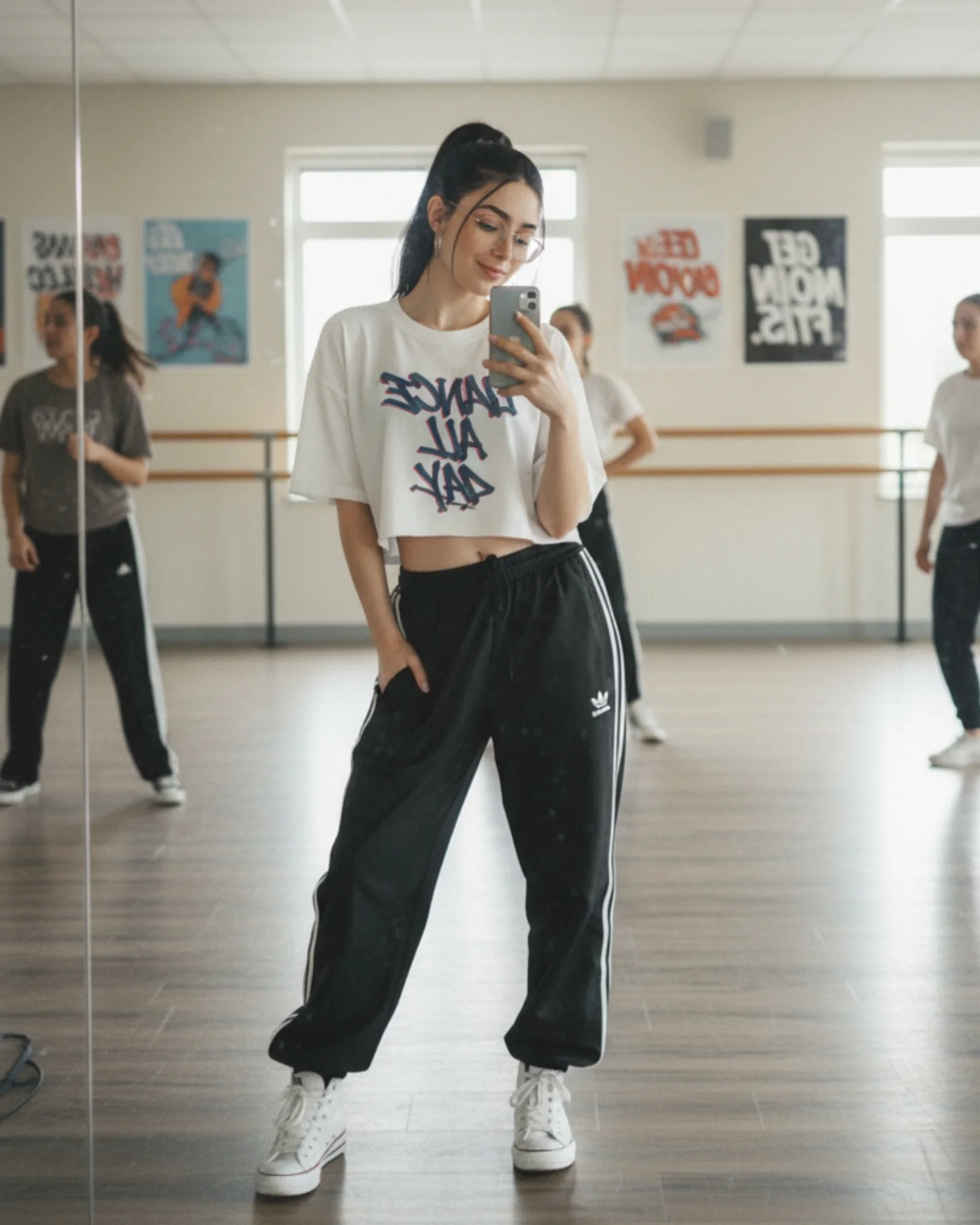
How soy_aria_cruz Created This Gym Mirror Selfie AI
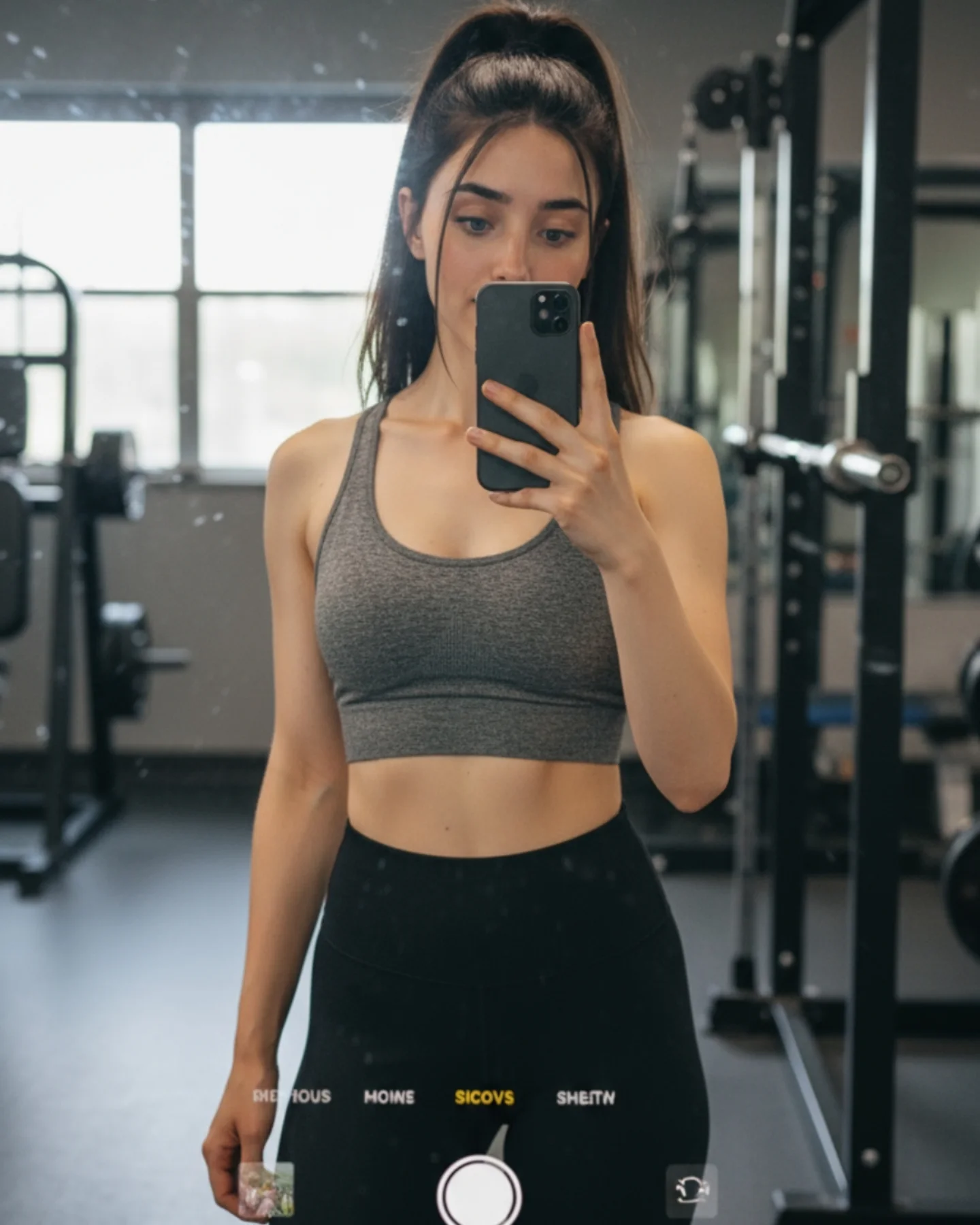
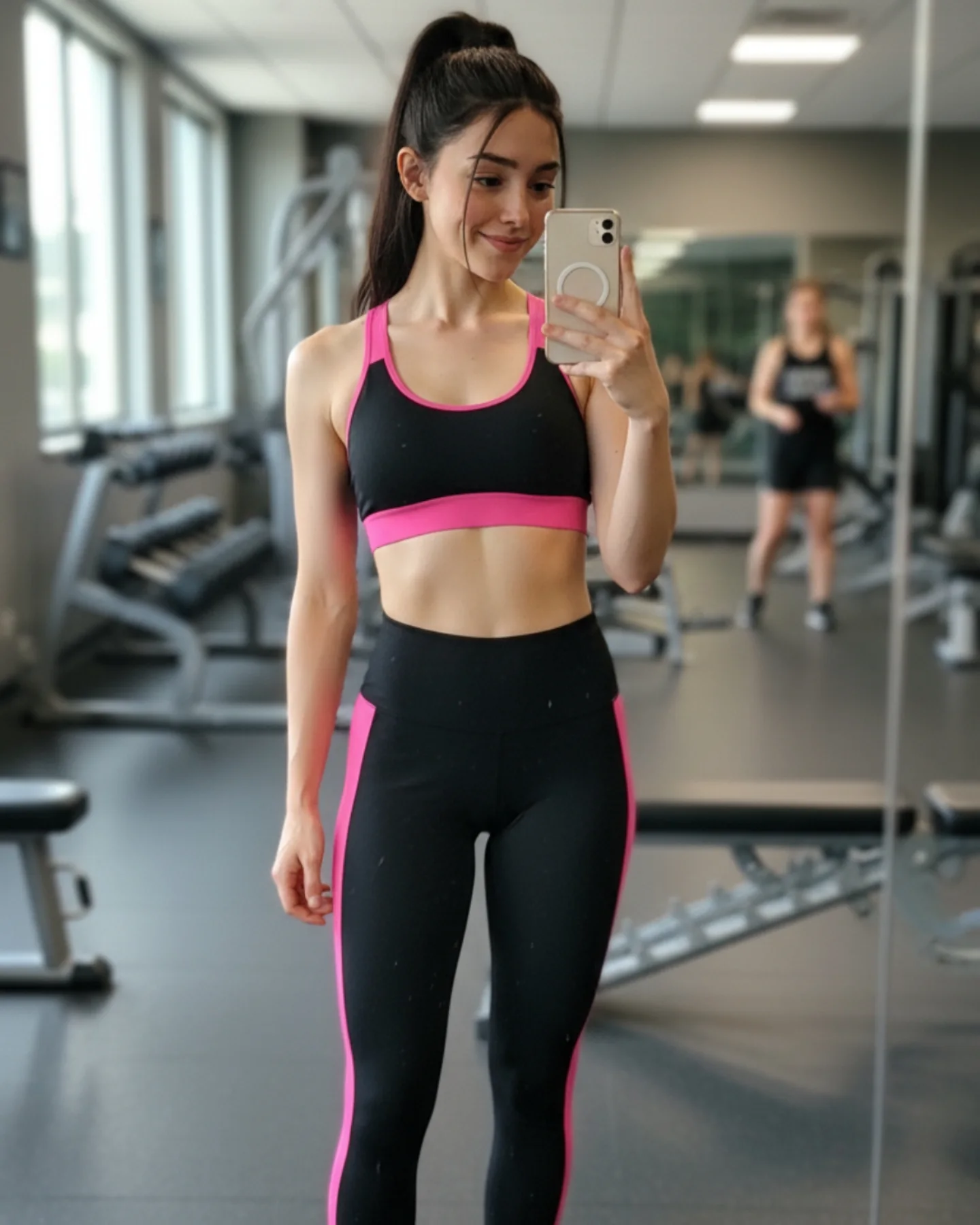
This image works because it keeps the whole scene close to how people actually document a workout. The phone covers part of the face, the lighting is practical instead of cinematic, the gym machines remain visible but soft, and the in-app camera interface is still on screen. All of that helps the image feel native. It does not look like a campaign pretending to be casual. It looks like a casual moment that happened to be worth posting.
That difference matters for creator growth. Fitness content often performs better when it feels integrated into real routine rather than overproduced. Viewers do not only respond to aspirational bodies or outfits. They also respond to proof of context. The machines, the mirror, the bright window, and the camera UI all tell the audience this image belongs to an actual gym session.
The outfit logic is simple on purpose. Gray sports bra, black leggings, hair up, no extra styling noise. That minimalism makes the content easier to transfer. A small creator looking for useful prompt examples can imagine adapting this immediately. That is one reason simple athleisure images often outperform more elaborate setups: the barrier to imitation feels lower.
| Signal | Evidence (from this image) | Mechanism | Replication Action |
|---|
| Visible capture proof | Phone and camera UI both remain inside the frame | Makes the image feel native and unforced | Keep the recording interface visible when authenticity is part of the content value |
| Readable environment | Gym machines and large window panels clearly identify the setting | Context supports the theme without overwhelming the subject | Let 2 to 3 recognizable equipment cues stay visible in the background |
| Transferable styling | Basic gray-and-black athleisure with high ponytail | Low-complexity wardrobe makes the format easy to replicate | Use simple fitness staples instead of fashion-heavy gymwear when teaching a repeatable look |
Best-fit use cases
- Fitness selfie prompt pages, because the scene grammar is immediately recognizable.
- AI influencer “everyday life” content, because it feels embedded in routine.
- Low-production lifestyle tutorials, because the image proves simple setups can still work.
- Mirror-selfie realism tests, because the phone UI and gym equipment expose fake-looking generations fast.
Less ideal: premium athletic brand campaigns, action training sequences, or transformation-before-after marketing assets. This image is about casual proof, not peak-performance drama.
To adapt it, keep the mirror, keep the phone-visible framing, and keep the simple fitness uniform. Then change the routine context. The same structure works in a yoga studio, home gym, dance room, hotel gym, or climbing gym if the environmental cues stay specific. Slot template: {routine setting} + {mirror selfie with visible phone} + {simple activewear} + {clear background proof}.
Aesthetic read
The strongest aesthetic choice here is understatement. There is no exaggerated flex, no dramatic angle, no intense color grading. The image trusts ordinary gym geometry: vertical machines, centered body, soft daylight, and dark flooring. That gives the frame a grounded quality. For creator content, grounded often beats glossy because it reads as more sustainable. It looks like part of a week, not part of a shoot day.
The camera interface at the bottom is especially useful as a design element. It would be noise in a brand campaign, but here it becomes a credibility device. It says, “this was captured in the flow of life.” That is exactly the kind of detail that turns a fitness image from generic into socially believable.
| Observed | Why it matters |
|---|
| Black phone covering part of the face | Strengthens the mirror-selfie authenticity |
| Gym equipment softly visible behind the subject | Confirms setting without cluttering the frame |
| Simple gray sports bra and black leggings | Keeps the look practical and easy to replicate |
| Bright window light mixed with indoor ambient light | Creates believable gym illumination |
| Camera UI overlay at the bottom | Acts as proof-of-capture rather than decoration |
Prompt technique breakdown
| Prompt chunk | What it controls | Swap ideas (EN, 2–3 options) |
|---|
| mirror selfie in a gym with visible phone and camera UI | Native capture structure | locker-room mirror shot, yoga studio mirror selfie, hotel gym capture |
| gray sports bra, black leggings, high ponytail | Routine athleisure identity | zip jacket and leggings, tank top and joggers, monochrome training set |
| weight machines and bright window background | Context proof and environmental readability | dumbbell rack backdrop, reformer studio, squat rack corner |
| neutral practical gym lighting | Believability and low-drama realism | warmer home-gym light, cooler LED gym light, early-morning window light |
| centered upright pose with relaxed stance | Casual routine energy | slight hip shift, post-workout towel pose, seated bench selfie |
How to iterate without losing the core
Lock these three things first: the visible capture UI, the simple fitness outfit, and the readable gym background. Those are the identity anchors. Then change only one or two variables per run.
- Baseline run: keep the same gym mirror structure until the image feels naturally embedded in routine.
- Second run: keep the capture logic fixed and change only the activity setting, such as home gym or yoga studio.
- Third run: keep the environment and pose but swap only the outfit silhouette to test how much fashion the frame can handle before it stops feeling casual.
- Fourth run: keep the same structure and build a weekly-routine content series by changing time of day, equipment backdrop, or expression.
If the image starts feeling artificial, the first thing to correct is usually the room logic: mirror reflections, machine placement, and whether the phone UI feels like part of the capture instead of a pasted-on graphic.