How soy_aria_cruz Created This Nightclub Mirror Selfie AI
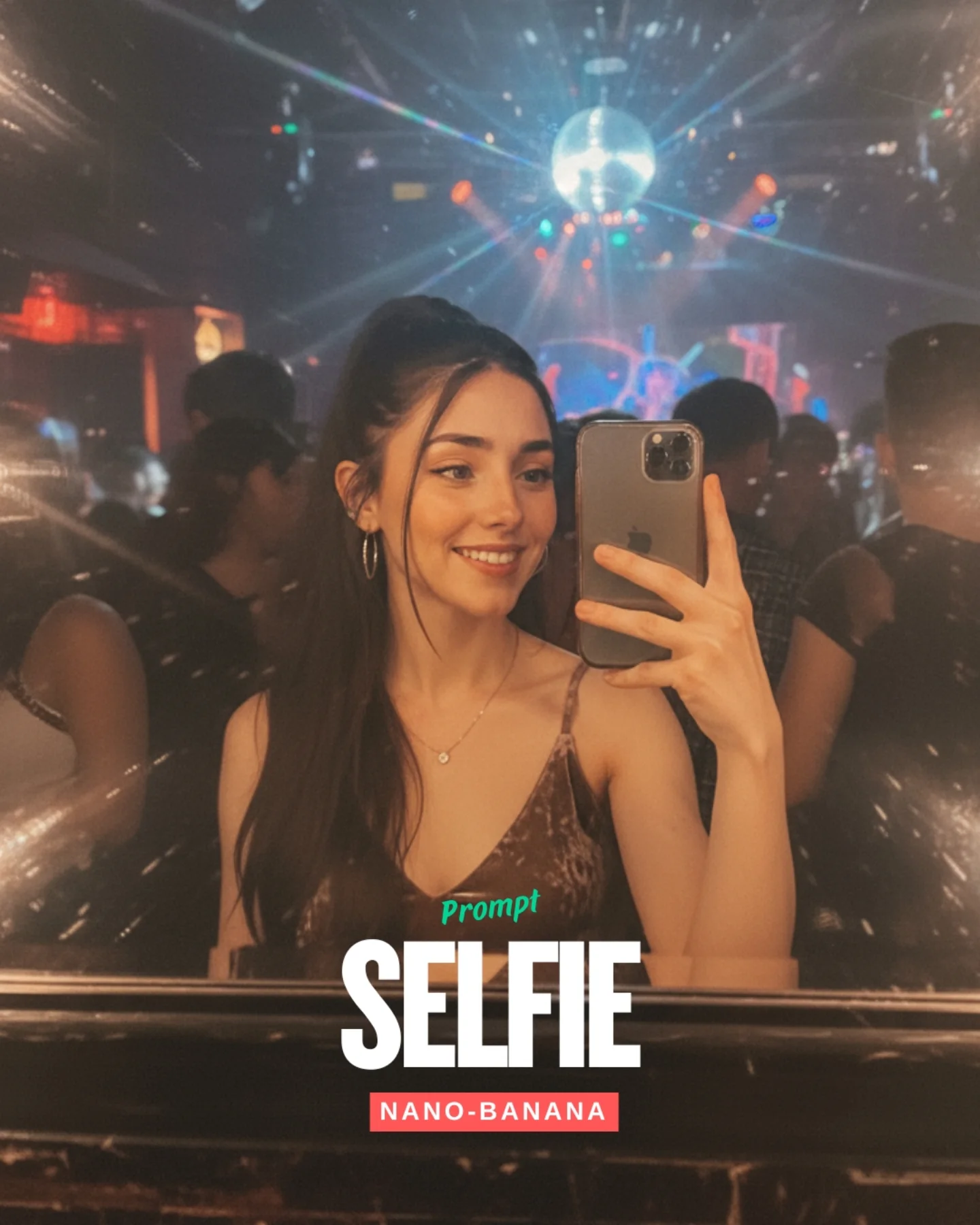
This image works because it embraces the messiness that makes real selfies convincing. The mirror is not clean and clinical. The lights bloom. The disco ball throws star-like streaks. The crowd behind the subject stays soft and half-readable. Even the framing feels natural instead of overcomposed. All of those small imperfections add up to a much stronger sense of lived-in realism than a technically “perfect” portrait would.
It also helps that the subject’s expression is casual and warm rather than overtly performative. She is clearly aware of the camera, but the image still feels like a moment happening inside a night out. That balance is useful for creators. It shows how to make AI selfies feel socially believable instead of obviously generated.
Why The Image Pulls People In
The strongest hook is context. A mirror selfie in a club is a format people instantly recognize. That familiarity lowers the friction. Viewers know exactly what kind of moment they are looking at, so they can respond emotionally right away. The subject’s smile, phone angle, and the disco ball above all reinforce that fast read.
The second hook is the atmosphere of imperfect light. The starburst streaks and haze make the scene feel remembered rather than staged. This is important because smartphone nightlife images often look compelling precisely because they are slightly flawed. Those flaws become proof of authenticity.
| Signal | Evidence (from this image) | Mechanism | Replication Action |
|---|
| Recognizable social format | Mirror selfie, phone in hand, club crowd, and disco ball create an instantly familiar setup | Familiar formats reduce interpretation effort and increase emotional immediacy | Build the scene around one recognizable social behavior before refining style details |
| Authentic imperfection | Bloom, flare streaks, haze, and soft background clutter all remain visible | Controlled messiness makes the image feel captured rather than manufactured | Keep a few low-light artifacts instead of cleaning the frame into studio perfection |
| Warm candid expression | The subject smiles at the phone instead of performing a rigid pose to the viewer | Candid interaction with the device reinforces the selfie illusion | Prompt the subject to look at the phone screen, not straight at the final viewer |
| Layered nightlife depth | Foreground ledge, midground subject, and background dance floor create clear spatial layers | Depth helps a selfie feel embedded in a real place rather than floating on a backdrop | Use at least three depth layers when building nightlife selfies: ledge, person, crowd/light field |
How The Aesthetic Stays Believable
The image stays believable because the outfit and accessories are simple enough to fit the setting. The silky camisole, small necklace, and hoop earrings feel like real going-out choices, not costume pieces. The pose is equally restrained. She is not throwing exaggerated angles or dramatic facial expressions. It looks like someone pausing for a quick mirror check on a night out.
The lighting is doing most of the aesthetic work. That is a useful lesson. In nightlife imagery, you do not need many props if the light behavior feels right. The disco ball, colored spots, and mirror haze already create enough visual texture. Once those are working, the selfie feels complete.
| Observed | Why it matters for recreation |
|---|
| Phone aimed into mirror with subject watching the screen | Creates the core behavioral realism of a selfie rather than a standard portrait |
| Disco ball and club lights producing flare bursts | Give the image authentic nightlife texture and low-light energy |
| Dark glossy ledge at the bottom of frame | Anchors the mirror perspective and adds an extra depth cue |
| Soft crowd silhouettes behind the subject | Place the selfie in a social setting without distracting from the face |
| Simple nightlife styling with satin top and hoops | Keeps the subject plausible and easy to remix into related looks |
Best Uses, Weak Uses, And Transfers
- Best for selfie-style prompt libraries because the scene teaches both behavior and environment at once.
- Best for creator education around low-light realism, mirror perspective, and social believability.
- Best for nightlife, weekend, or “candid influencer” content where polish should not erase spontaneity.
- Best for growth pages that want to show how everyday formats can outperform more produced images.
This format is less ideal for product photography, formal portraits, or high-detail fashion storytelling. Its strength is social realism, not precision styling.
Transfer Recipes
- Keep: mirror selfie behavior, low-light bloom, and nightlife depth. Change: move the setting to a bathroom mirror, rooftop bar, or backstage dressing room. Slot template: "{location} mirror selfie, phone in hand, candid smile, ambient low light, soft background activity"
- Keep: casual expression and layered lighting artifacts. Change: swap the outfit to a blazer, slip dress, or casual hoodie for a different social tone. Slot template: "{subject} taking a mirror selfie at night, {wardrobe}, practical lights and flare, realistic crowd blur"
- Keep: authentic imperfections and social familiarity. Change: adapt the format into travel nightlife, concert, or after-party content. Slot template: "{event type} selfie, mirror reflection, ambient haze, candid expression, believable smartphone framing"
Prompt Technique Breakdown
| Prompt chunk | What it controls | Swap ideas (EN, 2-3 options) |
|---|
| Selfie behavior | Determines whether the image feels socially believable | looking at phone screen; adjusting hair while holding phone; half-smile mid-selfie |
| Nightlife light texture | Creates the atmosphere that sells the club setting | disco ball starbursts; neon haze; warm bar lamps with mirror flare |
| Crowd softness | Adds context without stealing attention | blurred dancers; bar silhouettes; backstage figures out of focus |
| Outfit realism | Keeps the subject aligned with the social setting | satin camisole; slip dress; fitted black top with layered jewelry |
| Mirror framing | Controls how convincing the selfie perspective feels | bar ledge at bottom; mirror smudges; slightly off-center phone placement |
| Imperfection level | Decides whether the image feels captured or overprocessed | light grain and flare; softer haze bloom; minimal lens streaking |
Execution Playbook For Remixing It
Start by locking three things: the phone-in-hand mirror framing, the disco-ball-and-crowd nightlife context, and the candid smile aimed at the phone. Those are the core reasons the image feels like a real social moment.
Then iterate in this order:
- Stabilize the selfie behavior first: hand position, phone angle, and gaze direction.
- Refine the low-light atmosphere next, especially bloom, flare, and background softness.
- Tune outfit and jewelry so they match the venue without becoming costume-like.
- Adjust small polish details last, such as hair strands, ledge reflections, and noise level.
This order matters because selfies stop feeling real the moment behavior goes wrong. The social logic comes before the styling.