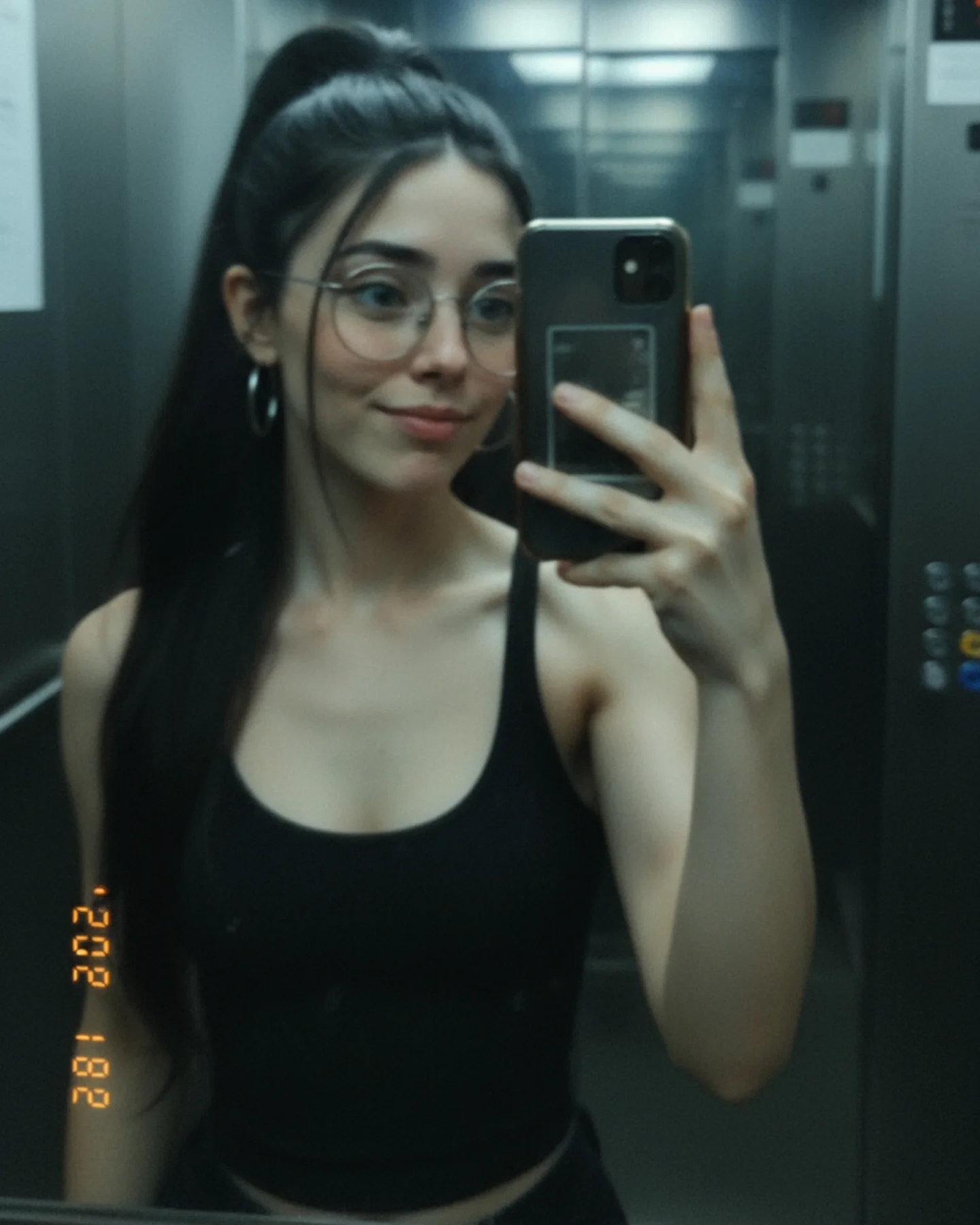
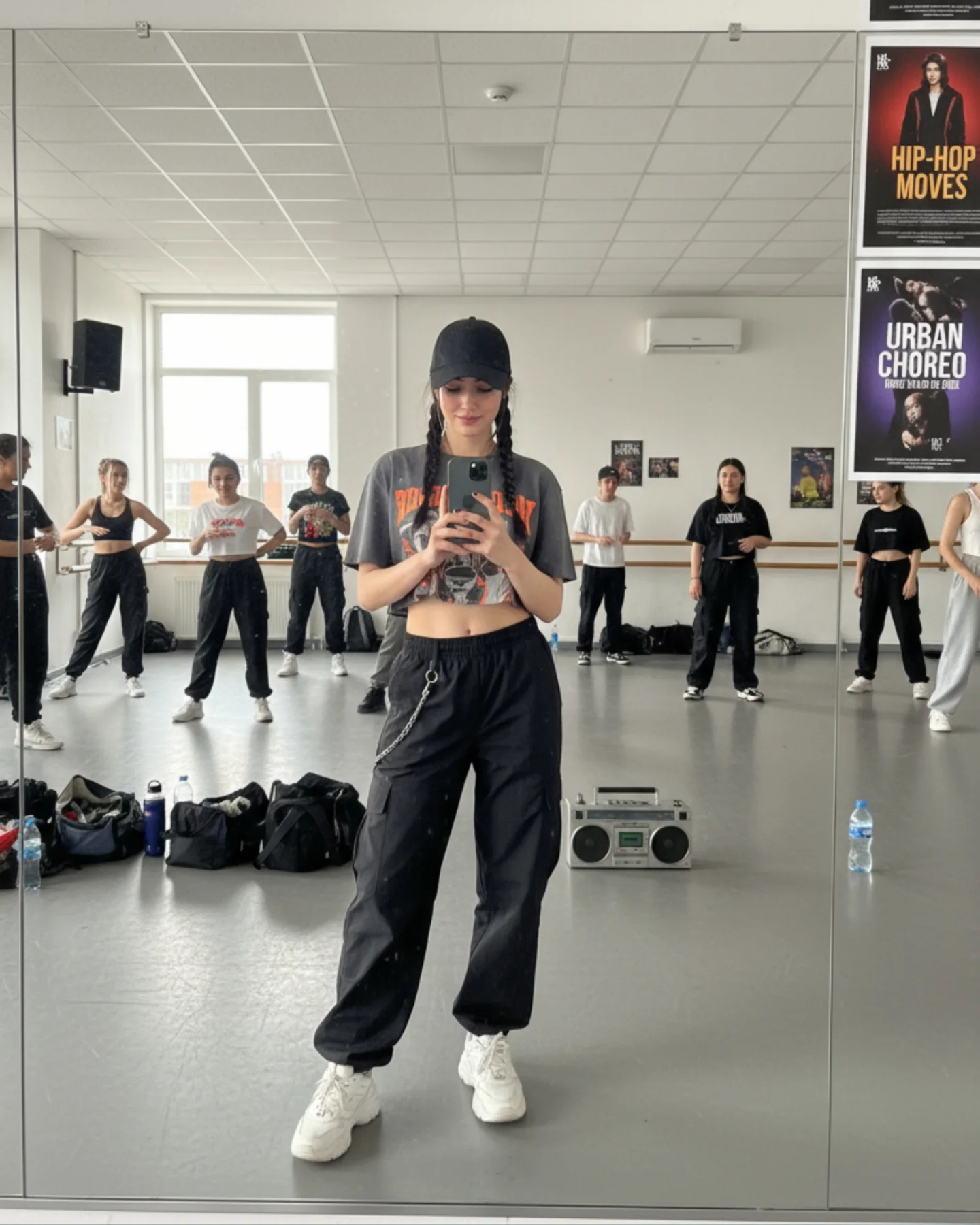
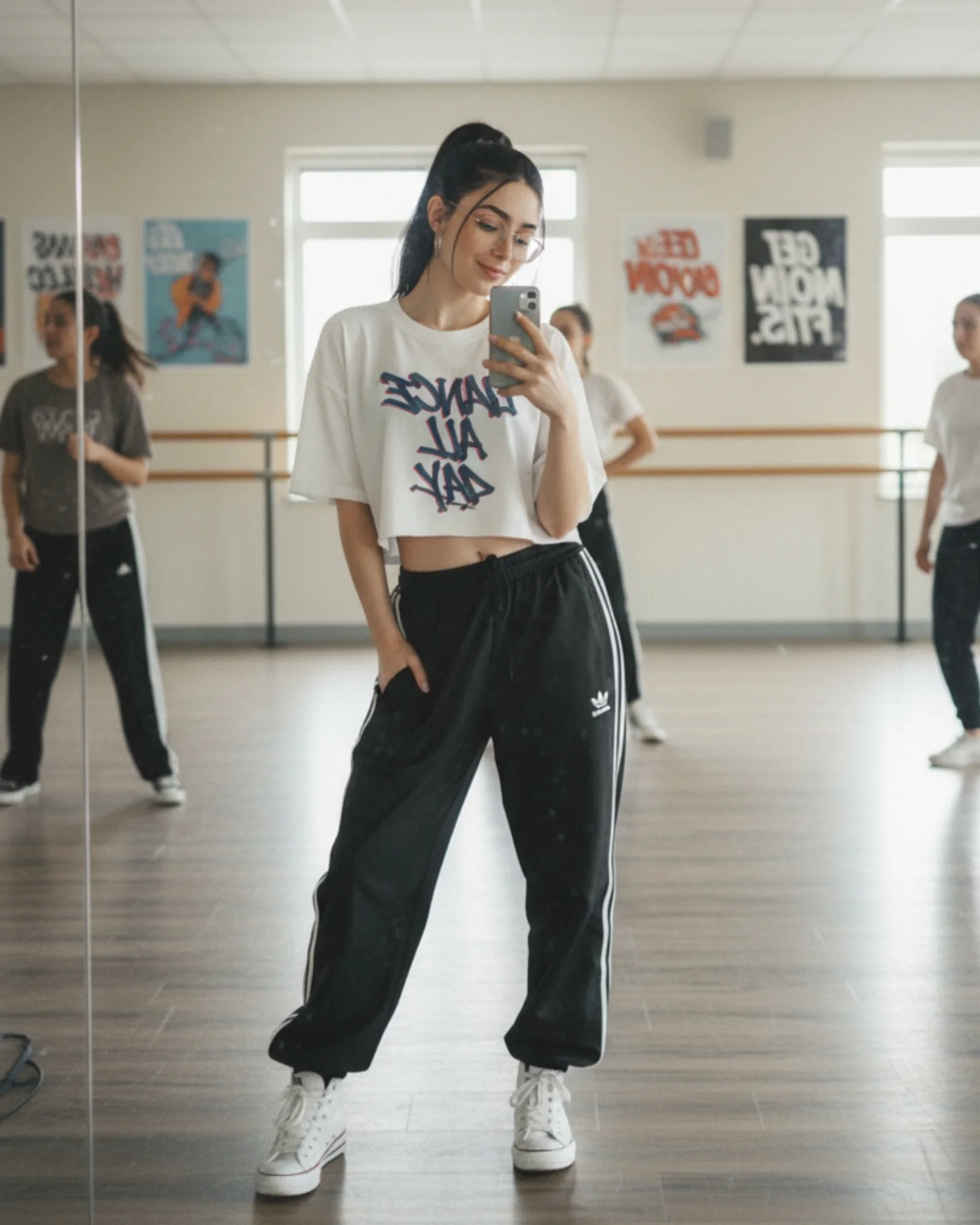
How soy_aria_cruz Made This Graffiti Mirror Selfie Image — and How to Recreate It
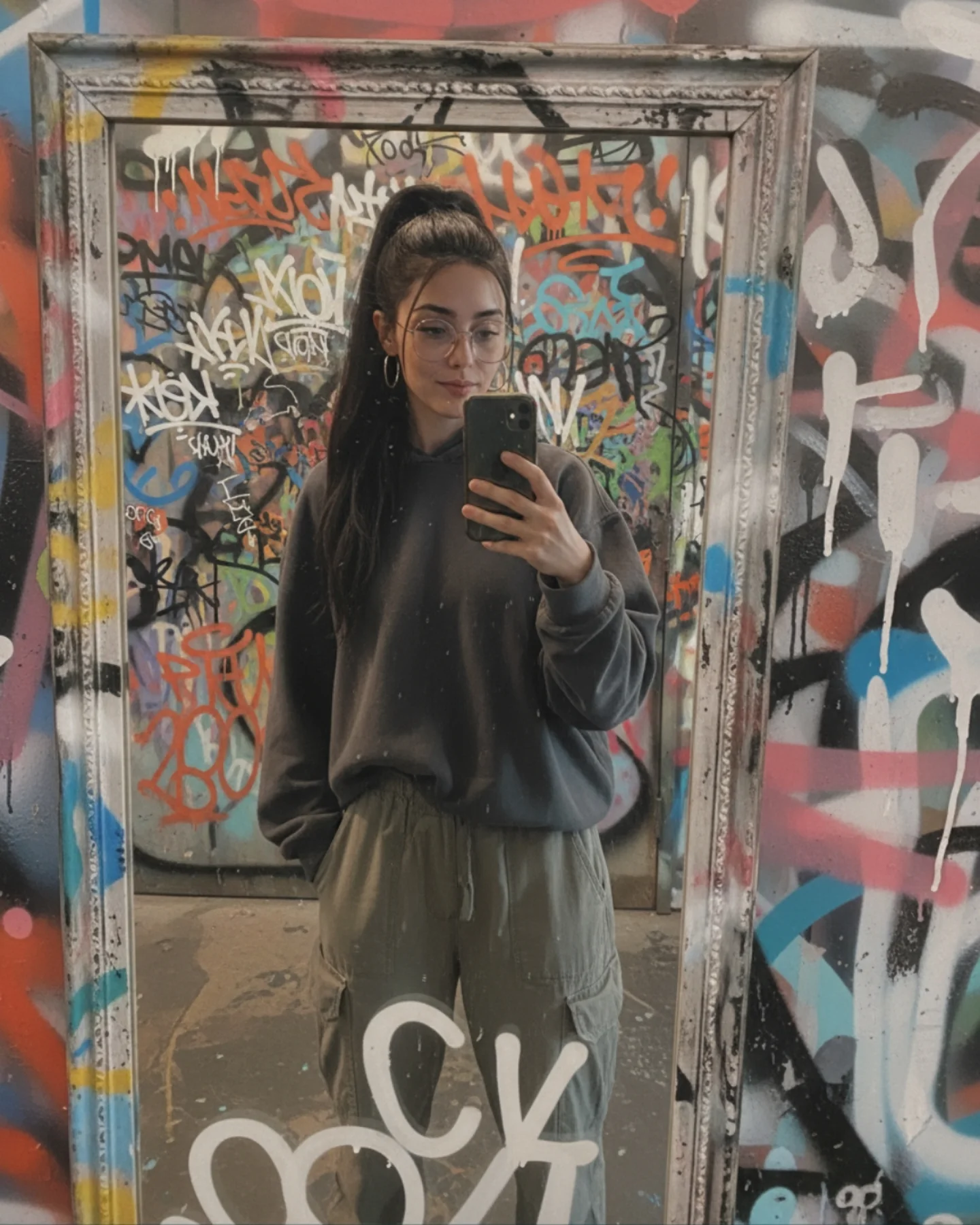
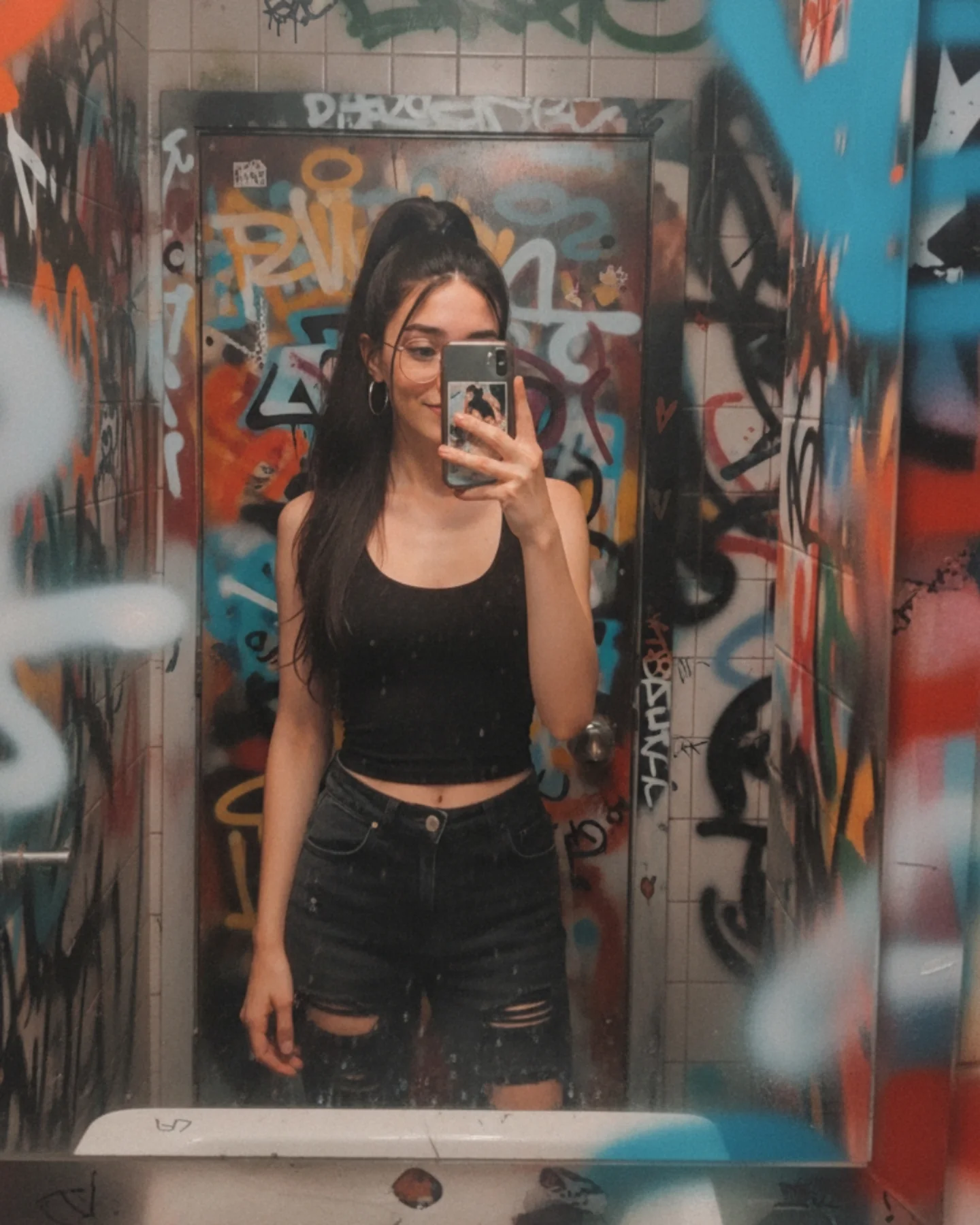
This image works because it understands that “casual” does not mean visually empty. The outfit is simple, but the setting does the heavy lifting. Graffiti on the mirror frame, graffiti on the wall, a rough floor, and a low-key hoodie-and-cargos fit all point to the same urban mood. The result feels like a real post from a specific place rather than a generic mirror selfie generated in a vacuum.
The second thing it gets right is posture. The subject is not trying too hard. One hand in the pocket, one hand on the phone, shoulders relaxed, expression soft. That body language matters. It is what makes the image feel like a person documenting a moment instead of manufacturing one. For creators, that distinction is often the difference between a believable selfie and an AI image that feels performative.
Why The Image Holds Attention
The immediate hook is the frame within the frame. The mirror already creates a strong boundary, and the graffiti turns that boundary into a visual event. Even before the viewer processes the outfit or the face, they understand that this is not a clean domestic mirror shot. It has character and location memory built into it.
The second hook is the balance between noise and calm. The environment is loud, but the subject is quiet. That contrast helps the portrait stand out. She becomes an anchor inside the chaos, which is a reliable way to make street-style images feel composed without making them sterile.
| Signal | Evidence (from this image) | Mechanism | Replication Action |
|---|
| Location personality | The entire mirror surround and wall are layered with graffiti tags and paint strokes | A distinct environment makes the selfie feel sourced from a real subculture or place | Choose one location texture language and commit to it instead of keeping the background generic |
| Low-effort posture | One hand stays in the pocket while the phone is held casually at chest level | Relaxed body language supports the illusion of a spontaneous social post | Prompt one natural idle gesture so the image does not feel formally posed |
| Streetwear simplicity | Oversized hoodie and cargo pants keep the styling believable and wearable | Casual clothing makes environmental storytelling more believable than highly styled fashion would | Use clothing that belongs to the setting instead of importing editorial glam by default |
| Mirror-frame depth | The silver frame contains the subject while the outer wall remains noisy | Framing inside the scene keeps chaos readable and protects portrait clarity | When using busy walls, contain the subject inside a strong architectural or object frame |
How The Aesthetic Stays Controlled
The image could have easily collapsed into visual clutter, but it avoids that because the subject’s palette is restrained. Dark gray, olive, black hair, silver metal, and skin tone. Those quiet colors give the eye a place to rest. The graffiti can therefore be energetic without making the whole image unreadable.
The mirror helps as well. Without it, the subject would probably disappear into the wall. With it, the environment becomes a border rather than a competing background. That is a useful strategy for creators who want textured locations without losing portrait focus.
| Observed | Why it matters for recreation |
|---|
| Worn silver mirror frame around the subject | Creates visual separation and makes the busy wall usable |
| Dense multi-color tags around a neutral outfit | Lets the background feel alive while keeping the subject readable |
| Phone held low at chest height | Supports the candid feel and reveals more of the face than a higher phone angle would |
| One hand in the pocket | Adds believable idle posture and reduces stiffness |
| Abstract white graffiti at the bottom of the mirror | Enhances realism and texture without needing readable text |
Best Uses, Weak Uses, And Transfers
- Best for urban selfie prompt libraries because the scene shows how environment can carry personality.
- Best for creator education around believable casual poses and mirror framing.
- Best for streetwear, art-space, or youth-culture content that needs specificity without high production value.
- Best for growth pages teaching how “simple selfie” content can still feel visually rich.
This format is less ideal for clean luxury branding, beauty-closeup campaigns, or quiet minimalist product storytelling. Its strength is environmental texture and social believability.
Transfer Recipes
- Keep: mirror selfie behavior, relaxed posture, and textured wall language. Change: swap graffiti wall for sticker wall, rehearsal studio mirror, or backstage greenroom mirror. Slot template: "{location texture} mirror selfie, casual posture, phone at chest height, relaxed streetwear outfit"
- Keep: oversized casual outfit and contained mirror frame. Change: shift the styling to varsity jacket, cargo skirt, or monochrome sweats. Slot template: "{subject} urban mirror selfie, framed by a distressed mirror, {wardrobe}, realistic ambient light"
- Keep: environmental noise around a calm central subject. Change: move from graffiti culture to music studio, creative office, or skate-shop interior. Slot template: "{creative space} mirror portrait, busy textured surroundings, calm expression, social-media realism"
Prompt Technique Breakdown
| Prompt chunk | What it controls | Swap ideas (EN, 2-3 options) |
|---|
| Mirror behavior | Keeps the image grounded in selfie logic rather than standard portrait logic | phone at chest level; one-hand mirror selfie; half-body reflection with casual gaze |
| Environment texture | Creates the identity of the space | graffiti walls; poster-covered hallway; painted rehearsal room |
| Streetwear block | Sets the tone of the subject without overstyling | oversized hoodie and cargos; washed crewneck and jeans; loose jacket and joggers |
| Pose relaxation | Determines whether the subject feels candid or staged | one hand in pocket; weight on one hip; slightly lowered shoulders |
| Frame-within-frame | Protects portrait clarity inside a visually loud environment | silver mirror frame; chipped dressing mirror; rectangular studio mirror border |
| Graffiti readability | Controls whether the wall feels authentic or distractingly textual | abstract tags; layered paint strokes; semi-legible street marks kept soft |
Execution Playbook For Remixing It
Start by locking three things: the mirror framing, the relaxed one-hand-in-pocket posture, and the dense graffiti environment. Those are the structural elements that make this selfie feel specific. If any of them drift, the image becomes generic fast.
Then iterate in this order:
- First stabilize the selfie logic: phone angle, eye line, and body posture.
- Next refine the outfit silhouette so it feels naturally oversized and casual.
- Then tune the mirror frame and graffiti density to keep the subject legible.
- Finally adjust mood details such as paint color balance, mirror wear, and expression softness.
This sequence works because believable social behavior matters more than aesthetic polish in images like this.