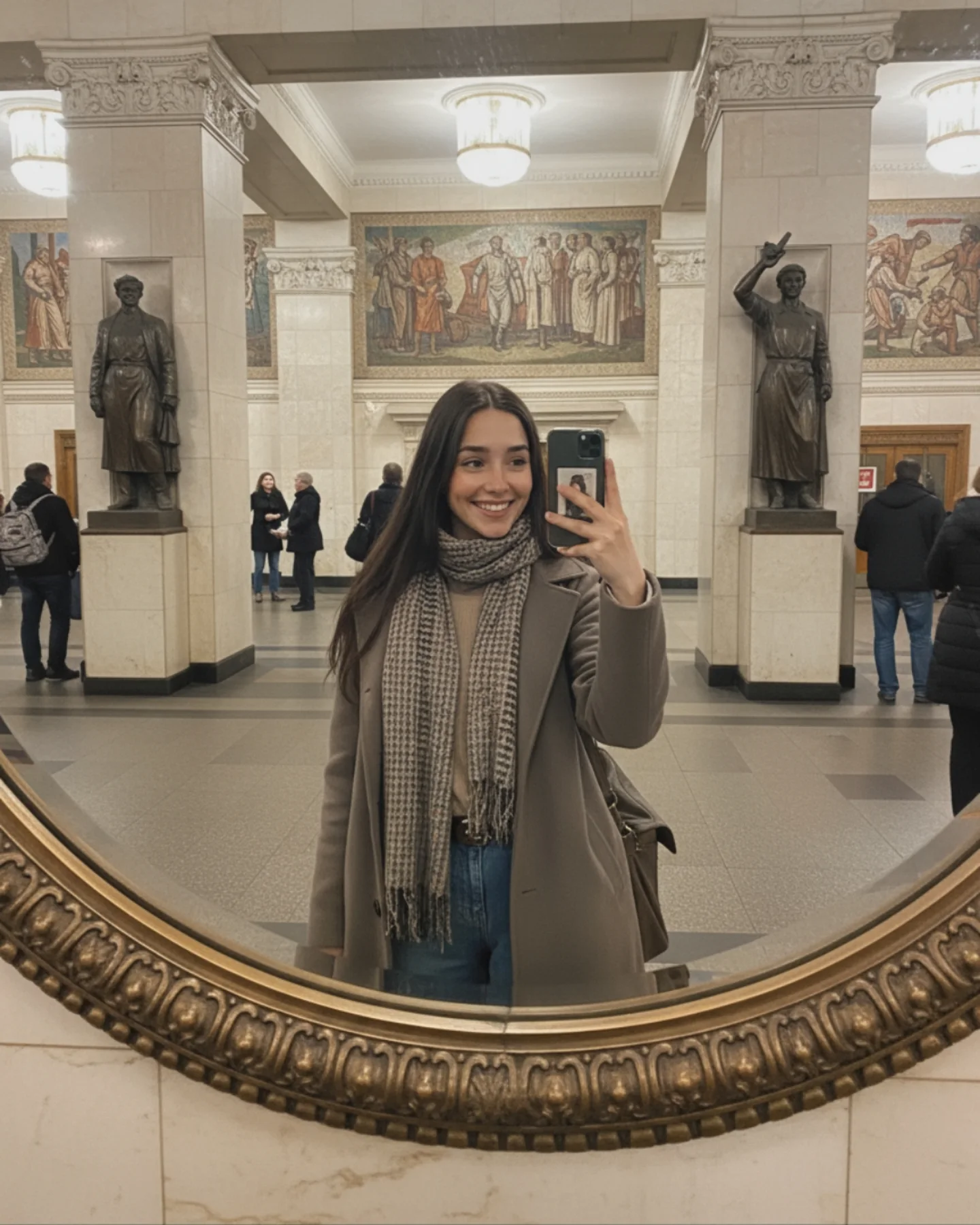
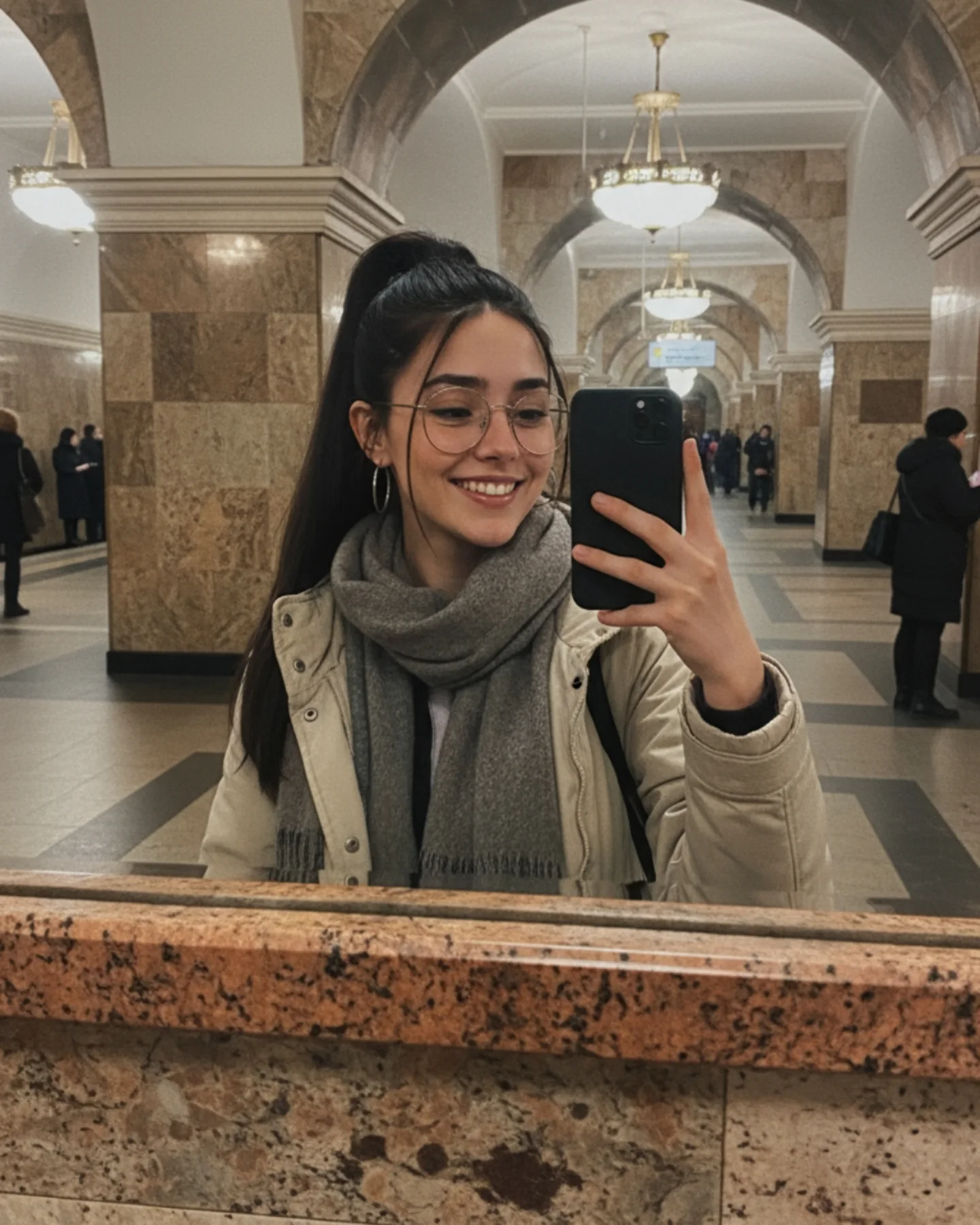
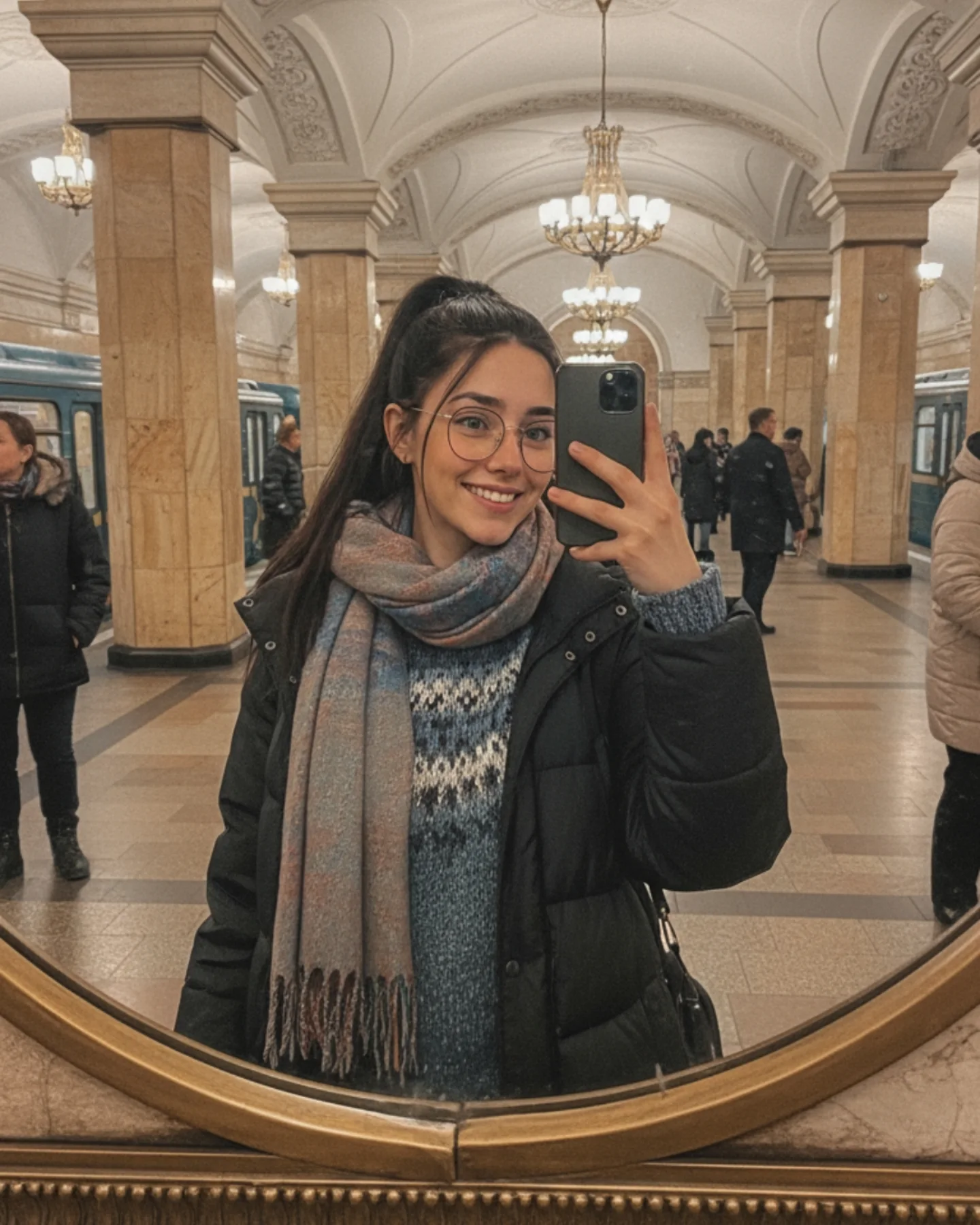
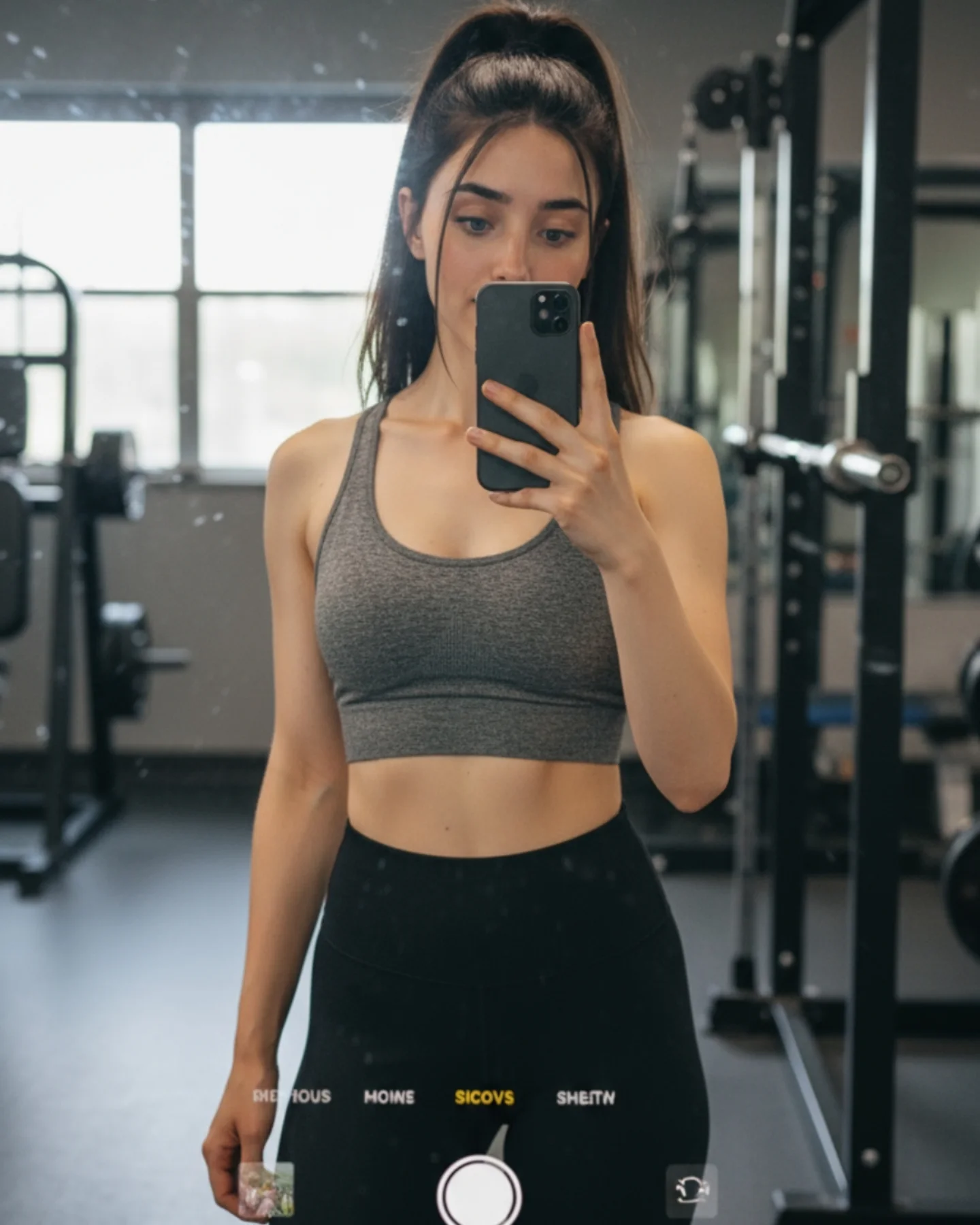
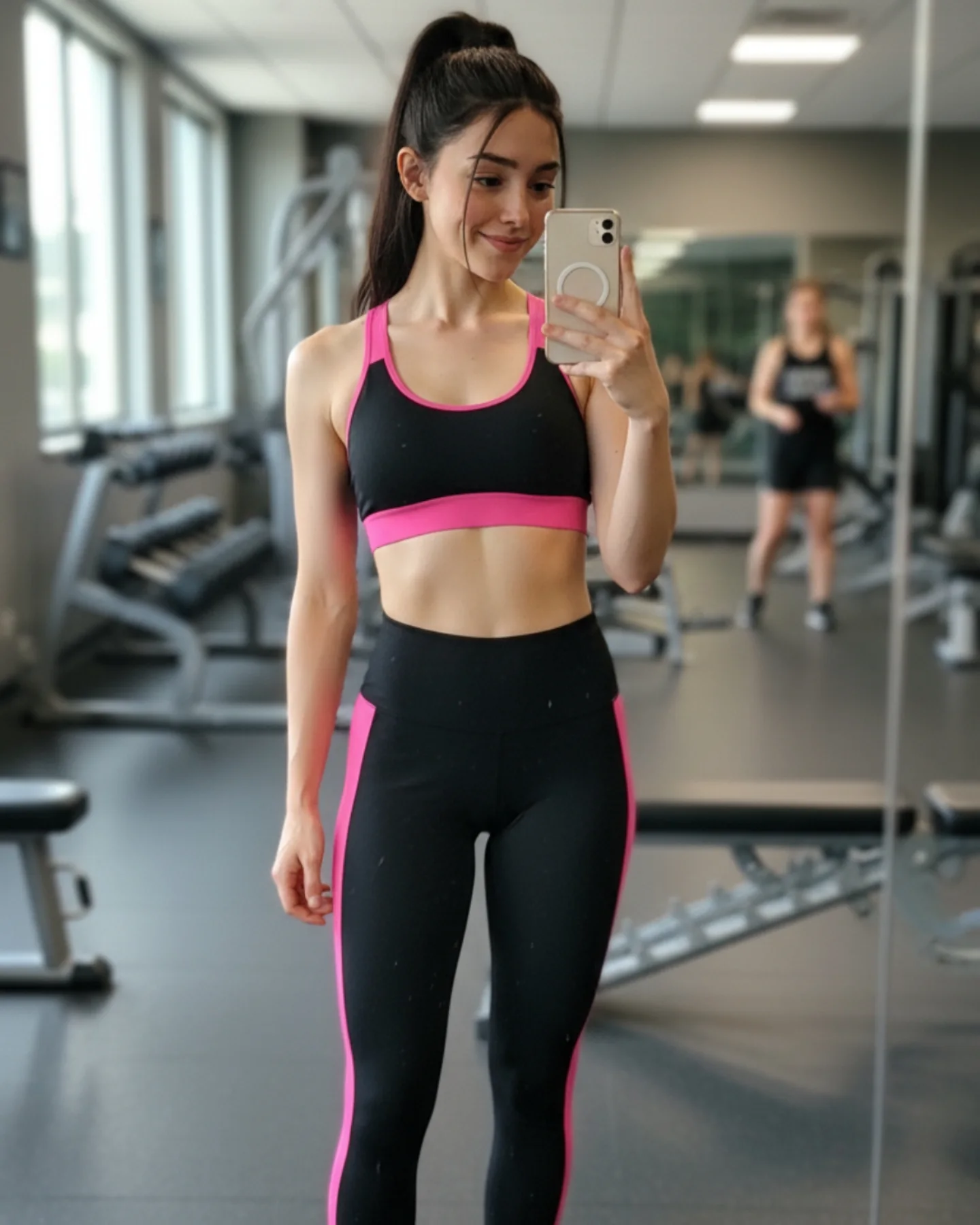
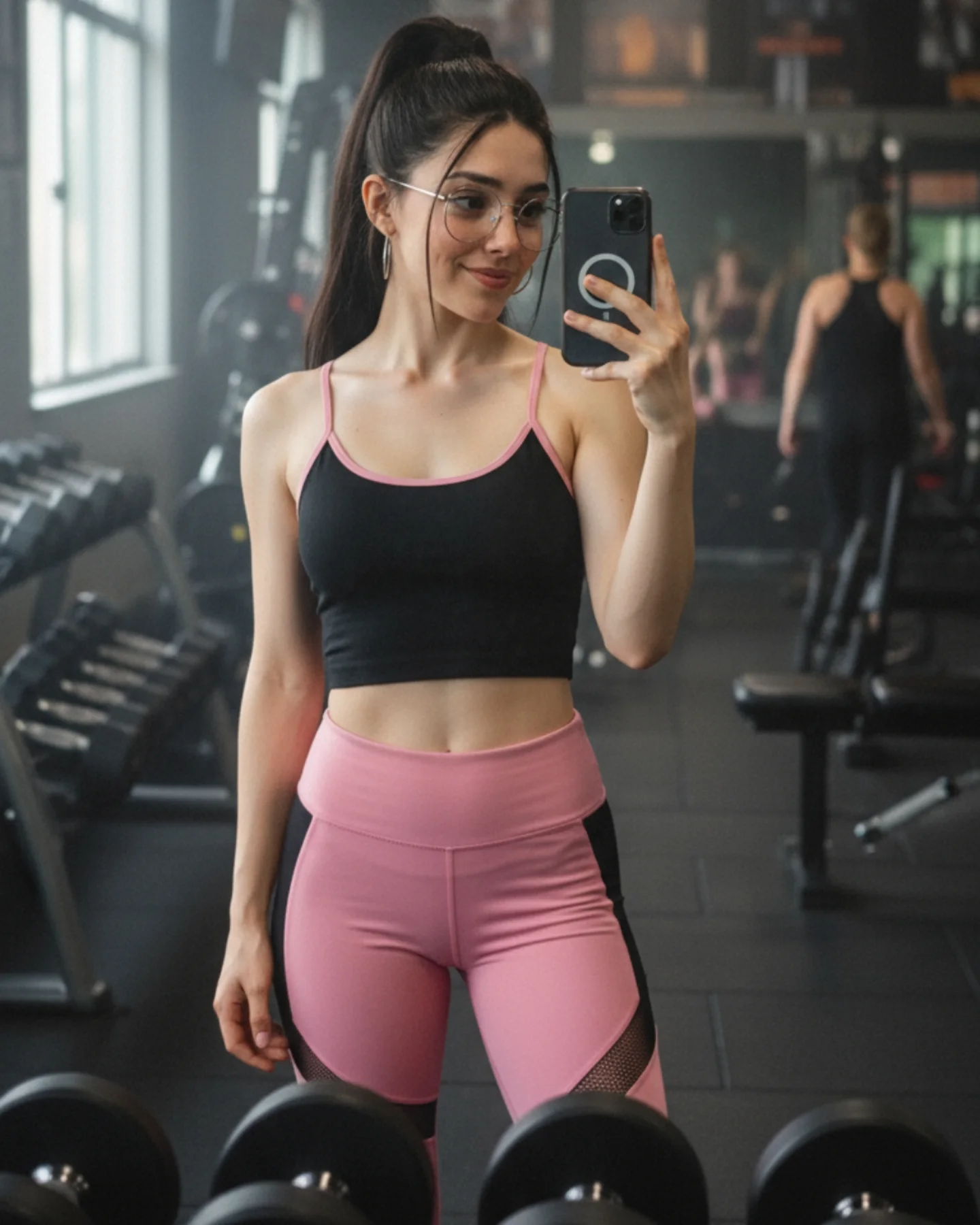
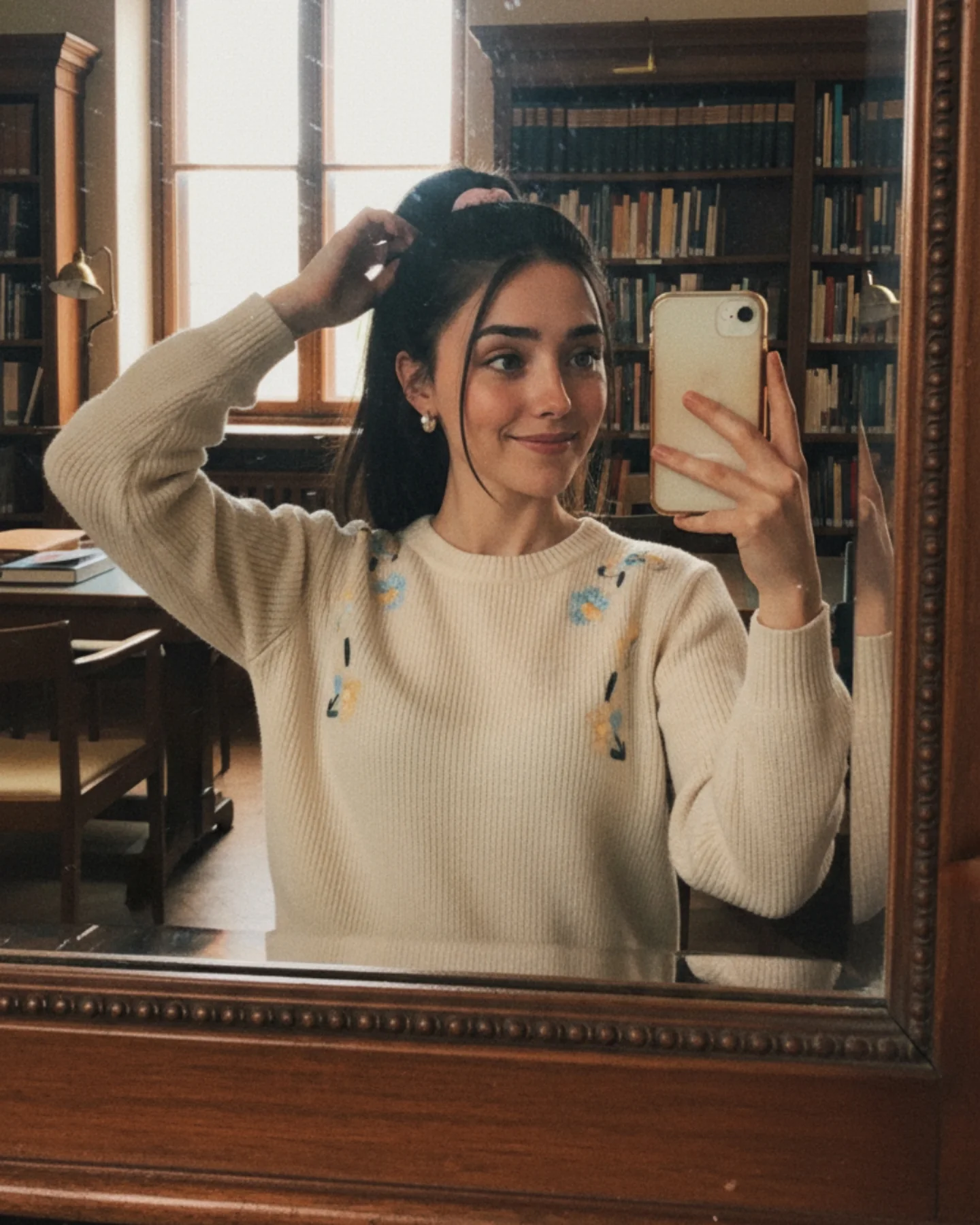
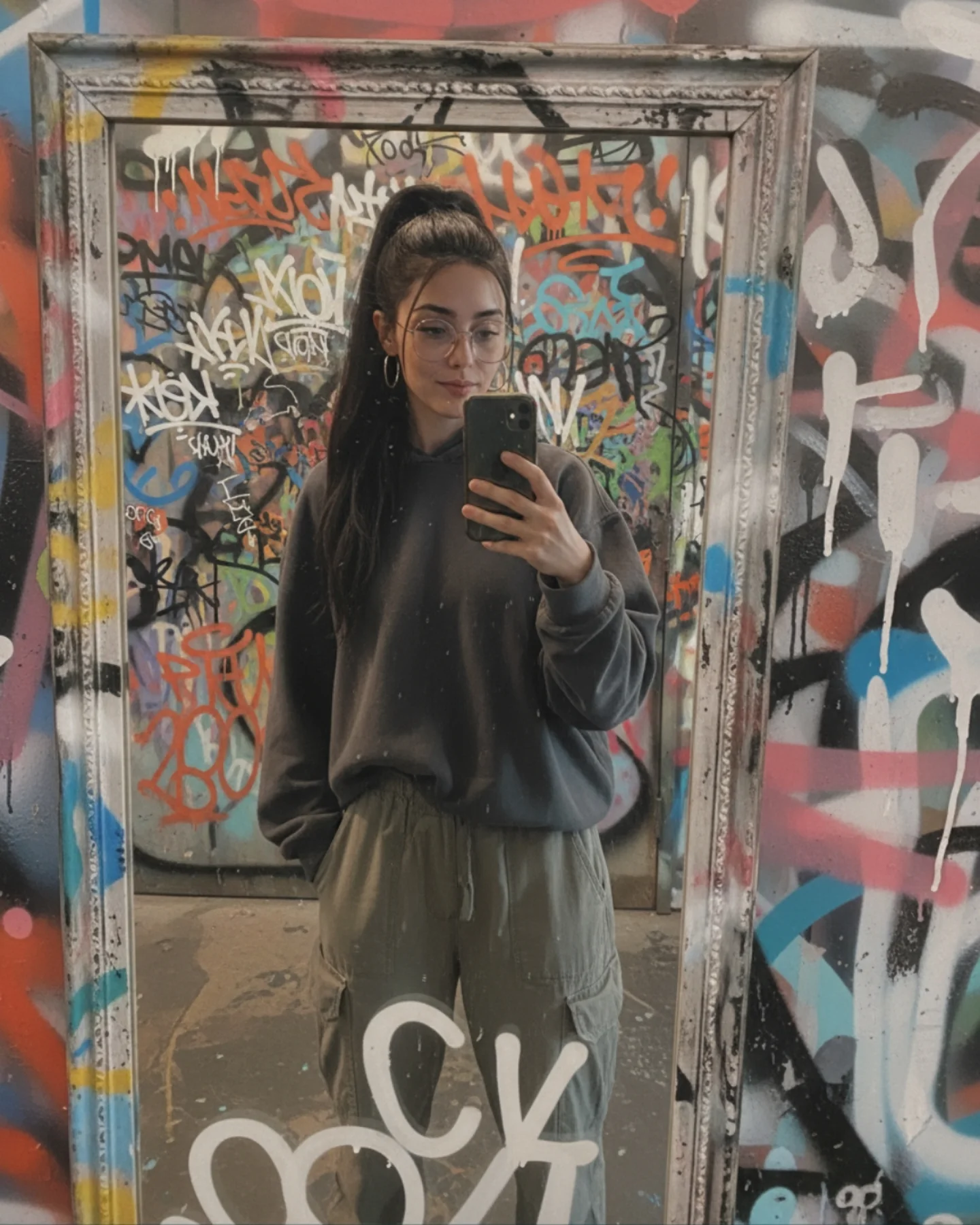
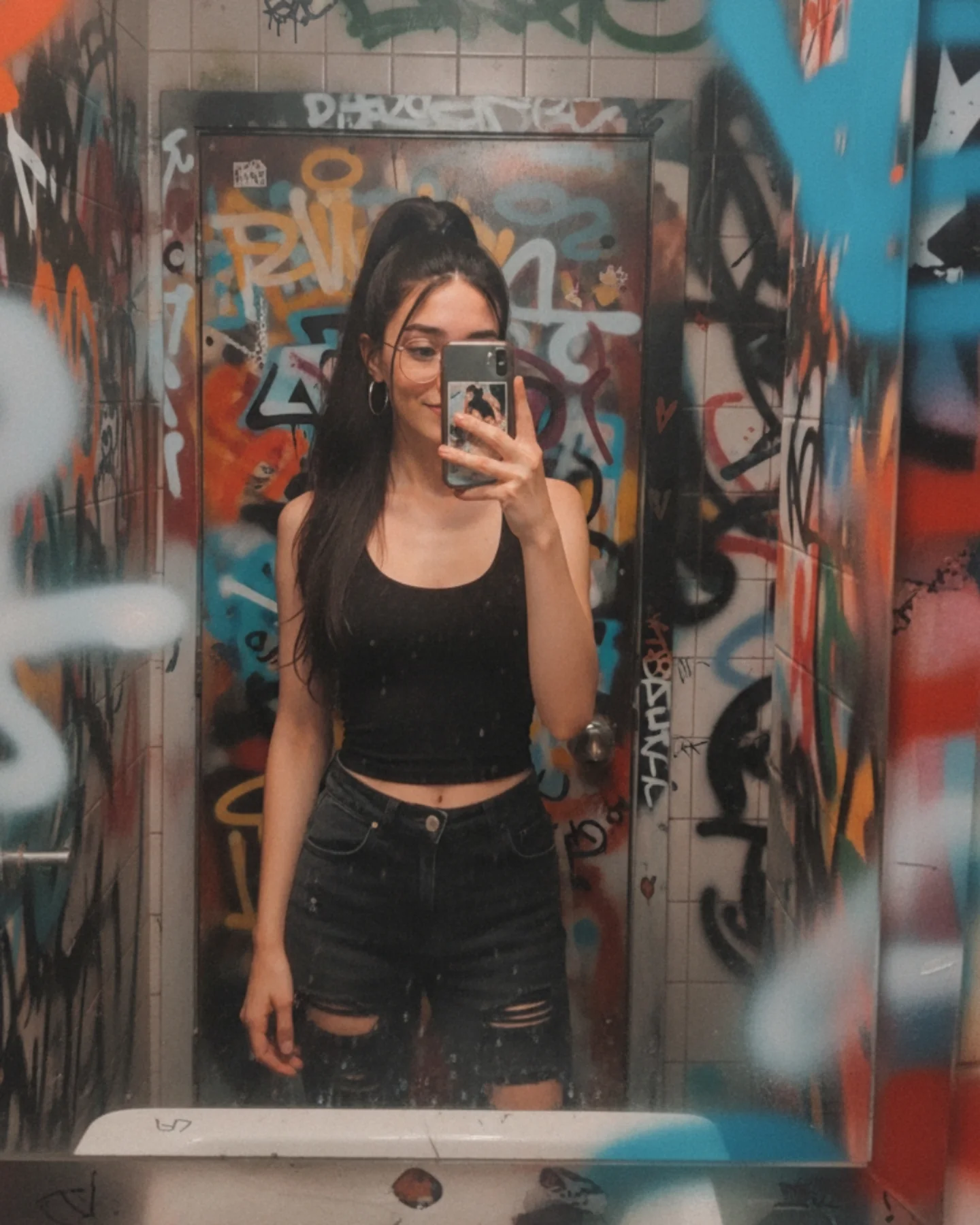
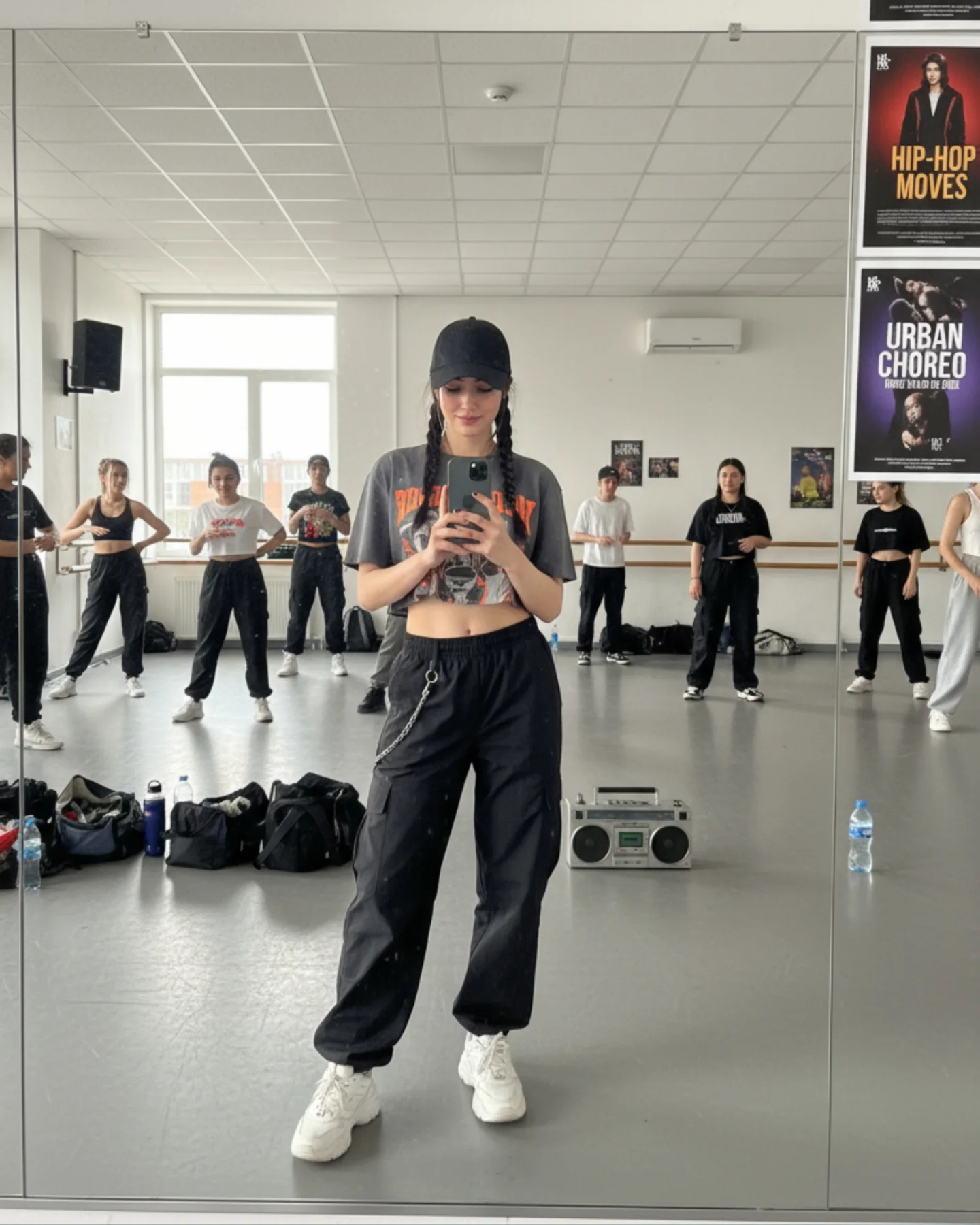
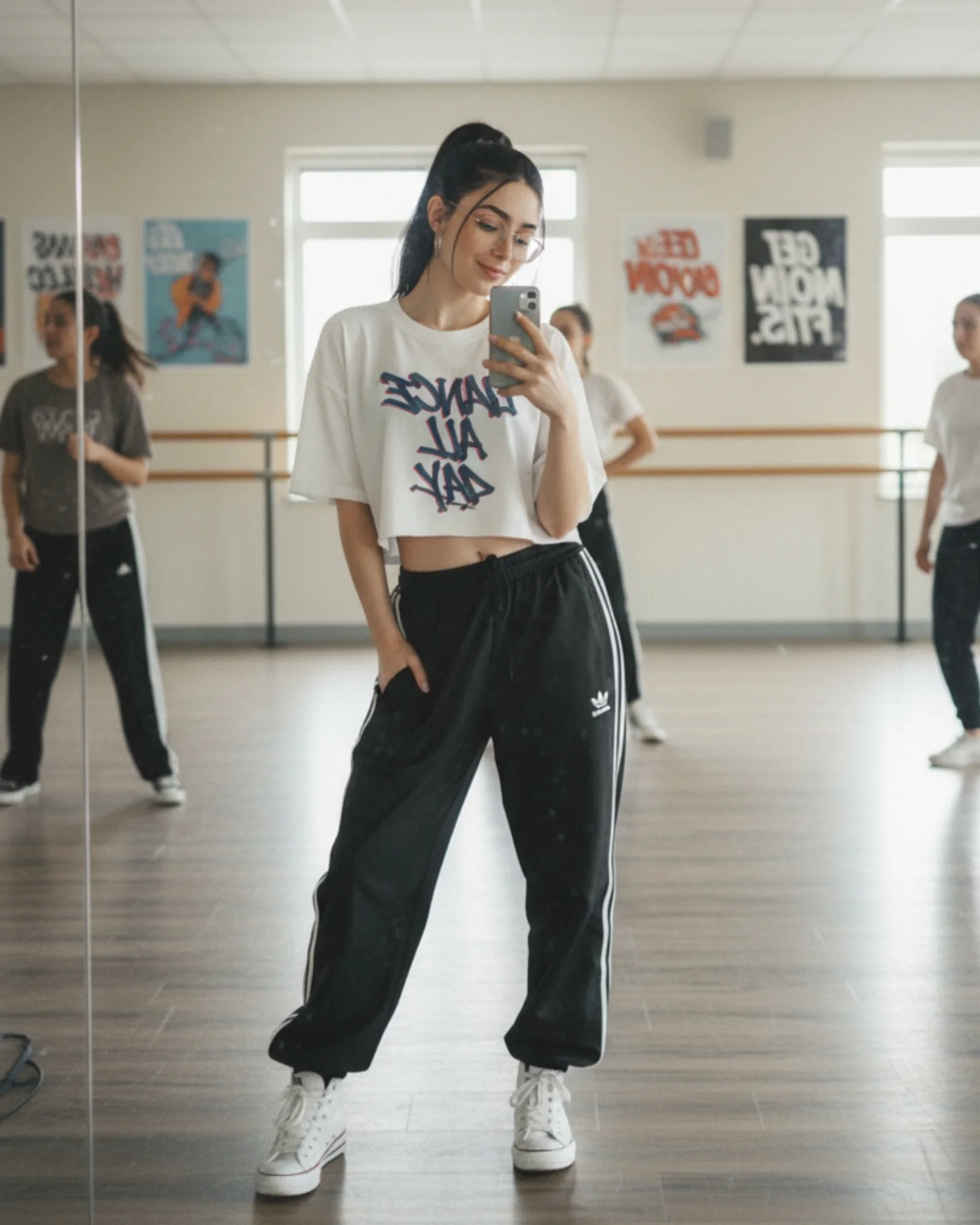
Hoy me apetecía algo más cercano 💕
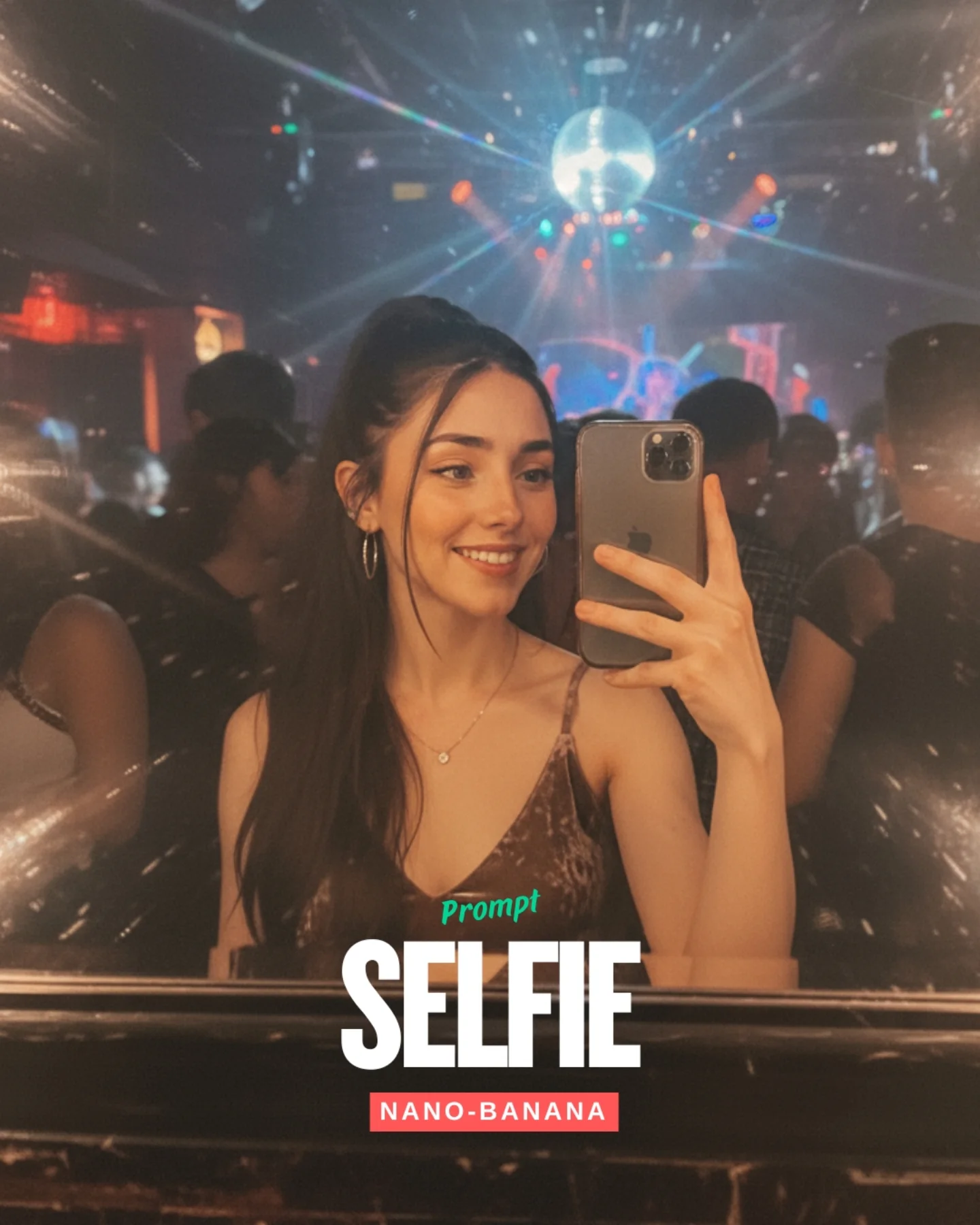
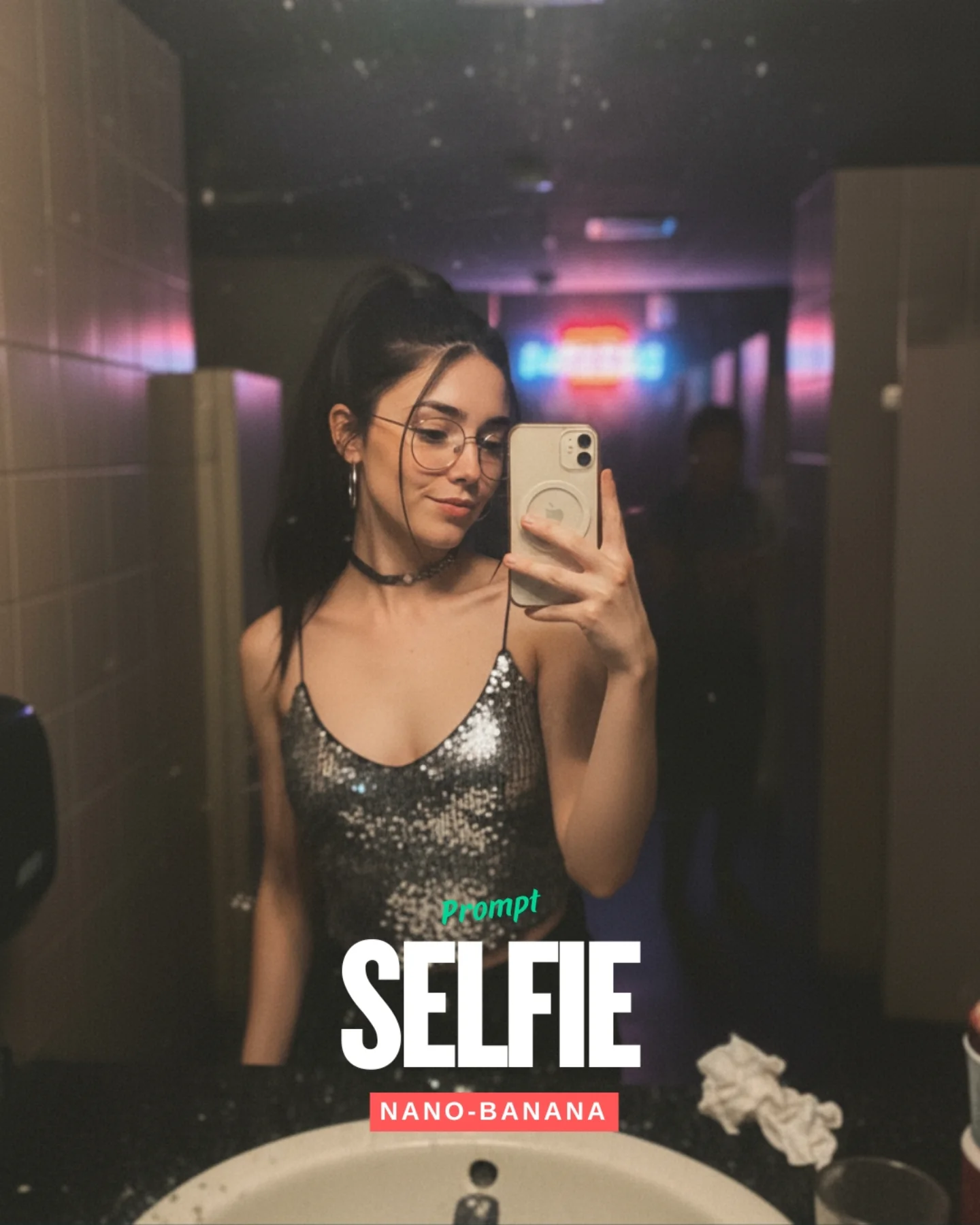
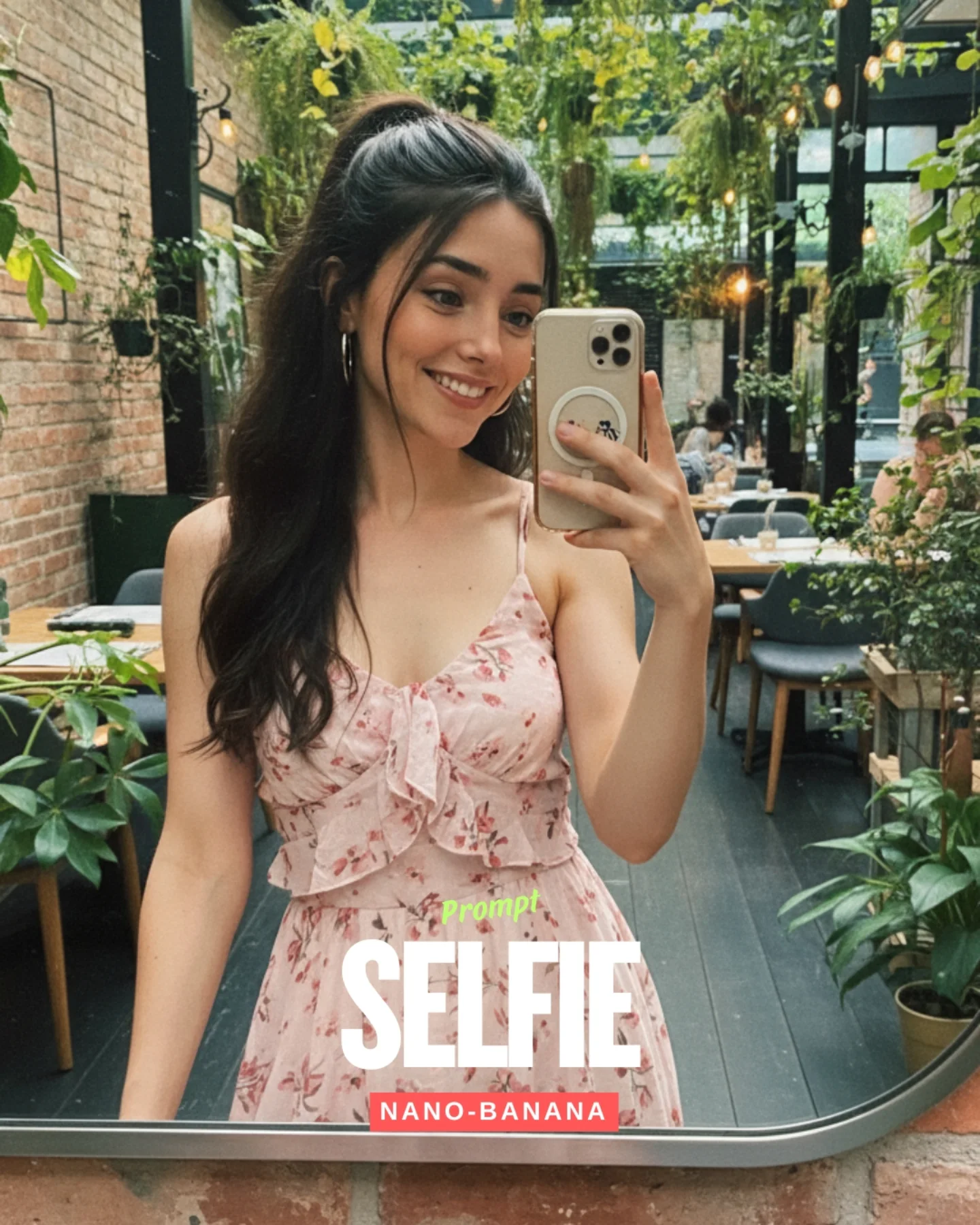
No todo tienen que ser looks producidos o escenarios llamativos… a veces un simple selfie con el móvil transmite mucho más 🌸
En este carrusel verás varias de mis fotos, de esas que parecen improvisadas pero tienen su encanto 😌📱
Comenta "ARIA" y te paso el Prompt Base y todos los prompts que he usado para generar estas imágenes con Nano Banana 🍌
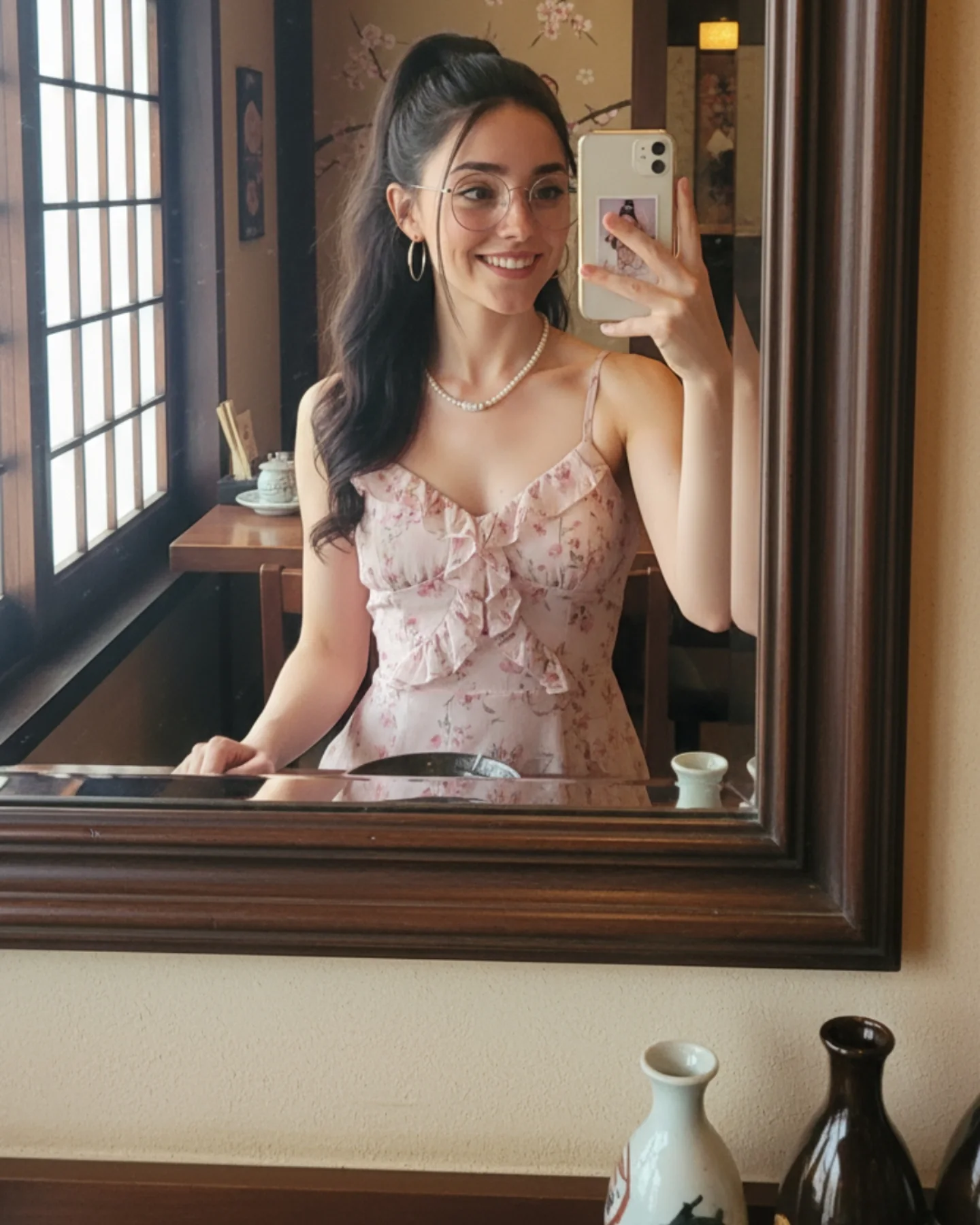
Mirror selfies usually depend on immediacy, but this one works because it adds environmental intention. The room is doing more than serving as a random backdrop. The wooden frame, shoji-style window rhythm, ceramics, and warm daylight all support the subject’s styling. That makes the image feel like a mood piece instead of disposable phone content.
How soy_aria_cruz Made This Pink Floral Dress Mirror Selfie AI
The key difference here is that the photo does not isolate beauty from place. The glasses, pearl necklace, pink floral dress, and soft smile establish a romantic personal style, while the room’s wood tones and tea-room quietness give the image emotional context. The selfie format stays casual, but the environment upgrades the result into something far more memorable.
Why This Works
The image succeeds because the styling and the space share the same emotional temperature. The dress is light, floral, and gentle. The room is warm, wooden, and calm. There is no conflict between subject and setting. That coherence is what gives the photo its polish.
The second reason it works is the mirror itself. The frame is thick enough to matter visually, so the image feels nested and composed. Many mirror selfies fail because they crop too tightly and lose the architectural logic of the mirror. Here, the frame helps convert a quick phone shot into something that reads more like lifestyle photography.
Signal Table
Signal
What It Does
Why It Matters
Pink floral slip dress
Provides the primary soft-romantic styling cue.
Sets the emotional tone immediately.
Round glasses and pearls
Adds refinement and personality.
Keeps the image from becoming generic influencer content.
Dark wooden mirror frame
Creates a strong visual boundary around the reflection.
Makes the composition feel intentional and spatially grounded.
Shoji-like side window
Introduces vertical rhythm and soft daylight.
Gives the room a specific mood instead of a vague interior feel.
Warm ceramics and table details
Quietly reinforce the tea-room atmosphere.
Add subtle lived-in context without clutter.
Aesthetic Read
This image sits in a strong lifestyle niche: soft feminine self-documentation with spatial taste. It is not fashion-editorial in the strict sense, because the phone remains visible and the shot preserves personal immediacy. But it is much more curated than a casual daily selfie because the room, light, and wardrobe all align.
That alignment is the important design lesson. The visual success comes from harmony, not spectacle. There is no dramatic pose, no aggressive color, and no complicated set. Instead, the image relies on tonal consistency: pink dress, beige walls, dark wood, soft daylight, black hair, and pale phone. That makes the frame feel calm and elegant.
Prompt Technique Breakdown
Technique
Application In This Image
Practical Use
Environment-styling match
The room and dress share the same softness and warmth.
Use matching emotional temperatures to make lifestyle portraits feel cohesive.
Mirror-frame anchoring
The frame is visible and compositionally important.
Helps selfies read as designed images rather than accidental captures.
Accessory specificity
Glasses, pearls, and hoops define the personality cleanly.
One or two accurate accessories can prevent generic outputs.
Soft daylight realism
Window light controls the face and room naturally.
Best when you want intimacy instead of glamour drama.
Foreground/Reflection layering
The viewer sees both the reflected room and the outer frame edge.
Adds depth and makes the mirror composition richer.
Use Cases
This structure works for lifestyle creator content, romantic personal-brand imagery, dress or accessory inspiration, tea-room or boutique hospitality mood boards, and AI prompt work focused on warm self-documentation with taste. It is especially useful when the goal is “soft, feminine, personal, but not messy.”
It is less suitable for high-energy fashion campaigns, dramatic beauty editorials, or purely room-design photography. The image depends on the coexistence of self-portrait and room atmosphere. Remove either one, and the balance changes.
Transfer Recipes
Recipe 1: Kyoto Cafe Variant
Keep the mirror, window slats, and floral dress, but add a stronger teaware presence and slightly deeper wood tones. This shifts the image toward boutique cafe lifestyle content.
Recipe 2: Minimal Romantic Apartment Variant
Use the same pink dress and glasses, but simplify the room into plaster walls, one framed print, and a lighter wood mirror. This produces a more contemporary domestic version.
Recipe 3: Creator Moodboard Variant
Retain the warm mirror framing and personal styling, but let the phone case, tabletop objects, and wall decor become slightly more distinct. This works well for social storytelling and aesthetic boards.
Execution Playbook
When prompting this type of image, treat the room as part of the styling. Do not simply say “mirror selfie in a room.” Define the room’s material language, window behavior, and emotional register. Here, dark wood and soft daylight are doing a lot of the work that would otherwise have to be carried by fashion styling alone.
Next, choose a small set of identity cues and hold them constant. In this image that set is round glasses, pearl necklace, pink floral dress, and a warm smile. Finally, keep the phone visible but secondary. The phone confirms the selfie format, but it should not become the loudest object in the composition.
Quick Summary
This mirror selfie works because it aligns wardrobe, accessories, room materials, and daylight into one coherent soft-romantic lifestyle image. The strongest prompts for this look specify the mirror frame, the warm Japanese-inspired interior, and a small set of personal styling cues instead of relying on “pretty selfie” language alone.