How soy_aria_cruz Made This Dance Studio Mirror Selfie AI
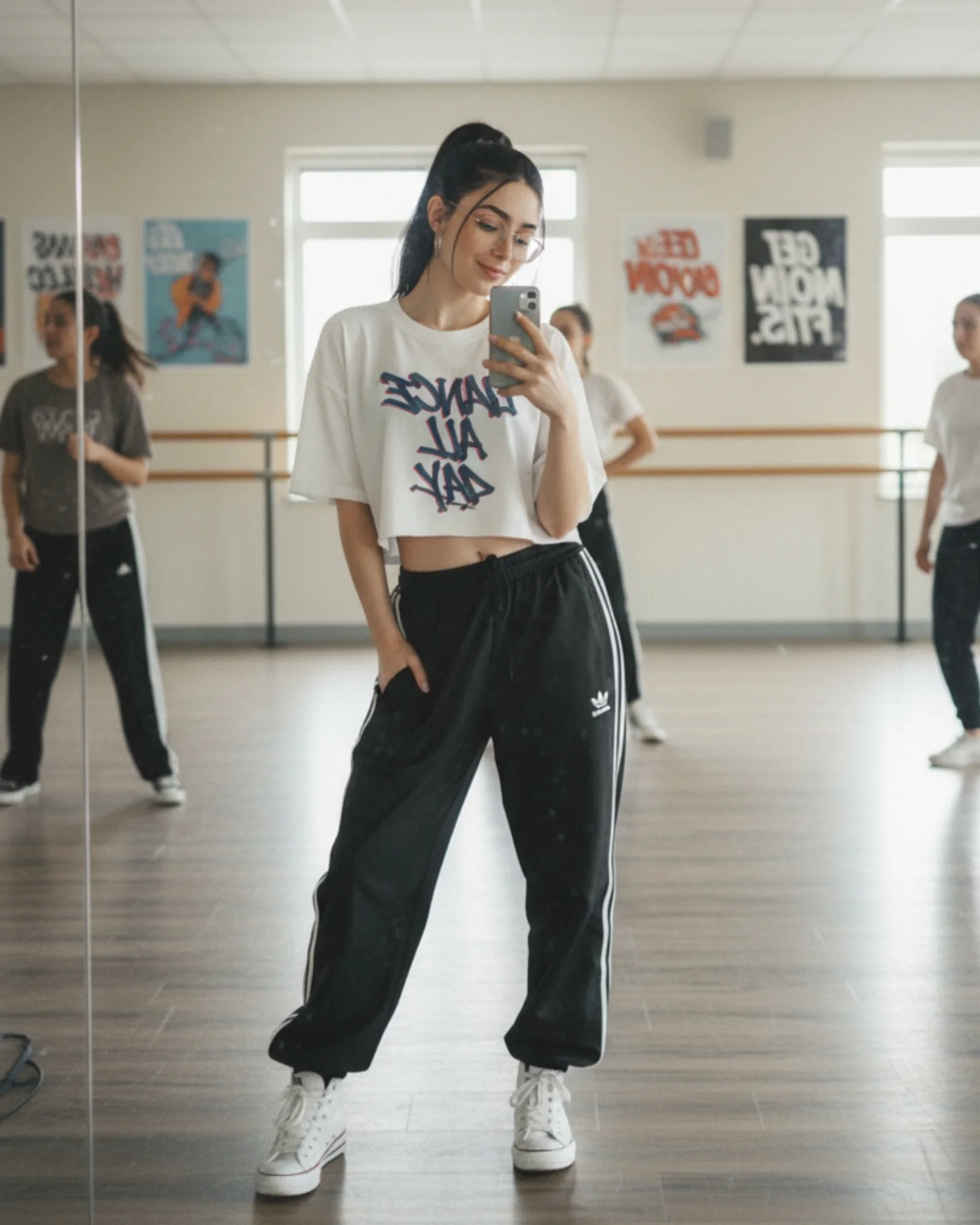
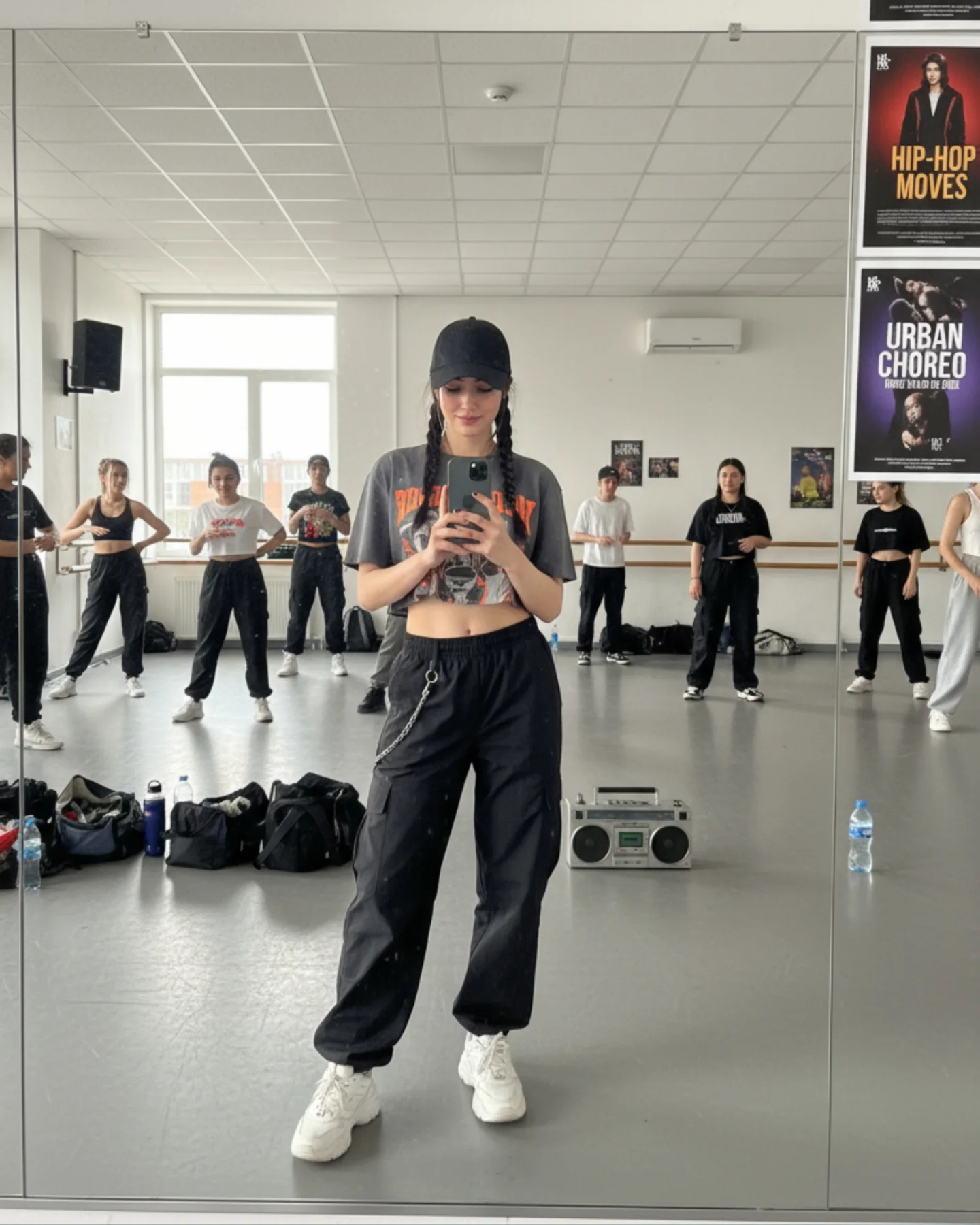
This image works because it captures the kind of moment people genuinely post: not a stage performance, not a polished campaign, just a casual mirror selfie in a practice space. The dance studio gives the picture context and identity, but the subject’s pose stays natural and unforced. That balance between setting and spontaneity is what makes the image feel credible.
For creators, this is a useful reminder that “casual” does not mean visually weak. A good lifestyle image often depends less on dramatic styling and more on whether the environment supports the person’s behavior. Here, the mirror, barre, wooden floor, and blurred dancers all quietly confirm the story of the image without distracting from the subject.
Why the image holds attention
The strongest mechanism here is environment-behavior alignment. The outfit, the selfie, the dance room, and the relaxed body language all belong together. Nothing feels imported from another visual world. That coherence makes the image easier to trust and easier to imagine as part of a real feed.
The second strength is silhouette clarity. Oversized tee, loose joggers, and high-top sneakers create a clean full-body outline that reads immediately, even at thumbnail size. That matters for social performance because viewers often decide whether to stop based on body posture and overall vibe before they inspect the face.
| Signal | Evidence (from this image) | Mechanism | Replication Action |
|---|
| Context matches behavior | Mirror selfie, activewear, barre, and dancers all belong to the same world | Scene coherence makes the image feel naturally real | Choose environments that logically support the pose and outfit you want |
| Readable full-body shape | Loose cropped tee, joggers, and sneakers create a clean stance | Strong silhouette improves feed readability and makes the image feel effortless | Build casual looks around simple shapes that read clearly in the mirror |
| Low-pressure authenticity | The pose is relaxed, with one hand in pocket and slight weight shift | Casual posture feels more relatable than overt posing | Use natural weight shifts and asymmetry instead of rigid front-facing stances |
Where this style fits best
This type of image is ideal for AI lifestyle creators, dance or fitness-influencer prompts, casual social mirror-selfie packs, and creator accounts that want to feel more human and less produced. It is especially useful when the goal is to build believable content around hobbies or everyday routines.
It is less useful for high-glam fashion accounts or dramatic sports campaigns. The strength here is realism, not spectacle. The image wants to feel like a real life moment before or after class.
- Best fit: dance or movement lifestyle creators. Why fit: the setting and outfit support an authentic hobby-based identity. What to change: vary the studio type, shirt graphic, or pose looseness.
- Best fit: influencer-base prompt libraries. Why fit: the image is a reusable example of believable social posture. What to change: keep the same stance and swap the niche from dance to yoga, rehearsal, or casual gym.
- Best fit: prompt educators teaching everyday realism. Why fit: the image shows how environment can do storytelling without heavy styling. What to change: compare this kind of coherent scene with a mismatched background example.
- Not ideal: editorial fashion pages. Reason: the pose and wardrobe are too ordinary by design.
- Not ideal: dramatic athletic branding. Reason: the image avoids intensity and competition cues.
Transfer recipes
- Keep: mirror selfie, casual stance, and activity-linked environment. Change: dance studio to yoga room, rehearsal hall, or gym mirror. Slot template: "{subject} taking a mirror selfie in {activity space} wearing {casual activewear}"
- Keep: oversized top and loose pants silhouette. Change: the hobby signal in the background while preserving the same social-media pose. Slot template: "{everyday movement selfie} built around {clear environment cue}"
- Keep: relaxed asymmetry and full-body framing. Change: the mood from playful to tired, focused, or post-workout content. Slot template: "{mirror selfie pose} adapted for {emotion or routine context}"
What the image gets right aesthetically
The image succeeds because it lets one strong idea carry the whole frame: ordinary confidence. The oversized white tee adds movement and softness, while the black joggers and sneakers keep the silhouette grounded. The background dancers are especially useful because they make the space feel active without stealing focus. That is a smart level of detail.
The lighting also helps by staying neutral. Many AI images overcomplicate casual interiors with dramatic contrast or lens tricks. This image understands that clean everyday light is often a better realism cue than anything cinematic.
| Observed | Why it matters for recreation |
|---|
| Mirror selfie in a real practice studio | Creates an authentic social-media behavior pattern |
| Oversized white crop tee and black joggers | Build a clear casual movement-friendly silhouette |
| Wood floor, barre, and posters in the background | Anchor the image in a believable dance environment |
| Blurred dancers behind the subject | Add life and context without cluttering the frame |
| Soft neutral indoor daylight | Strengthens realism and keeps the mood approachable |
Prompt chunks worth locking first
If you want to recreate this kind of image, begin with the setting-behavior match before you focus on face or outfit polish. The image works because the room and the pose are in sync.
| Prompt chunk | What it controls | Swap ideas (EN, 2–3 options) |
|---|
| mirror selfie in a dance studio | Core activity context and realism | yoga studio mirror selfie, rehearsal-room mirror shot, pilates mirror pose |
| oversized cropped tee, joggers, and high-top sneakers | Silhouette and casual wardrobe logic | hoodie and leggings, rehearsal shorts and tee, track jacket and sweatpants |
| one hand holding phone, other hand in pocket | Relaxed asymmetrical pose | hand on hip, adjusting hair, holding water bottle after class |
| wooden floor, barre, windows, and posters | Studio authenticity | mirrored gym room, old rehearsal hall, industrial dance loft |
| blurred dancers in background | Ambient activity without distraction | two classmates stretching, instructor figure in back, empty room for solo vibe |
| soft natural indoor light | Believable atmosphere and mood | warm evening studio light, cooler rehearsal light, bright daytime class light |
An iteration path that keeps the image believable
Lock these three things first: the dance-room environment, the mirror-selfie pose, and the oversized-streetwear silhouette. Those are the realism anchors. After that, refine shirt drape, sneaker grounding, and the amount of background activity one variable at a time.
- Run 1: stabilize full-body proportions, phone-hand placement, and mirror framing.
- Run 2: refine the oversized shirt text, jogger drape, and sneaker shape.
- Run 3: improve the studio context with clearer barre, posters, and softly blurred background people.
- Run 4: remix the environment while preserving the same social-natural posture.
If the image feels too polished, reduce the posing and keep the room more ordinary. If it feels too empty, add just enough background activity to support the story.