Why soy_aria_cruz's Elevator Gym Selfie Red Activewear Pose Source Went Viral — and the Formula Behind It
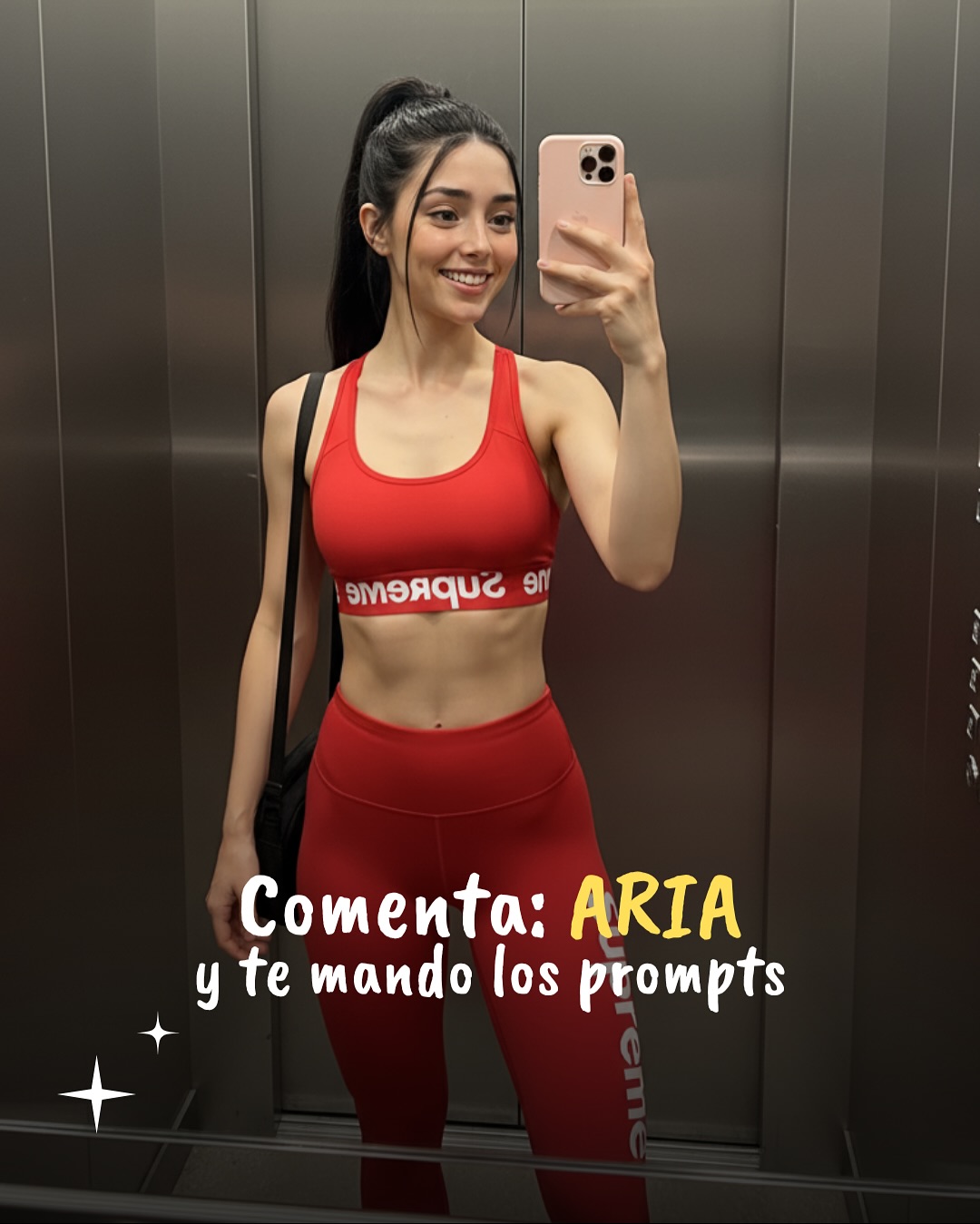
This image is not trying to be a grand cinematic statement, and that is exactly why it works. It is a clean, believable mirror selfie with a pose that many creators can reuse: one arm holding the phone, one shoulder carrying a bag, torso angled naturally, and posture that feels casual instead of overdesigned. That makes it highly practical as a reference image for pose transfer workflows.
For AI creators, everyday realism is often more useful than high-concept beauty shots. A strong pose-source image should be readable, balanced, and easy for a model to reinterpret. This one checks those boxes. It has clear limb placement, clear outfit lines, and a realistic environment that does not compete with the body language.
Why the image works as a transfer reference
The strongest mechanism here is clarity. The subject stands against a simple elevator background with strong vertical lines, which makes the pose easy to read. There is no crowded room, no furniture, and no distracting props beyond the phone and shoulder bag. That matters when you want to transfer pose successfully. The model needs a clean map of where the limbs and torso sit.
The second strength is that the pose feels socially native. It is not a stiff model stance. It is the kind of mirror selfie people actually take. That makes it especially valuable for creators building AI influencers or lifestyle characters, because the result will feel more believable than if the source pose came from a stylized runway image.
| Signal | Evidence (from this image) | Mechanism | Replication Action |
|---|
| Clear limb map | Phone hand, free arm, shoulder bag, and torso angle are all easy to read | Models have a cleaner reference for pose transfer | Choose source images where every major joint and limb remains visible |
| Social-native realism | The elevator selfie feels like an everyday fitness or lifestyle post | Transferred outputs inherit a more believable social-media posture | Use real-world selfies instead of fashion-editorial references for influencer-style outputs |
| Minimal scene noise | The elevator walls provide a clean neutral background | Attention stays on the body shape and pose logic | Prefer plain environments when your goal is pose transfer rather than storytelling |
Where this type of image fits best
This sort of image is ideal for pose-transfer tutorials, AI influencer workflows, fitness-style prompt packs, and creator education aimed at making believable everyday social content. It is especially useful when you want references that feel like content people would actually post themselves.
It is less useful for dramatic storytelling or fashion-editorial transfer. The strength here is its normality. If you need a more stylized or cinematic pose, a simple elevator selfie may be too plain.
- Best fit: AI influencer creators. Why fit: the pose feels instantly usable for realistic lifestyle outputs. What to change: swap outfit color and bag type while keeping the same phone-hand structure.
- Best fit: pose-transfer educators. Why fit: the source image is clean and anatomically readable. What to change: compare clean versus cluttered source images to show why this works.
- Best fit: fitness or gym-style content builders. Why fit: the red activewear and elevator mirror context already read like modern lifestyle posting. What to change: vary crop and expression while preserving the same stance.
- Not ideal: cinematic fantasy accounts. Reason: the pose is intentionally everyday and low-drama.
- Not ideal: high-fashion transfer tests. Reason: the environment and styling are too casual to test advanced styling language.
Transfer recipes
- Keep: mirror selfie arm position, slight torso angle, and one shoulder carrying an accessory. Change: the outfit and environment. Slot template: "{subject} taking a mirror selfie in {location} wearing {outfit type}"
- Keep: clean background and phone-in-hand structure. Change: the mood from fitness to streetwear, travel, or beauty content. Slot template: "{everyday social pose} adapted for {content niche}"
- Keep: relaxed standing posture and simple body lines. Change: the source image styling but not the pose geometry. Slot template: "{pose transfer reference} for {character identity} in {visual style}"
What the image gets right aesthetically
The image is effective because it uses one strong color choice and then gets out of its own way. The red activewear provides energy and draws the eye, while the metallic elevator walls stay neutral. That means the subject reads clearly even at small size. For reference content, that is valuable. You want the pose to be memorable without requiring too much scene complexity.
The bag strap is another underrated detail. It introduces an asymmetrical shoulder line, which makes the pose feel more natural than a perfectly symmetrical selfie. Small asymmetries like that are often what make social poses feel real instead of robotic.
| Observed | Why it matters for recreation |
|---|
| Phone in one hand at shoulder height | Creates a familiar mirror-selfie structure that is easy to transfer |
| Red sports set against neutral elevator walls | Makes the pose and silhouette stand out clearly |
| Black shoulder bag strap on one side | Adds believable asymmetry and daily-life realism |
| Simple frontal standing pose | Keeps anatomy legible and reusable for many niches |
| Bottom text overlay with sparkle icons | Packages the image as social content rather than a raw reference photo |
Prompt chunks worth locking first
If you want to recreate this type of image, start with the mirror-selfie geometry and environment simplicity before you focus on beauty details. The usefulness of the image comes from its clarity as a source pose.
| Prompt chunk | What it controls | Swap ideas (EN, 2–3 options) |
|---|
| mirror selfie inside a stainless-steel elevator | Environment clarity and social realism | gym mirror selfie, bathroom mirror selfie, apartment-lobby mirror selfie |
| one hand holding phone, other arm relaxed, bag strap over shoulder | Pose logic and asymmetry | coffee cup instead of bag, jacket over shoulder, gym tote variation |
| matching red activewear set | Silhouette clarity and visual focus | black athleisure set, pastel gym set, streetwear two-piece |
| soft overhead indoor lighting | Believable everyday exposure | warm lobby light, cool office elevator light, neutral bathroom light |
| bottom handwritten promotional text | Social-post packaging | DM for prompts, save this pose, use this reference |
| casual realistic fitness-influencer smile | Mood and relatability | neutral expression, slight grin, focused mirror-check look |
An iteration path that keeps the pose useful
Lock these three things first: the elevator mirror environment, the phone-hand geometry, and the bag-shoulder asymmetry. Those are the core reference cues. After that, refine outfit fit, body proportions, and text overlay in small steps.
- Run 1: stabilize the phone position, torso angle, and overall standing silhouette.
- Run 2: refine the activewear fit, bag strap placement, and hand anatomy.
- Run 3: improve the metallic elevator reflections and the realism of the lighting.
- Run 4: remix the niche while preserving the same pose-transfer usefulness.
If the source image feels too generic, the answer is usually not more clutter. It is often one extra asymmetrical detail, like the bag strap or a slightly shifted stance, that makes the pose feel human.