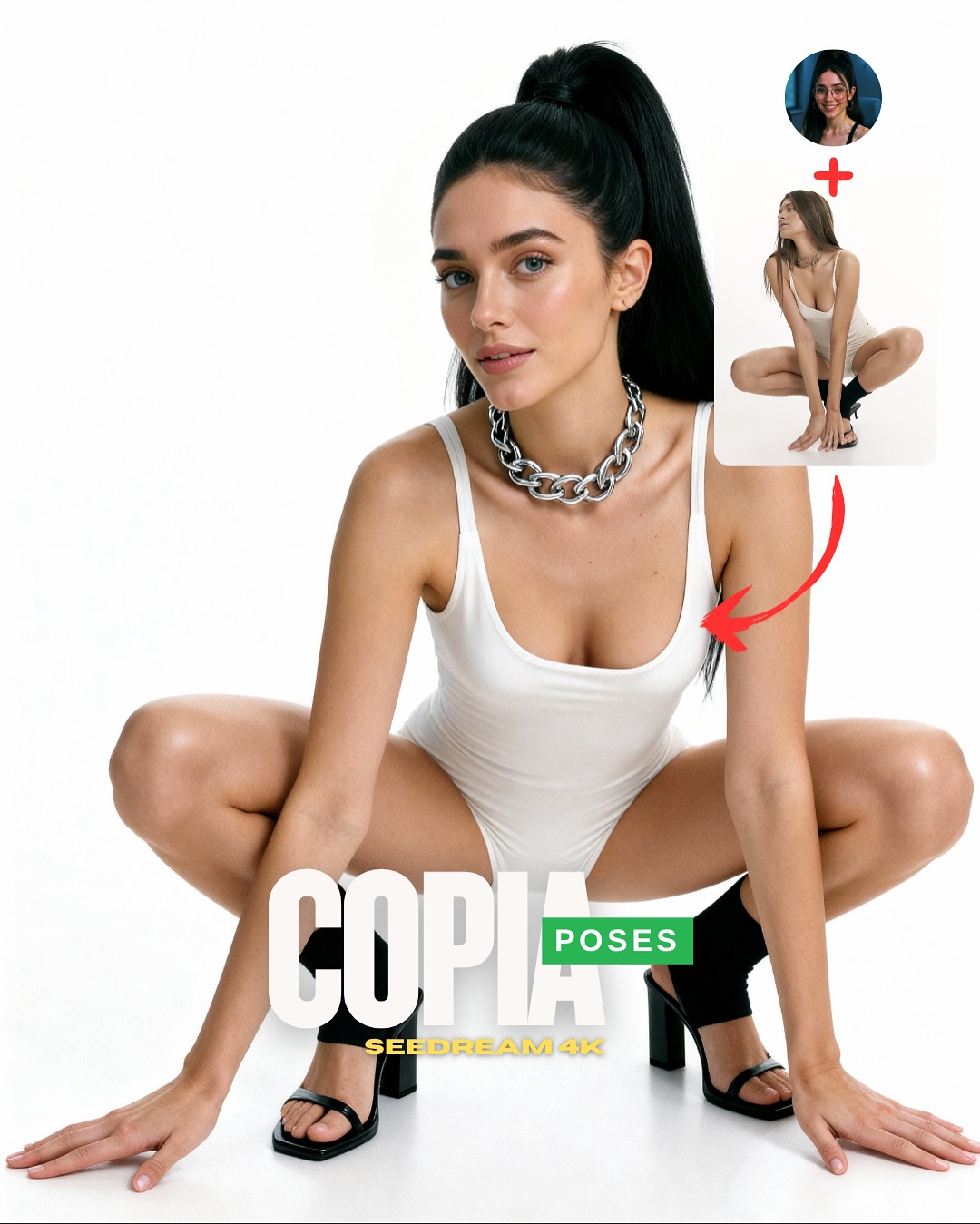
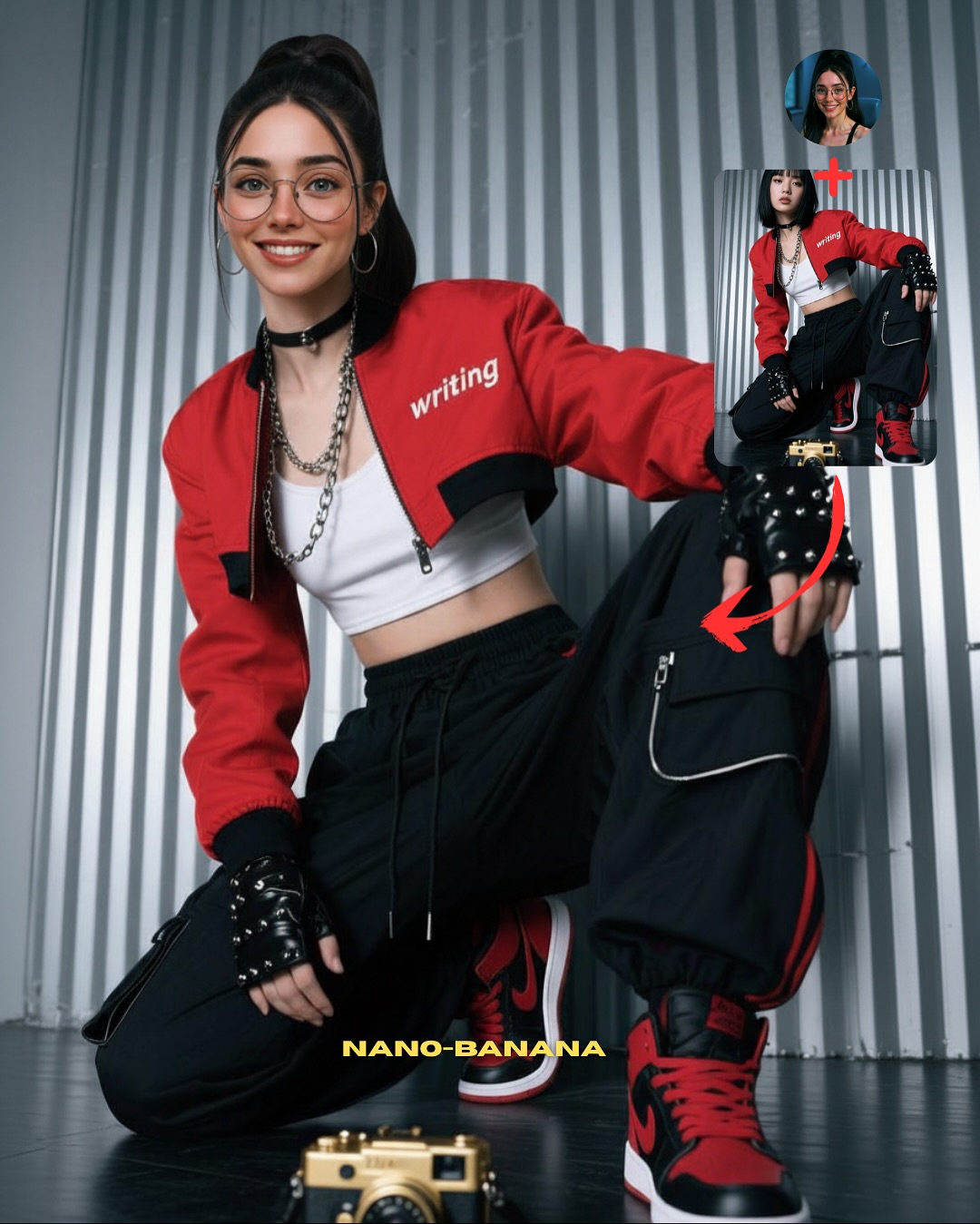
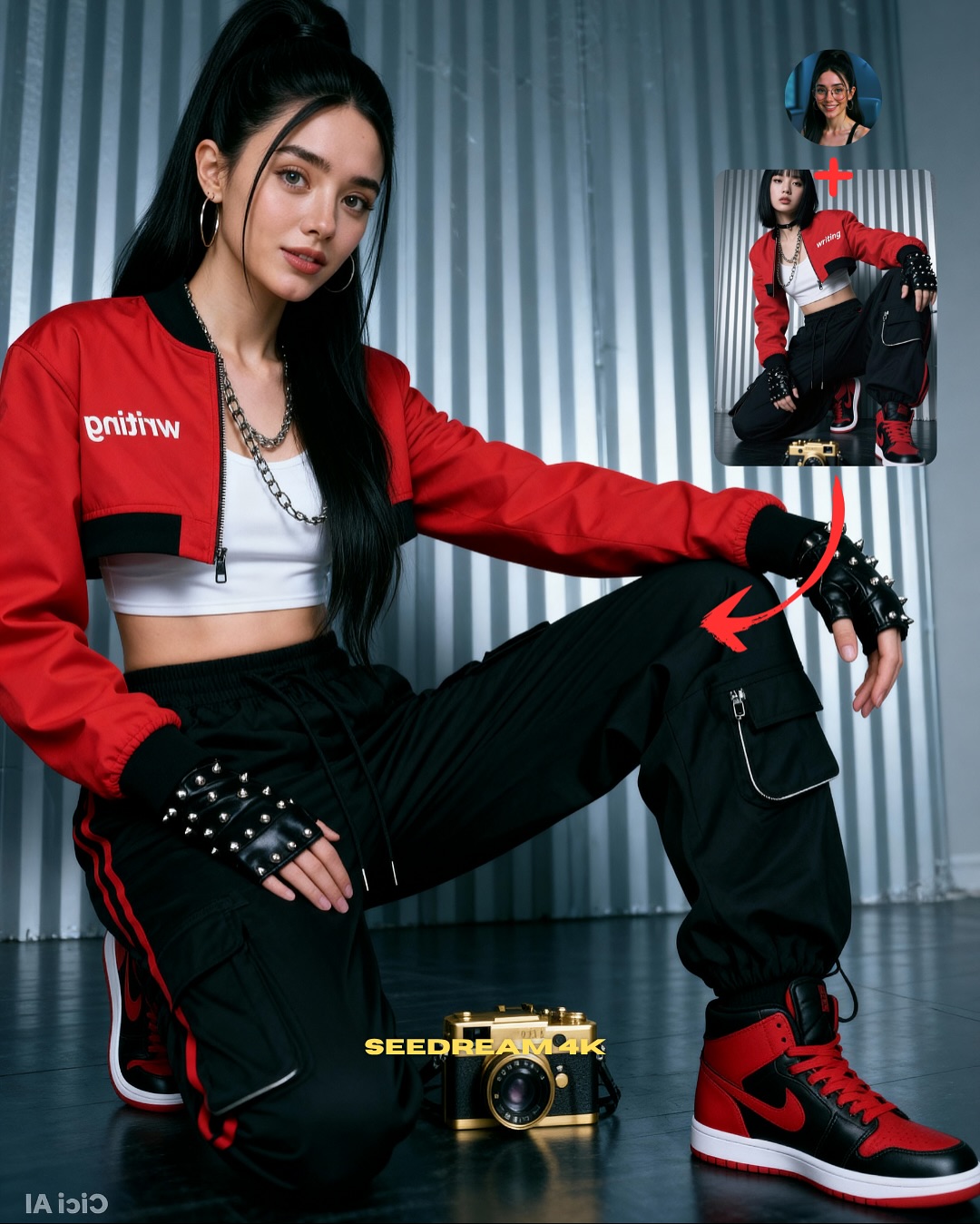
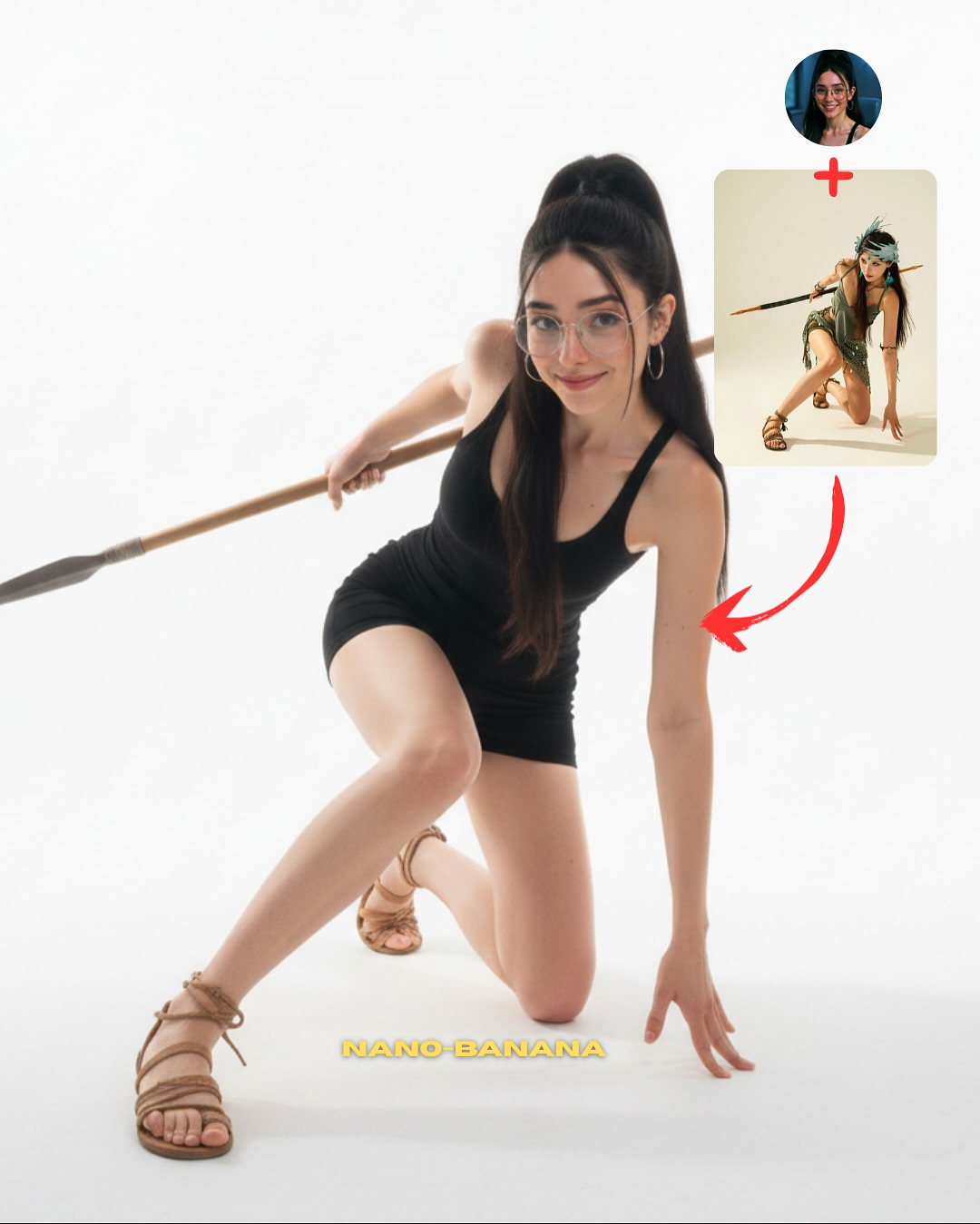
Transfiere Poses a tu Influencer IA 💕
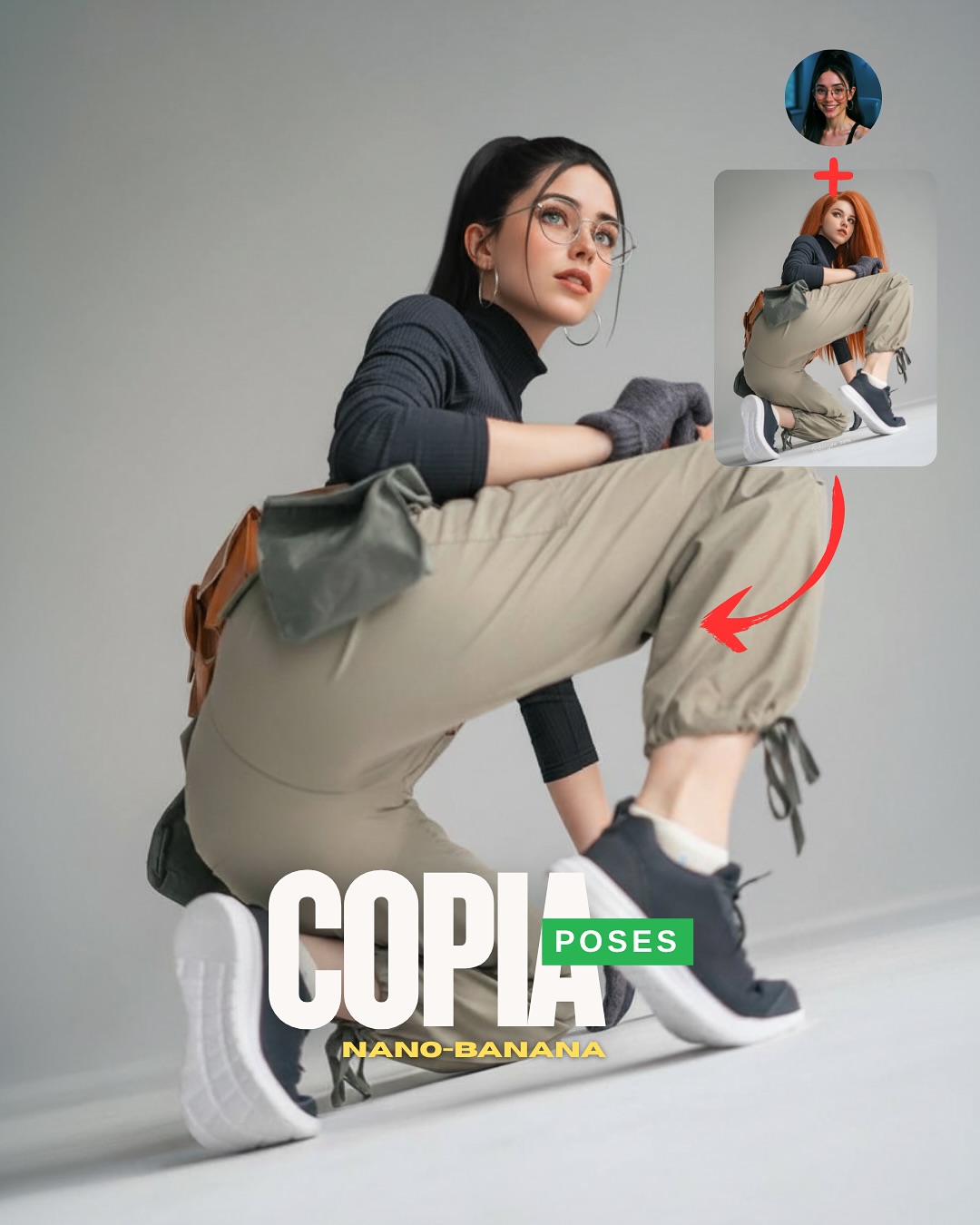
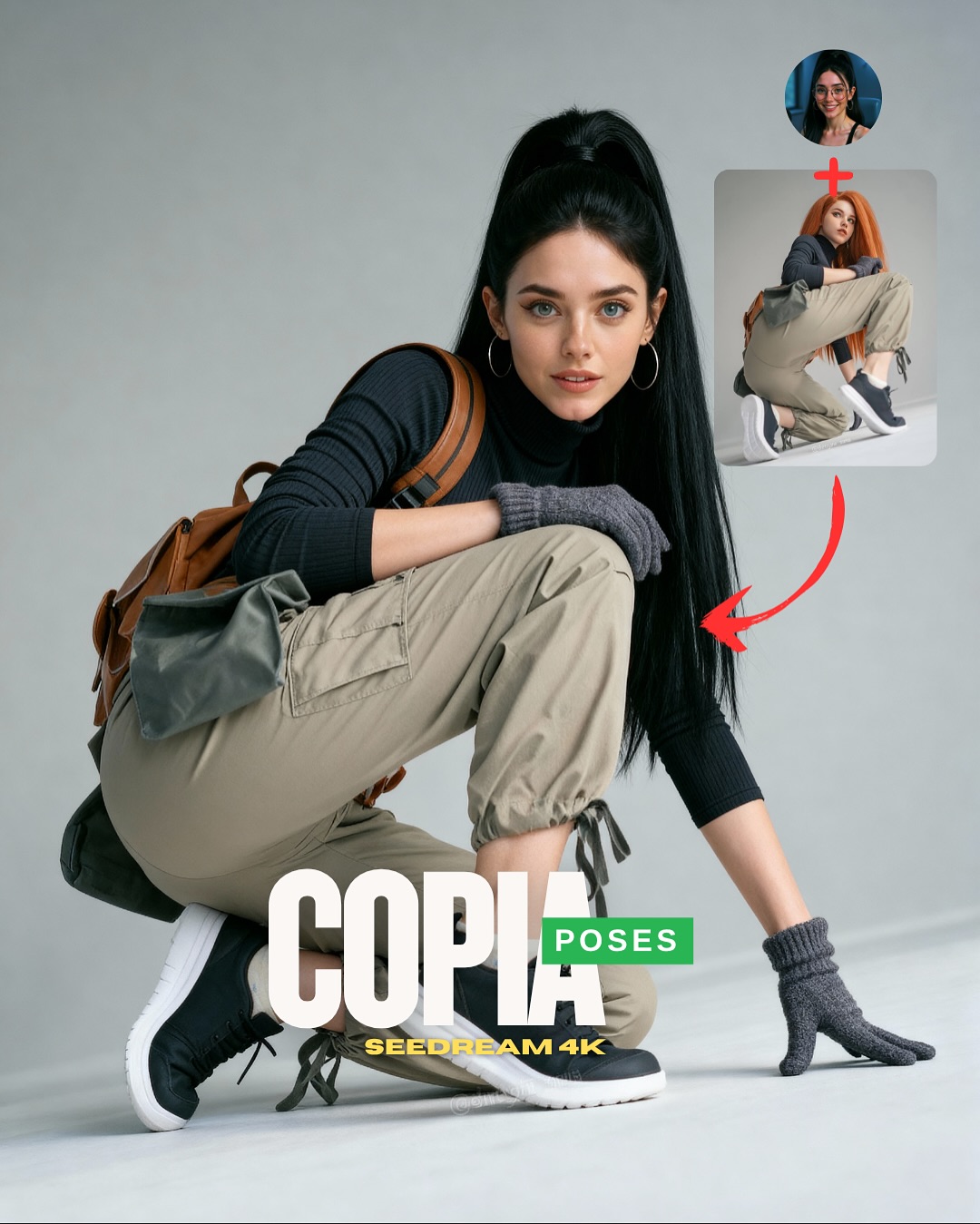
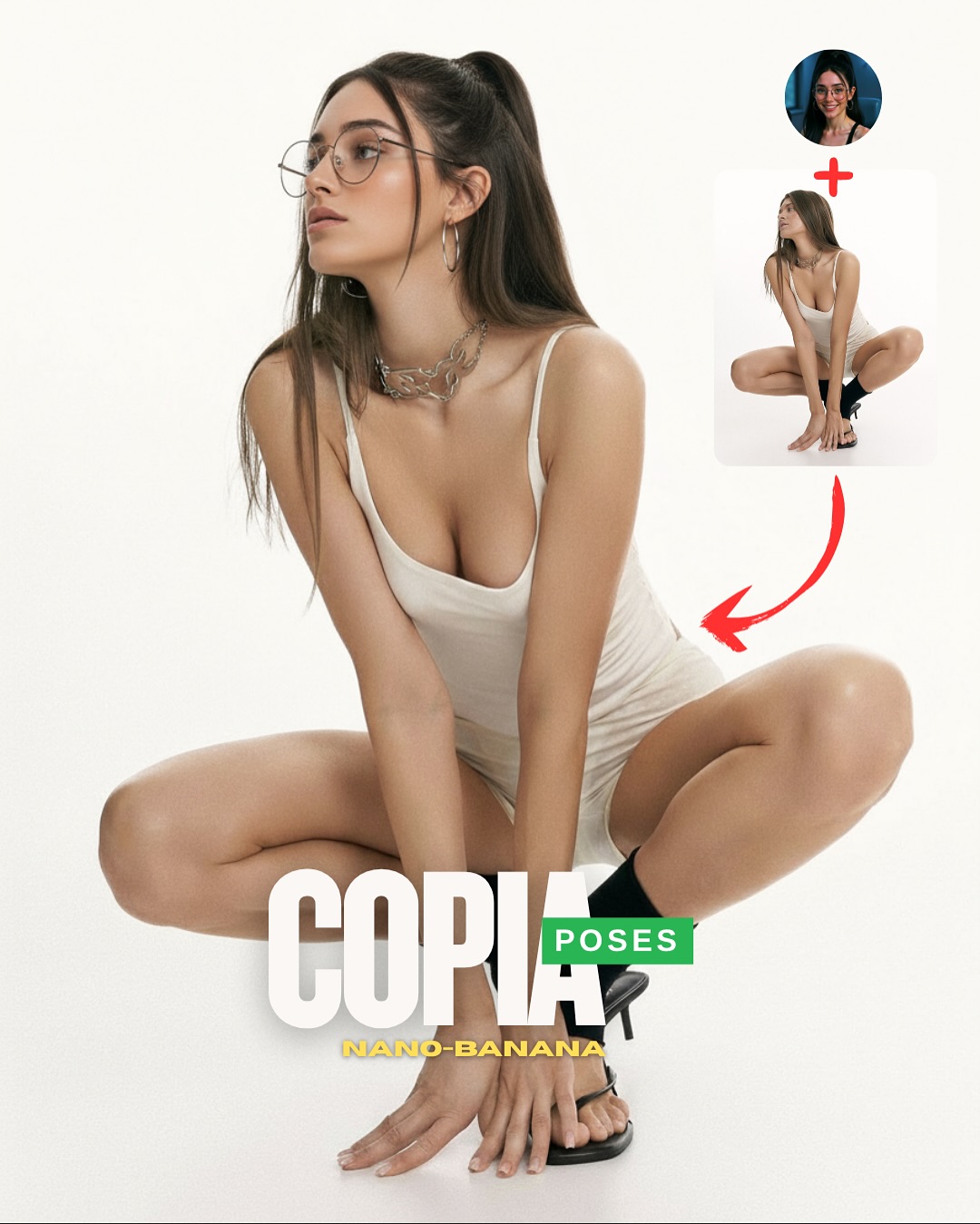
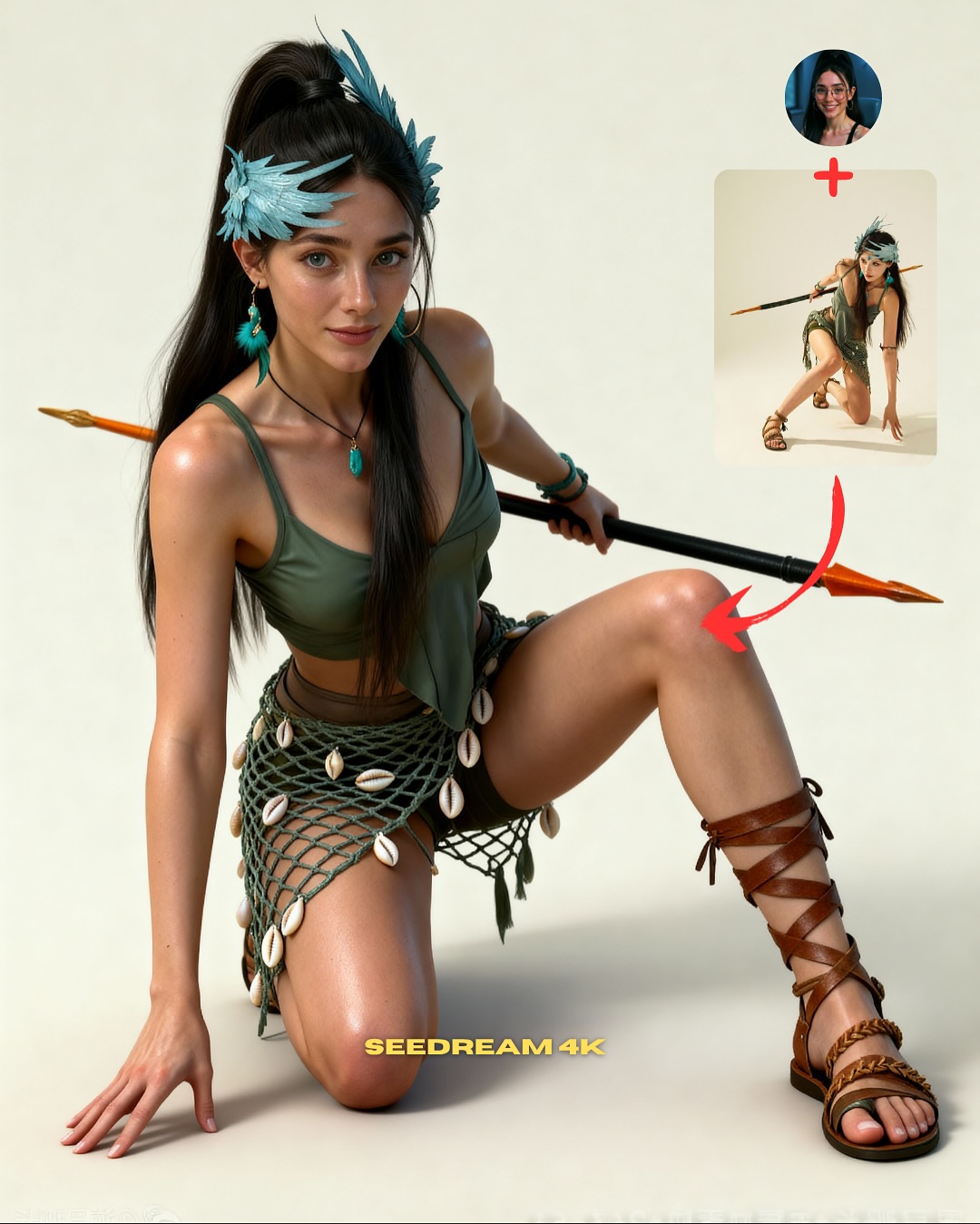
Como sé que conseguir transferir la pose que buscas es complicado y requiere muchas pruebas fallidas (y créditos gastados para nada 😅), aquí te dejo varias imágenes con sus prompts para que puedas usarlas con tus propias imágenes 🙊
Cómo usarlo:
1️⃣ Imagen 1 = tu foto o la de tu influencer IA.
2️⃣ Imagen 2 = la pose que quieres recrear.
3️⃣ Genera en Nano-Banana o Seedream 4K y haz 4–8 intentos para elegir el mejor resultado.
Si quieres todos los Prompts comenta “ARIA” y te lo paso 💌
How to Create a Chair Backbend Denim Pose AI Image
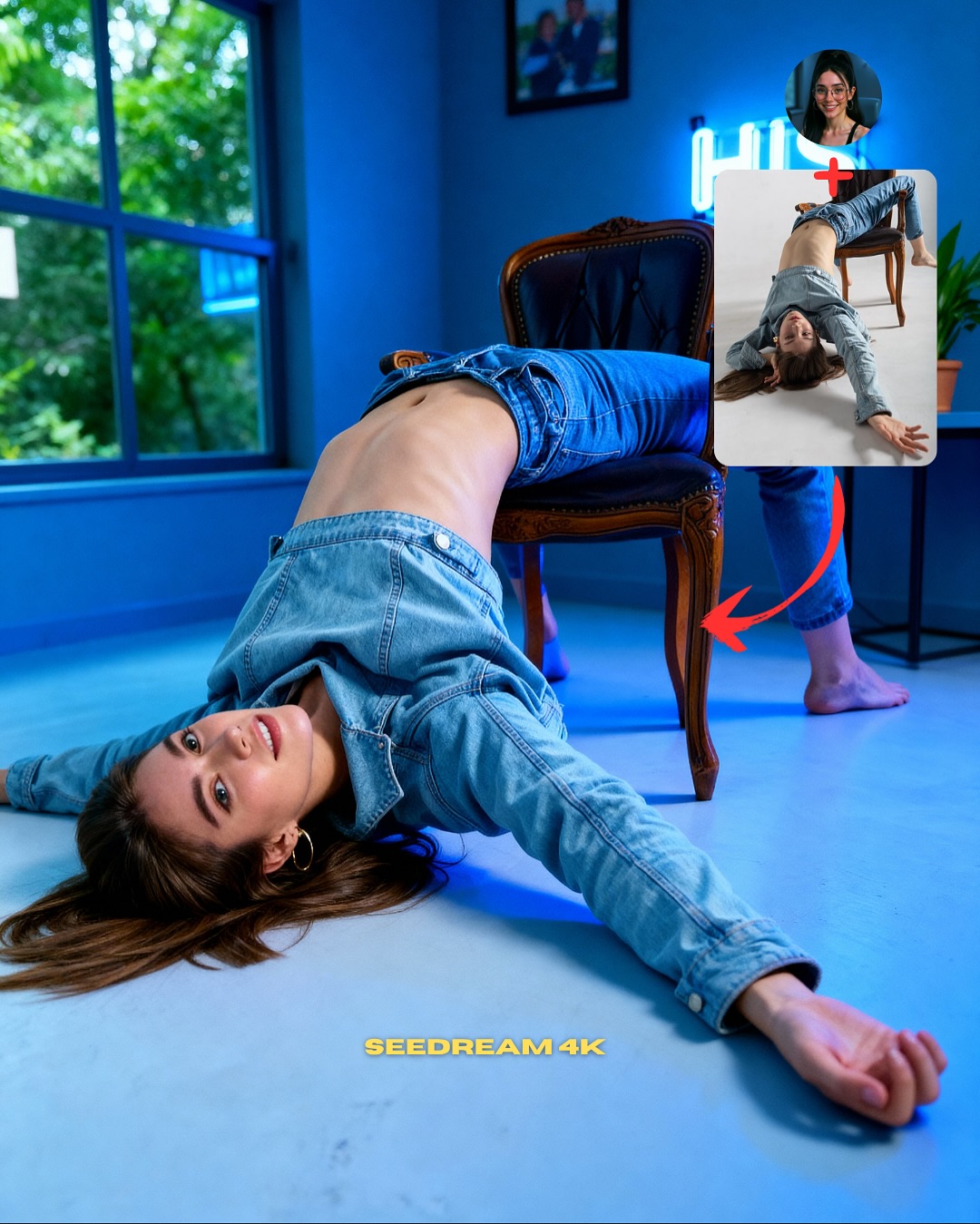
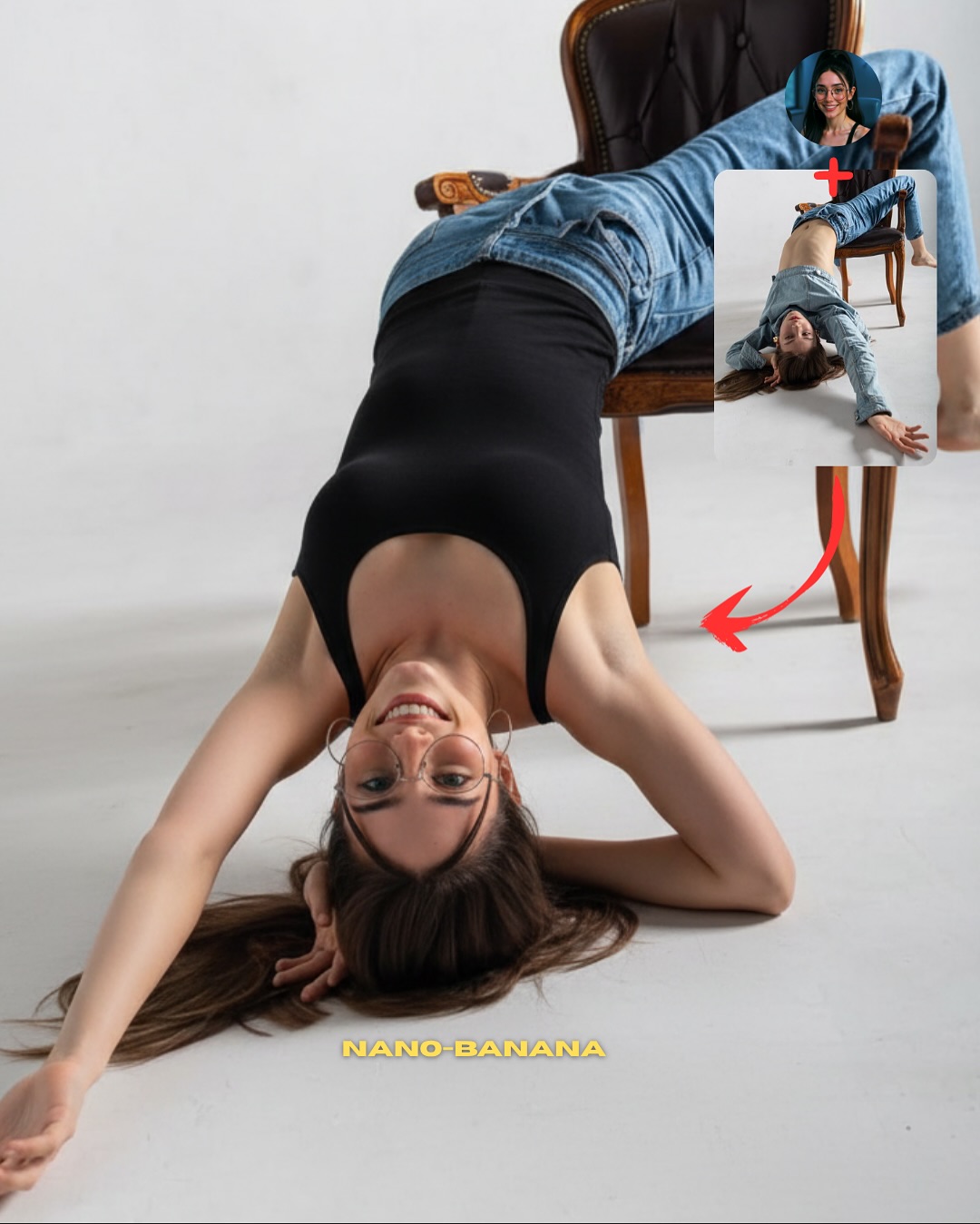
This image works because it turns a difficult body position into something visually legible. Backbend poses often fail in AI outputs because the support logic becomes unclear. Here, the support is easy to read: the chair carries the hips, the torso arcs downward, the arm stretches across the floor, and one leg remains active behind the chair. That clarity makes the image useful, not just impressive.
The scene also balances technical pose value with strong visual mood. The cool blue room, the window light, the vintage chair, and the denim styling give the image enough personality to feel memorable. But none of those elements overpower the main lesson. The pose is still the star. That is the mark of a strong transfer reference.
Why The Pose Reads So Clearly
The strongest decision is the low camera angle. It lets the viewer see the chair, torso arc, floor contact, and leg support in a single read. If this had been shot from higher up, the pose would be much harder to decode. The foreground arm also helps. It pulls the viewer into the frame and makes the body extension feel longer and more dramatic.
The second smart choice is the chair itself. A plain chair gives the pose structure without visually competing with it. That is useful for creators because it makes the reference adaptable. You can keep the body mechanics and swap the chair style, lighting, wardrobe, or setting later.
Signal
Evidence (from this image)
Mechanism
Replication Action
Readable support logic
The chair, grounded leg, and floor-reaching arm all show how the pose is physically held
Clear support points prevent anatomy from feeling fake or impossible
Always specify what the body is leaning on, where the weight sits, and which limbs stabilize the pose
Floor-level perspective
The near arm and low camera make the arch feel deeper and more dimensional
Low perspective adds drama without needing any artificial effects
Place the camera low whenever the pose relies on body extension across space
Single-prop structure
The chair defines the whole pose without cluttering the scene
A single strong prop makes transfer easier than a complex furniture setup
Use one anchor object for difficult poses rather than building a full room composition first
Mood without distraction
Blue room light and window greenery add atmosphere while leaving the pose readable
Controlled ambience makes the reference memorable but still practical
Keep the environment simple and let lighting do the mood work
What Makes The Aesthetic Flexible
The denim outfit is doing quiet but important work here. It outlines the torso, hips, and legs clearly, which helps the viewer understand the body curve. If the clothing were too loose or too decorative, the pose would be harder to read. That is a useful principle for creators collecting references: simple styling often transfers better than elaborate styling.
The room design also stays flexible. A chair, a blue wall, a window, a touch of neon. That is enough to set a tone, but not so much that the image becomes trapped in one narrative. You could adapt the same pose into fashion, dance, introspective lifestyle, or character-poster imagery with only a few changes.
Observed
Why it matters for recreation
Body arch centered on the chair seat
Makes the pose structure clear and gives the whole composition a strong central line
Foreground arm extended along the floor
Adds perspective depth and reinforces the length of the pose
Denim outfit with visible midriff
Helps the viewer read torso direction and spinal curve more easily
Blue ambient room light plus window fill
Creates atmosphere while keeping skin and furniture believable
Minimal furniture count
Lets the pose remain the focal point and makes the image easier to remix
Best Uses, Weak Uses, And Transfers
Best for pose-transfer tutorials because the support mechanics are unusually clear.
Best for dance, movement, or fashion-editorial prompts that need body extension rather than action speed.
Best for creators learning how props can stabilize difficult poses without overcomplicating the scene.
Best for moody indoor portraits where the pose itself should carry the image.
This format is less ideal for crowded scenes, armor-heavy styling, or narrative action shots. Its power comes from clean body logic and focused composition.
Transfer Recipes
Keep: supported backbend, single chair prop, low-angle camera. Change: swap denim for eveningwear, athleisure, or performance costume. Slot template: "{subject} in a deep backbend over a chair, low camera angle, one arm on floor, {wardrobe}, moody room light"
Keep: window fill plus colored ambient light. Change: move the scene into a rehearsal studio, loft apartment, or gallery space. Slot template: "{location} backbend portrait, chair-supported arch, cool ambient light, visible depth from floor perspective"
Keep: clear support points and negative space. Change: adapt the concept into yoga, dance campaign, or cinematic character-poster imagery. Slot template: "{use case} pose reference, torso draped over chair, grounded arm extension, minimal interior set"
Prompt Technique Breakdown
Prompt chunk
What it controls
Swap ideas (EN, 2-3 options)
Support structure
Determines whether the backbend looks believable or broken
hips on chair seat; shoulders supported by chair edge; one foot planted behind chair
Camera height
Controls how dramatic the arch and foreground arm appear
floor-level angle; knee-height angle; slightly elevated side view
Wardrobe clarity
Keeps the torso and hip line readable
denim set; fitted dancewear; minimal knit top and trousers
Ambient mood
Sets the emotional tone without changing the pose
cool blue room light; soft sunset fill; neutral daylight studio
Foreground extension
Adds perspective and visual pull
arm extended to lens; leg extended to edge; hand trailing behind head
Prop simplicity
Prevents the pose from being buried by environment noise
single wooden chair; metal stool; bench edge
Execution Playbook For Remixing It
Start by locking three things: the exact chair support point, the floor-level perspective, and the extended arm on the ground. Those are the structural decisions that make the pose readable. If one of them drifts, the backbend quickly becomes confusing.
Then iterate in this order:
First stabilize the body mechanics: hip placement, torso arch, arm extension, and leg support.
Next refine the chair size and placement so it supports the pose without hiding it.
Then tune wardrobe fit and hair placement so the body curve stays visible.
Only after that should you experiment with room mood, color, or styling direction.
This order matters because backbend references fail first at the support stage. Once support reads clearly, the rest of the image becomes much easier to control.