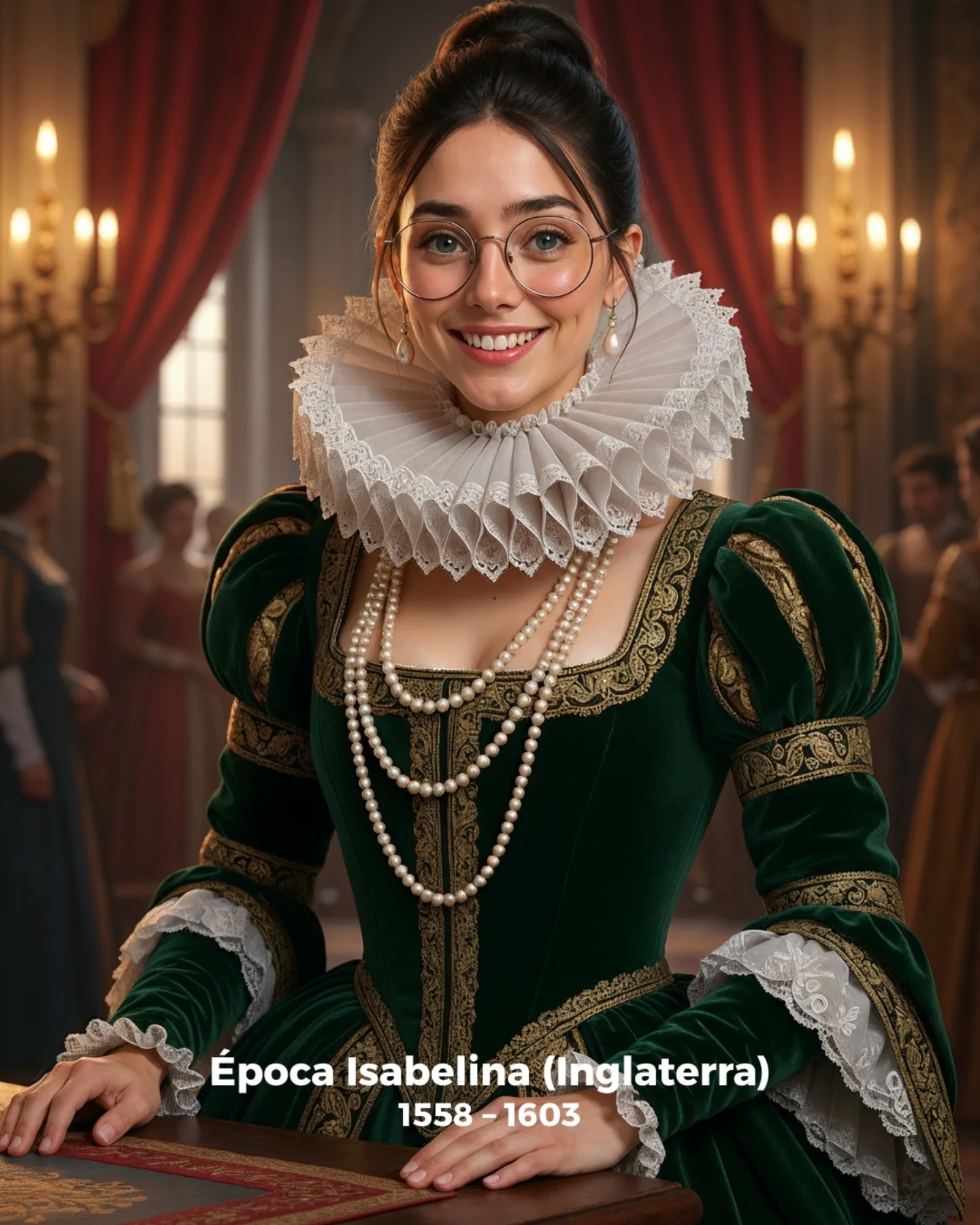
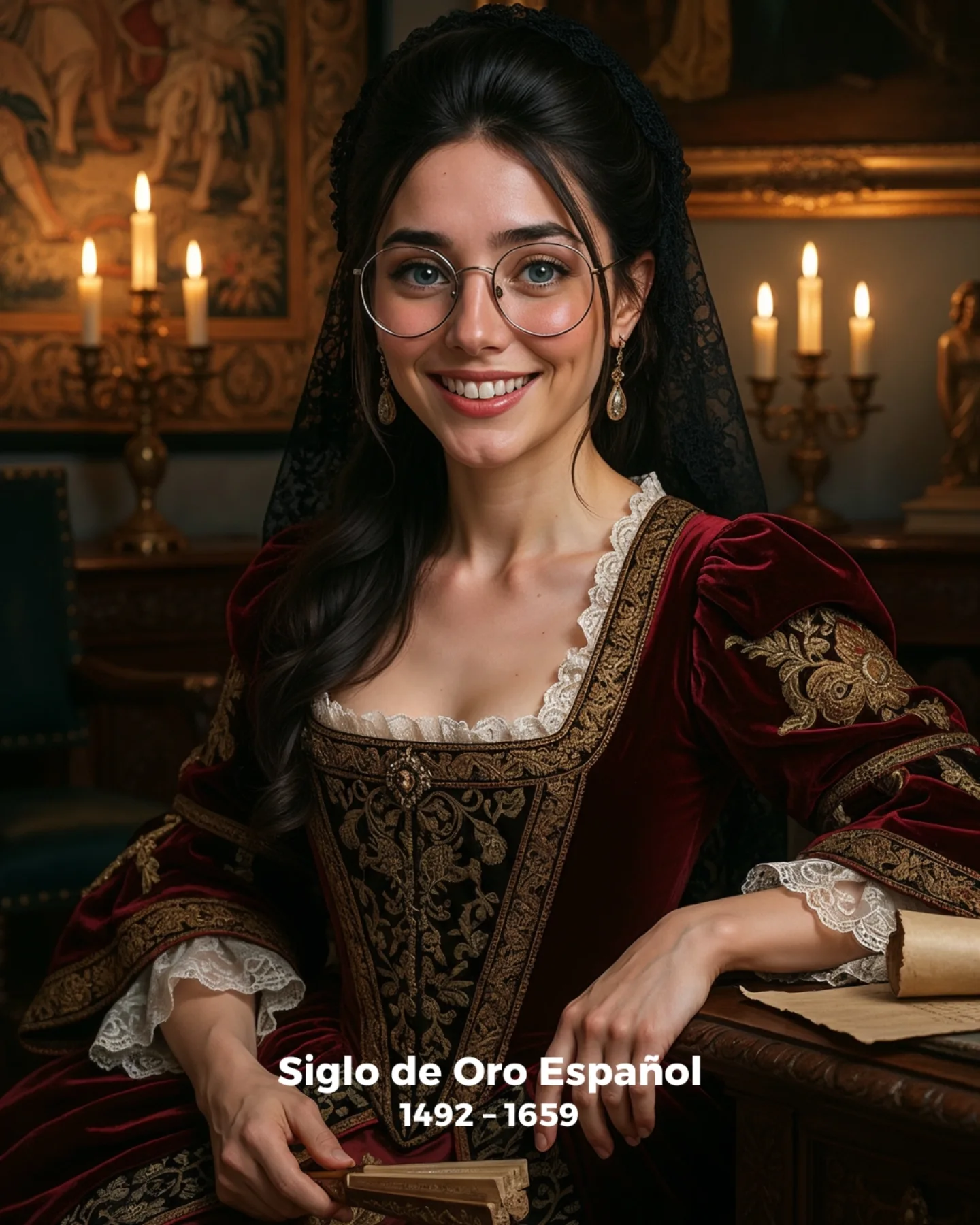
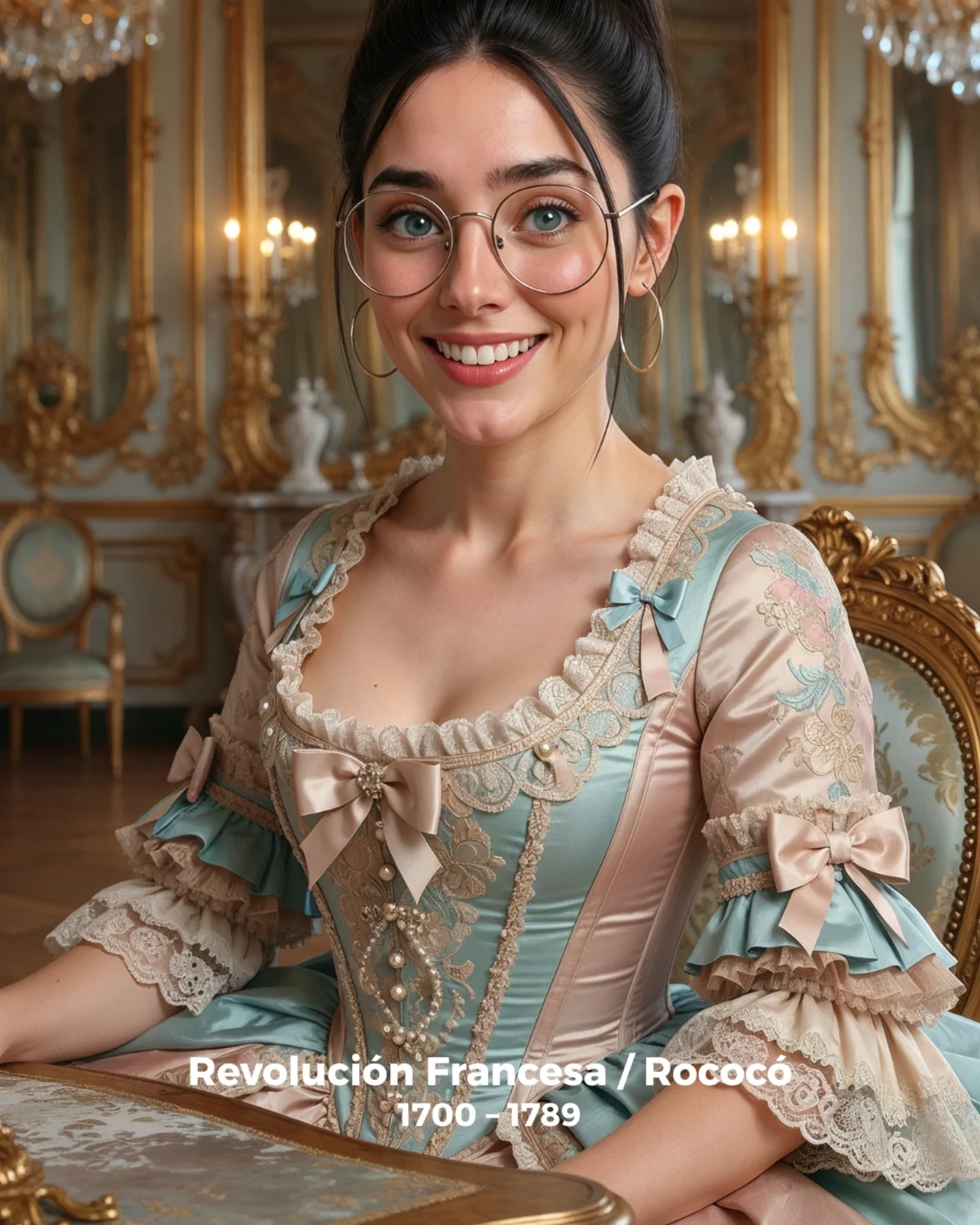
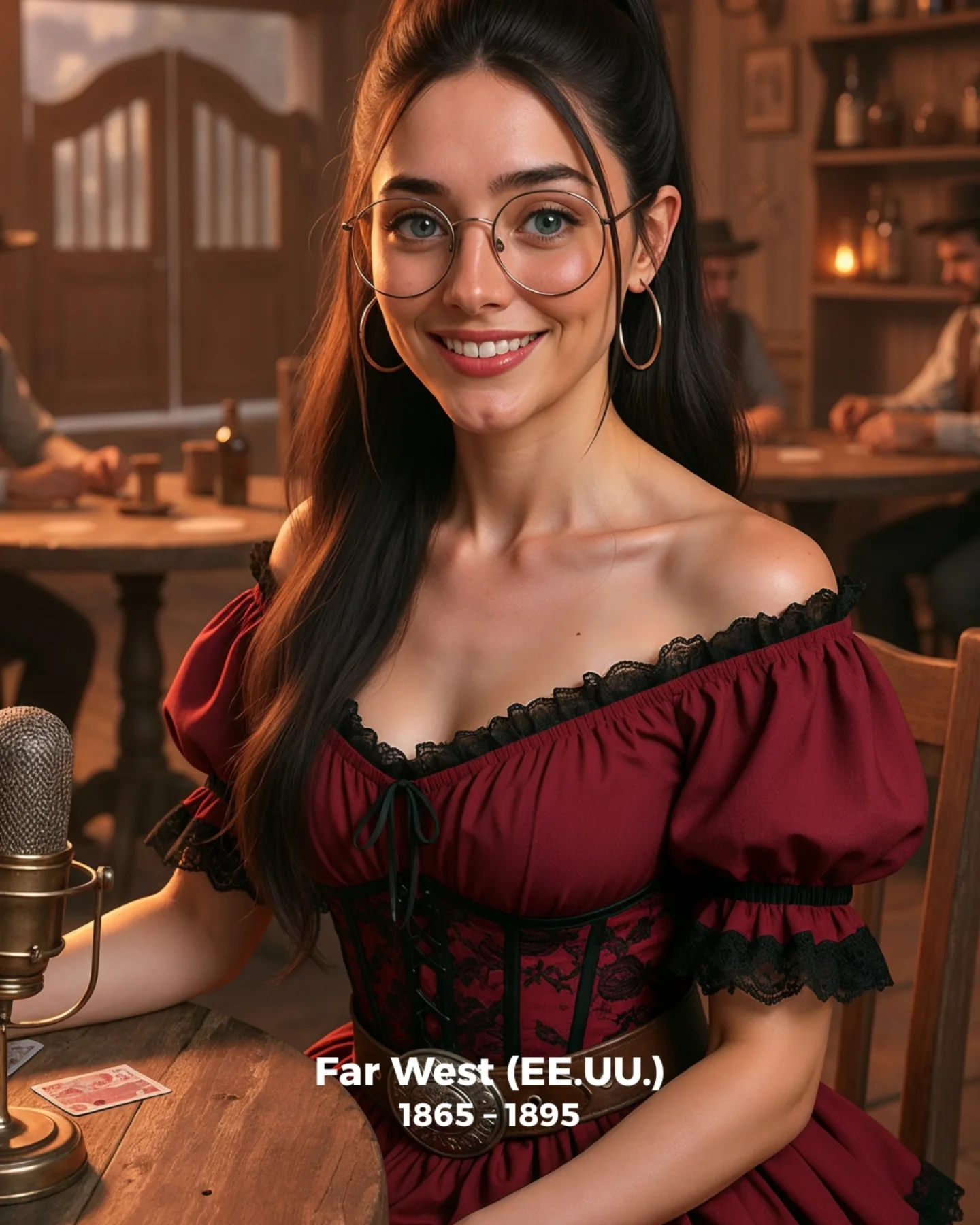
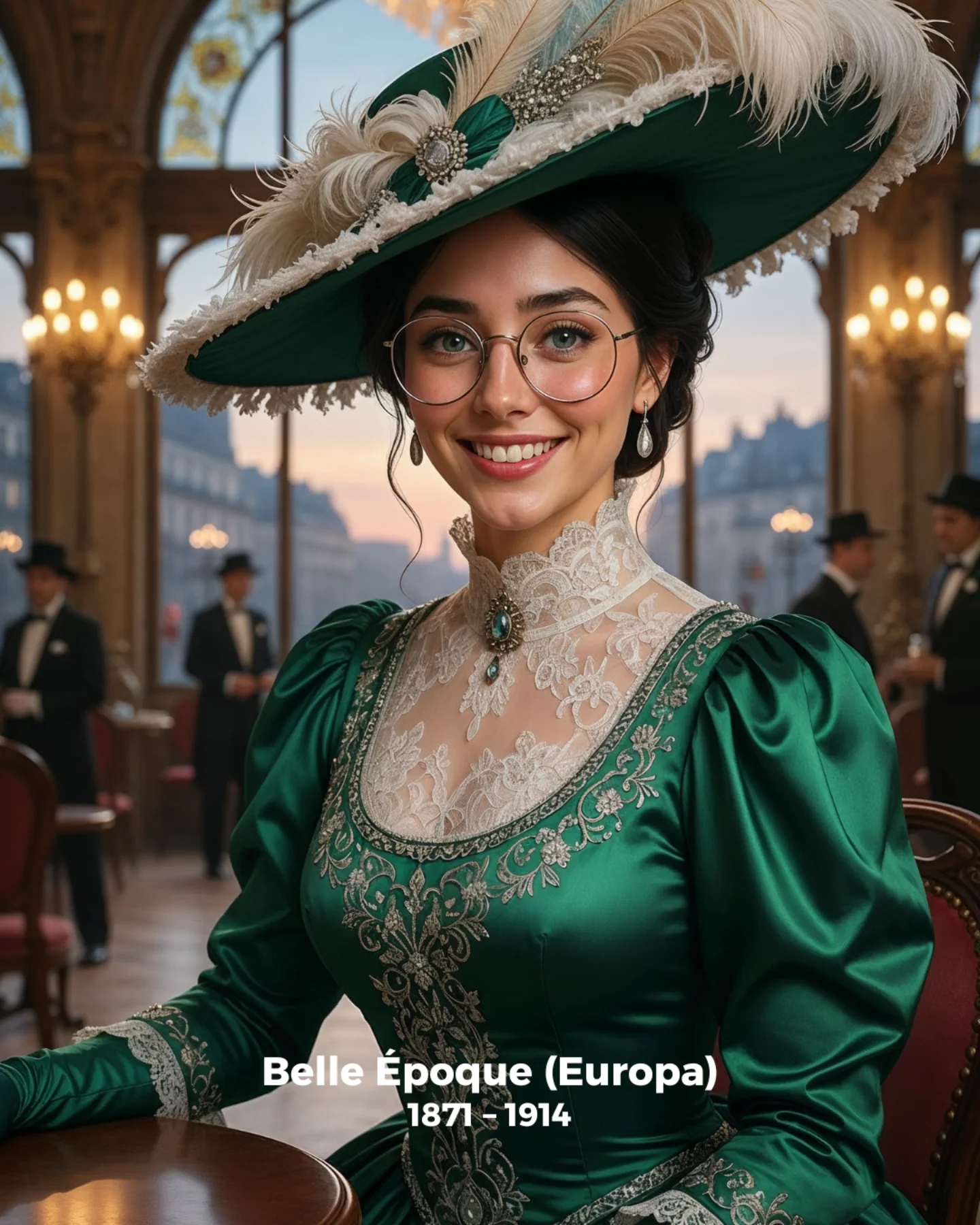
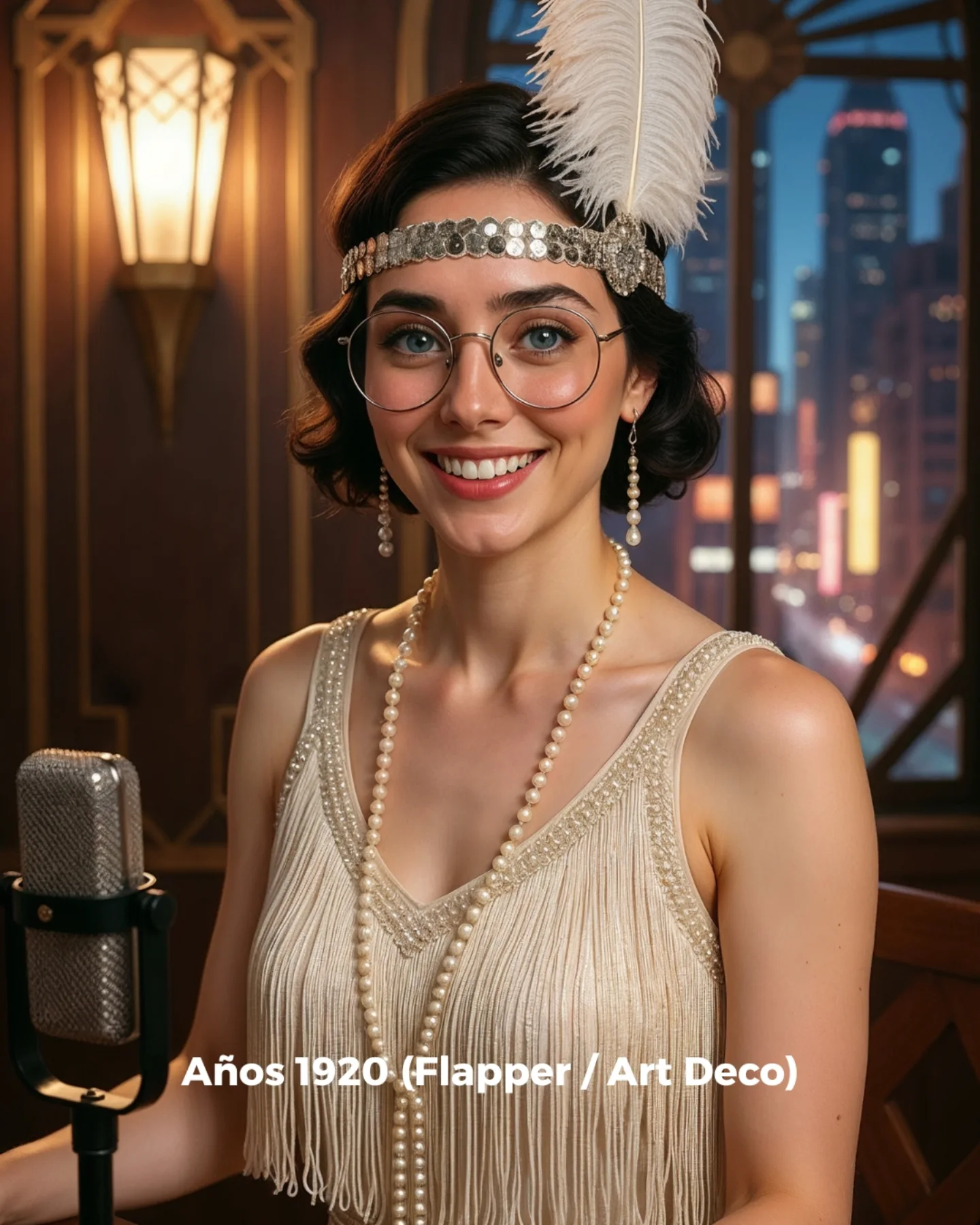
How soy_aria_cruz Made This Victorian Portrait AI
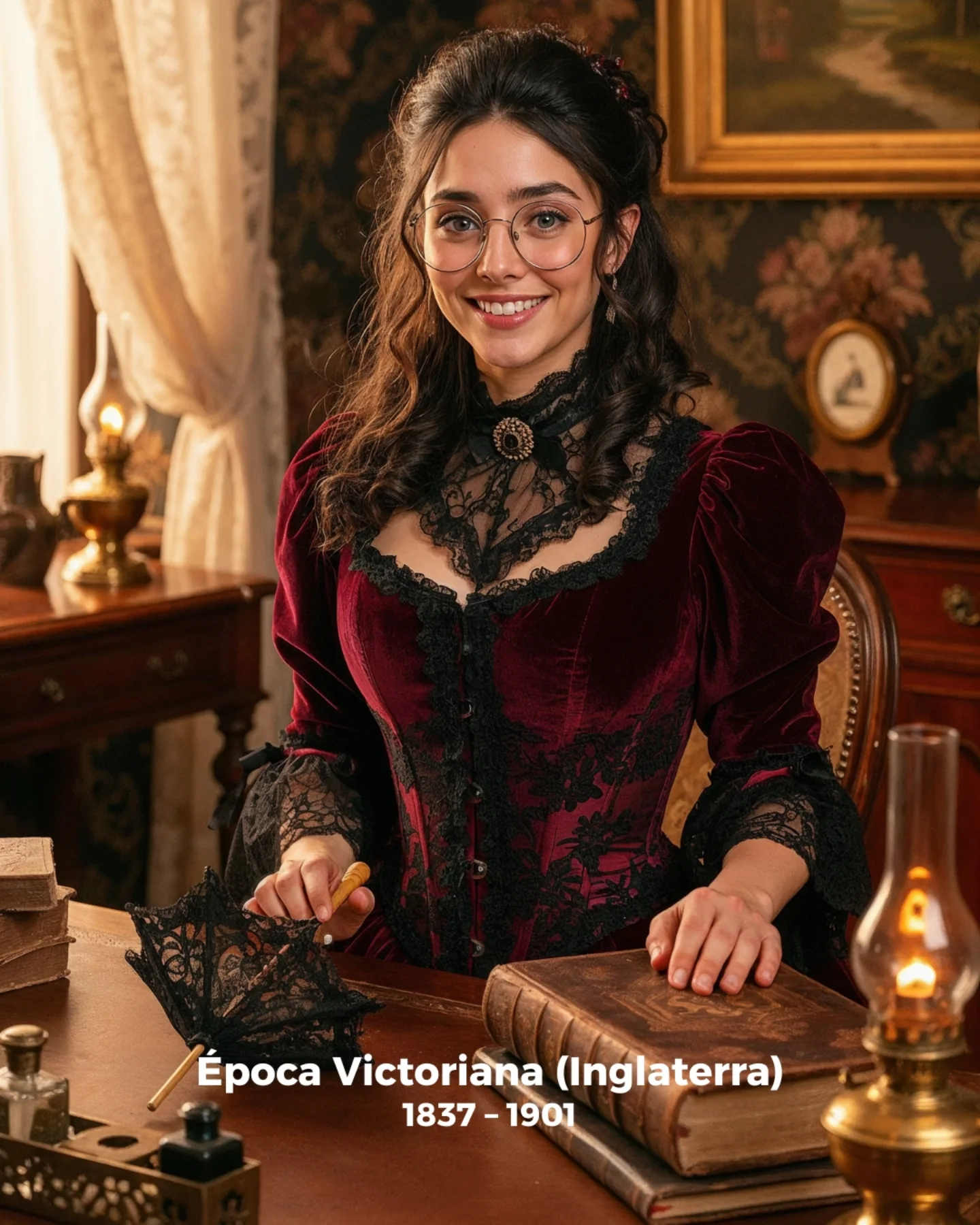
This image works because it understands that Victorian style is not only about clothing. The burgundy velvet dress and black lace are important, but the room is doing equal work: floral wallpaper, oil lamps, books, writing desk, and dark wood all reinforce the same historical language. That coherence is what makes the period readable quickly. Viewers do not need to decode the scene. They recognize it at a glance.
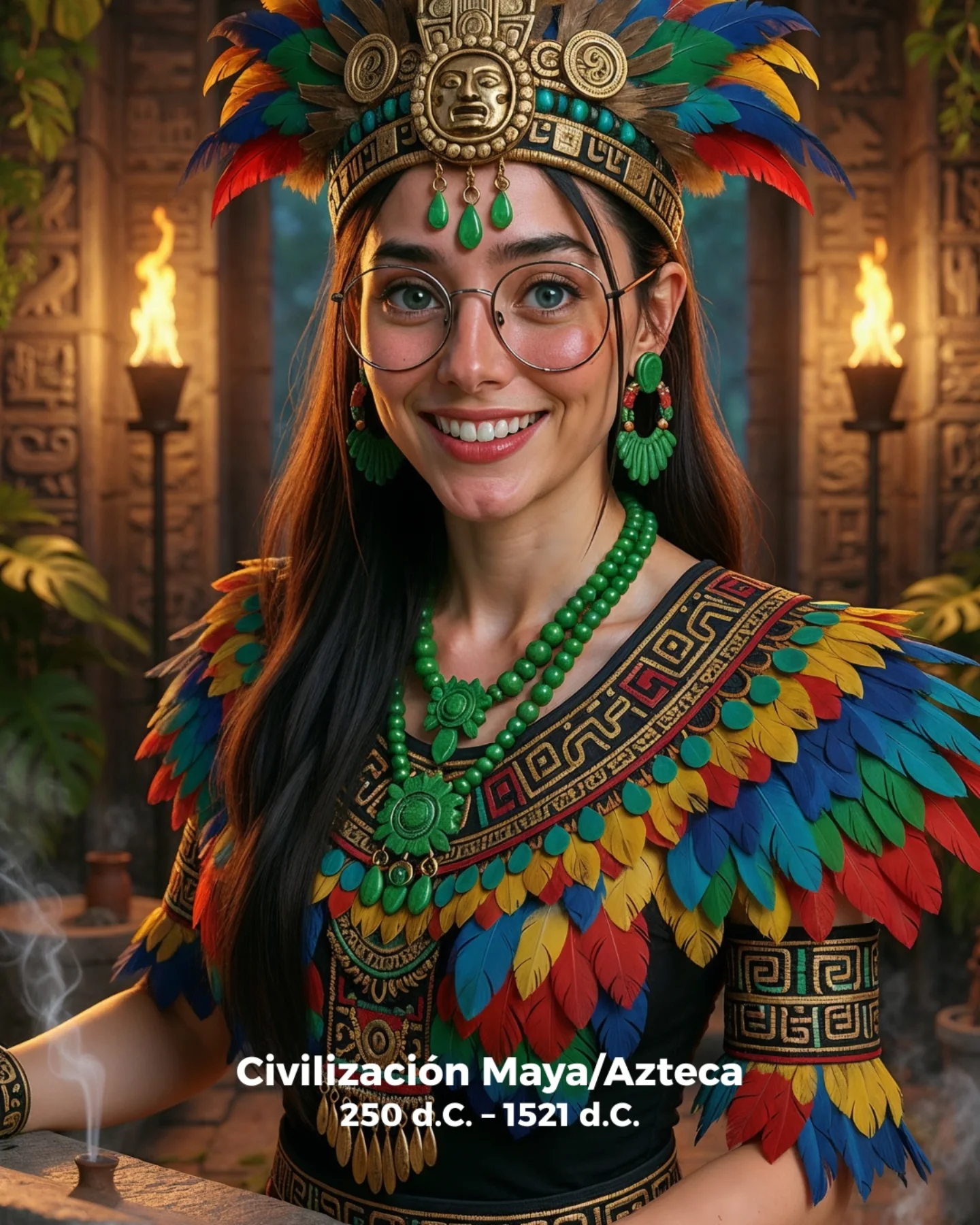
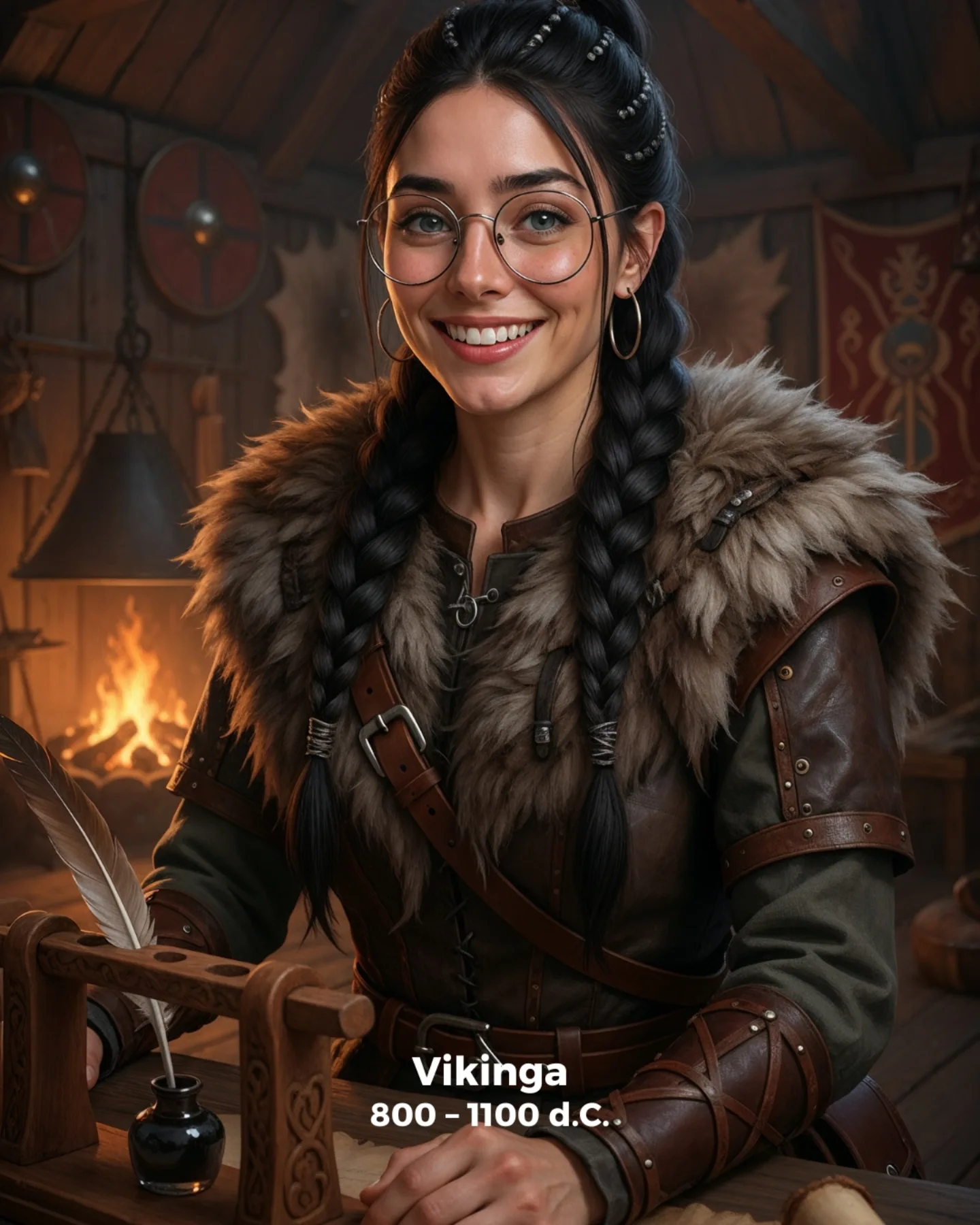
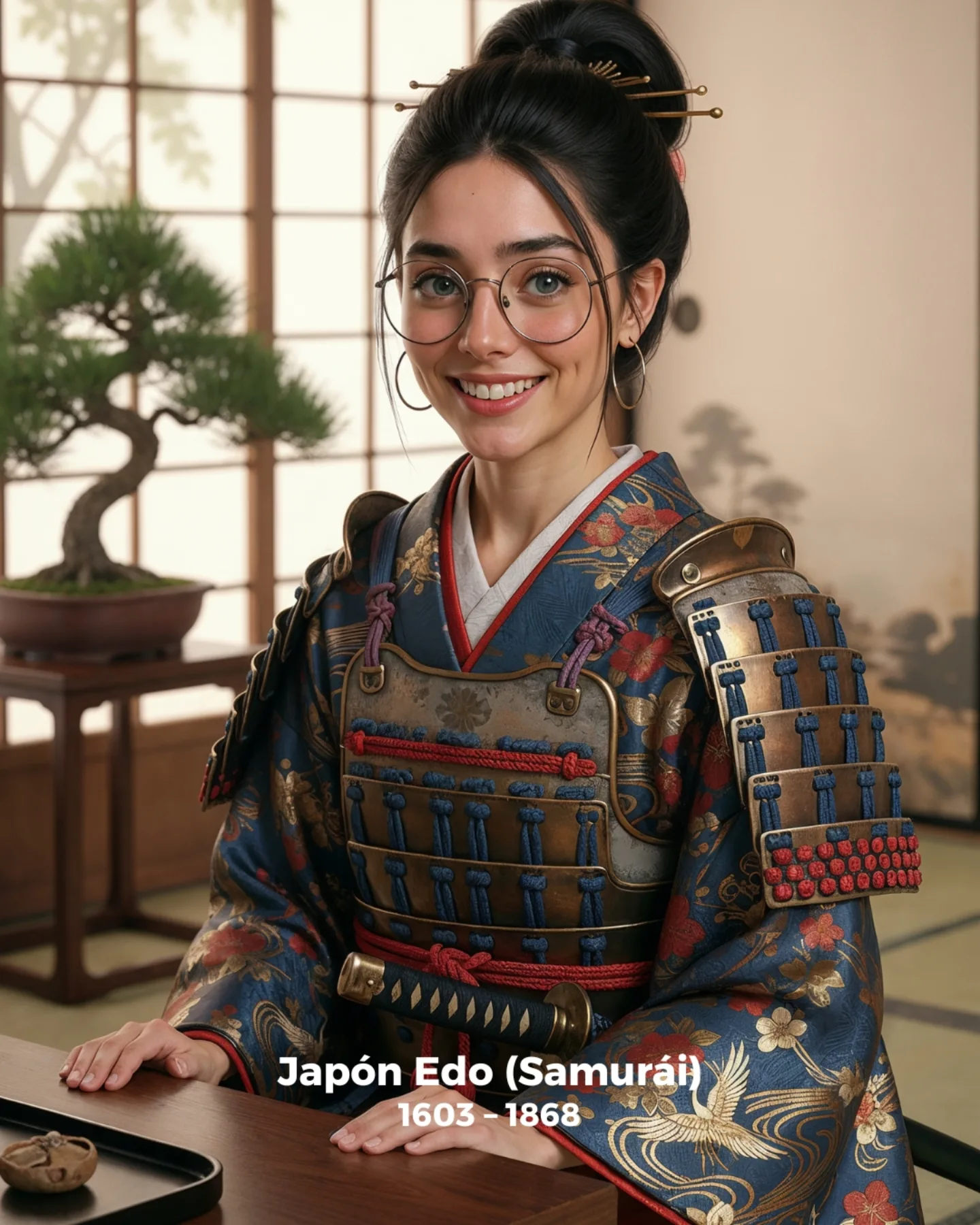
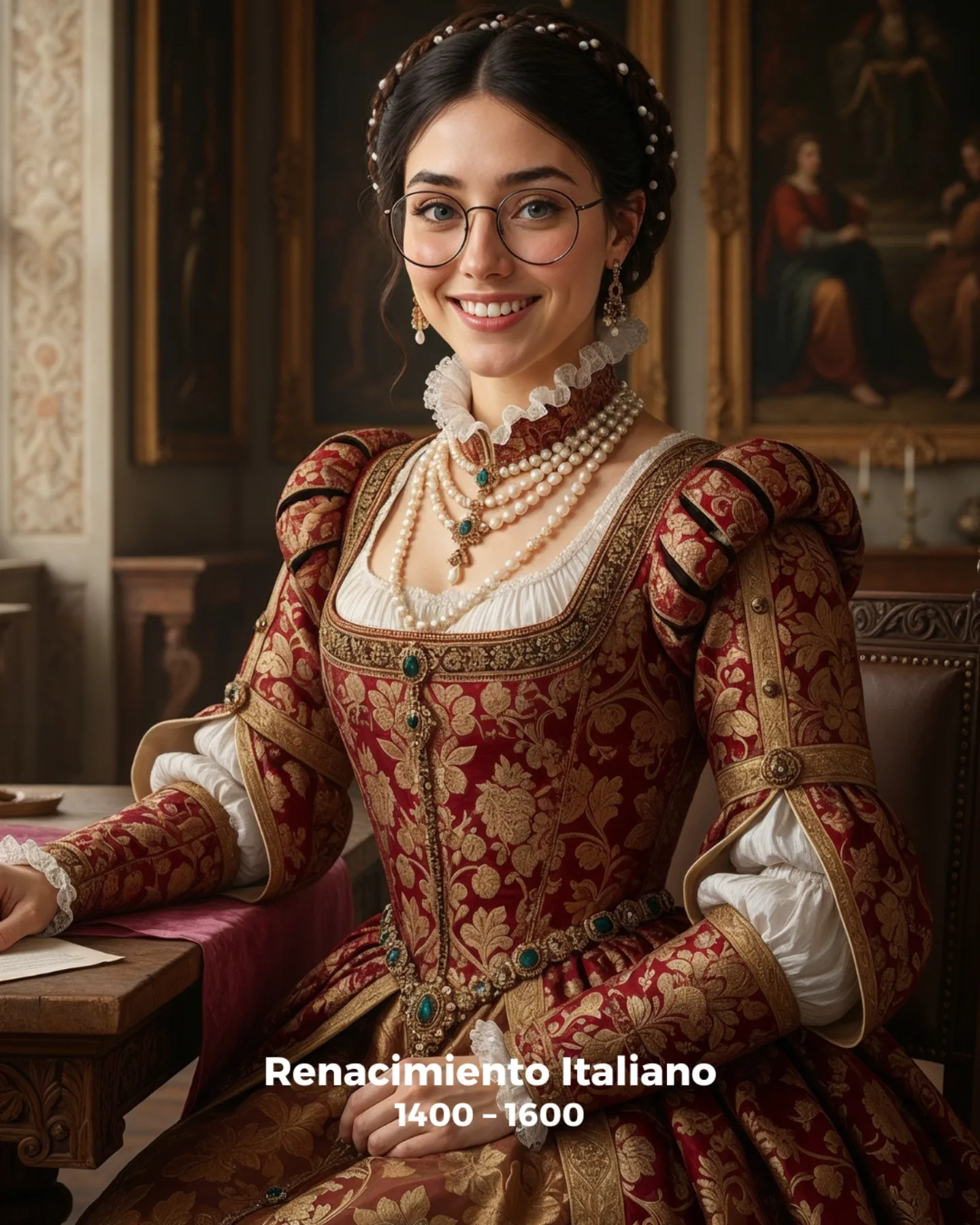
The portrait also benefits from staying personal. The subject still feels like the same creator moving through time, not a totally anonymous historical painting. The glasses and smile preserve identity while the costume and environment carry the century shift. That is exactly what makes a time-travel series compelling. It is not just about visiting another era. It is about keeping one person legible across many eras.
The desk setup adds a lot of value here. Instead of floating the costume in front of a decorative background, the image places the subject in a believable domestic-intellectual environment. Books, lamps, and writing tools make the portrait feel lived-in. That is a useful creator lesson: historical images get much stronger when objects imply a daily world, not just a look.
| Signal | Evidence (from this image) | Mechanism | Replication Action |
|---|
| Strong period cluster | Velvet dress, lace collar, oil lamps, antique books, floral wallpaper | Several aligned cues make the century obvious immediately | Use costume, furniture, and lighting from the same era instead of relying on wardrobe alone |
| Identity continuity | Glasses, smile, and recognizable facial structure remain stable | Keeps the creator consistent across the time-travel sequence | Preserve 2 to 3 personal anchors when changing historical styling |
| Readable timeline packaging | The image includes the era name and date range at the bottom | Turns the portrait into one chapter inside a larger historical journey | Add concise date labels when publishing multi-era transformations |
Best-fit use cases
- Historical era transformation series, because the period reads clearly and elegantly.
- Prompt libraries for nineteenth-century styling, because the room and wardrobe reinforce each other.
- Educational social content, because the date label encourages comparison across centuries.
- Creator identity-consistency demos, because the same face survives a rich costume shift.
Less ideal: strict museum reconstruction, modern lifestyle storytelling, or minimalist studio portraiture. This image is built for decorative historical worldbuilding.
To adapt the idea, keep the same recognizable face, keep one strong costume cluster, and keep an era-matching room. Then move forward or backward in time. The same format can become Edwardian, Belle Époque, Regency, or early twentieth-century salon imagery if each period gets its own furniture and textile language. Slot template: {same recognizable person} in {specific historical era} with {costume cluster} inside a {matching domestic interior} and a {timeline label}.
Aesthetic read
The image succeeds aesthetically because it balances warmth and density. Victorian interiors can become visually heavy very quickly, but here the warm lamps and clean centered pose keep the frame readable. The velvet and lace give the outfit richness, while the desk anchors the composition so the portrait still feels ordered. That is a useful lesson for historical content: when textures multiply, composition needs to stay calm.
The burgundy-and-black palette is especially effective because it feels period-appropriate without swallowing the face. The lamps add glow, the wallpaper adds depth, and the glasses keep the creator recognizable. That combination makes the portrait both decorative and personal.
| Observed | Why it matters |
|---|
| Burgundy velvet dress with black lace neckline | Gives immediate Victorian material and silhouette cues |
| Oil lamps and dark wood desk | Create a believable period domestic atmosphere |
| Books, bottles, and writing tools | Add lived-in historical context beyond costume |
| Floral wallpaper and framed art | Support the interior’s cultural era language |
| Bottom era label with dates | Anchor the image inside a chronological series |
Prompt technique breakdown
| Prompt chunk | What it controls | Swap ideas (EN, 2–3 options) |
|---|
| same woman identity with glasses and stable smile | Series continuity | same face with signature earrings, same identity with braid, same expression with period hair |
| Victorian velvet dress, lace collar, puff sleeves | Period wardrobe coding | Edwardian blouse and skirt, Regency empire dress, Belle Époque evening gown |
| oil lamps, desk, books, wallpaper, framed art | Domestic historical environment | study room, parlor, writing salon |
| warm interior lamplight | Mood and material richness | candlelit room, softer daylight parlor, darker library glow |
| bottom era label and date range | Timeline packaging | museum-card footer, period badge, year caption line |
How to iterate without losing the core
Lock these three things first: the recognizable face, the period wardrobe cluster, and the era-matching desk interior. Those are the time-travel anchors. Then change only one or two variables per run.
- Baseline run: keep the Victorian room and outfit aligned until the era reads instantly.
- Second run: keep the same identity and label structure but test adjacent periods to compare how clearly each one codes.
- Third run: keep Victorian styling fixed and vary the room from study to parlor or hallway portrait.
- Fourth run: assemble a multi-century set and compare which interiors best preserve both history and identity.
If the portrait starts feeling generic, the first thing to inspect is usually whether the room objects still belong to the same century as the dress. Historical images lose strength when the environment stops reinforcing the costume.