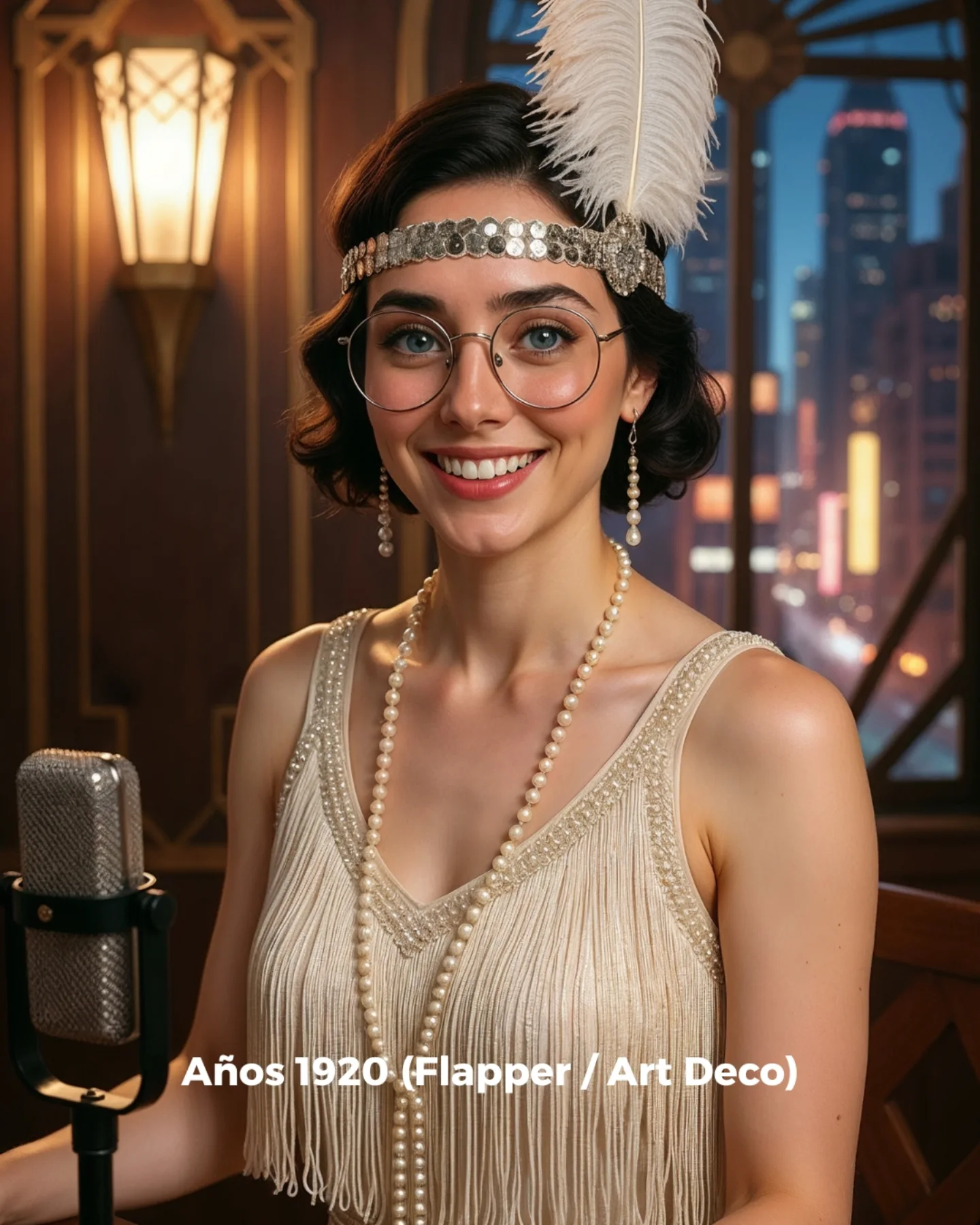
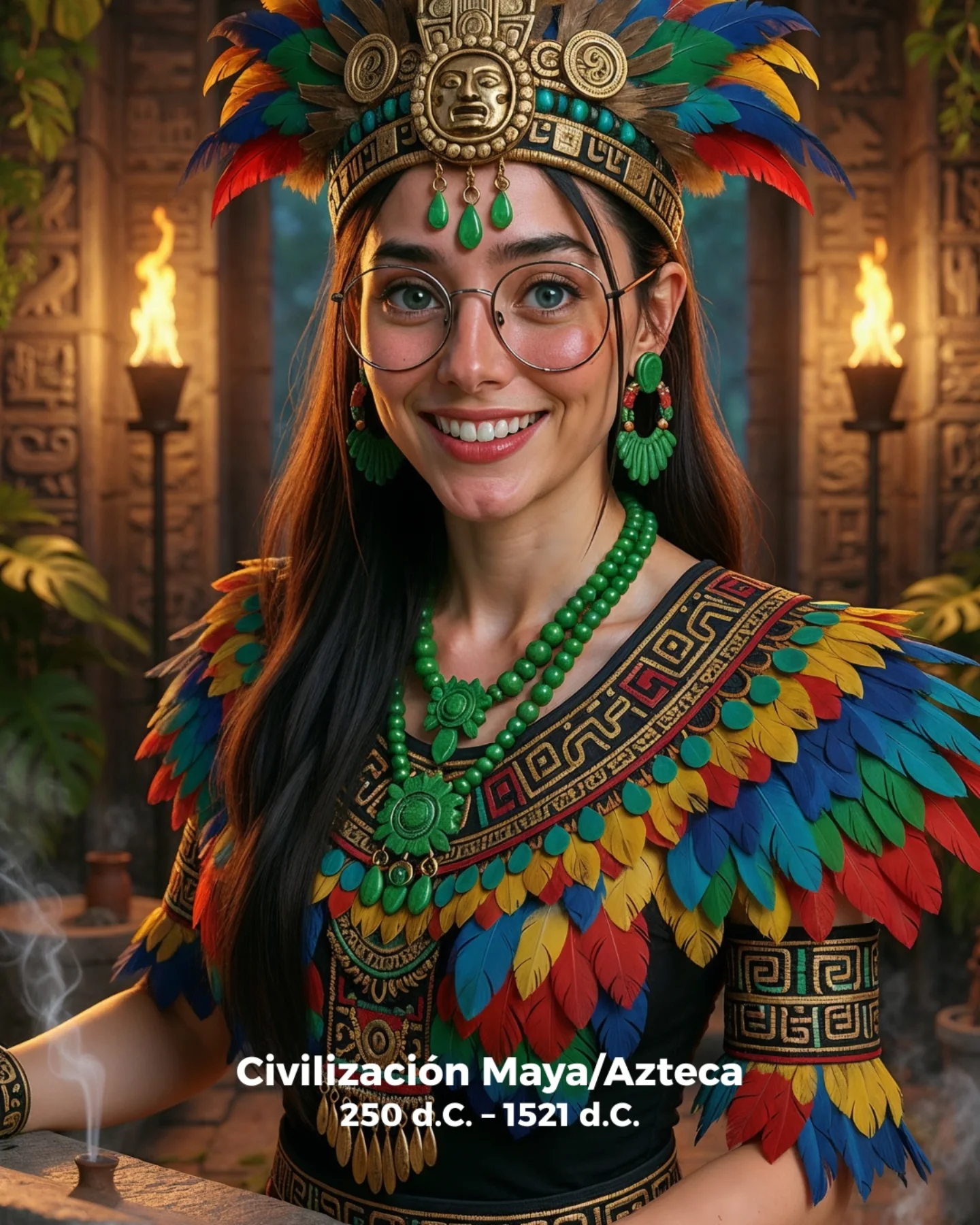
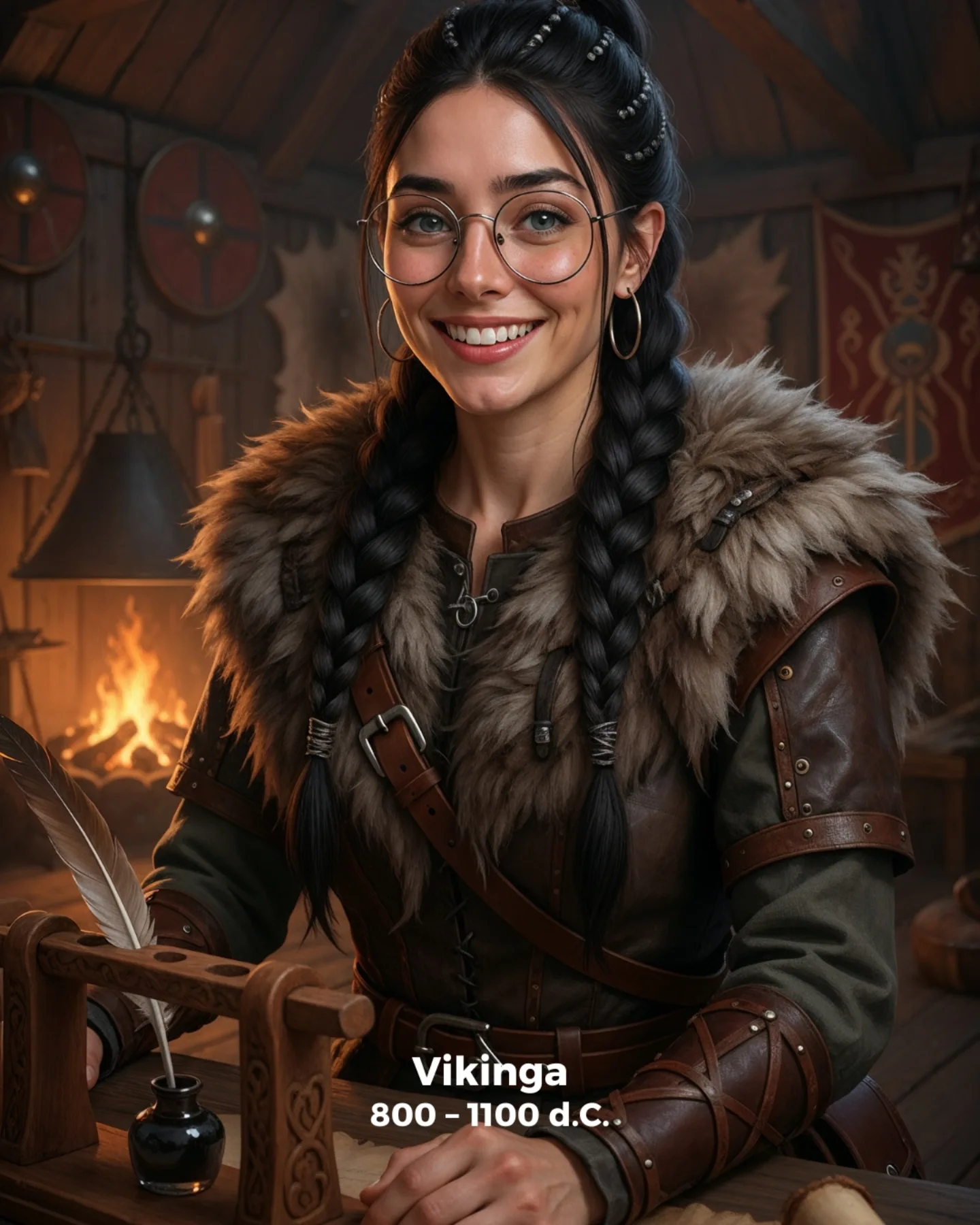
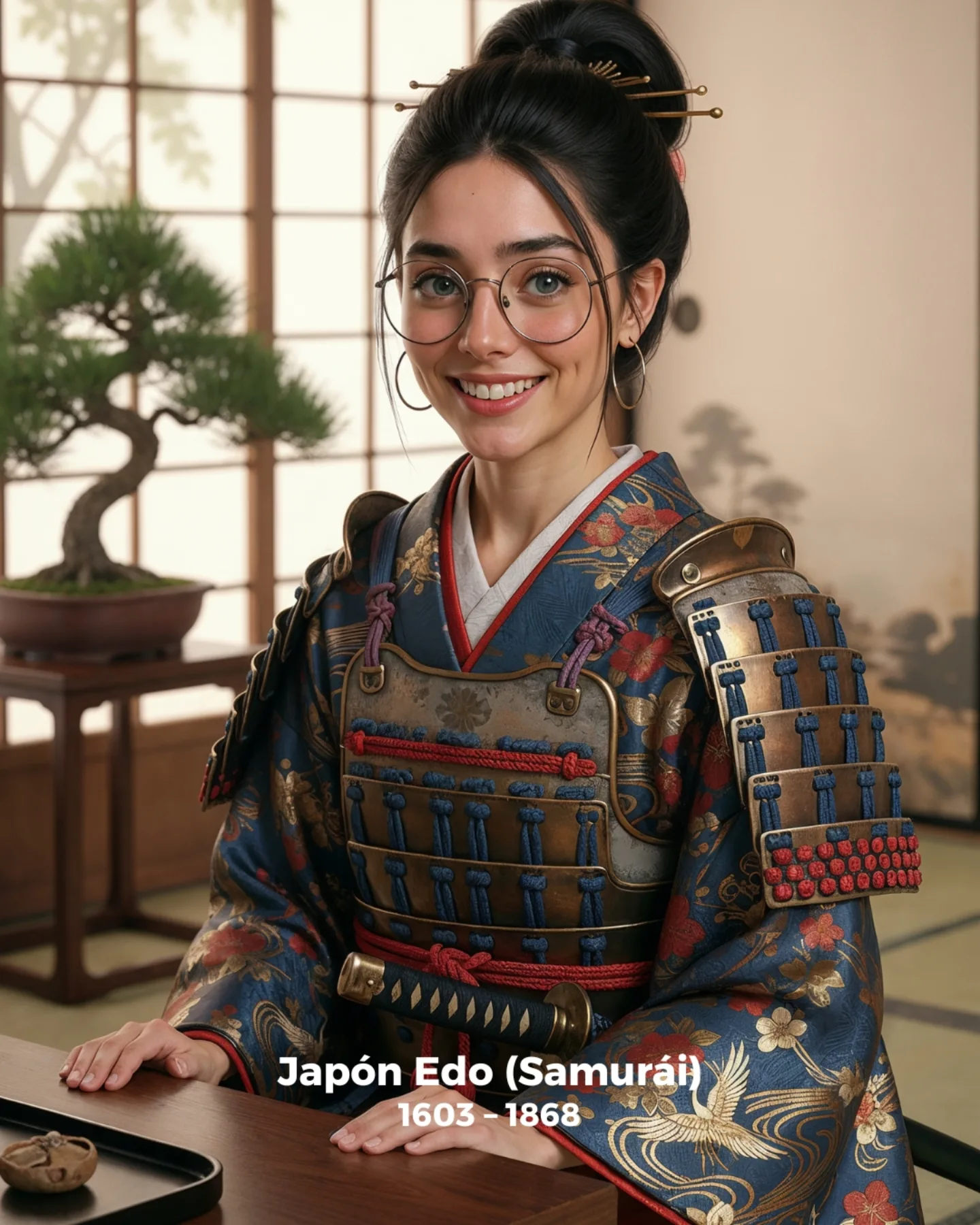
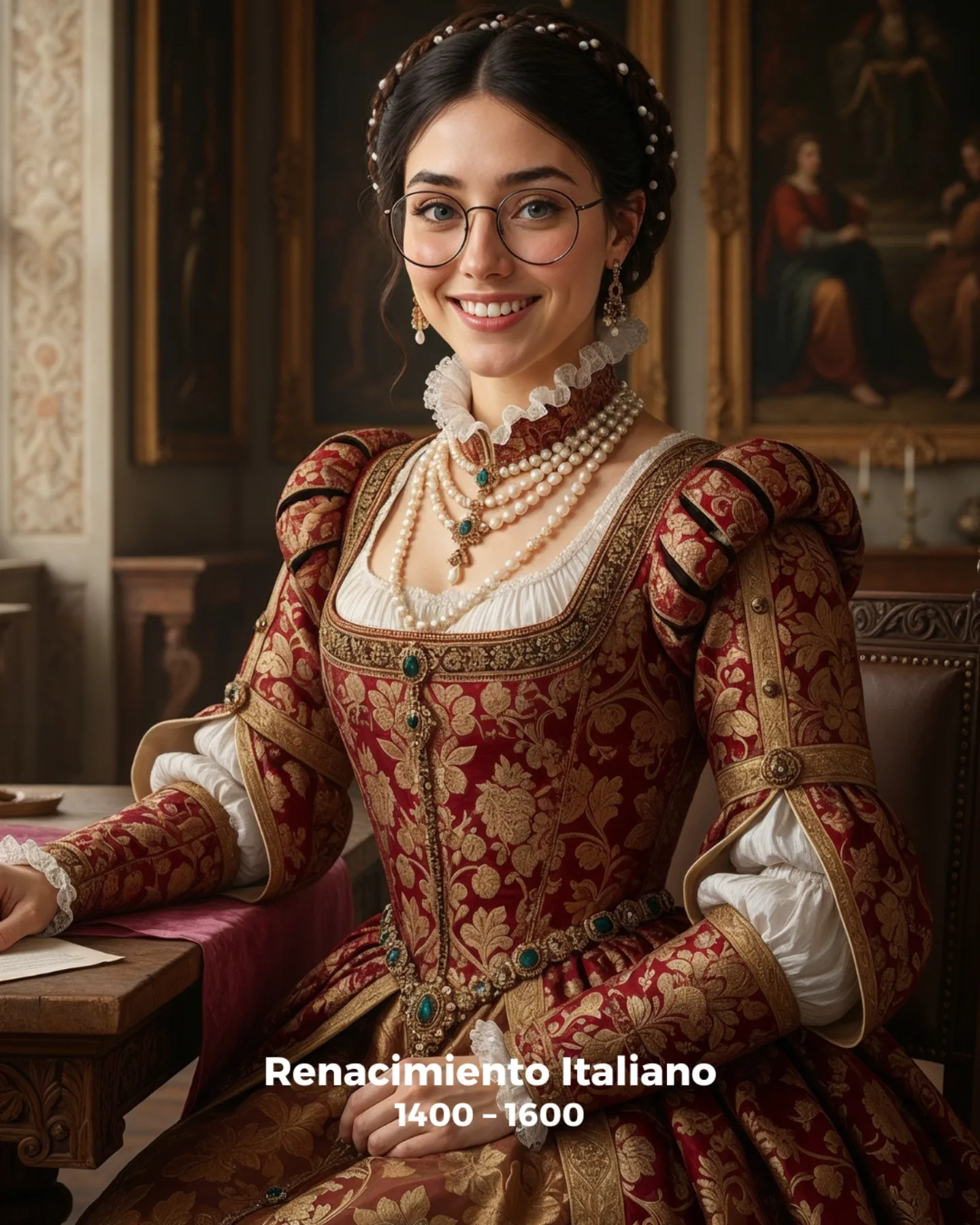
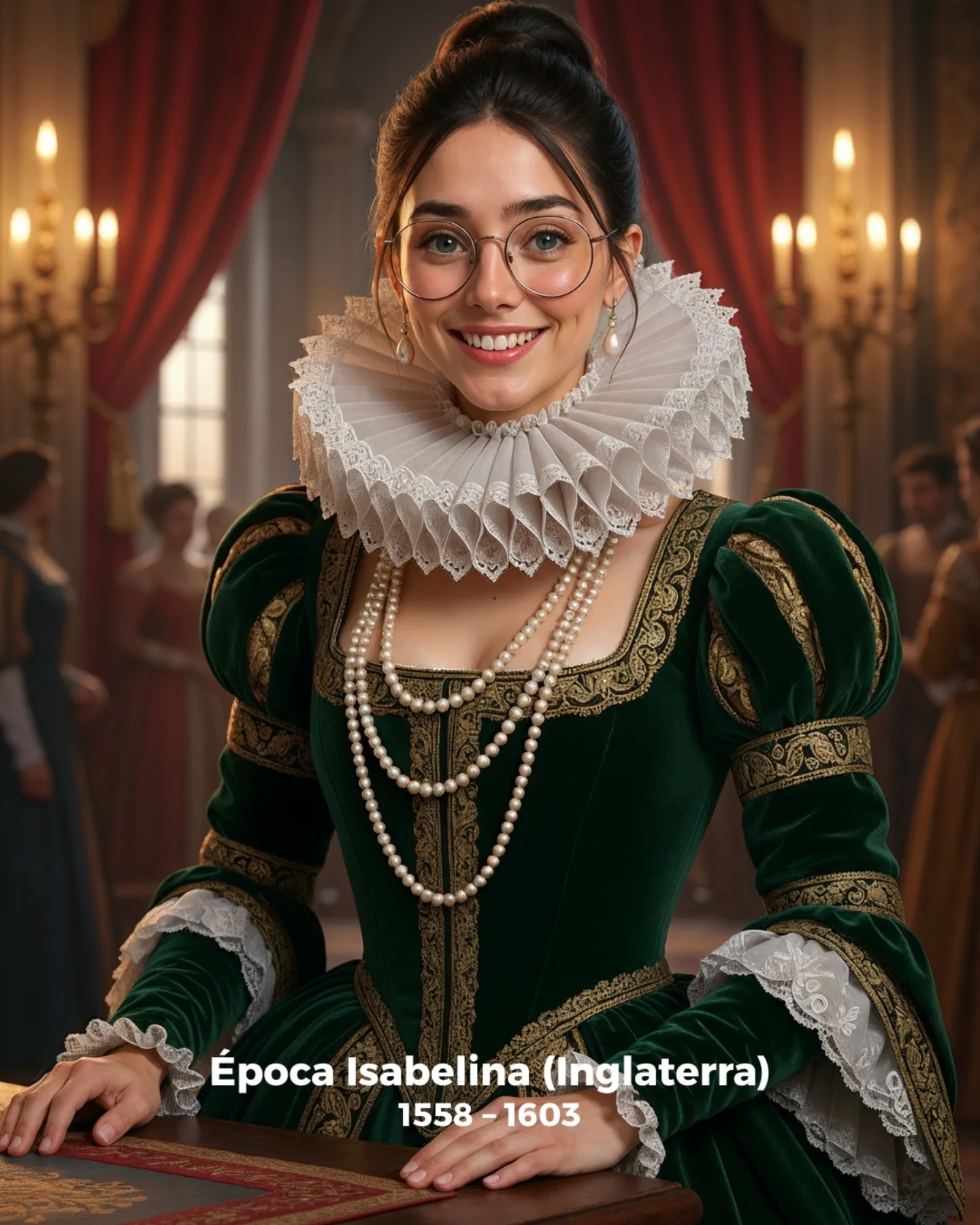
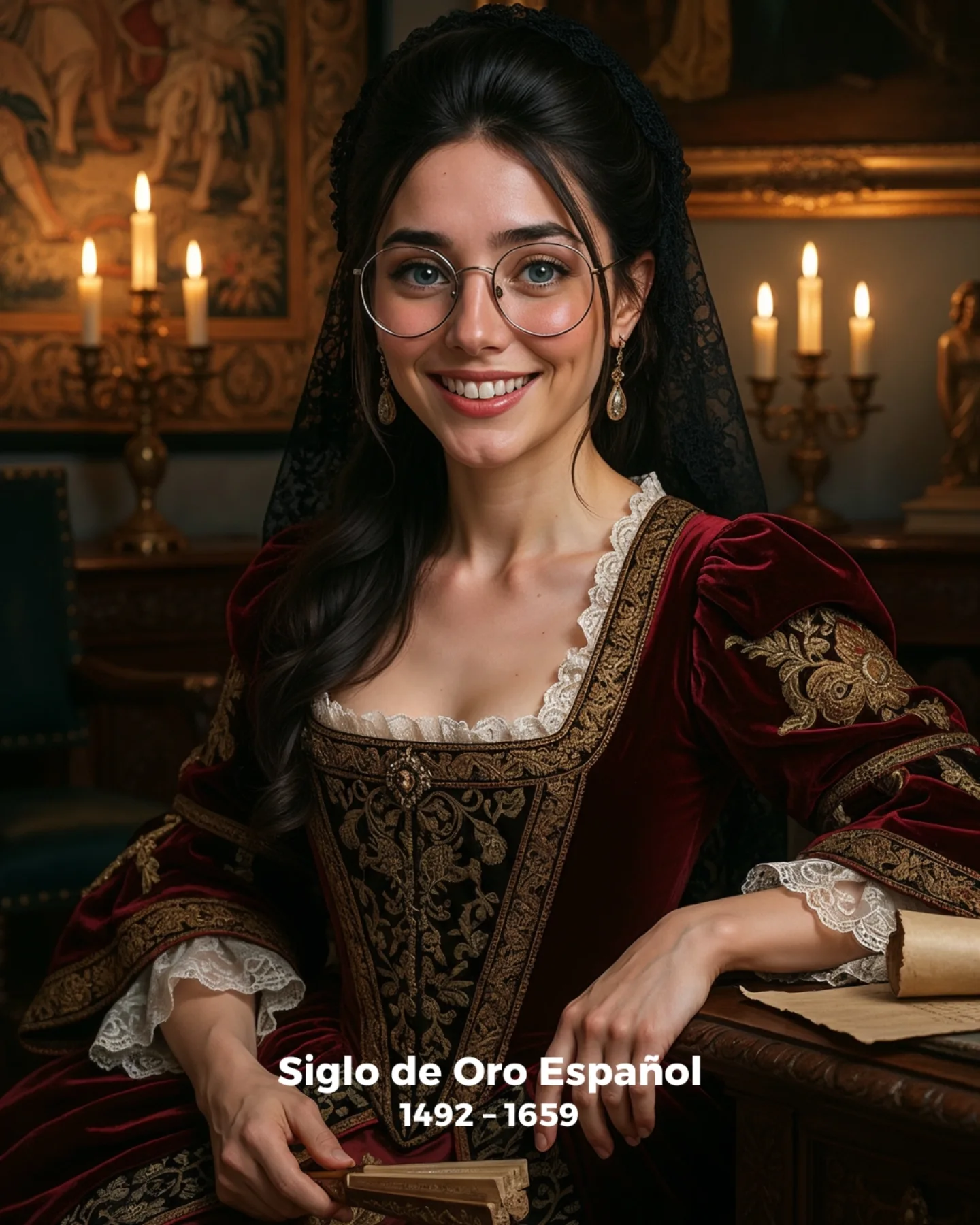
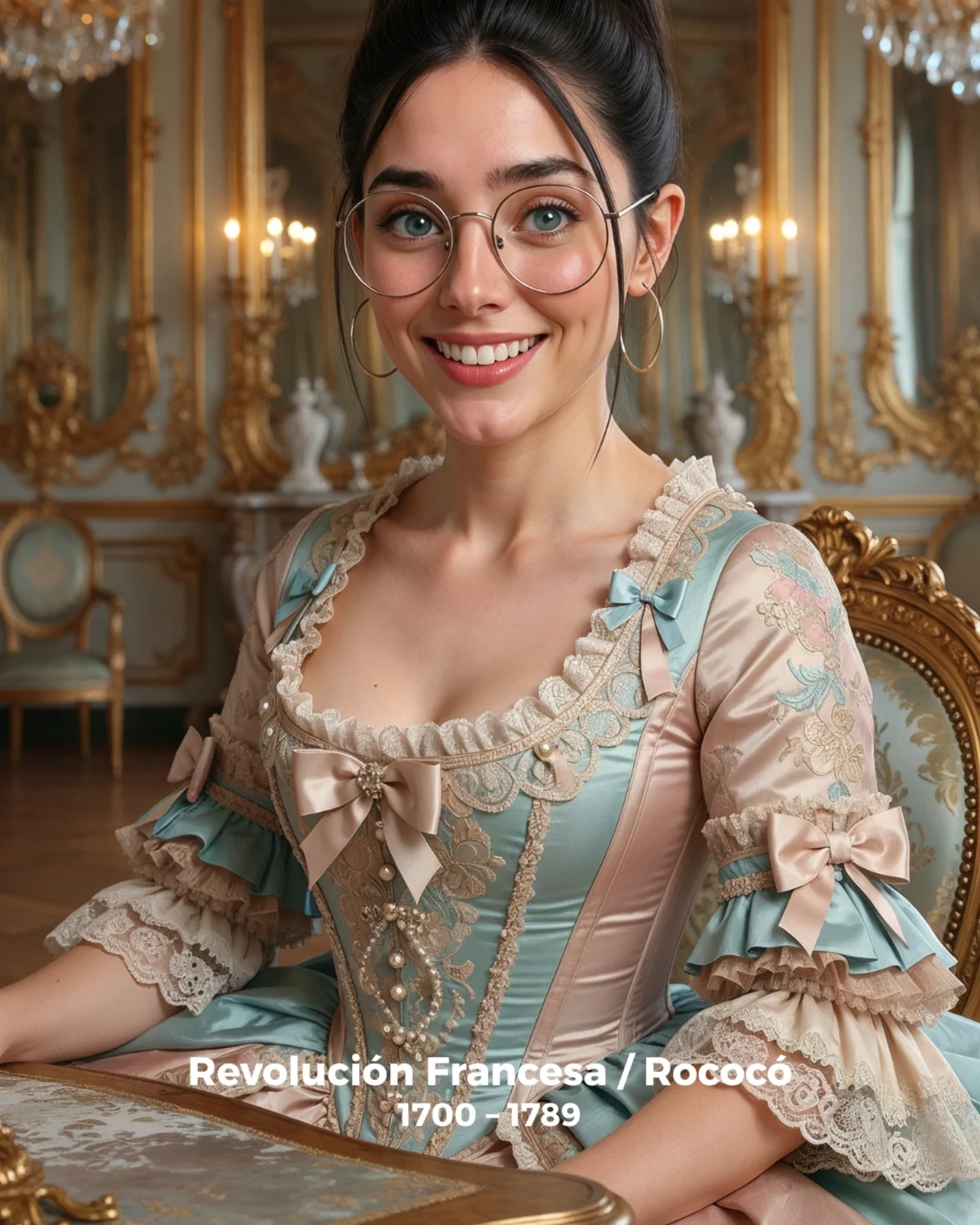
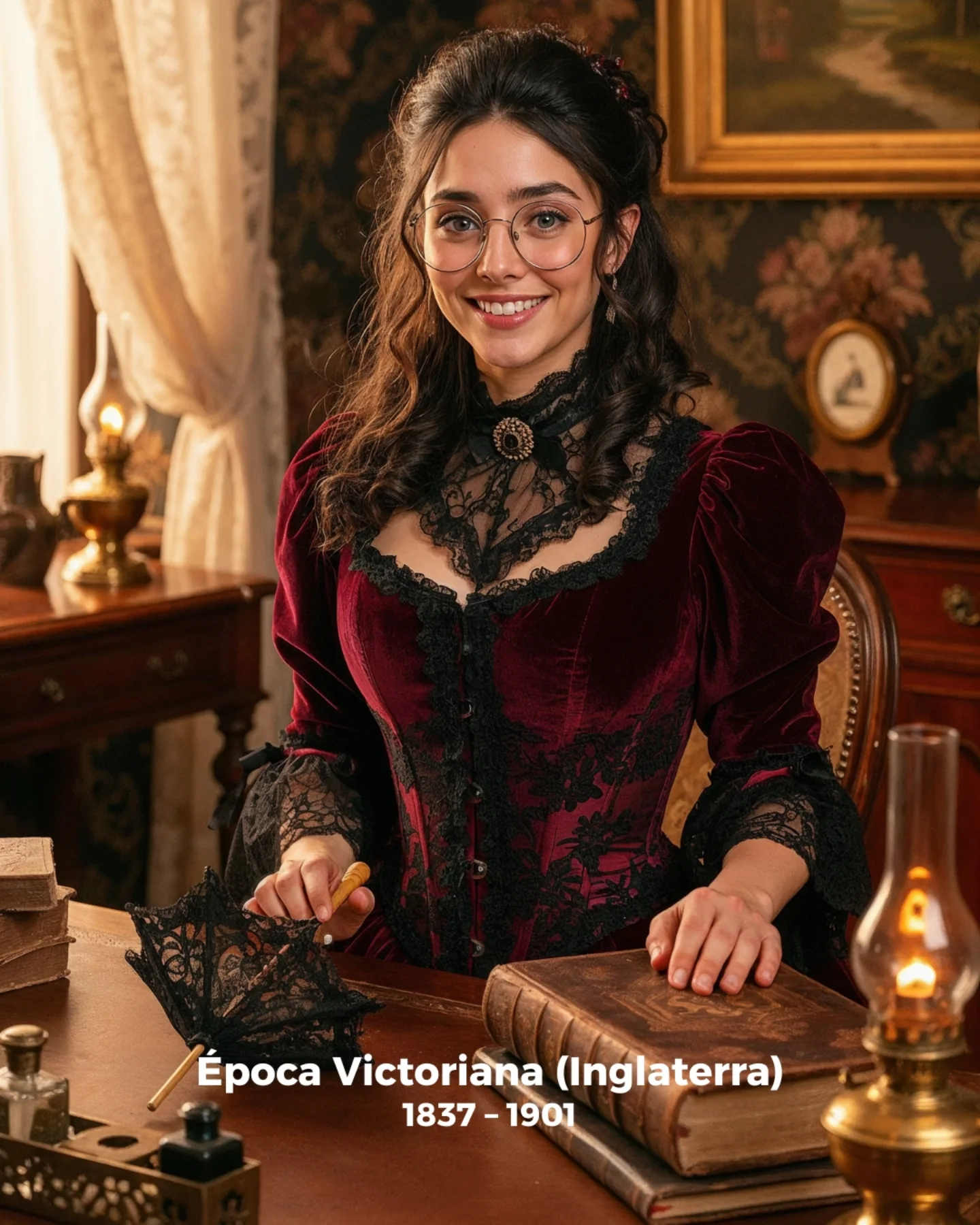
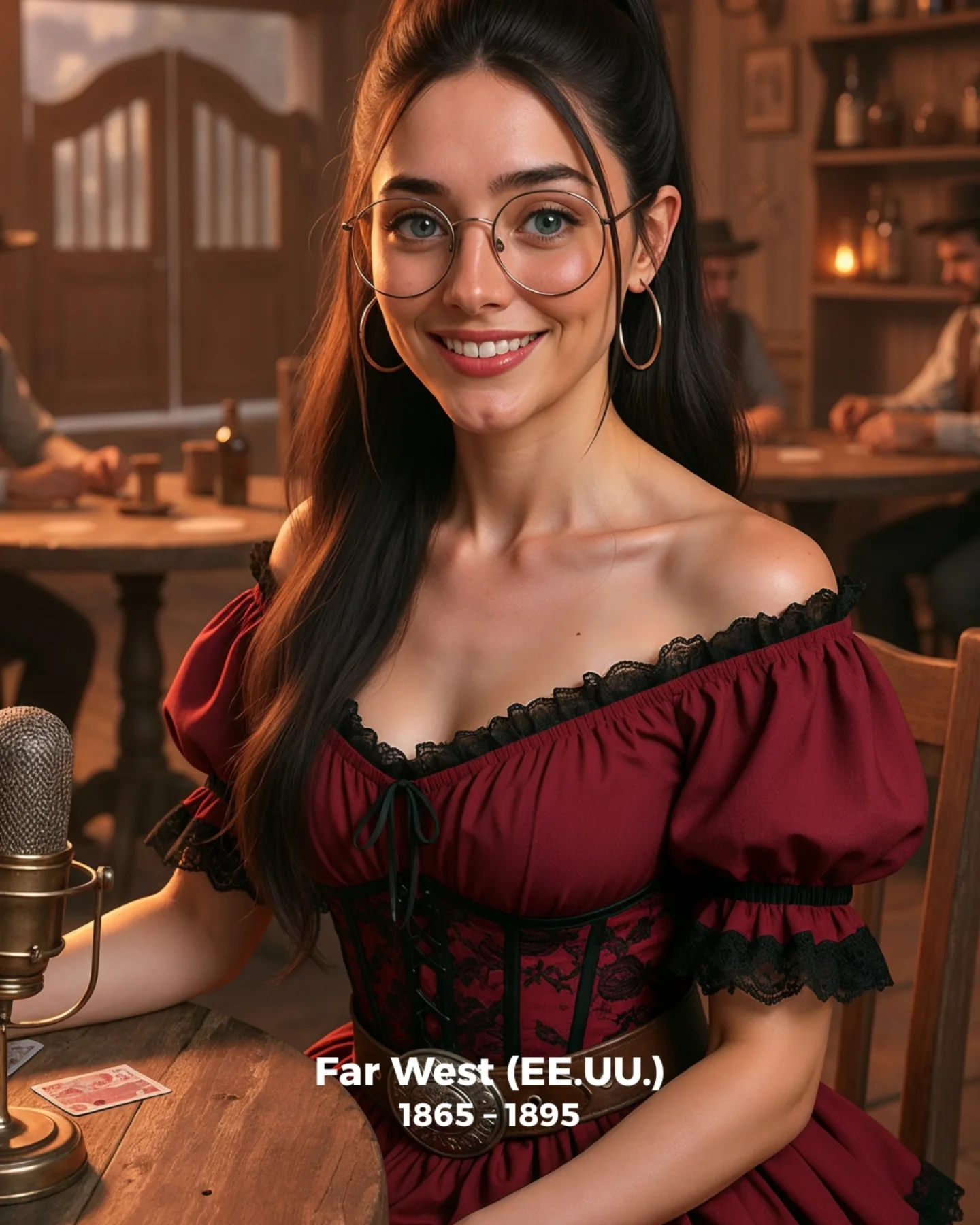
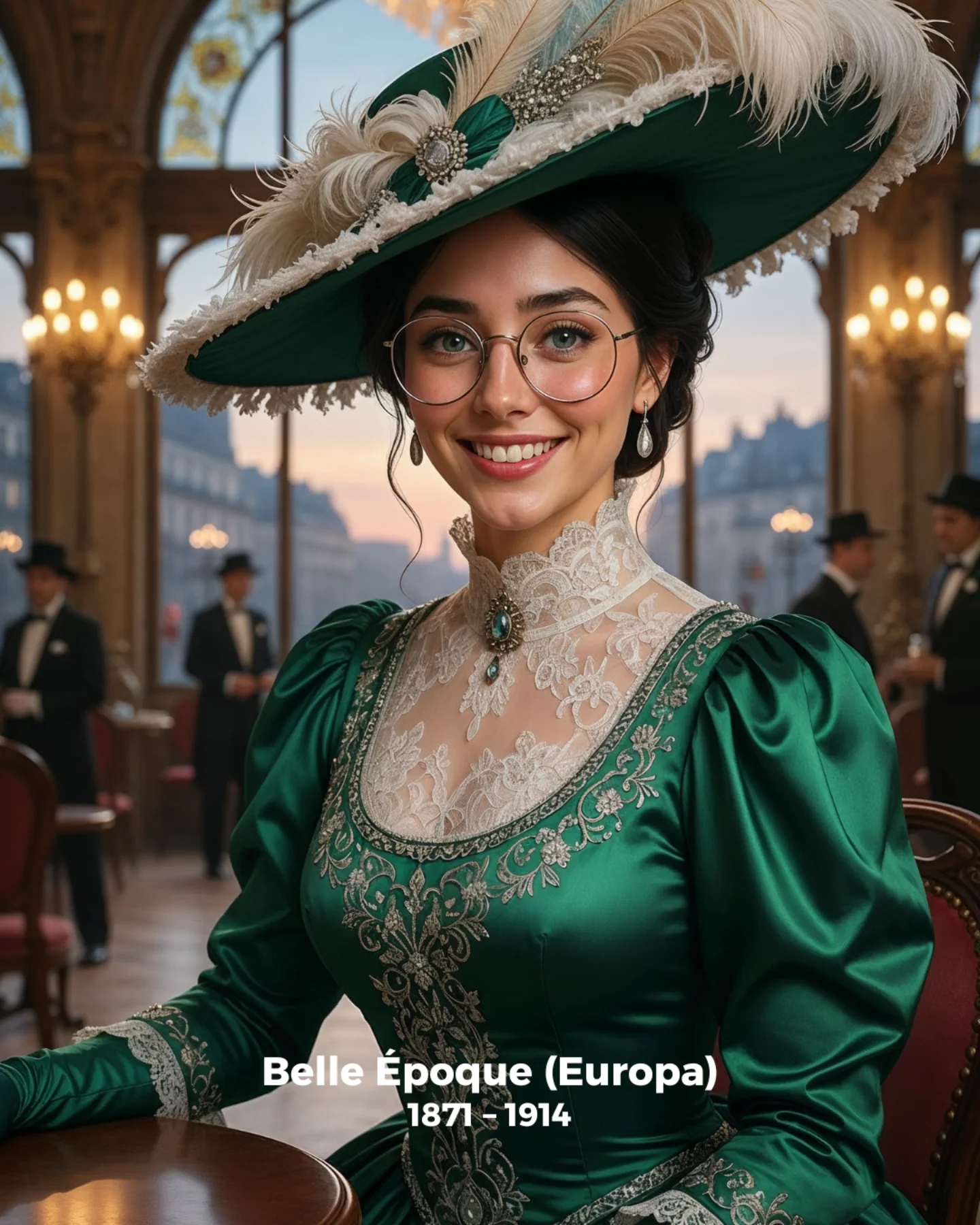
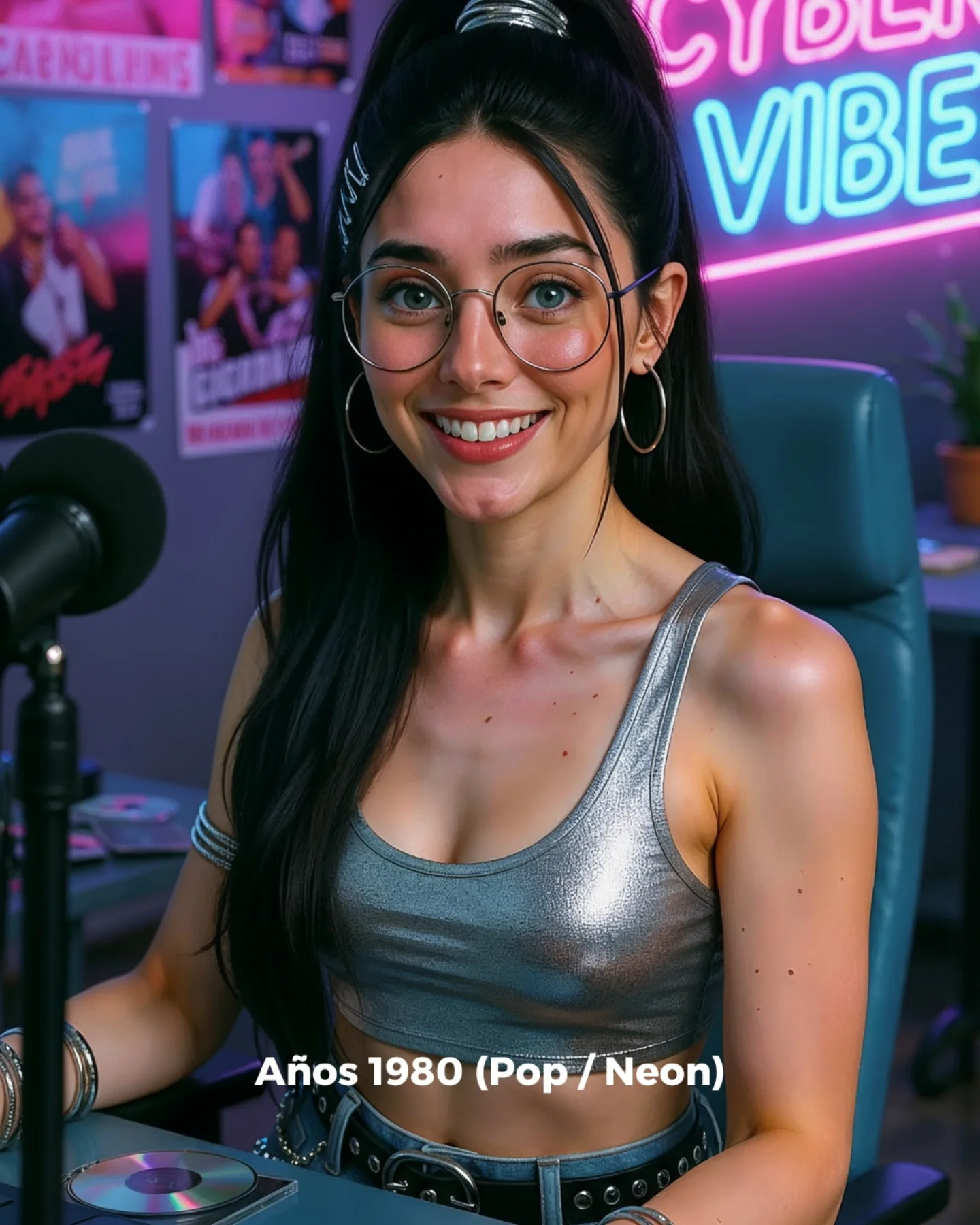
This prompt works especially well because the 1920s are instantly recognizable through silhouette and ornament. Fringe, pearls, feathered headpieces, and Art Deco interiors communicate the era almost immediately. That makes the image highly effective for a “same character across different historical periods” concept, because the viewer understands the transformation in seconds.
The portrait also benefits from the performance context. The microphone and city-at-night backdrop suggest cabaret, radio, and metropolitan glamour without requiring a crowded scene. This adds narrative depth while keeping the image clean enough to work as a single historical card in a series.
How soy_aria_cruz Made This 1920s Flapper Art Deco AI Portrait and How to Recreate It
| Element |
Why It Matters |
| Fringe dress and pearls |
Immediately establish flapper fashion and the decorative richness of the era. |
| Feathered jeweled headband |
Acts as the strongest visual shorthand for 1920s nightlife glamour. |
| Vintage microphone |
Adds a period-specific narrative cue tied to performance and broadcasting culture. |
| Art Deco room geometry |
Grounds the image in a recognizable design language beyond clothing alone. |
| Era label at the bottom |
Makes the portrait function clearly as one educational or collectible panel in a series. |
Best Use Cases
Use this structure for time-travel portrait series, history-themed creator carousels, AI makeover timelines, or educational visuals that reinterpret one recurring face across multiple centuries. It is especially effective when you want the result to feel glamorous and shareable rather than strictly academic.
Visual Anchors To Preserve
| Anchor |
Why It Matters |
| Short waved bob |
Defines the flapper silhouette and distinguishes the era immediately. |
| Long pearl necklace |
Adds elegance and supports the 1920s identity without cluttering the frame. |
| Fringe bodice texture |
Creates movement and richness even in a static portrait. |
| Night city window |
Supports the metropolitan Art Deco atmosphere and gives the background depth. |
| Warm golden lamp light |
Enhances the luxurious mood and flatters the costume materials. |
Prompt Writing Tips
For 1920s prompts, focus on materials and accessories more than generic words like “vintage” or “glamorous.” Fringe, pearls, metallic headbands, feathers, and geometric interiors are what really anchor the period. If you want the image to feel like a series card, include a strong label and keep the composition centered and orderly.
Common Mistakes To Avoid
| Mistake |
What Goes Wrong |
| Hair too modern or too long |
The flapper identity becomes less convincing immediately. |
| Background without Art Deco cues |
The image may read as generic “old glamour” instead of a specific 1920s setting. |
| No performance or nightlife signal |
The portrait loses some of the cultural richness associated with the era. |
| Overloading the frame with props |
The subject gets lost and the card feels less elegant. |
| Era text too loud |
The image becomes graphic-heavy and less timeless in appearance. |
Final Takeaway
This prompt is strong because the 1920s give you instantly readable glamour through texture, shape, and atmosphere. The fringe dress, pearls, feathered headpiece, microphone, and warm Art Deco interior all work together to create a refined historical portrait with clear identity. If you want a standout era card in a multi-period series, this structure is highly reliable.