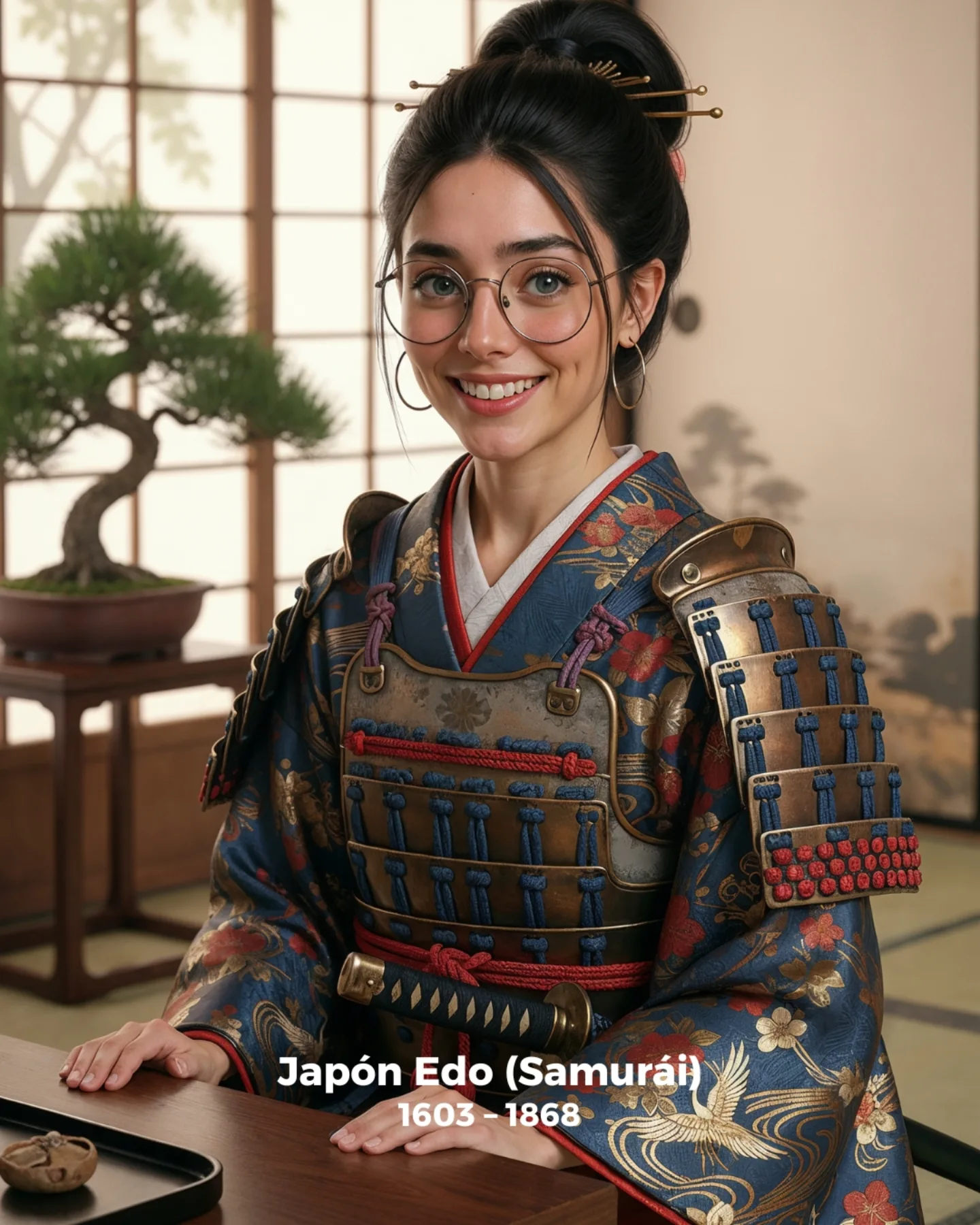
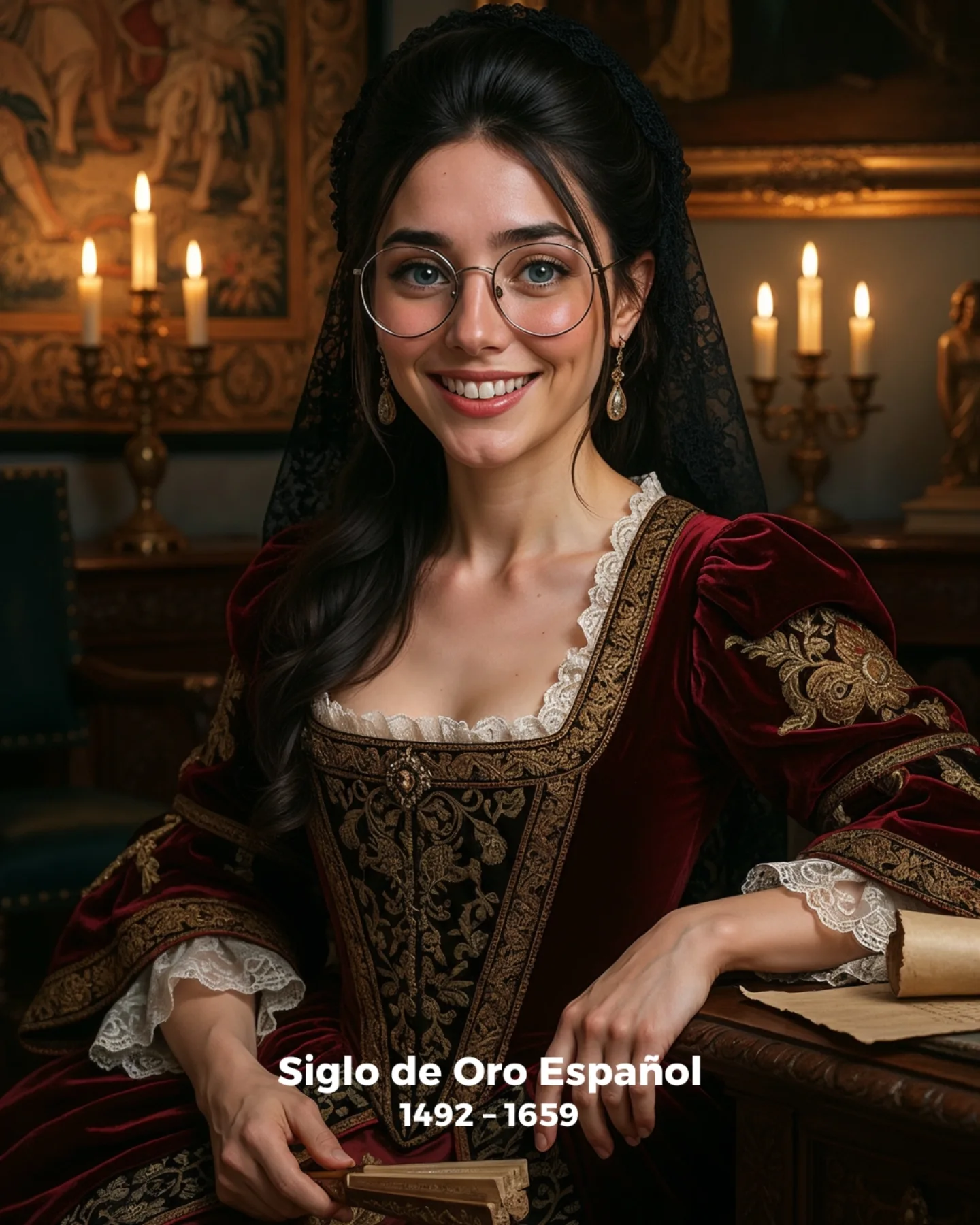
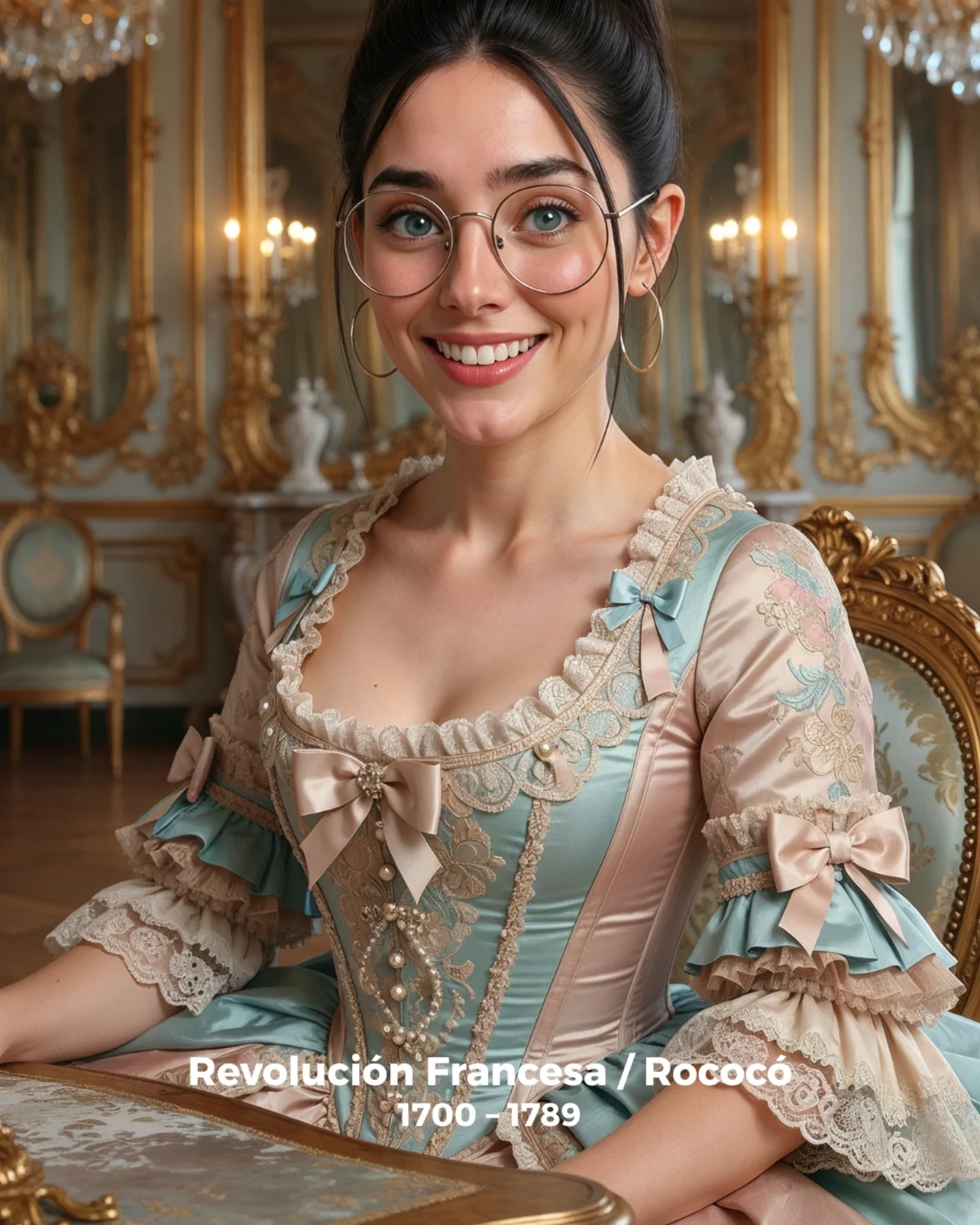
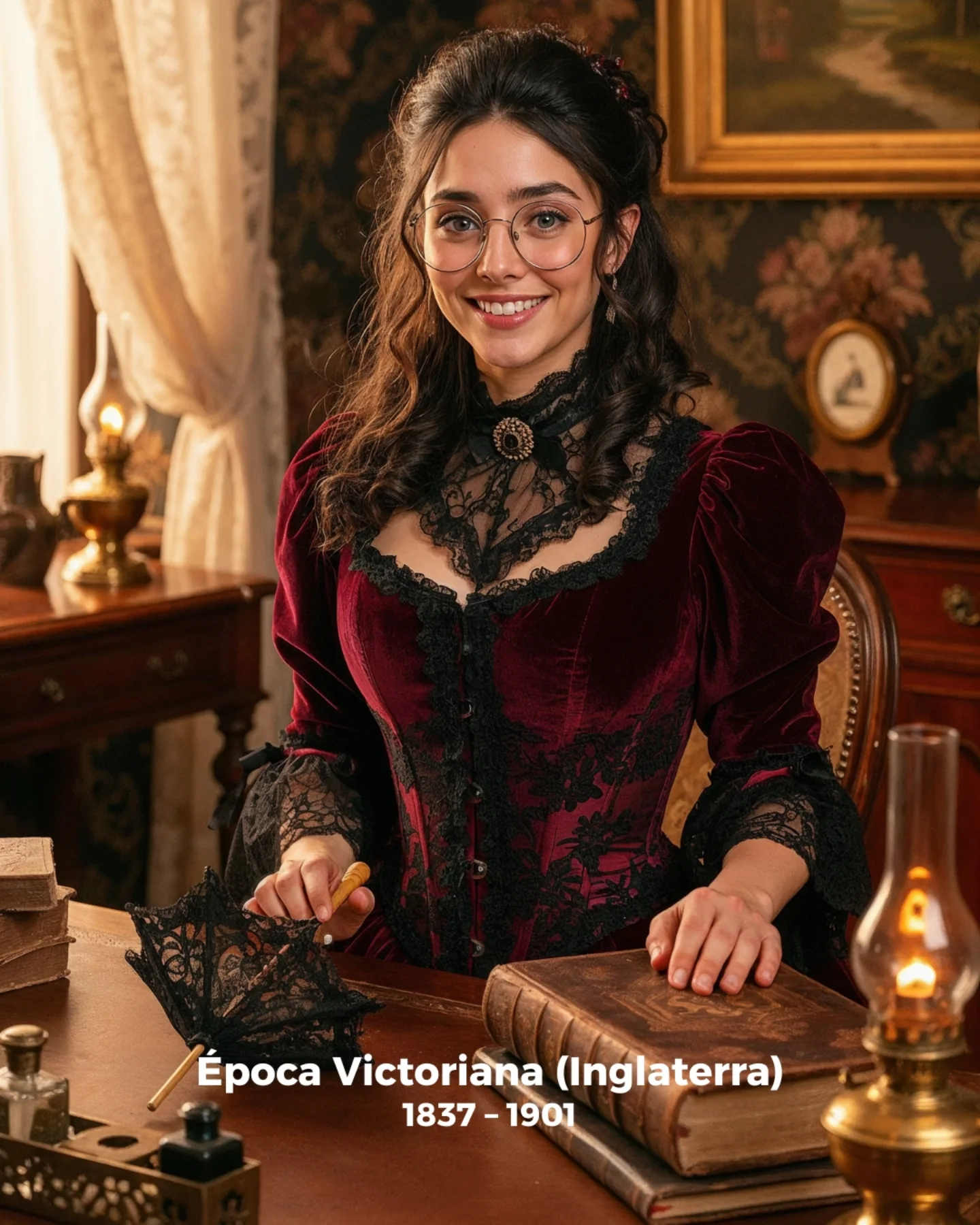
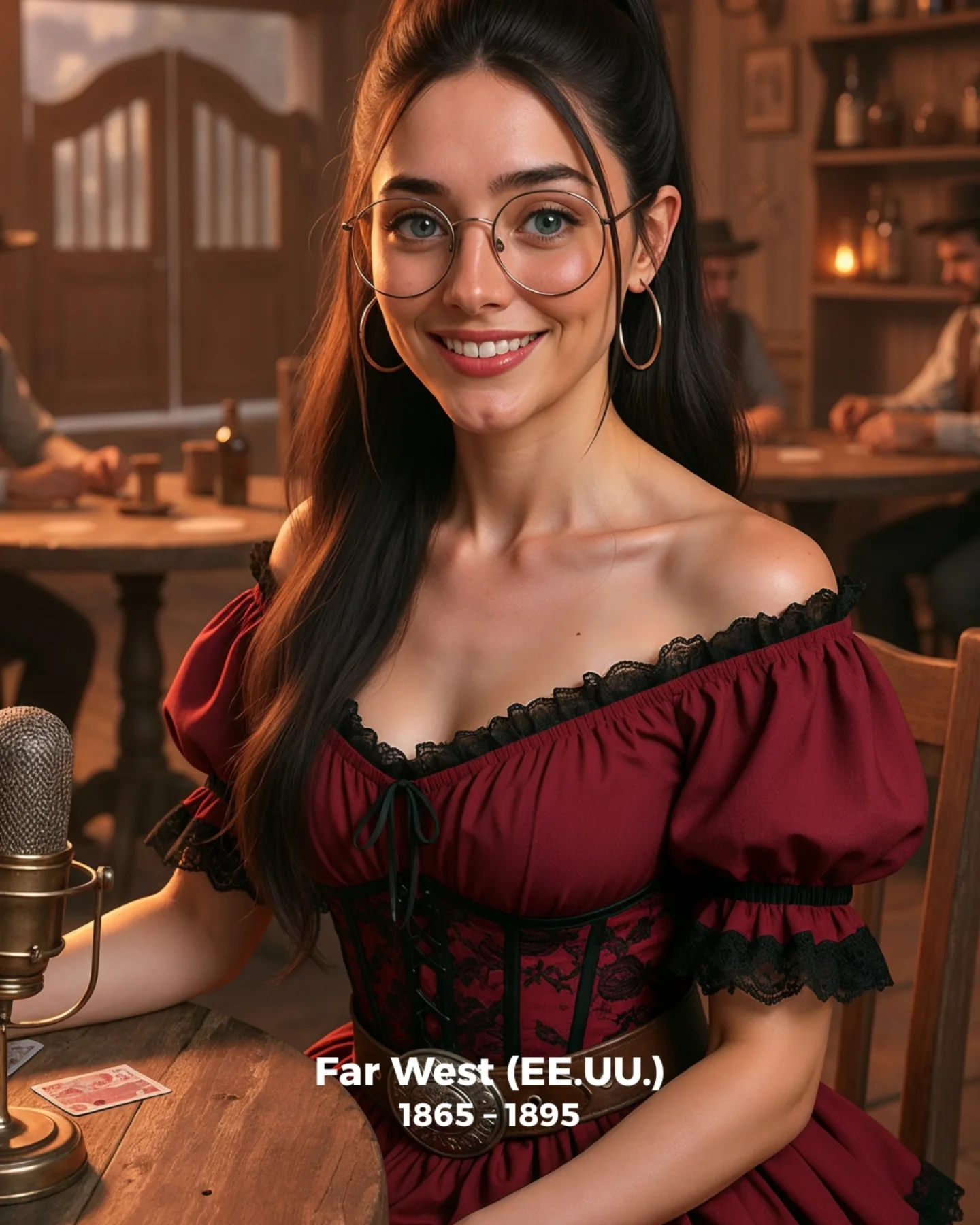
Soy_aria_cruz's Edo Samurai Woman Portrait AI Image
This image succeeds because it makes historical styling feel inviting instead of distant. Many period-inspired AI portraits fail by becoming costume-heavy, cold, or overly theatrical. Here, the result is much more approachable. The smiling expression, recognizable glasses, and calm room setting make the image feel human first and historical second. That balance is exactly why the frame has strong social appeal.
The smartest move is the fusion strategy. The portrait does not attempt perfect museum reconstruction. Instead, it keeps enough Edo-era markers to create a clear time-travel fantasy while leaving the face and emotional tone modern and readable. That is often the better growth tactic for creator content. Audiences engage faster with “recognizable person in a transformed era” than with a fully anonymized costume study.
The room also helps. Shoji screens, bonsai, tea objects, and soft daylight build period credibility without overwhelming the frame. The background stays minimal, which means the armor and kimono textures can do the real storytelling. This makes the image visually rich but still scroll-friendly.
| Signal | Evidence (from this image) | Mechanism | Replication Action |
|---|
| Historical clarity | Samurai armor, kimono layering, waist sword, Japanese room details | Specific era cues create instant narrative value | Lock 3-5 unmistakable historical markers before refining accessories |
| Modern relatability | Friendly smile, familiar facial styling, round glasses | Modern readability reduces distance and increases comment potential | Keep one or two present-day identity anchors when doing era transformations |
| Controlled background | Shoji screens and bonsai provide context without clutter | Minimal context prevents the costume from competing with environmental noise | Use a small number of high-signal background objects rather than building a busy set |
Aesthetic Read
The visual pleasure here comes from texture contrast. Smooth paper screens, woven kimono fabric, lacquer-like armor plates, braided cords, and polished wood all interact inside a restrained palette. That restraint matters. If the colors were louder or the props more numerous, the portrait would start feeling theme-park-like. Instead, it keeps an elegant rhythm between costume complexity and room simplicity.
The portrait also benefits from soft daylight. Historical costume images often become too moody, but this one stays bright and legible. That choice makes the face approachable and lets the viewer appreciate the layered materials. It is an important prompt lesson: period styling does not always need dark cinematic drama. Sometimes a calm interior and an open smile deliver more reach.
| Observed | Recreate cue |
|---|
| Blue patterned kimono under armor with red cord accents | Specify layered textile and armor materials with color restraint |
| Shoji-lit room with bonsai and low table | Use a sparse Japanese interior with 2-3 strong context props |
| Warm approachable expression | Ask for a soft smile instead of a stern warrior pose |
| Medium portrait crop that preserves costume context | Frame from waist-up so armor and room details remain visible |
Use Cases And Transfers
- Era-transformation content: ideal because it demonstrates how to keep identity while changing historical context.
- Prompt tutorials about costume fidelity: strong fit when teaching fabric, prop, and room-detail control.
- Cultural fantasy portraits with grounded realism: useful when the goal is elegance rather than spectacle.
- Storytelling carousels about different time periods: a good fit because the image is instantly legible as one stop in a larger historical sequence.
Not ideal for battle scenes, action-heavy samurai imagery, or highly purist historical reconstruction. The charm here comes from calm interior portraiture and soft relatability, not combat intensity or museum precision.
Transfer recipe 1. Keep: calm interior light, one strong era costume, approachable expression. Change: historical culture or century. Slot template: "{era} interior portrait, {costume system}, warm smile, refined room detail".
Transfer recipe 2. Keep: face identity anchors and minimal background. Change: warrior type, such as samurai, court noble, or artisan. Slot template: "{historical role} portrait, seated indoors, layered garment detail, soft daylight".
Transfer recipe 3. Keep: texture contrast and waist-up framing. Change: room prop set, such as scrolls, lacquerware, or tatami tea service. Slot template: "{period room} portrait, {garment materials}, {props}, elegant historical realism".
Prompt Technique Breakdown
| Prompt chunk | What it controls | Swap ideas (EN, 2–3 options) |
|---|
| era anchors | Historical legibility | samurai armor, kimono layers, waist sword |
| identity carryover | Whether the transformed character still feels like the same person | glasses, smile, soft facial expression |
| room context | Believability of the historical setting | shoji screens, bonsai, tea tray |
| material language | Richness of the costume render | embroidered textile, lacquered plates, braided red cords |
| light softness | Mood and shareability | diffused shoji daylight, warm indoor ambient, muted overcast room light |
| pose energy | Whether the portrait feels calm, noble, or theatrical | seated calm pose, upright formal stance, hands resting near low table |
Execution Playbook
Baseline lock first: the Edo samurai costume system, the Japanese interior context, and the recognizable face identity. Those three controls define the image. Then iterate one layer at a time.
- Start with one seated portrait using blue patterned kimono, armor, sword, shoji room, bonsai, and gentle smile.
- Change only one historical prop next, such as tea tray or screen layout, while keeping the costume fixed.
- Then test only the emotional tone, moving from warm smile to calm neutral expression without changing the scene.
- Only after identity and setting hold, experiment with tighter crop or richer armor detail.
If the output starts drifting into fantasy cosplay, reinforce “historically inspired Edo interior portrait” and “realistic materials, not fantasy armor.” If the image loses the time-period clarity, restate the room anchors and sword placement. Those corrections usually bring the portrait back to the same elegant and highly shareable historical transformation style.