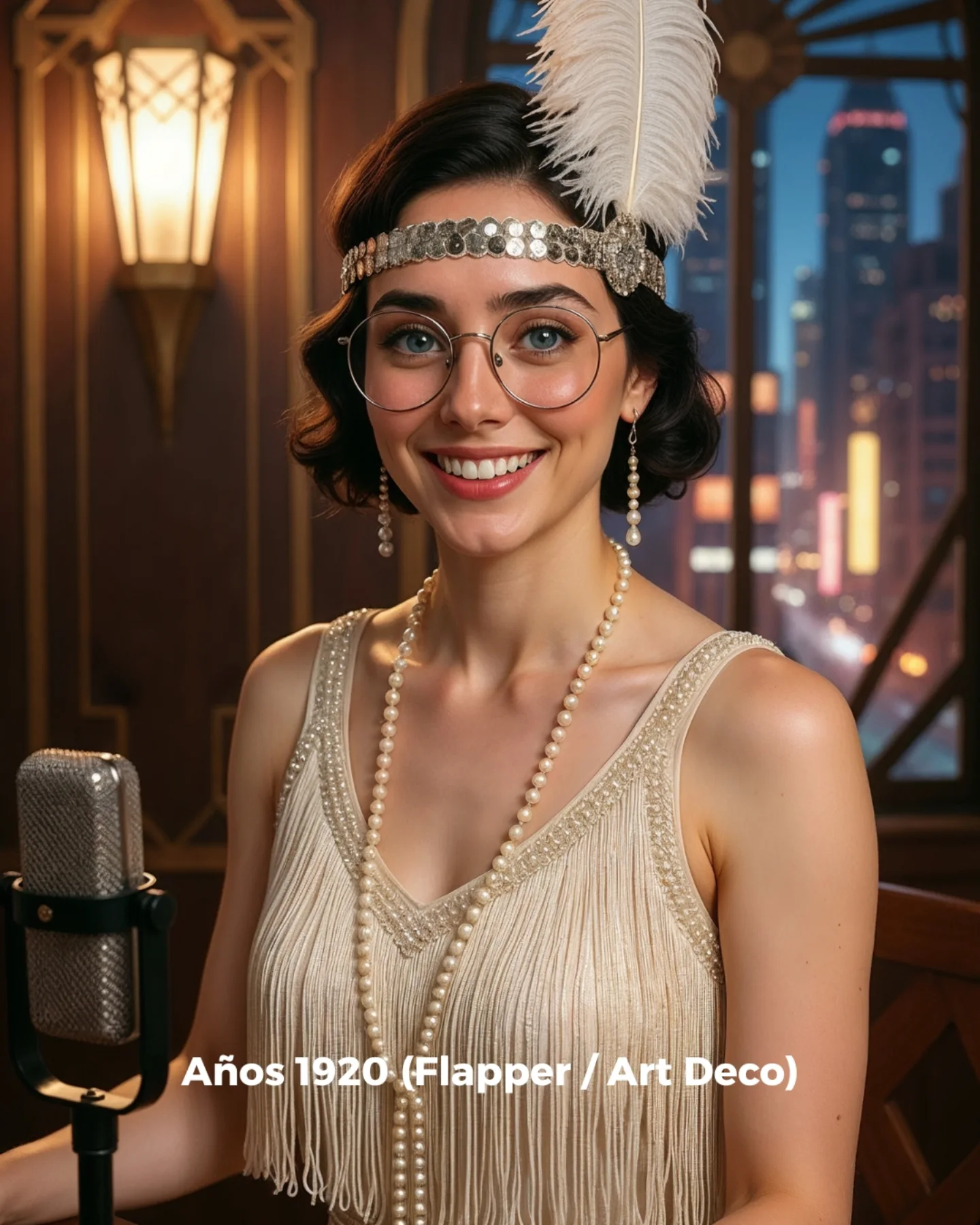
How soy_aria_cruz Made This Renaissance Portrait AI
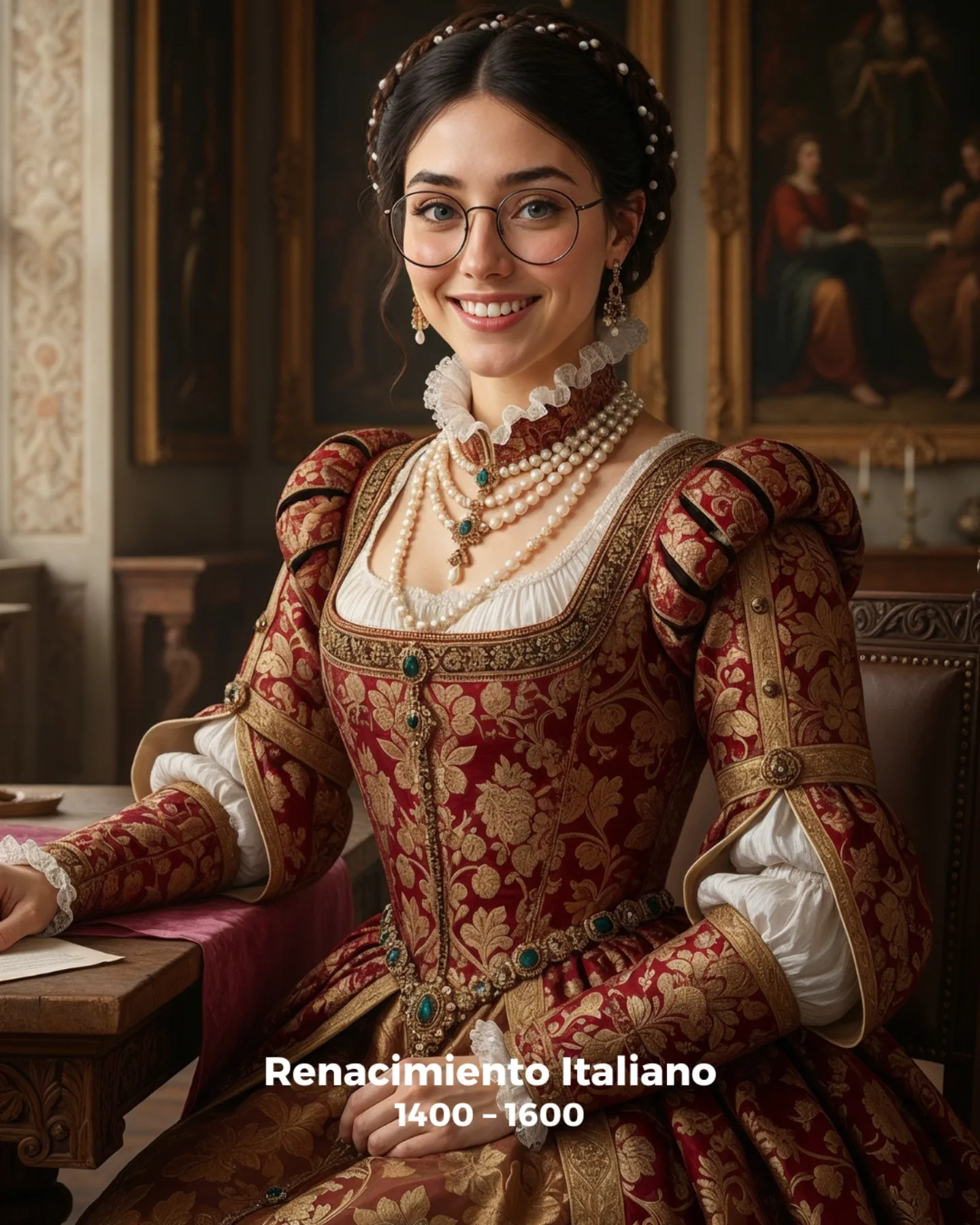
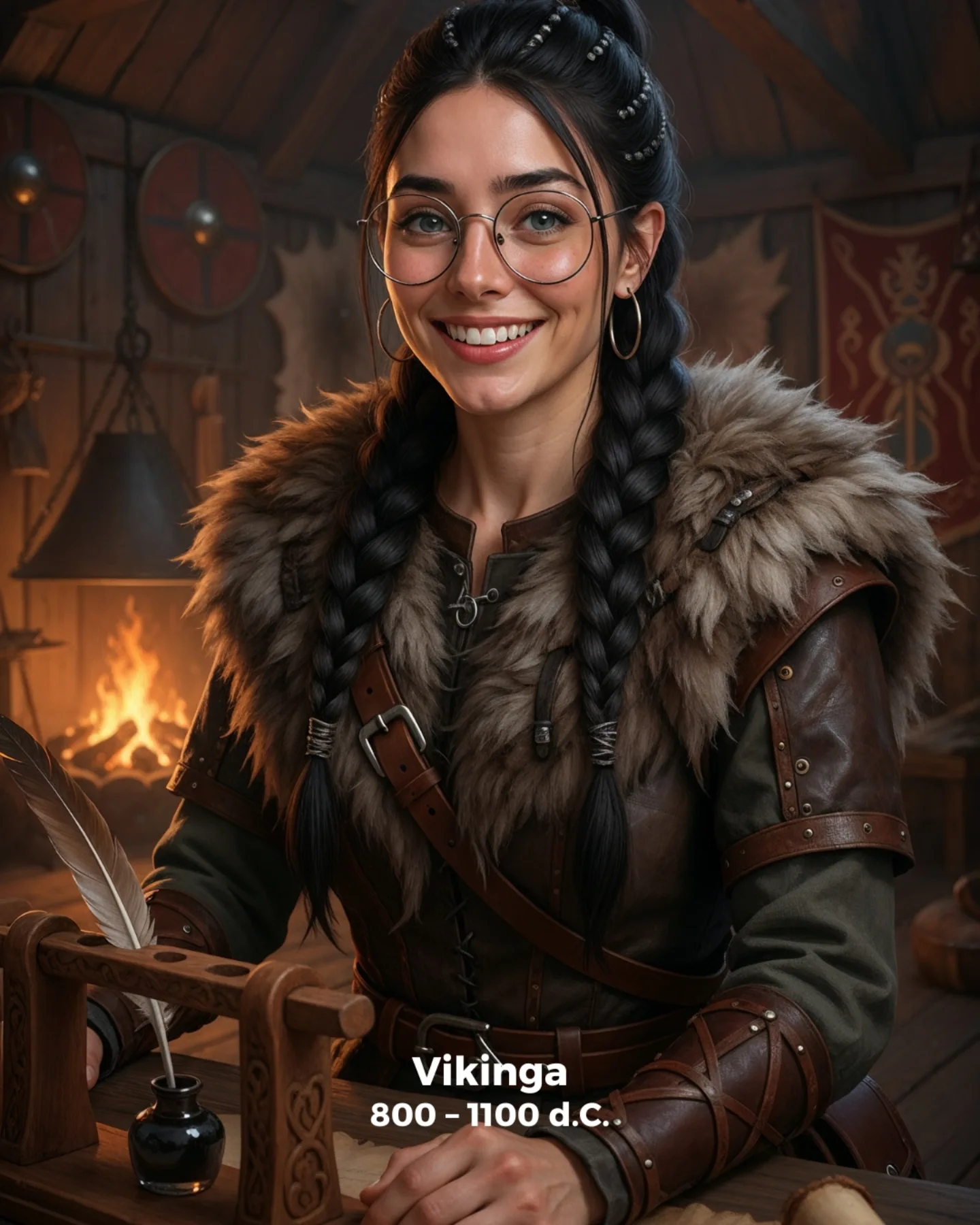
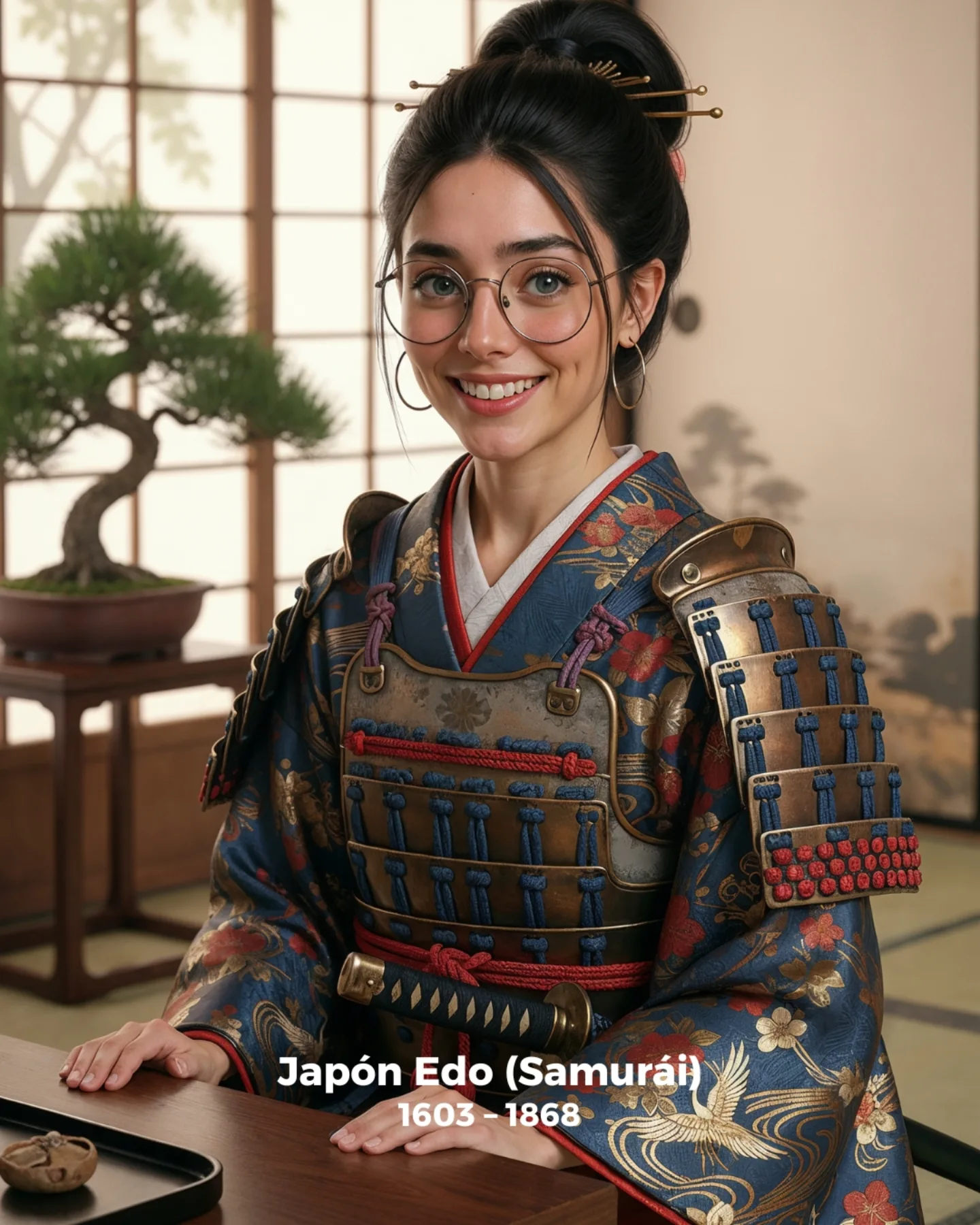
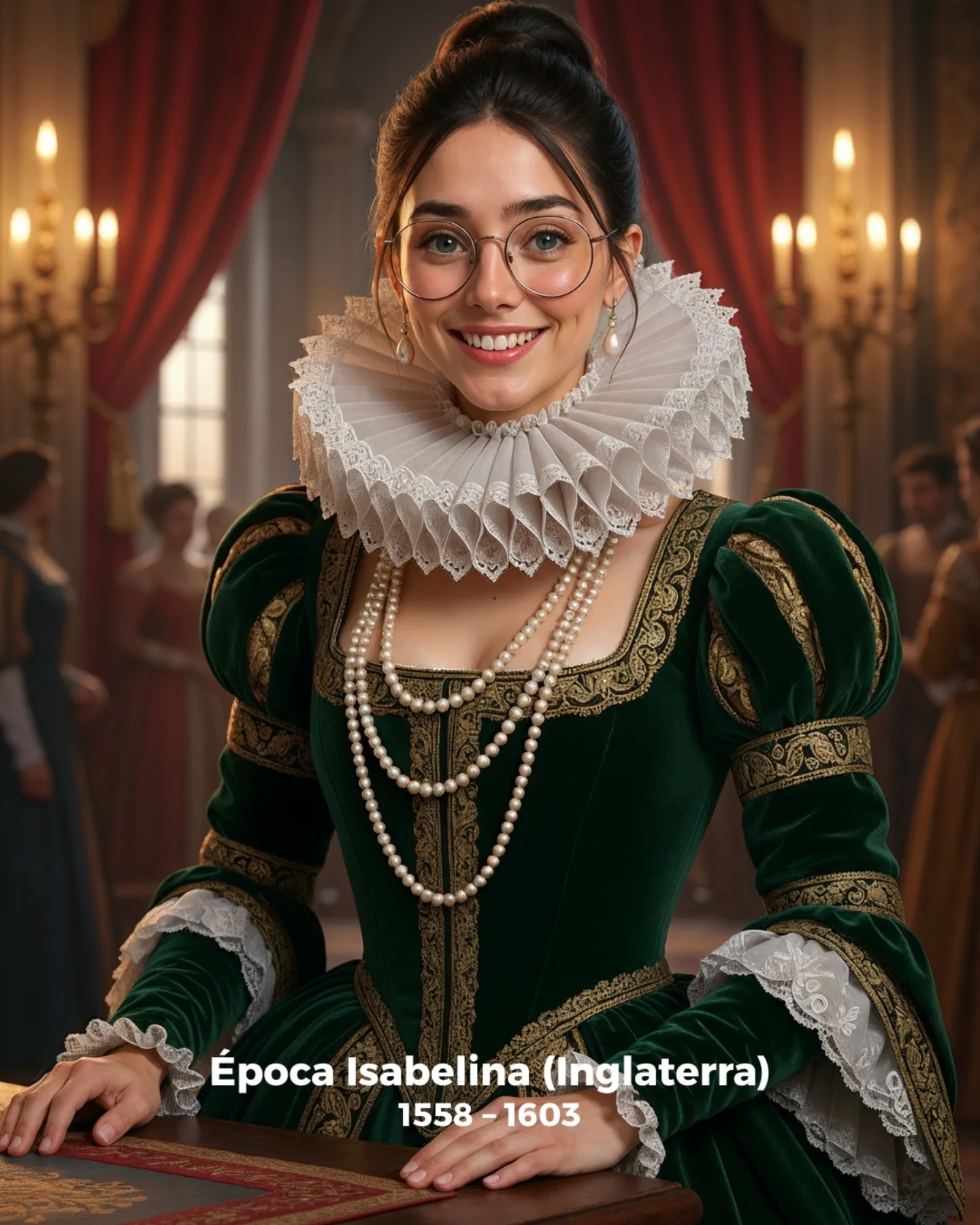
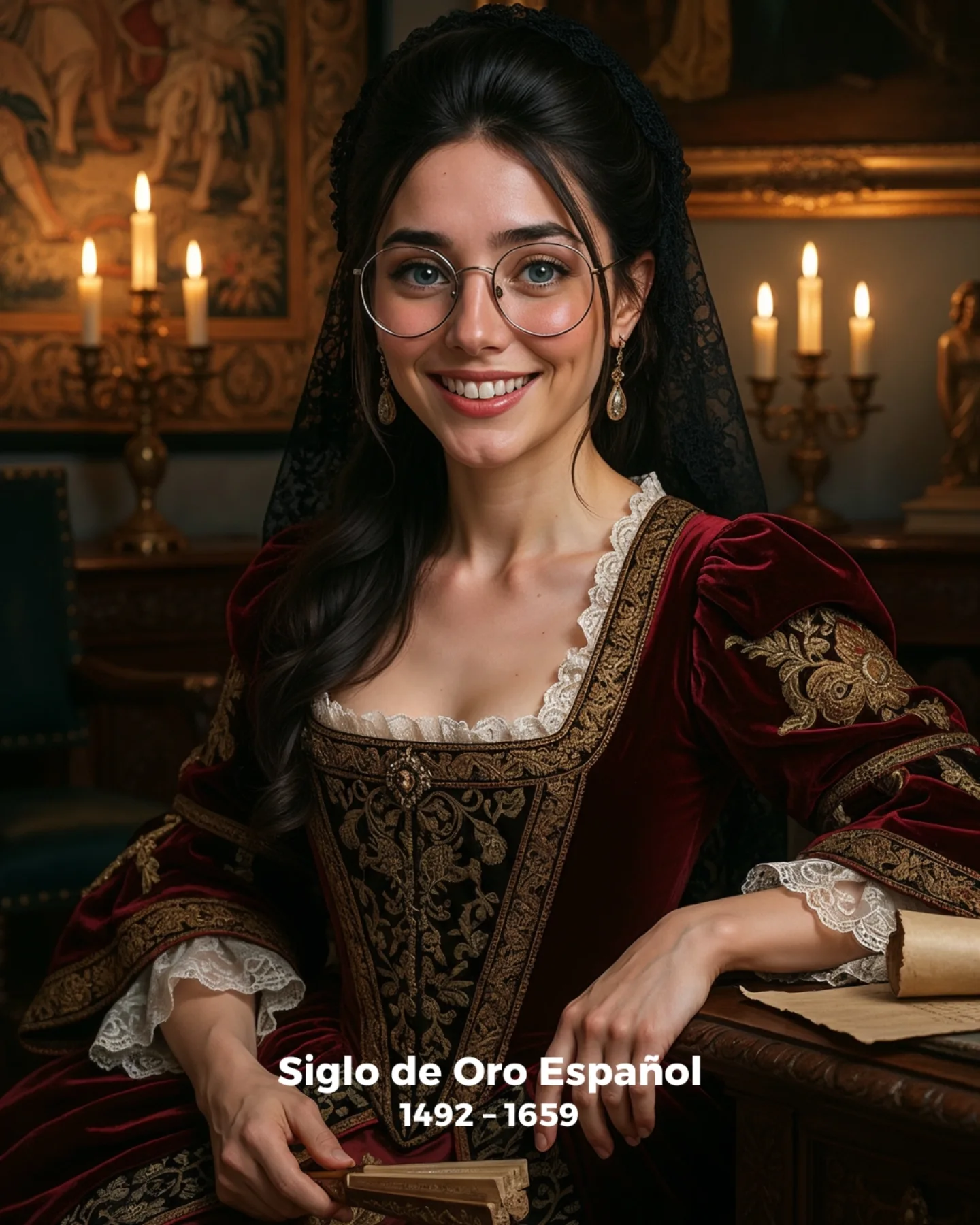
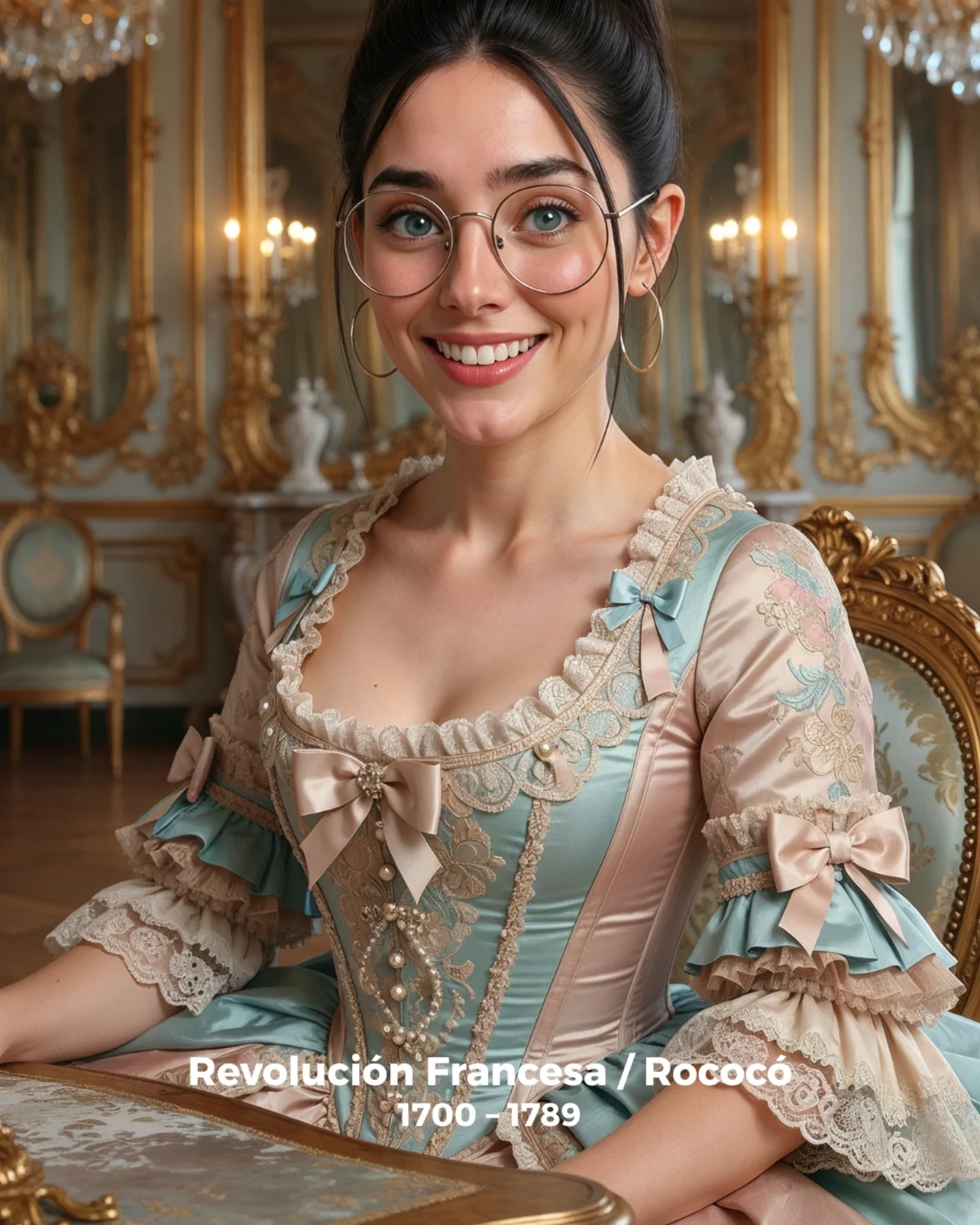
This image works because it understands what viewers need from an era transformation: instant recognition plus identity continuity. The dress, pearls, lace collar, carved wood interior, and painted backdrop make the Renaissance setting legible immediately. But the face still feels like the same creator traveling through another century. That continuity is what keeps the whole series from becoming a costume catalog.
The image also benefits from a seated portrait structure. Renaissance visual language is often associated with composed posture, interior wealth, and carefully controlled clothing volume. By sitting the subject at a wooden table inside a richly furnished room, the image absorbs those signals naturally. It does not need to exaggerate the era. The environment and pose are already doing enough.
The red-and-gold brocade dress is the strongest anchor in the frame. It carries pattern, status, and period all at once. Then the pearls and lace add refinement near the face, which is important for social-media readability. Historical series perform better when the era cues sit close to the face, not only in the background. That is one reason this image reads so quickly even at thumbnail size.
| Signal | Evidence (from this image) | Mechanism | Replication Action |
|---|
| Immediate period coding | Brocade gown, pearls, lace collar, carved room, painted backdrop | Several aligned historical markers make the era readable in one glance | Use a cluster of costume and interior cues rather than relying on one prop alone |
| Identity continuity | Glasses, smile, face shape, and recognizable expression remain consistent | Keeps the character stable across the entire time-travel series | Retain a few signature identity markers even when changing centuries |
| Series packaging | Bottom label names the era and gives the date range | Turns the image into a chapter inside a larger timeline concept | Add concise era labels to each image in a historical sequence |
Best-fit use cases
- Historical era transformation posts, because the period reads instantly and elegantly.
- Prompt libraries for costume-era content, because the image shows how wardrobe and room should reinforce each other.
- Educational carousel series, because labeled centuries encourage comparison and discussion.
- Identity-consistency demos, because the same face survives a major styling shift.
Less ideal: strict documentary reconstruction, casual modern lifestyle content, or minimalist portrait studies. This image is built for visual storytelling through period richness.
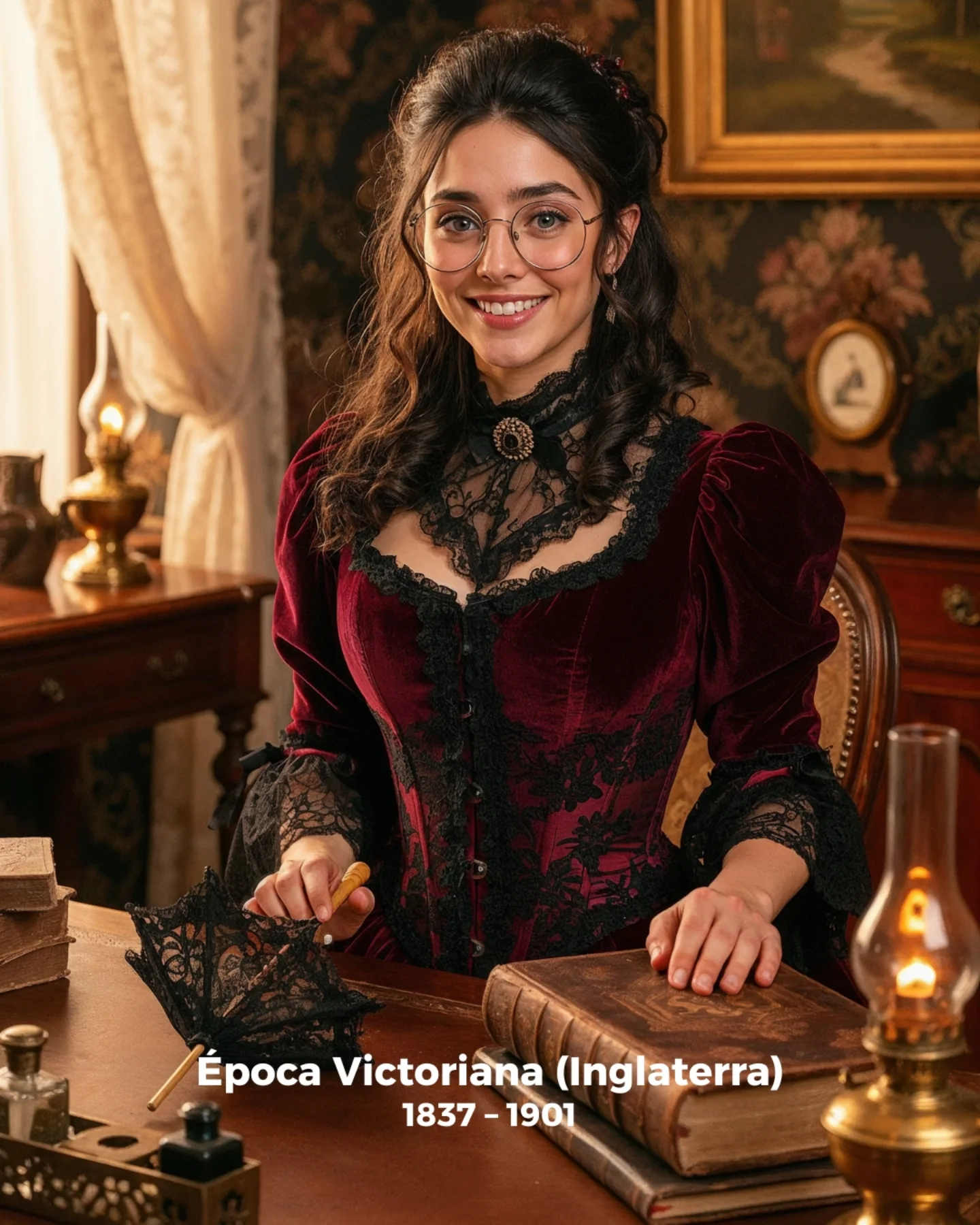
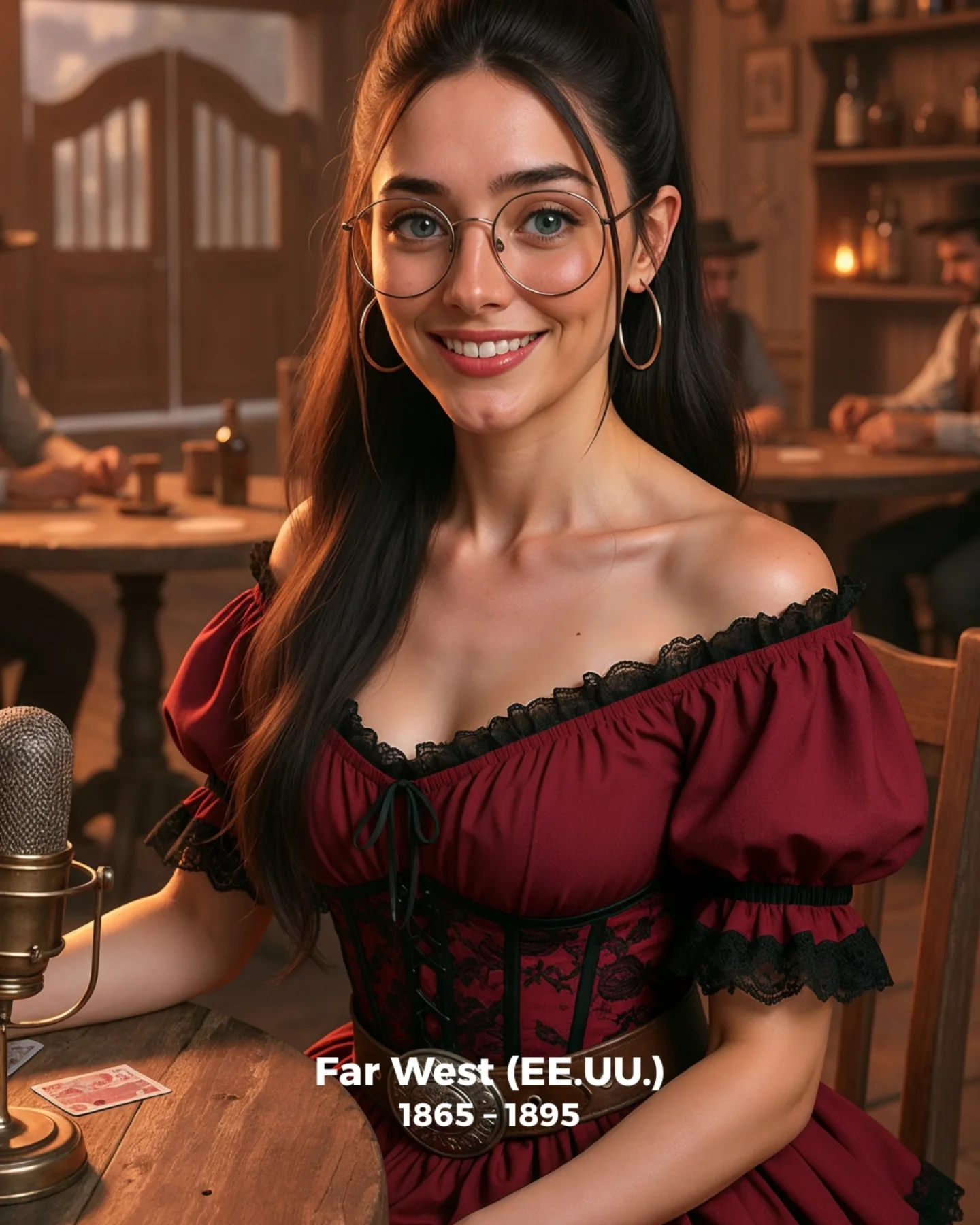
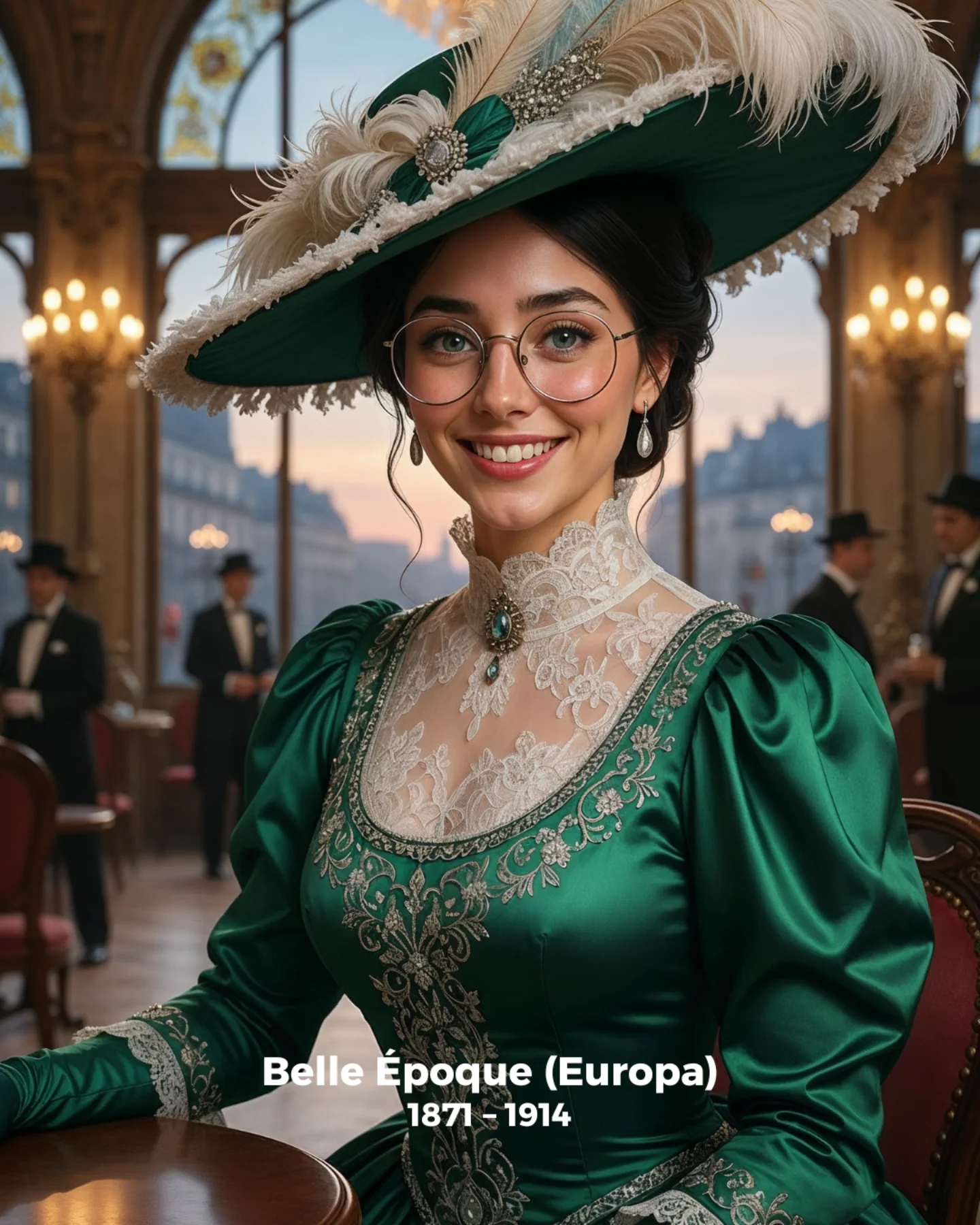
To adapt the idea, keep the recognizable face, keep one strong historical costume anchor, and keep the label format. Then move the same subject into adjacent centuries or other regions. A Tudor court portrait, Baroque salon, or Belle Époque interior can all use the same transformation logic if each gets its own unmistakable visual codes. Slot template: {same recognizable person} reimagined in {specific era} with {period costume cluster} inside a {matching interior} plus a {timeline label}.
Aesthetic read
The image succeeds aesthetically because it feels rich without becoming crowded. The room is dark and warm, which allows the dress and pearls to glow. The seated pose stays still, so the eye can appreciate fabric, jewelry, and carved wood without losing the subject. That is a useful lesson for historical content: when the styling becomes ornate, the body language should usually become calmer.
The glasses are especially interesting here. They are technically anachronistic, but they function as a continuity device. In a pure museum reconstruction they would be wrong. In a creator-led time-travel series, they are exactly what keeps the subject recognizable from era to era. That is an intentional tradeoff, and in this context it works.
| Observed | Why it matters |
|---|
| Red-and-gold brocade gown with structured bodice | Delivers a strong Renaissance silhouette immediately |
| Pearls and lace collar near the face | Add small-scale historical cues that survive at feed size |
| Dark wood interior and framed paintings | Support the period setting without needing a wide environmental shot |
| Modern glasses kept on the subject | Preserve creator identity across the series |
| Bottom era label with dates | Make the image function as one stop in a timeline journey |
Prompt technique breakdown
| Prompt chunk | What it controls | Swap ideas (EN, 2–3 options) |
|---|
| same woman identity with glasses retained across eras | Series continuity | same smile with signature earrings, same face with braid silhouette, same identity with modern accessory kept |
| Renaissance brocade gown, pearls, lace collar, jeweled bodice | Period wardrobe recognition | Tudor embroidered dress, Baroque satin gown, medieval velvet courtwear |
| carved wood room with paintings and writing table | Historical interior support | palazzo study, noble chamber, salon with tapestries |
| warm painterly portrait light | Museum-like tone and visual richness | window-side Old Master light, candlelit glow, softer gallery ambience |
| bottom era label and date range | Timeline packaging | period caption footer, museum-card style label, century badge |
How to iterate without losing the core
Lock these three things first: the face continuity, the clear period costume cluster, and the era label format. Those are the identity anchors. Then change only one or two variables per run.
- Baseline run: keep the Renaissance room and gown until the era reads instantly while the subject still feels recognizable.
- Second run: keep the same identity and label structure but change only the century or region to test portability.
- Third run: keep the era fixed and vary the room from formal chamber to painted salon or study.
- Fourth run: build a multi-era sequence and compare which centuries preserve face consistency best.
If the image starts feeling generic, the first thing to inspect is usually the costume silhouette and the supporting room language. Historical portraits lose impact when the dress and environment stop telling the same time-period story.