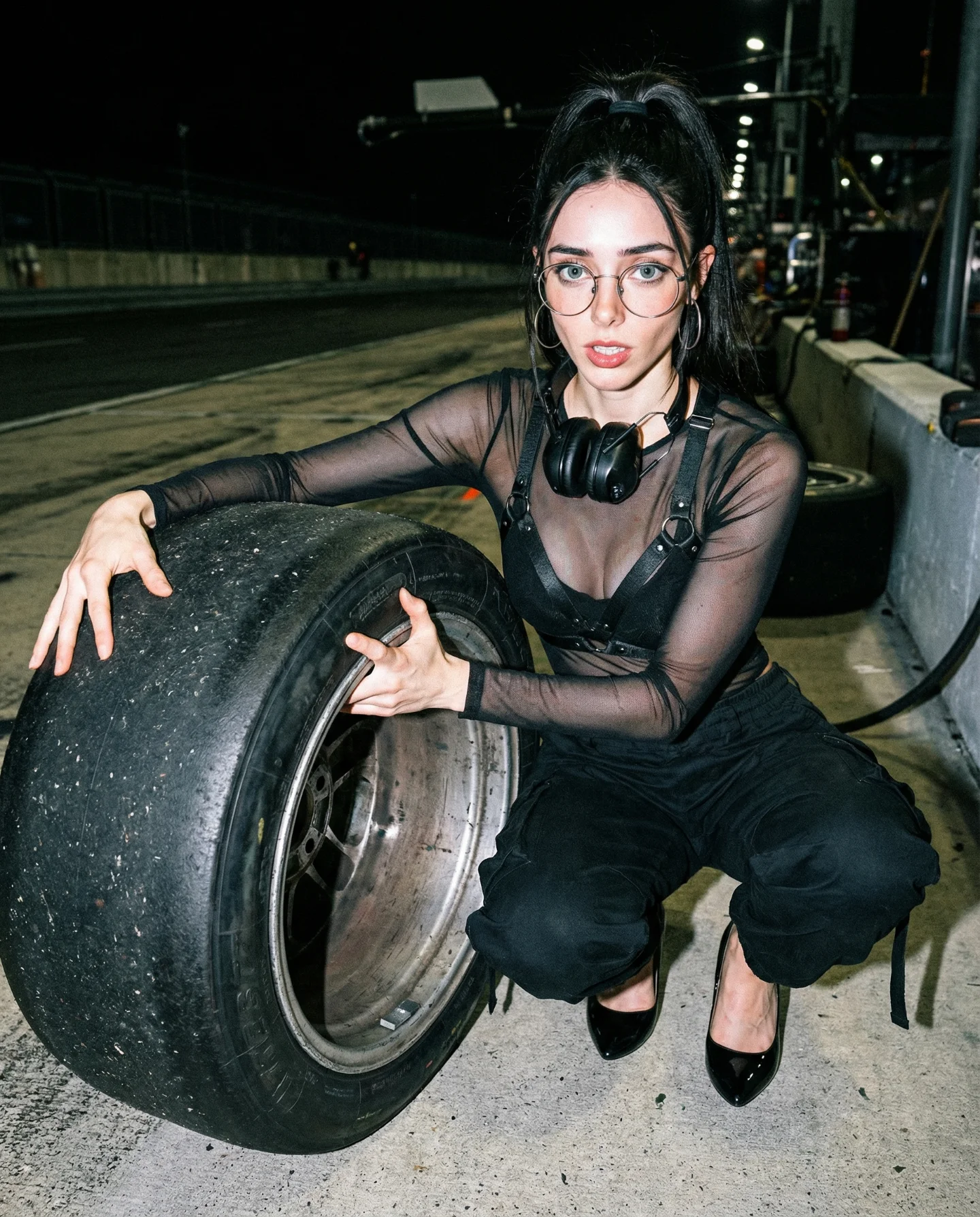
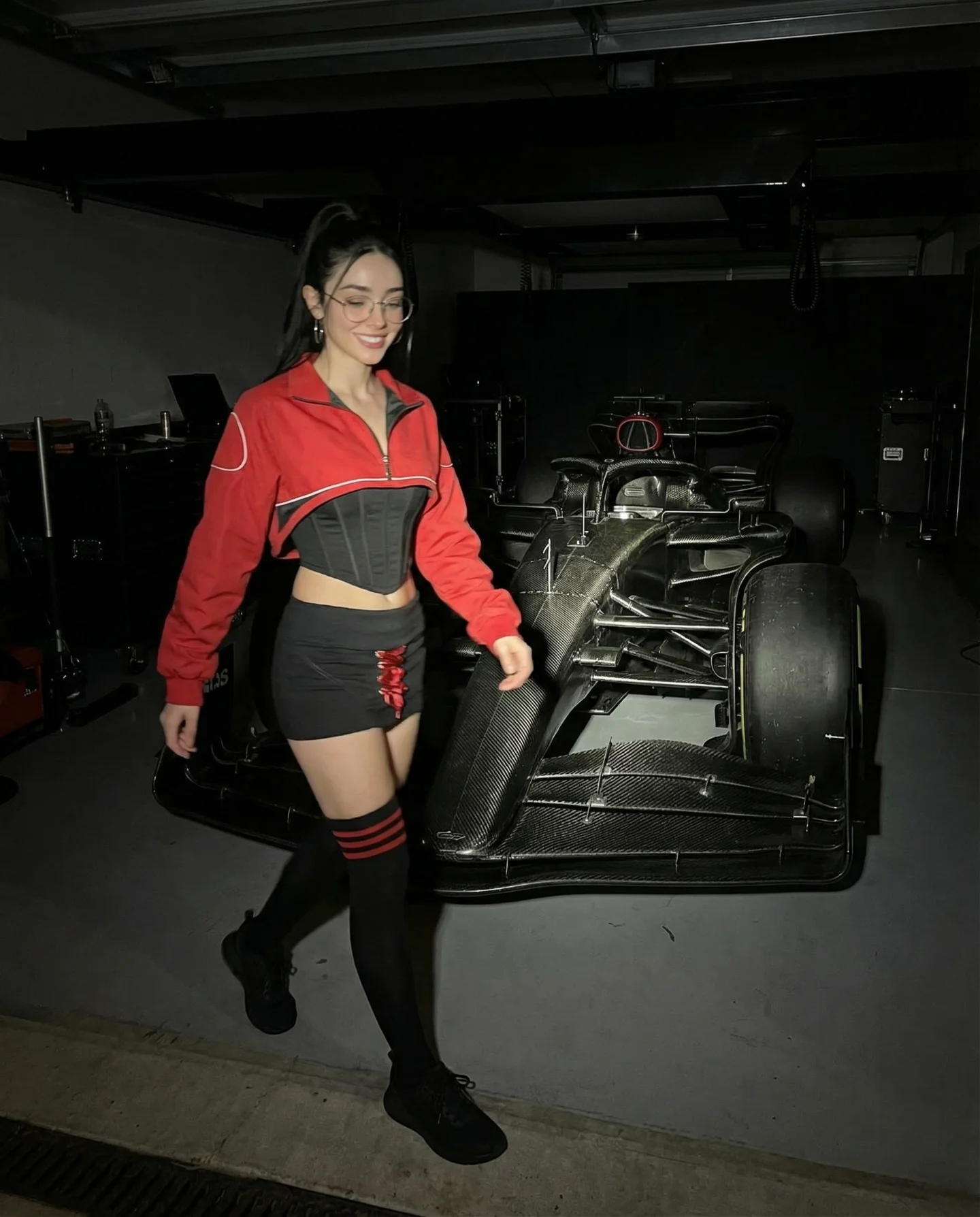
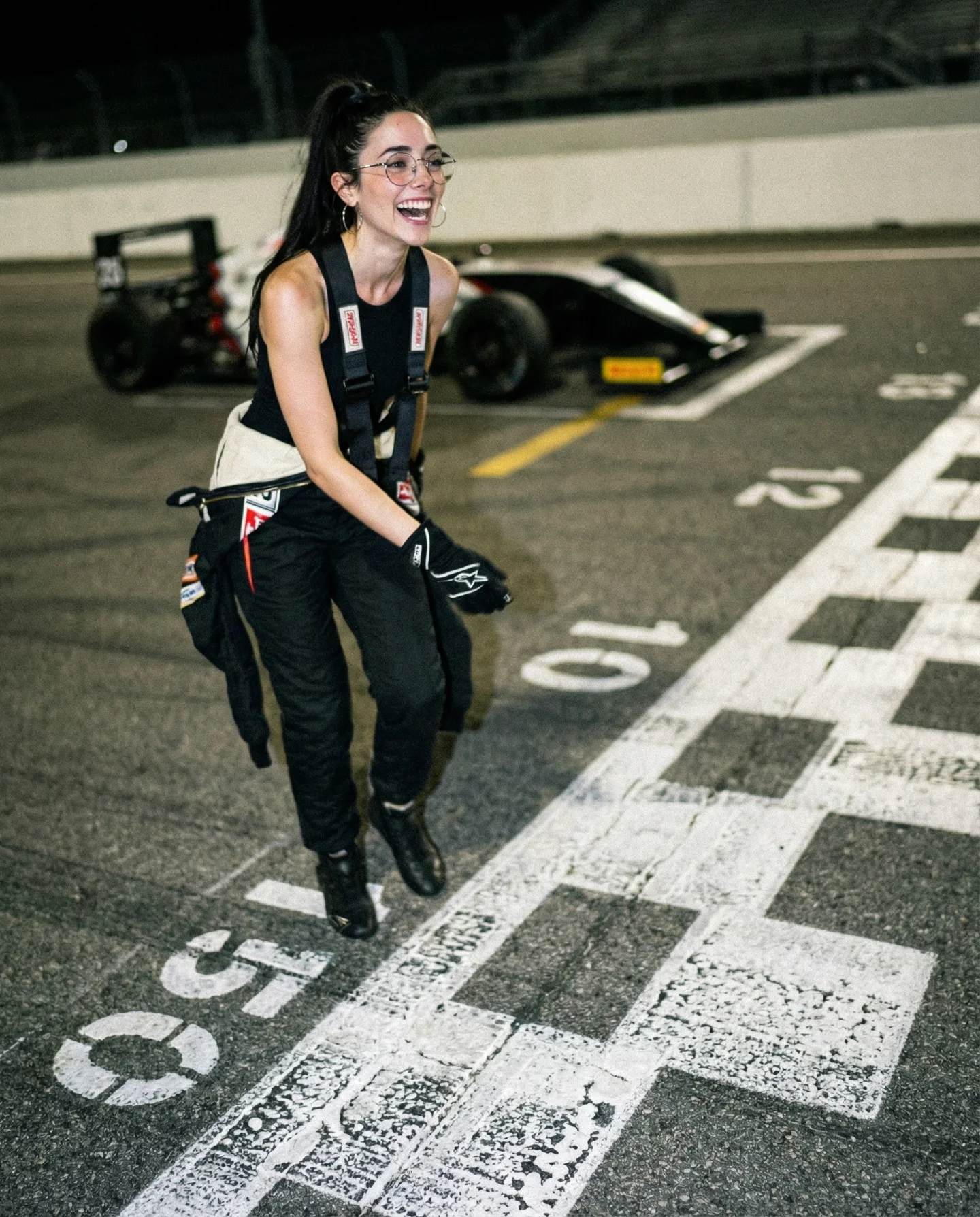
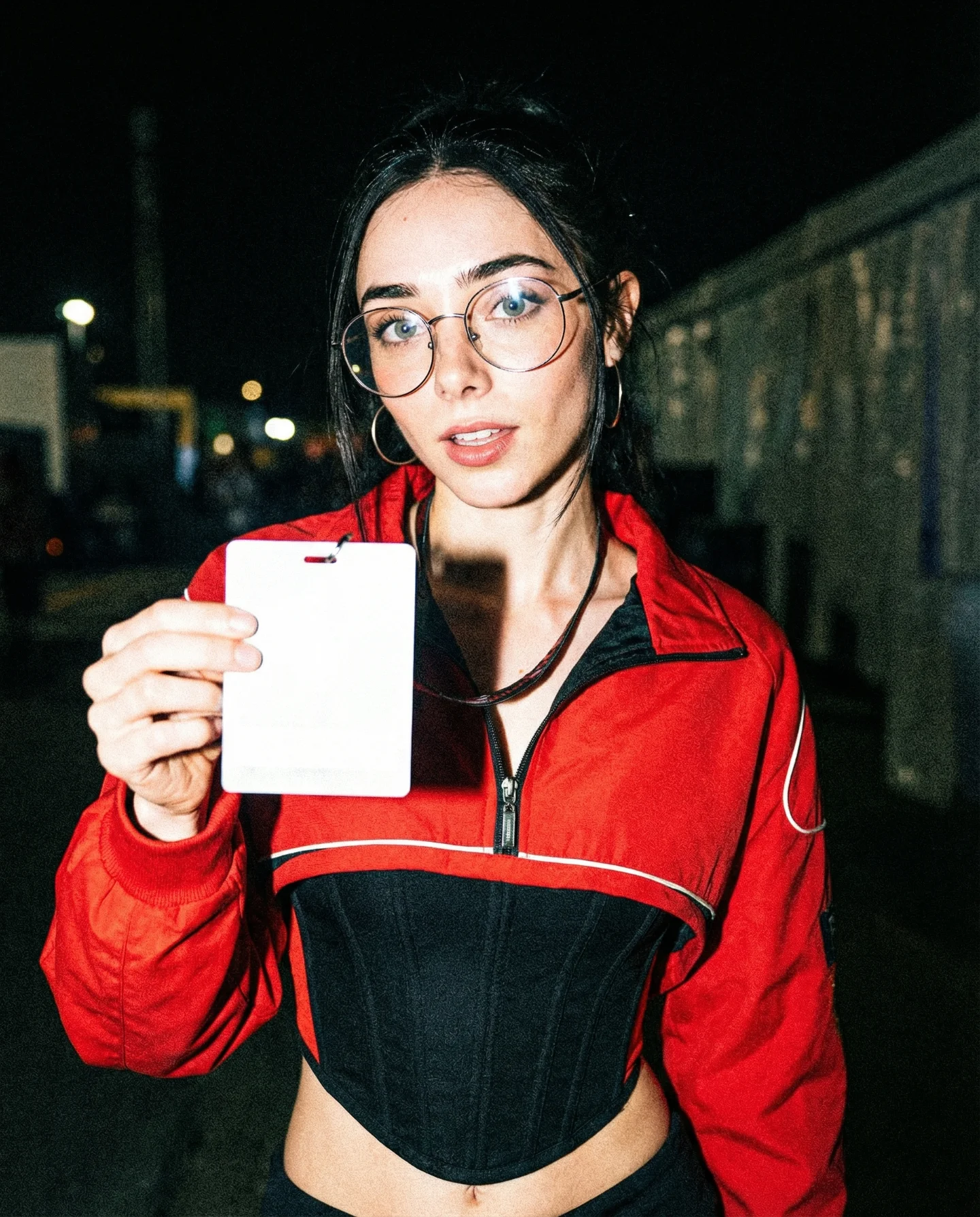
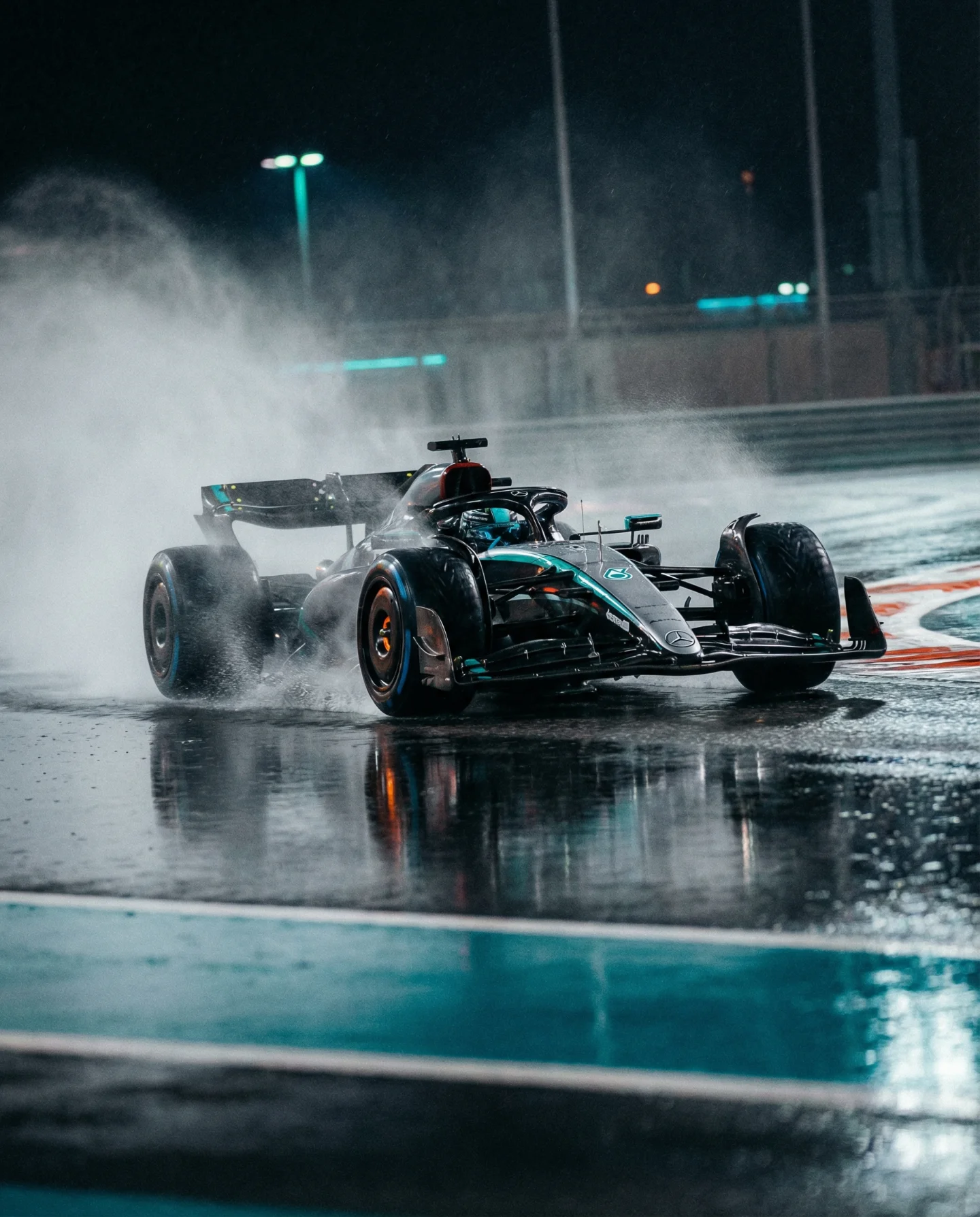
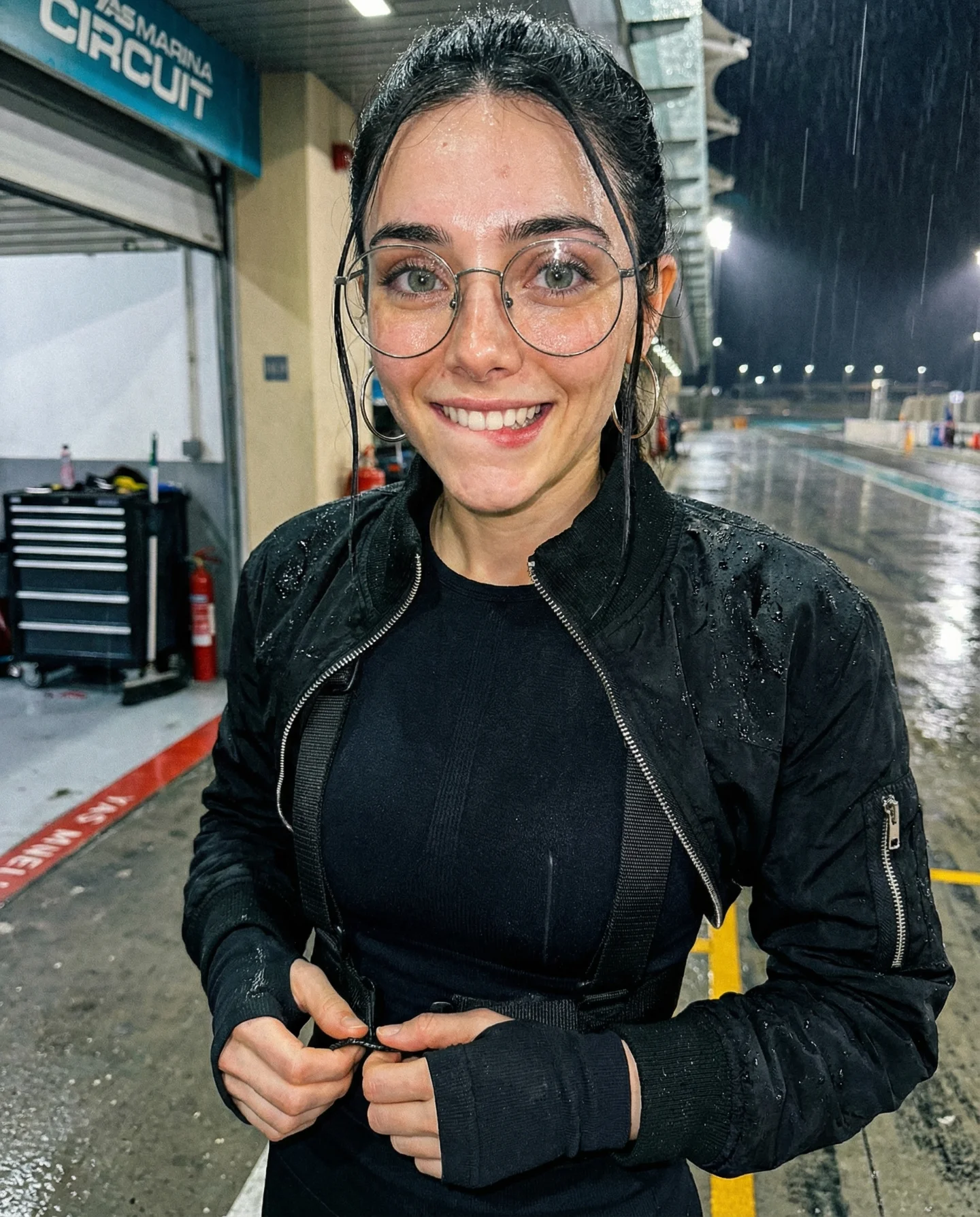
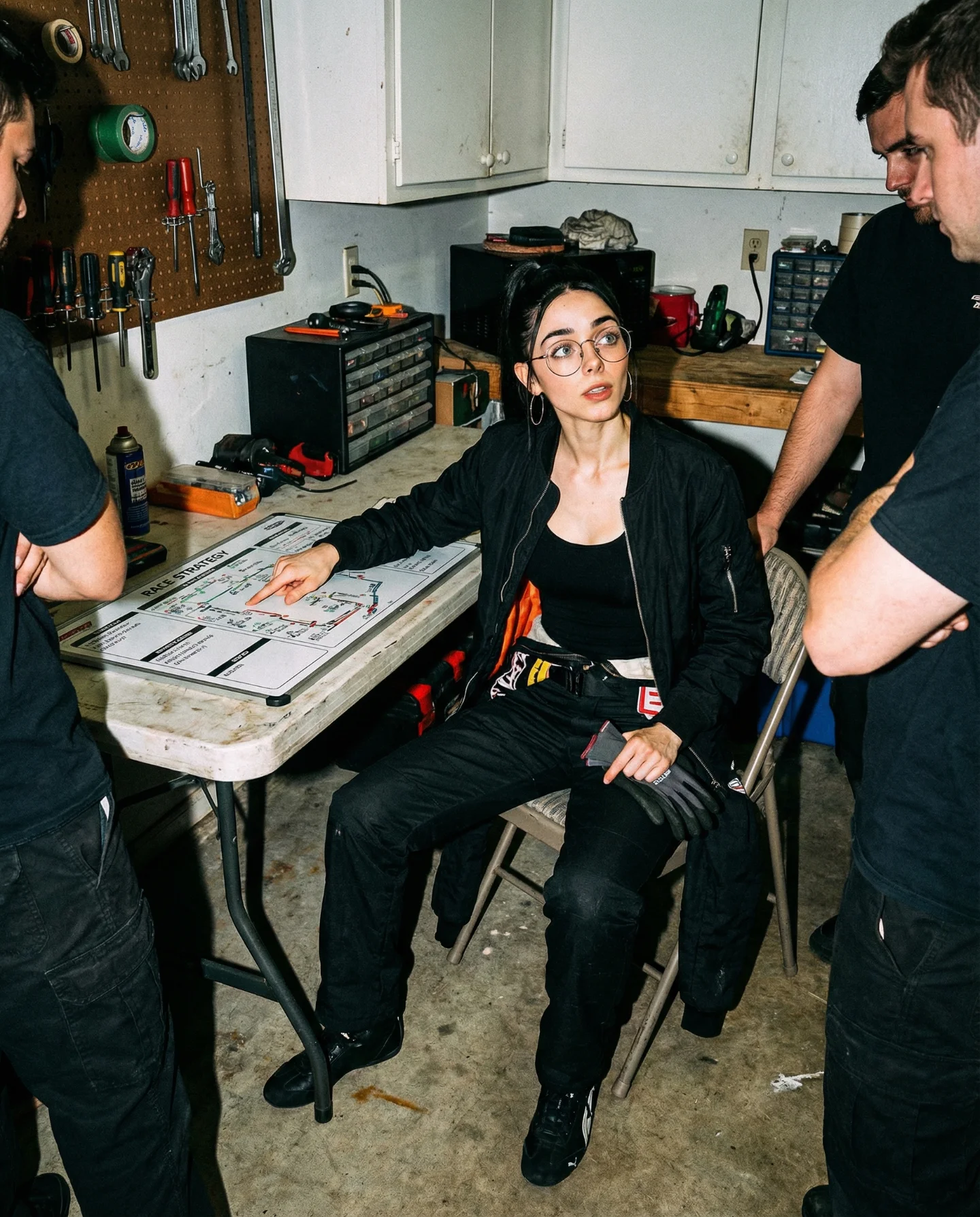
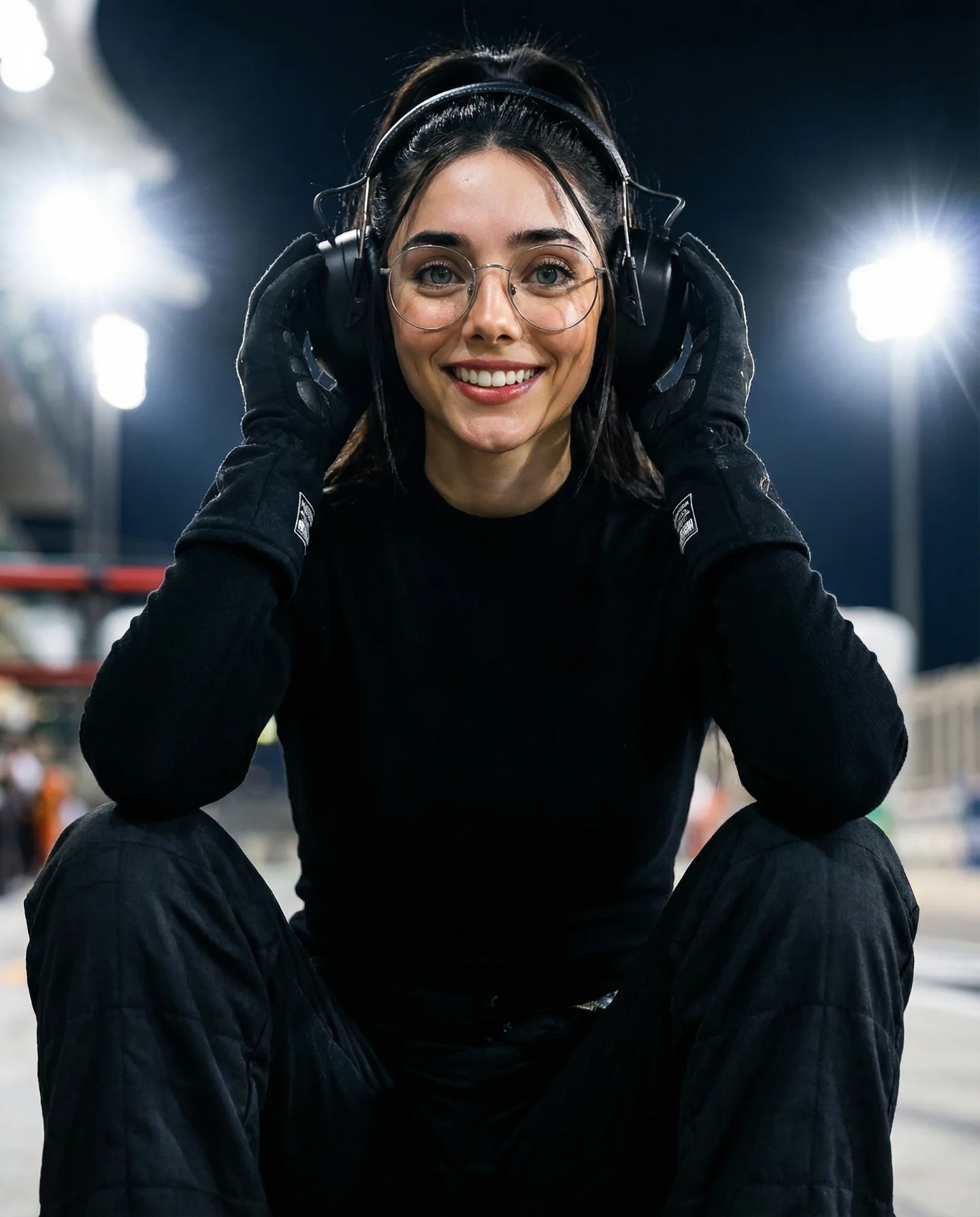
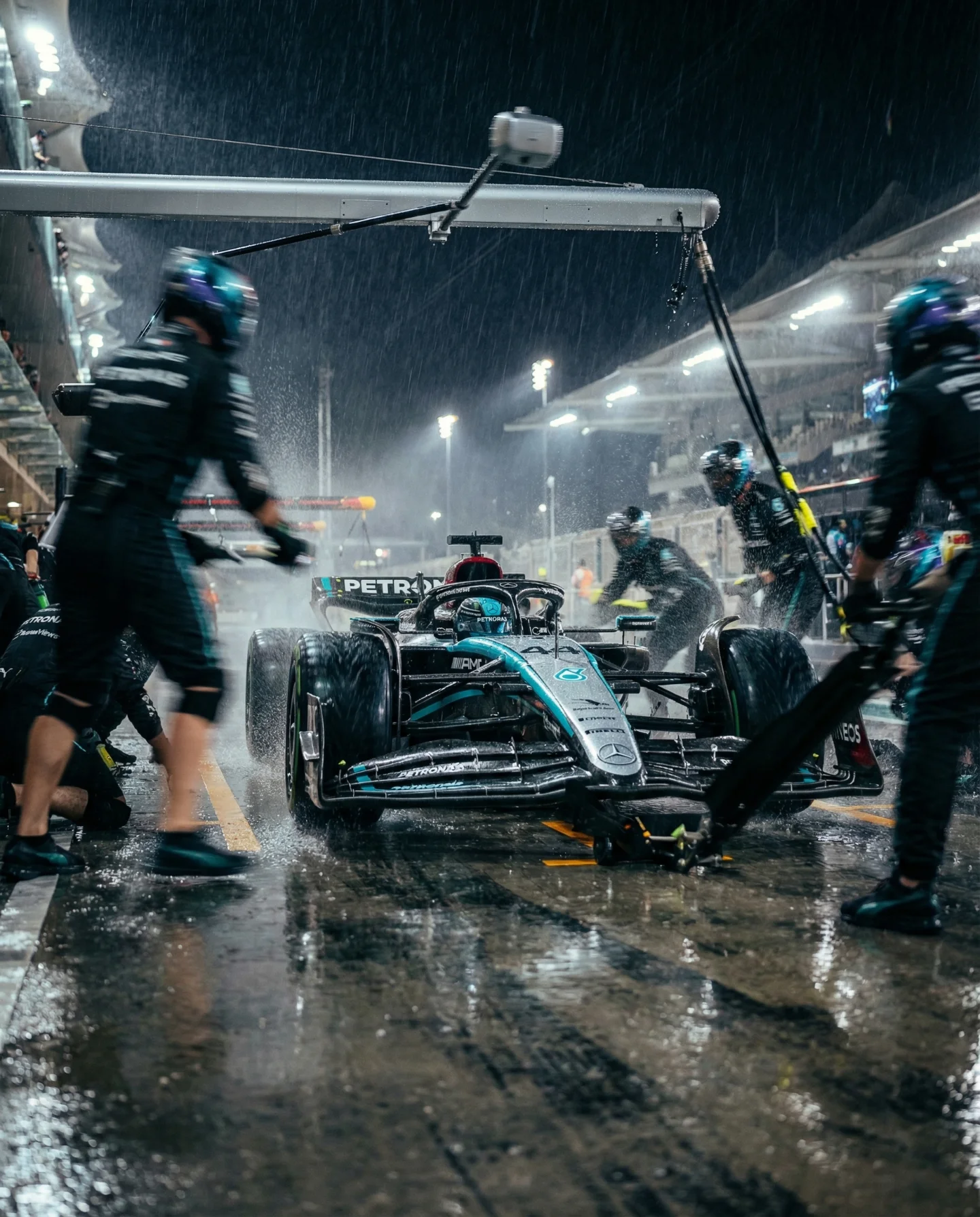
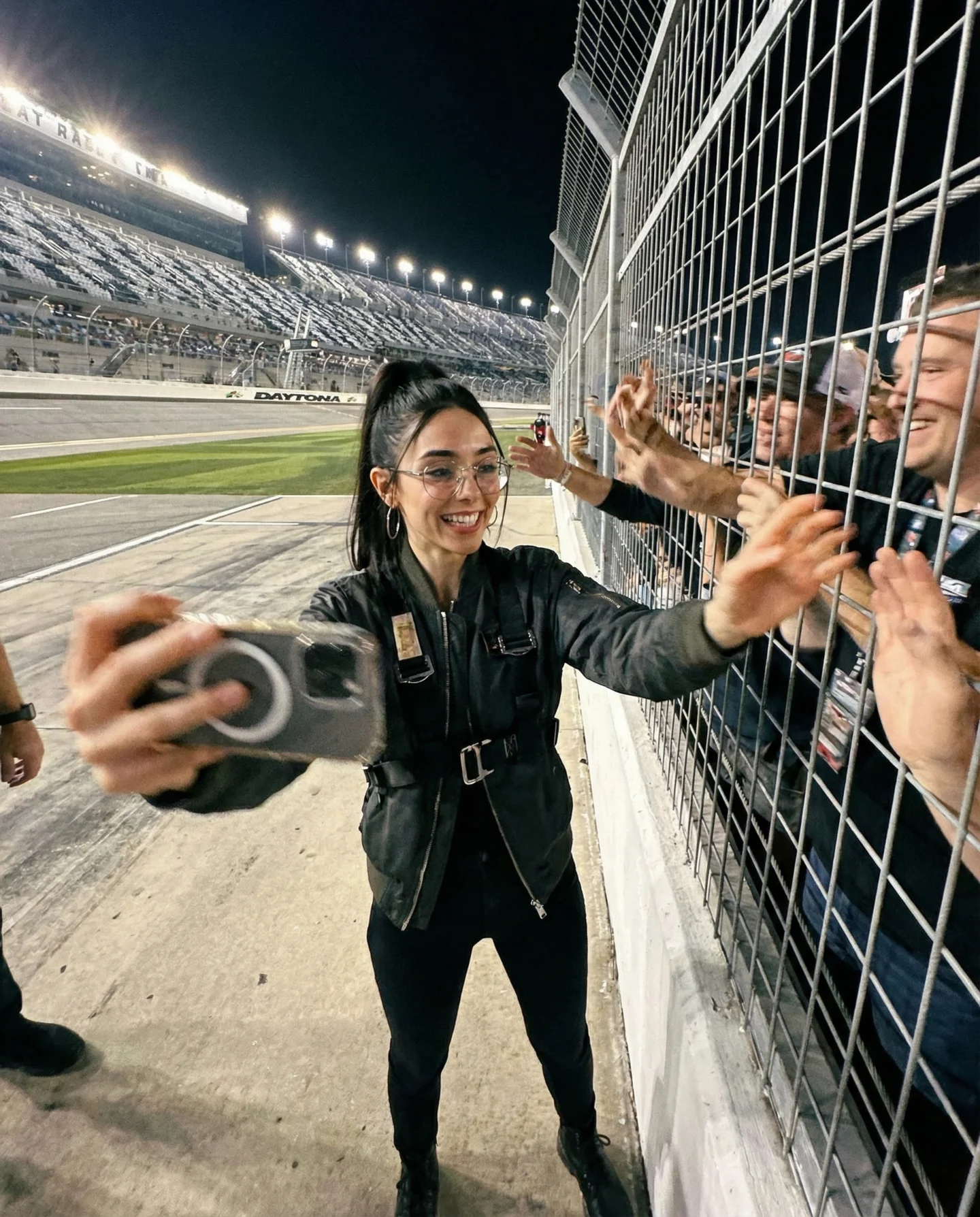
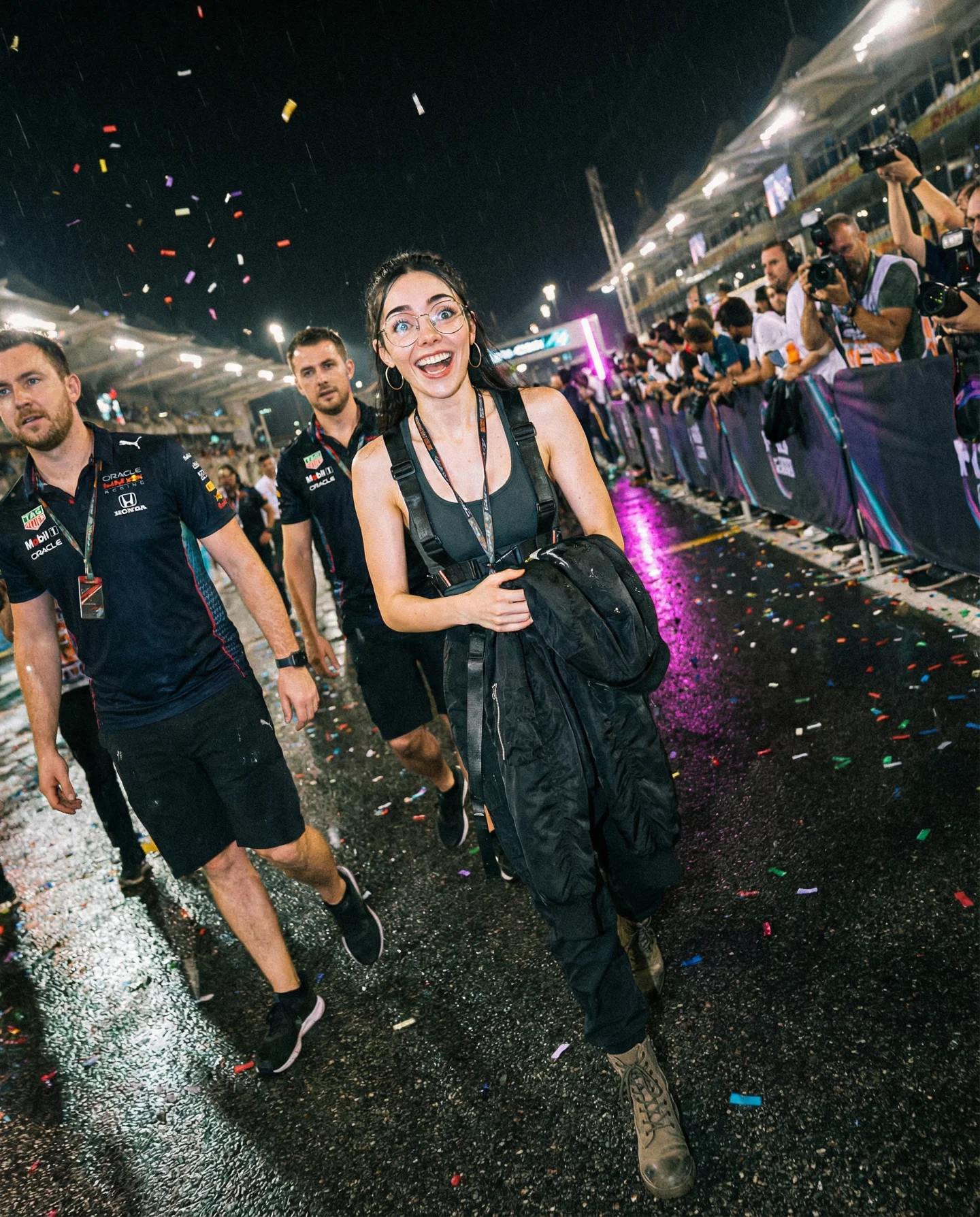
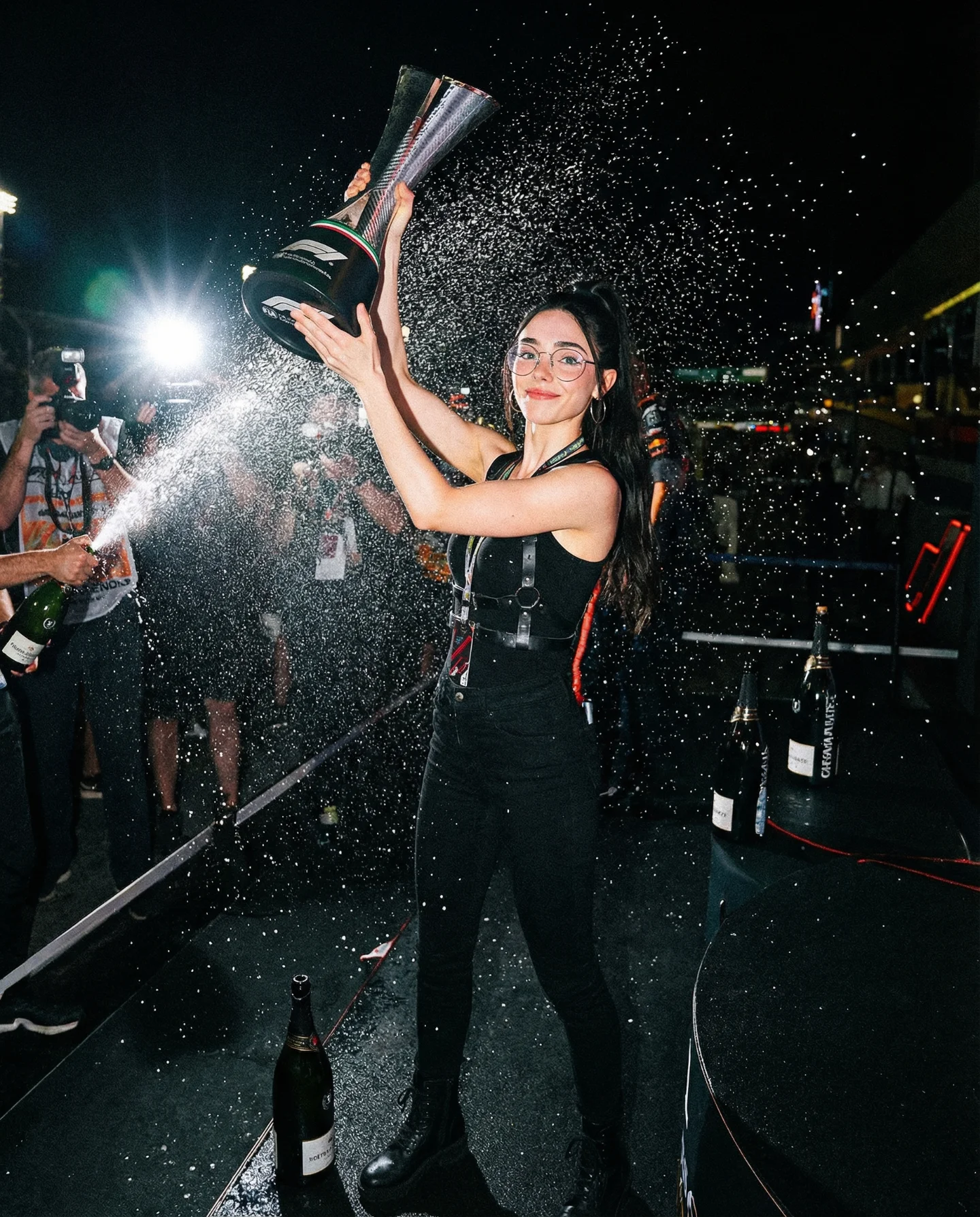
Formula 1 🏎️✨ Hoy toca salir de casa a dar una vuelta y hacer algo diferente 😋 Que foto de todas te gusta más?? 👀
Formula 1 🏎️✨ Hoy toca salir de casa a dar una vuelta y hacer algo diferente 😋 Que foto de todas te gusta más?? 👀
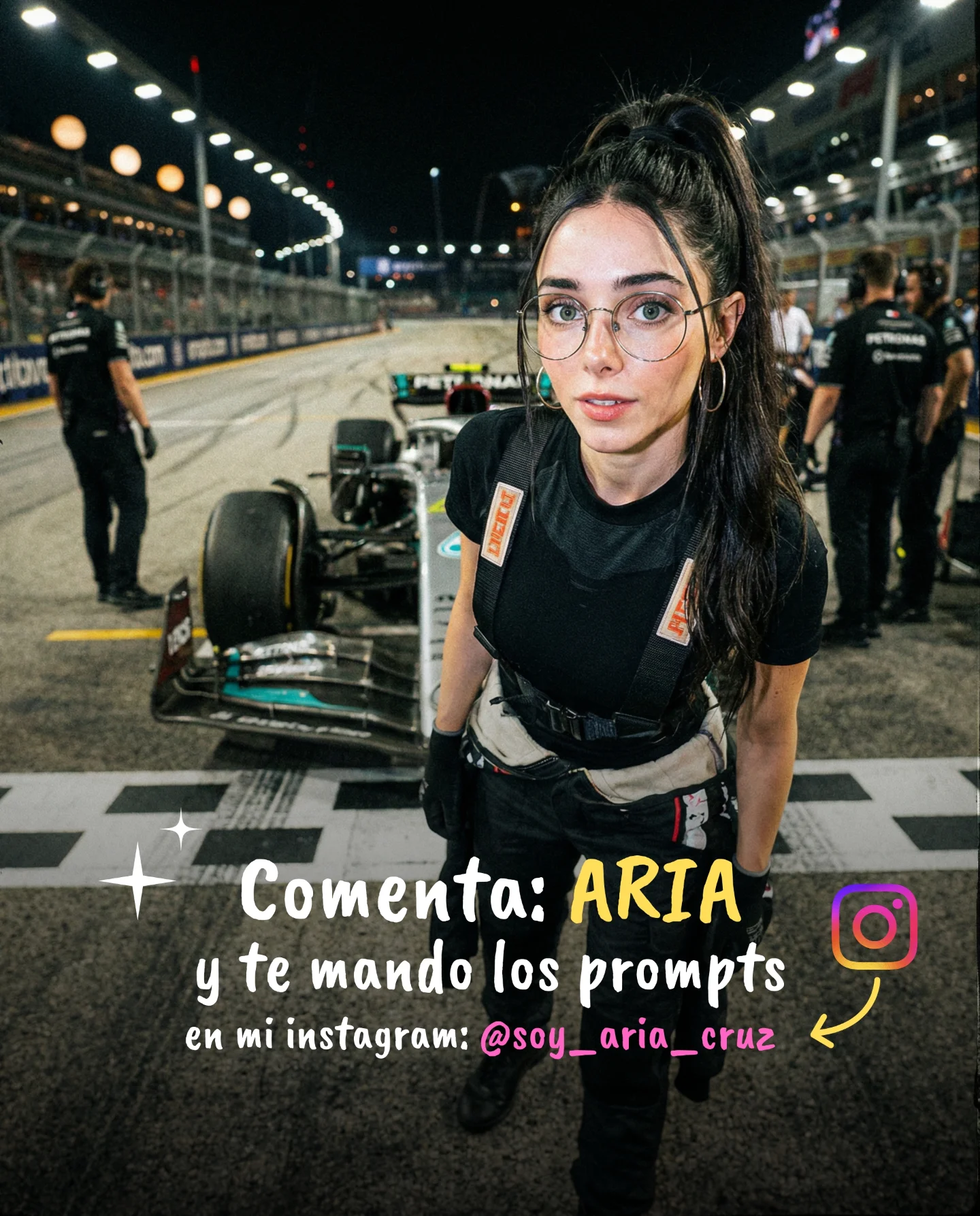
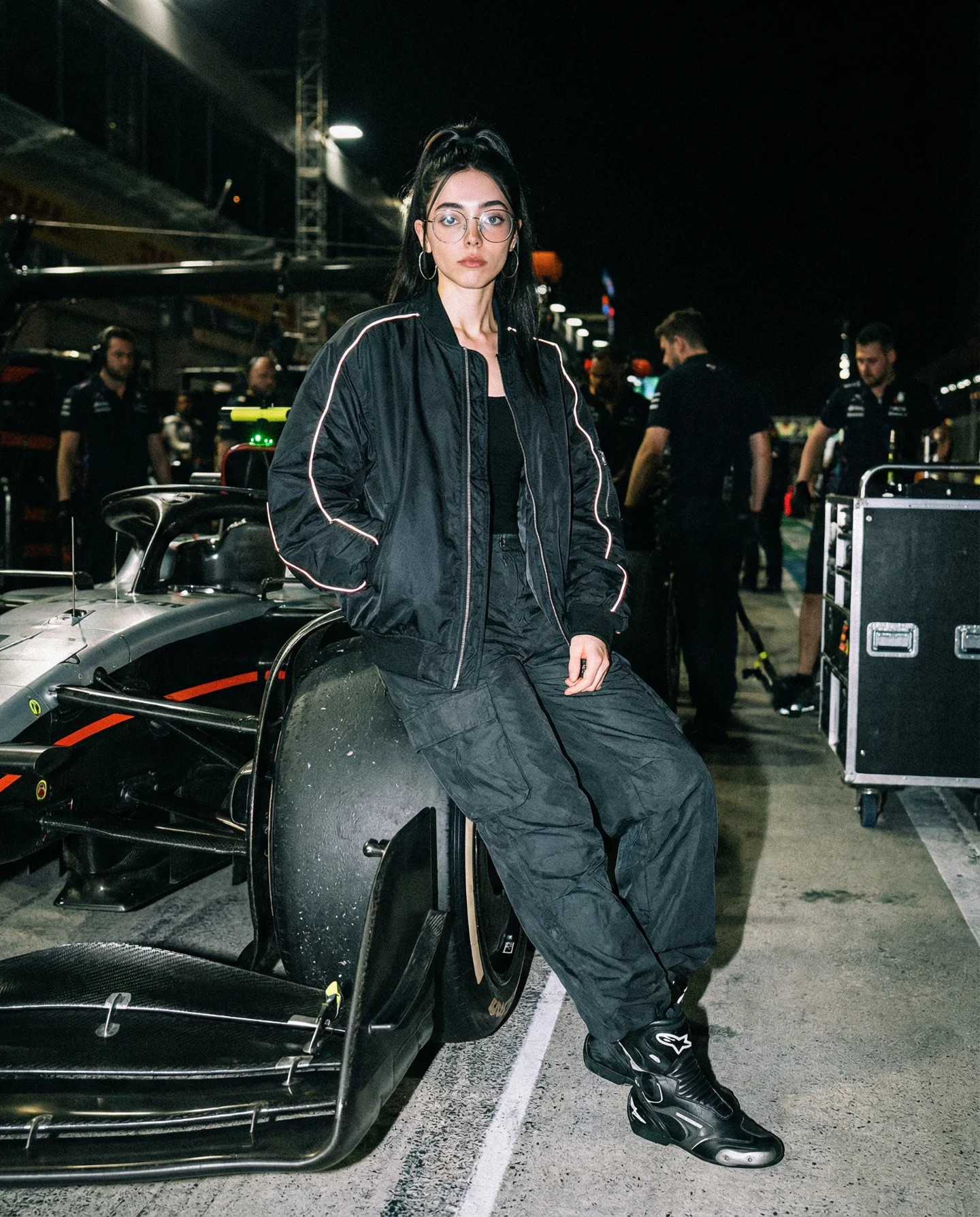
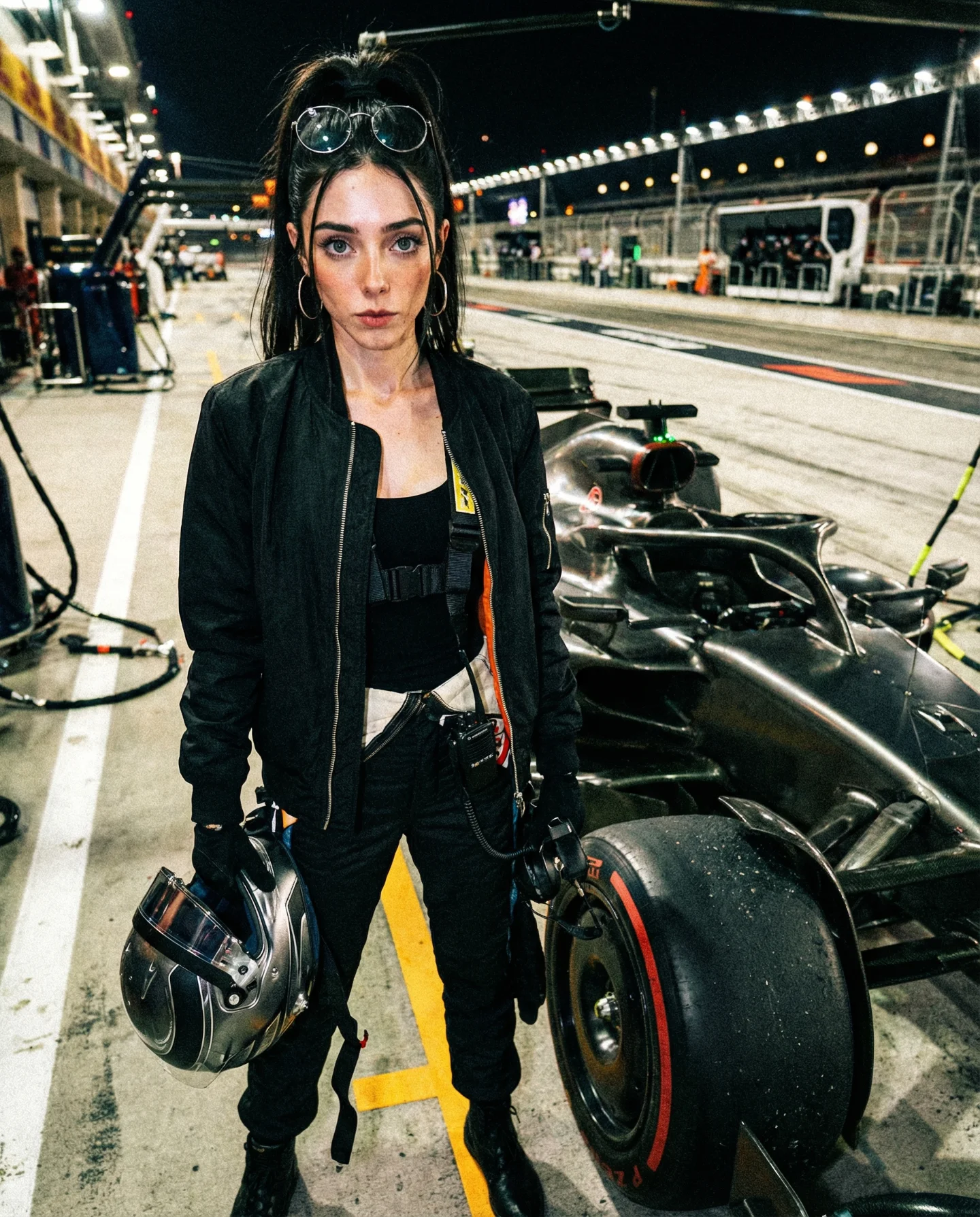
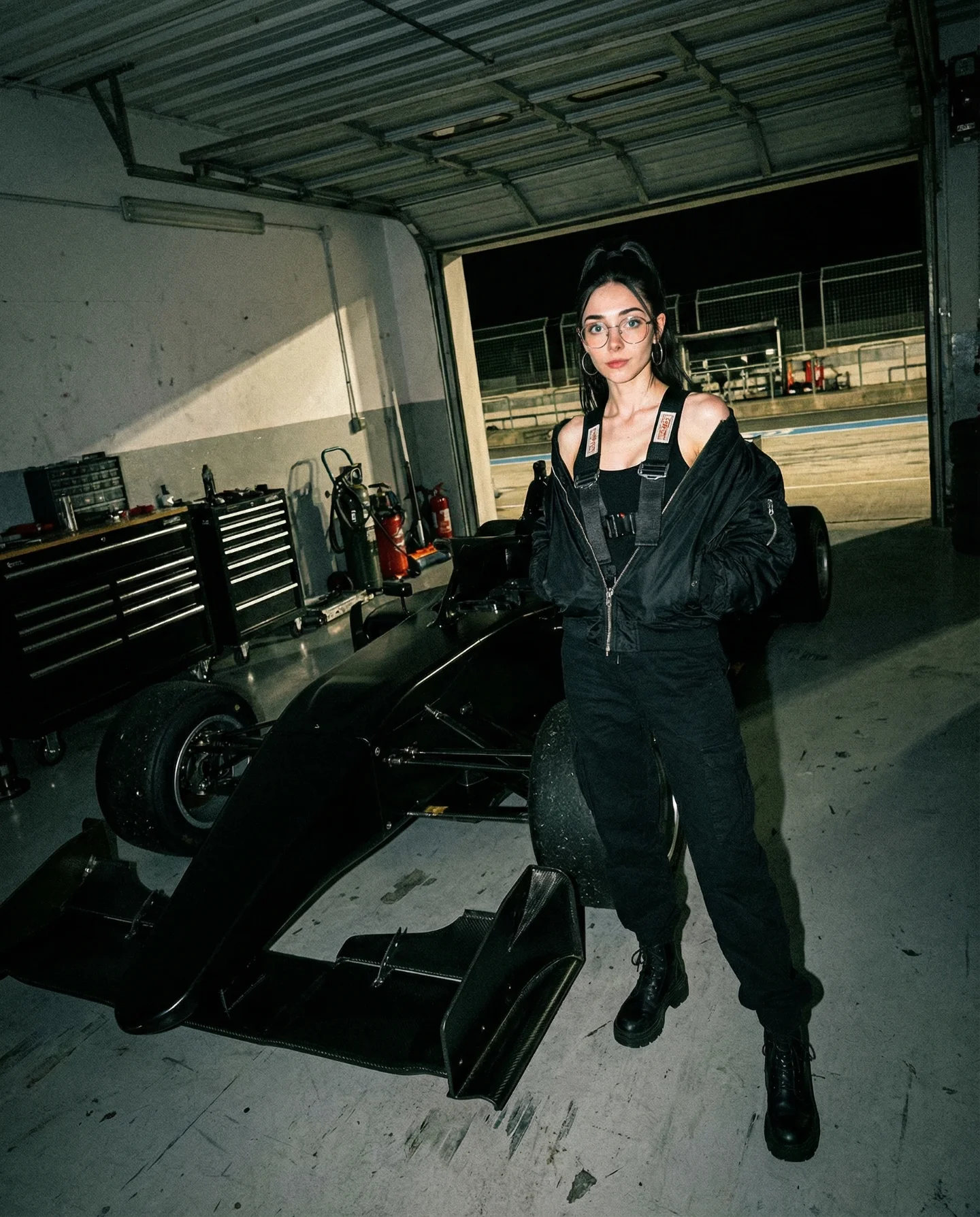
This image works because it understands a basic rule of aspirational content: access is often more compelling than action. There is no race happening in the frame, no motion blur, no dramatic overtake. Instead, the creator is standing directly on the grid with the car behind her. That is enough. For most viewers, the emotional charge comes from being close to the machine in a place that usually feels protected and exclusive.
The second smart move is that the car stays in a supporting role. Many creators make the mistake of letting the object take over the image, which turns the person into a prop. Here the balance is better. The woman is the clear focal point, but the car behind her delivers instant context, status, and credibility. That structure is much stronger for creator-led content because the image remains about identity, not just environment.
The frame is easy to decode at thumbnail size. You see a face first, then glasses, then black styling, then the unmistakable silhouette of a Formula 1 car. That sequence matters. On social platforms, the eye rarely processes everything at once. Good posts reveal meaning in layers, and this one does that efficiently.
The night-race lighting also adds polish without making the post feel overproduced. The venue lights create a premium event atmosphere, but because the photo still feels like social-native content, it stays relatable. That mix is useful for AI creator images: too polished and the image feels like advertising, too casual and it loses prestige. This one sits in the productive middle.
| Signal | Evidence (from this image) | Mechanism | Replication Action |
|---|---|---|---|
| Access-driven aspiration | The subject is standing on the starting grid with the car directly behind her. | Viewers read the image as insider access, which increases status and curiosity. | Place the creator in a restricted or prestigious environment rather than outside it. |
| Fast hierarchy | The face is foreground-dominant while the car remains clearly visible. | The image keeps human connection and niche context at the same time. | Lock the portrait first, then use the hero object as a second-read background anchor. |
| Premium atmosphere | Night lights, pit buildings, and track symmetry create event-scale polish. | Lighting adds grandeur without needing aggressive editing tricks. | Use venue lighting and strong depth lines instead of forcing cinematic color grading. |
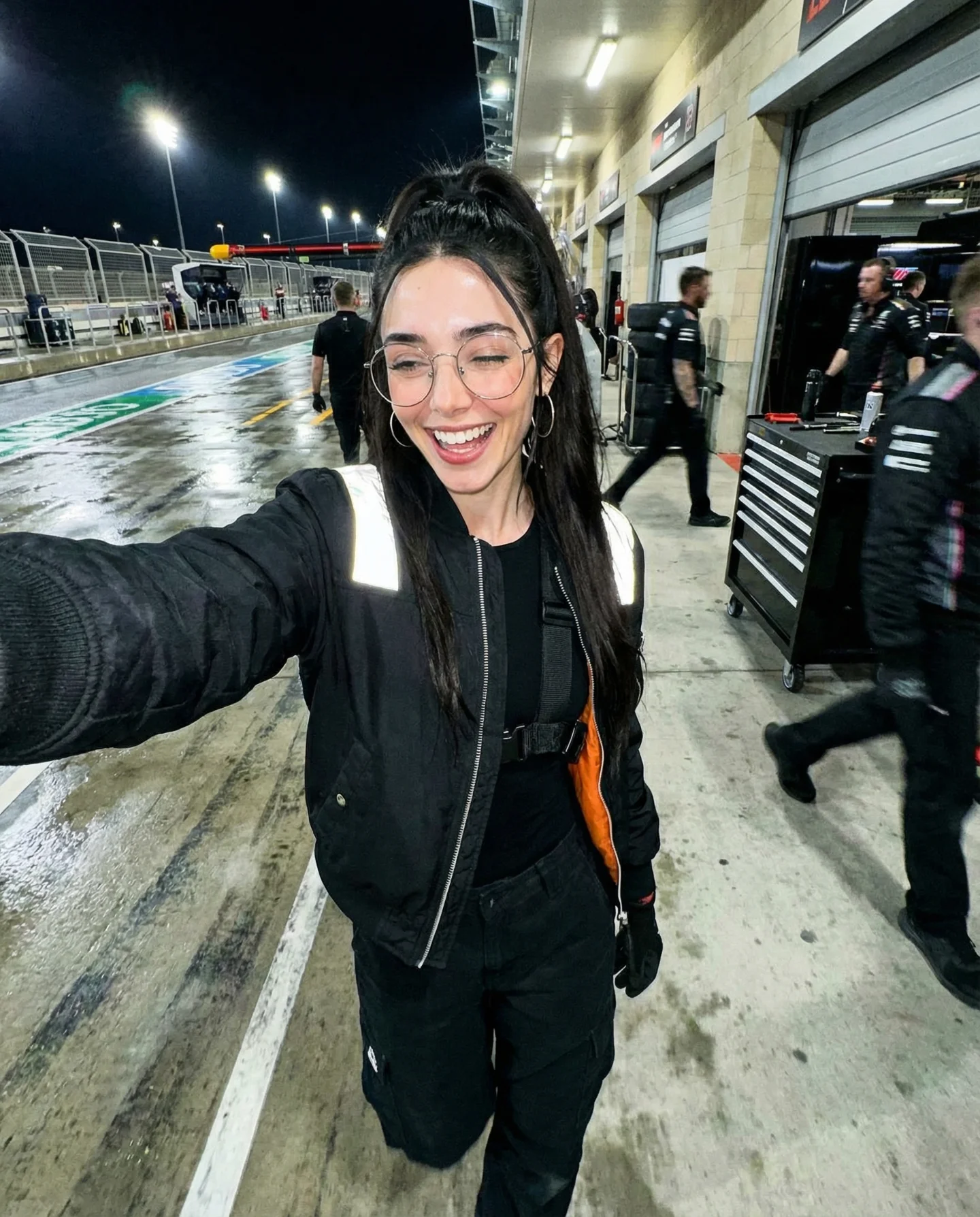
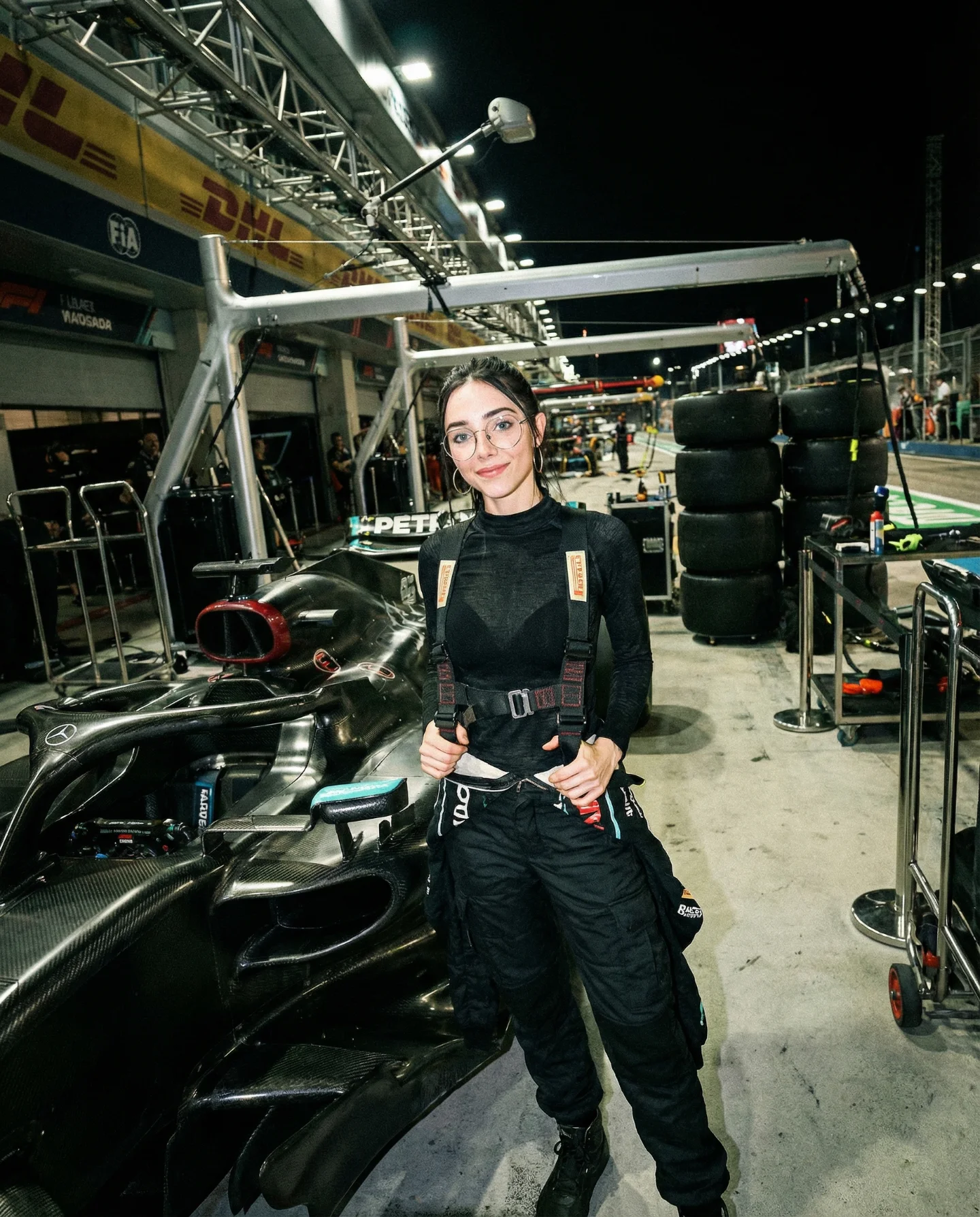
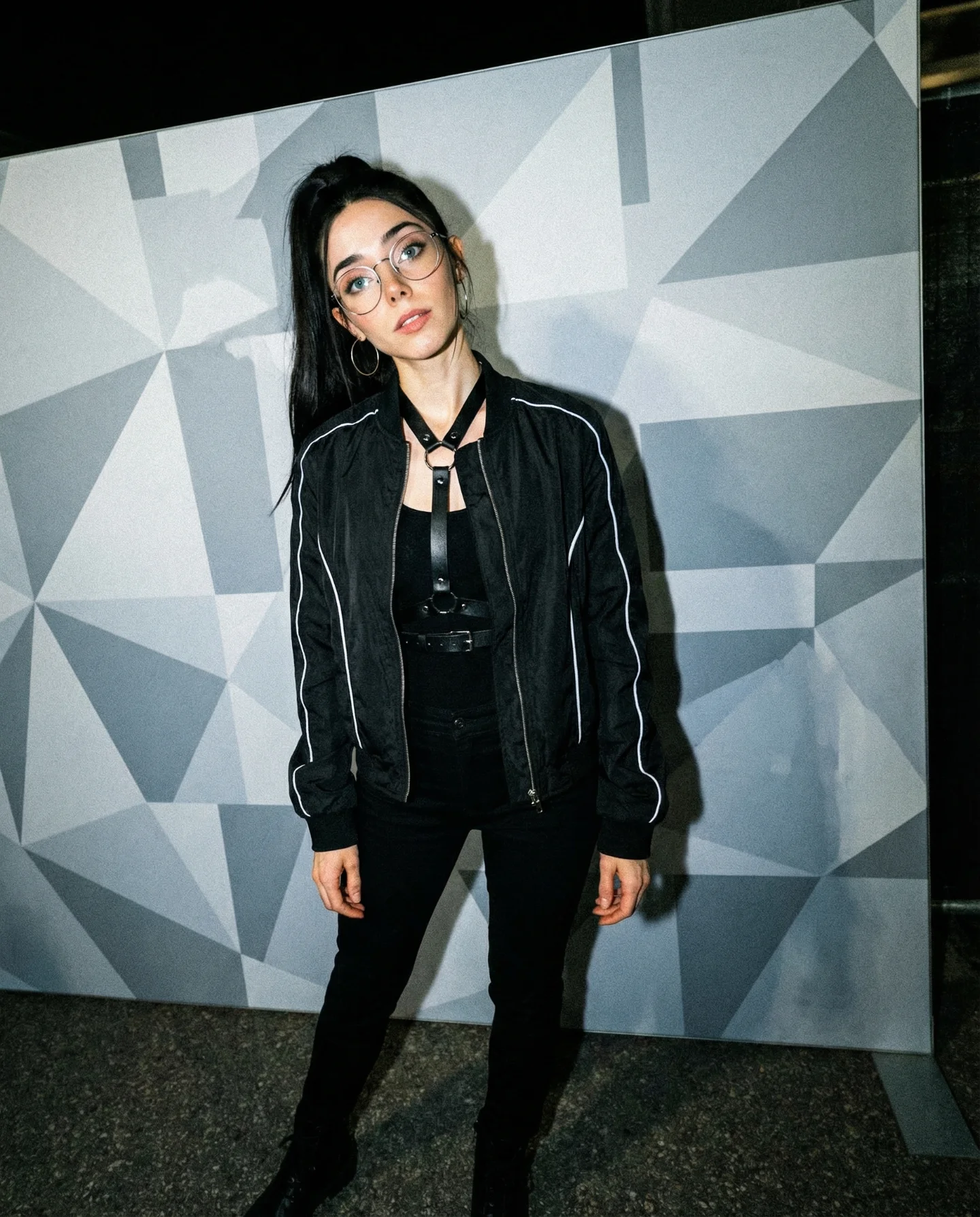
| Creator consistency | Glasses, ponytail, and black outfit repeat across multiple posts. | Recurring identity cues make the character feel stable and memorable. | Keep 3 to 4 signature appearance markers constant across scenarios. |
This setup is ideal for motorsport-themed persona building, event access storytelling, and “exclusive world, personal point of view” content. It also adapts well to paddocks, garages, pit lanes, track walks, and luxury sports event entrances. The core idea is not just Formula 1. The transferable pattern is this: put the creator in front of a world-class object, but preserve their face as the primary read.
It is less effective for pure automotive photography, dramatic race storytelling, or highly intimate candid content. The strength here is controlled access and portrait hierarchy. If you need speed, tenderness, or mechanical detail as the hero, a different structure will work better.
{creator identity} standing in front of {elite machine or object} inside {exclusive night event venue}{portrait-led social photo} with {high-status background object} in {restricted access setting}{consistent creator look} on a Formula 1 grid with {car type} behind and {night-race lighting}The strongest aesthetic decision is restraint. The frame does not chase complexity. The wardrobe stays dark, the pose is straightforward, and the car is framed clearly but not aggressively. That restraint makes the image feel cleaner and more expensive. It trusts the venue to do the visual heavy lifting.
The second important choice is symmetry with slight imperfection. The lights and track create an almost corridor-like composition, but the human presence breaks the mechanical order. That small tension keeps the image from feeling like a sterile press photo. It still feels creator-owned.
| Observed | Why it matters for recreation |
|---|---|
| Foreground portrait with the car stacked directly behind | This layering is the whole status mechanism of the image. |
| Night-race lights on both sides of the grid | The venue immediately feels premium and large-scale. |
| Mostly black outfit with harness details | The look fits motorsport without turning into costume. |
| Glasses and high ponytail | These details stabilize the creator identity across scenarios. |
| Minimal emotional expression, direct gaze | The mood stays cool, composed, and aspirational rather than playful. |
If you want this image to converge, define the hierarchy explicitly. Say that the person is foremost and the car is directly behind. If you do not specify this relationship, models often place the car too far back, too large, or too decorative. The success of the image depends on stacked depth and controlled emphasis.
| Prompt chunk | What it controls | Swap ideas (EN, 2-3 options) |
|---|---|---|
| young woman standing on a Formula 1 grid with a car directly behind her | The core portrait-object hierarchy | grid access portrait; trackside prestige shot; race-weekend identity frame |
| large round glasses, high ponytail, hoop earrings | The recognizable face and styling markers | signature creator details; smart-glam identity cues; consistent portrait anchors |
| black fitted top with racing-harness suspenders | The niche-specific wardrobe feel | motorsport-inspired styling; technical black outfit; subtle pit-lane fashion |
| night track lighting with pit buildings and fencing | The venue realism and atmosphere | Grand Prix grid at night; illuminated pit straight; premium race venue |
| silver-and-black Formula 1 car centered behind the subject | The prestige object and visual context | open-wheel race car backdrop; elite motorsport machine; high-status vehicle anchor |
| clean photograph without promotional graphics | Prevents drift into meme or story-post styling | no overlay text; no CTA icons; no social stickers |
Lock three things first: subject placement, car placement, and venue lighting. Those are the structural elements. Then stabilize the glasses and outfit details. Leave color grading and staff density until the end.
The one-change rule matters here. If the car shifts too much, fix the stack before editing wardrobe. If the subject looks generic, fix the face before touching the background. This kind of status image depends more on hierarchy than on decoration.