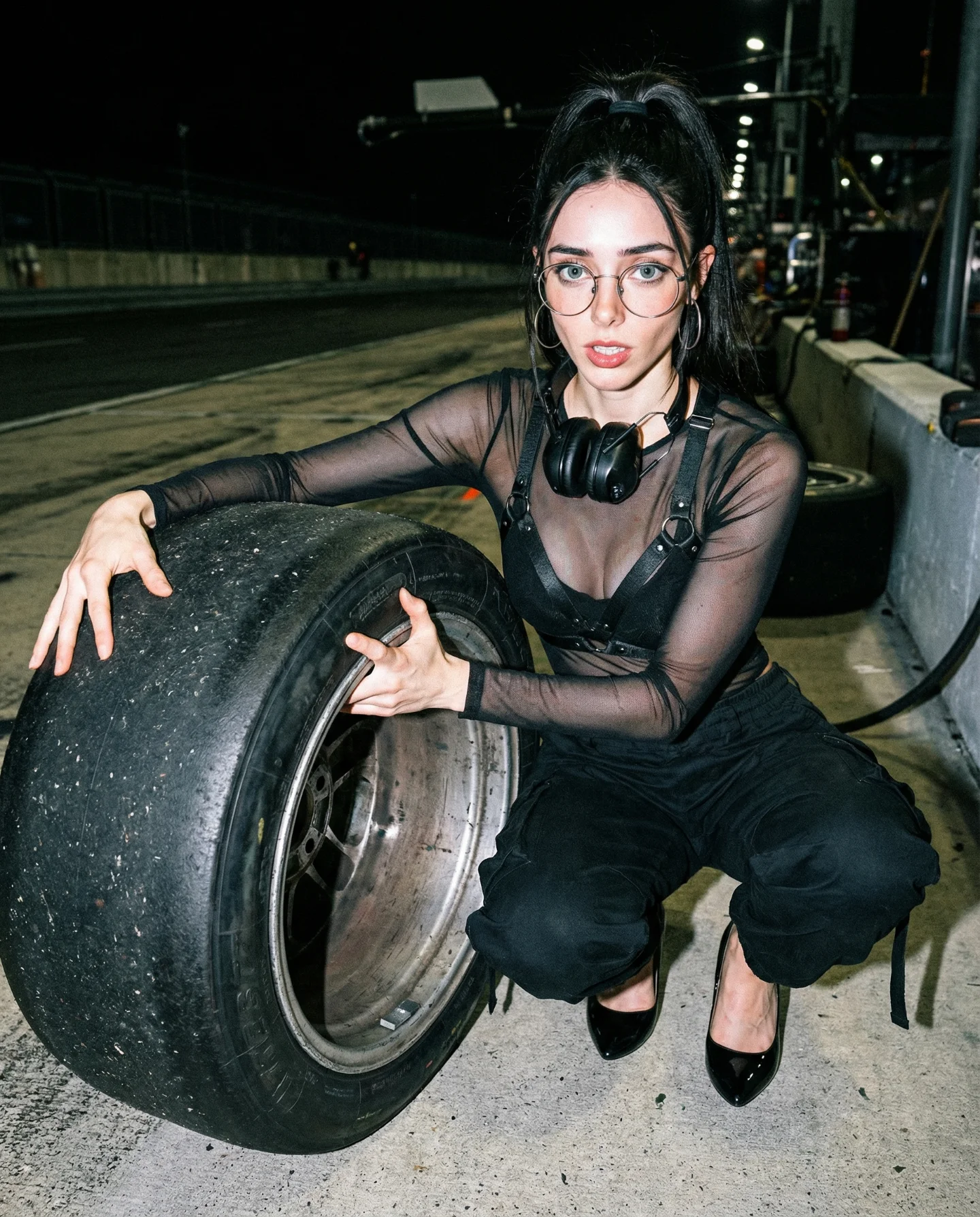
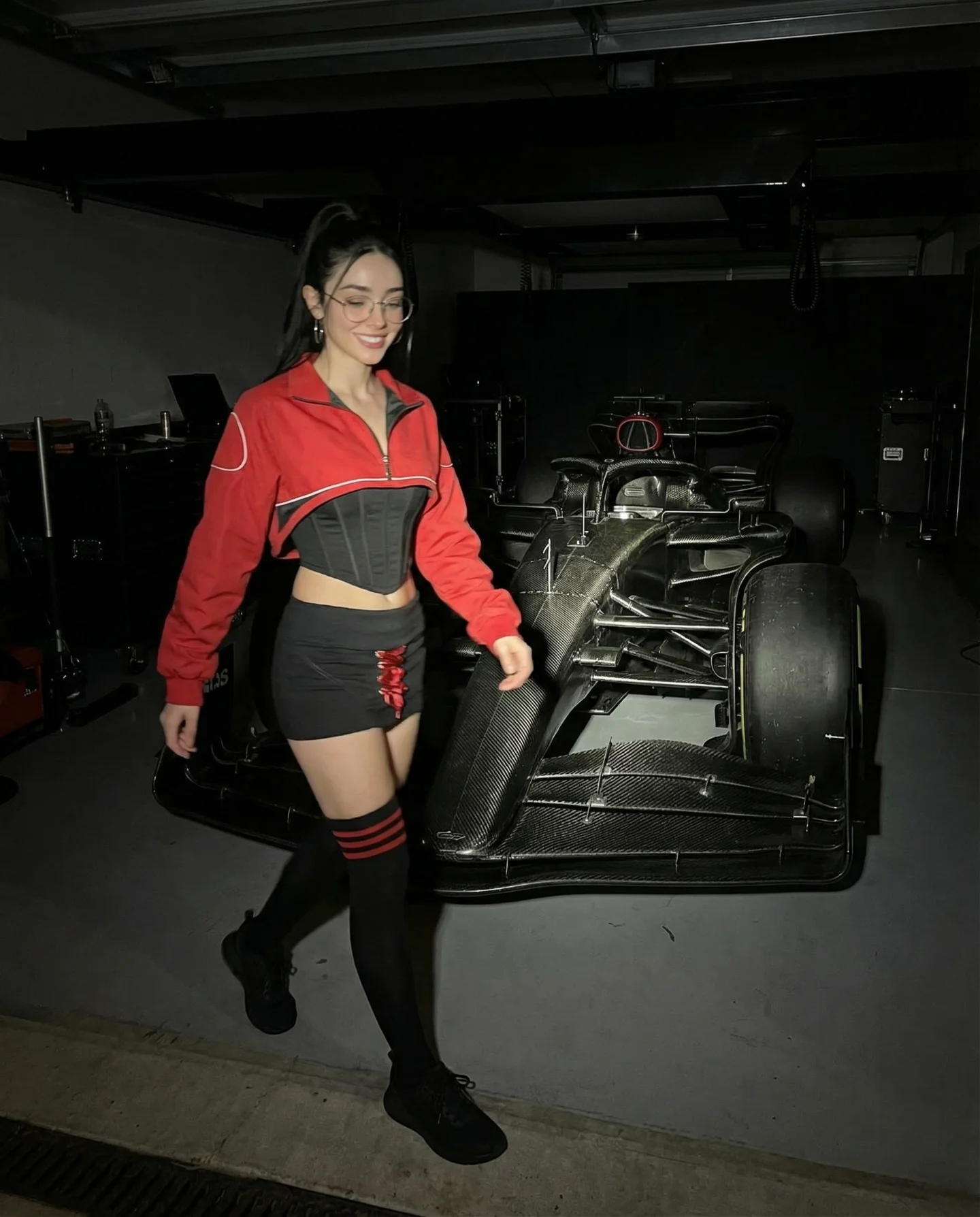
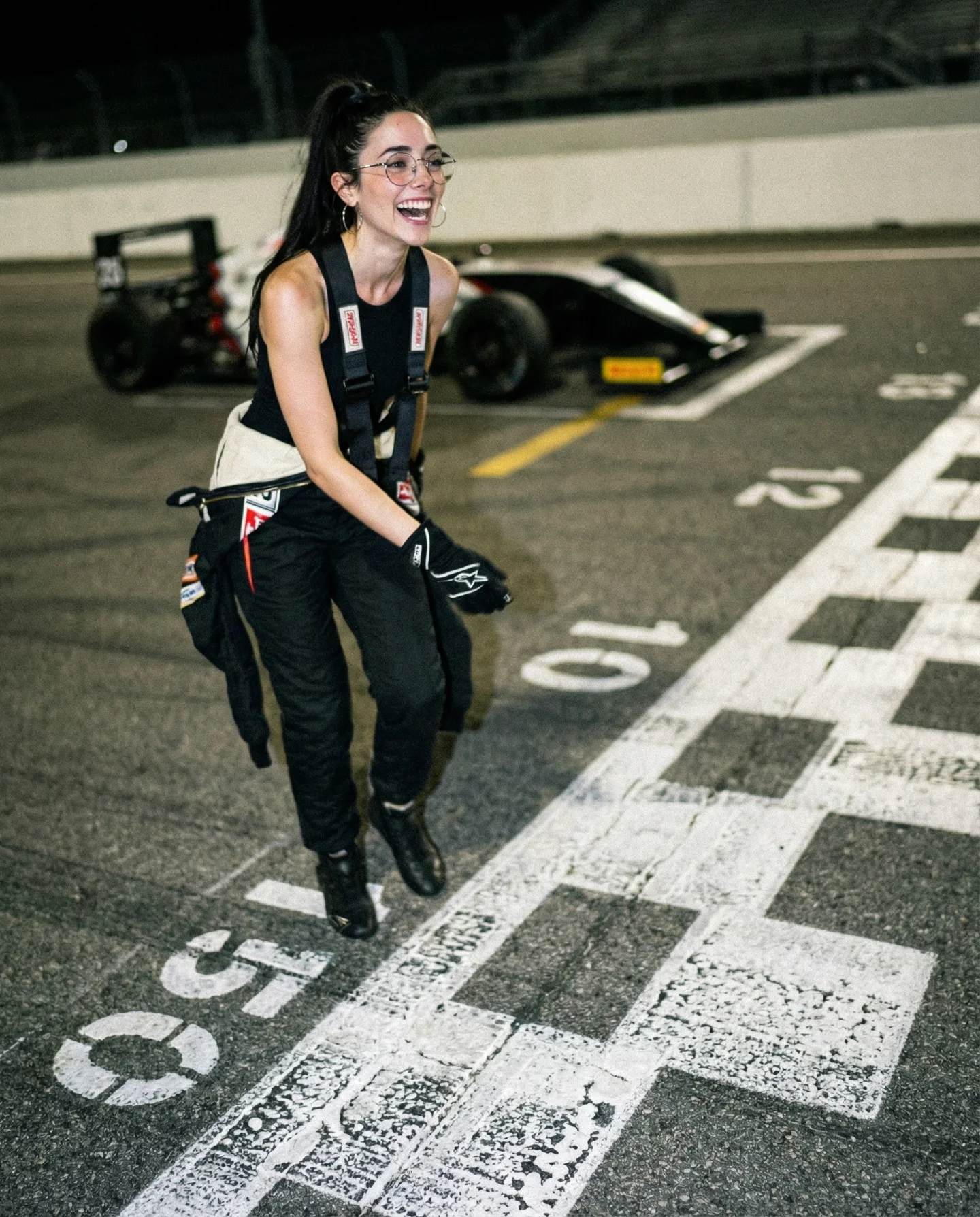
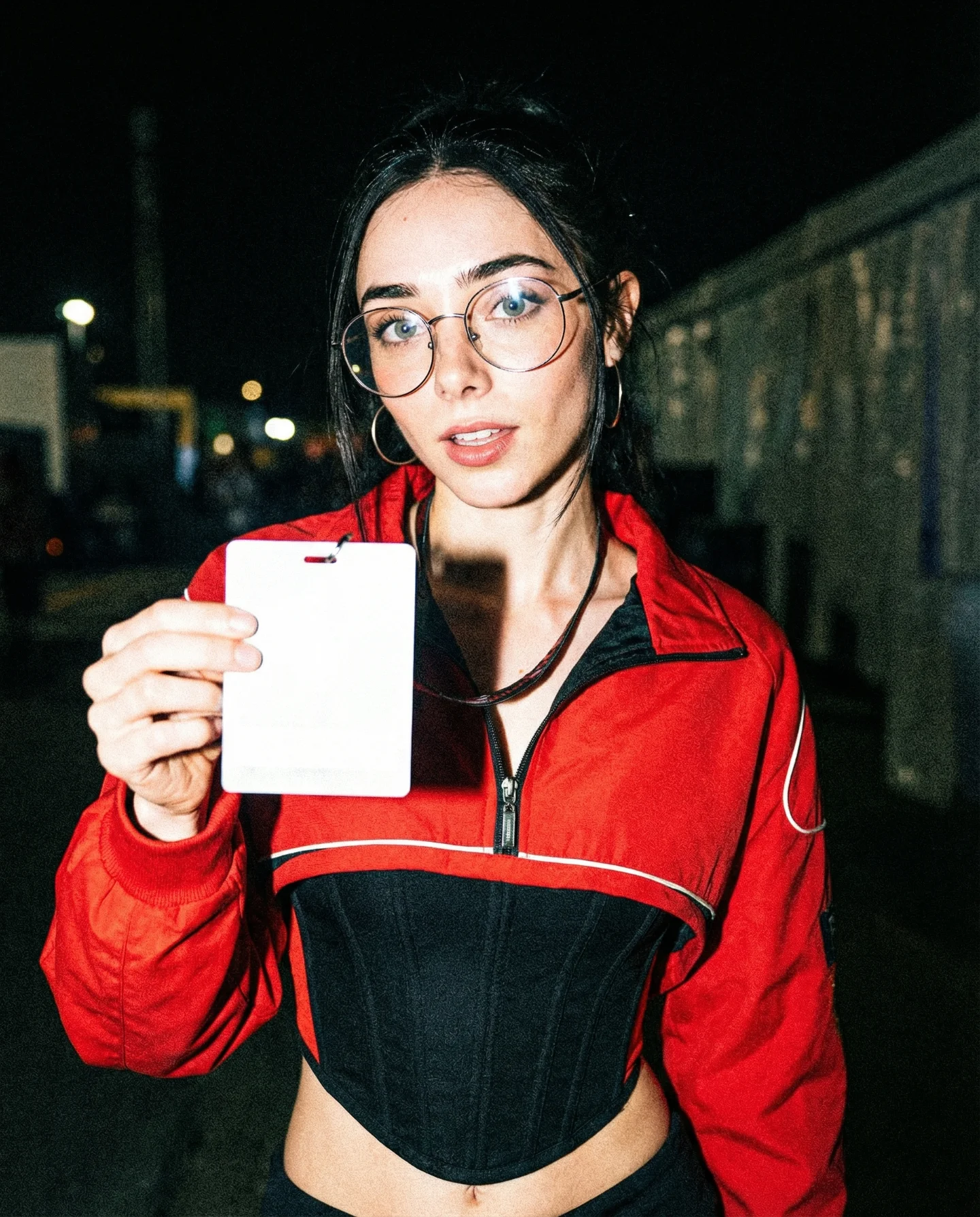
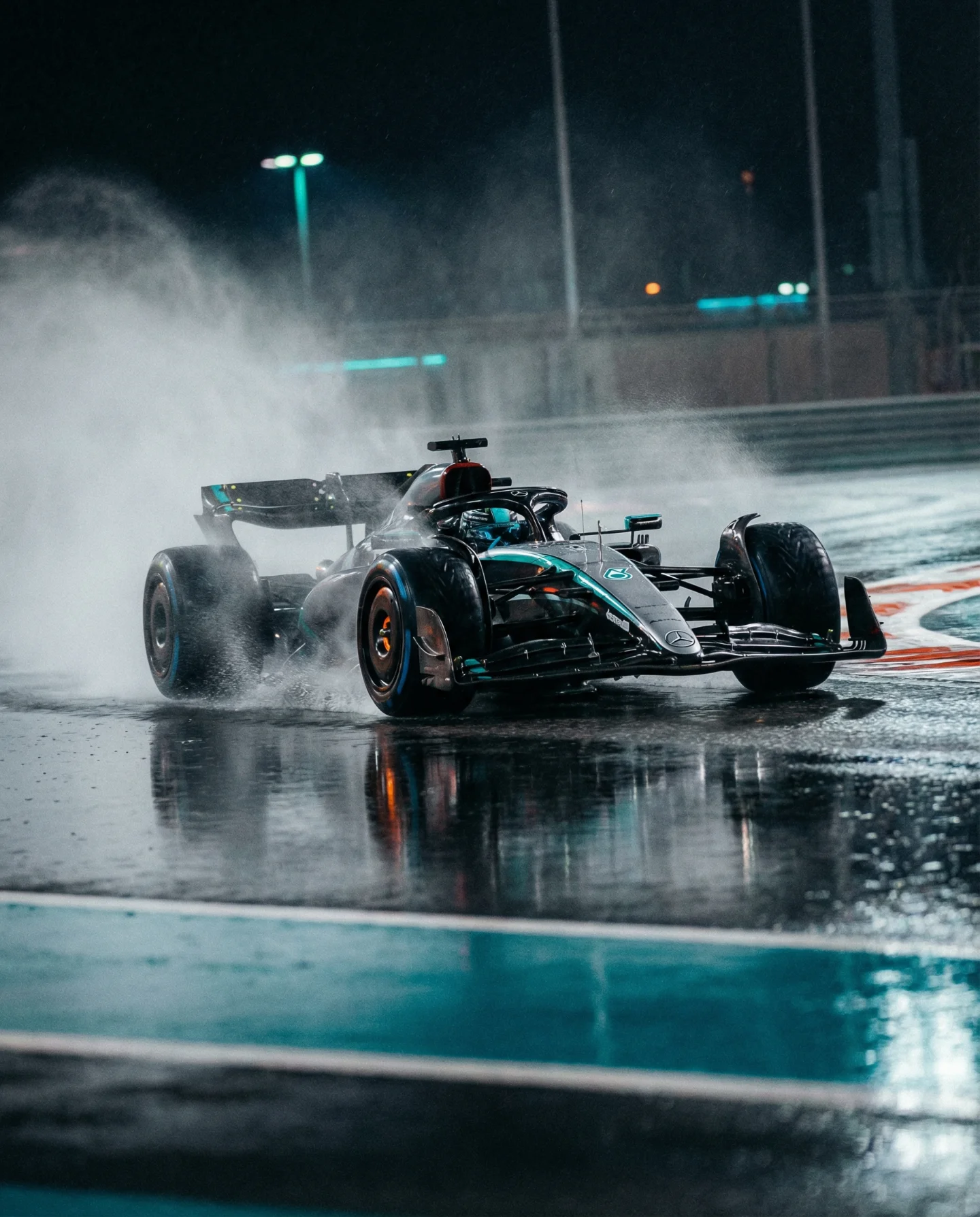
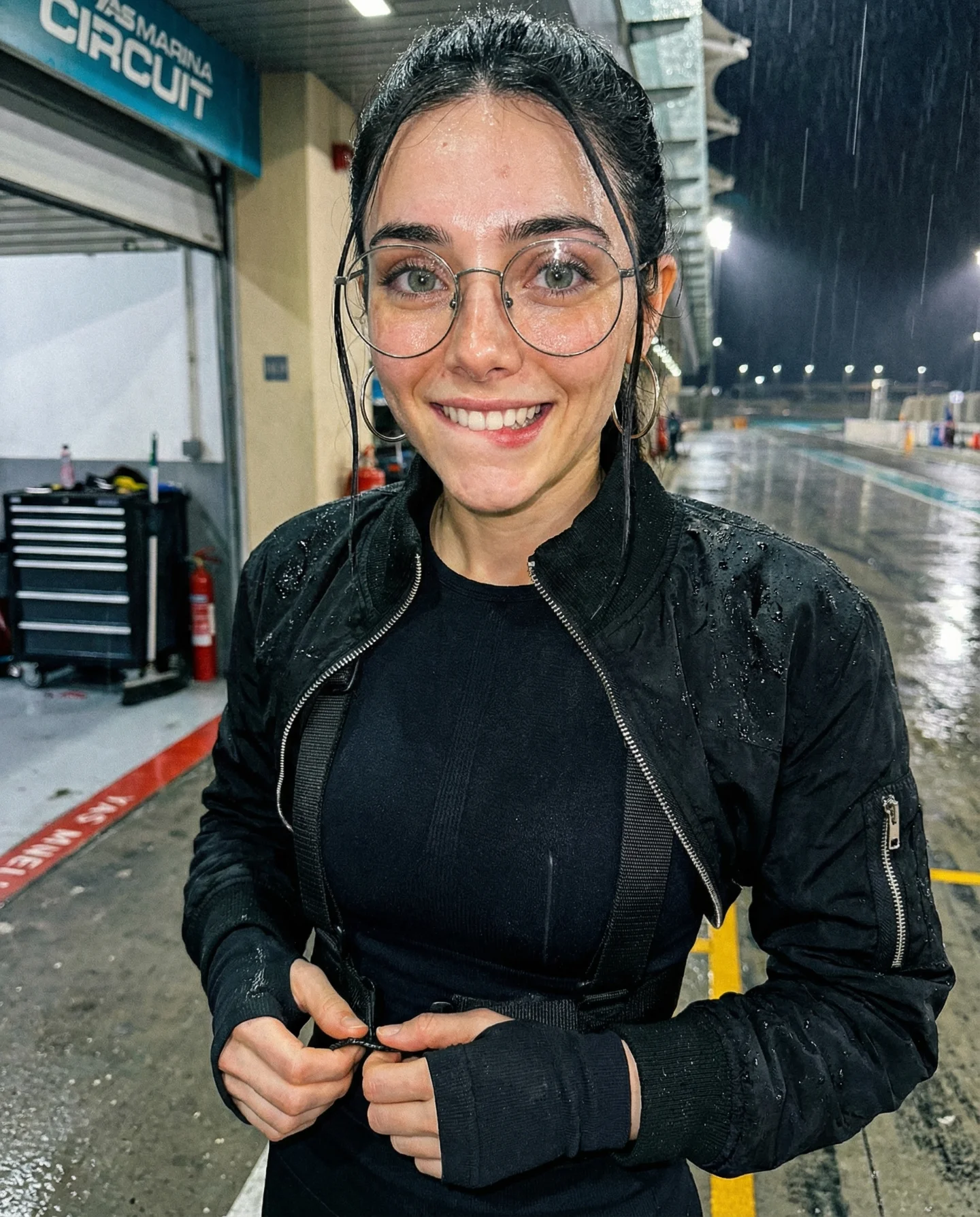
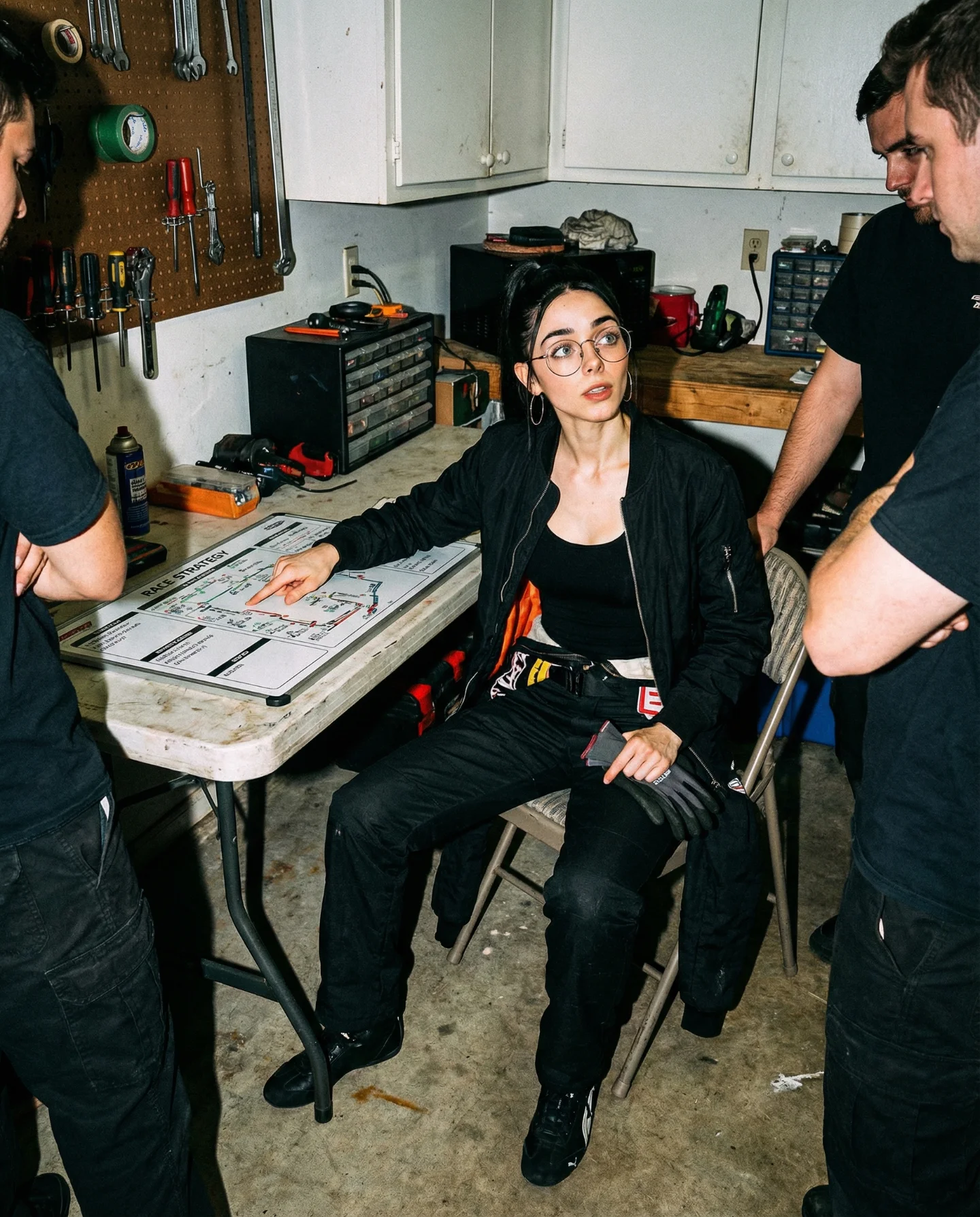
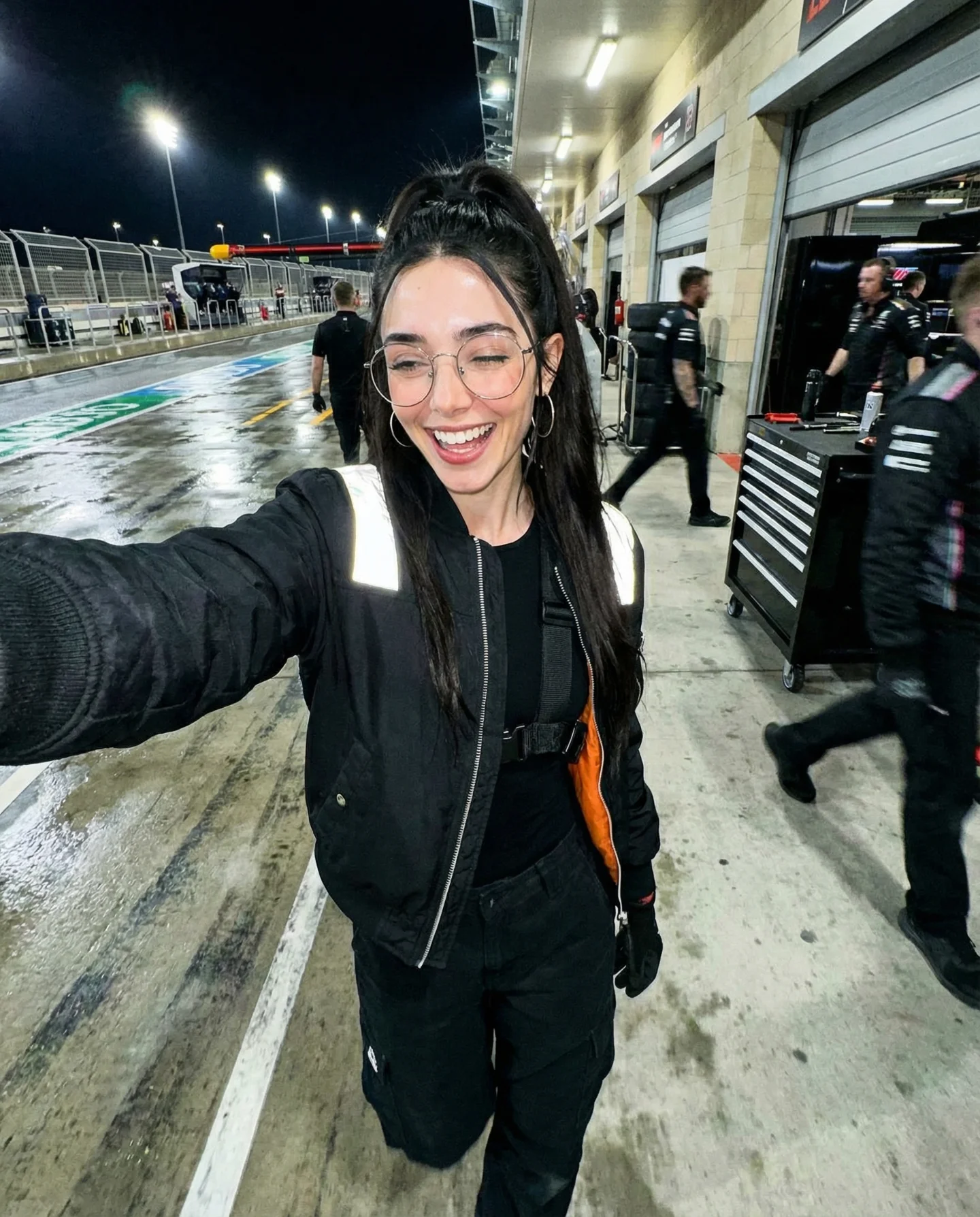
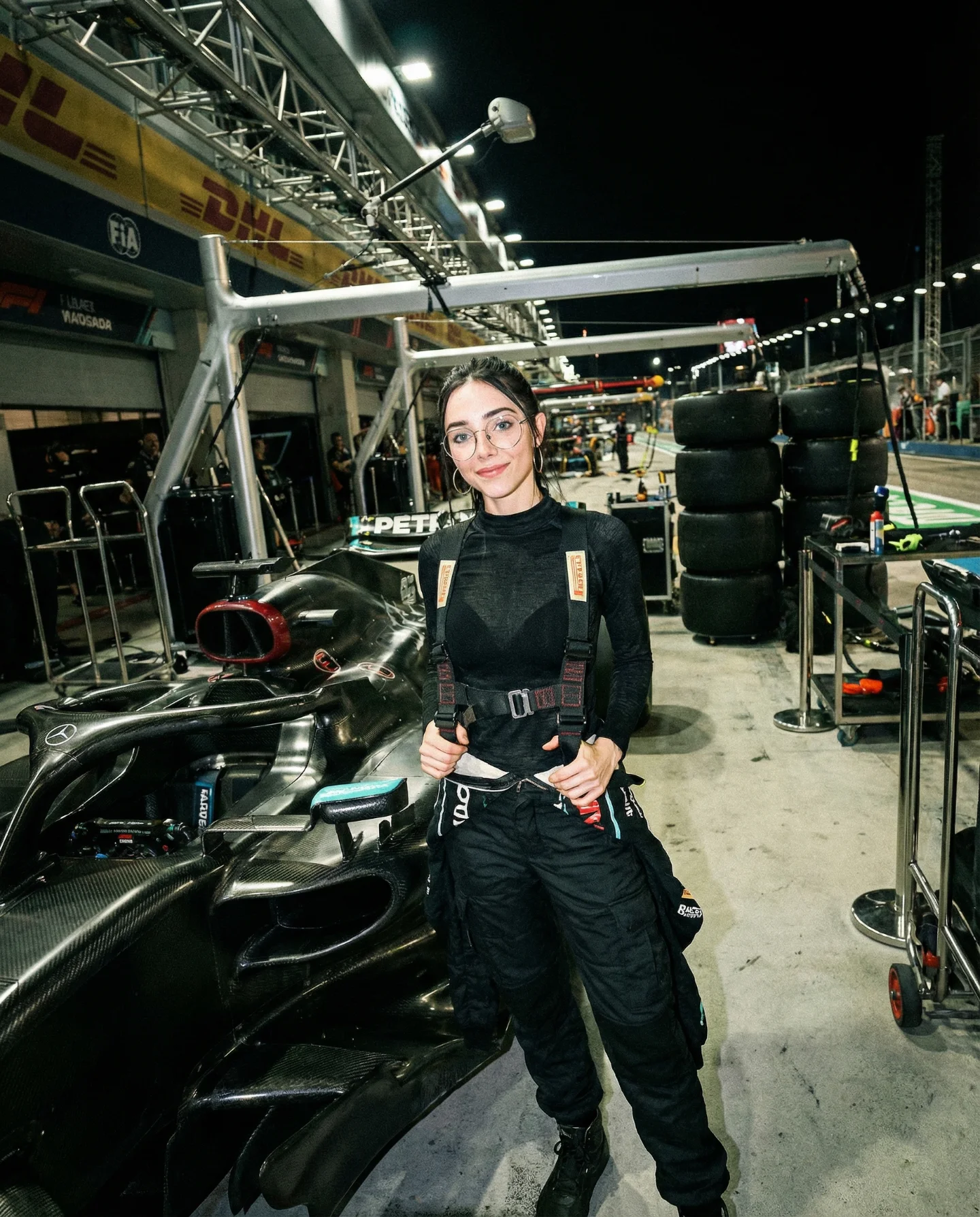
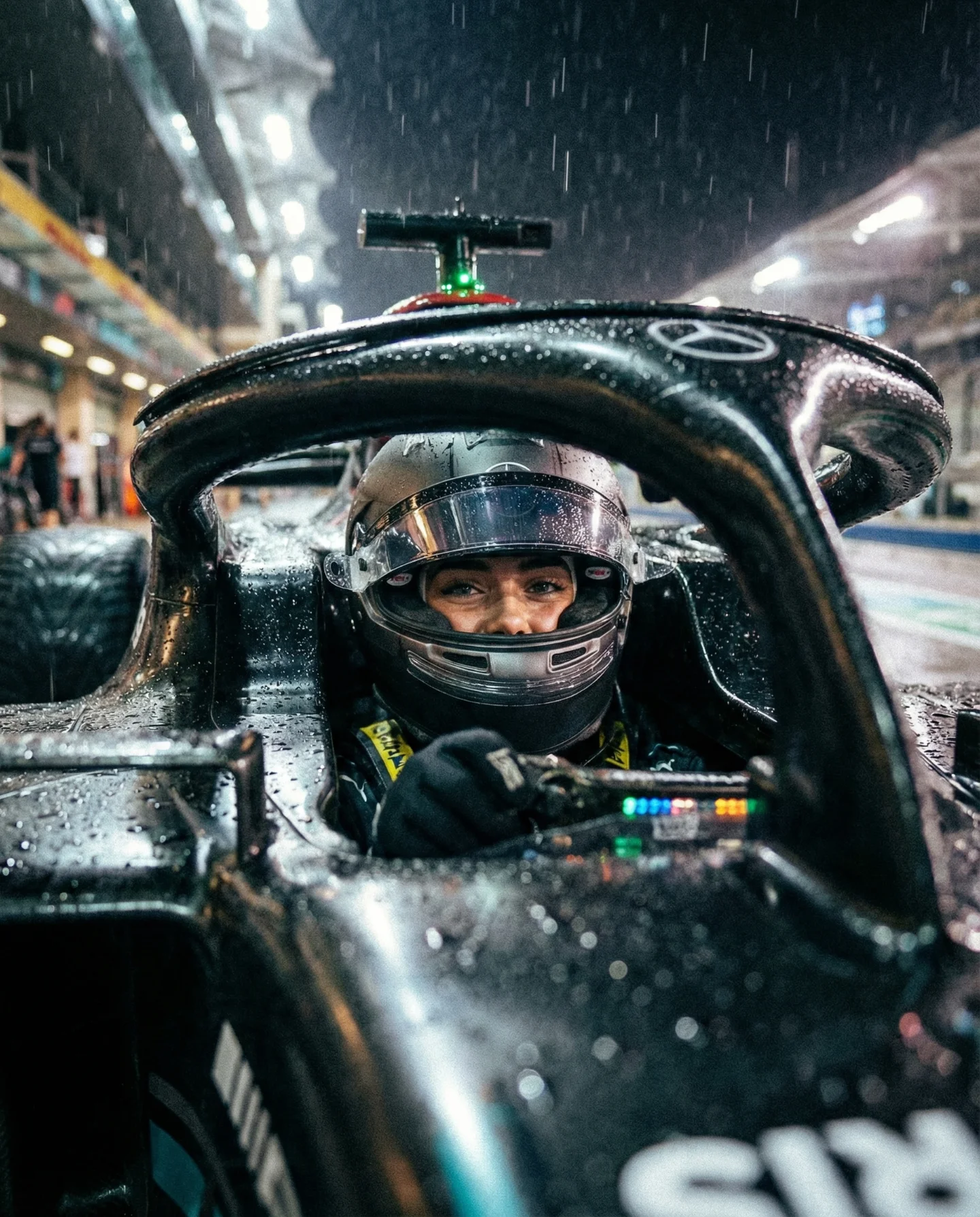
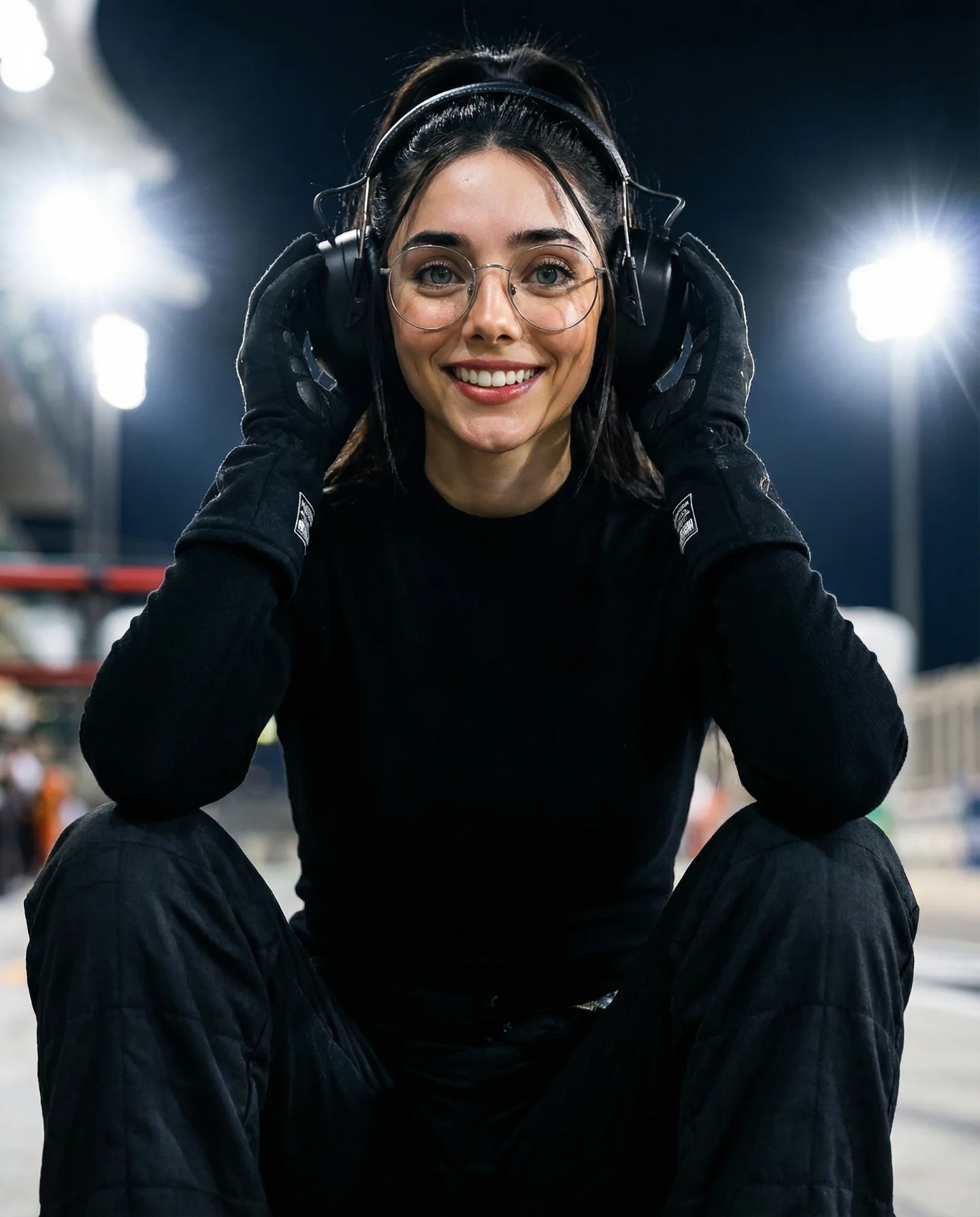
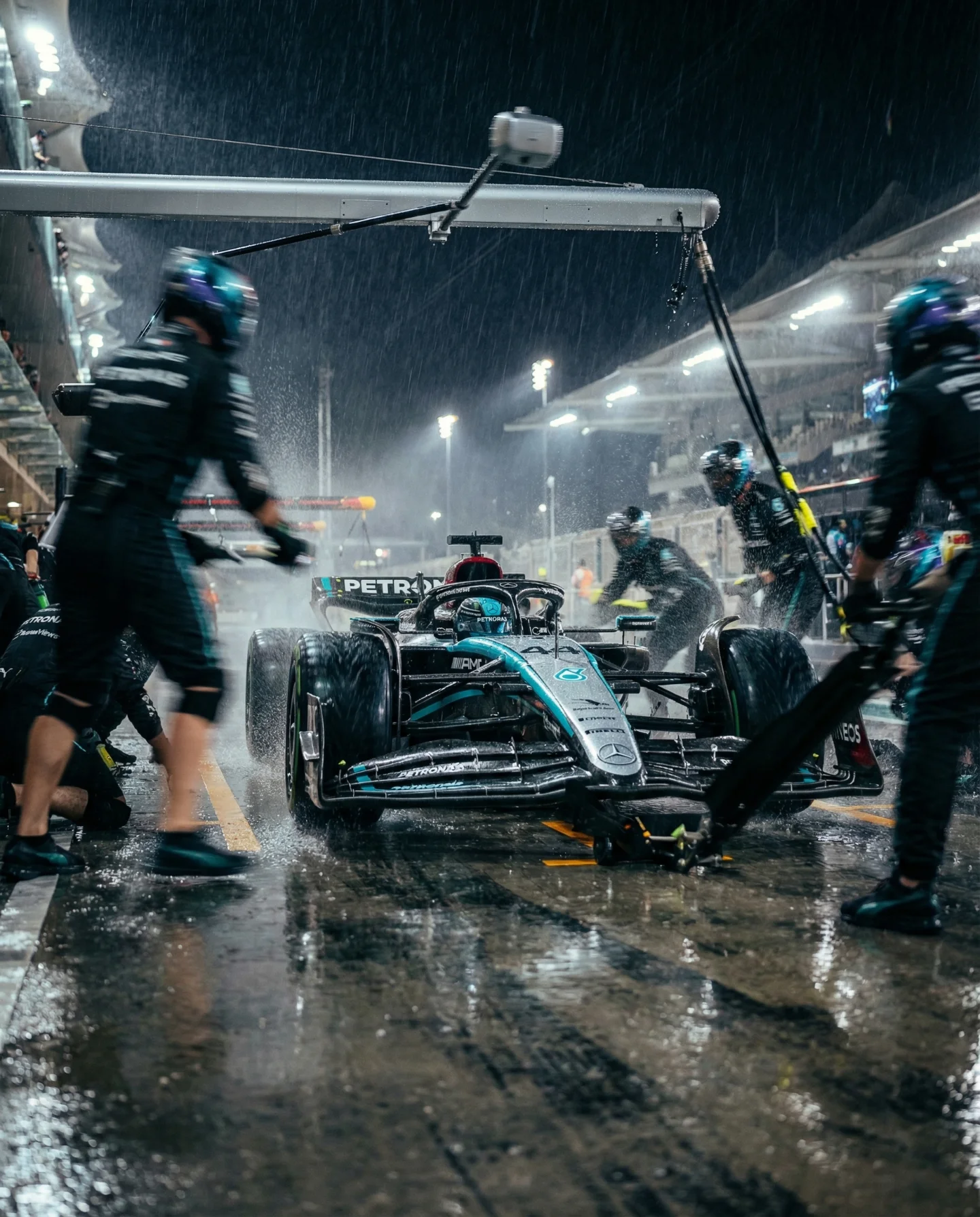
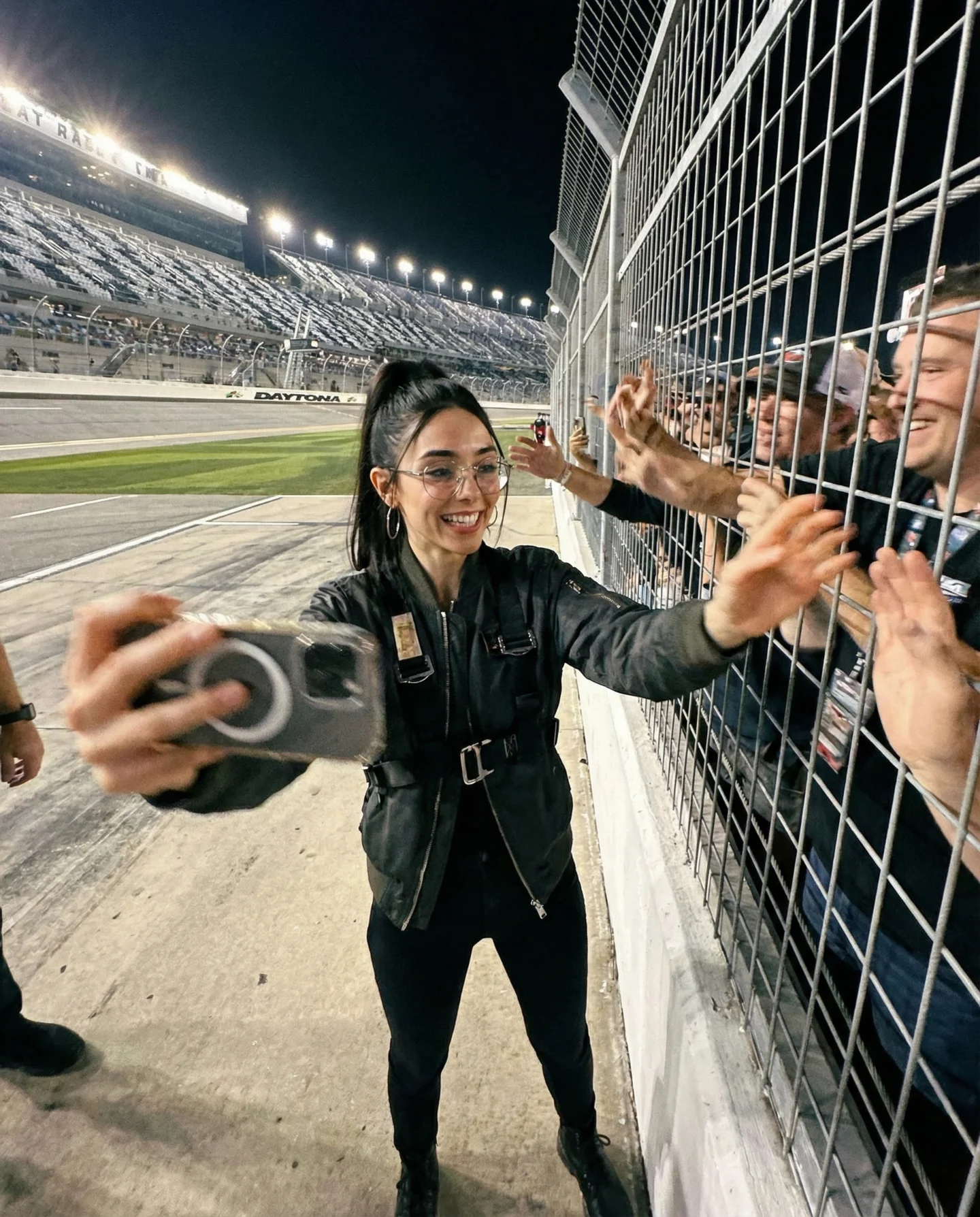
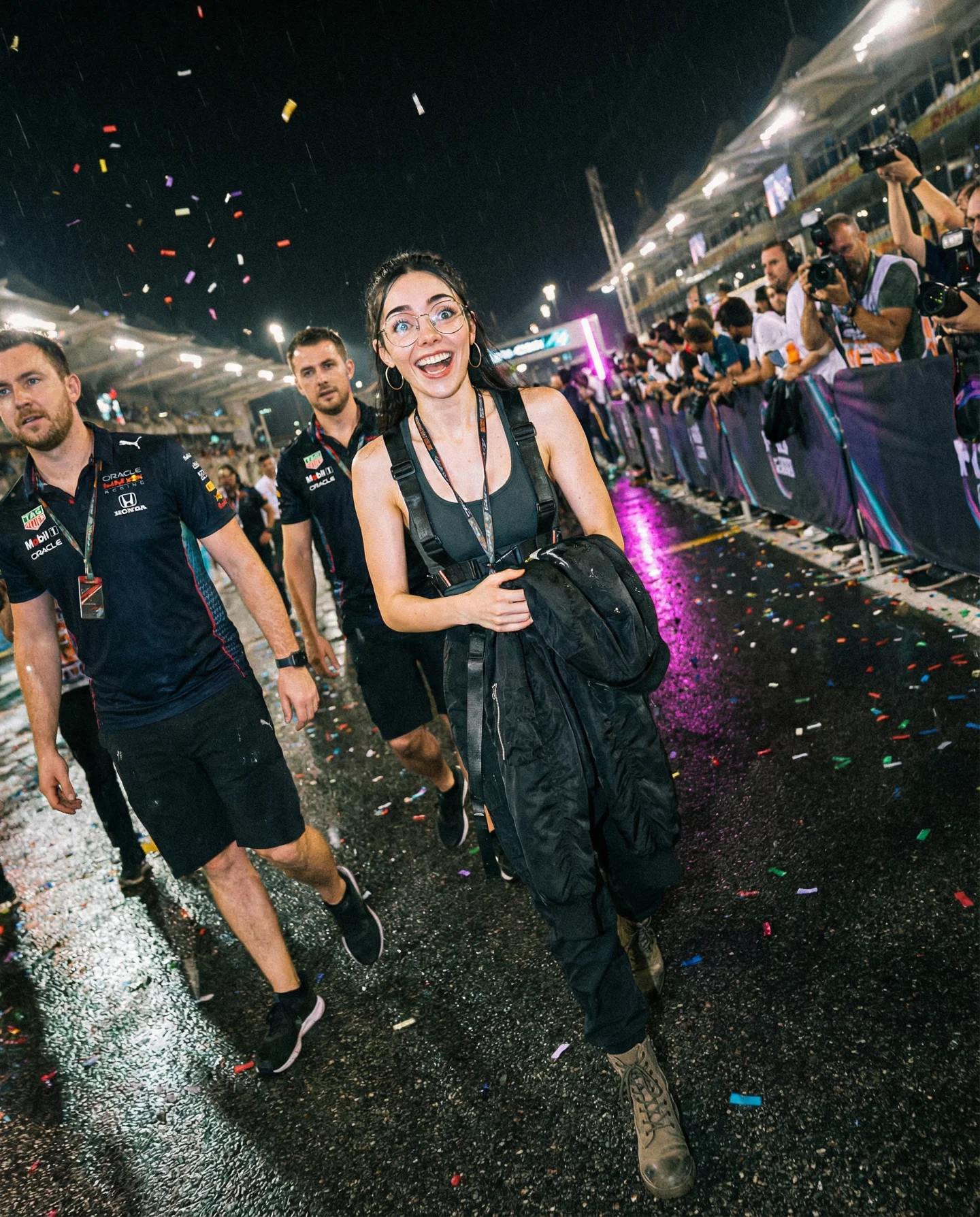
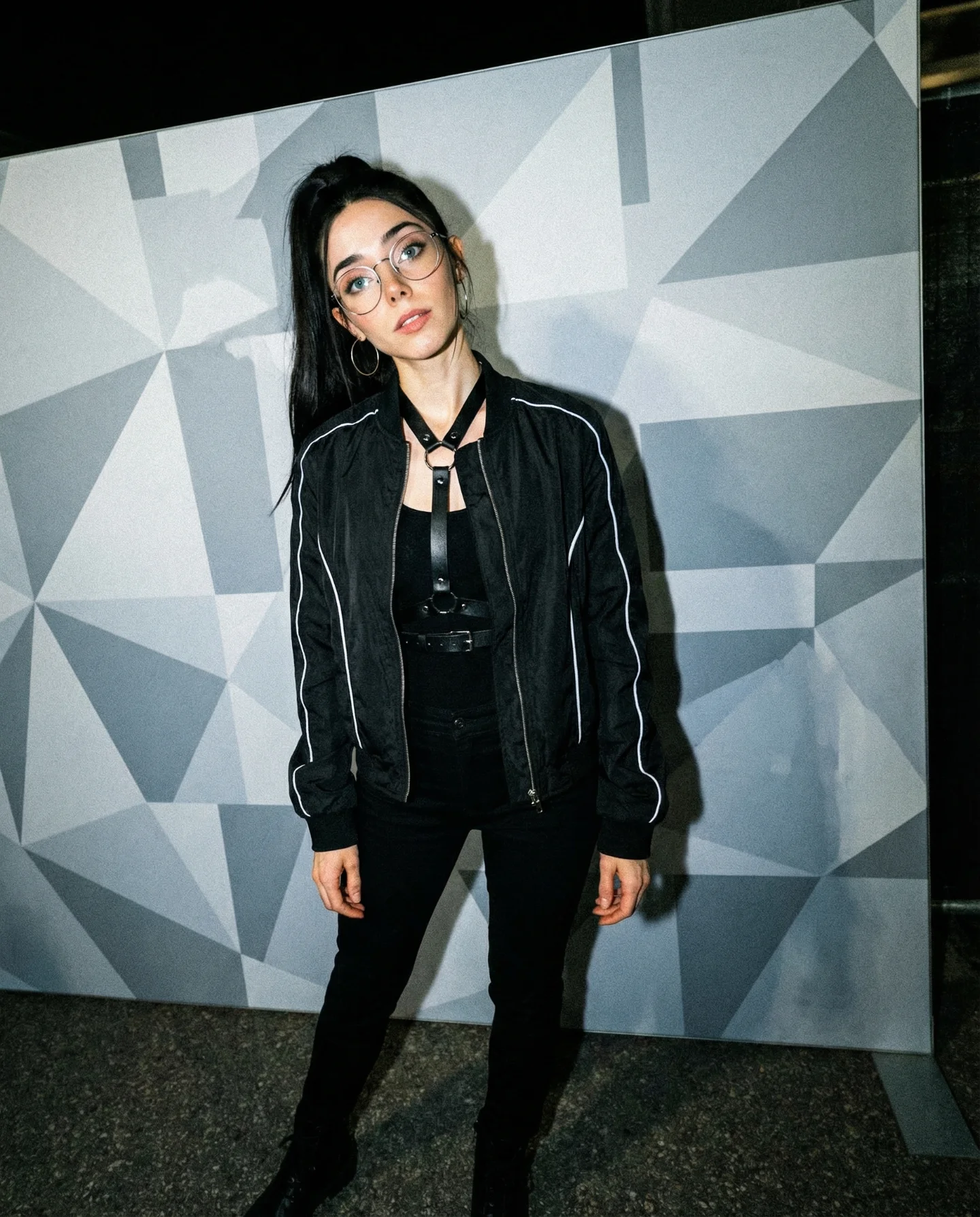
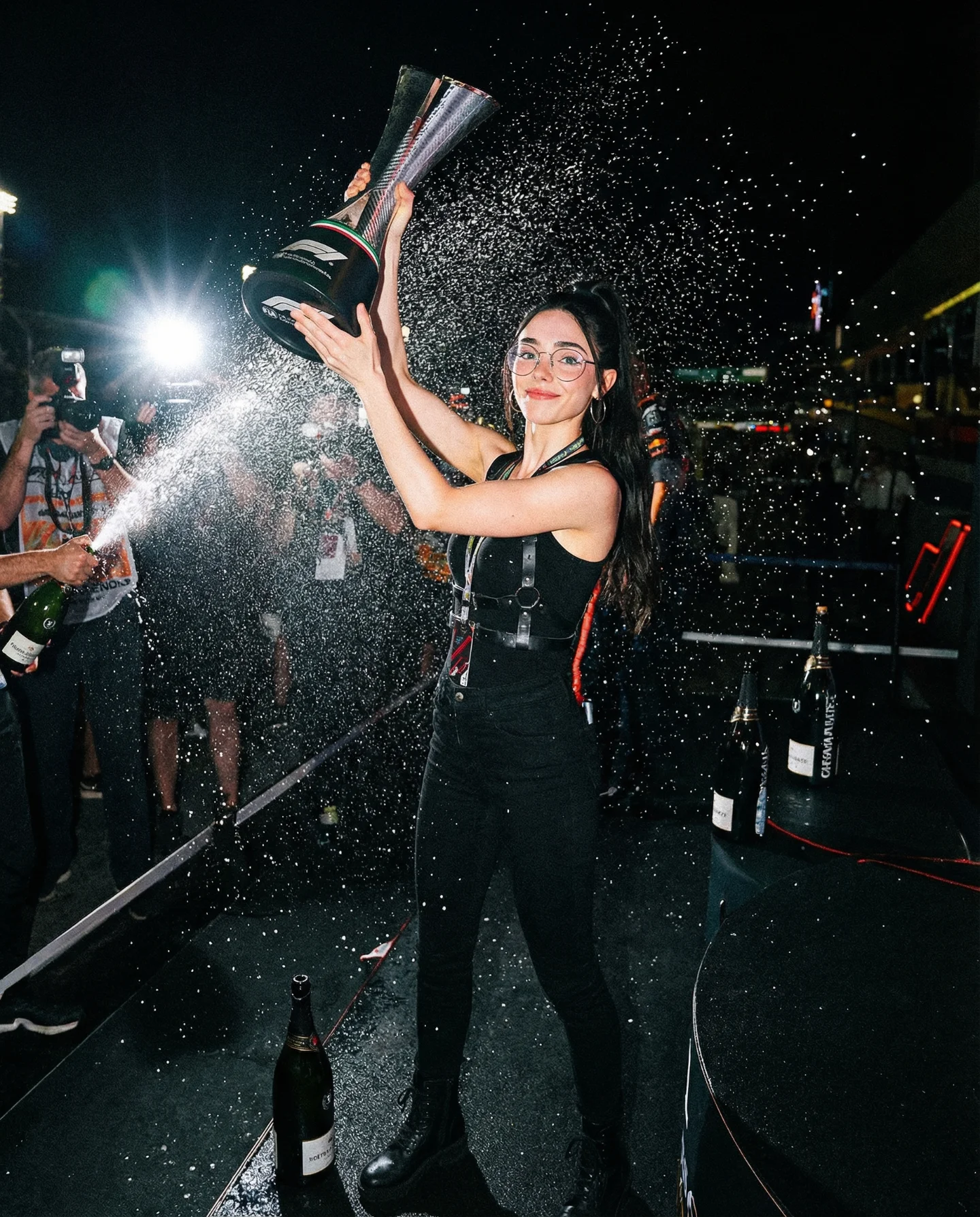
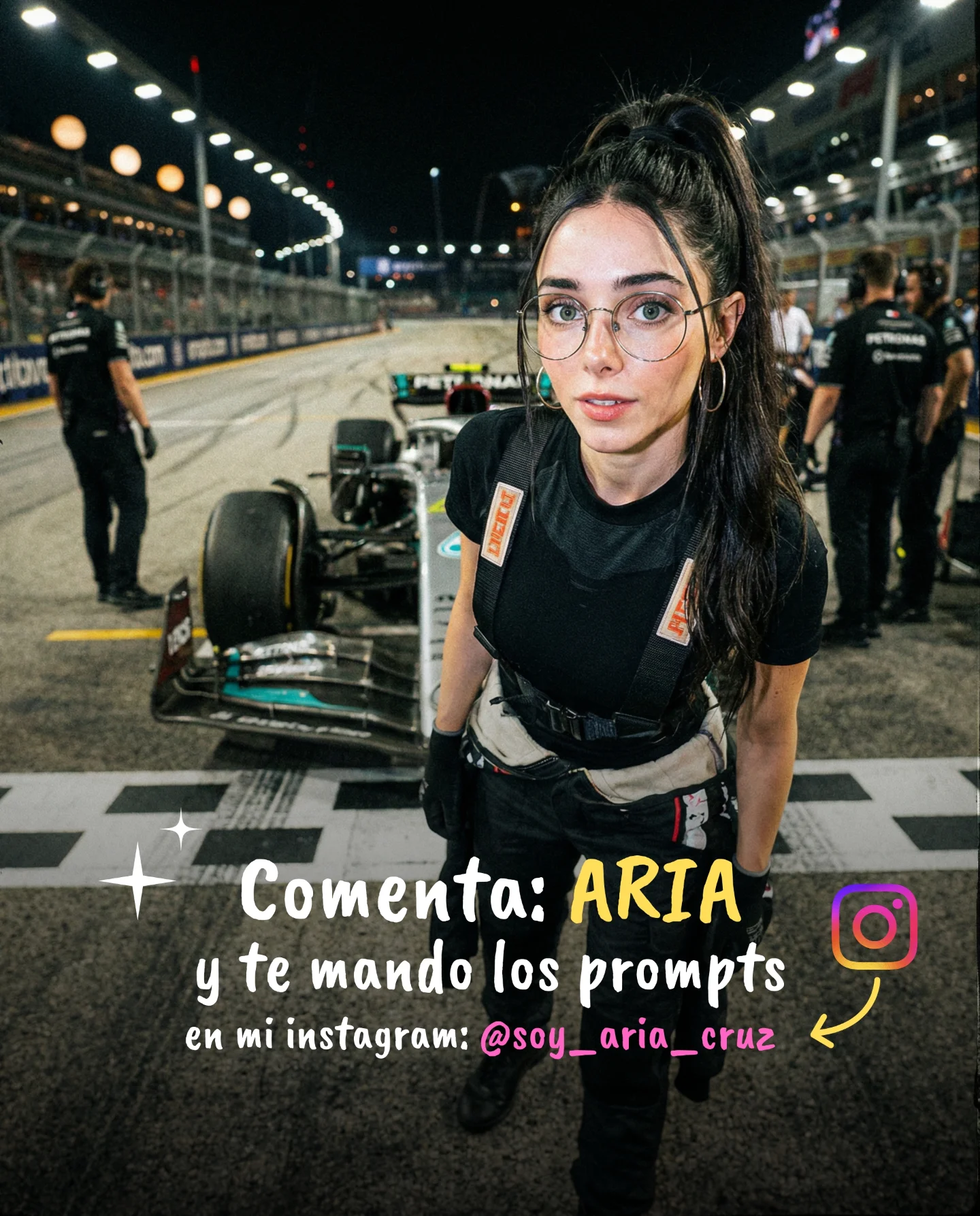
Formula 1 🏎️✨ Hoy toca salir de casa a dar una vuelta y hacer algo diferente 😋 Que foto de todas te gusta más?? 👀
Formula 1 🏎️✨ Hoy toca salir de casa a dar una vuelta y hacer algo diferente 😋 Que foto de todas te gusta más?? 👀
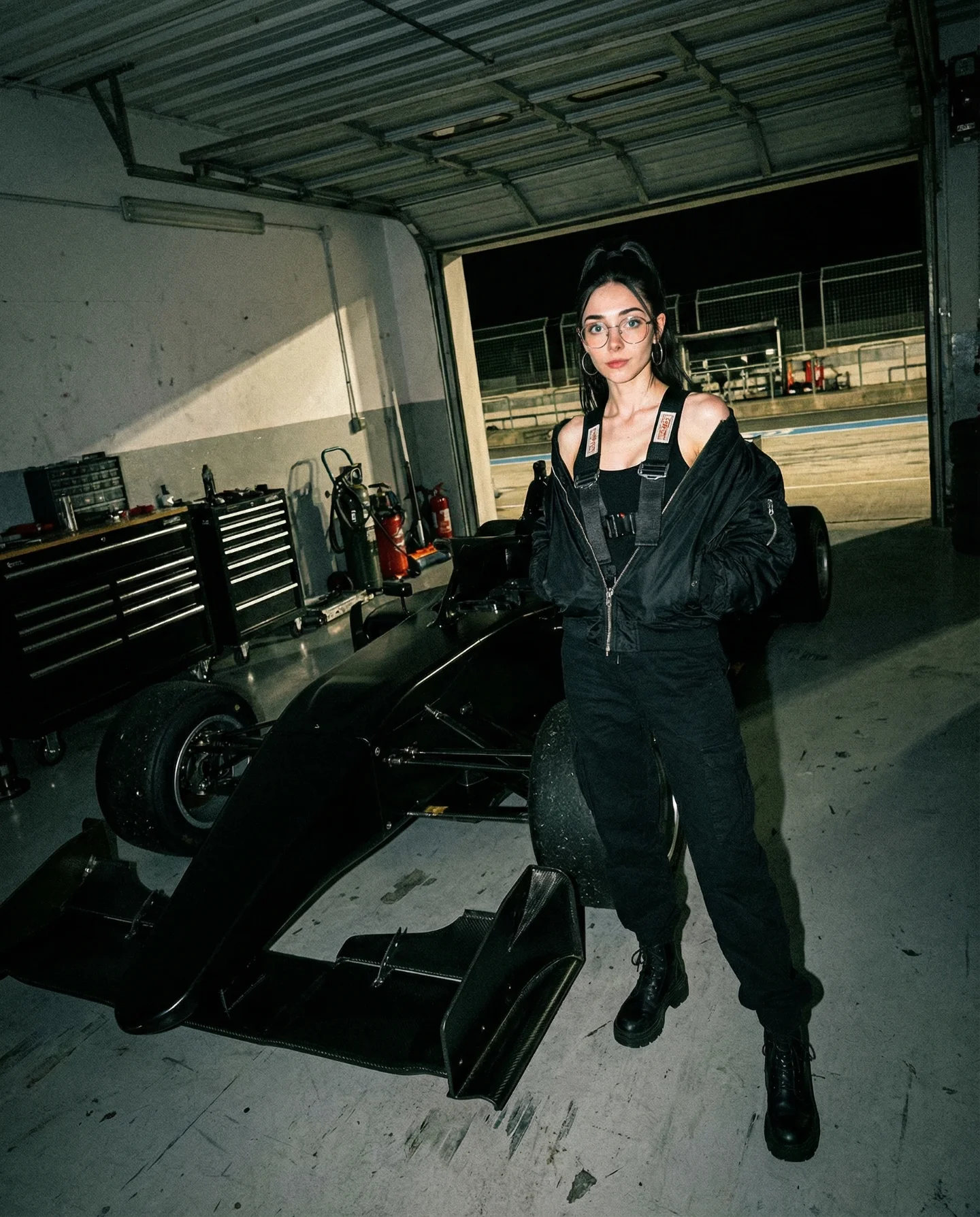
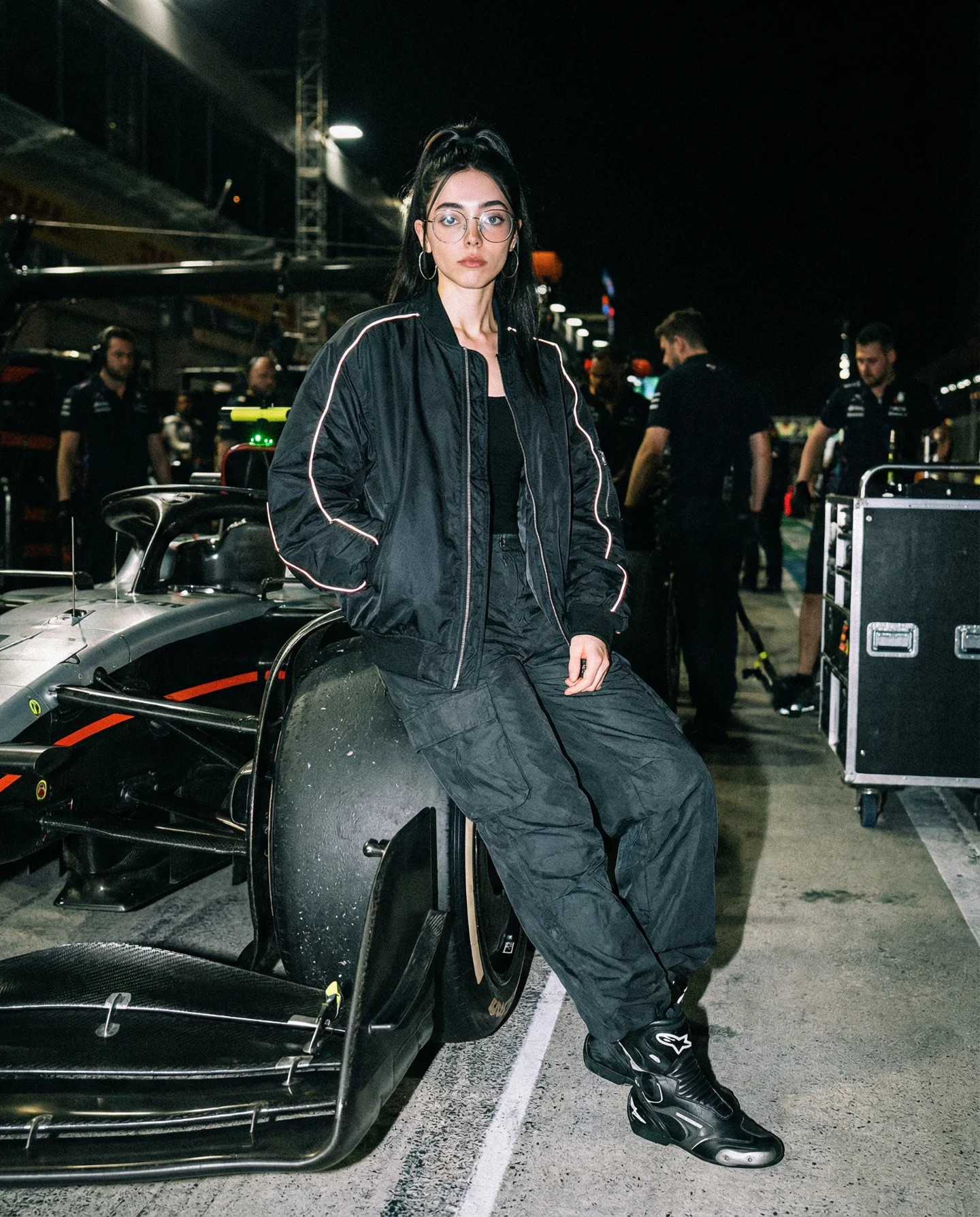
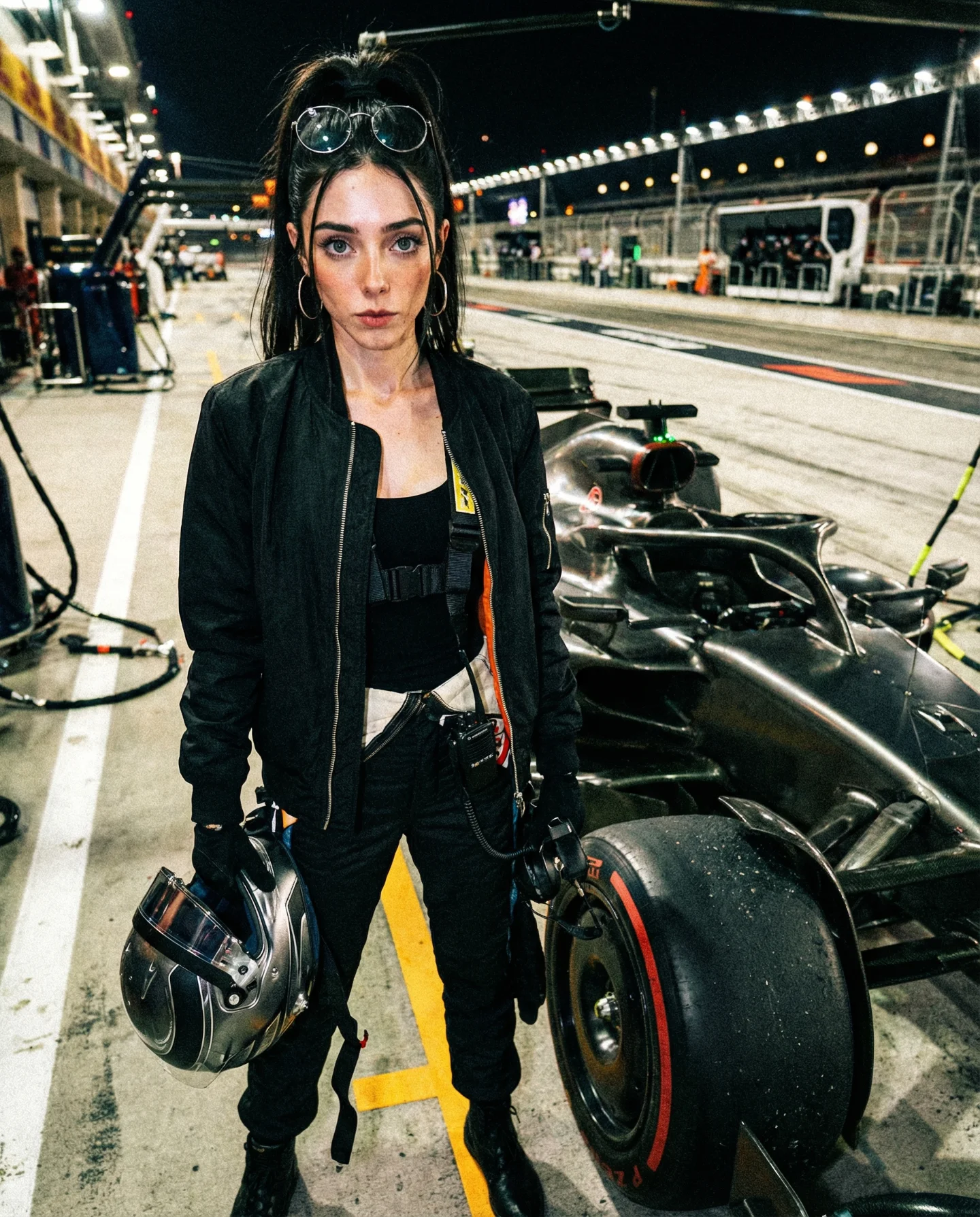
This image works because it shifts the Formula 1 theme away from speed and toward access. The previous kind of racing image usually focuses on the car in motion, but this one is about proximity. Being inside the garage beside the machine makes the sport feel tactile, industrial, and human. That change matters because it gives creators a different entry point into the same subject category.
The strongest part of the frame is the relationship between the person and the car. The race car is low, sharp, and almost animal-like in silhouette, while the subject stands upright and calm beside it. That contrast creates authority. The image does not need the car to be moving, because the garage itself already implies readiness, engineering, and tension before action.
The direct-flash look helps too. It keeps the image from becoming a glossy motorsport campaign and instead makes it feel like a captured moment inside a working bay. For prompt-based content, this is useful because it teaches a different kind of Formula 1 image: not race spectacle, but paddock realism.
| Signal | Evidence (from this image) | Mechanism | Replication Action |
|---|---|---|---|
| Machine proximity | Subject standing directly beside an open-wheel car inside the garage | The image feels exclusive and insider-access rather than spectator-level | Place the subject in the workspace around the object, not only in front of it |
| Industrial credibility | Tool cabinets, concrete floor, open bay, night track outside | Functional details make the world believable | Include workshop objects that imply use, maintenance, and prep |
| Flash realism | Frontal lighting with darker garage edges | The portrait feels immediate and less like an ad campaign | Use direct flash or prompt language that mimics documentary garage photography |
This style works well for motorsport lifestyle posts, pit-lane concept portraits, machine-and-human editorial content, and AI prompt sets that want to explore racing culture beyond the track. It also transfers to motorcycles, classic-car workshops, aircraft hangars, and industrial maker spaces.
It is less effective for pure vehicle beauty shots or maximal high-speed action content. The power here is presence and context, not velocity.
{industrial bay} {subject beside machine} {direct flash} {night prep atmosphere}{working garage} {tool backdrop} {confident portrait} {object dominance in foreground}{functional industrial space} {one machine} {one subject} {flash realism}The image is strong because everything obeys the same visual logic. Black clothing, black race car, gray concrete, metal tool drawers, cool night light outside. That restraint makes the silhouette of the car and the stance of the subject do the work. The open garage door is especially important because it adds depth and context without adding clutter. It quietly says: this machine belongs to a larger live environment beyond the frame.
| Prompt chunk | What it controls | Swap ideas (EN, 2-3 options) |
|---|---|---|
| open-wheel race car inside a pit garage | Motorsport identity and setting | MotoGP bike in service bay; endurance prototype in paddock tent; rally car in workshop stall |
| all-black utilitarian styling | Subject tone and silhouette discipline | race overalls; mechanic coveralls; monochrome streetwear |
| direct-flash portrait in an industrial bay | Authenticity and immediacy | documentary garage light; workshop fluorescent portrait; handheld pit-lane flash |
| open door to floodlit track | Depth and world-building beyond the garage | hangar opening to runway; workshop door to city street; paddock tent opening to track lane |
Lock these three things first: the garage environment, the clear machine silhouette, and the subject’s grounded stance. Once those are fixed, iterate carefully instead of changing everything at once.