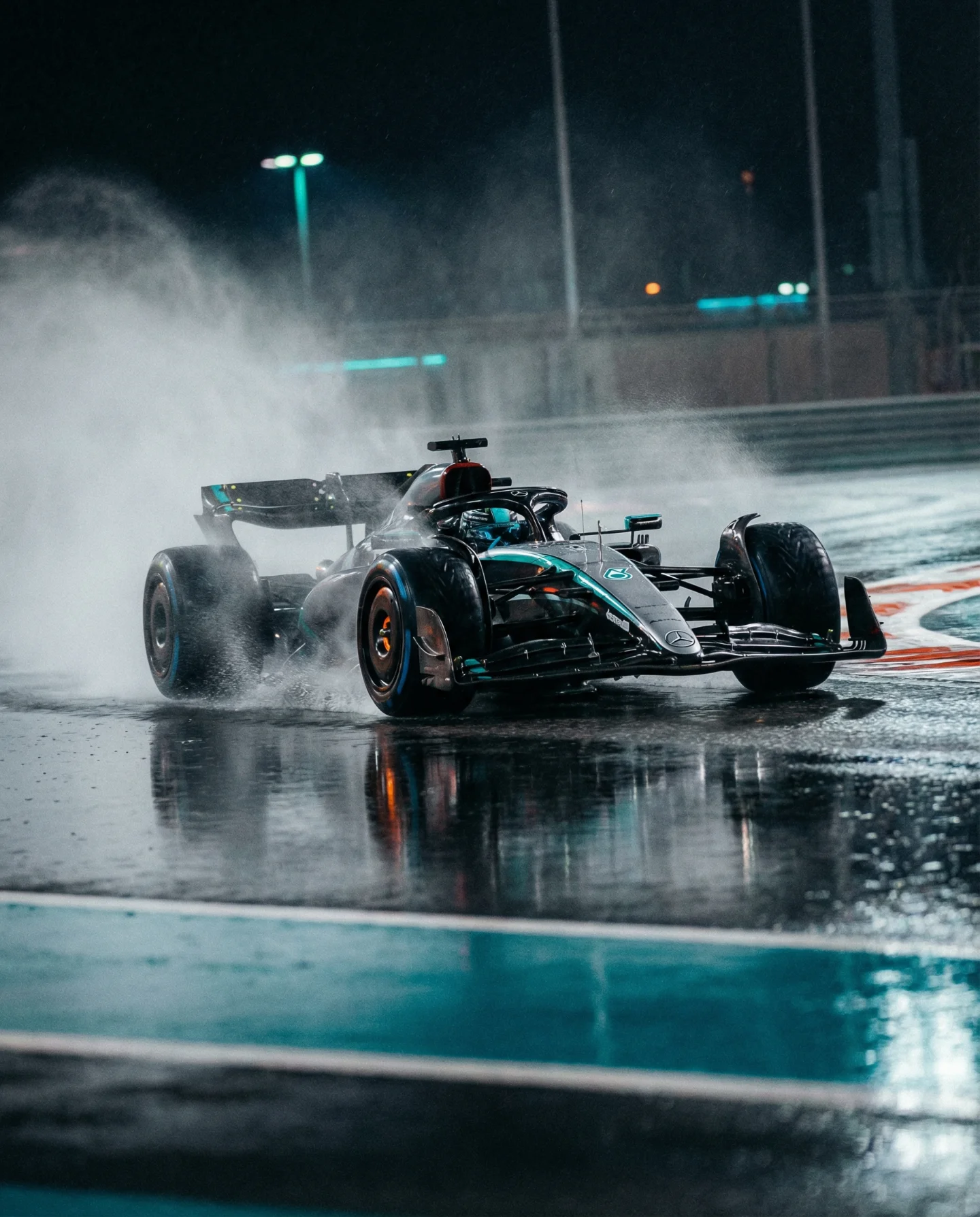
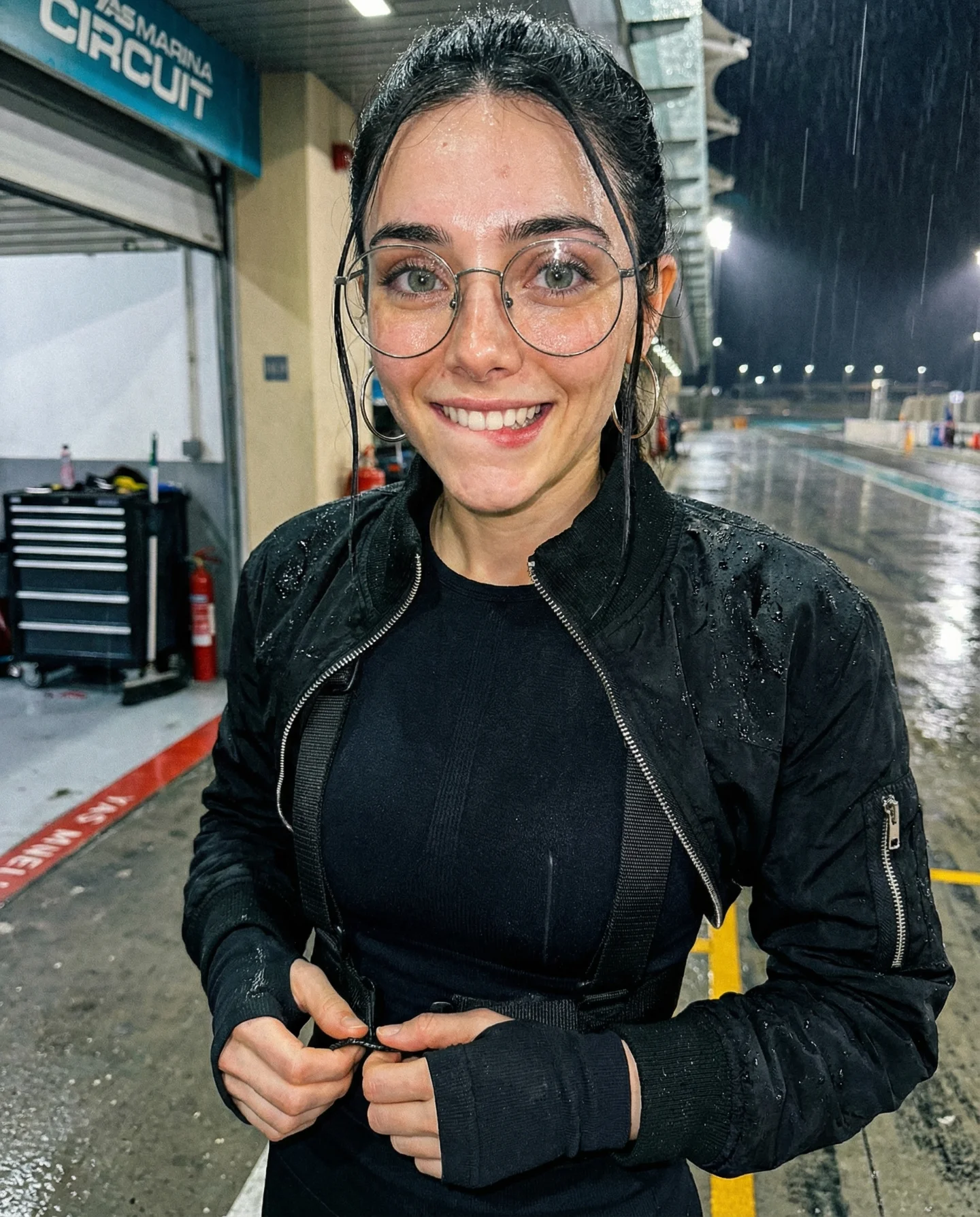
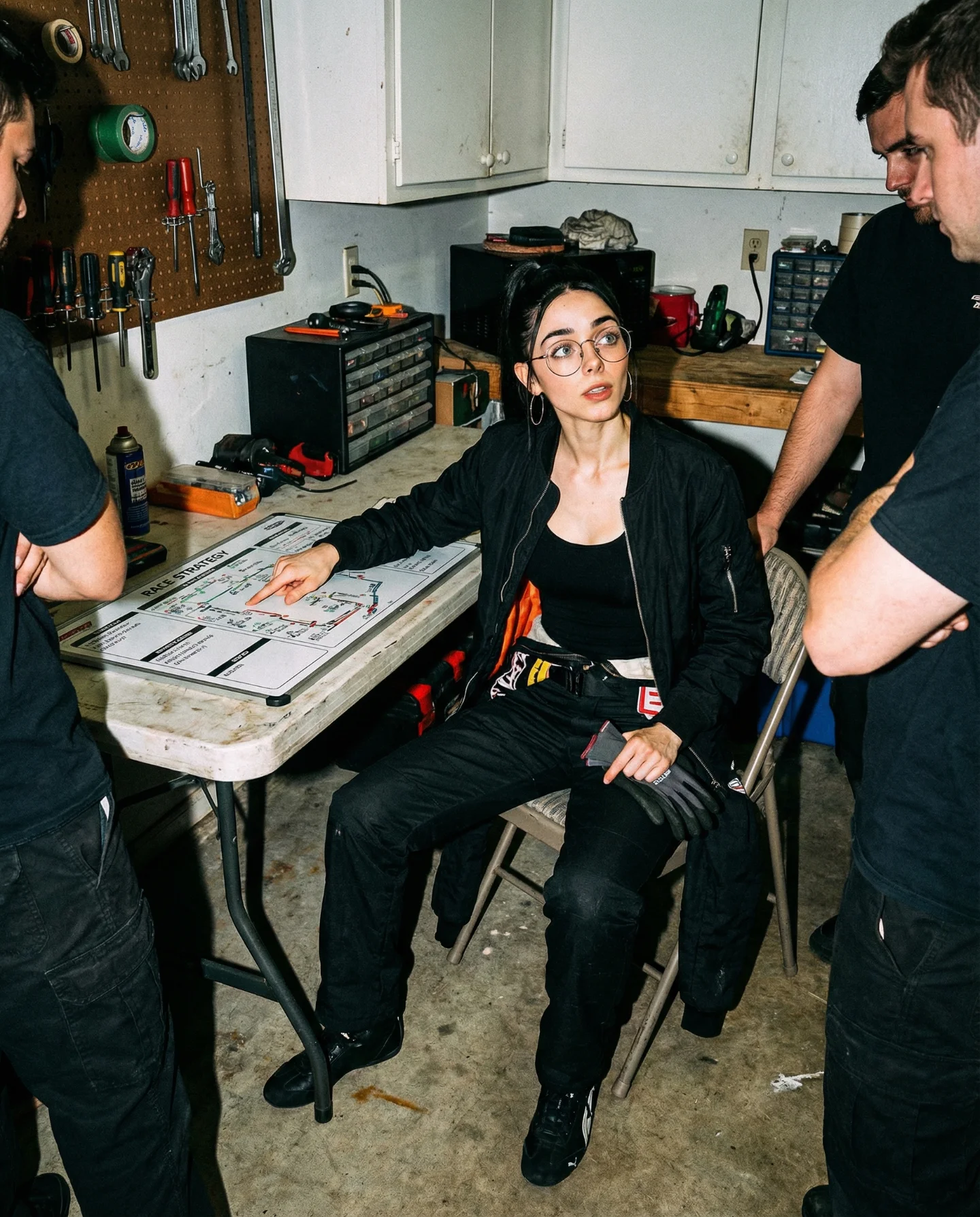
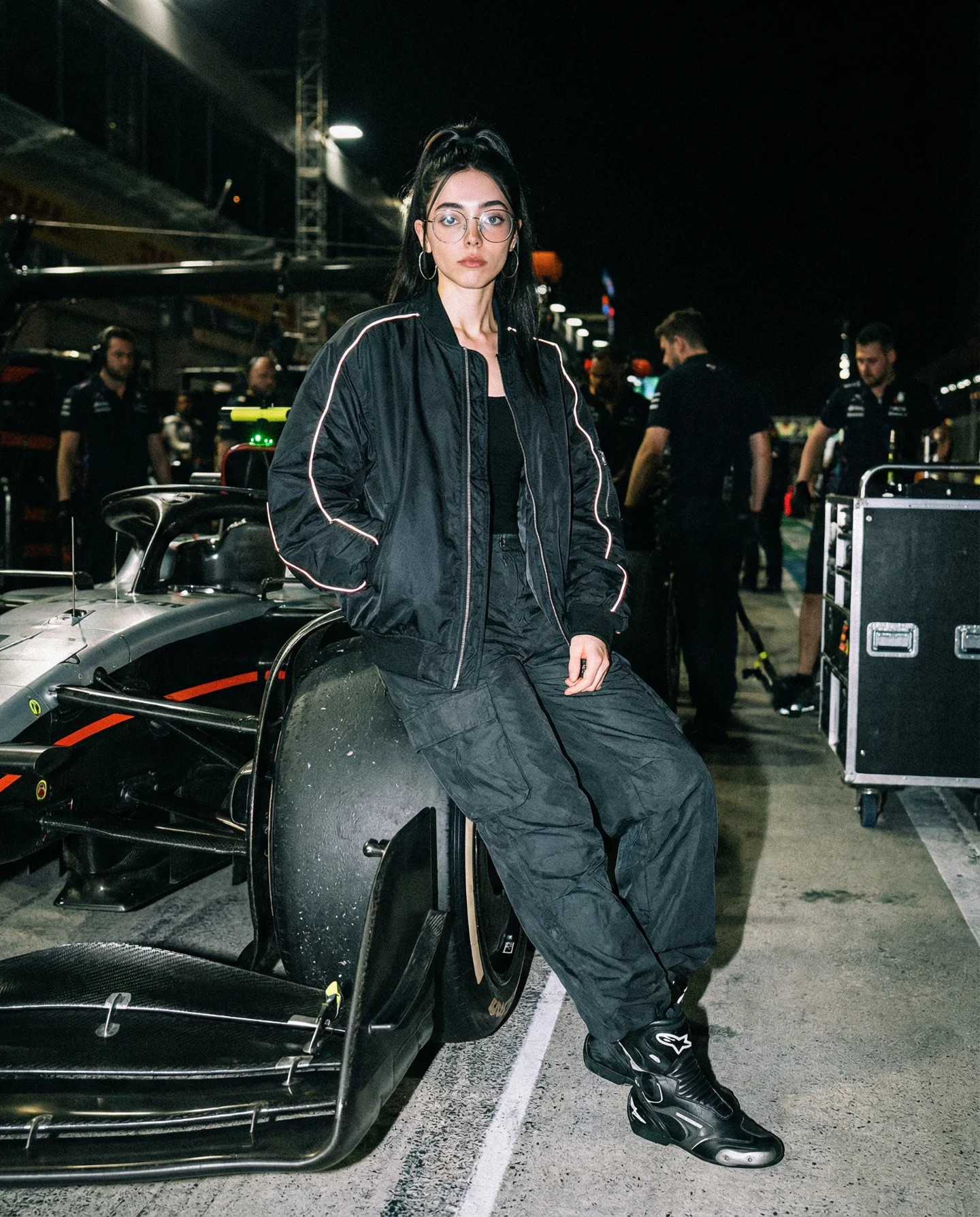
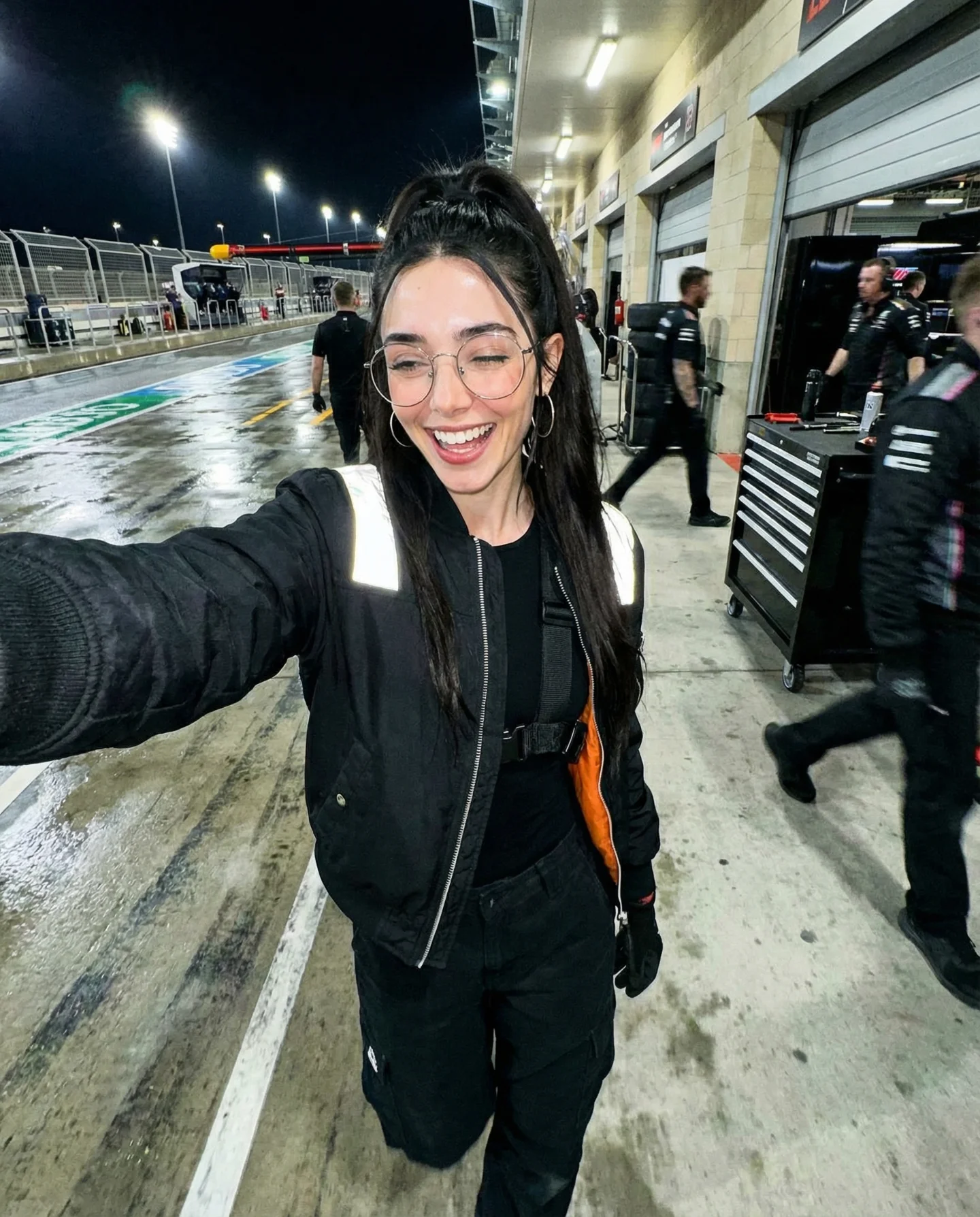
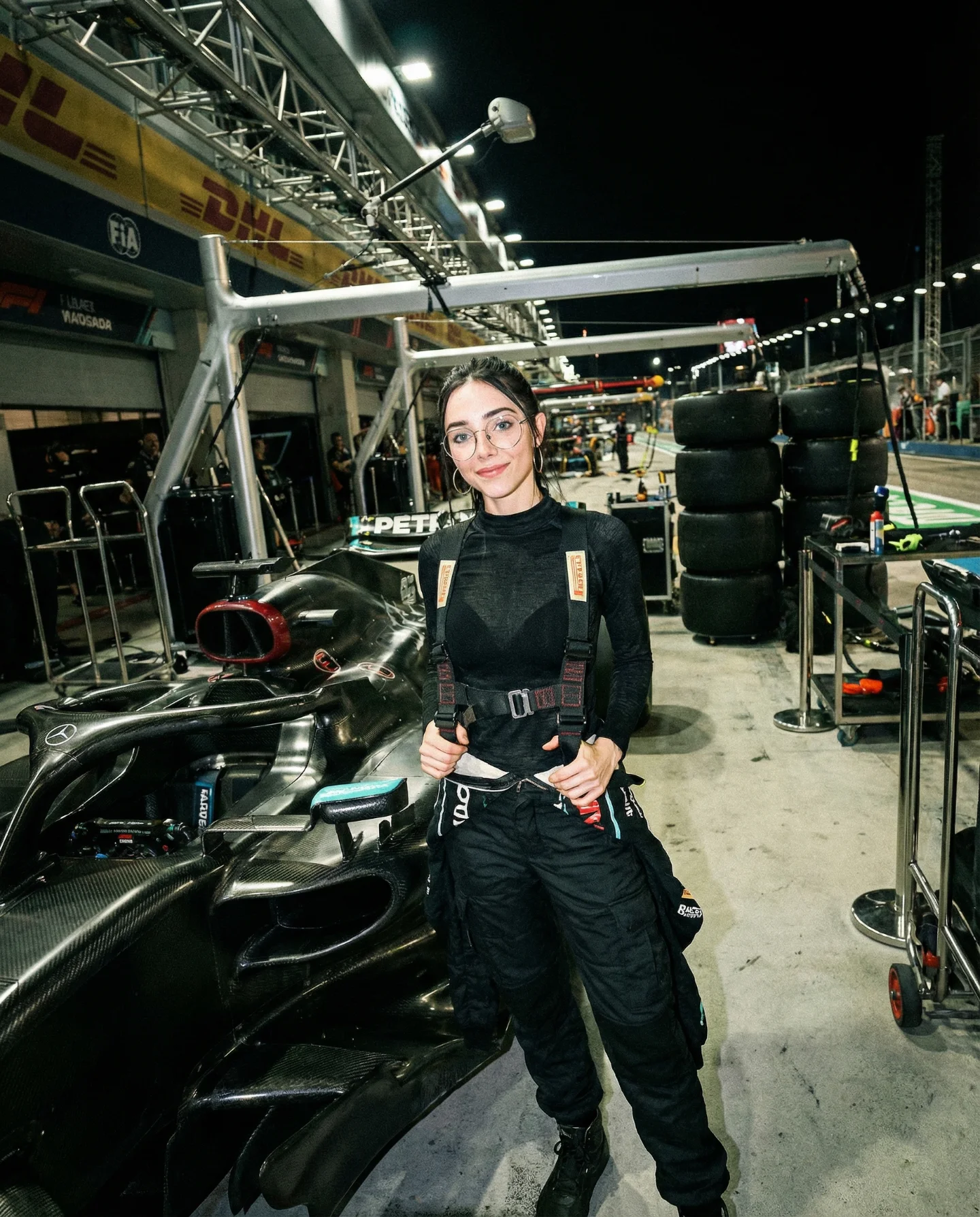
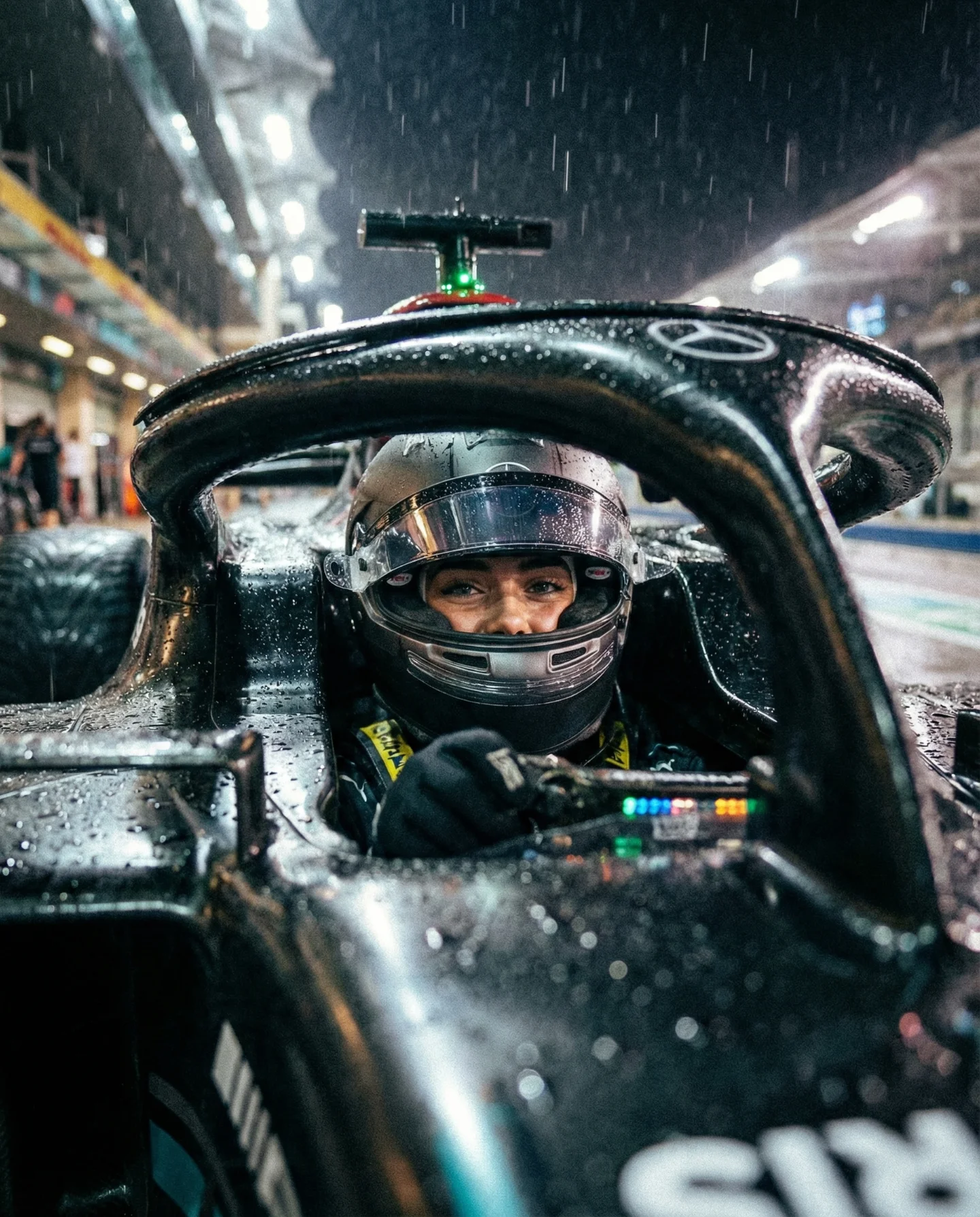
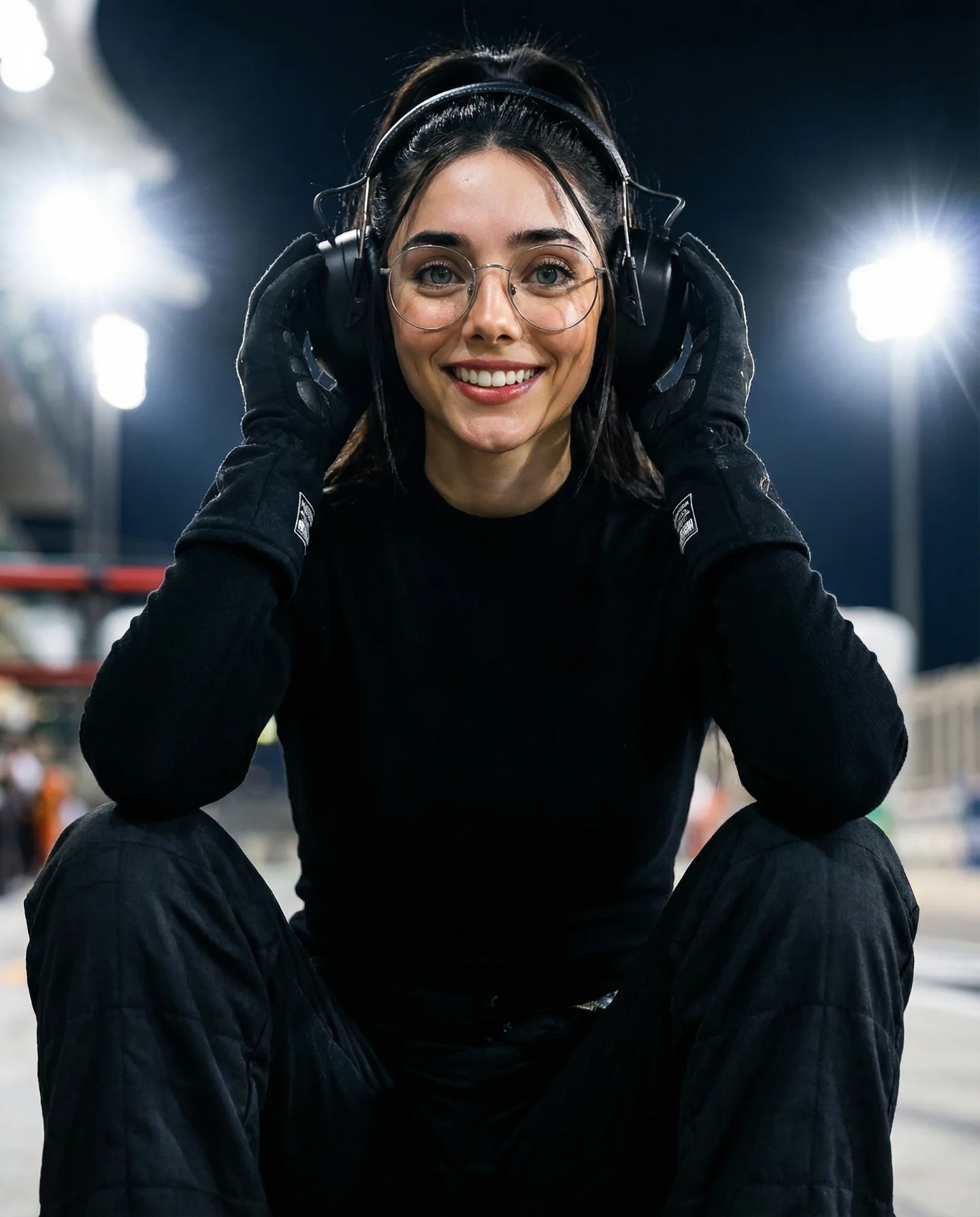
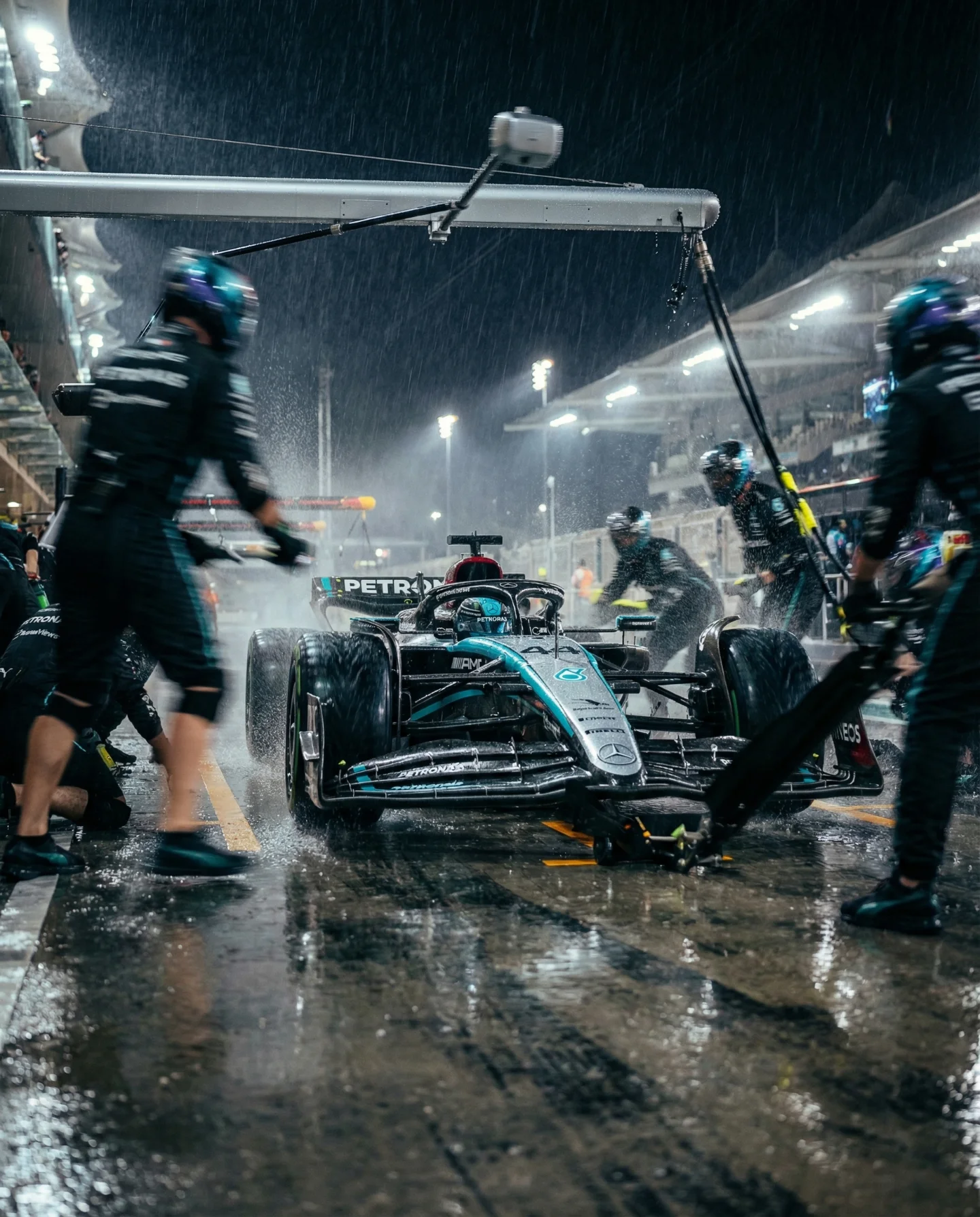
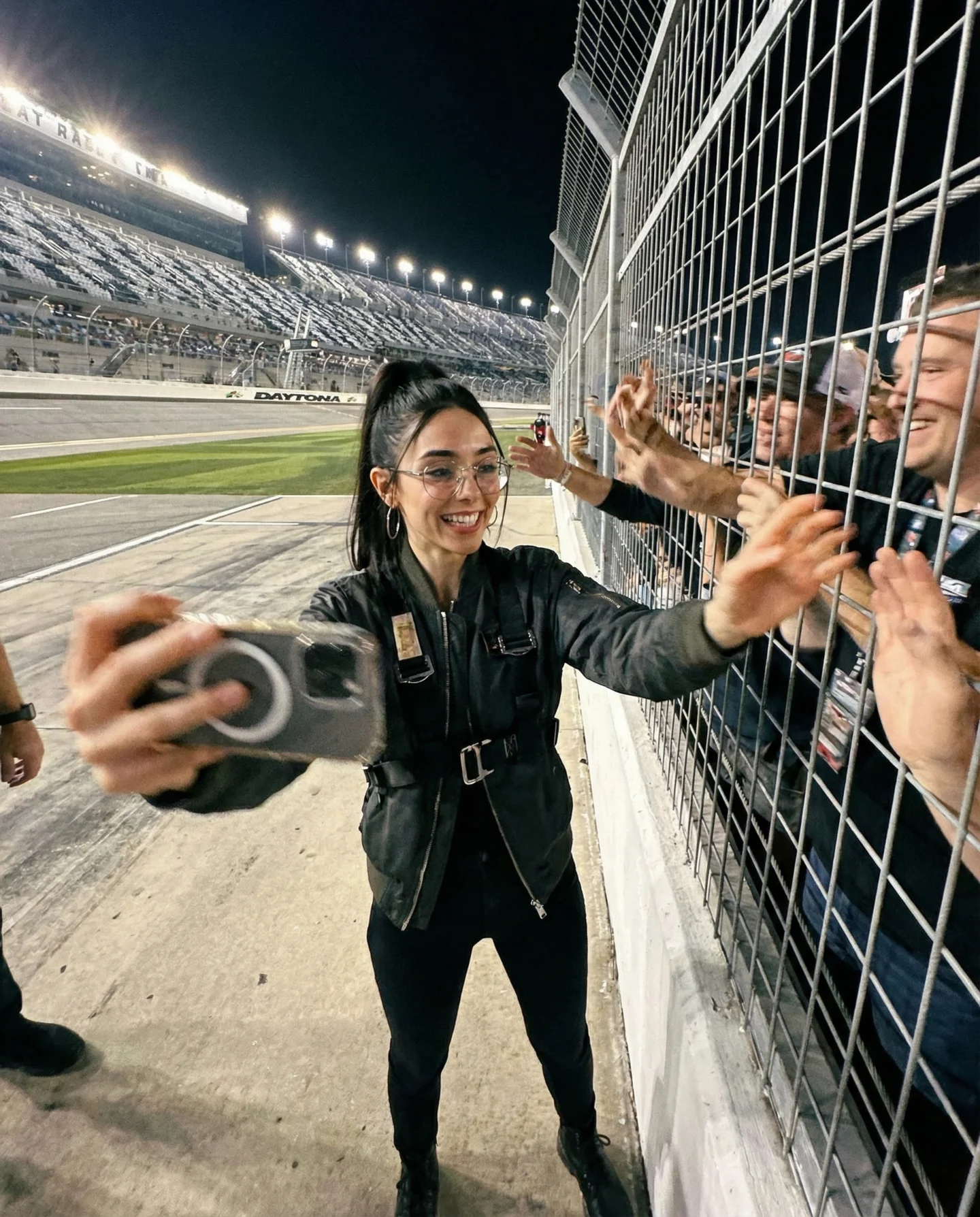
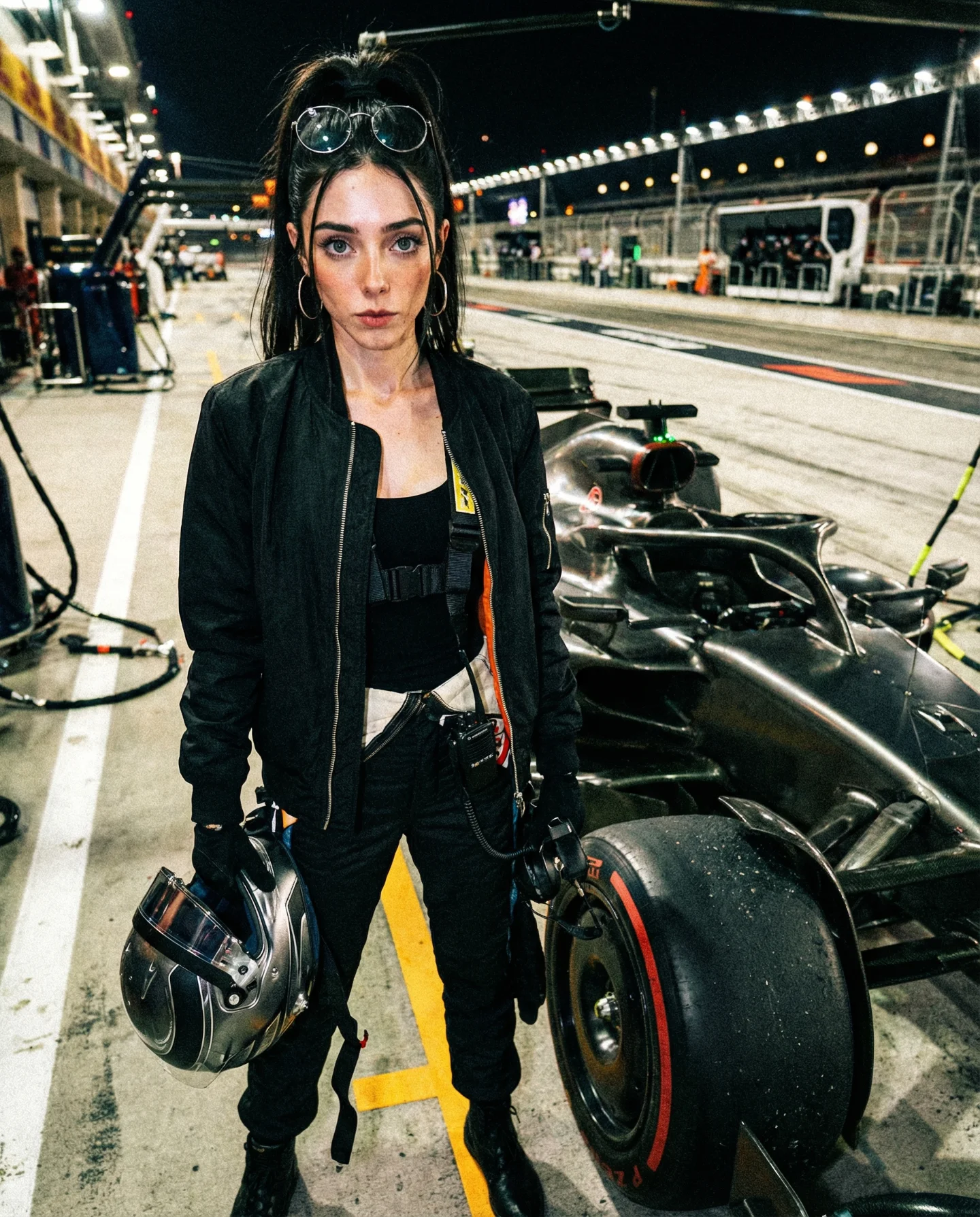
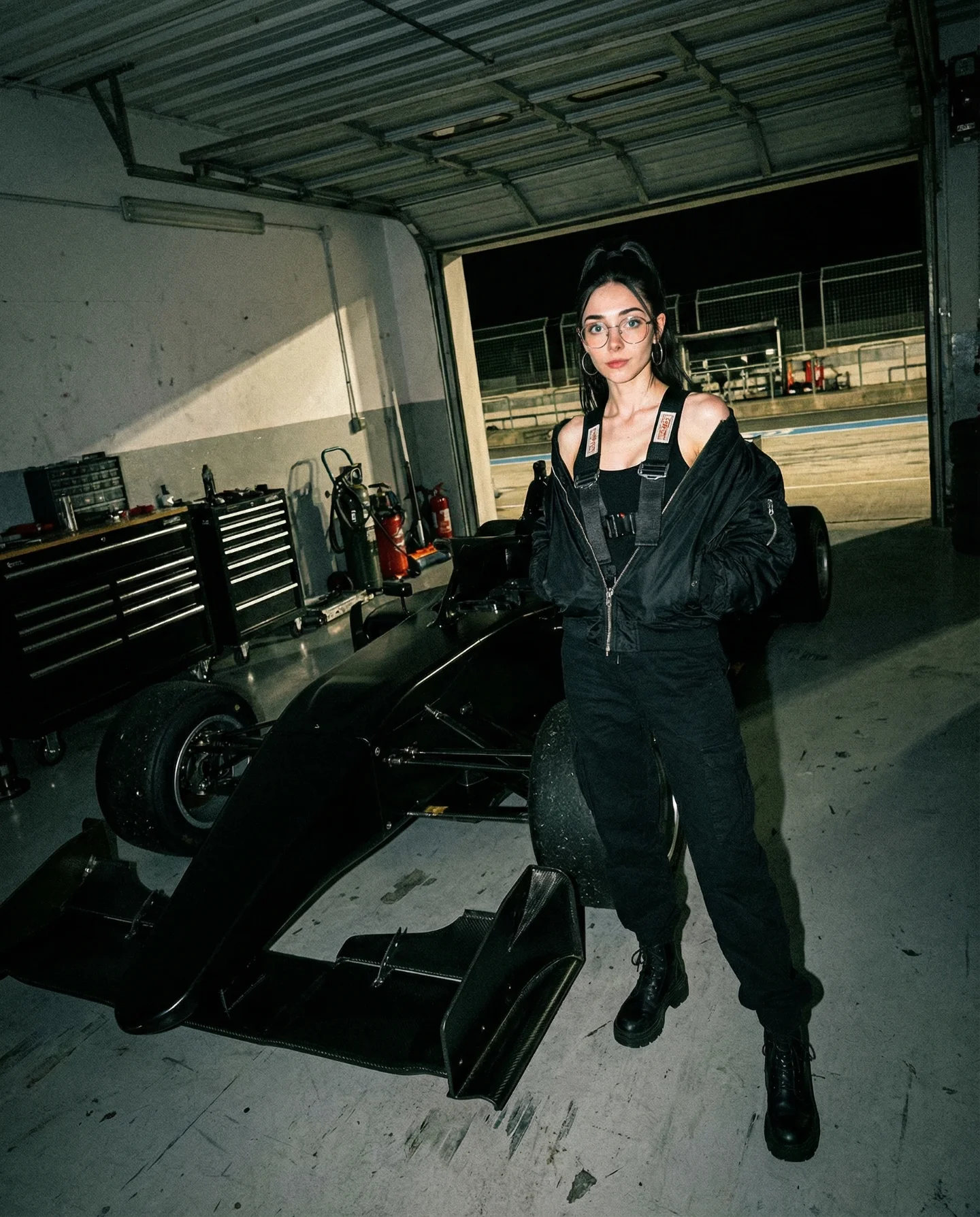
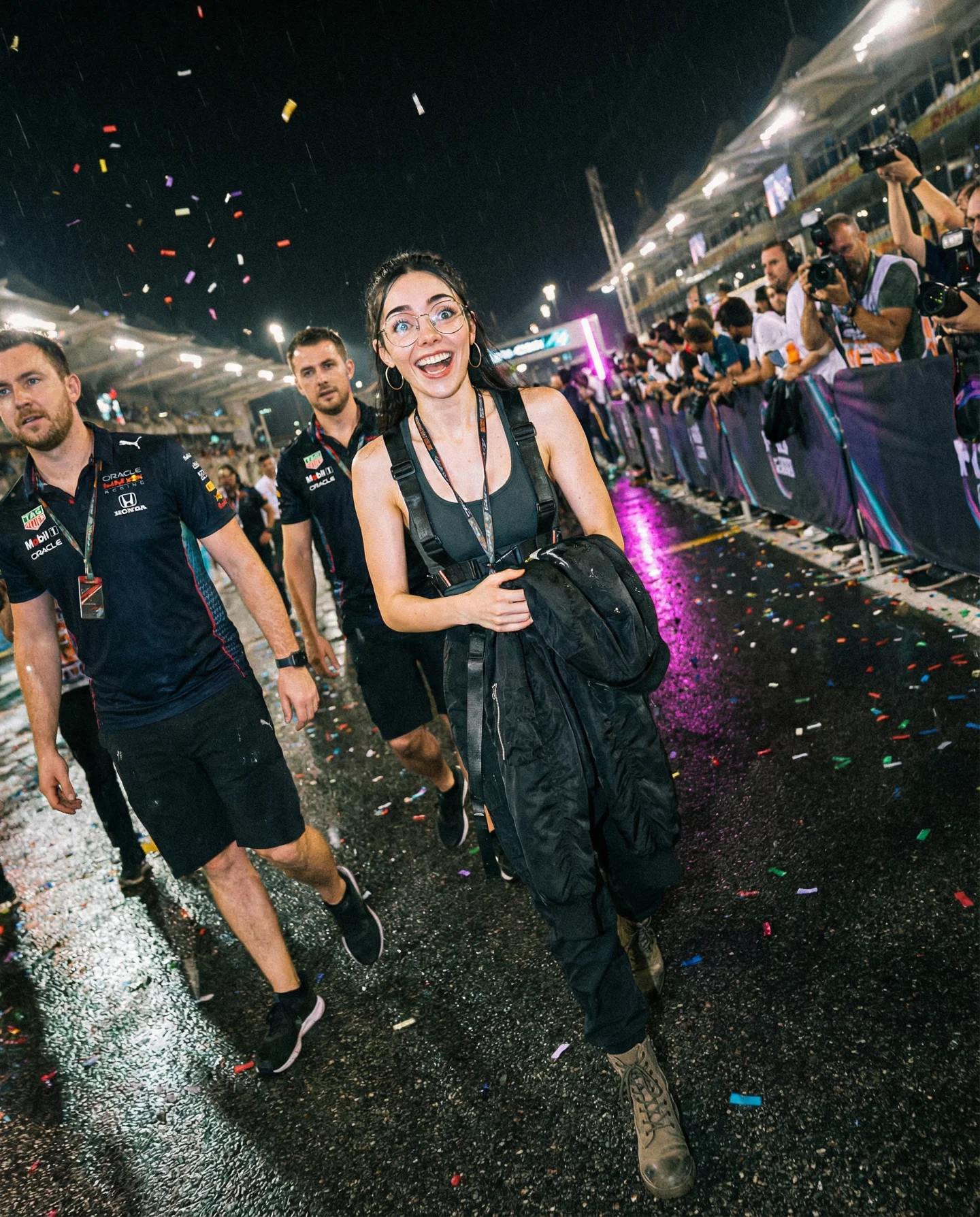
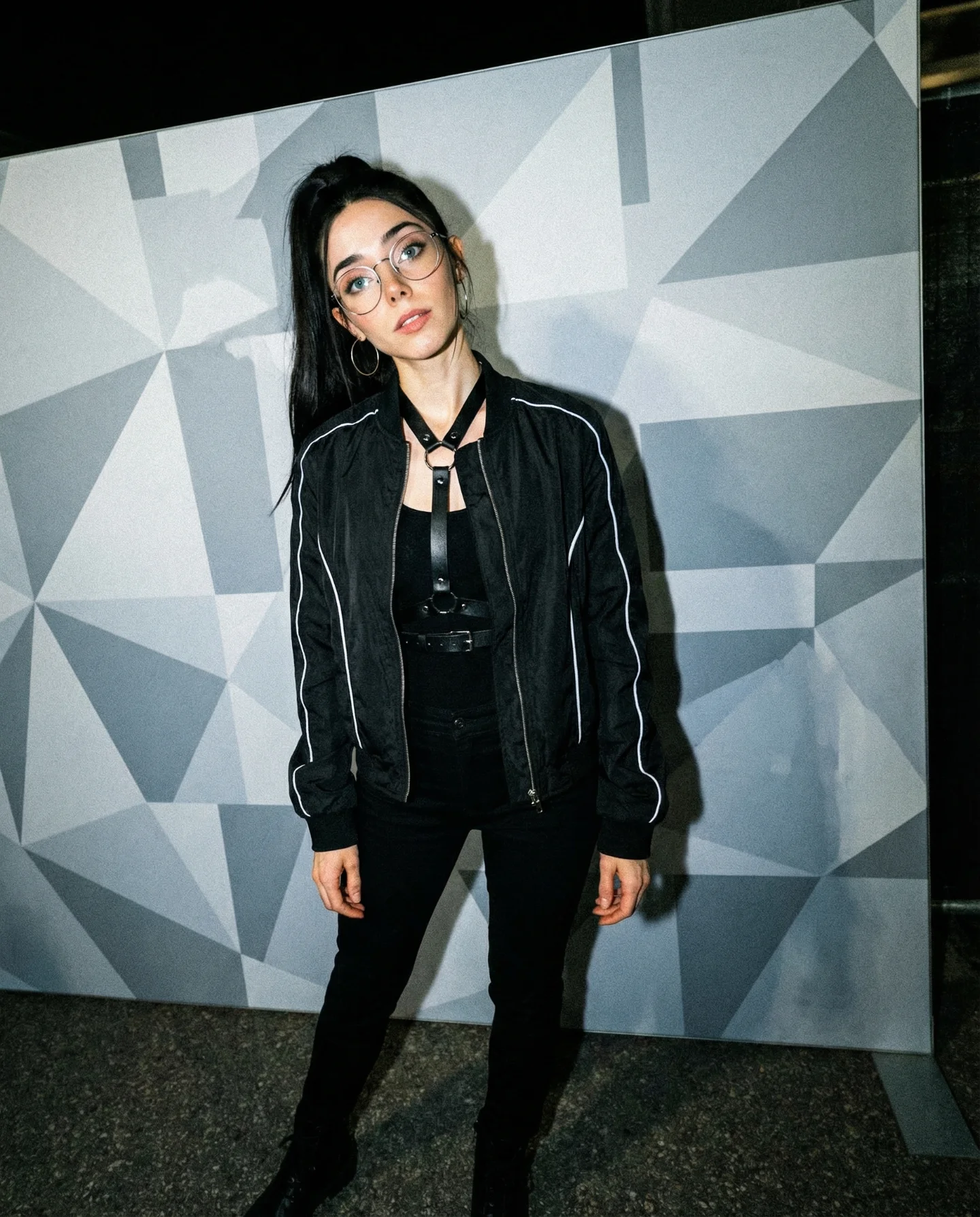
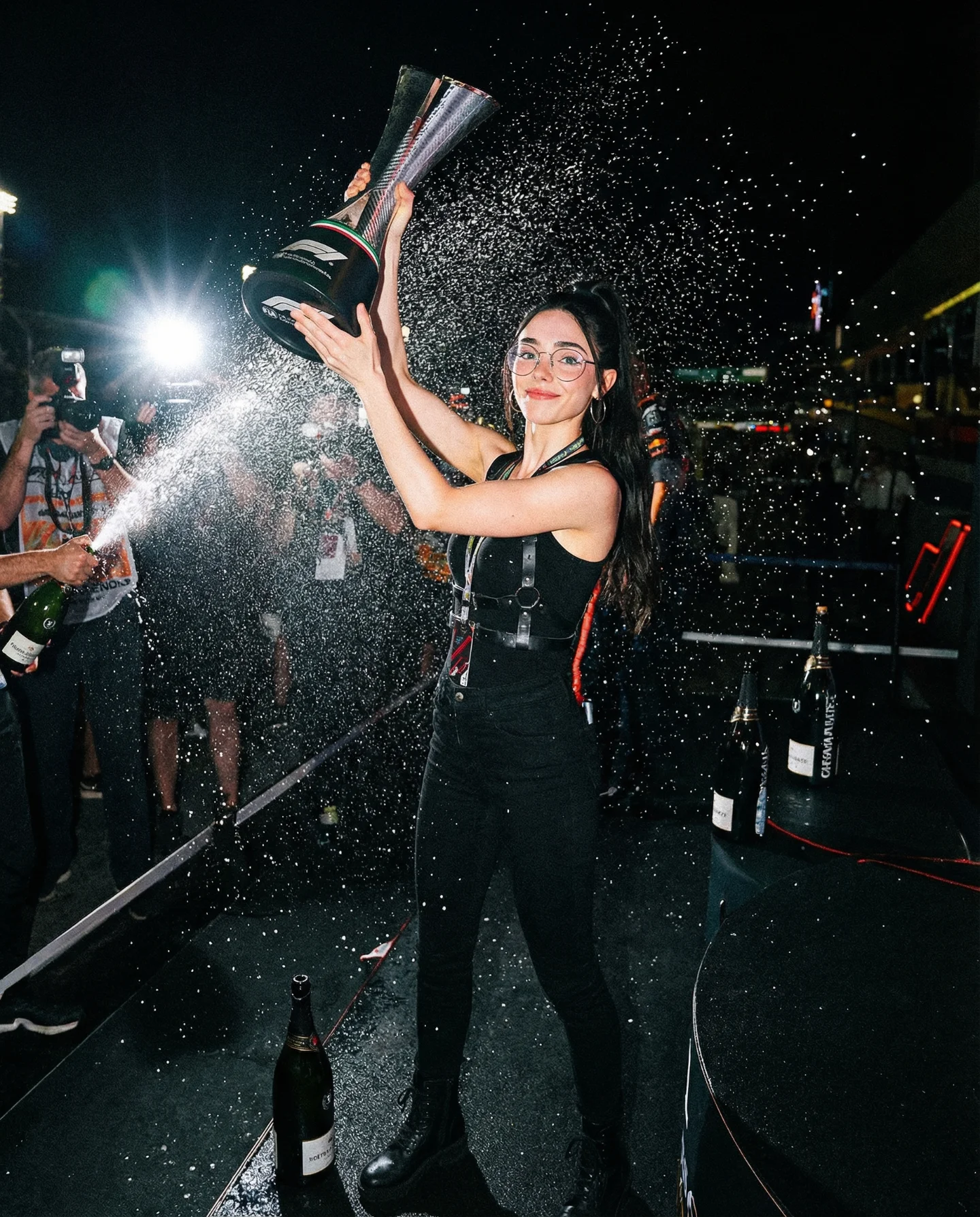
Formula 1 🏎️✨ Hoy toca salir de casa a dar una vuelta y hacer algo diferente 😋 Que foto de todas te gusta más?? 👀
Formula 1 🏎️✨ Hoy toca salir de casa a dar una vuelta y hacer algo diferente 😋 Que foto de todas te gusta más?? 👀
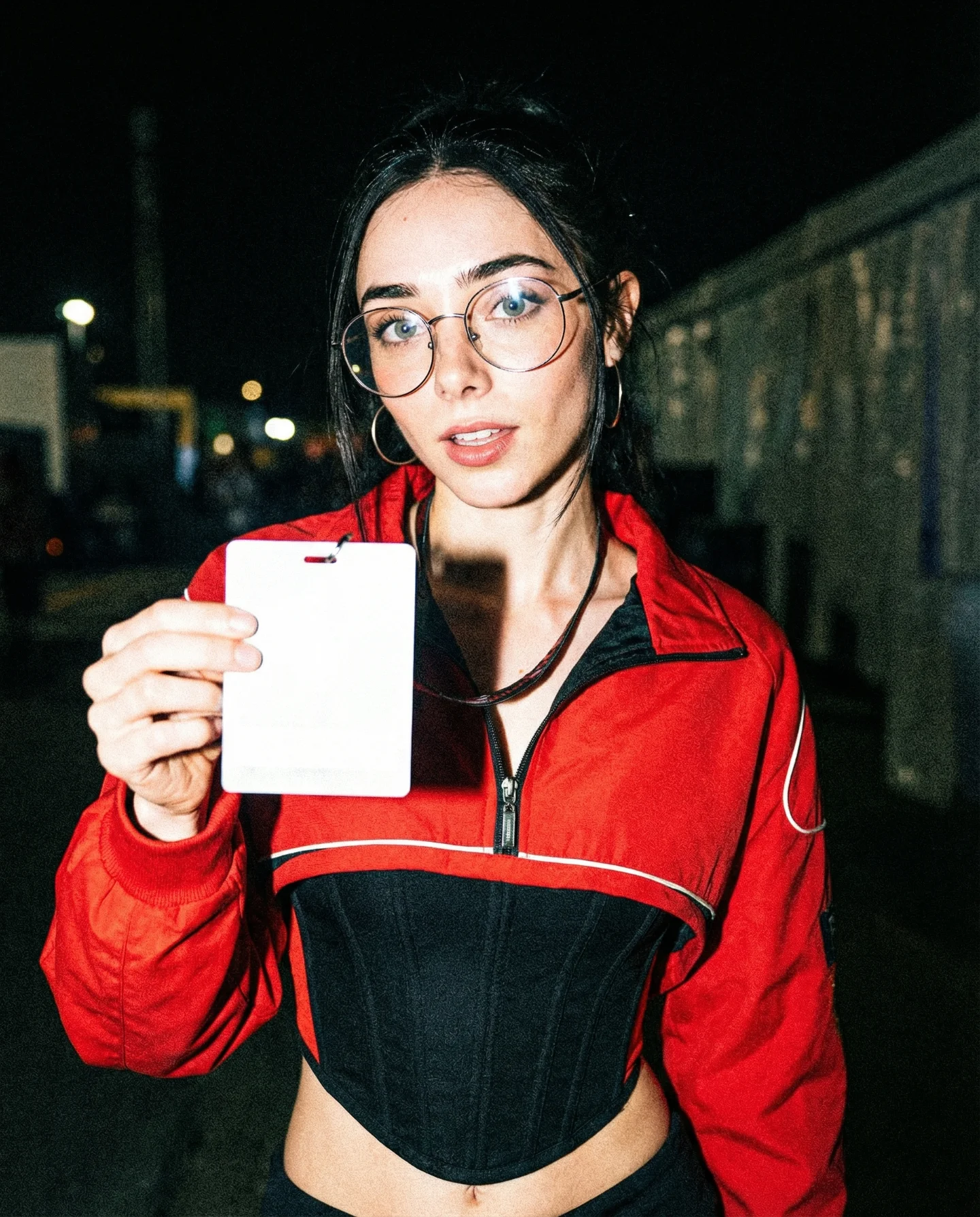
This image works because it borrows the visual language of access. The blank badge in the foreground tells you this is not just another fashion portrait. It suggests entry, backstage privilege, a world behind the barrier. That single prop creates curiosity before the viewer even processes the outfit. Then the direct flash look takes over. It feels fast, a little intrusive, and very real, which is exactly why it lands on social platforms where polished images often get ignored faster than imperfect ones.
There is also a sharp tension between glamour and utility. The red cropped jacket reads like motorsport uniform language, while the black corset keeps the image anchored in creator-fashion styling rather than pure cosplay. Nothing here is overloaded with set design, so the viewer fills in the missing story: late night, pit lane, some kind of event access, maybe a behind-the-scenes moment. That gap is useful. Images that leave one clean question in the mind often travel better than images that explain everything upfront.
| Signal | Evidence (from this image) | Mechanism | Replication Action |
|---|---|---|---|
| Access fantasy | Blank credential badge held close to camera | Viewers project themselves into a privileged role and pause to decode the scenario | Lock one clear prop that signals entry: pass, headset, wristband, keycard, ticket |
| Flash realism | Hard frontal flash with dark background and visible falloff | The snapshot energy feels immediate and socially native instead of over-produced | Keep direct flash and underexpose the environment by one to two stops |
| Strong identity contrast | Red racing jacket against black night background | High contrast improves thumb-stop power and makes the subject readable on mobile | Use one dominant wardrobe color against a low-information background |
| Narrative gap | No car shown, no logo shown, but the paddock mood is obvious | Viewers infer context, which increases dwell time and comment potential | Hint at the world with one or two clues instead of showing the whole set |
This setup is strongest when a creator wants to look close to culture rather than detached from it. It fits event recaps, backstage fashion, nightlife editorials, creator-as-insider posts, and launch content where the image needs to imply social relevance fast. It is also a strong choice for AI creators building a persona around access, status, or trend fluency, because the scene does not need an expensive set to communicate those ideas.
This format is less ideal for quiet luxury, wellness, or soft romantic storytelling. The flash is too confrontational for those use cases, and the access prop can feel performative if the audience expects intimacy rather than status-coded energy.
{venue corridor} {statement jacket} {lanyard pass} {late-night energy}{backstage area} {tailored outerwear} {show pass} {editorial flash}{conference hallway} {techwear layer} {credential badge} {founder-night mood}What stands out first is the confidence of the lighting. The image does not try to flatter in a delicate way. It uses the flash almost like a statement: here is the subject, here is the prop, everything else can fall away. That choice gives the frame speed. The second win is palette discipline. Red, black, skin tone, and a few dim lights in the background are doing nearly all the work. There is no color noise fighting for attention.
The third strength is spatial layering. The badge sits nearest to the viewer, the face stays as the true focal anchor, and the background dissolves into suggestion. That creates depth without requiring a complex environment. Finally, the image feels specific without becoming cluttered. You can tell what world it belongs to, but the frame never gets buried under logos, cars, or obvious branding.
| Observed | Why It Matters For Recreation |
|---|---|
| Direct flash from camera position | Creates the hard-edged social snapshot feel that makes the image believable |
| Two-to-three color palette dominated by red and black | Keeps mobile readability high and makes the wardrobe memorable |
| Foreground prop held near lens | Adds depth, story, and a focal interruption that stops the scroll |
| Clean but not empty dark background | Lets the subject feel contextualized without stealing attention |
| Subject fills around sixty to seventy percent of frame | Balances intimacy with enough wardrobe and prop information to sell the concept |
The easiest way to rebuild this look is to think in locked control blocks. Do not start with vibe words alone. Start with the blocks that force the engine to respect the image grammar.
| Prompt chunk | What it controls | Swap ideas (EN, 2-3 options) |
|---|---|---|
| young woman with large round glasses holding a blank credential badge | Core subject identity and prop narrative | holding a backstage pass; holding a VIP wristband card; holding a press lanyard |
| cropped red racing jacket over a black corset top | Wardrobe silhouette and red-black contrast | cropped moto jacket; fitted pit crew jacket; red track jacket with piping |
| nighttime paddock service lane with blurred trailers and distant lights | Scene context without overloading the background | night venue alley; backstage loading area; dim event corridor |
| direct on-camera flash, dark underexposed background | Lighting direction and social-native realism | harsh point-and-shoot flash; frontal paparazzi flash; compact camera flash look |
| vertical medium close-up, badge in foreground, shallow depth of field | Framing, depth, and mobile readability | tight 4:5 portrait; waist-up editorial crop; eye-level nightlife portrait |
| natural skin texture, candid expression, high contrast editorial snapshot | Rendering finish and anti-plastic realism | clean flash realism; gritty editorial photo; sharp nightlife portrait |
Start by locking three things before anything else: composition, lighting direction, and the access prop. If one of those drifts, the image stops feeling like the same concept and becomes generic nightlife portraiture. After that, follow a one-change rule. Adjust only one or two variables per generation so you can actually see which lever improved the result.
If the image looks too polished, you usually do not need a new concept. You need less ambient fill, a darker background, and a more obvious flash signature on the glasses and skin.