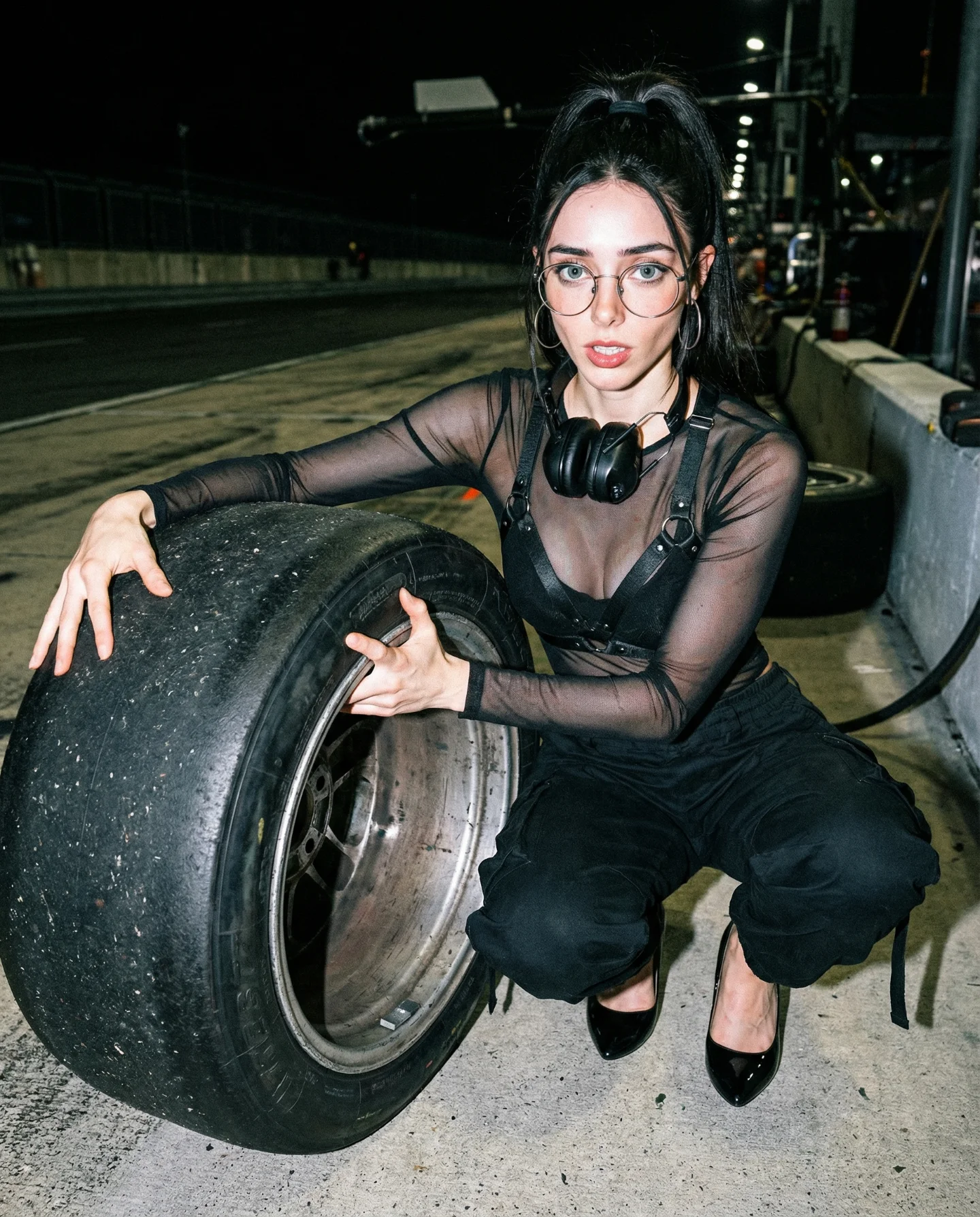
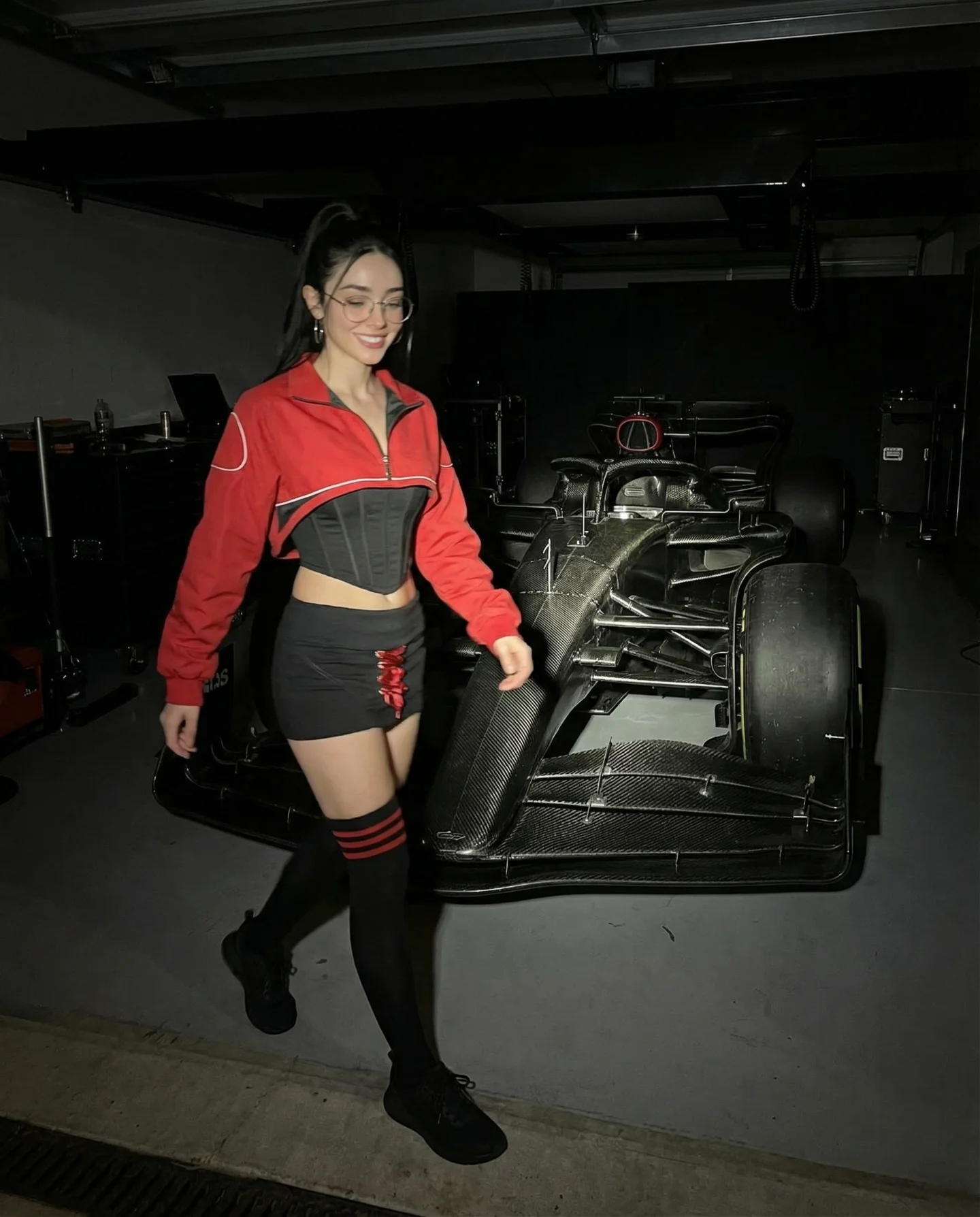
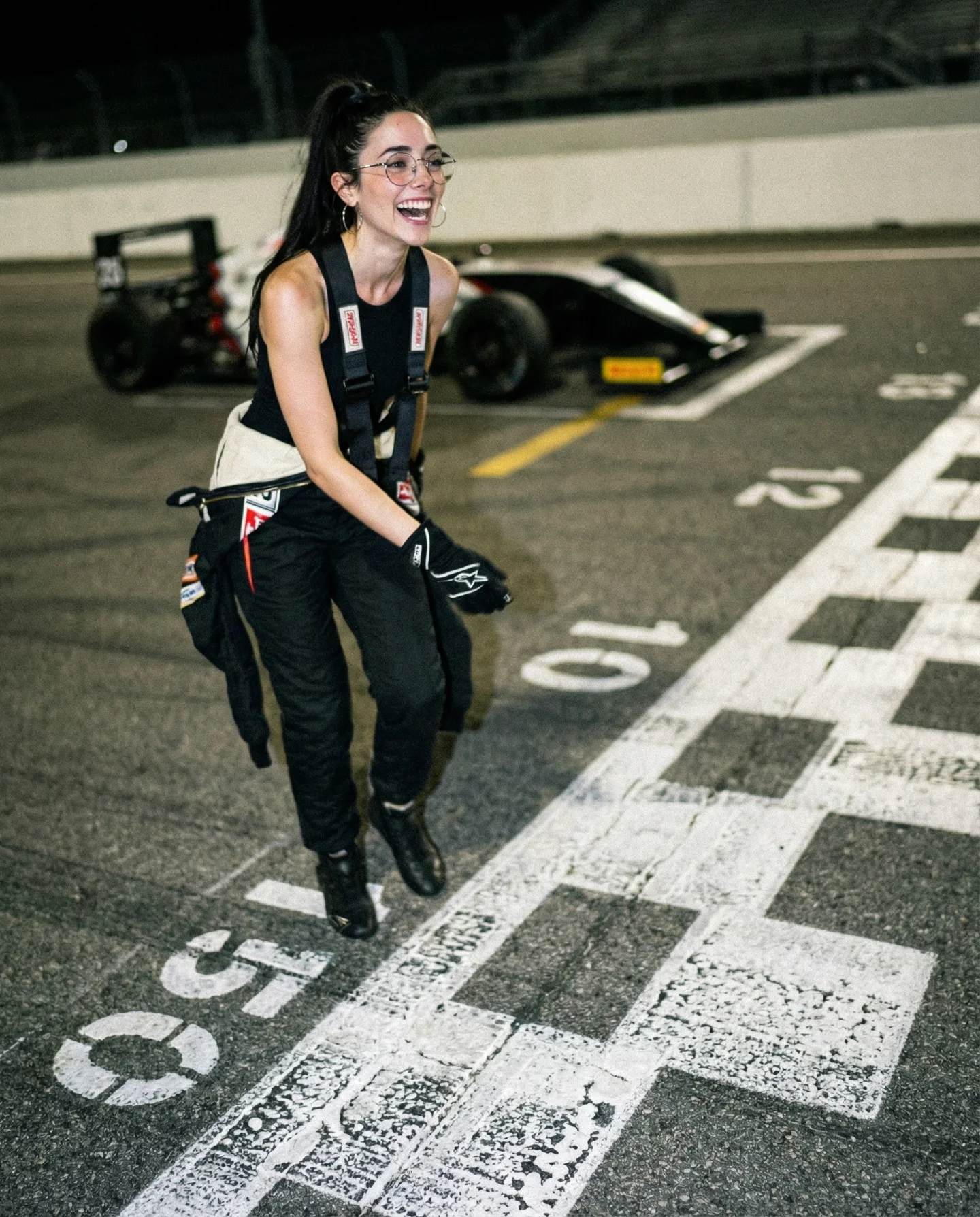
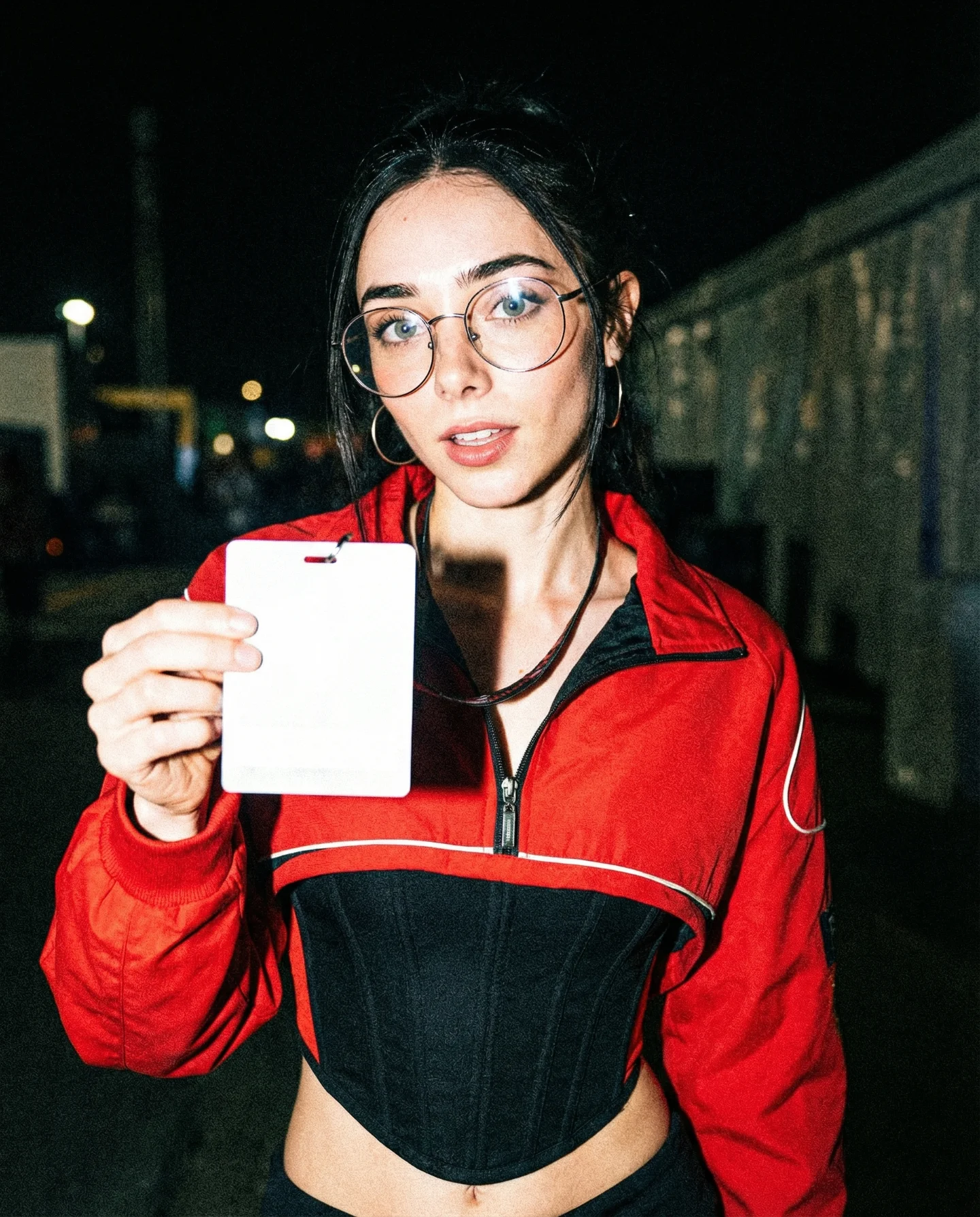
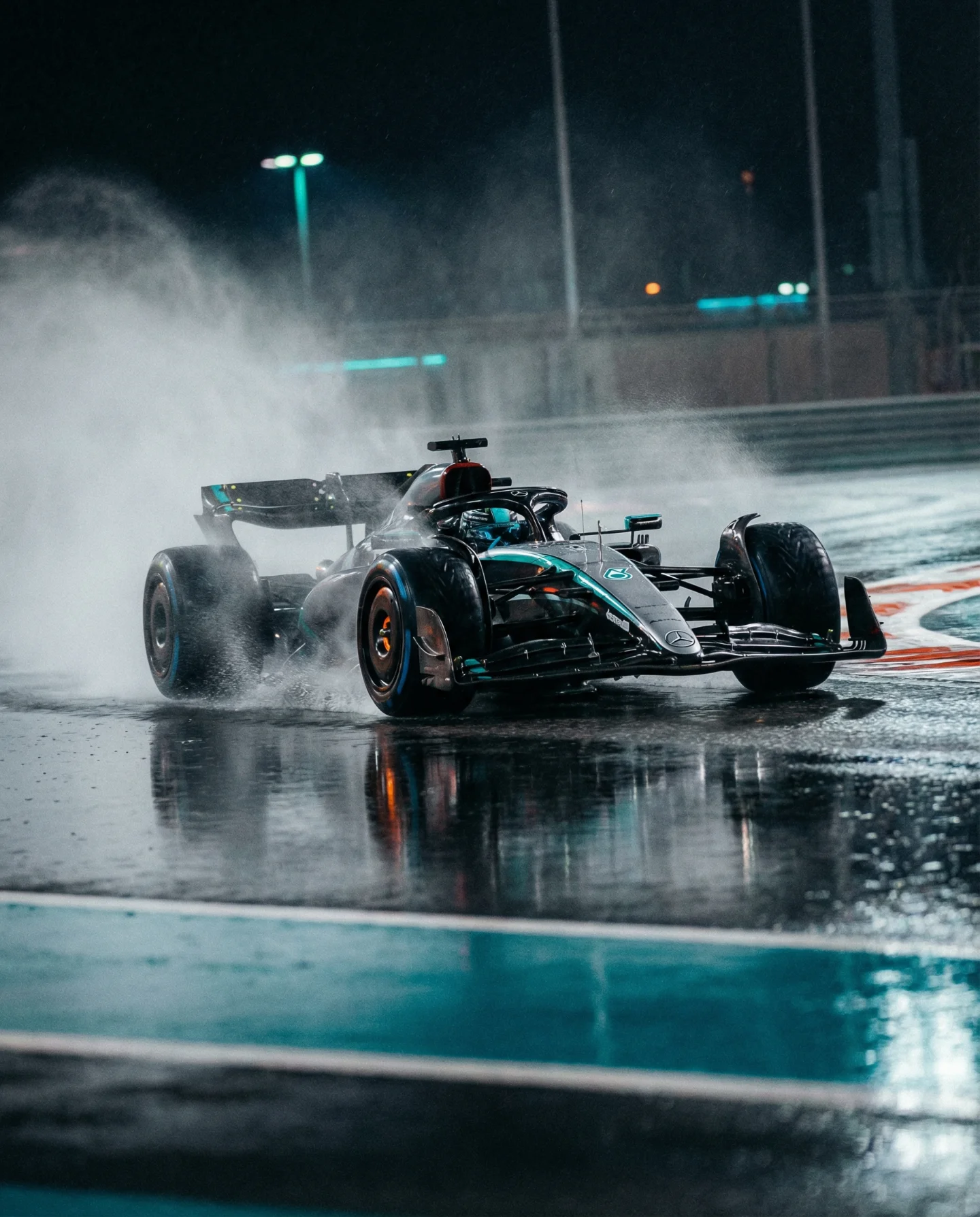
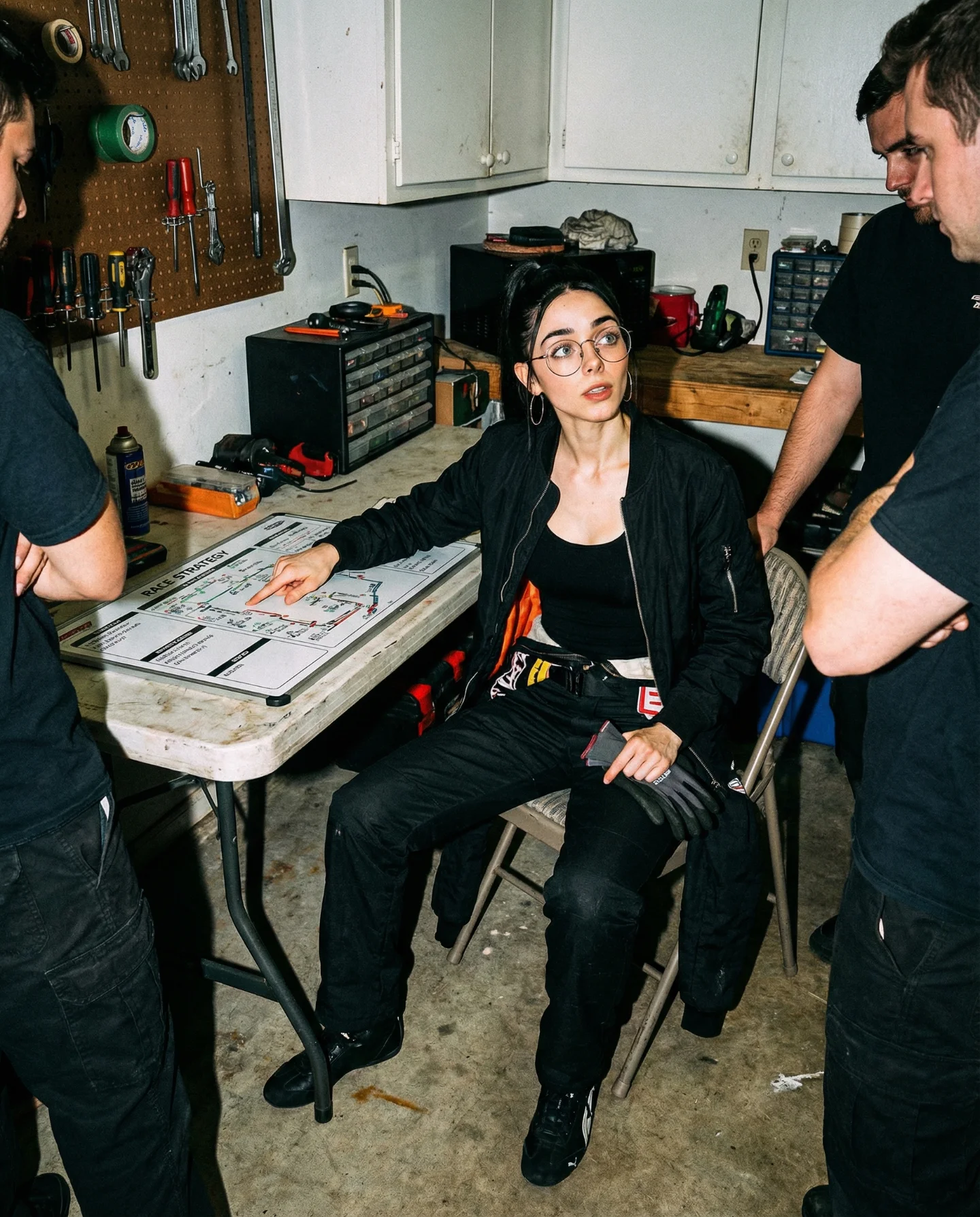
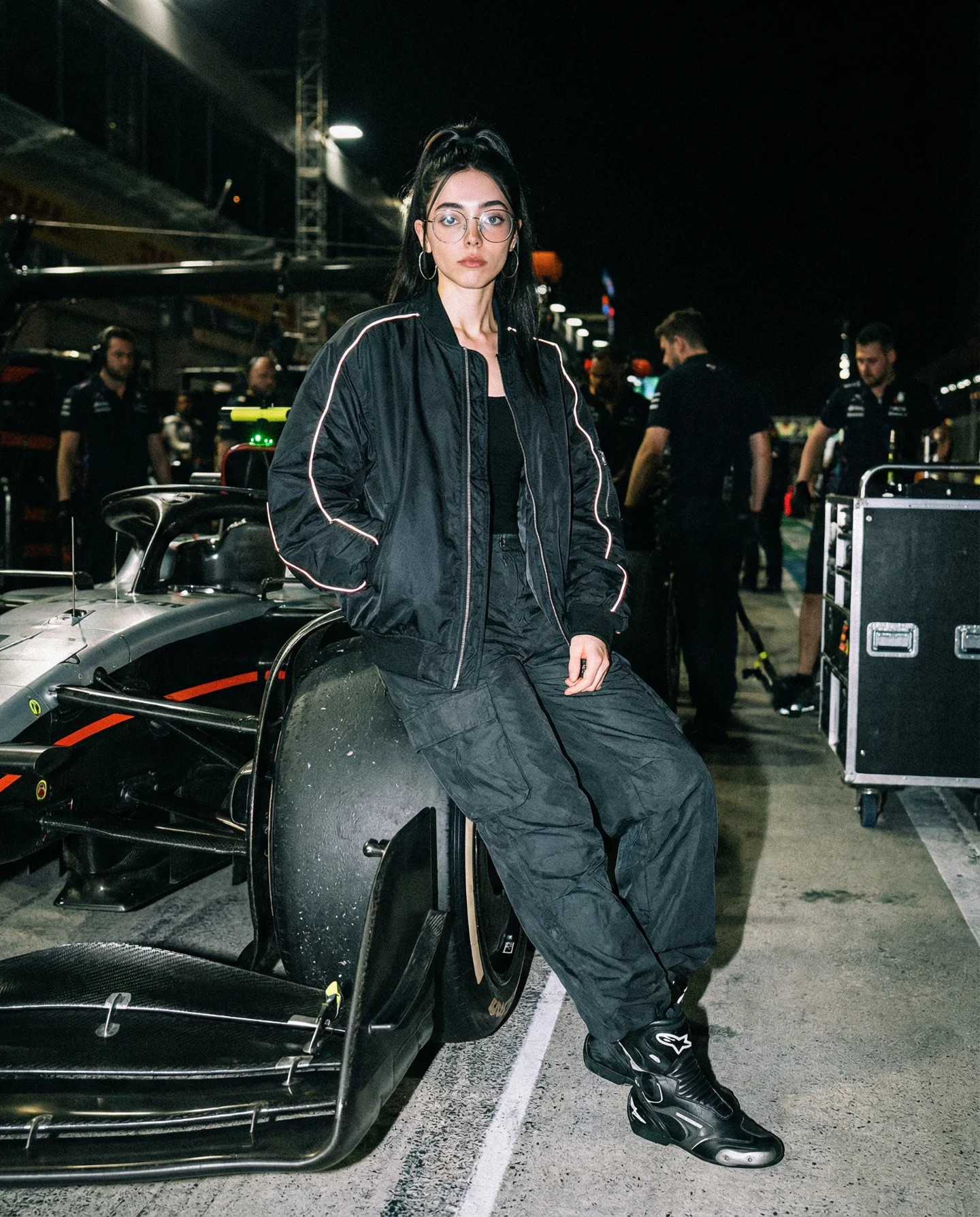
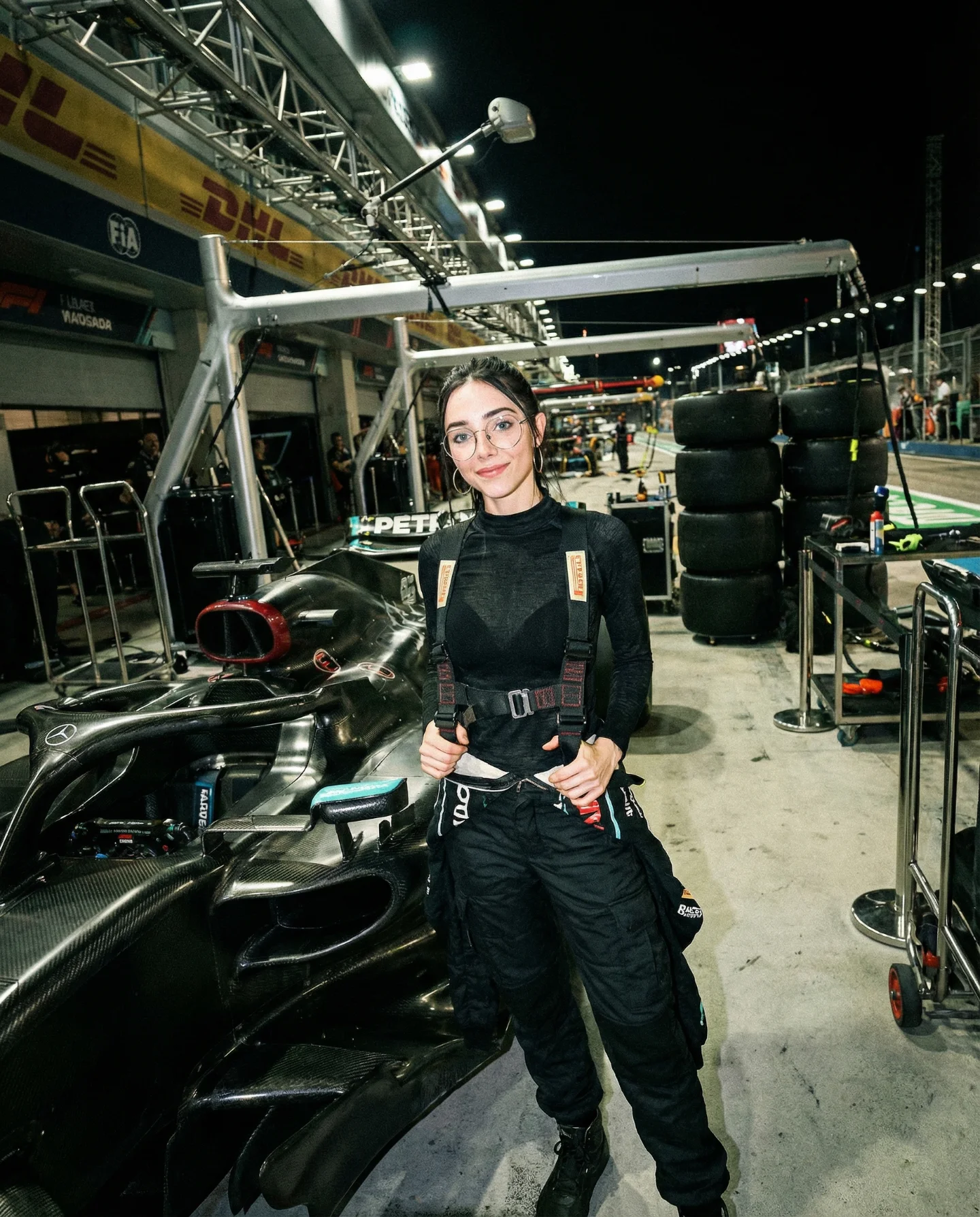
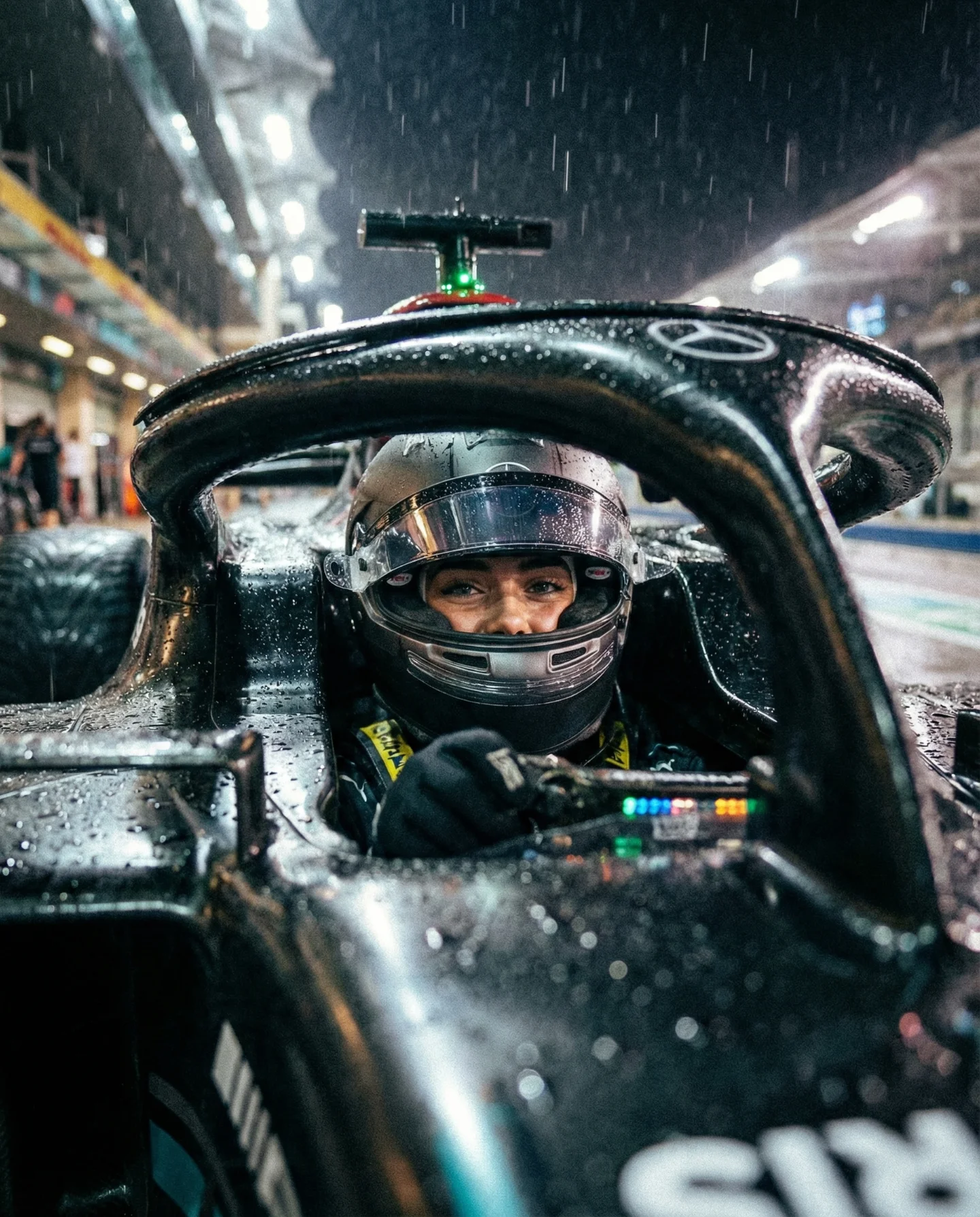
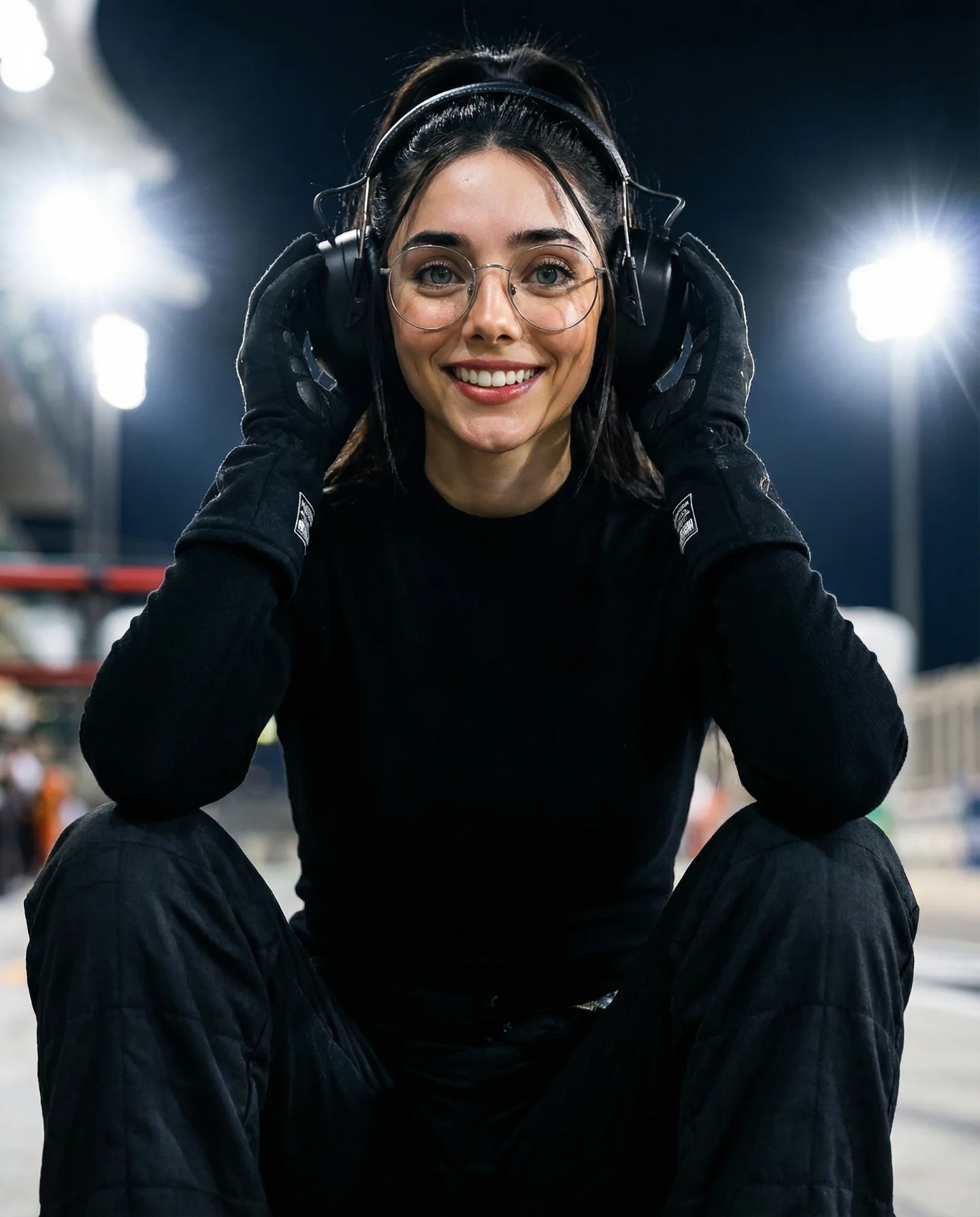
Formula 1 🏎️✨ Hoy toca salir de casa a dar una vuelta y hacer algo diferente 😋 Que foto de todas te gusta más?? 👀
Formula 1 🏎️✨ Hoy toca salir de casa a dar una vuelta y hacer algo diferente 😋 Que foto de todas te gusta más?? 👀
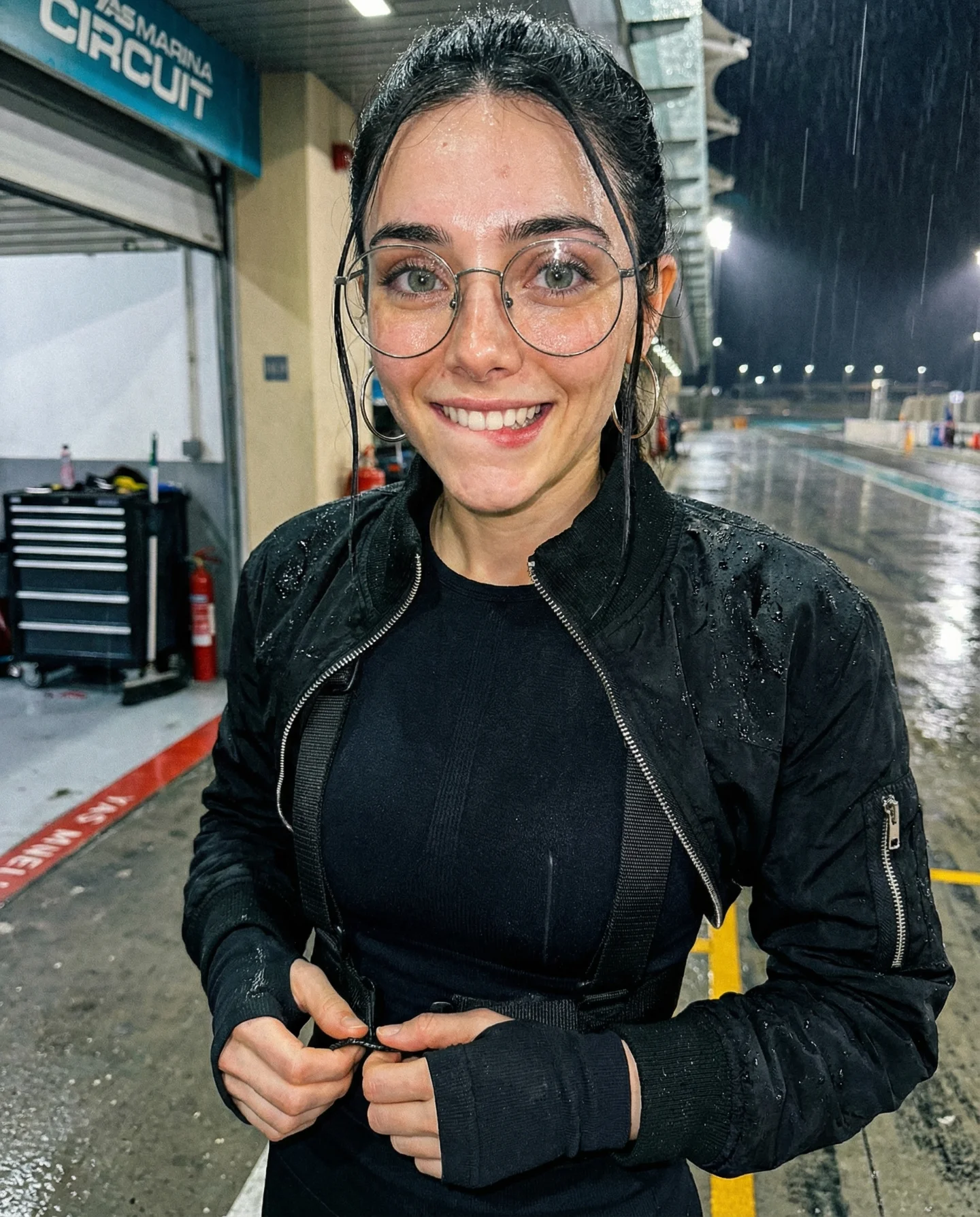
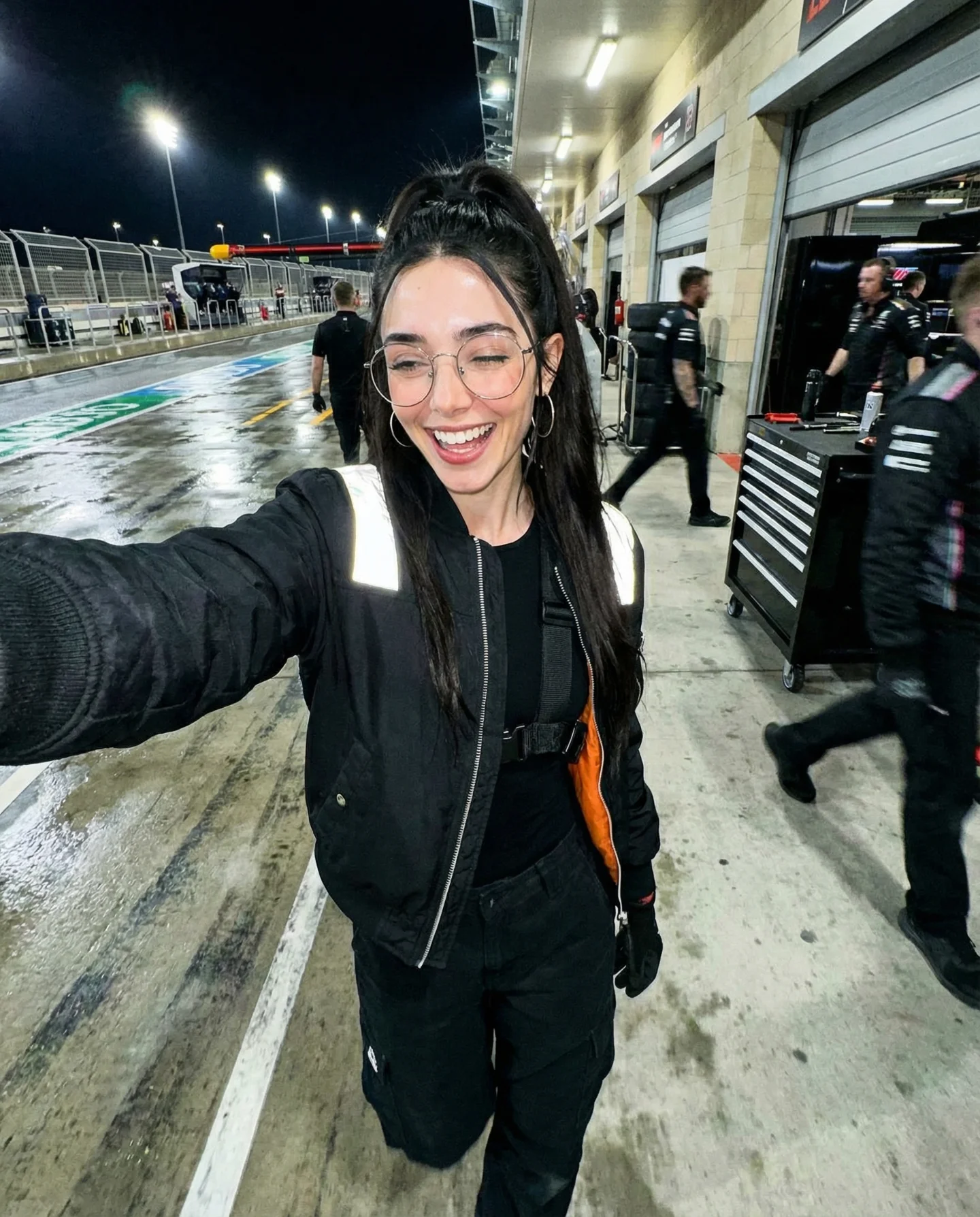
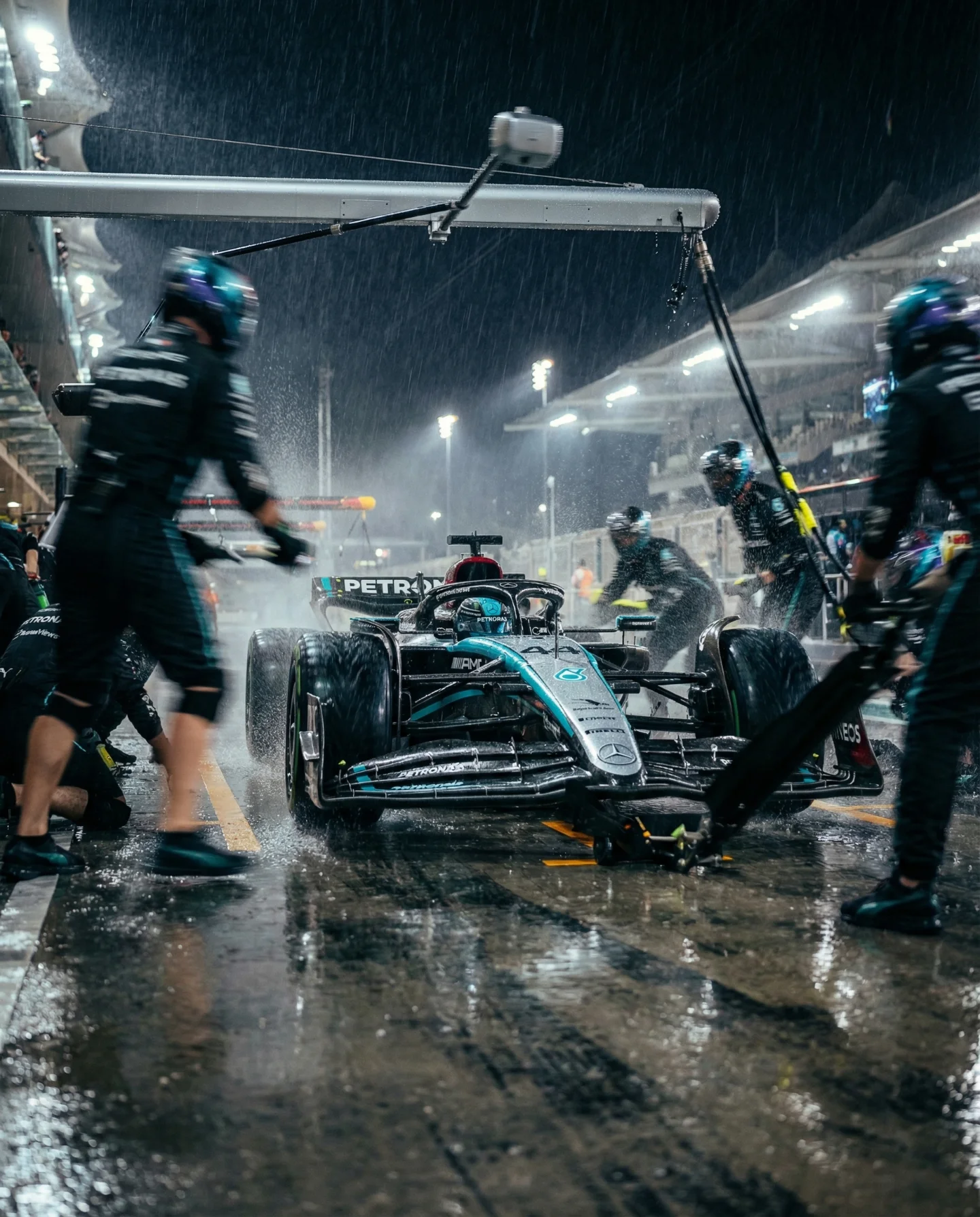
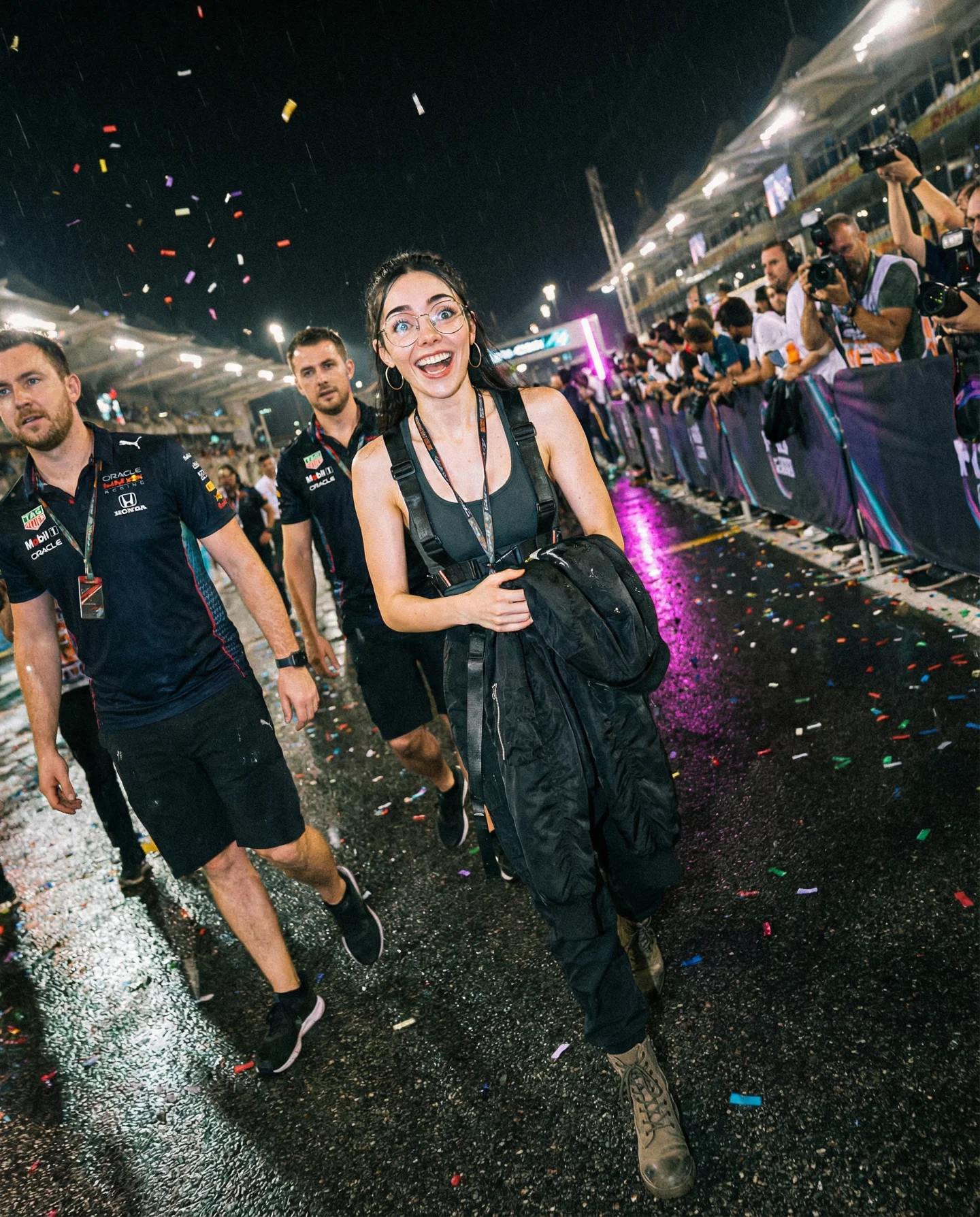
This image works because the weather changes everything. A dry paddock portrait could still be interesting, but the rain makes the scene electric. Wet pavement, visible droplets, and reflected overhead lights immediately create atmosphere. The setting stops feeling like a generic sports facility and starts feeling cinematic in a documentary way.
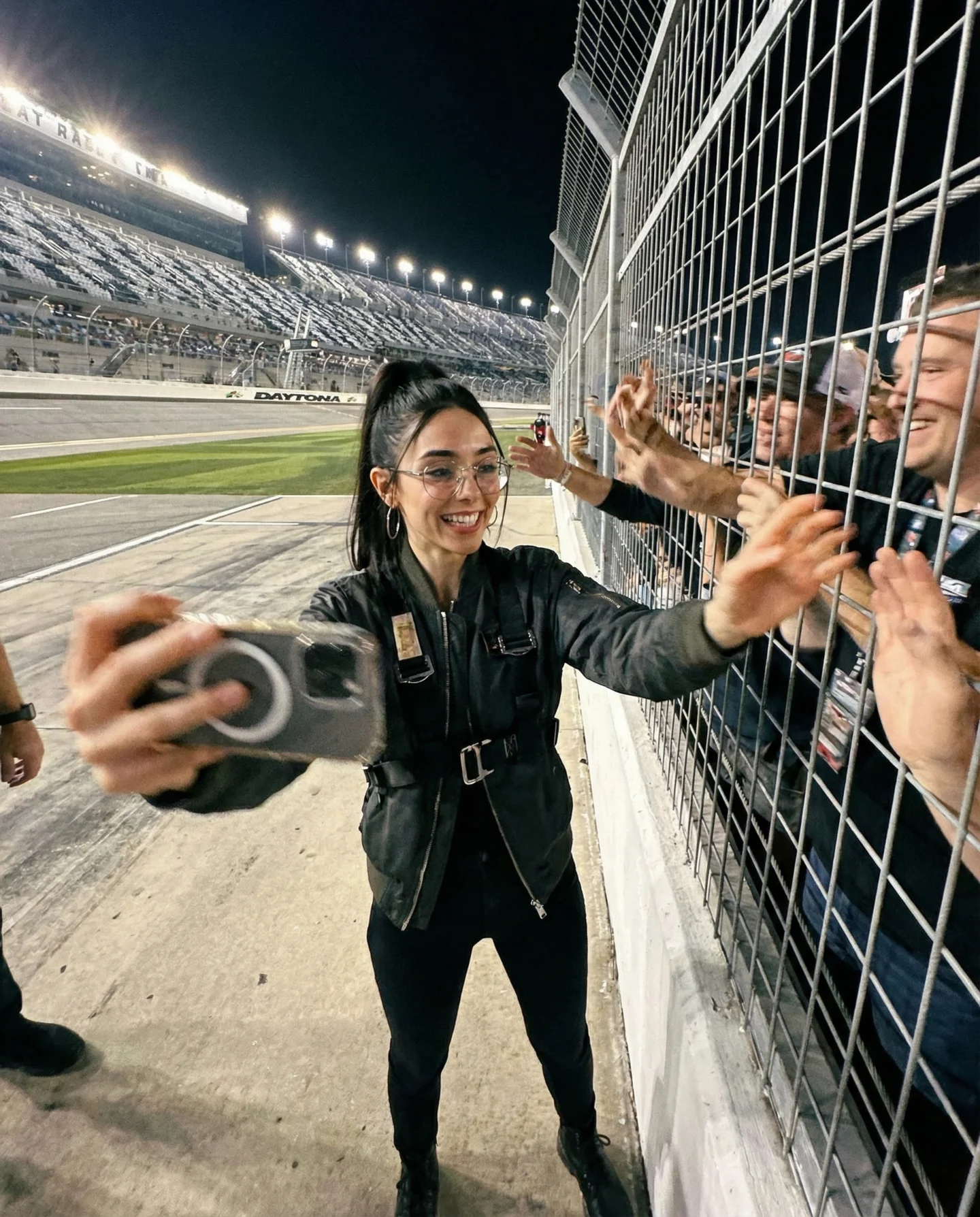
The subject’s smile is also doing important work. It keeps the image from becoming cold or overly technical. Instead of presenting the racetrack as a harsh industrial place, the portrait makes it feel exciting and human. That contrast between harsh environment and warm expression is what gives the image its energy.
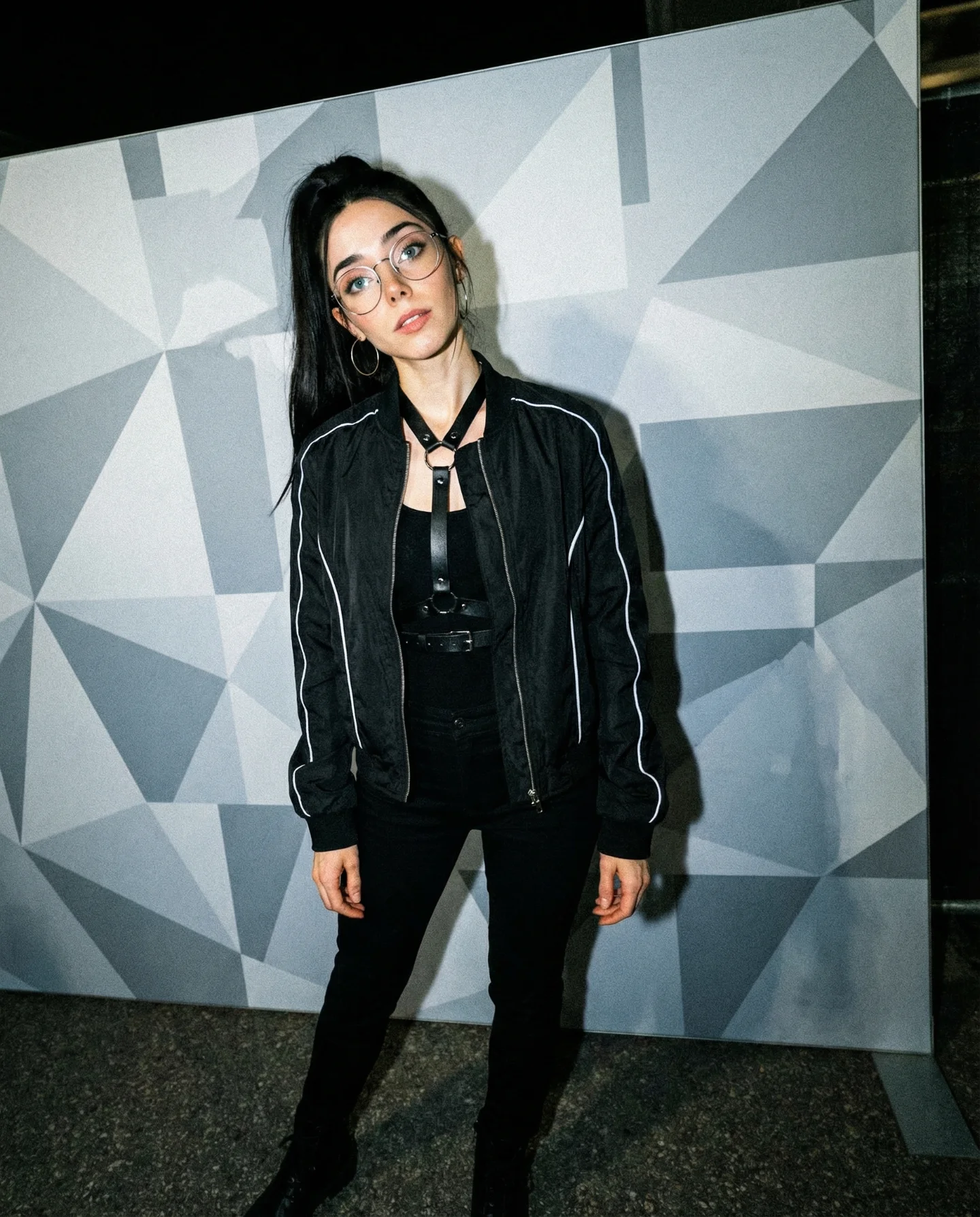
The all-black outfit is the right choice because it fits the setting without trying to outshine it. In a rainy pit-lane scene, bright colors or overt fashion details would compete with the wet reflections and the industrial lighting. Black keeps the look practical and believable while still feeling sharp on camera.
The glasses and hoop earrings add just enough identity to the portrait. They make the subject feel distinct without pushing the styling into costume territory. This matters because the image is strongest when it feels like a real person at the track, not a model inserted into a motorsport set.
The rain is not just weather in this image. It is a compositional tool. The falling droplets catch the light, the pavement reflects the lamps, and the entire environment gains movement and texture. Those reflections are especially valuable because they make the frame feel larger and more immersive than the crop alone would suggest.
In prompt writing, reflective wet surfaces are often worth describing in detail because they double the visual information in a scene. Here, the ground is almost as important as the subject’s clothing in communicating the mood.
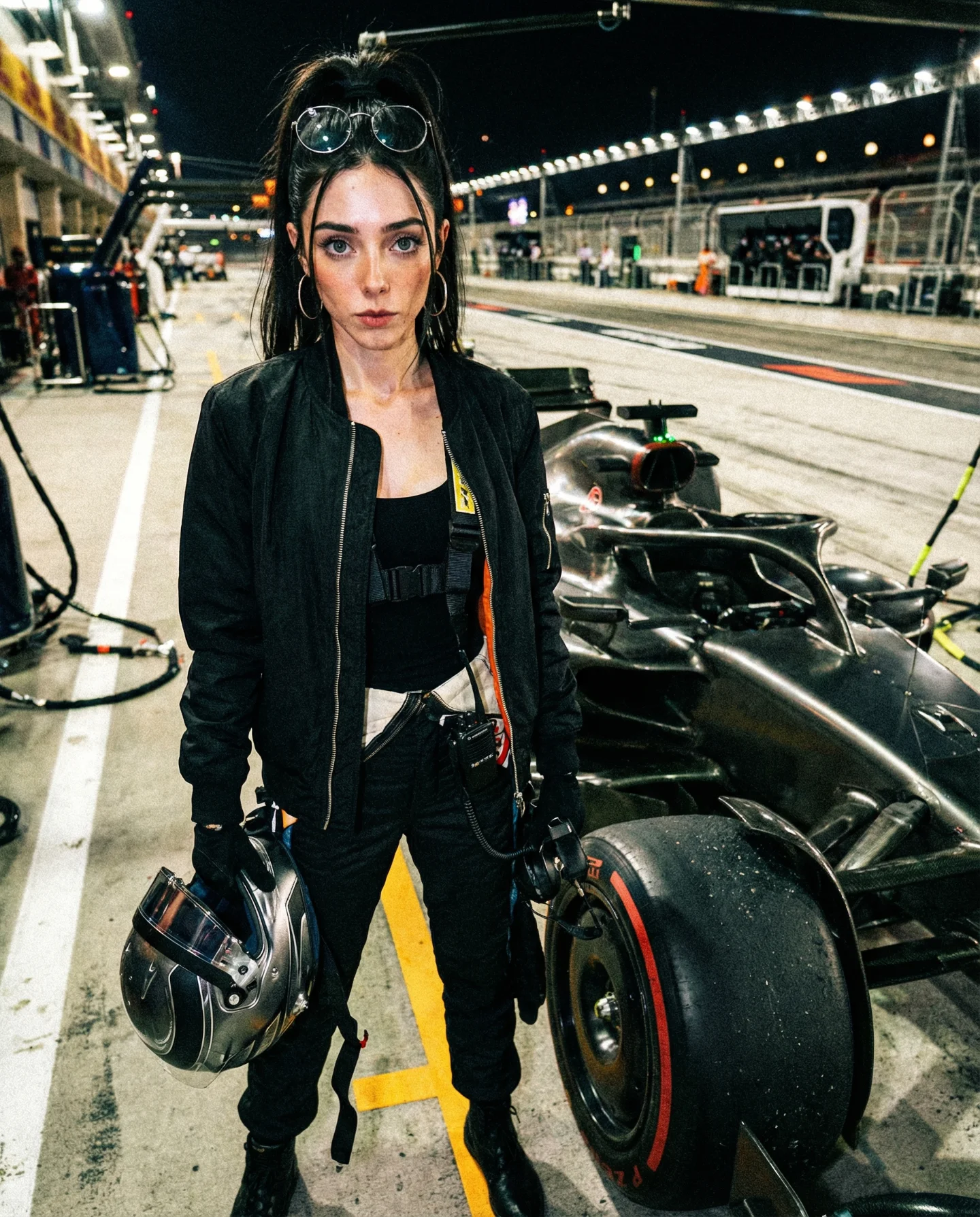
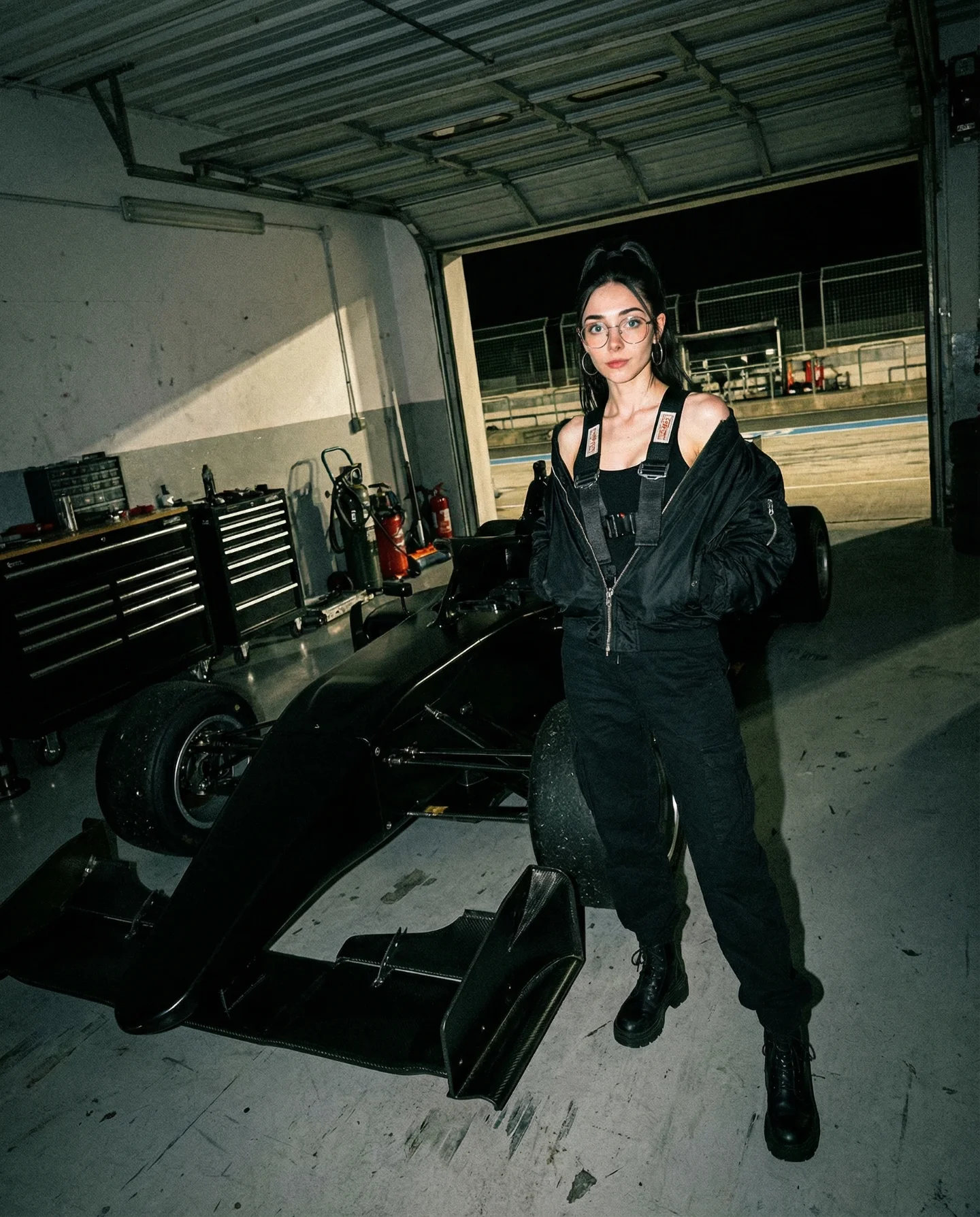
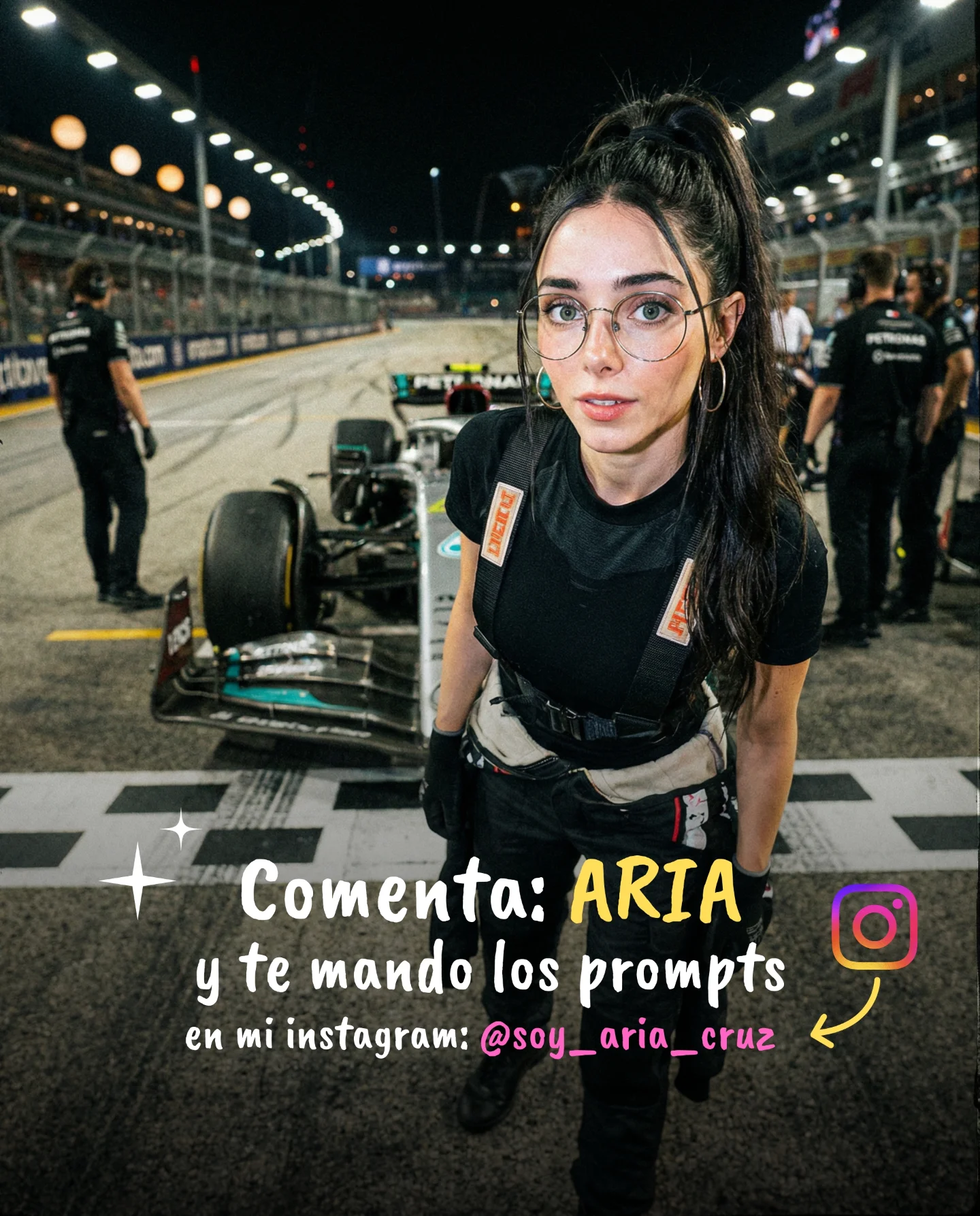
This image depends on the location reading clearly as a racetrack paddock or pit area. Without that, it might look like any rainy service lane. The garage opening, the industrial barriers, the signage, and the floodlit track environment all help anchor the image in motorsport culture. That context is what makes the portrait distinctive.
This is a good reminder that niche settings need at least a few specific cues. You do not have to overdo the branding, but you do need enough visual evidence that the place feels real and recognizable.
To recreate this image well, the prompt should mention rainy night paddock lighting, wet pavement reflections, black sporty layers, glasses, and the feel of a Formula 1 style pit lane. If the lighting or rain is underspecified, the result will lose the atmosphere that makes the image special. The environment is doing half the storytelling here.
It also helps to frame the mood as excited and present rather than glamorous or dramatic. This should feel like a real moment someone enjoyed, not a stylized motorsport fashion campaign. That distinction keeps the portrait human and believable.
This prompt direction works well for motorsport lifestyle imagery, rainy-night documentary portraits, F1-inspired creator content, and sports-adjacent prompt libraries that need stronger environmental identity. It is especially effective when you want a portrait that feels dynamic without relying on visible cars as the main subject.
It is also a strong example of how weather can turn a niche location into a powerful visual story. The track is already interesting, but the rain is what makes it unforgettable.