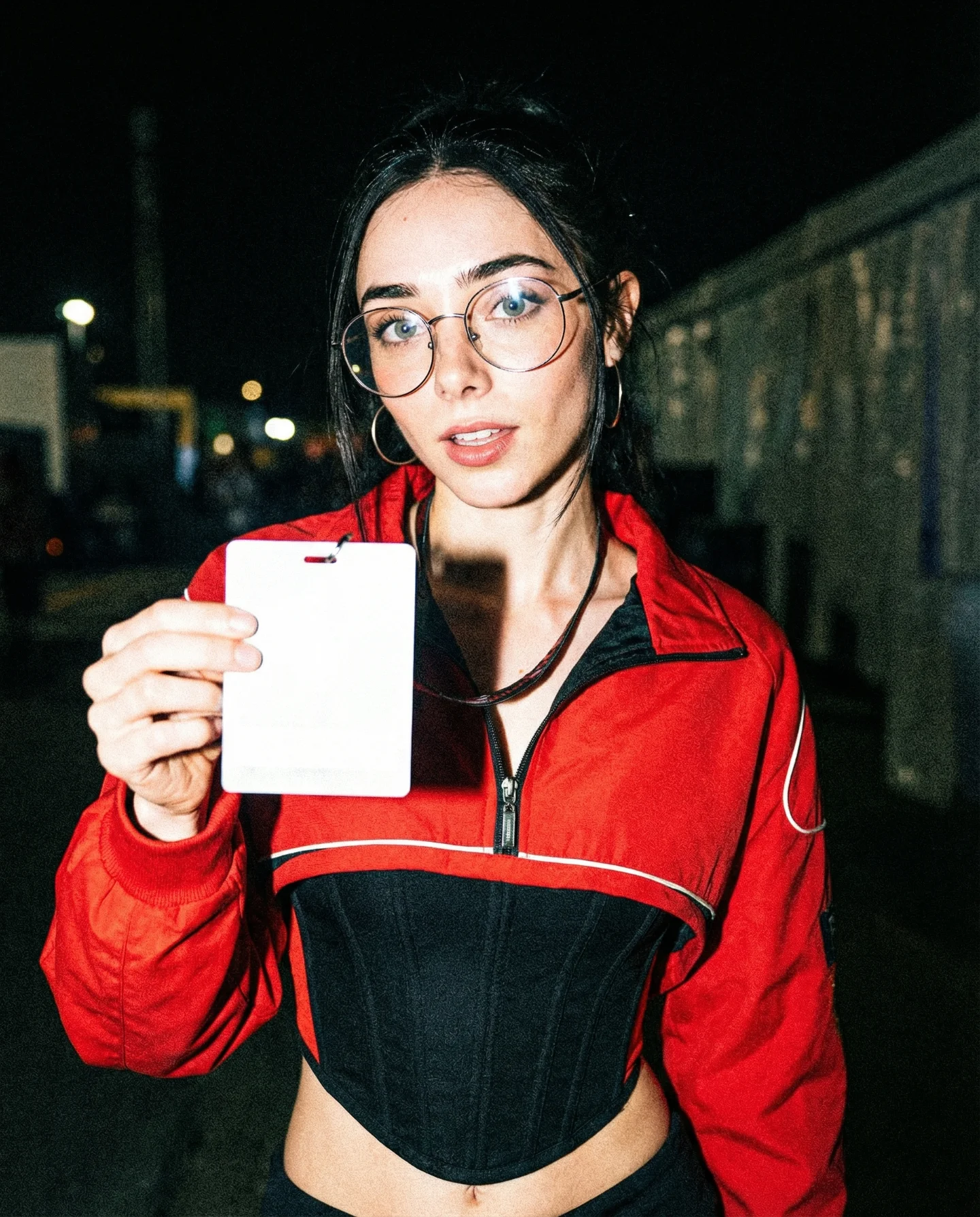
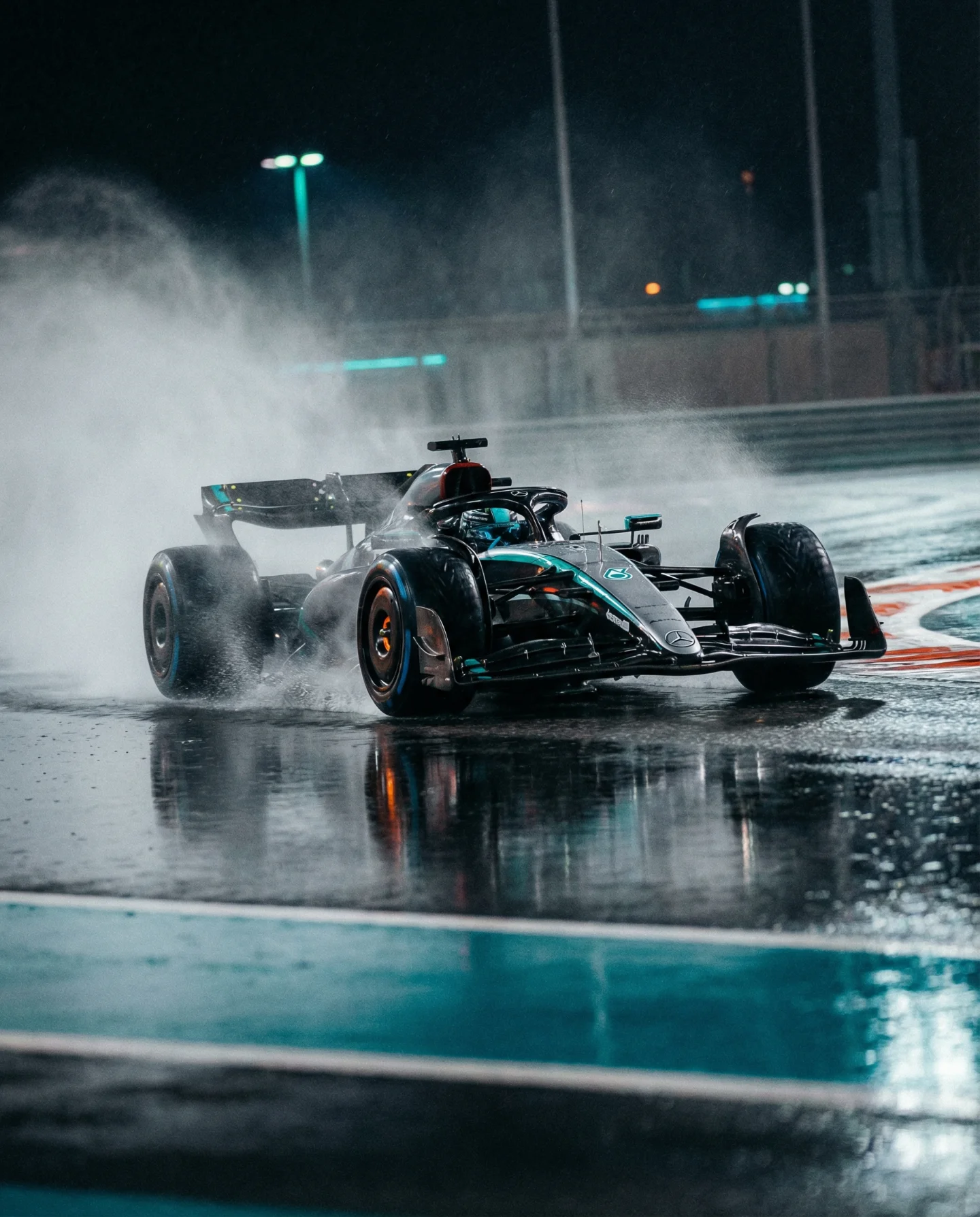
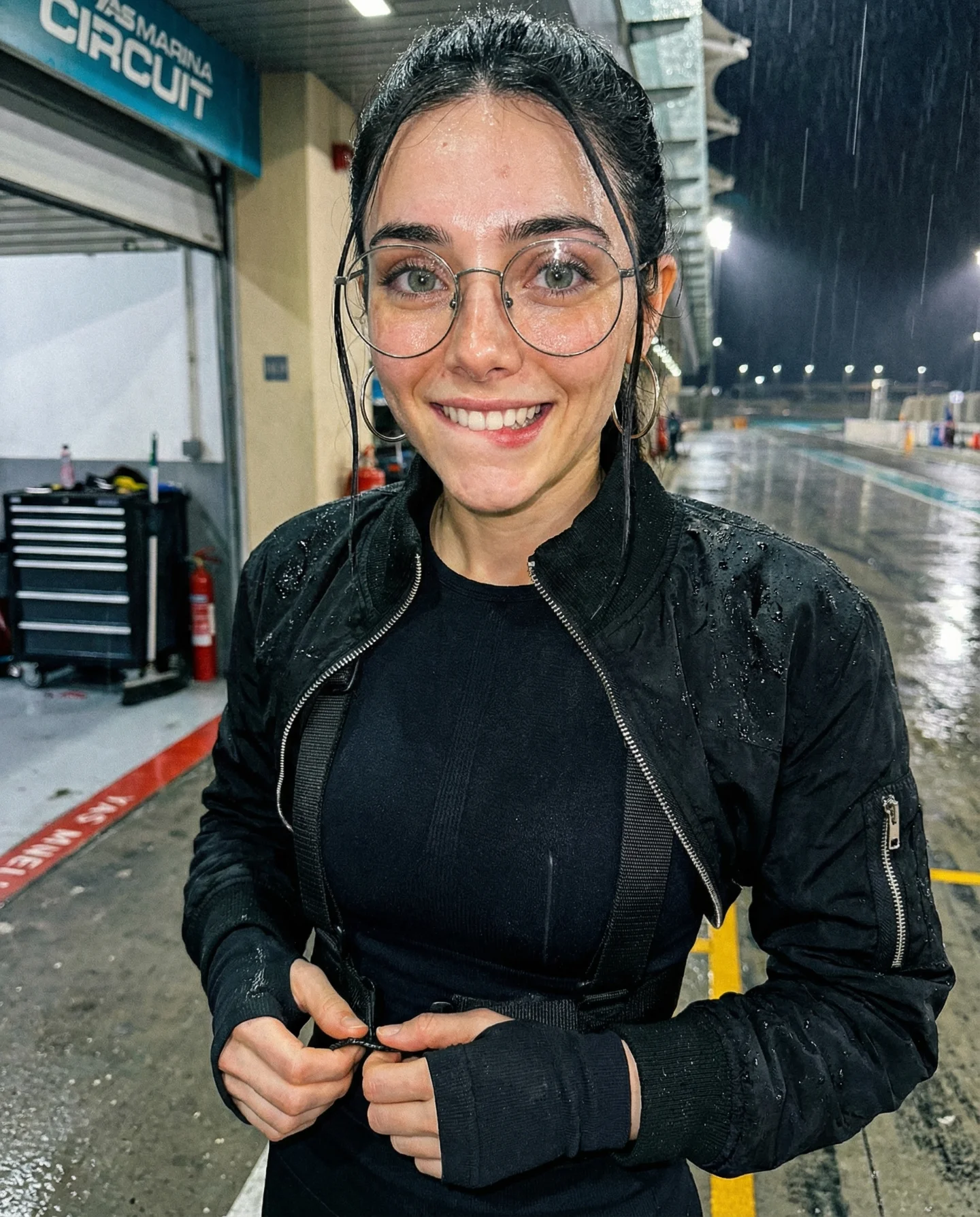
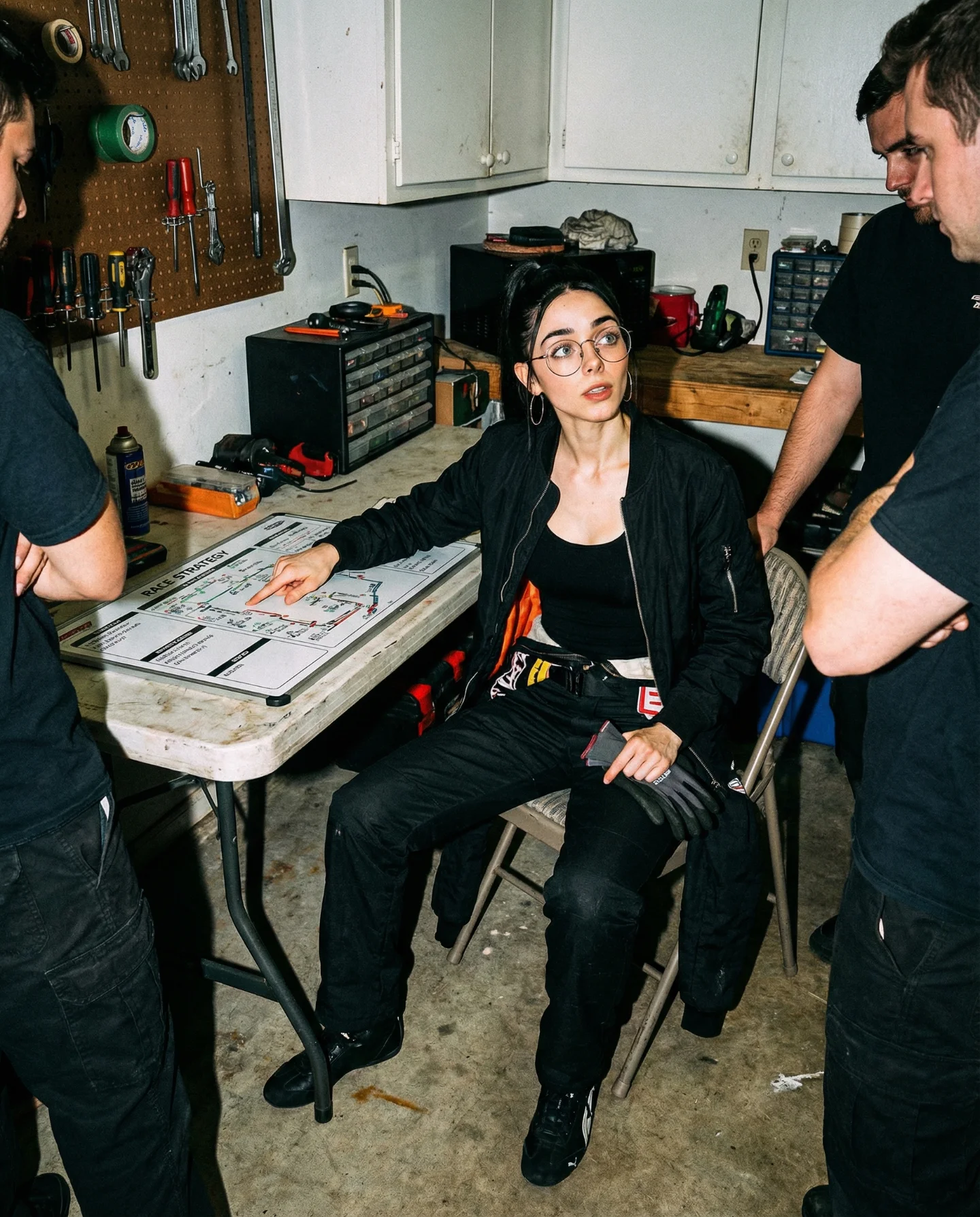
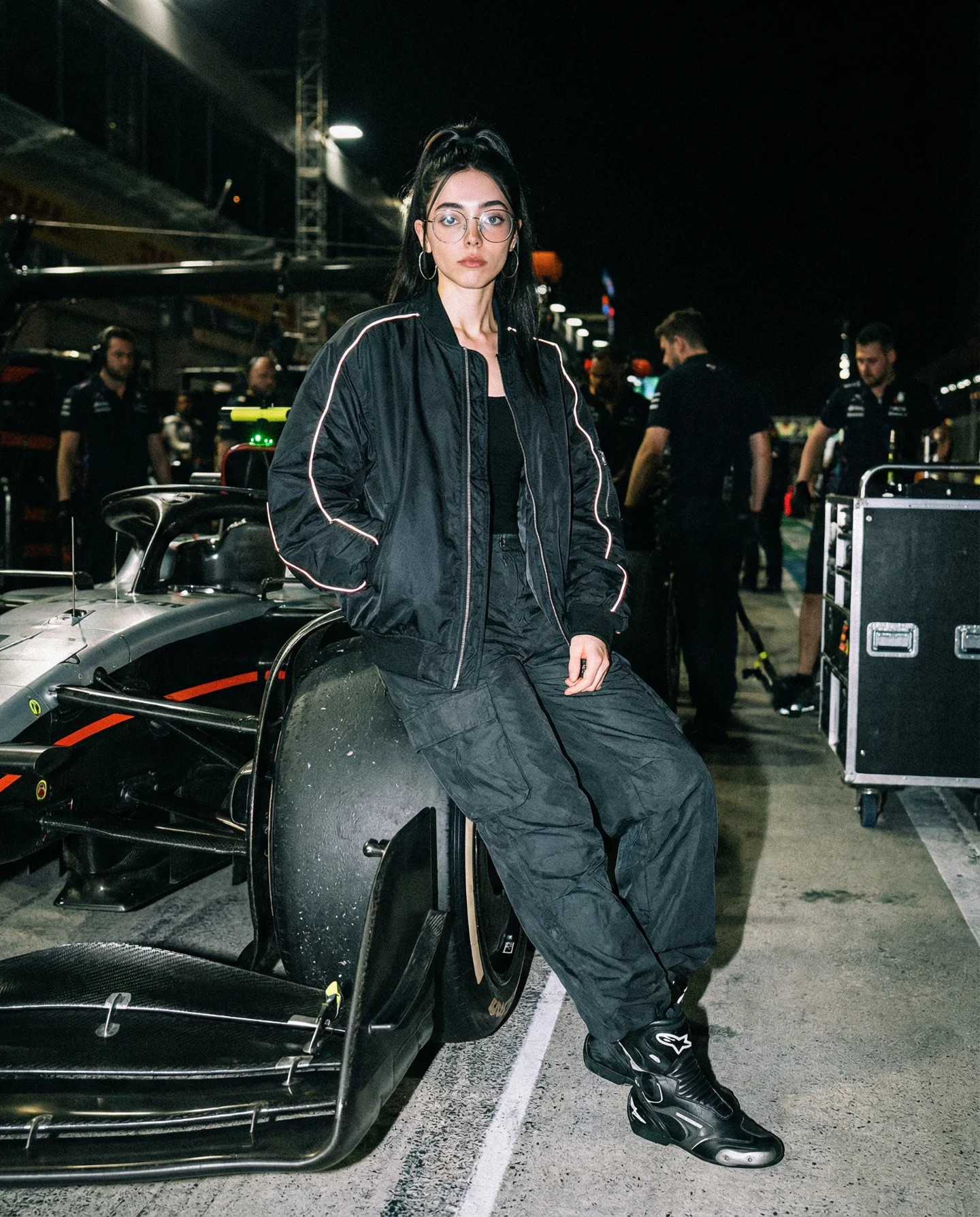
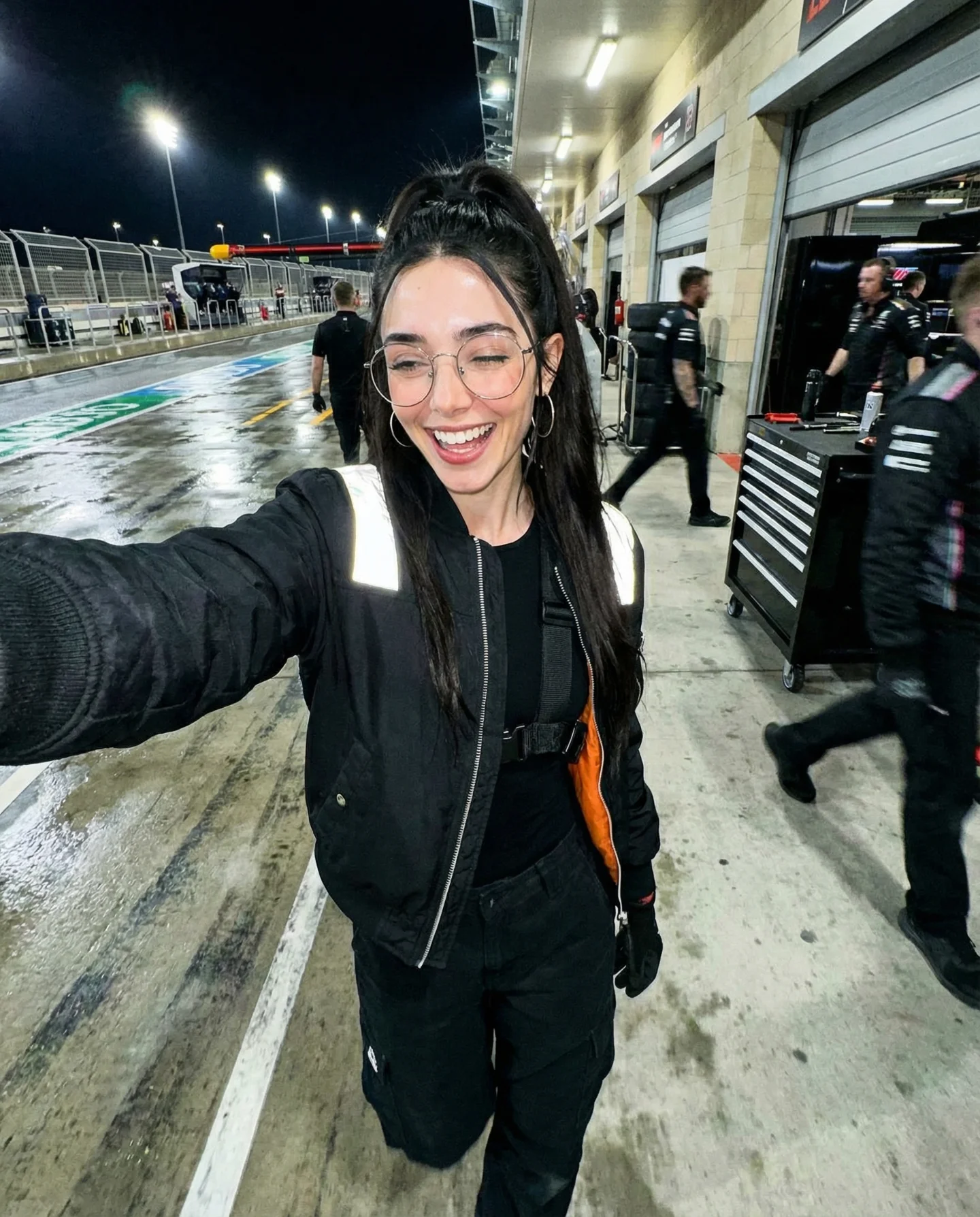
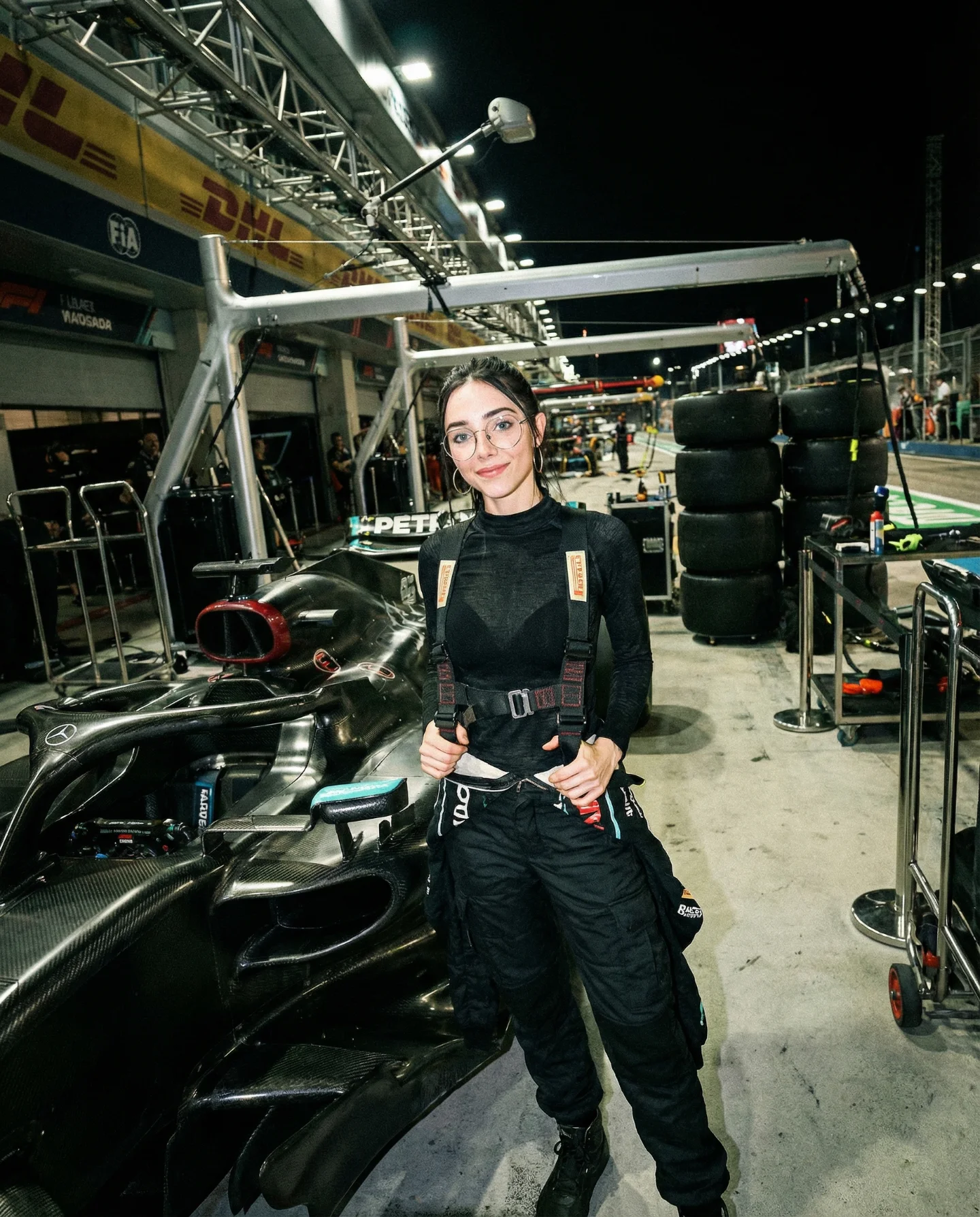
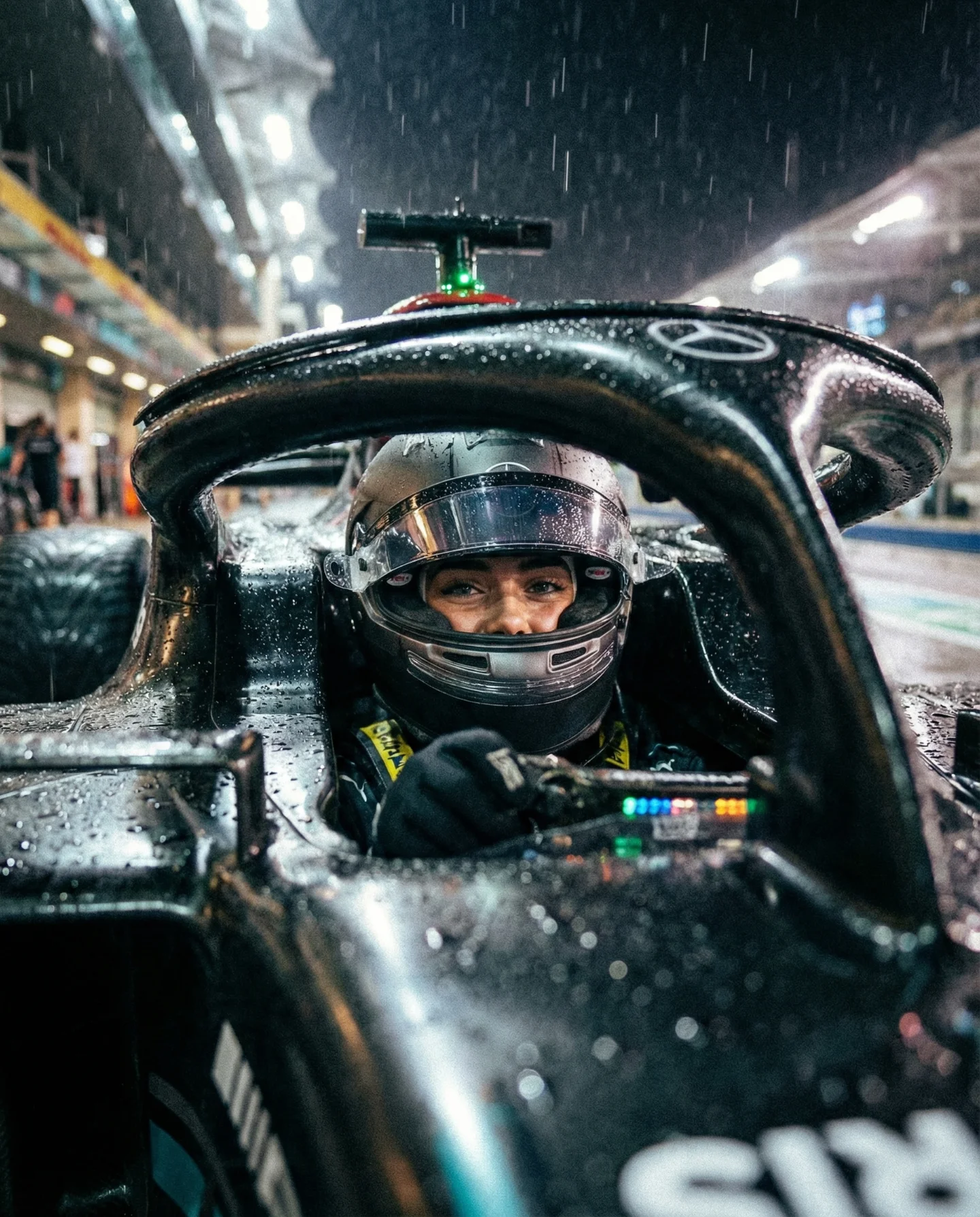
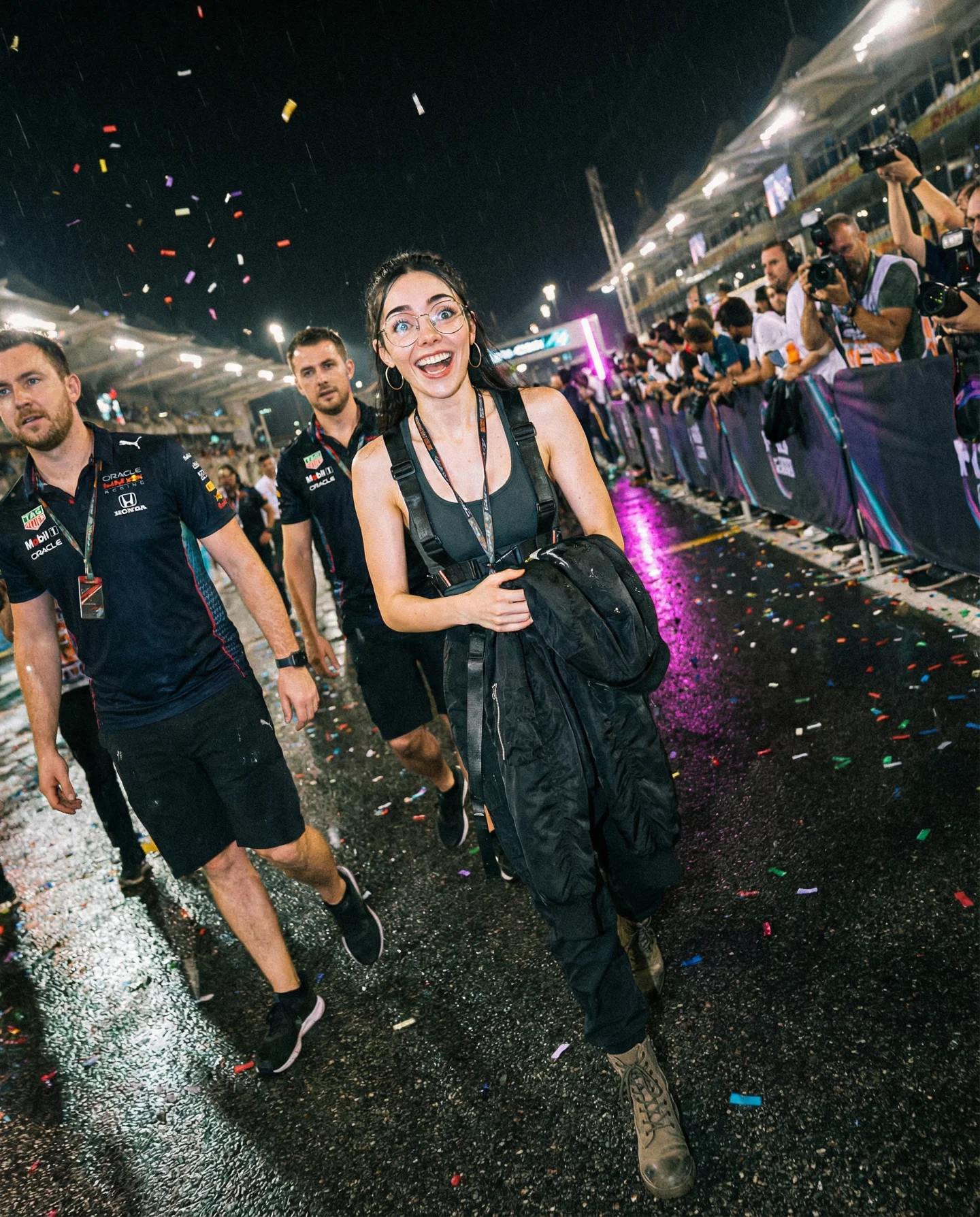
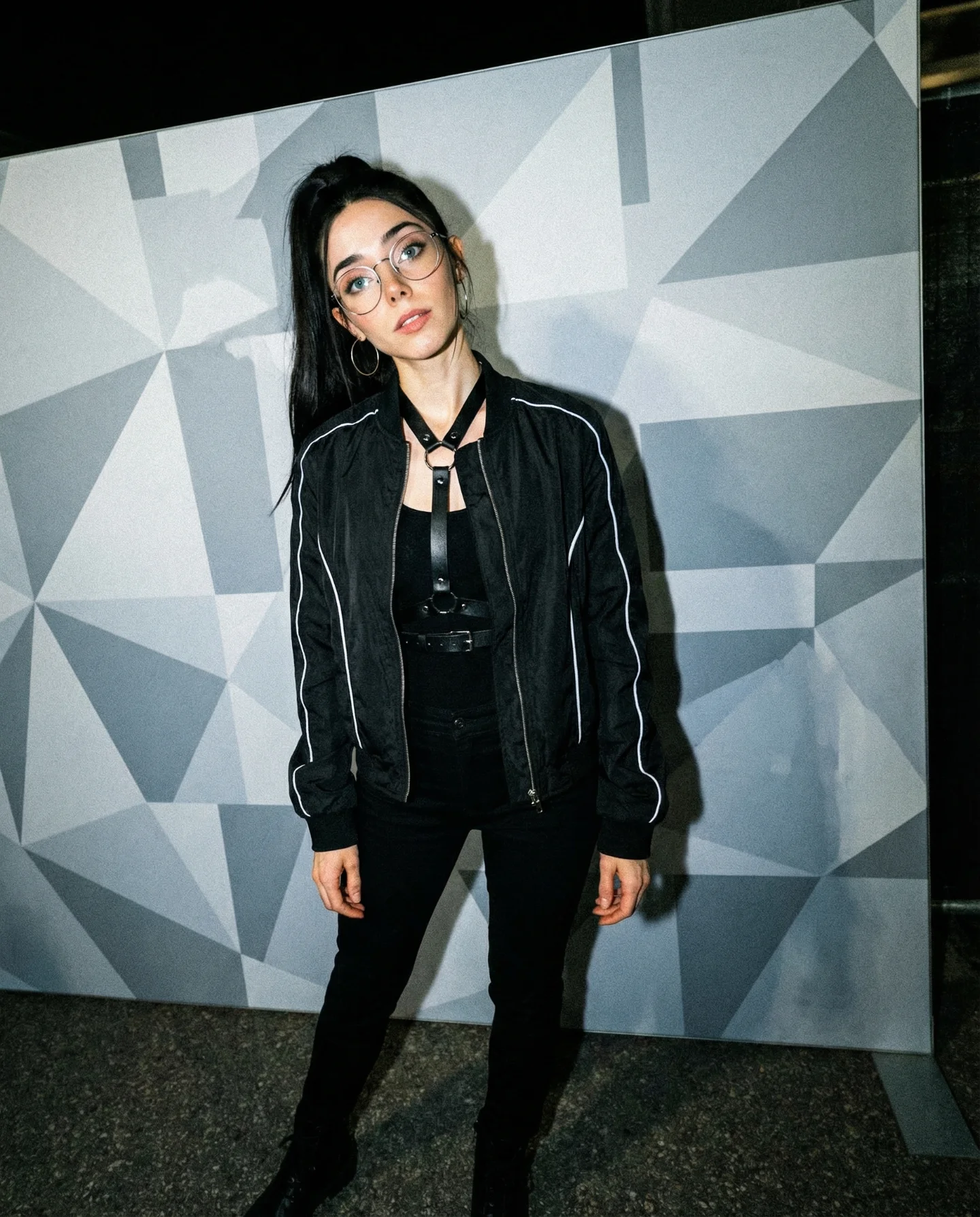
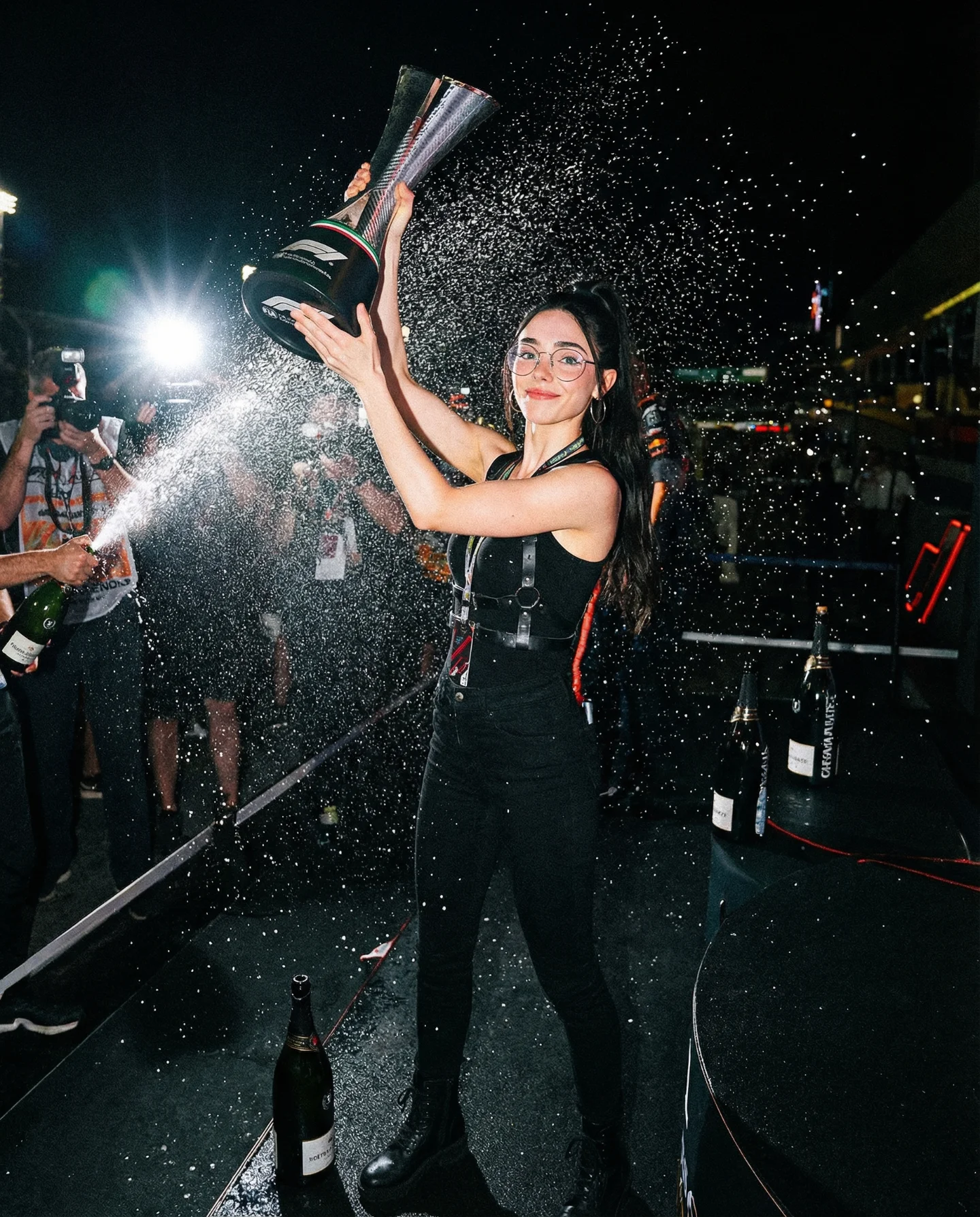
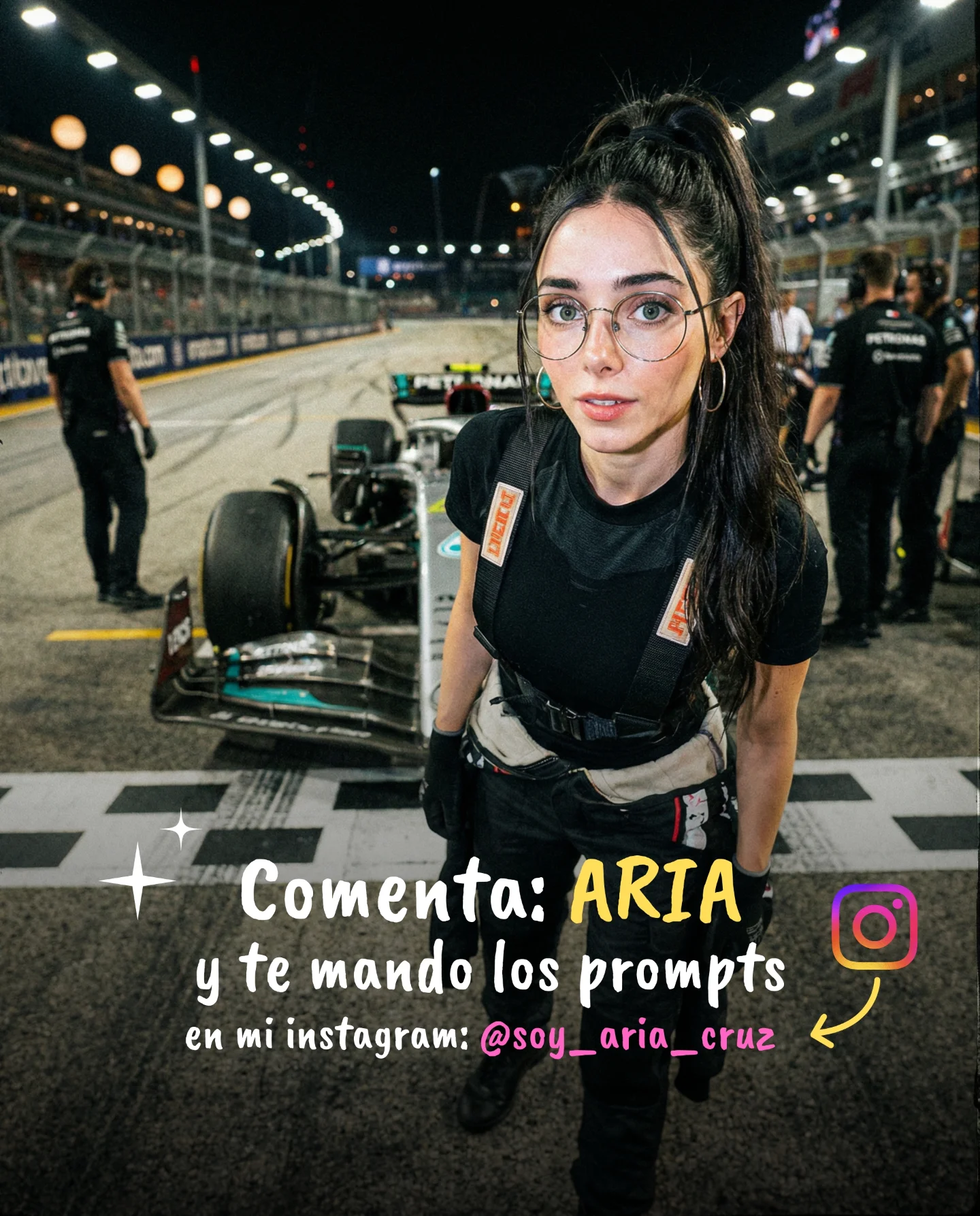
Formula 1 🏎️✨ Hoy toca salir de casa a dar una vuelta y hacer algo diferente 😋 Que foto de todas te gusta más?? 👀
Formula 1 🏎️✨ Hoy toca salir de casa a dar una vuelta y hacer algo diferente 😋 Que foto de todas te gusta más?? 👀
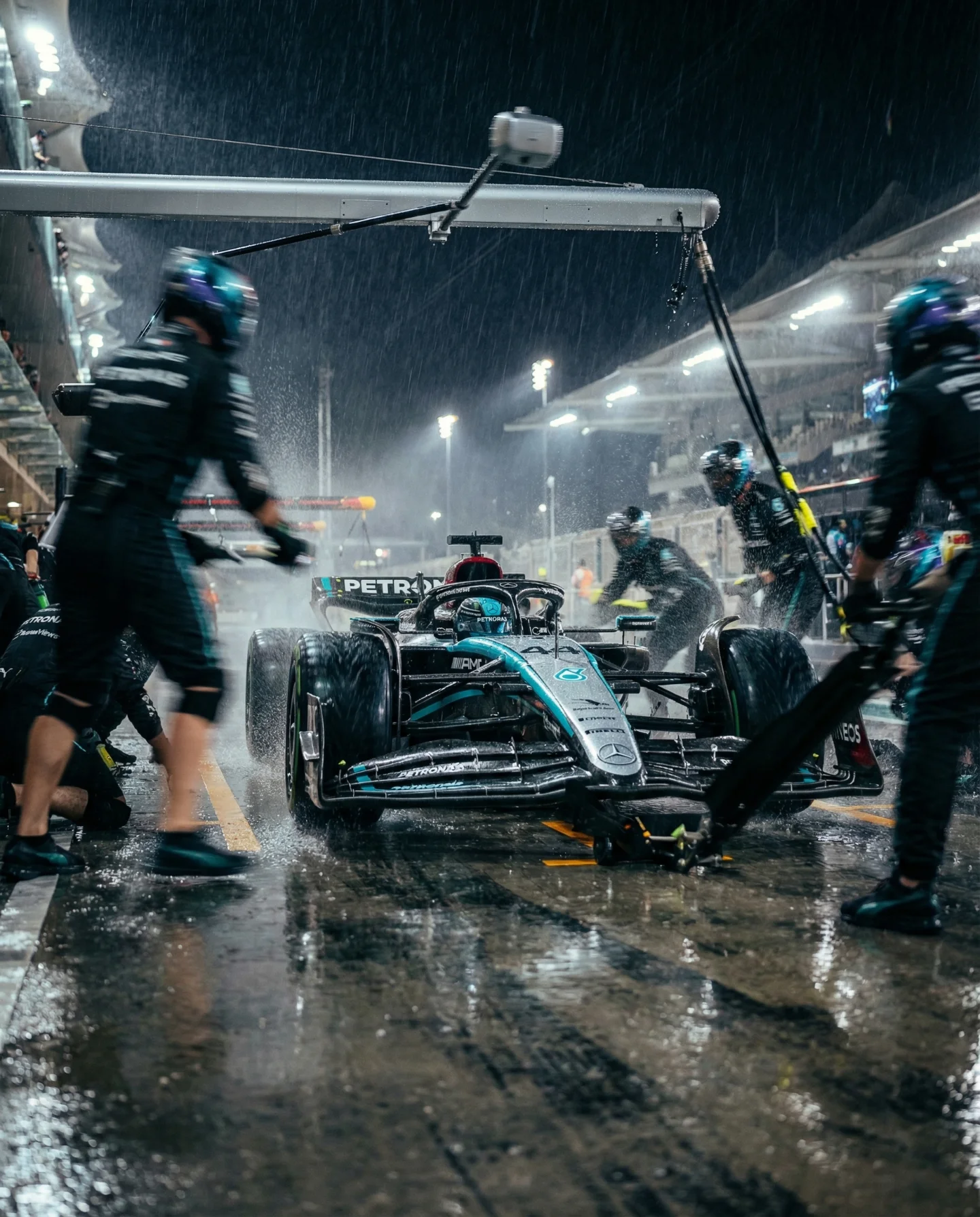
This image is powerful because it turns pure operational chaos into a clean visual thesis. At first glance, the viewer reads three things immediately: heavy rain, a Formula 1 car, and human urgency. That is enough to stop the scroll. But the frame keeps going after the first read, because the wet reflections, motion blur, and overhead rigging add layers without making the scene hard to understand.
For creators, this is a useful example of how spectacle works online. Spectacle is not just about a famous object. It is about putting that object inside an active condition. A parked race car is interesting. A rain-soaked pit stop under stadium lights is a system under pressure, and that pressure is what creates the image’s energy.
The strongest hook here is friction. Everything in the shot is working against comfort: rain is falling hard, the ground is dangerous and reflective, the crew are moving fast, and the car feels pinned in the middle of a short-lived moment. Viewers instinctively know this scene cannot hold for long. That temporary quality is a major advantage in social media because it gives the frame urgency.
The second advantage is hierarchy. Even with so much happening, the image does not feel messy. The Mercedes car is the sharp anchor, and the crew are arranged like moving brackets around it. The motion blur is not a flaw. It is what tells your brain this is real action, not a posed reenactment. Small creators should pay attention to that lesson: controlled blur often performs better than over-clean perfection when the story is speed.
| Signal | Evidence (from this image) | Mechanism | Replication Action |
|---|---|---|---|
| Operational tension | The car is centered while crew move rapidly around it in heavy rain | Viewers feel they are witnessing a high-stakes live process, not a static display | Build images around a system in motion rather than an object standing still |
| Weather drama | Rain streaks and water reflections dominate the frame | Weather adds emotional texture and instantly raises cinematic value | Use backlit rain, mist, or spray as a structural part of the composition |
| Clear center of gravity | The race car stays sharp and central while the edges blur | One stable anchor lets complexity feel exciting instead of confusing | Keep the hero subject crisp and let secondary actors carry the blur |
| Premium surface detail | Wet carbon fiber, metallic paint, and reflective asphalt all read clearly | Texture makes the scene feel expensive and immersive | Prioritize materials that respond strongly to directional light and moisture |
This visual pattern works best when the creator wants to communicate process, pressure, or elite access. You can move it outside motorsport and still keep the same growth mechanics. The key is not the race car itself. The key is one hero object inside a stressful, short-duration, visually noisy environment, with one stable focal point holding the frame together.
The aesthetic strength of this image comes from engineered contrast. It is not simply “cinematic rain.” The frame carefully separates stable geometry from unstable motion. The car is all precision: symmetrical, metallic, grounded. The crew are almost the opposite: blurred, irregular, fleeting. That contrast gives the image a pulse.
The wet ground is doing a lot of hidden work too. Without the reflections, the scene would lose half of its depth. The asphalt turns the overhead lighting into an extra design layer, which is why the lower half of the frame feels so rich without becoming cluttered. When creators try to remake this style, they often focus only on rain and forget the floor. That is a mistake. The reflection field is one of the main reasons this image feels premium rather than merely chaotic.
| Observed | Why it matters | How to recreate it |
|---|---|---|
| Low camera near the wet track surface | Makes the car feel aggressive and enlarges reflections | Shoot from knee height or lower and let the ground occupy real foreground space |
| Sharp car, blurred crew | Communicates speed without losing the main focal subject | Lock focus on the hero object and allow edge movement to streak naturally |
| Heavy rain visible in backlight | Adds atmosphere and physical stakes | Use strong overhead or rear lights that catch falling water |
| Cool white lights with a turquoise team accent | Keeps the palette coherent while preserving brand recognizability | Limit the palette to wet neutrals plus one accent color |
This is a scene where prompt discipline matters. If you only ask for “a cool F1 pit stop in the rain,” the model usually over-stylizes the rain, loses the team realism, or turns the car into a generic futuristic racer. The better approach is to write the image as a series of locked mechanical constraints.
| Prompt chunk | What it controls | Swap ideas (EN) |
|---|---|---|
| front-facing Mercedes Formula 1 car centered in a rainy pit lane | Main subject identity and visual hierarchy | GT race car, endurance prototype, superbike in pit lane |
| multiple pit crew moving around the car, some motion blurred | Action energy and realism | engineers rushing, photographers crossing frame, mechanics surrounding machine |
| heavy rain, mist, wet reflective asphalt, cool stadium lights | Atmosphere and premium texture | snow flurries with floodlights, sea spray at dock, steam in a night factory |
| low ground-level vertical documentary shot | Perspective and intensity | chest-height frontal shot, side angle tracking shot, tighter crop on front wing |
| silver-black bodywork with turquoise accents | Palette coherence and team-coded visual memory | red-black livery, white-gold luxury machine, neon lime cyber-race palette |
Lock the image in this order: first the centered car and low camera, second the wet environment and reflective floor, third the moving crew, and only then the team branding details. If you start with branding before the scene geometry is stable, the result usually drifts into poster art or a generic sports wallpaper.
Use the one-change rule here too. First get the pit stop right in dry conditions if necessary. Then add rain only. Then add motion blur only. Then refine the accent color and branding. That order sounds slower, but it avoids the common failure mode where every effect is introduced at once and nothing remains believable.
Iteration 1: centered F1 car, low angle, pit lane, no rain
Iteration 2: keep composition, add heavy rain and reflective asphalt
Iteration 3: keep rain, add motion-blurred pit crew at the edges
Iteration 4: keep action and weather, refine Mercedes-style silver-black-turquoise livery