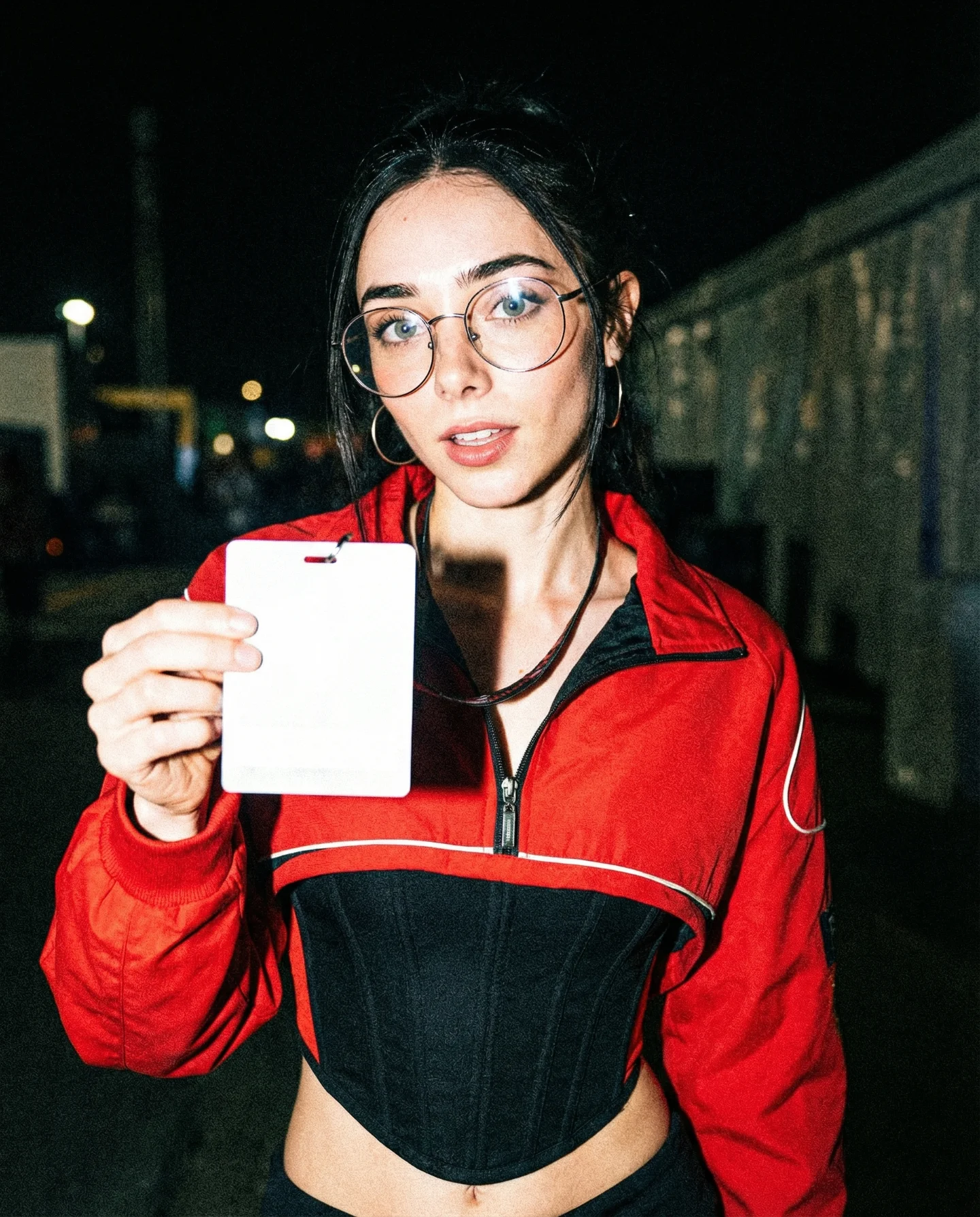
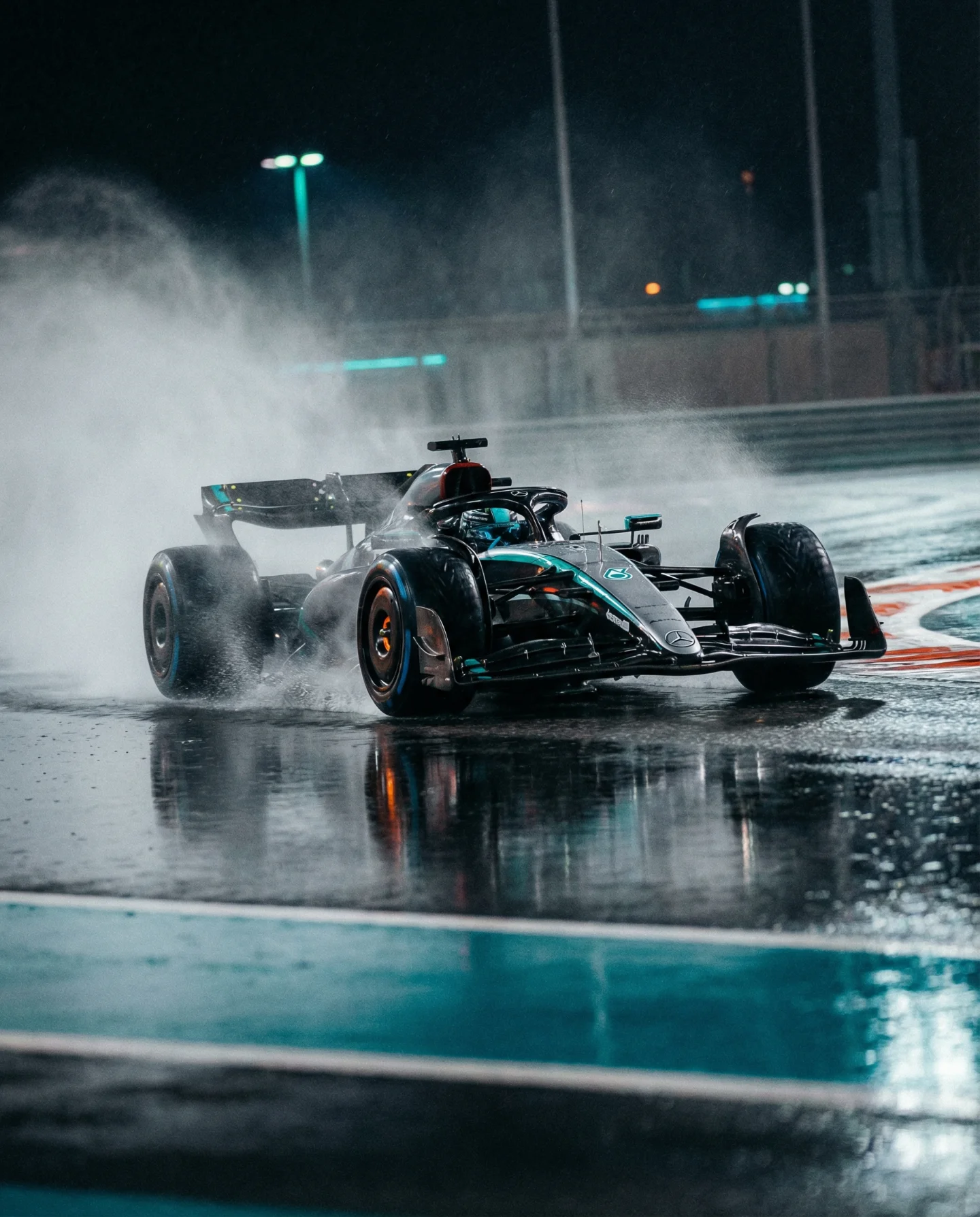
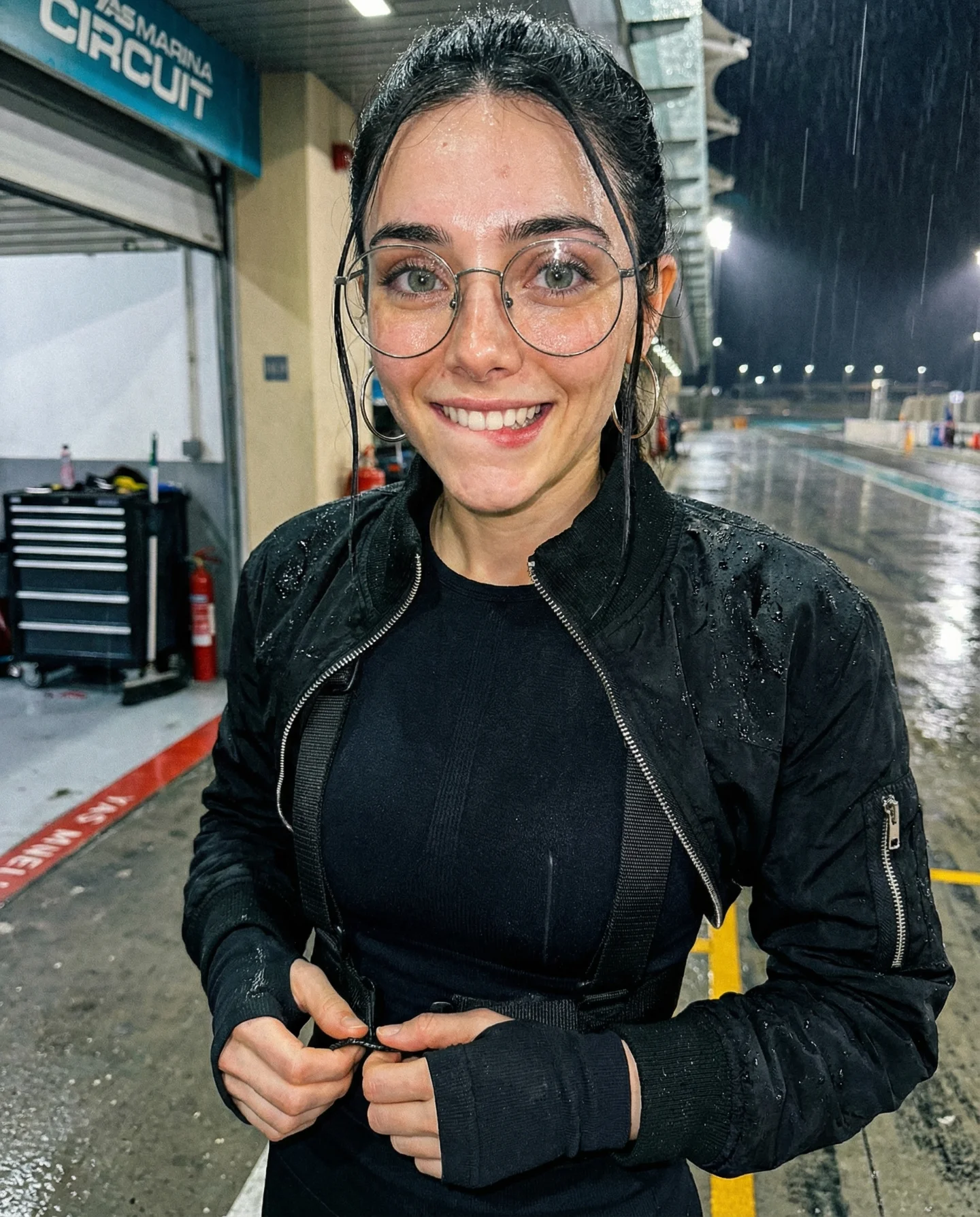
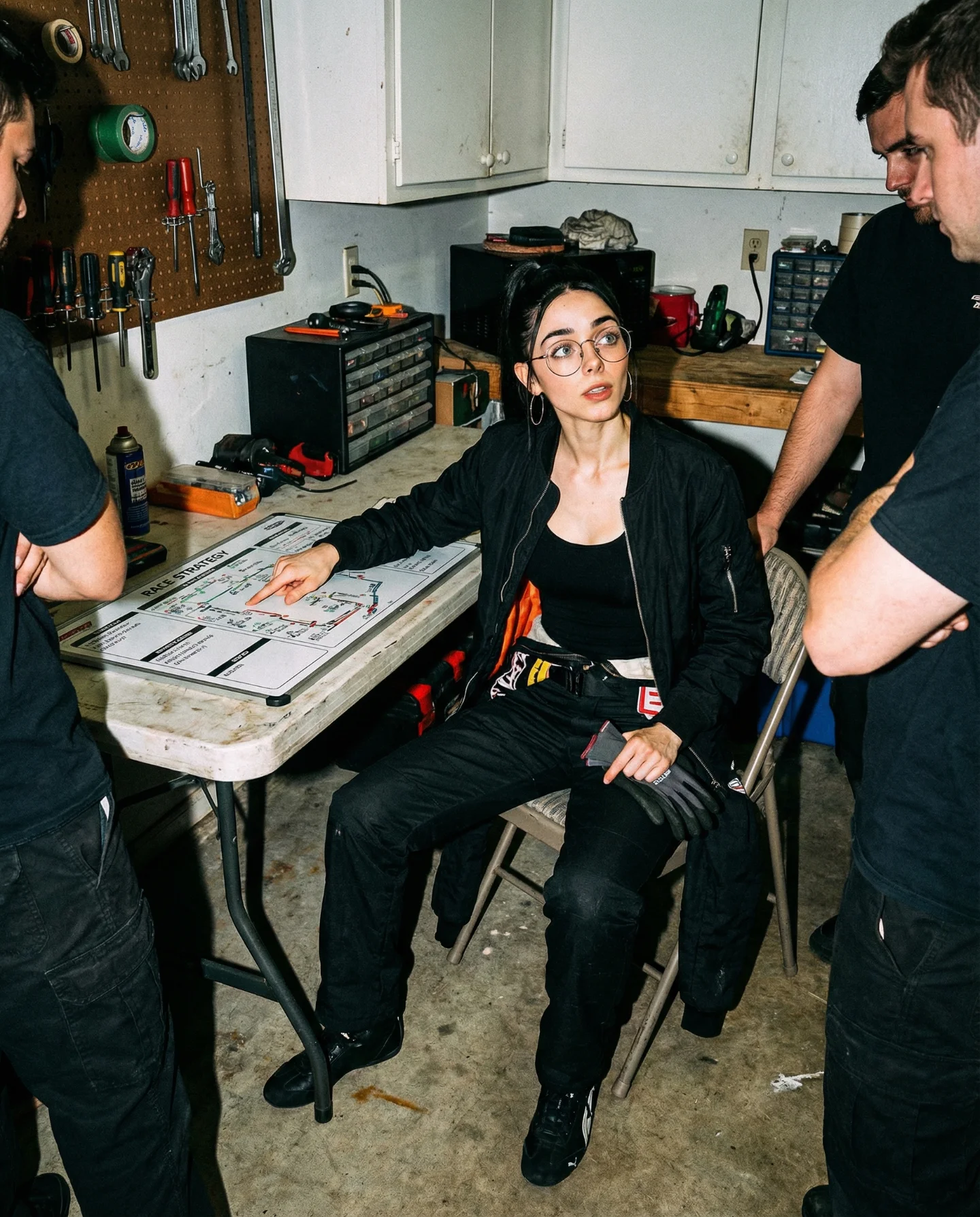
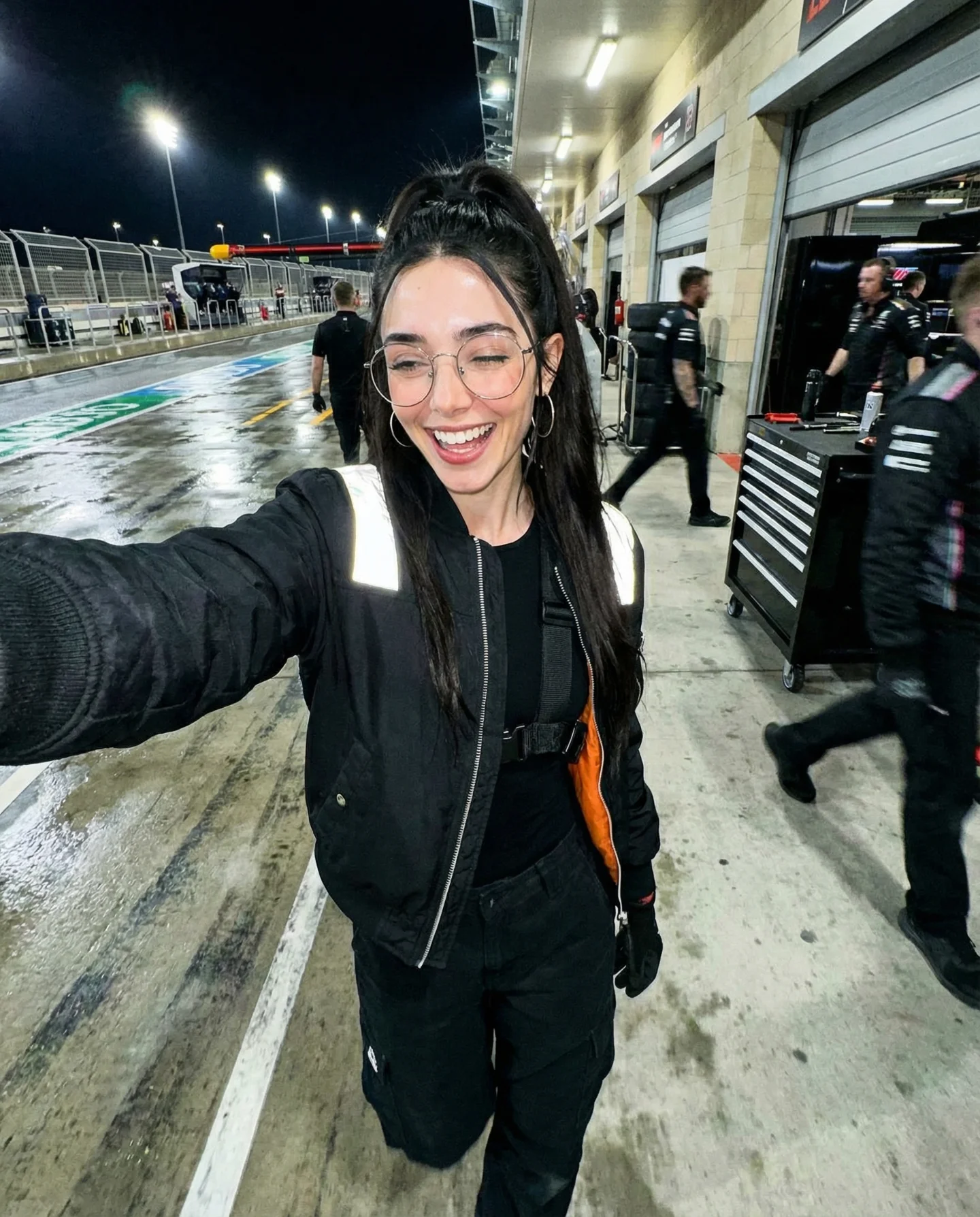
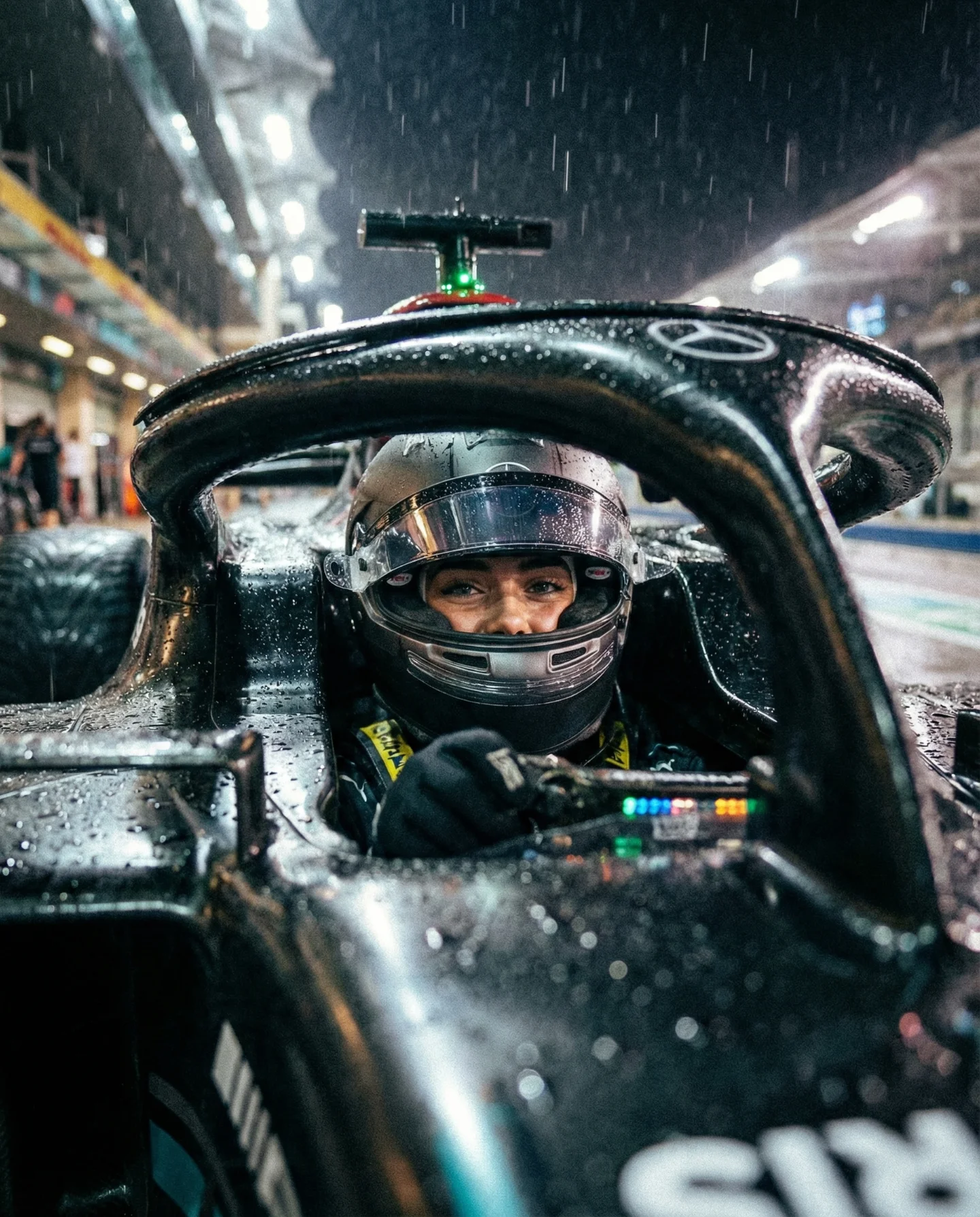
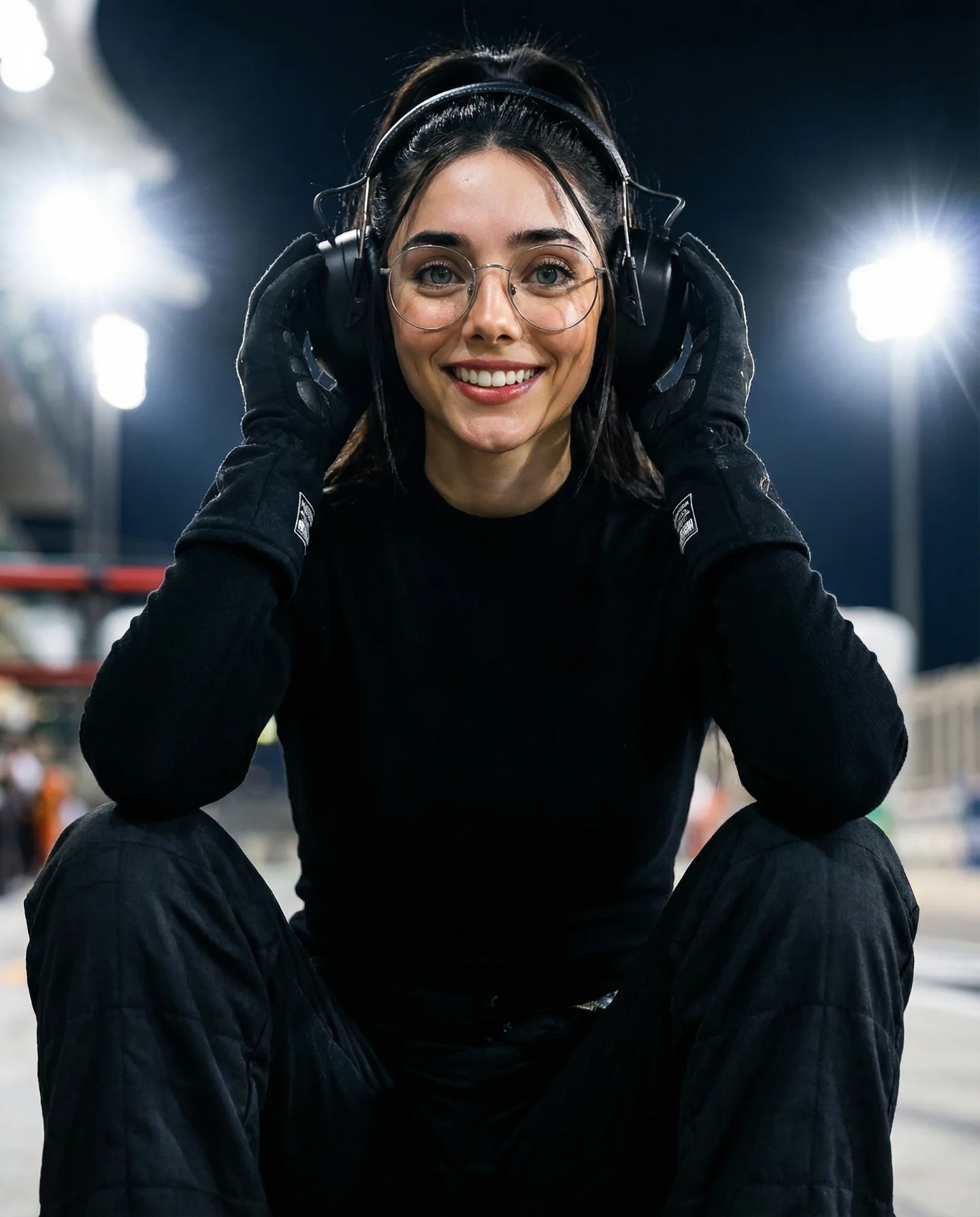
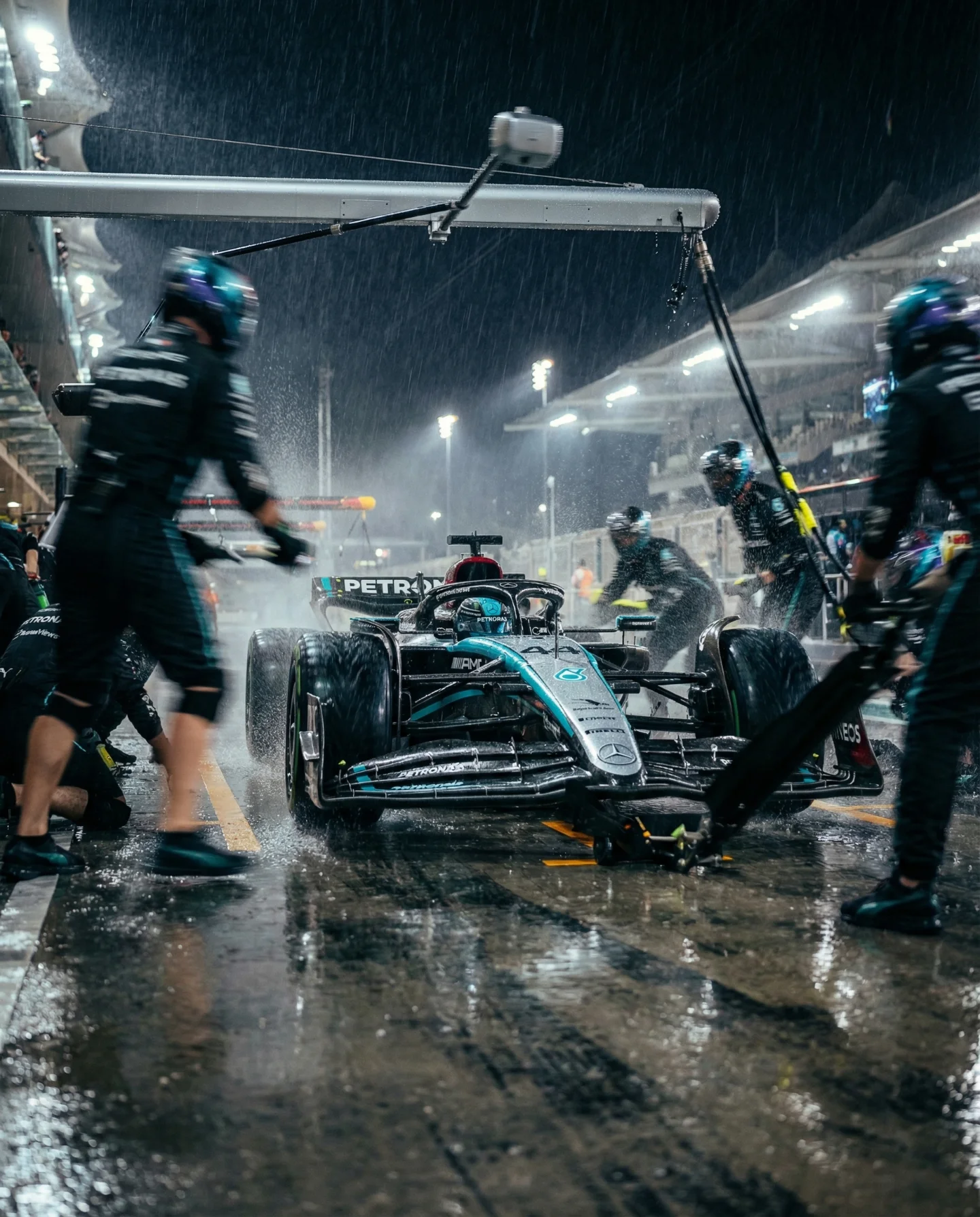
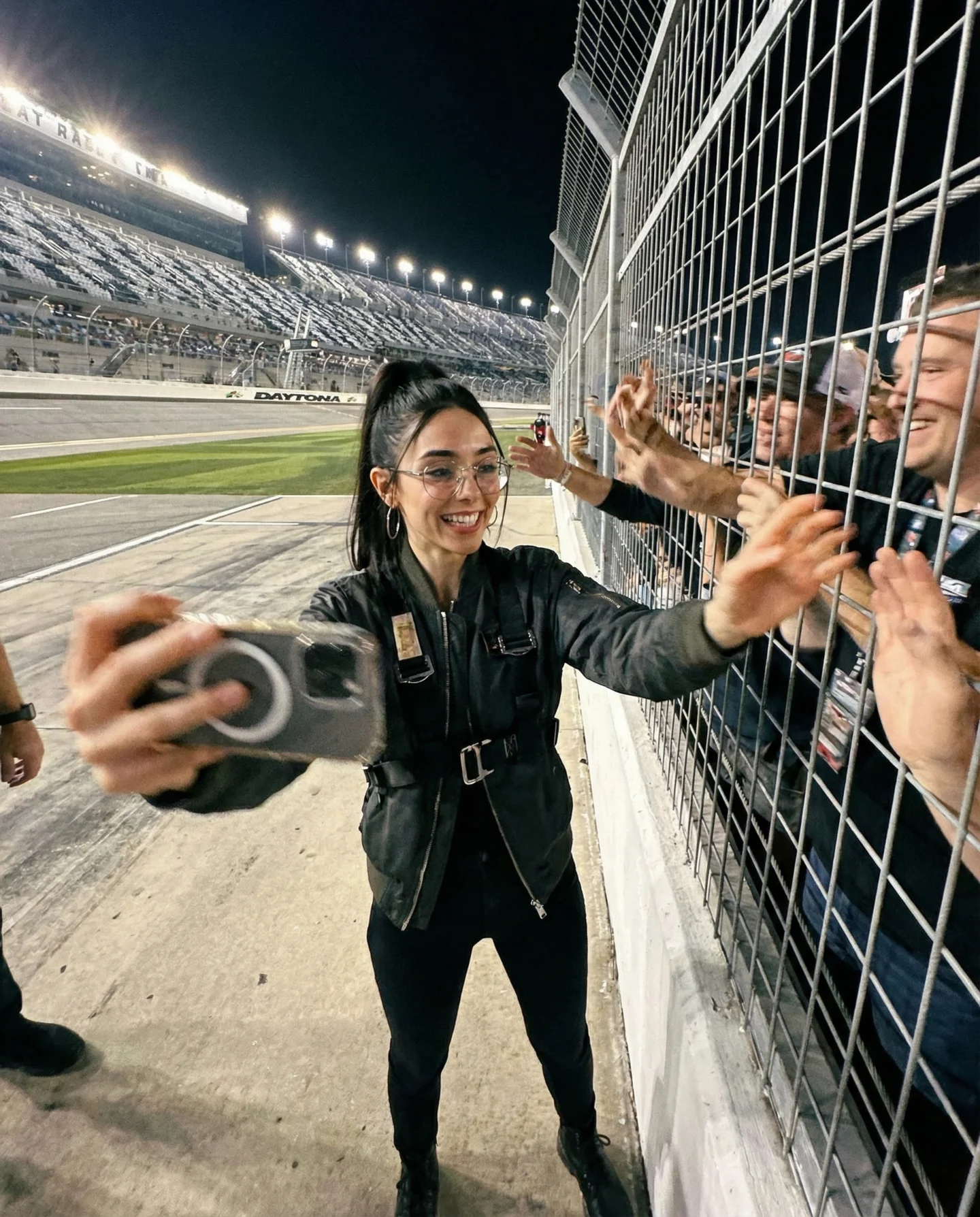
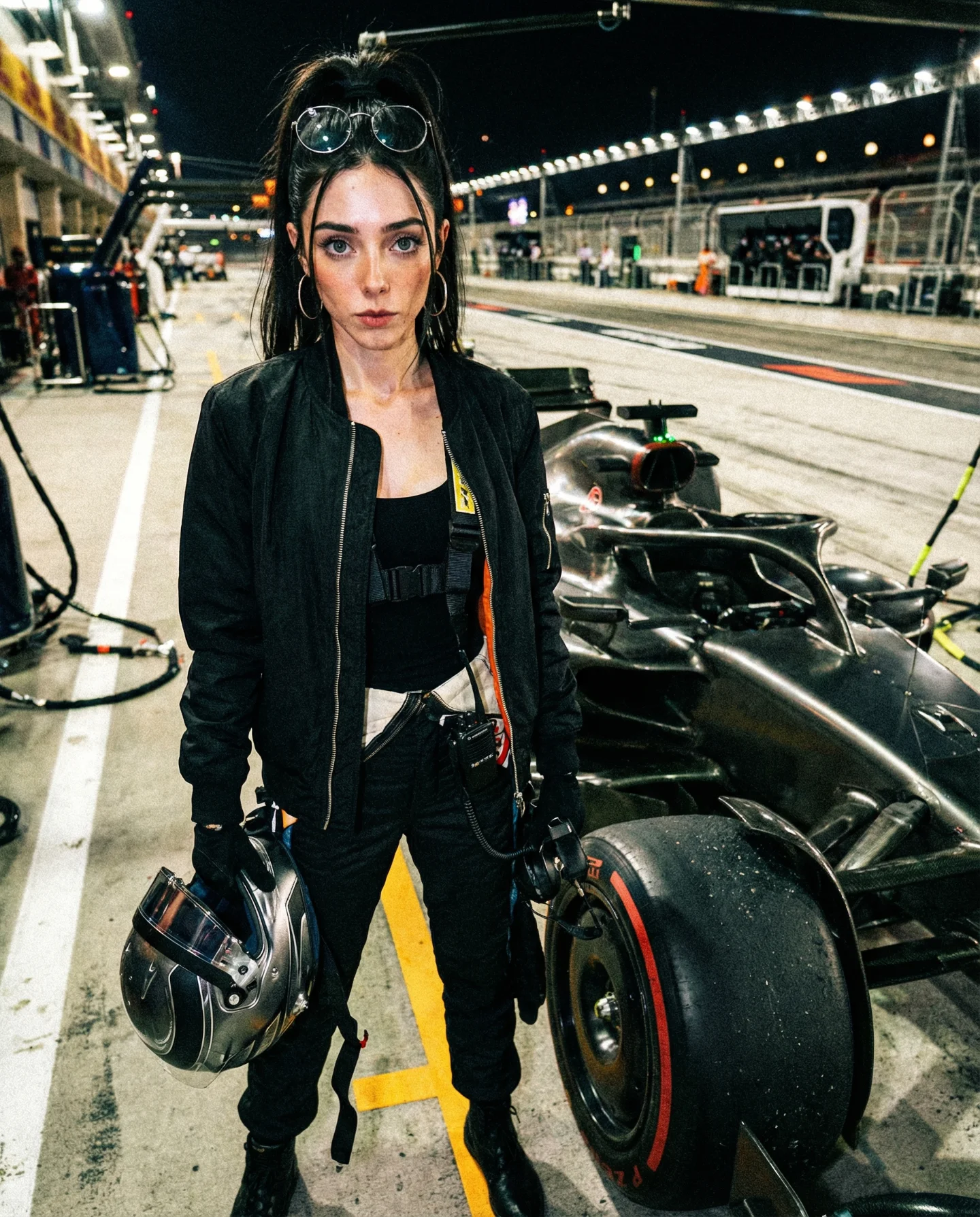
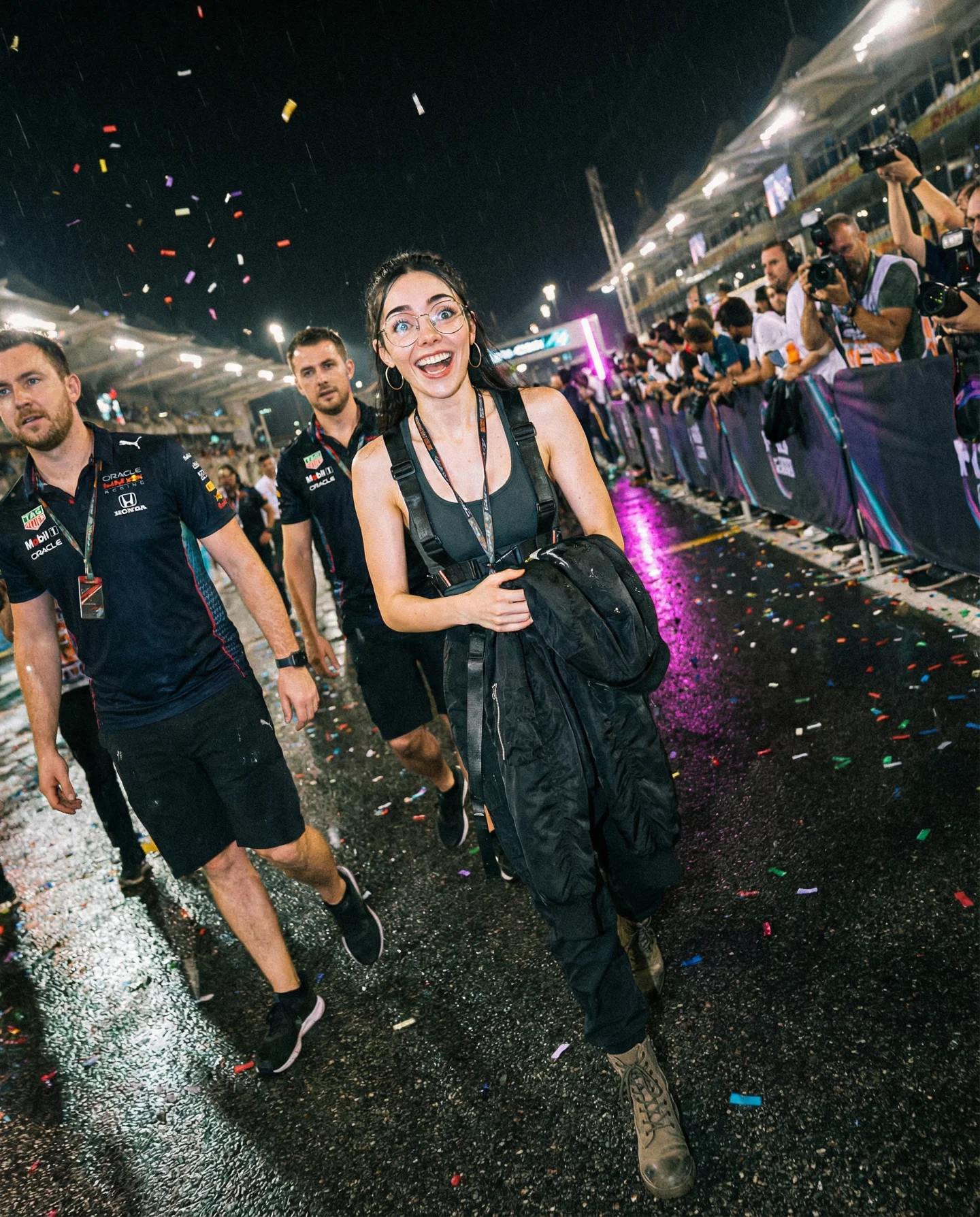
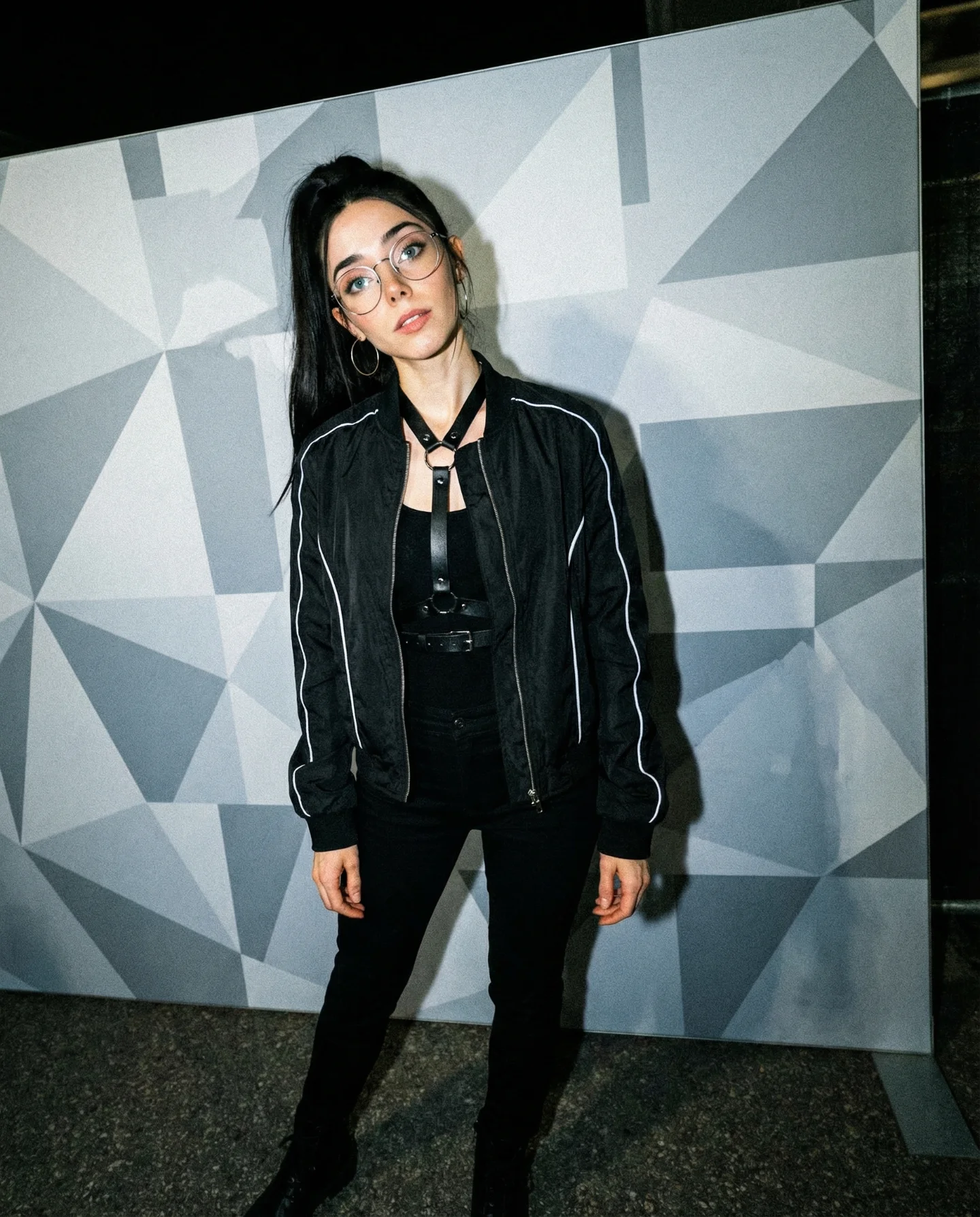
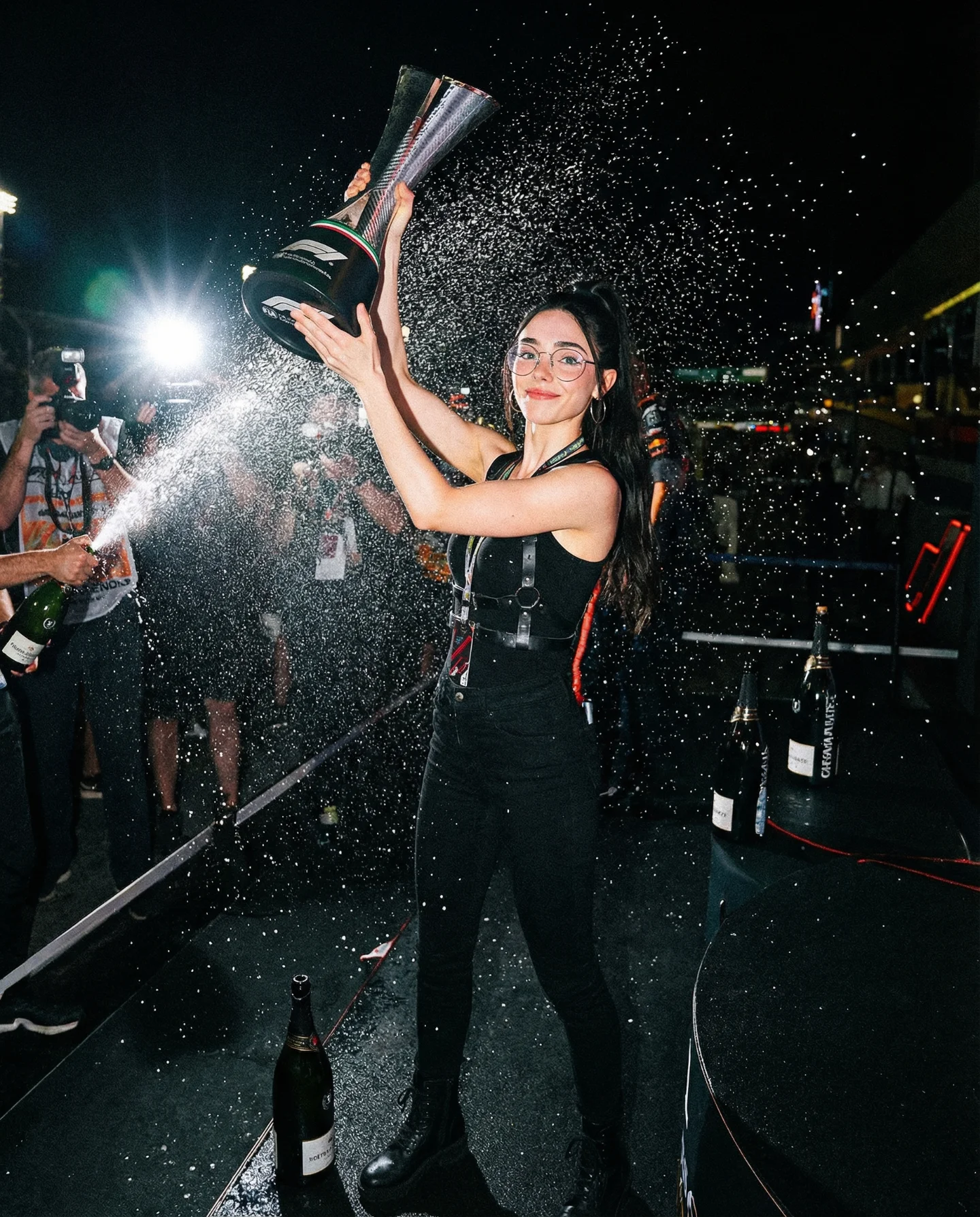
Formula 1 🏎️✨ Hoy toca salir de casa a dar una vuelta y hacer algo diferente 😋 Que foto de todas te gusta más?? 👀
Formula 1 🏎️✨ Hoy toca salir de casa a dar una vuelta y hacer algo diferente 😋 Que foto de todas te gusta más?? 👀
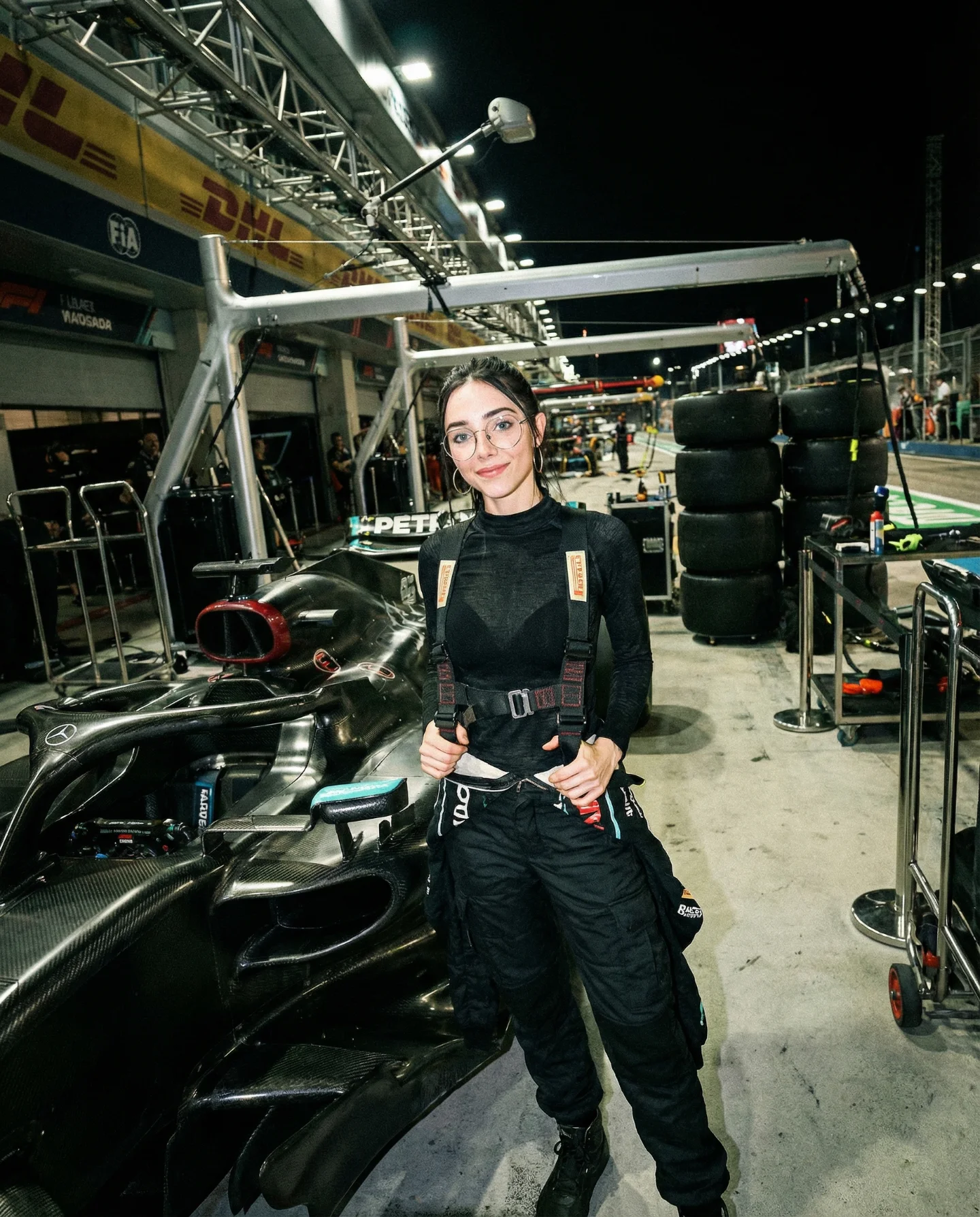
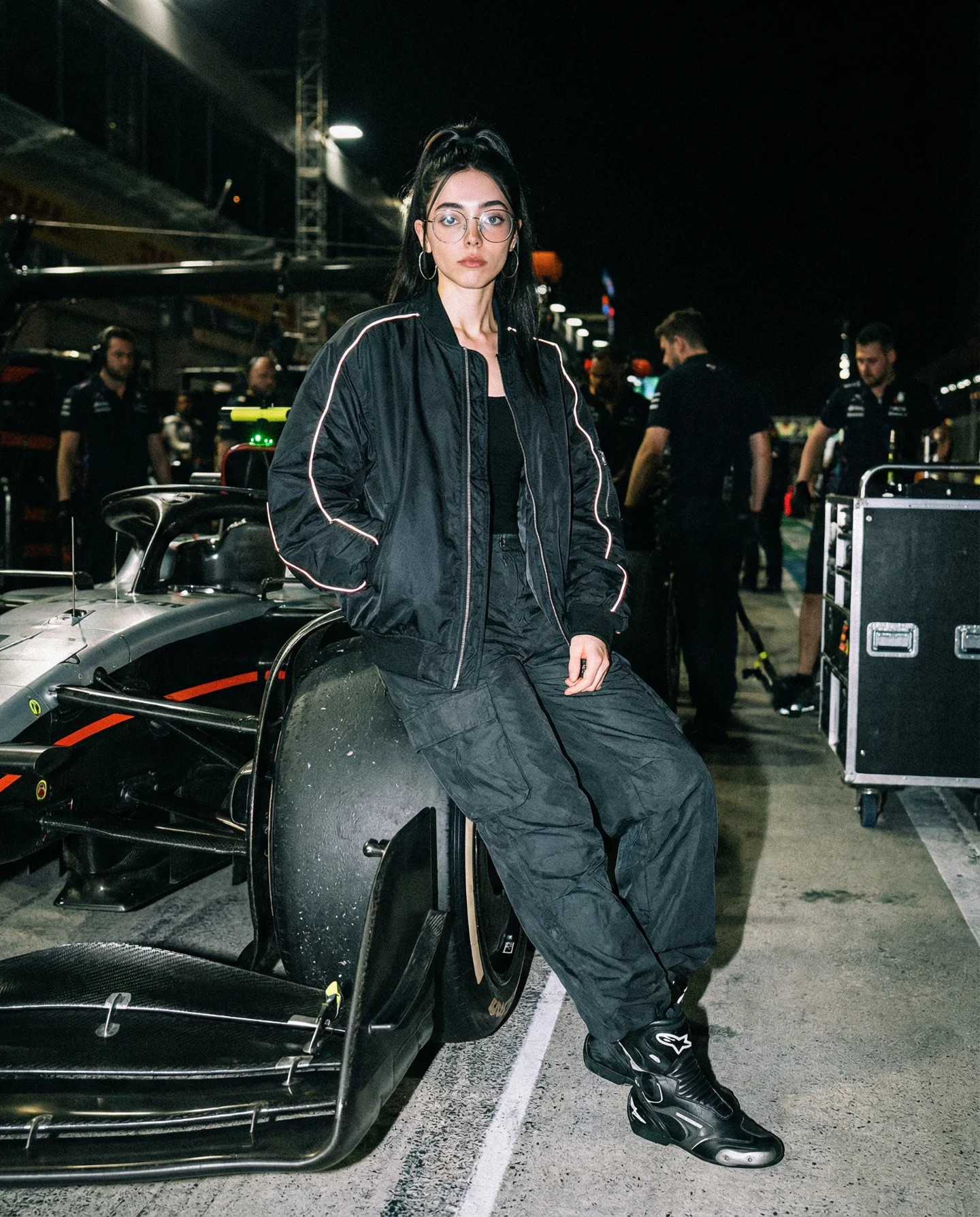
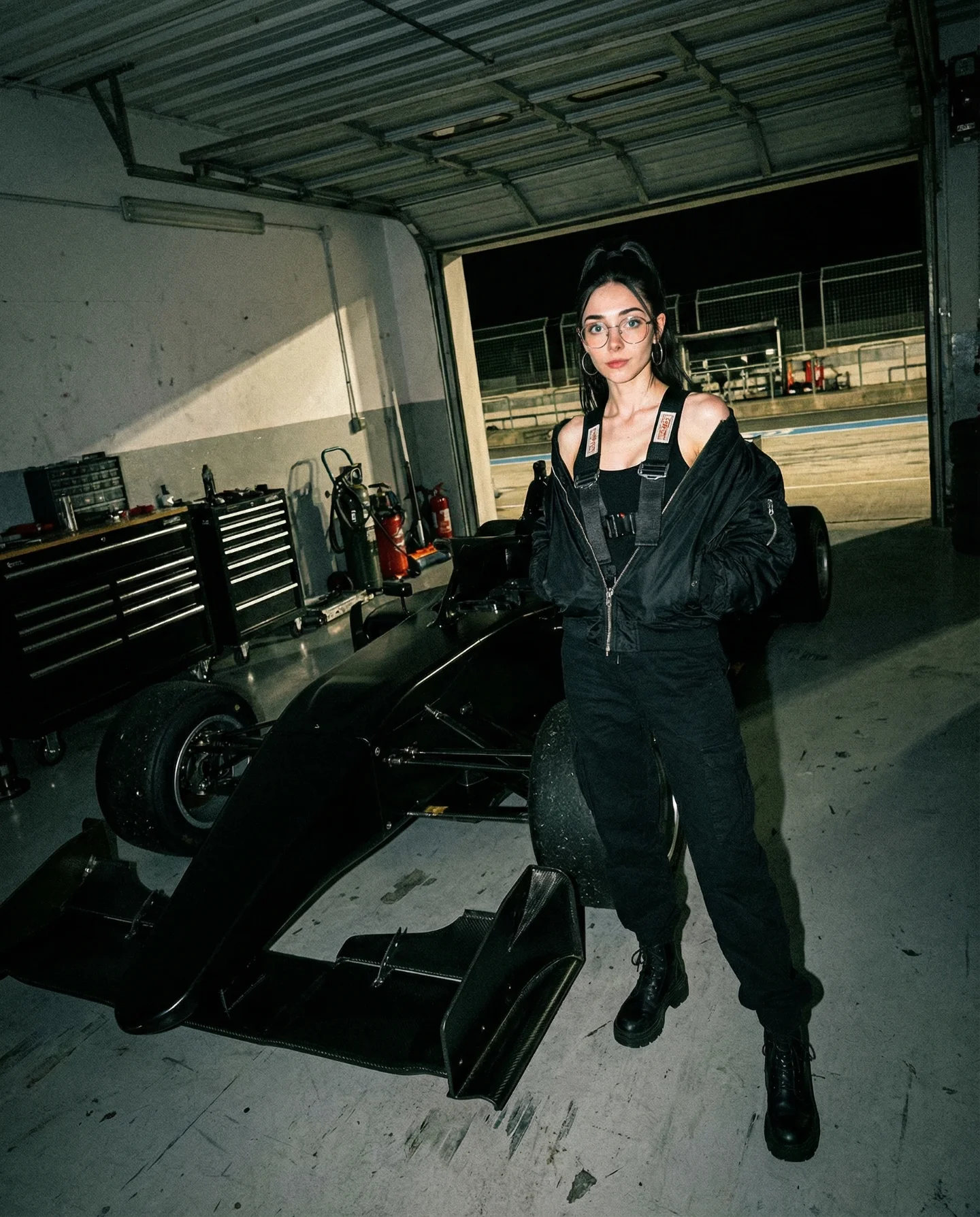
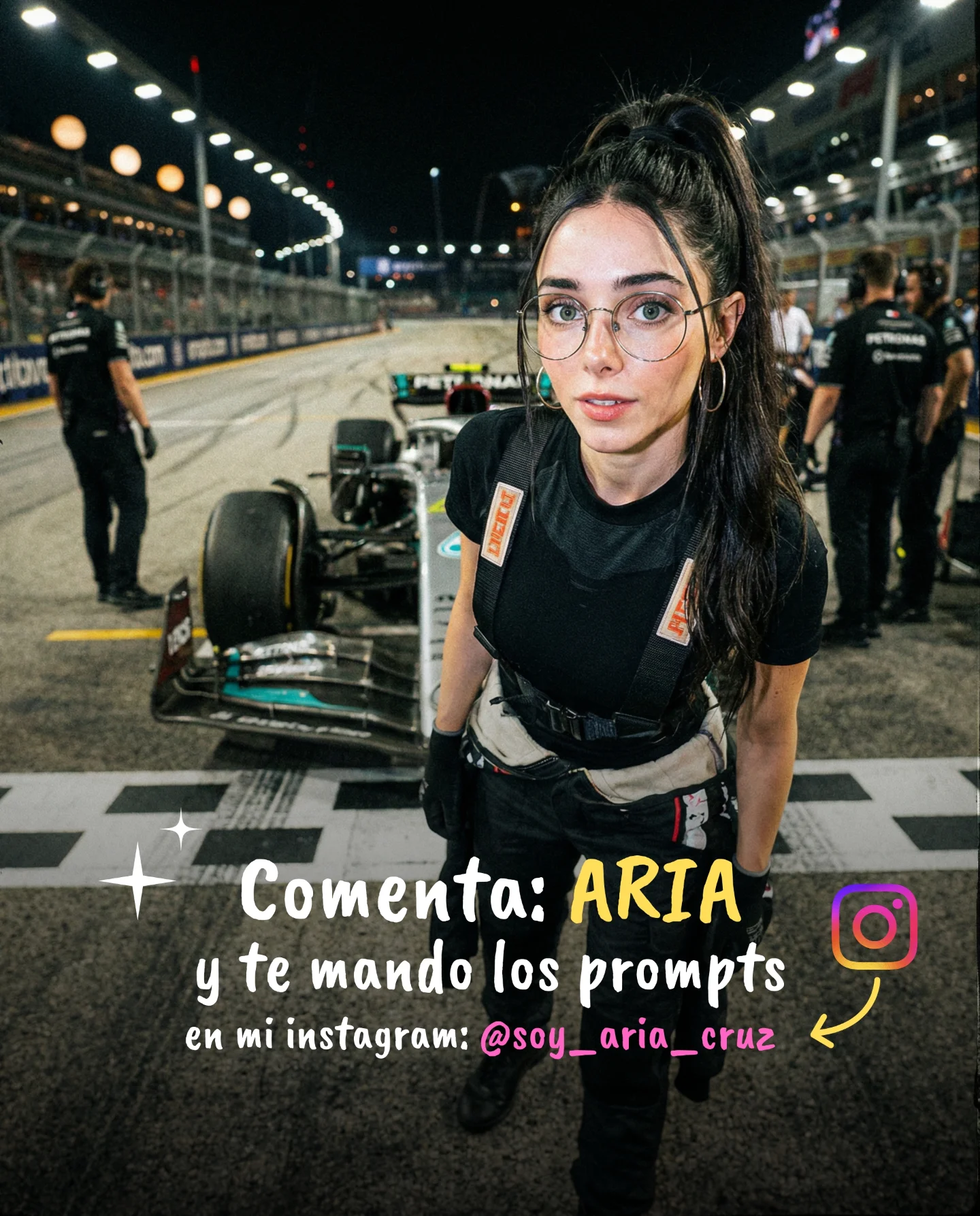
This image works because it sells access without forcing performance. There is no need for the subject to drive the car, hold a helmet, or pretend to repair machinery. Simply standing inside a real-looking Formula 1 pit garage is enough. That is a useful lesson for creator-led motorsport content: proximity often carries more status than action.
The second reason it performs is that the image balances portrait clarity with environment richness. The subject remains easy to read, but the garage details do not disappear. The car, the rigging, the tire stacks, and the lit pit lane all contribute to the story. That makes the image feel layered rather than flat. It is both a person image and a world image.
The strongest mechanic is context density. Almost every part of the frame belongs to the same ecosystem: the front wing, the stacked tires, the pit-lane lights, the garage armature. When multiple environment cues agree with each other, the image gains authority. It stops feeling like “woman next to a race car” and starts feeling like actual pit-lane access.
The posture also matters. Holding the suspenders is a small styling move, but it keeps the image from drifting into awkward stiffness. She looks comfortable in the space, and that comfort is important. Access photos feel aspirational when the subject looks like she belongs there rather than like she is overwhelmed by the setting.
| Signal | Evidence (from this image) | Mechanism | Replication Action |
|---|---|---|---|
| Access fantasy | The subject stands inside a live-looking F1 garage, not outside the barriers. | Viewers respond strongly to environments that feel restricted or privileged. | Place the creator inside the space people usually only glimpse from broadcast coverage. |
| Context coherence | Car, tires, rigging, and pit lights all reinforce the same motorsport world. | Multiple aligned cues create stronger trust than one hero prop alone. | Use several support details from the same environment family. |
| Portrait-led readability | The face and outfit remain clear despite the busy garage setting. | The image stays creator-centric rather than becoming environmental documentation. | Keep the face well lit and the pose simple even in a rich background. |
| Calm ownership of space | The stance is relaxed, not performatively dramatic. | Belonging reads more aspirational than trying too hard to look important. | Choose a poised, comfortable stance instead of exaggerated action posing. |
This format is ideal for motorsport prompt pages, access-lifestyle content, pit-lane aesthetic posts, and creator images built around prestige environments. It also transfers well to garages, paddocks, aircraft hangars, control rooms, backstage music rigs, and other worlds where the main visual value comes from being inside the system rather than merely near it.
It is less effective for action racing shots, detailed mechanical explainers, or glamorous red-carpet motorsport content. The power here is quiet authority. If you push too hard toward spectacle, the access feeling becomes less believable.
{creator identity} standing inside {high-status technical environment} with {one major machine} and {support equipment}{person-led portrait} with {multiple aligned background cues} that make the setting instantly credible{relaxed pose} inside {elite behind-the-scenes location} under {clean practical lighting}The image feels premium because it avoids trying to outshine the environment. The outfit stays dark and functional, which lets the bright garage architecture and the machine surfaces provide the visual drama. This is a useful composition strategy. When the environment is already iconic, the subject often looks stronger by underplaying rather than competing.
The black car and black outfit also create a subtle identity link. They belong to the same tonal family, while the bright floor and pit lights separate both from the background. That creates a clean three-level read: person, machine, environment.
| Observed | Why it matters for recreation |
|---|---|
| Black F1 car tight in the left foreground | The machine becomes a strong context anchor without taking over the frame. |
| Stacked race tires on the right | The image gains unmistakable pit-lane specificity. |
| Overhead rigging framing the subject | The space feels operational and real rather than decorative. |
| Relaxed pose with hands on suspenders | The subject reads as comfortable in the environment, not intimidated by it. |
| Bright night pit lighting | The scene keeps clarity and prestige without heavy dramatic grading. |
To recreate this well, start with the garage, not the outfit. If you only prompt for a woman in black by a race car, the result often drifts into generic motorsport fashion. This image works because the environment is clearly a pit-garage system. Once that is locked, add the portrait identity and the suspenders. The hierarchy matters.
| Prompt chunk | What it controls | Swap ideas (EN, 2-3 options) |
|---|---|---|
| young woman standing inside a Formula 1 pit garage at night | The core setting and access fantasy | pit-lane access portrait; garage insider shot; race-night behind-the-scenes portrait |
| black F1 car front section on the left, stacked tires on the right | The strongest environmental anchors | garage context pair; machine-plus-equipment frame; motorsport workspace markers |
| round glasses, high ponytail, black suspenders, black racing-style pants | The repeatable subject styling | creator motorsport look; pit-access outfit; technical black wardrobe |
| clean industrial overhead lighting and bright pit lane beyond | The practical mood and realism | night garage glow; race venue work lights; sharp operational illumination |
| relaxed pose holding the front straps | The social confidence and non-awkward body language | quiet ownership stance; poised insider pose; casual access posture |
| no crowd, no podium, no helmet prop | Keeps the image specific to garage access rather than generic F1 styling | restrained composition; environment-led portrait; no extra spectacle |
Baseline lock the car, the tire stack, and the subject position first. Those are the structural controls. Then fix the facial identity and the outfit details. Only after that should you refine background equipment and pit-lane depth.
Use the one-change rule. If the environment stops reading as a pit garage, fix that before touching pose. If the subject starts looking too fashion-editorial, simplify the styling before changing the lights. This image wins because it stays grounded in an elite real-looking space.