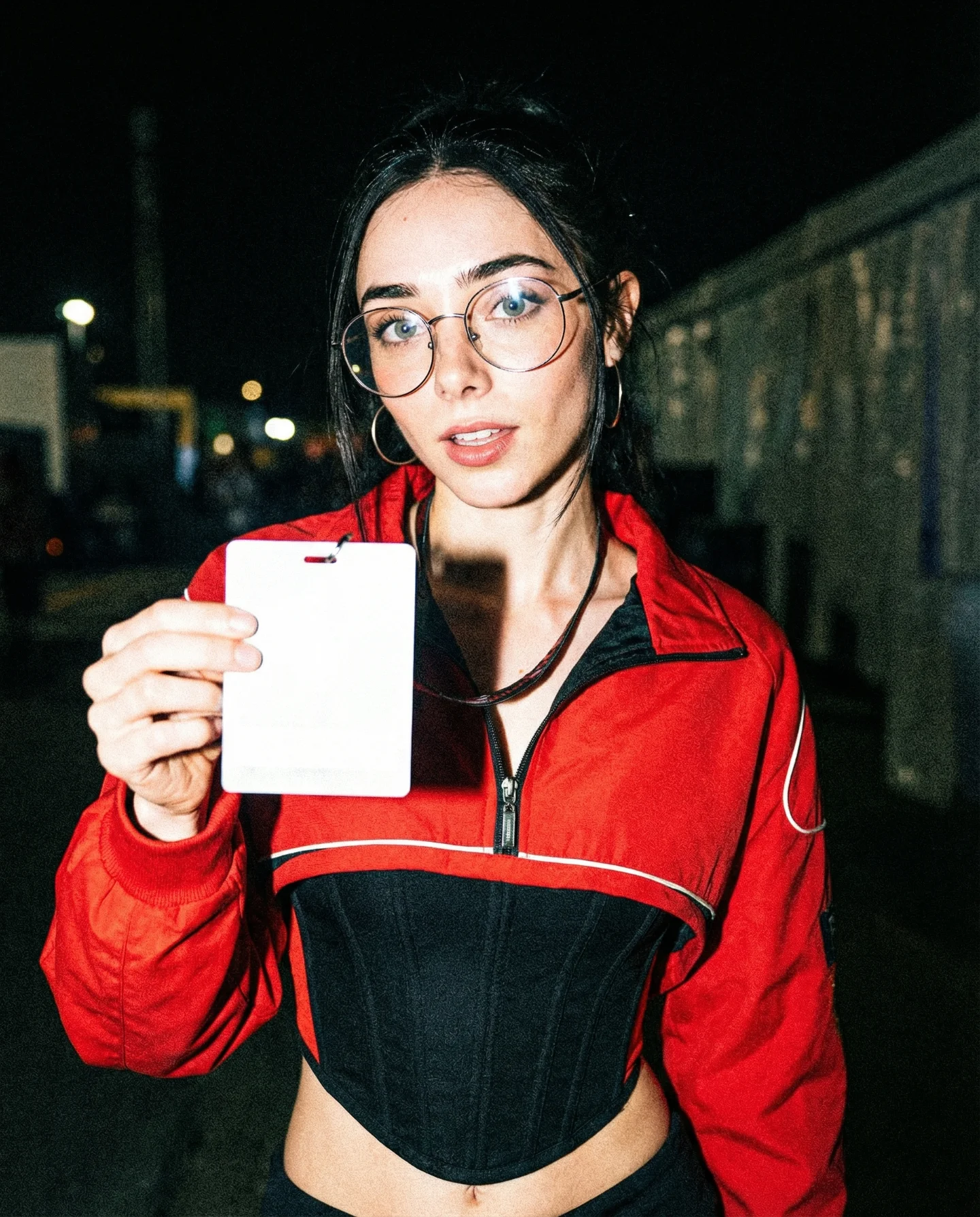
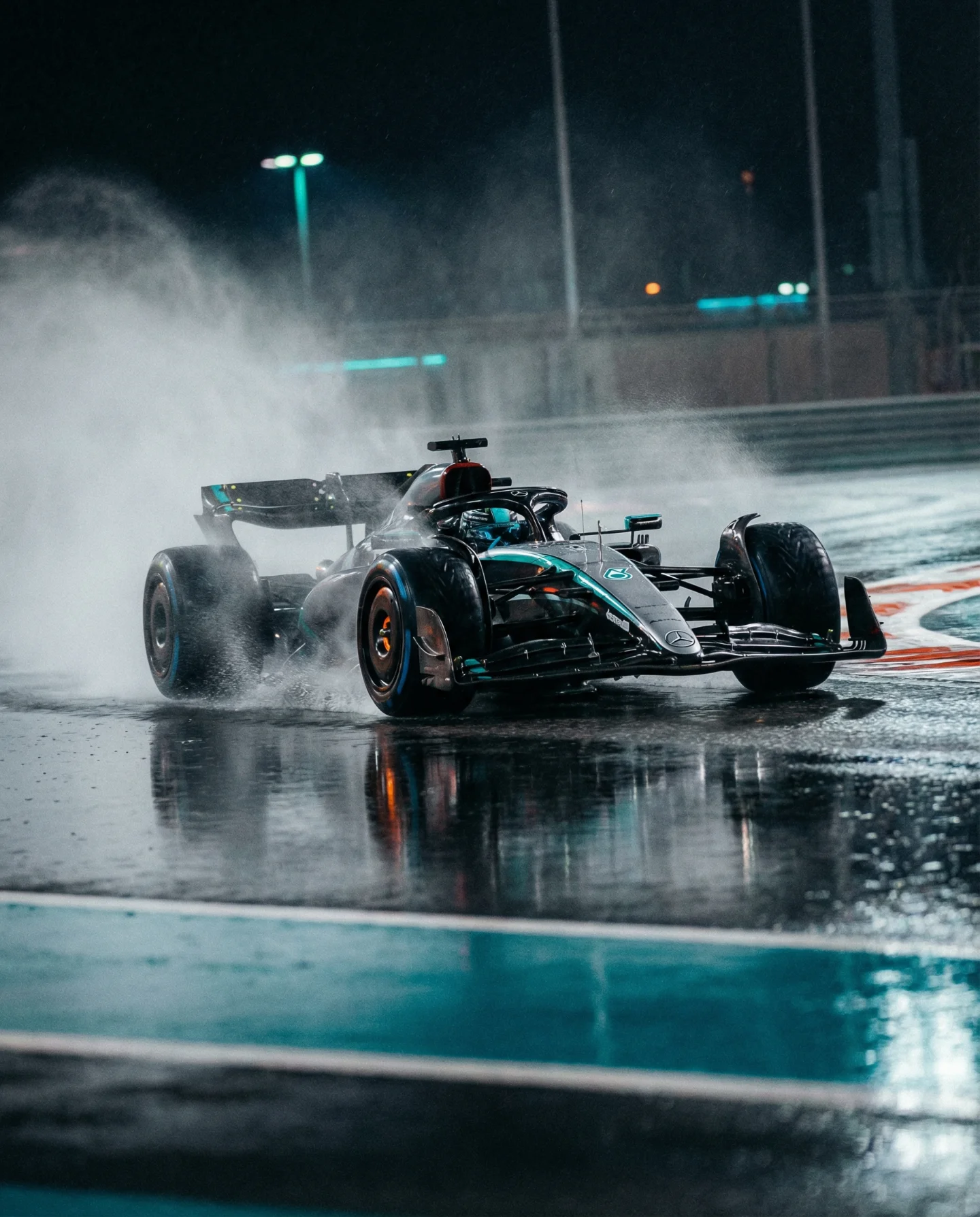
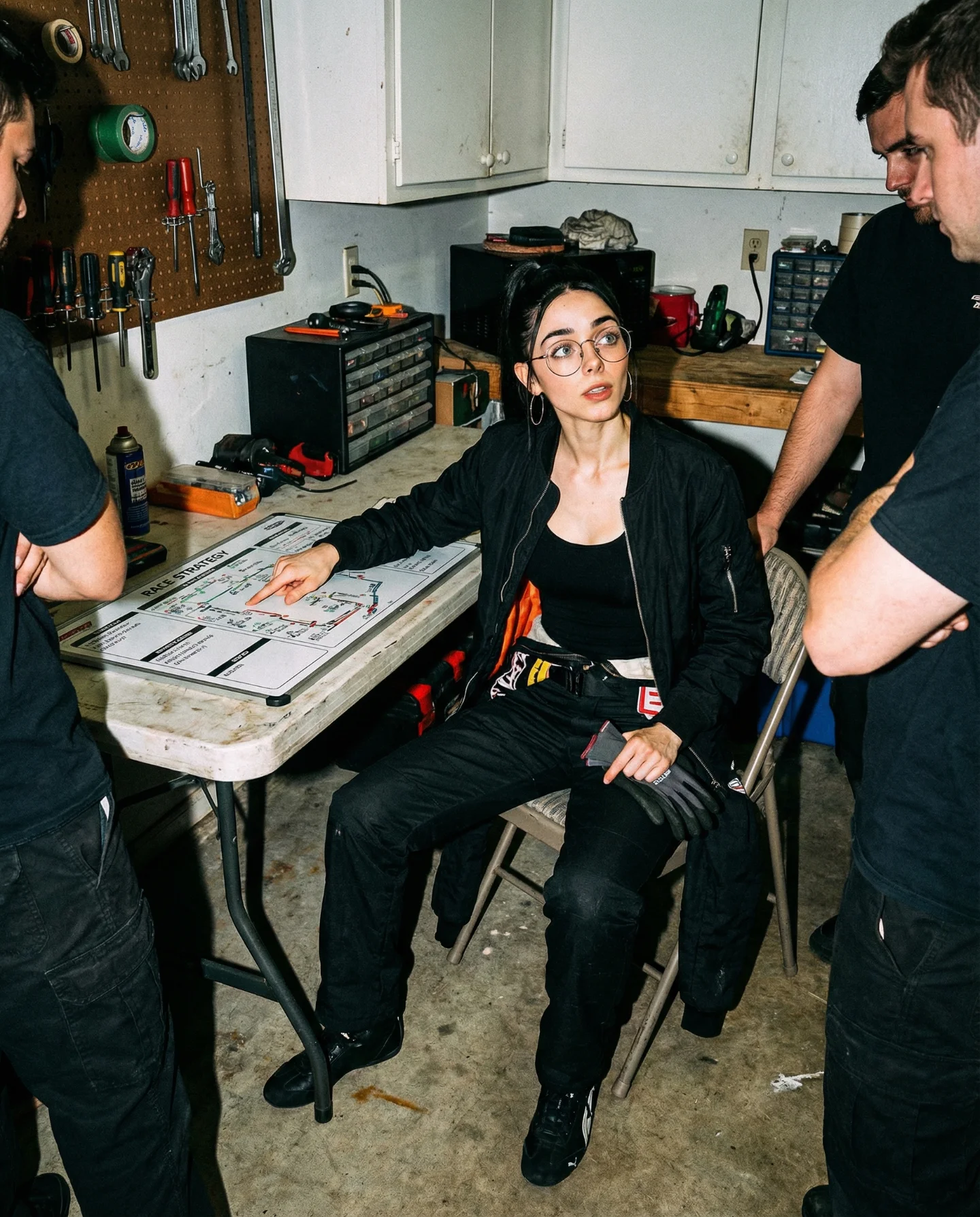
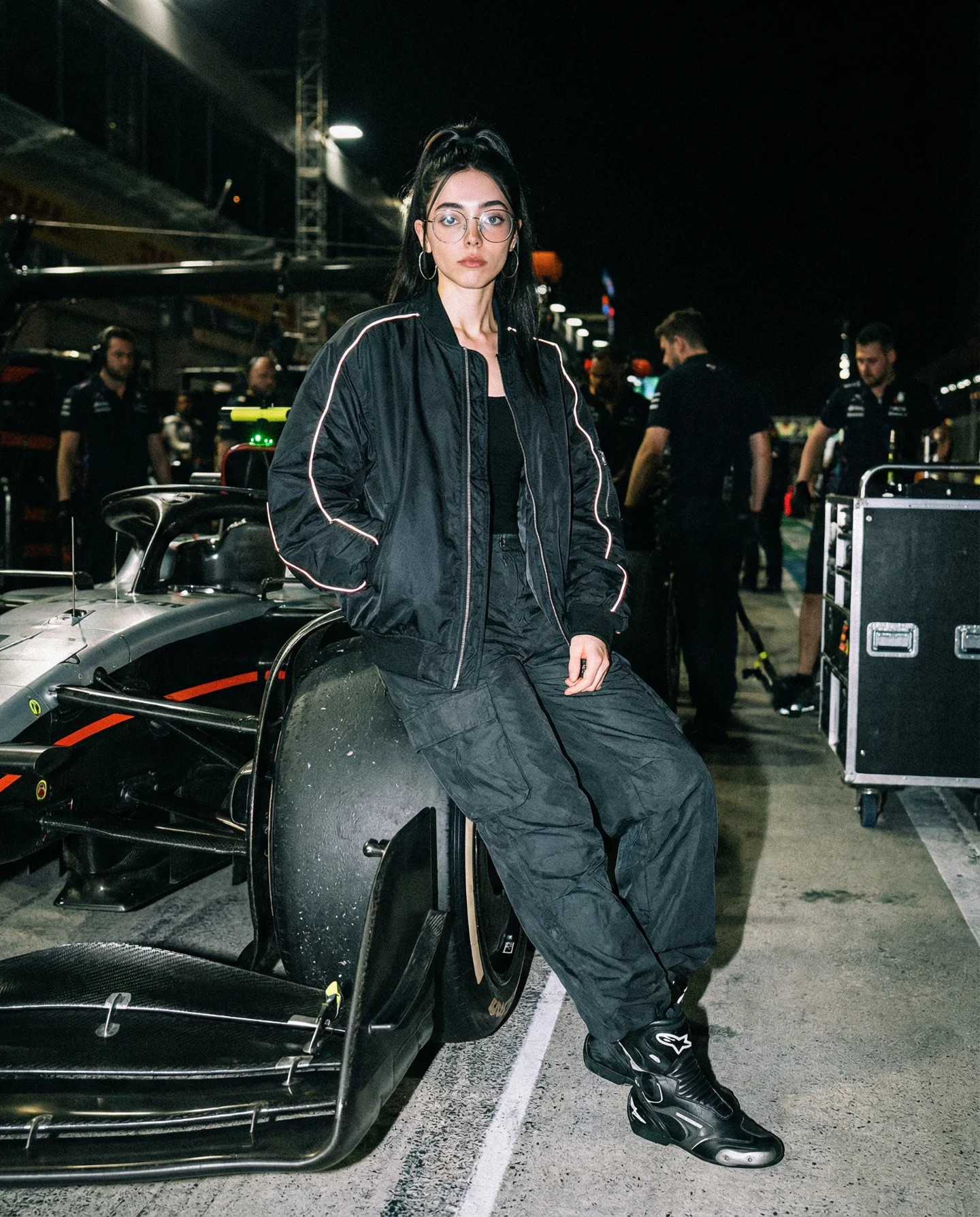
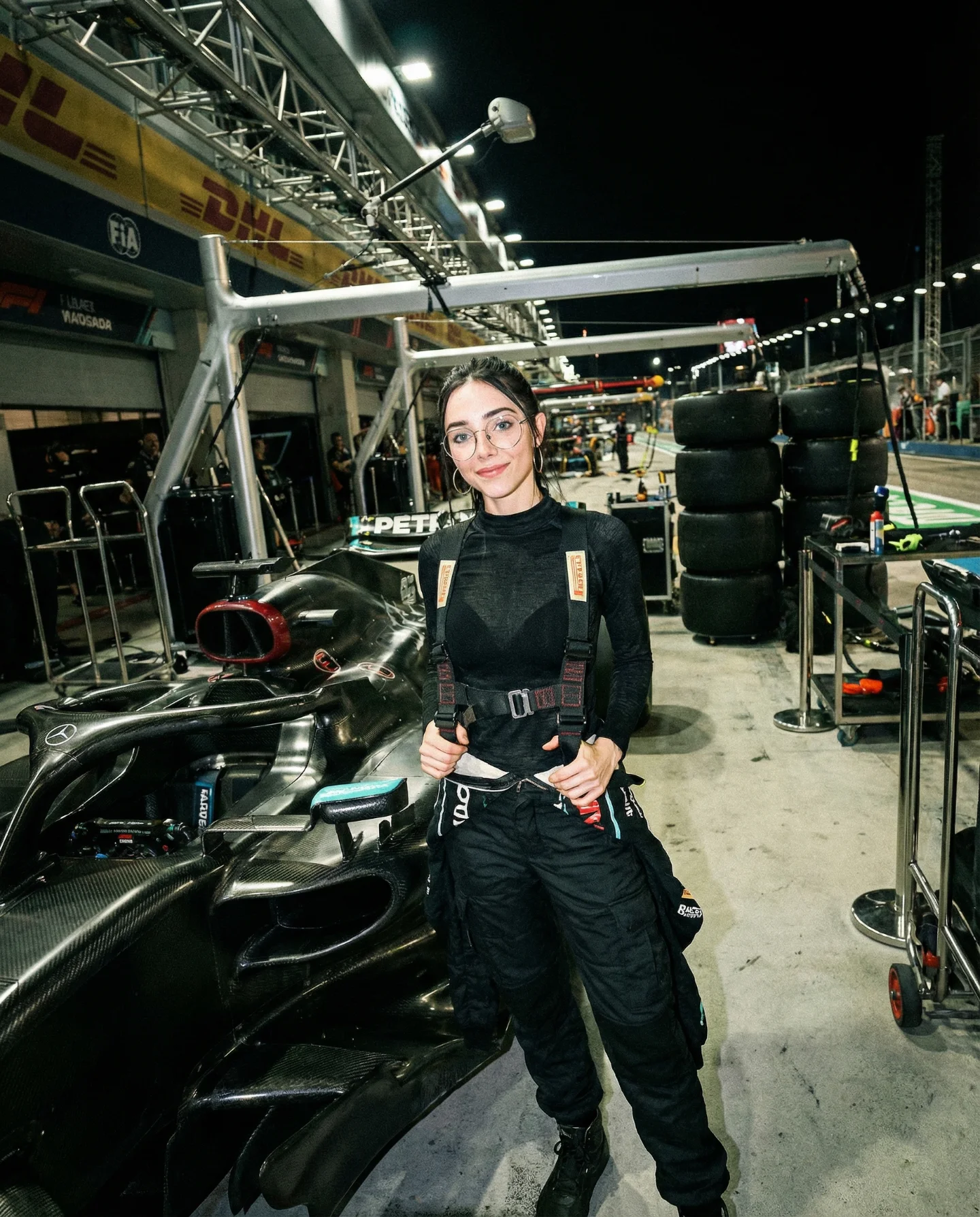
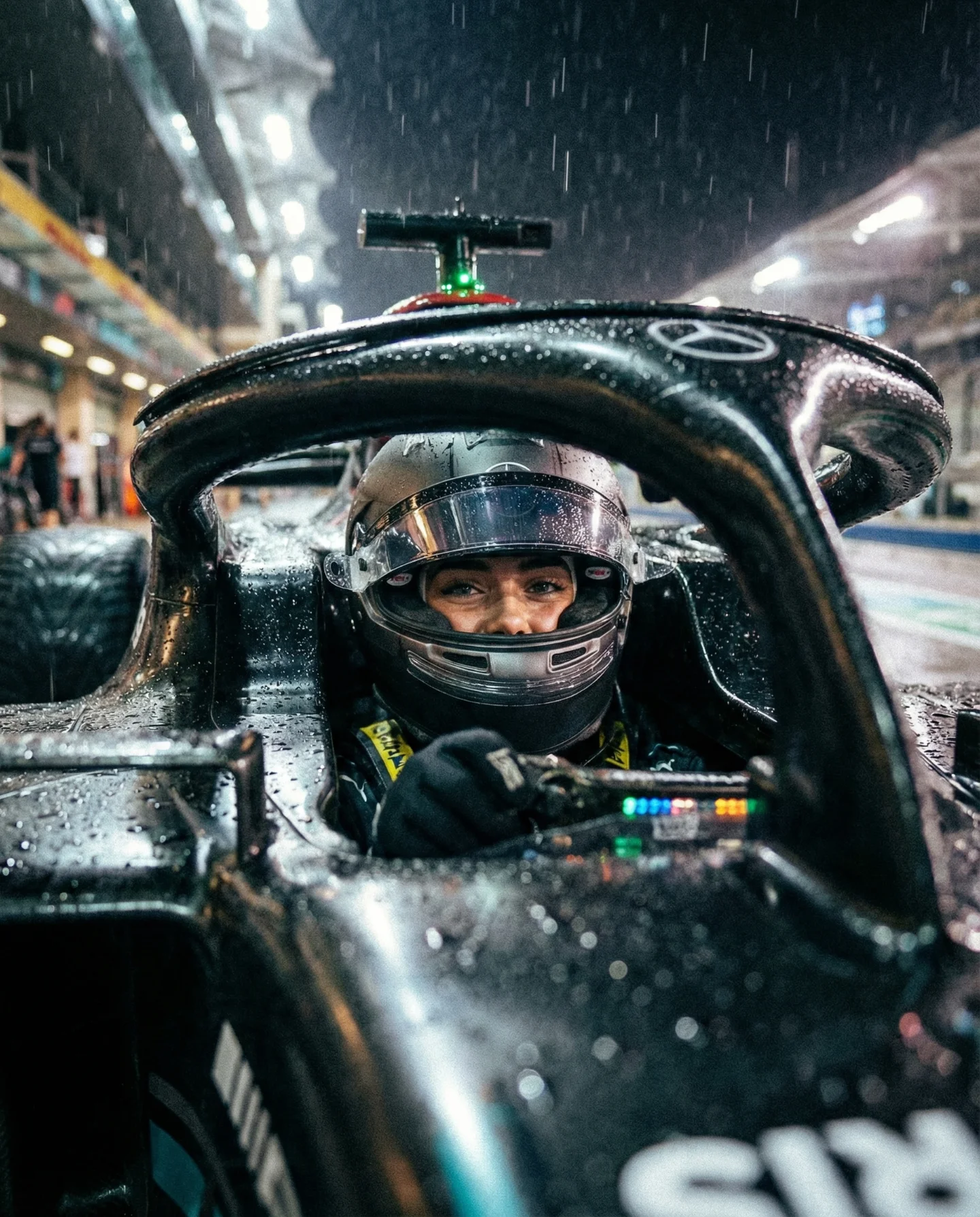
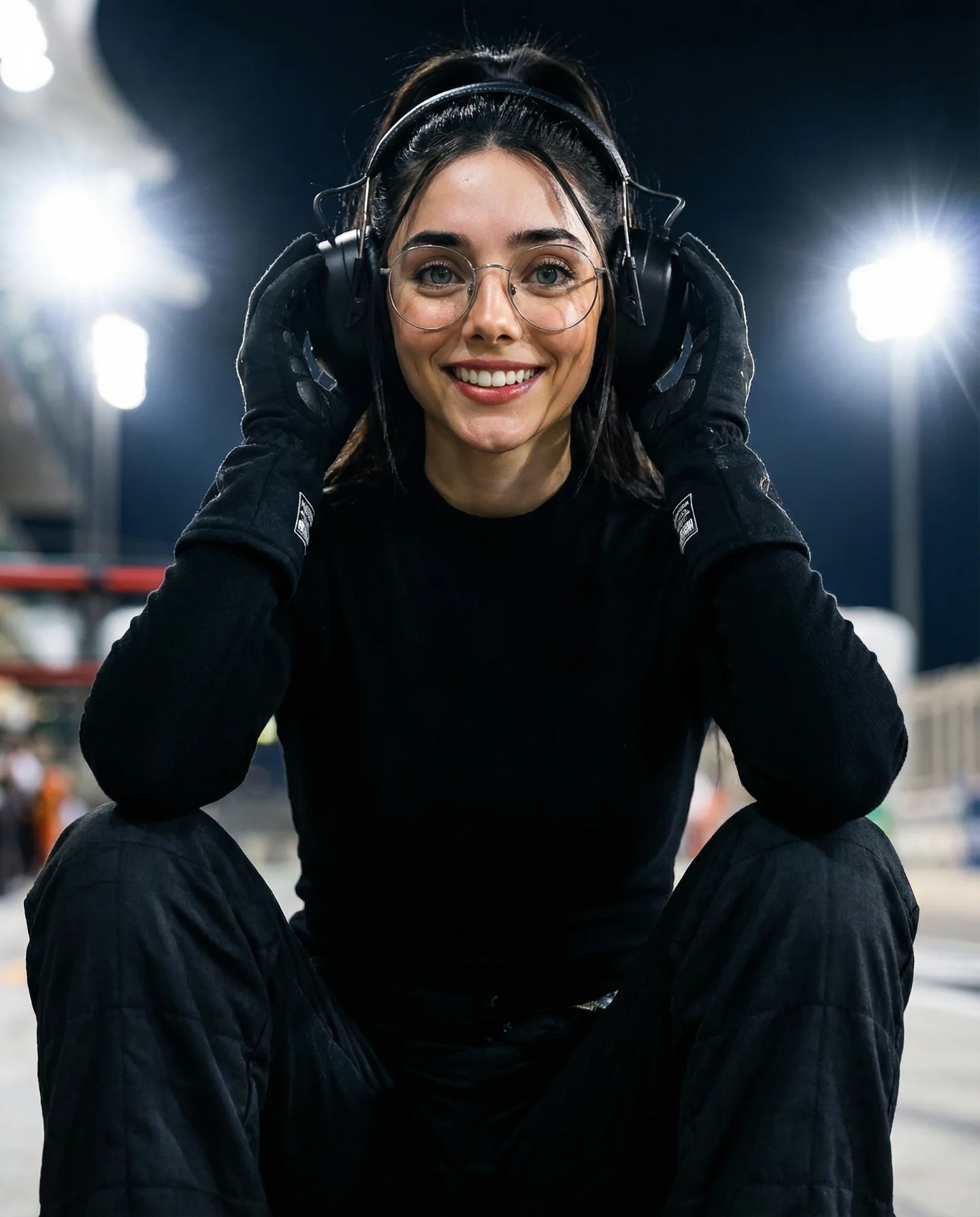
Formula 1 🏎️✨ Hoy toca salir de casa a dar una vuelta y hacer algo diferente 😋 Que foto de todas te gusta más?? 👀
Formula 1 🏎️✨ Hoy toca salir de casa a dar una vuelta y hacer algo diferente 😋 Que foto de todas te gusta más?? 👀
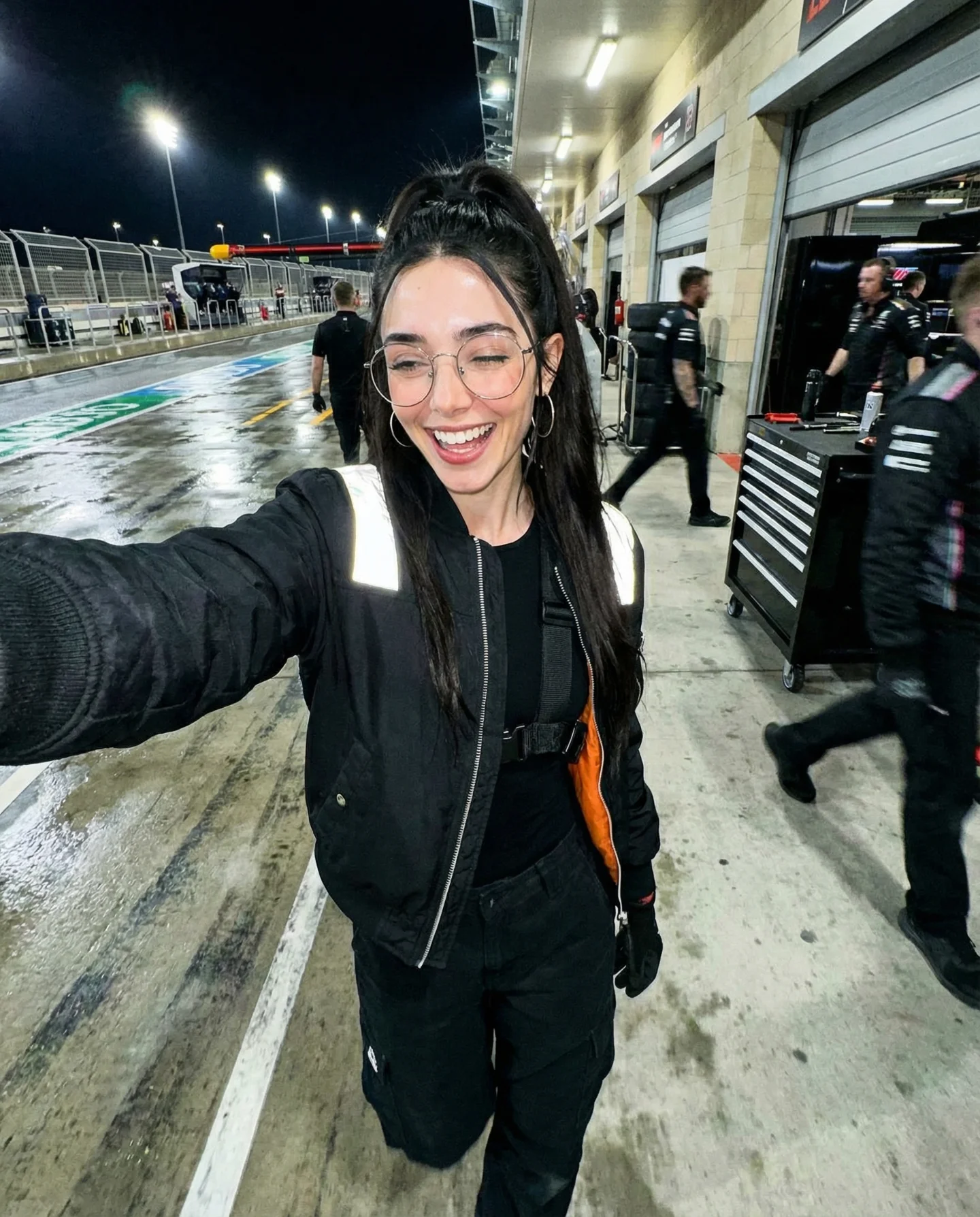
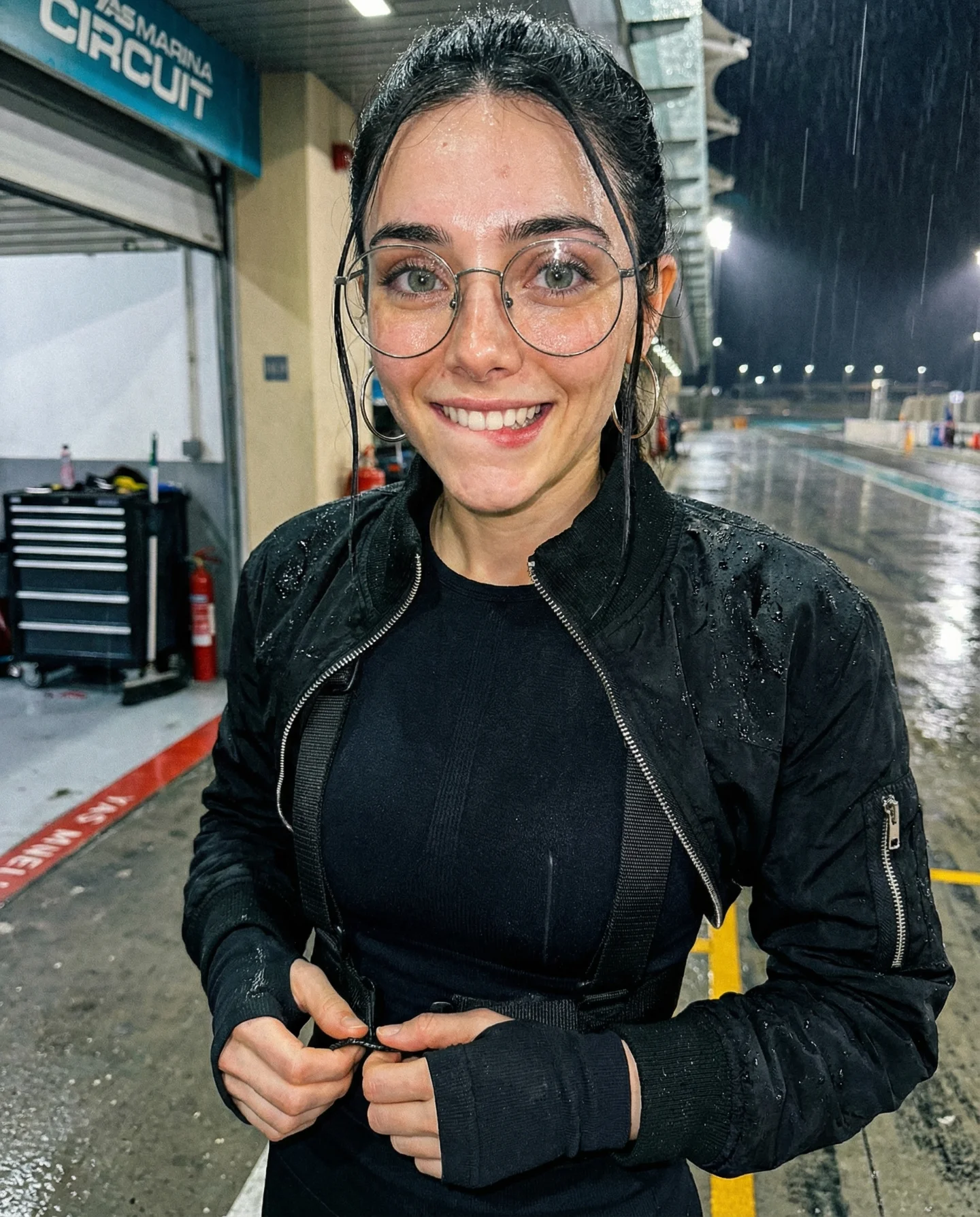
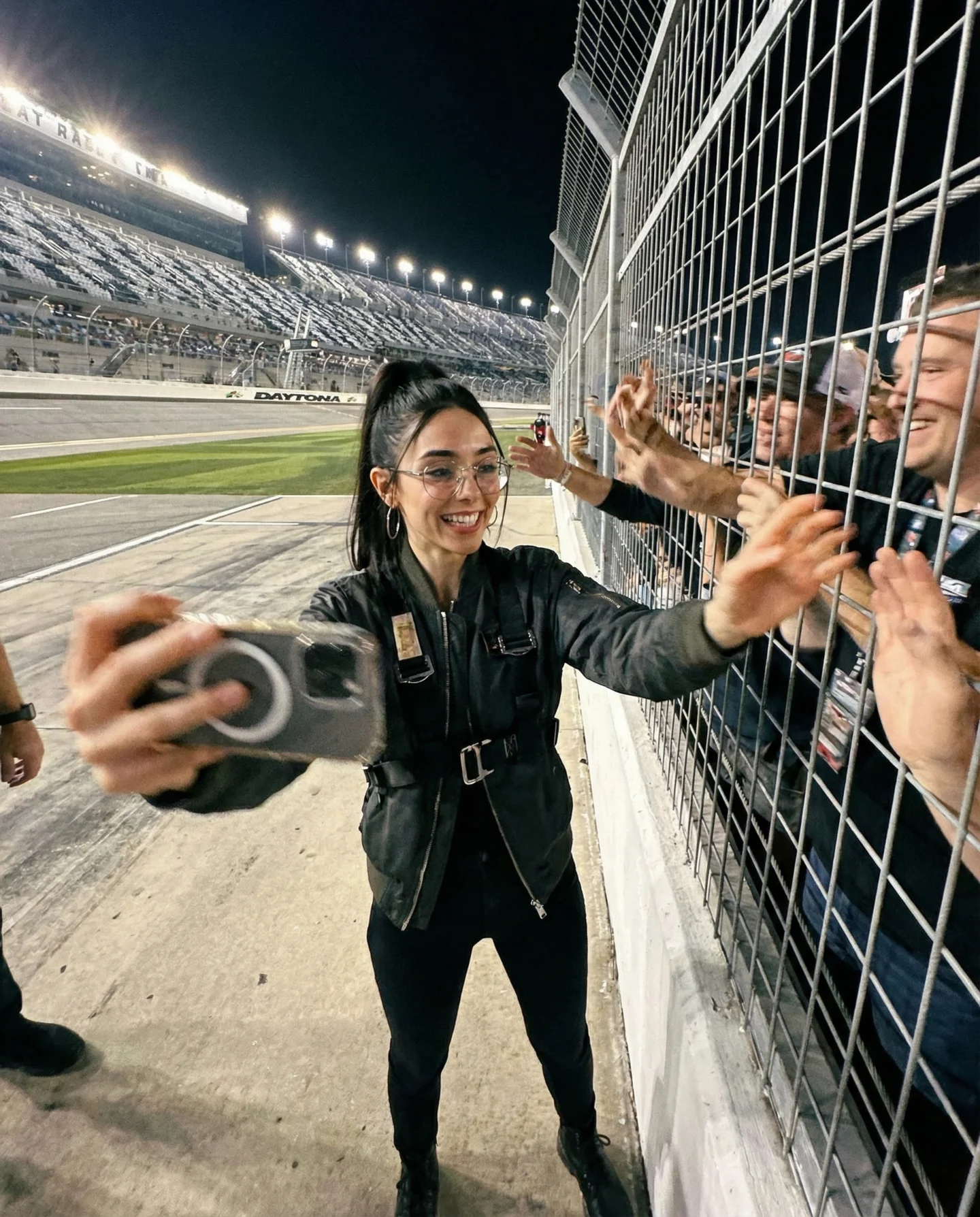
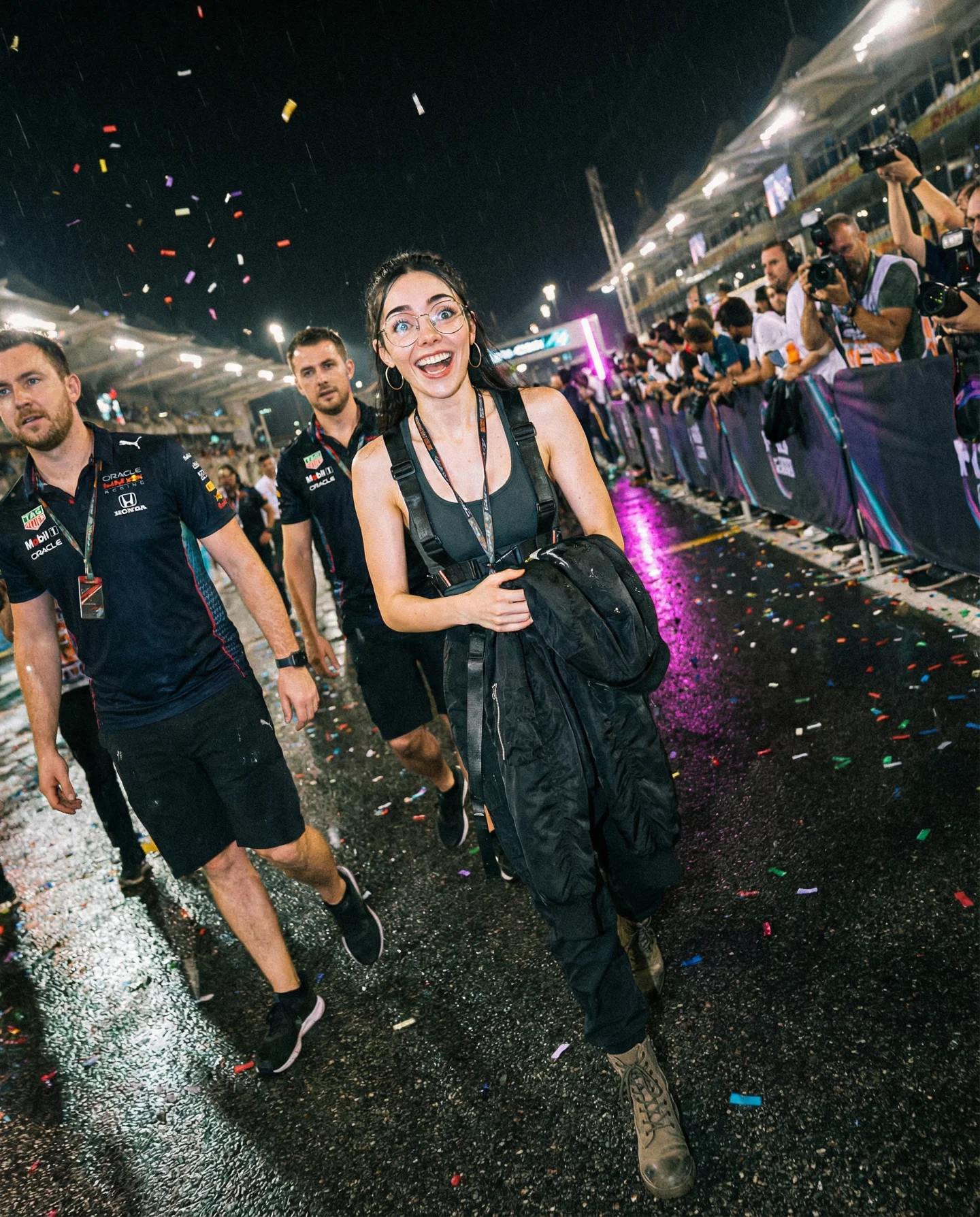
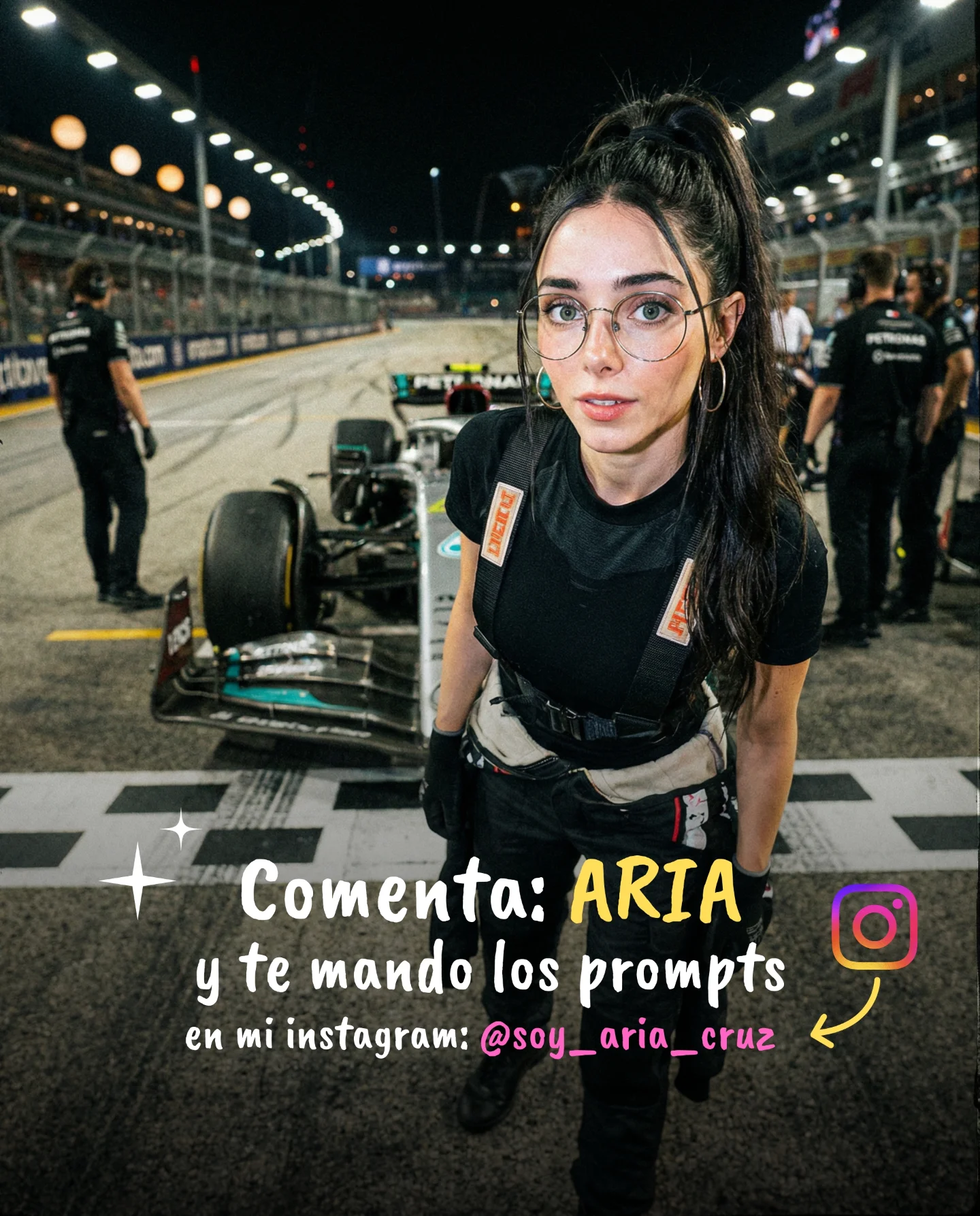
This image performs because it combines access and personality in the same frame. The setting is instantly high-status: a Formula 1 pit lane at night, wet ground, open garages, crew moving in the background. But the image does not present that world as distant spectacle. It presents it through a cheerful, handheld selfie. That switch matters. Instead of looking like media coverage, the post feels like social proof that the creator is really inside the moment.
The result is much stronger for feed performance than a polished paddock wide shot. A wide shot shows the place. A selfie shows belonging. For small creators, that difference is crucial. People respond more intensely when a location is filtered through an identifiable person with expression, styling, and attitude. The environment gives status. The face gives relatability.
The main hook is controlled contrast. Formula 1 usually reads as speed, machinery, and elite access. Selfie culture reads as casual, immediate, and personal. When those two codes meet, the image feels more novel than either one alone. The viewer gets both aspiration and intimacy in a single glance. That is a strong recipe for comments, because it invites questions about the experience as much as the outfit or the prompt.
The second reason it works is movement without chaos. Crew members blur slightly in the background, the subject looks mid-step, and the wet pit lane reflects the lights, so the frame feels alive. At the same time, the face remains clear and happy. This balance keeps the image energetic without becoming messy. Many creators lose this by trying to make motorsport images too dramatic. Here, the candid smartphone logic is what makes it believable.
| Signal | Evidence (from this image) | Mechanism | Replication Action |
|---|---|---|---|
| Access signal | Open garages, crew uniforms, wet pit lane, track fencing | Exclusive spaces create curiosity and status fast | Anchor the prompt with 2-3 environment markers that unmistakably define the location |
| Human warmth | Laughing smile, glasses, relaxed walk-forward selfie pose | Softens the elite setting and makes the image feel socially shareable | Keep one expressive facial cue and one candid body-language cue instead of a static pose |
| Documentary energy | Background motion, damp reflections, handheld perspective | Makes the frame feel like a captured moment rather than staged content | Use smartphone selfie language and allow mild background blur or movement |
| Clean palette | Black outfit against pale concrete and cool night lights | Maintains strong readability in a visually complex environment | Dress the subject in a controlled tonal range and let the location provide the detail |
The smartest choice here is the wet pit lane. Reflections on the concrete make the space feel cinematic immediately, but because they come from practical lights rather than artificial color effects, the image still feels honest. The damp ground is doing a lot of visual labor. It adds texture, depth, and mood while staying fully believable for a motorsport setting.
The subject styling is equally effective because it stays functional. Black bomber jacket, gloves, strap detail, and reflective patches all support the environment instead of competing with it. That is why the image avoids looking like cosplay. The outfit feels like it belongs in the paddock. For creators, this is a useful lesson: when the location is already visually rich, wardrobe should reinforce the narrative, not start a second one.
| Observed | Why it matters for the look | How to recreate it |
|---|---|---|
| Wide-angle selfie perspective | Makes the viewer feel inside the moment | Use front-camera smartphone framing with one arm entering the foreground |
| Wet reflective ground | Adds cinematic atmosphere without artificial styling | Prompt damp pit-lane concrete and floodlight reflections |
| Background crew movement | Keeps the location active and believable | Add a few blurred staff figures, not a crowd |
| All-black paddock outfit | Strengthens visual cohesion and motorsport credibility | Keep wardrobe functional, tonal, and slightly technical |
| Cool-white night lighting | Preserves realism and industrial clarity | Use overhead fluorescents and stadium lights, not sunset or neon palettes |
This format is weaker when the environment itself is the only story. If the subject expression becomes flat, the image loses much of its power. It is also less effective if the background is too empty, because the whole point is to show personal presence inside an active, exclusive space.
{exclusive venue} {wide-angle selfie} {functional outfit} {active background staff}{night access location} {personal selfie expression} {movement in background} {cool practical lighting}{creator persona} {insider location marker} {handheld phone perspective} {real-world lighting}To rebuild this style reliably, prompt chunks need to control four separate layers: the selfie camera logic, the venue cues, the subject styling, and the sense of motion. If any one layer goes soft, the image becomes generic fast.
| Prompt chunk | What it controls | Swap ideas (EN, 2–3 options) |
|---|---|---|
| wide-angle smartphone selfie while walking | Handheld immediacy and perspective distortion | front-camera candid; moving selfie; informal backstage phone shot |
| Formula 1 pit lane with garages, crew, wet concrete | Location specificity and status signal | motorsport paddock; race garage corridor; pit-lane access zone |
| all-black paddock outfit with reflective accents | Subject integration into the environment | technical bomber outfit; monochrome utilitywear; black event-ops styling |
| bright smiling expression, glasses, hoop earrings | Personal identity and social warmth | soft grin with glasses; laughing expression; casual excited look |
| cool-white night floodlights reflecting on damp ground | Mood and realism | fluorescent paddock lights; industrial night lighting; wet-surface reflections |
| few blurred crew members in background | Environmental activity without clutter | moving staff silhouettes; background event workers; subtle motion behind subject |
Start by locking three things: the selfie angle, the venue markers, and the practical lighting. Those are the backbone of the image. After that, change only one or two variables at a time. If you change the location, wardrobe, and expression together, you will not know which part weakened the realism.
If the result starts looking too polished, reduce cinematic effects and add more phone-camera honesty. If it stops reading as exclusive access, strengthen the garage architecture, crew presence, and track fencing. The image wins because it feels like a real moment in a rare place, not because it looks heavily produced.