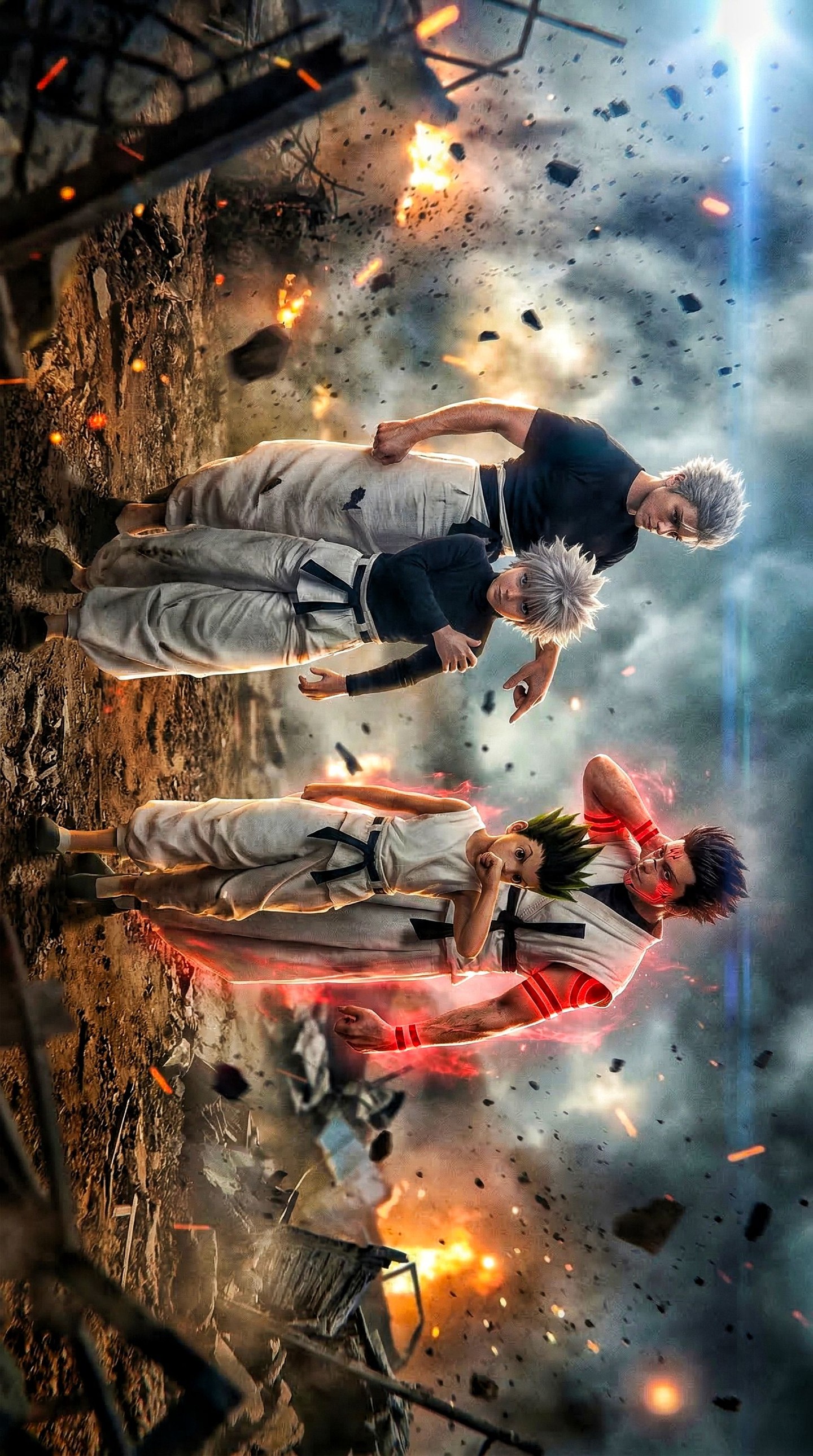
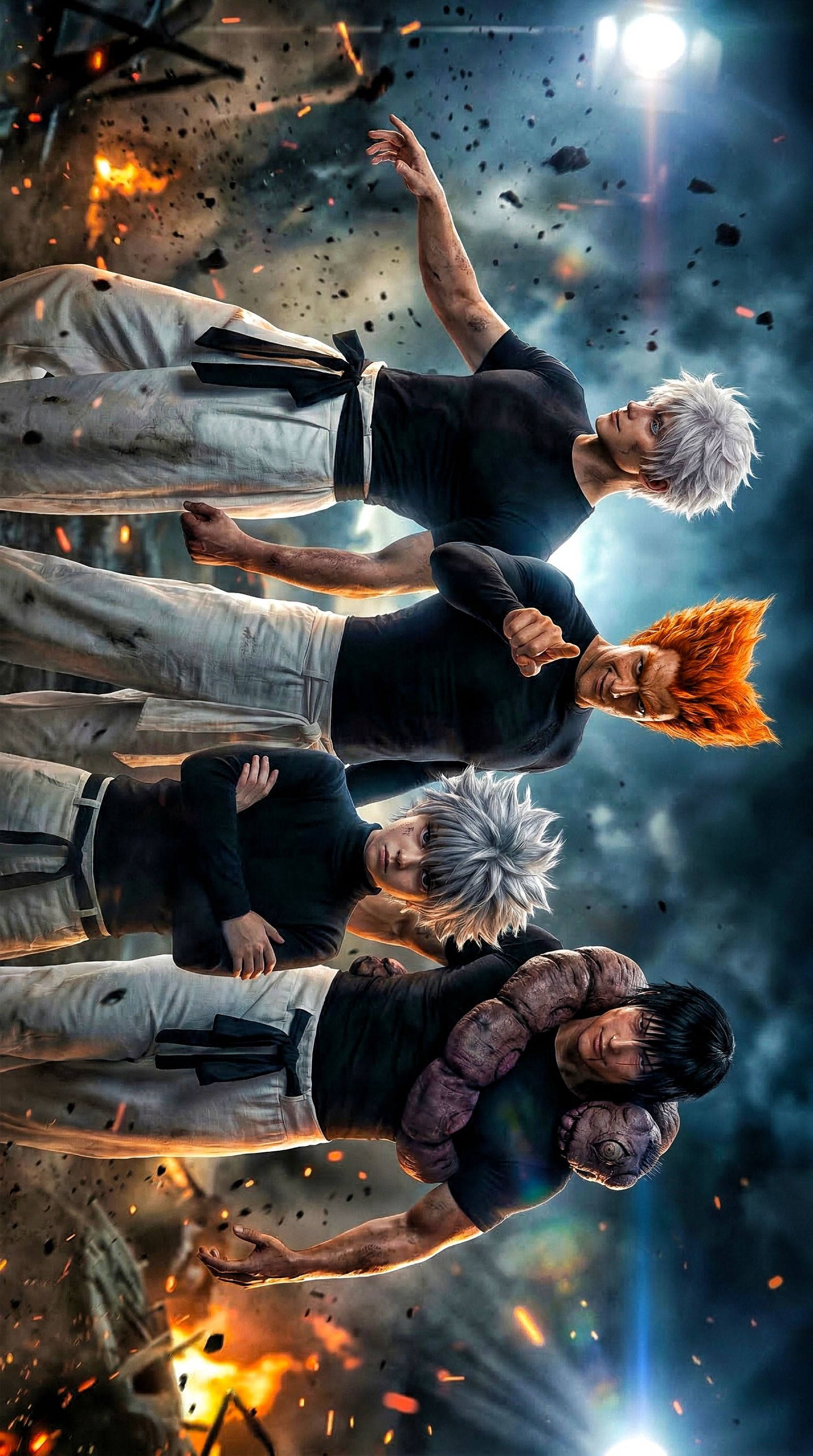
How vikaschauhan Made This Anime Fighter Action Pose AI Art - and How to Recreate It
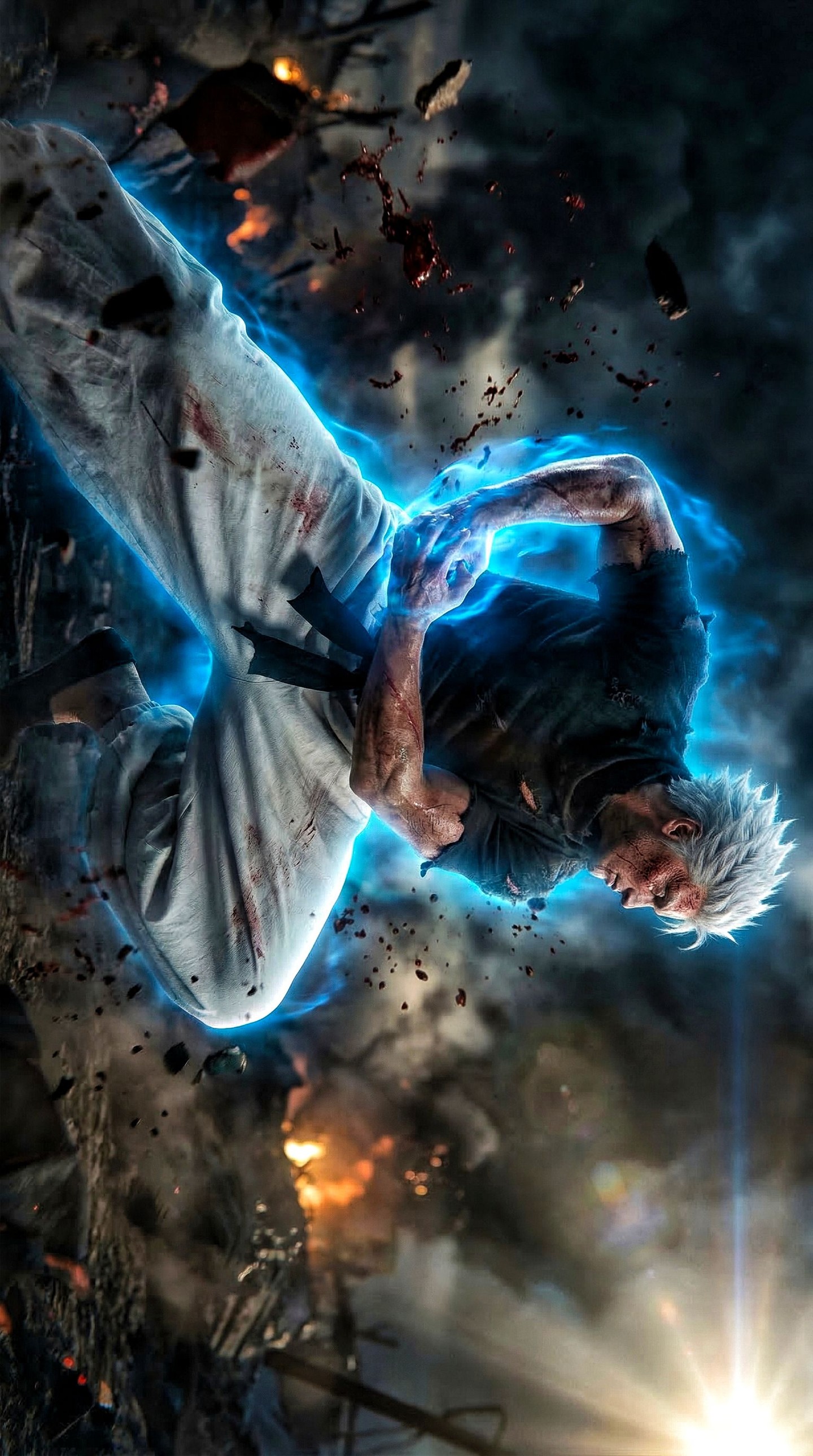
Some anime battle images look loud without feeling strong. Others feel powerful instantly, even before the viewer studies the details. The difference usually comes down to structure. This image concept of a white-haired fighter suspended in a sideways airborne motion works because every visual choice supports the same idea: force captured at the exact moment before impact resolves. The blue aura is dramatic, the battlefield is chaotic, and the body is twisted through the frame, but the real success of the composition comes from clarity and hierarchy rather than raw visual noise.
The first thing to notice is the body position. The fighter is not planted on the ground, and he is not floating in a generic jump. He is rotated almost horizontally, with the body cutting diagonally across the composition. That immediately changes the emotional temperature of the image. A diagonal airborne body suggests risk, instability, motion, and commitment. It tells the viewer this is not a calm display of power but a split-second combat beat extracted from a larger conflict. In prompt writing, that distinction matters more than many people realize.
Strong anime action art often depends on whether the pose carries the story before effects are added. If you removed the aura, smoke, and explosion light from this concept, the image would still feel aggressive because the pose itself is narratively rich. The fighter appears to be striking, dodging, or redirecting momentum at the peak of a violent exchange. That is what allows the surrounding effects to feel earned rather than decorative.
The pose is the real source of impact
A common mistake in action prompting is to rely too heavily on visual clutter. Creators often write long strings of effects such as smoke, embers, power sparks, dust clouds, glowing trails, and cinematic flames, but they fail to define the motion of the body clearly. The result is an image that looks busy without feeling disciplined. This composition avoids that trap by putting the body first. The pose establishes the emotional event. Everything else only intensifies it.
When writing a prompt for a similar image, it helps to describe the figure in physical terms rather than emotional generalities. Instead of saying “dynamic action pose,” it is more useful to say that the body is turned sideways in mid-air, stretched across the frame with a tense torso twist and strong limb extension, as if moving through a violent exchange. That phrasing gives the image model physical instructions it can build around. Strong prompts often sound almost choreographic.
The direction of the body is equally important. Running a figure from upper left to lower right or lower left to upper right creates a sense of travel that a centered upright pose cannot match. Diagonal composition is one of the fastest ways to make a battle image feel immediate. Here, the diagonal structure also allows debris and sparks to move in sympathy with the figure, which makes the entire scene feel coherent rather than randomly explosive.
| Core element | Why it matters |
|---|
| Sideways airborne pose | Creates instant instability and transforms the image into a suspended combat beat. |
| Readable torso twist | Preserves believable anatomy and helps the viewer understand the action. |
| Diagonal frame energy | Pushes the eye through the scene and makes the subject feel propelled. |
| Suspended debris | Acts like punctuation marks that reinforce impact without replacing it. |
| Explosive lower flare | Adds directional momentum and anchors the fighter inside a dangerous environment. |
Why the electric-blue aura works so well
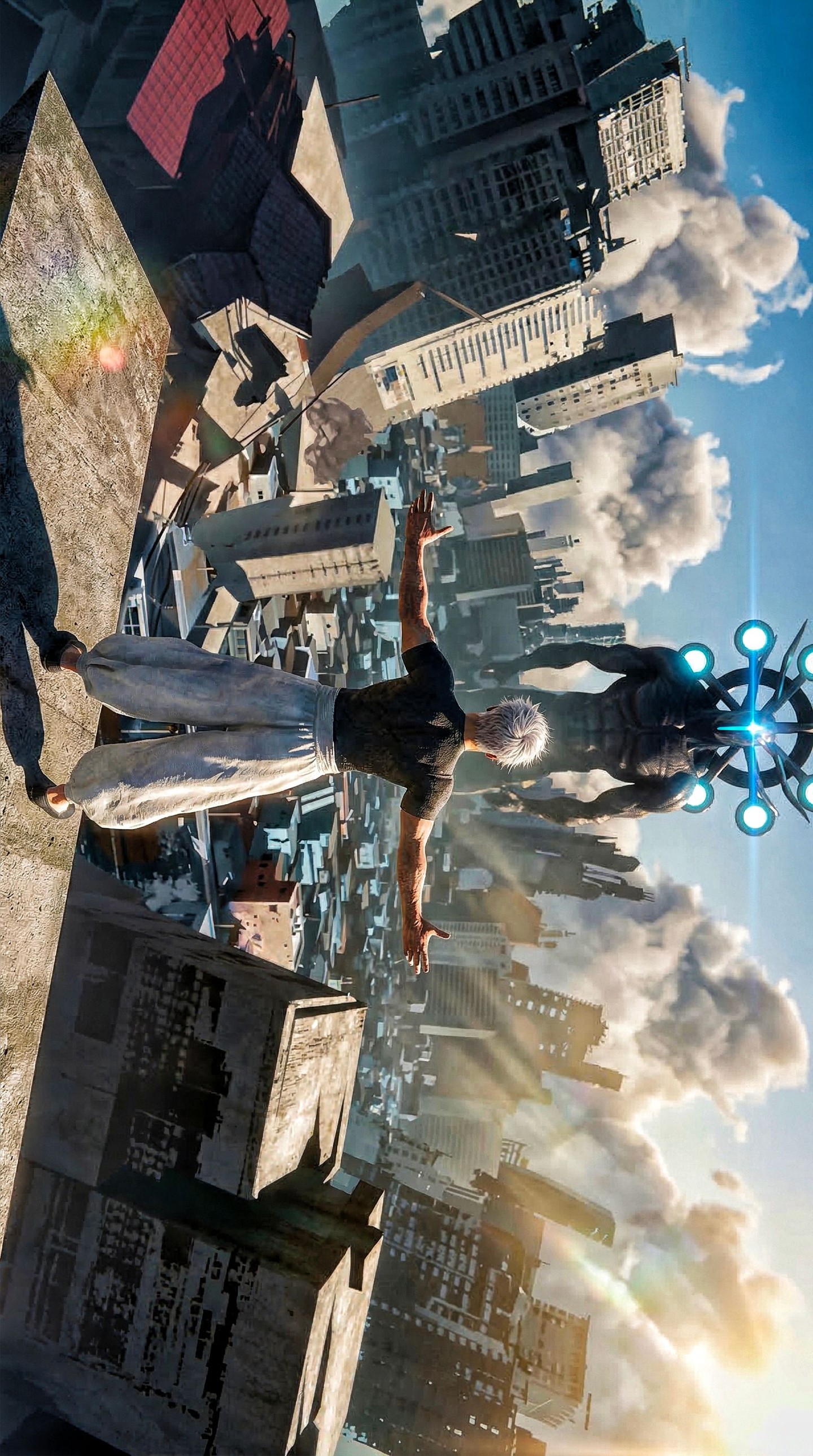
The aura in this image is not merely there to signal power. It plays a structural role. Against a smoky battlefield, characters can easily disappear into the environment, especially when both costume and background are dark. The electric-blue aura solves that problem by separating the body from the surrounding destruction. It sharpens the silhouette, frames the pose, and introduces a supernatural identity at the same time.
The most useful way to think about the aura is as controlled contour light rather than random glowing fog. If the energy becomes too diffuse, it muddies anatomy. If it hugs the character too tightly without variation, it can feel flat. This concept works because the aura wraps the silhouette with enough intensity to read clearly while still allowing the viewer to see clothing, damage, and body tension. That balance is hard to achieve by accident, which is why careful prompt language matters.
Blue is also a smart color choice. It naturally contrasts with the warm oranges and reds of battlefield fire. That means the lighting system immediately gains depth. The subject receives cool supernatural definition while the environment contributes warm destructive atmosphere. This cool-versus-warm split is one of the oldest tricks in cinematic image-making, and it remains extremely effective in anime poster design because it helps the eye organize complexity quickly.
In practical prompt terms, phrases like “bright electric-blue aura tracing the silhouette,” “clean supernatural edge light,” or “blue energy wrapping the body without obscuring anatomy” are more useful than vague instructions such as “lots of glowing power.” A good prompt tells the model what job the effect should do, not just what the effect is called.
Using costume contrast to support the silhouette
The costume design in this concept does something subtle but important. The white hair and light trousers provide immediate contrast against the dark shirt and smoky background. That contrast keeps the body readable while also making the image feel graphic and memorable. White elements catch rim light beautifully, especially when illuminated by blue energy, and dark clothing helps ground the figure so the image does not wash out into pure effect lighting.
The damaged quality of the outfit also matters. Torn fabric, dirt, and blood traces tell the viewer that this is not a clean promotional pose taken before battle. It is a frame from the middle of an ongoing conflict. Those details increase credibility and tension. However, they only work because the image still prioritizes readability. Damage is useful when it supports narrative. It becomes harmful when it turns the image into texture noise.
This is a useful lesson for prompt construction: detail should reinforce story, not compete with it. If a character is battle-worn, describe the specific kinds of wear that underline motion and impact. Torn pants, scuffed surfaces, and marks of recent collision are more effective than a generic “damaged clothes” instruction. Specificity helps the image feel intentional.
The environment should amplify, not compete
The battlefield behind the fighter is full of smoke, embers, debris, and distant explosions, yet it does not steal the image away from the figure. That is because the background is structured as amplification rather than subject matter. The viewer understands instantly that the setting is dangerous and unstable, but the eye is never confused about what matters most. This is exactly how background design should function in a battle portrait.
One reason this works is depth management. The farther parts of the environment remain soft enough that the subject stays dominant. Smoke acts like atmospheric separation. Debris is visible, but it does not overwhelm. Light flares punctuate the frame rather than flattening it. In strong action illustrations, the environment must feel rich but subordinate. That hierarchy gives the composition authority.
Prompt writers can support this by describing the environment in relational terms. Instead of only listing smoke, fire, dust, and ruins, it helps to specify that the background should be secondary, softened, or separated from the subject. Expressions like “chaotic battlefield kept behind the figure,” “destruction visible but subordinate,” or “shallow background separation with crisp subject” can greatly improve output quality.
| Environment choice | Contribution to the final image |
|---|
| Smoke haze | Creates distance and helps isolate the subject from the background. |
| Flying rubble | Supports the sense of impact and suggests a larger violent context. |
| Warm firelight | Adds contrast against the blue aura and deepens the cinematic tone. |
| Blurred destruction | Suggests scale without fighting the body for attention. |
| Embers and sparks | Add small rhythmic accents that make the frame feel alive. |
How to keep action readable
Readable action is one of the hardest things to achieve in image generation. Models often overcompensate when they hear words like “dynamic,” “fast,” and “explosive.” They may produce too much blur, too much broken anatomy, or too many disconnected effects. The safest solution is to define readable action as a requirement. That means clear silhouette, strong limb tension, coherent torso alignment, and suspended motion rather than pure smearing.
Negative constraints are especially important here. If you want the image to remain premium, it is worth excluding muddy aura effects, broken limbs, extra arms, unreadable silhouettes, goofy expressions, and cluttered environments. Anime battle posters depend on authority. The moment the anatomy looks uncertain or the composition becomes chaotic without control, that authority disappears.
It is also helpful to remember that speed does not always require blur. Some of the strongest action art looks fast because of body angle, debris flow, and lighting direction rather than because the whole image is smeared. This concept benefits from that principle. The viewer feels velocity because the body cuts across space and the environment reacts around it, not because the subject has been turned into an indistinct streak.
How to write this into a high-value content entry
For databases, blogs, and prompt collections, the best entries do more than store the raw prompt. They explain the logic behind the image. In this case, the concept becomes more useful when the user understands why the pose comes first, why the aura is blue, why the environment stays secondary, and why the silhouette is protected so carefully. That educational layer makes the prompt reusable.
If someone wanted to adapt this concept into a sword fighter, cybernetic warrior, demon hunter, or martial artist, the same design rules would still apply. Lock the motion. Protect the silhouette. Use one dominant energy color. Build environmental danger behind the figure, not over the figure. Balance cool and warm light. Let the body remain legible. Those principles turn an ordinary action frame into a poster-worthy one.
That is why this blue-aura airborne battle image is such a strong example for prompt engineering. It demonstrates that spectacle works best when structure comes first. The body tells the story, the aura sharpens the iconography, and the battlefield raises the stakes. Once those layers are aligned, the resulting image feels less like random generated chaos and more like a deliberate anime key visual with real cinematic control.