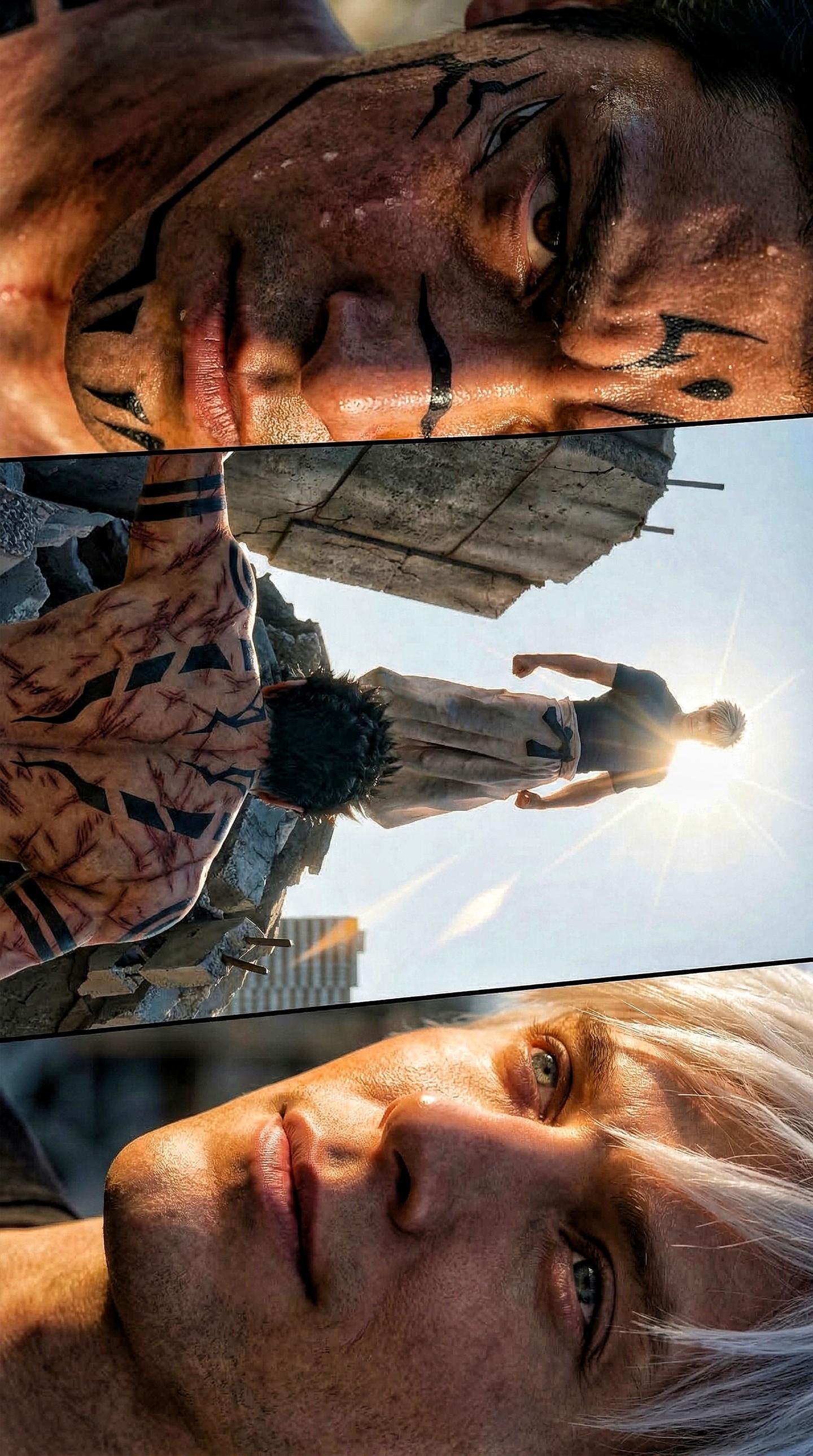
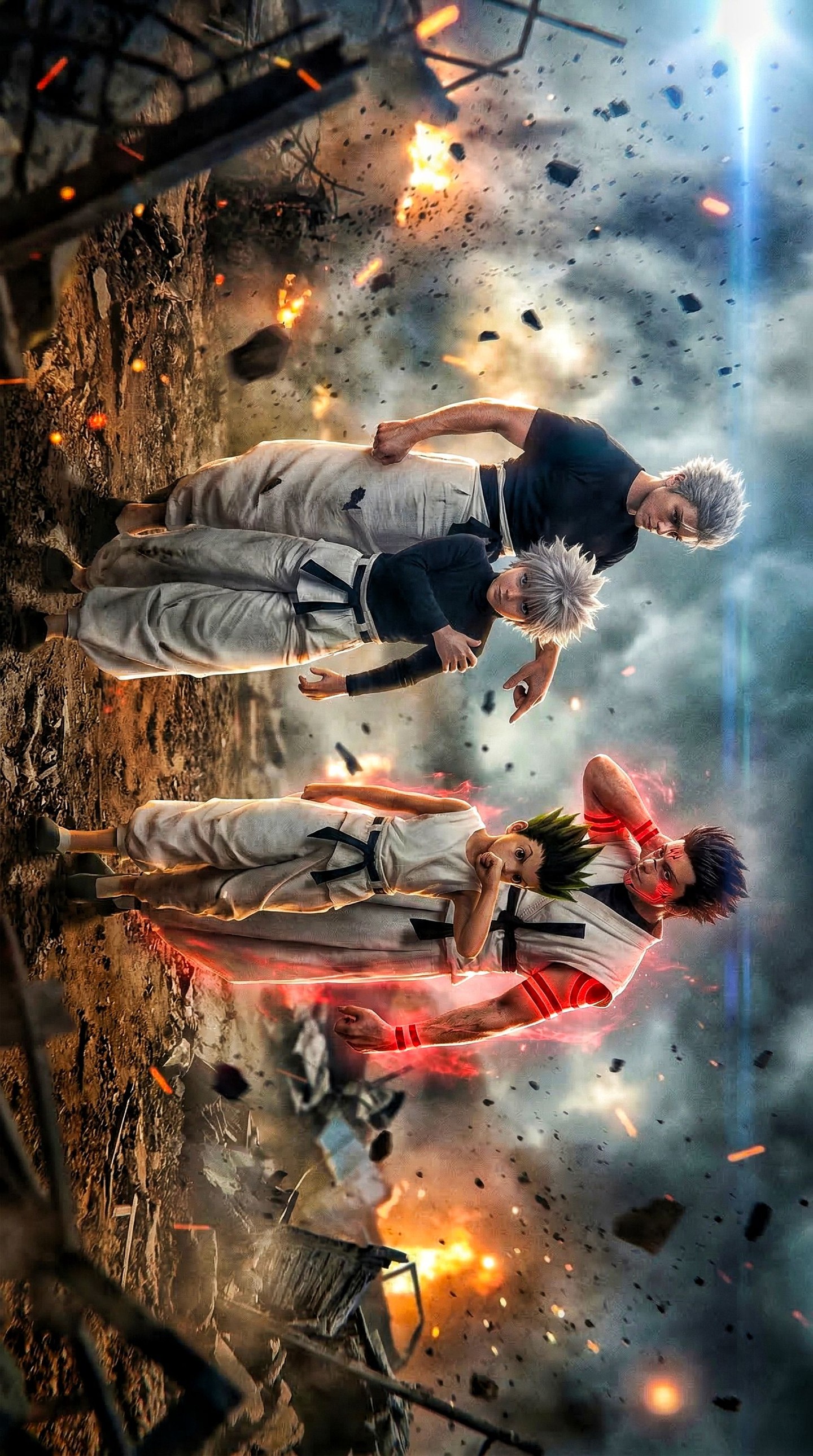
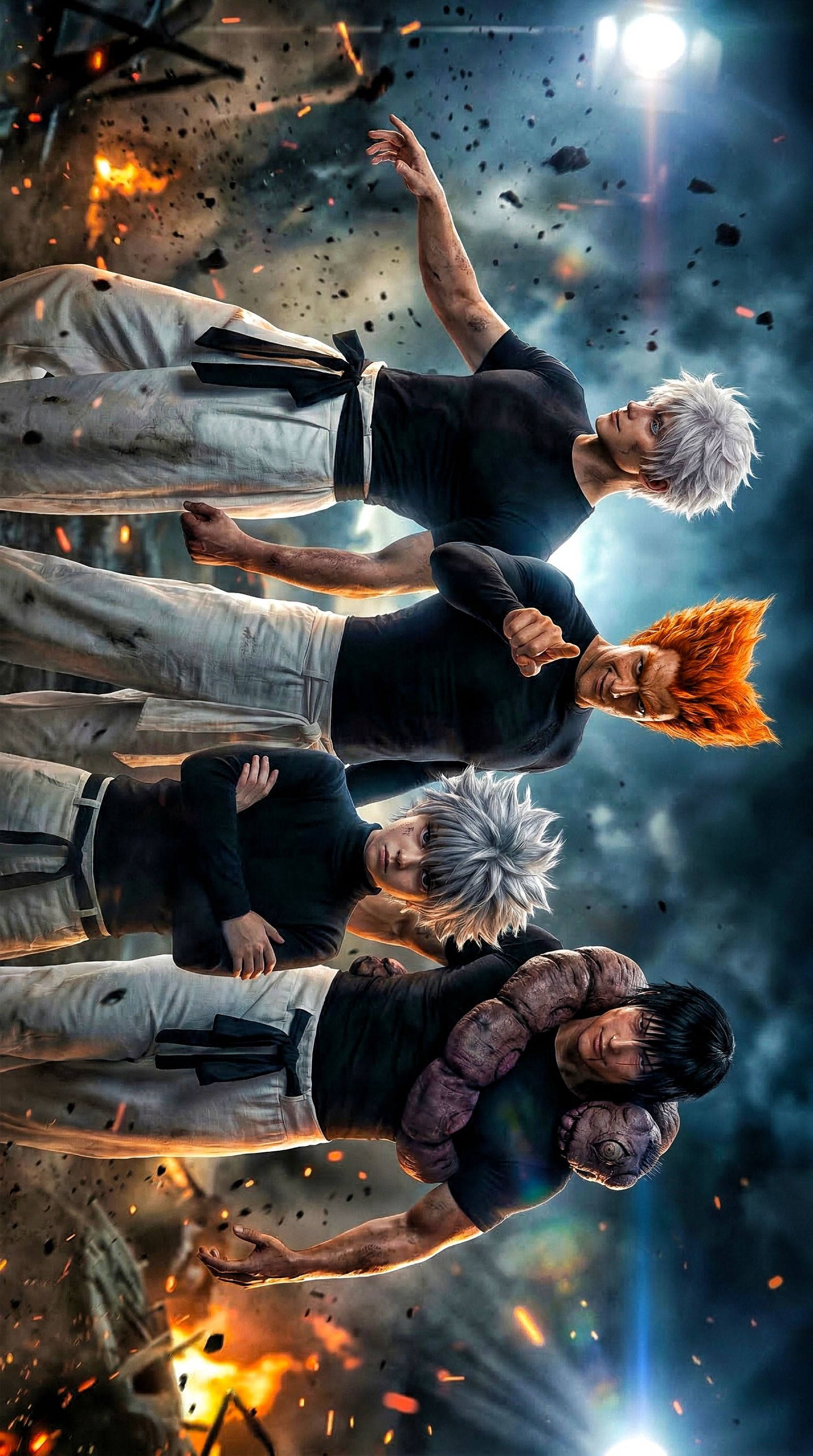
JJK
HD Wallpaper link in bio Wallpaper link in my bio 👆🏻
.
.
.
.
.
Created with nano banana pro on @pixverse_official
Follow @cyborg.digitalart
for more ai artworks
Which one is your Favourite?
Comment down your Favourite one 👇
❌❌ Do not repost ❌❌
#aiart #anime #manga #cyborgdigitalart #jujutsukaisen
How vikaschauhan Made This Futuristic City Rooftop Pose AI Art - and How to Recreate It
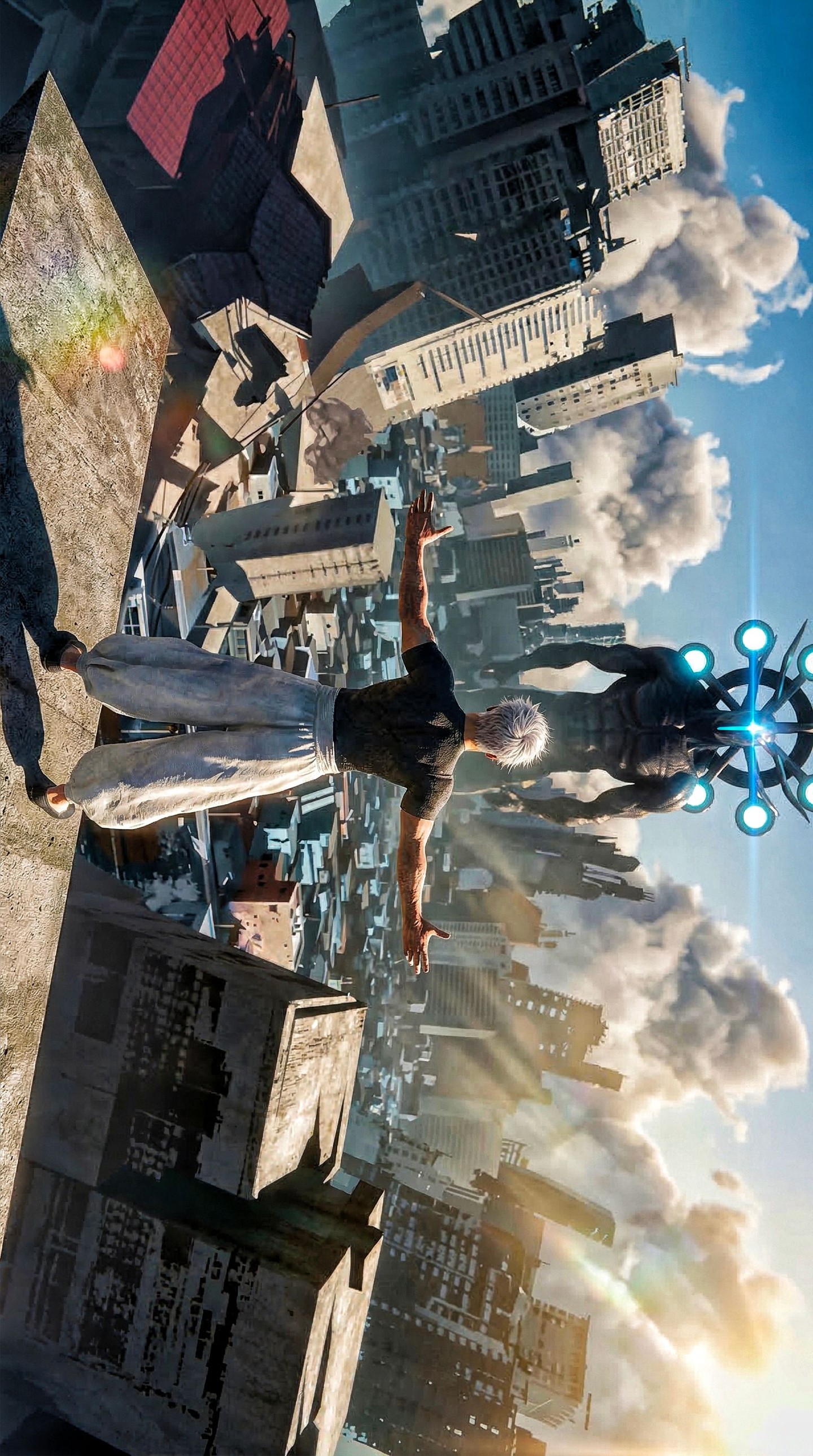
Some images earn attention because they are loud. This one earns attention because it destabilizes your sense of gravity. The tilted city, the back-facing figure, the impossible hovering entity, and the late-day light all work together to make the frame feel like a threshold moment rather than a static illustration. For creators, that matters. A picture that feels like a threshold gets more curiosity, more pause time, and more discussion than one that simply looks polished.
What makes this especially useful for small creators is that the idea is transferable. You do not need the exact same sci-fi skyline or glowing machine halo. What you need is the same stack of signals: one human figure used as a scale anchor, one impossible event, one strong directional light source, and one composition choice that tells the viewer the world is not stable anymore. That is the real engine behind the image.
The viral pull here is not coming from detail density alone. It comes from tension between control and disorientation. The figure stands with arms open, almost in a surrender pose or a ritual welcome, while the city itself has been rotated into a near-vertical experience. That gives the viewer two readings at once: the body looks calm, but the world looks wrong. When those two emotional signals clash, people stop scrolling because the frame asks a question before it offers an answer.
Another reason the image travels well is that it gives viewers an instant narrative lane without overexplaining. You can read it as summoning, confrontation, transcendence, apocalypse, game-cinematic drama, or AI-future spectacle. That flexibility is powerful. The best shareable visuals often leave enough room for projection. Audiences want a frame they can caption in their own way, not just admire once and move on.
The lighting also deserves more credit than it usually gets. The sun is not just decorative here. It acts like a legitimacy device. Without that slanted natural light, the whole scene could have felt like pure synthetic concept art. With it, the city gains atmosphere, the rooftop gains texture, and the glowing figure feels inserted into a world with believable physical light. That bridge between realism and impossible spectacle is exactly what makes many high-performing sci-fi visuals feel expensive.
Signal
Evidence (from this image)
Mechanism
Replication Action
World instability
The city is presented on a dramatic tilt instead of a normal horizon.
Disorientation increases pause time because the viewer has to re-read spatial logic.
Lock one major composition disruption: tilt the world, invert gravity cues, or rotate the skyline 20-40 degrees.
Human scale anchor
A single white-haired figure stands on the rooftop with open arms.
One readable body gives the audience an entry point into a large surreal environment.
Keep one isolated figure in the frame and make sure the silhouette reads instantly from thumbnail size.
Impossible focal event
A giant hovering entity with blue glowing circular nodes floats in front of the figure.
Viewers stay longer when the image contains one undeniable “how is that there?” moment.
Turn up one impossible object only: hovering deity, glowing machine, portal, giant symbol, or light construct.
Believable cinematic light
Late-afternoon sunlight cuts across the buildings and rooftop edges.
Naturalistic light helps surreal content feel more convincing and more premium.
Use one clear light direction and keep it consistent across architecture, figure, and atmosphere.
Where This Works Best And Where It Does Not
This kind of frame is strongest when the goal is anticipation, mythology, or dramatic brand positioning. It works beautifully for creators making sci-fi teasers, concept-poster content, AI short-film promotion, game-world mood posts, or “future city” visual essays. It also fits launch moments, because the image already feels like an arrival scene.
Best fit: teaser posters for AI films or shorts. Why fit: the image carries unfinished narrative energy. What to change: swap the hovering entity for the story-specific object or antagonist.
Best fit: futuristic world-building carousels. Why fit: the skyline and impossible scale imply a larger world beyond the frame. What to change: keep the city tilt, but vary the district, weather, or era.
Best fit: music-cover or synthwave promo art. Why fit: the pose and light already feel cinematic and atmospheric. What to change: reduce architectural clutter and push one stronger palette.
Best fit: game key art tests. Why fit: the image reads instantly at poster scale and suggests a playable world. What to change: lock a more specific costume, faction emblem, or gameplay prop.
Best fit: creator brand announcements. Why fit: the single-figure-against-the-world composition communicates ambition. What to change: replace the hovering form with a branded icon or symbolic object.
It is less ideal for content categories that need intimacy, tutorial clarity, or product specificity. If the audience needs to understand a face closely, compare a physical object, or read practical steps fast, this kind of dramatic perspective becomes a liability.
Not ideal: beauty or portrait-first content. Reason: the face is too secondary to the world event.
Not ideal: product ads that need clear object recognition. Reason: the emotional spectacle overwhelms the item being sold.
Not ideal: educational explainers. Reason: spatial drama creates mood better than clarity.
Transfer Recipes
Urban angel / divine-tech transfer. Keep: tilted skyline, rooftop edge, sunset direction. Change: replace the machine entity with a haloed figure or symbolic gate. Slot template (EN): “{city} rooftop at {time_of_day}, {character} facing {hovering_entity}, cinematic tilt, god-ray atmosphere”.
Cyber threat transfer. Keep: back-facing human figure, impossible hovering mass, strong sun shafting. Change: move from modern skyline to industrial district and shift palette colder. Slot template (EN): “{industrial_scene} with {lone_figure} confronting {machine_form}, tilted perspective, hard directional light”.
Fantasy portal transfer. Keep: one scale anchor, unstable world angle, skyline depth. Change: swap city for ruins or cliffs and replace the hovering object with a magical portal. Slot template (EN): “{ruin_or_cliff_scene}, {solo_character} arms open toward {portal_or_symbol}, dramatic tilt, luminous atmosphere”.
What The Aesthetic Is Really Doing
Observed closely, the image is less about futuristic detail than about directional force. The architecture rises diagonally, the figure’s arms spread horizontally, and the glowing entity radiates circular energy. Those shape systems collide in a way that keeps the eye moving. You are never trapped in one part of the frame. You scan from rooftop edge to skyline to sunburst to hovering machine and back to the human body. That circulation is part of why the image feels alive.
There is also a strong realism-to-spectacle ratio at work. The rooftop textures, shadow directions, and haze depth all feel grounded. The impossible thing is isolated and therefore stronger. Creators often make the mistake of making every part of an image fantastical. This frame does the opposite: it makes most of the world believable so the one impossible event becomes overwhelming.
Observed
Why It Matters
World tilted far off level
Creates immediate unease and scale drama without needing extra effects.
Subject fills only a modest portion of frame
Lets the environment feel huge and the encounter feel mythic.
Directional sunlight from the right
Makes the scene feel physically coherent and cinematic.
Clean rooftop foreground edge
Gives the viewer a stable starting plane before the image breaks that stability.
Single blue energy accent in a mostly warm-neutral scene
Focuses attention on the supernatural object immediately.
Prompt Technique Breakdown
If you want to recreate this style consistently, think in prompt chunks, not paragraphs. The image is basically a stack of controlled modules. You can swap one without destroying the whole result, which is exactly what makes the formula useful for creators working iteratively.
Prompt chunk
What it controls
Swap ideas (EN, 2-3 options)
solo rooftop figure seen from behind
Gives a human scale anchor and a projection-friendly viewpoint.
high contrast between warm city and cool energy accent
Separates the supernatural element from the believable world.
“warm skyline + cyan core”, “amber haze + blue pulse”, “sunlit city + cold portal glow”
How To Remix This Without Losing The Effect
The safest way to iterate on an image like this is to lock the structural pieces first. If you change too many things at once, the whole dramatic system falls apart and you cannot tell what broke the image.
Baseline Lock
Lock the composition disruption first: the tilted skyline or unstable horizon.
Lock the lighting direction second: late-day light from one side with visible atmospheric falloff.
Lock the lens feel third: a wide cinematic city view that still keeps one readable human figure.
One-change Rule
Change only one or two knobs per run. Do not change subject, entity, city, and lighting together. That turns every test into a new image instead of a useful iteration.
Run 1: establish the base frame with rooftop, tilted city, single figure, and warm light.
Run 2: keep everything else fixed and change only the hovering entity design.
Run 3: keep the entity and composition fixed, then adjust the atmosphere density and sun rays.
Run 4: keep the scene locked and only refine costume silhouette or pose openness on the main figure.
That is the practical takeaway for creators: this image feels massive because it is disciplined, not because it is random. If you lock perspective, isolate one impossible event, and respect light as the bridge between realism and spectacle, you can adapt this formula into multiple niches without losing the emotional punch.