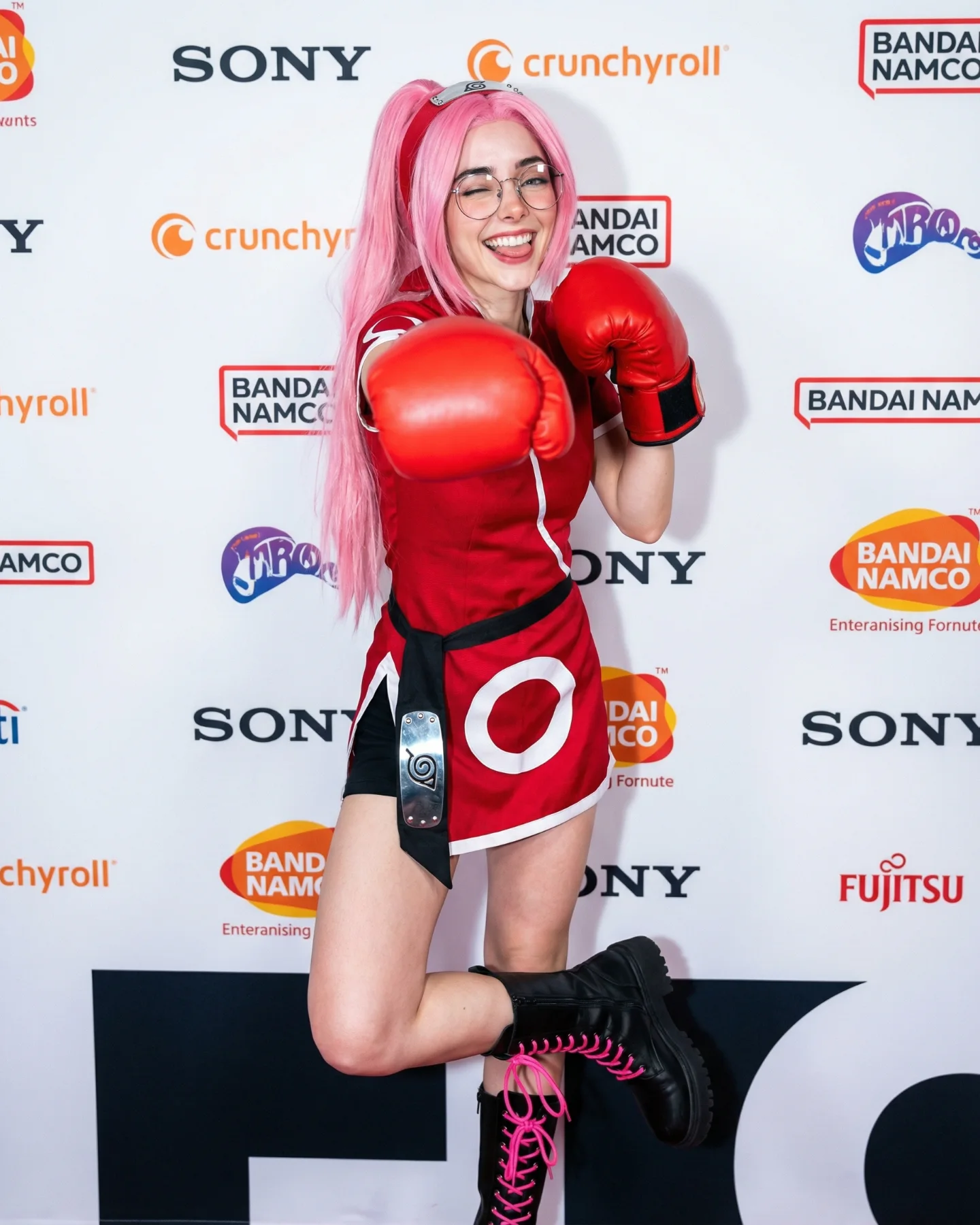
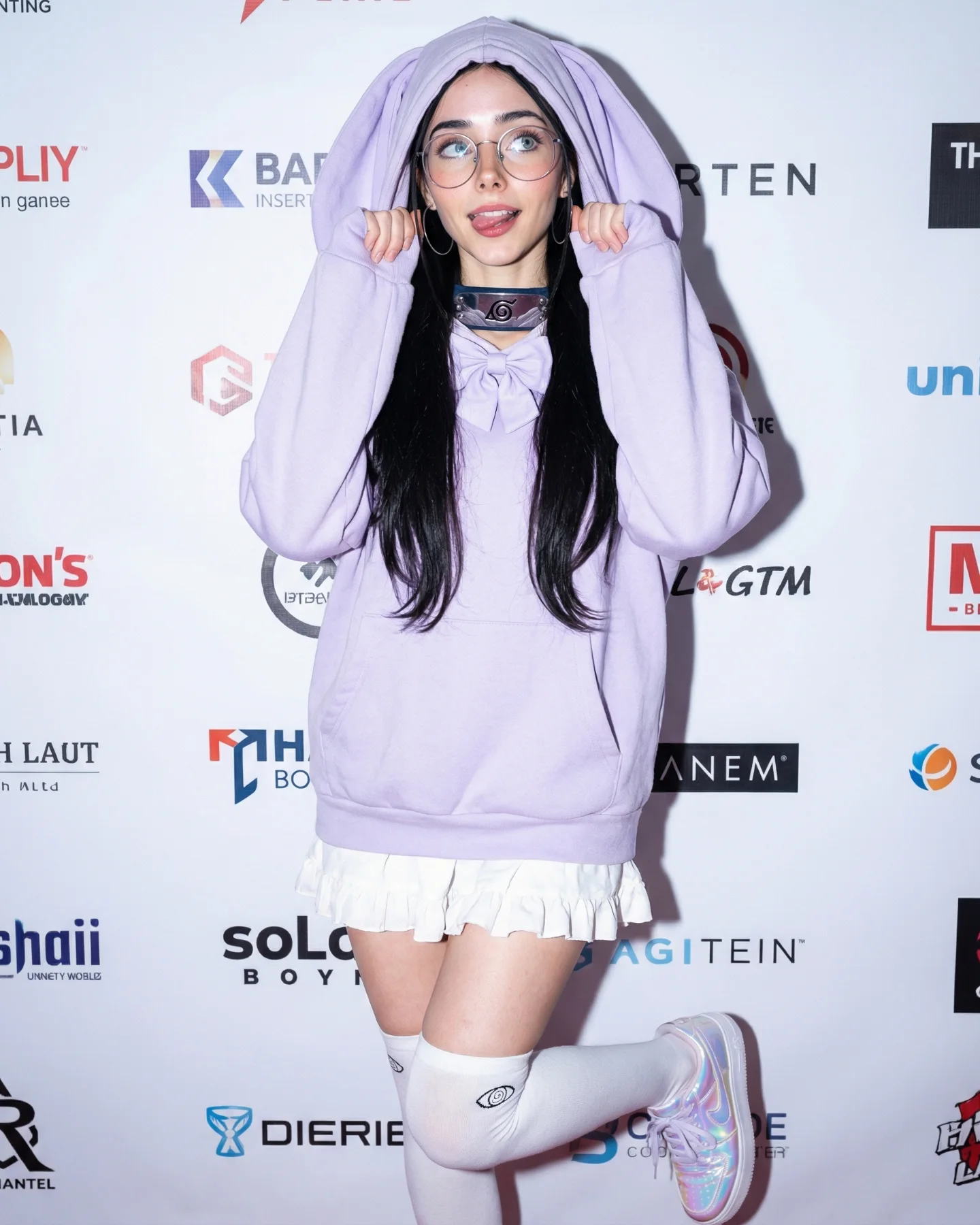
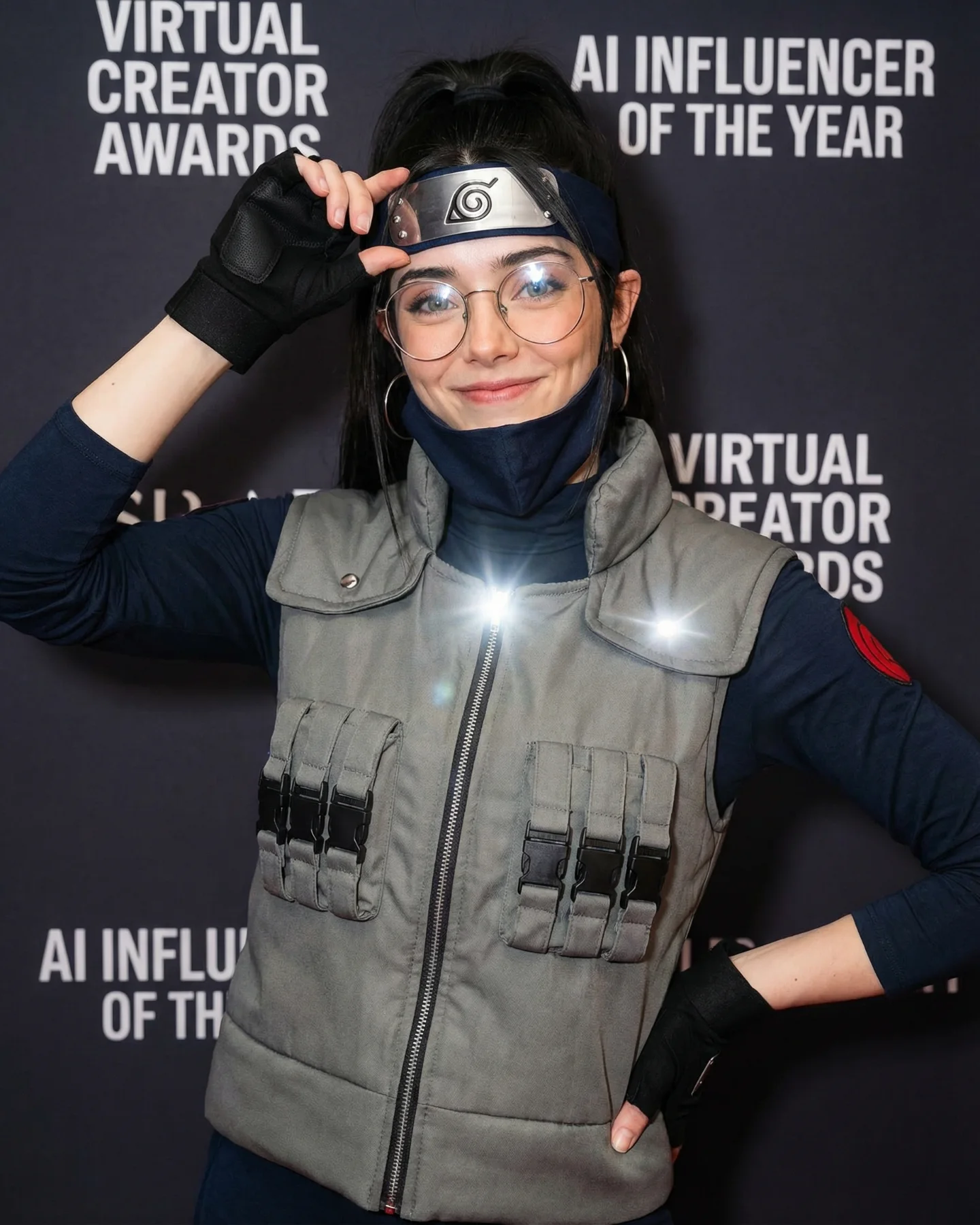
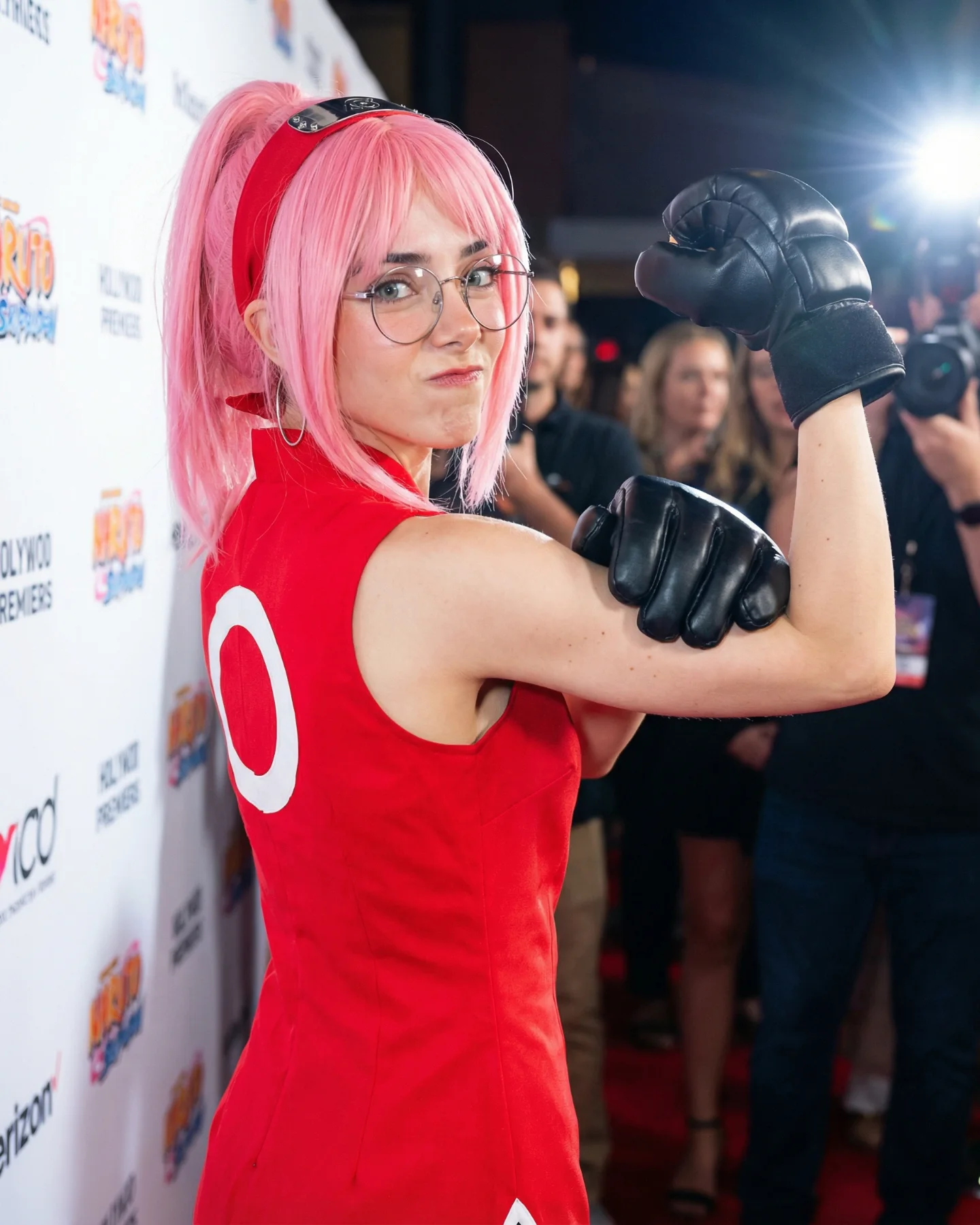
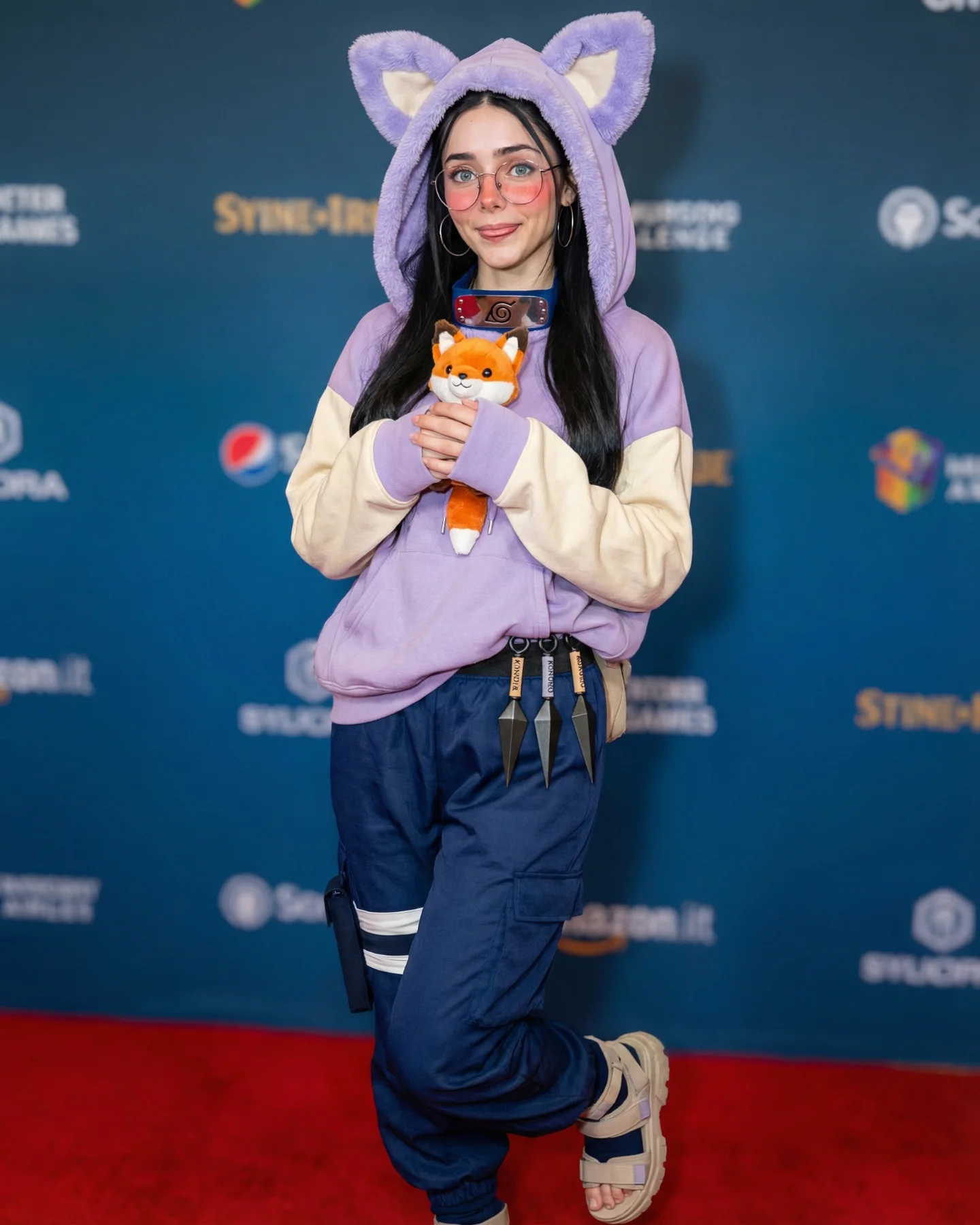
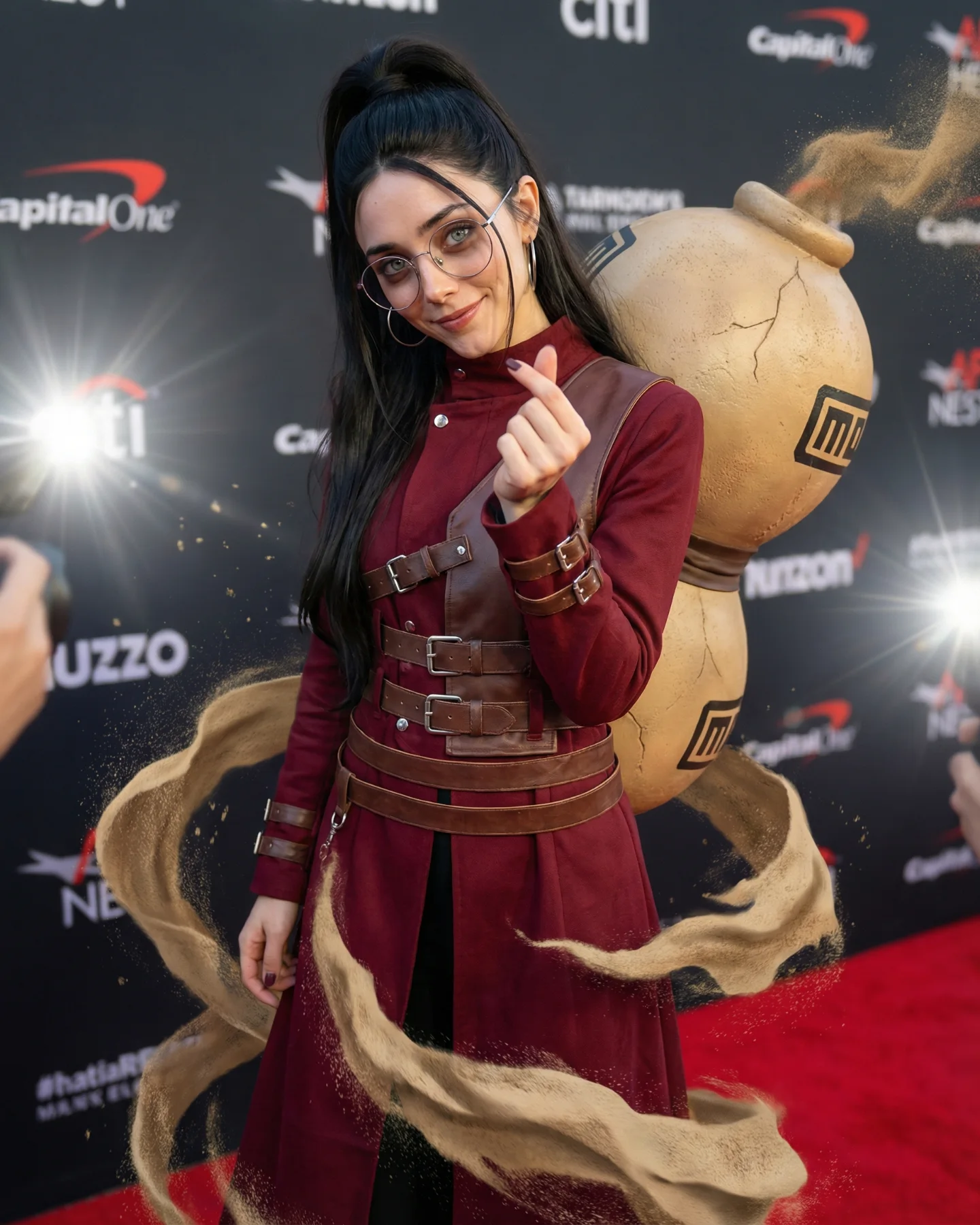
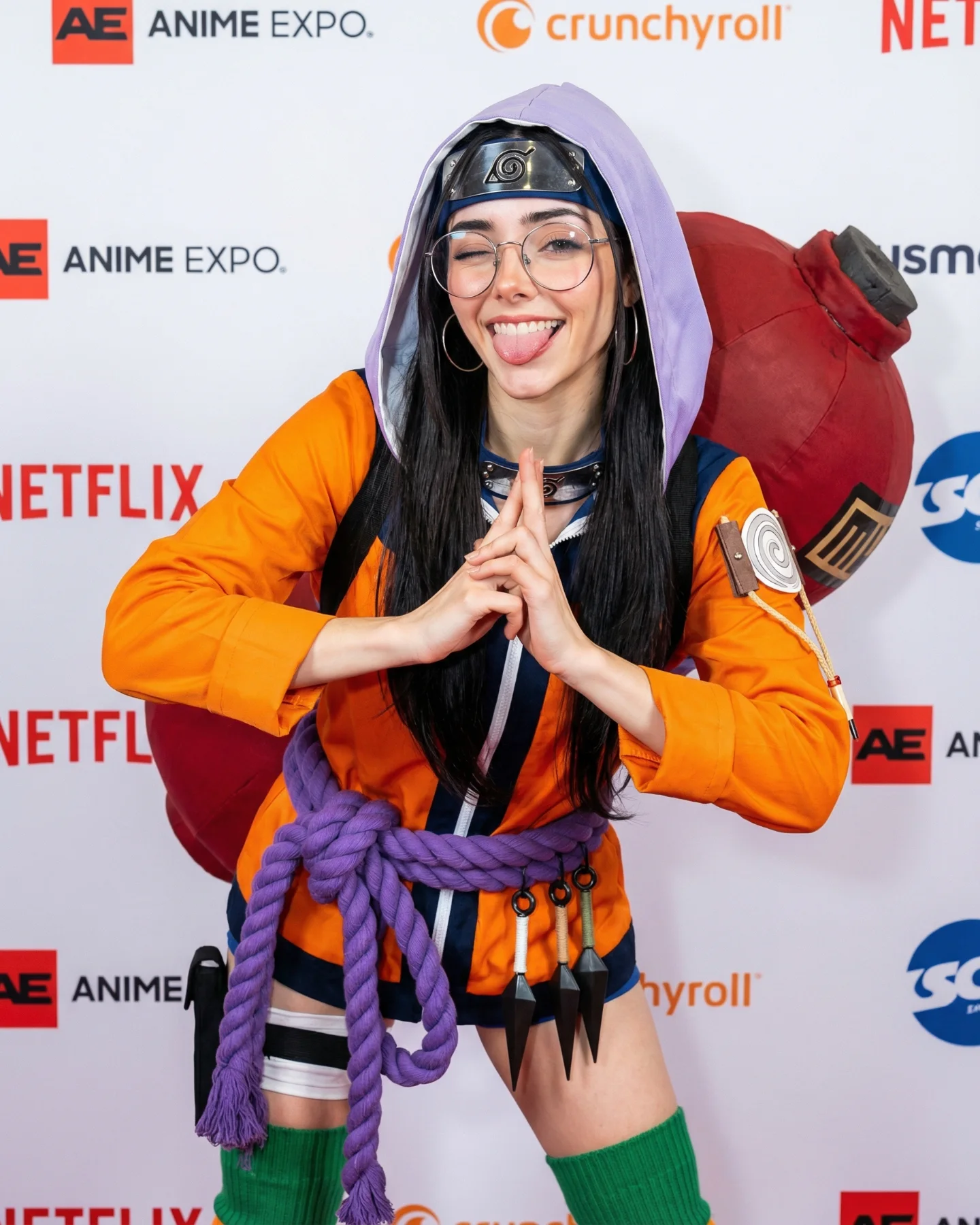
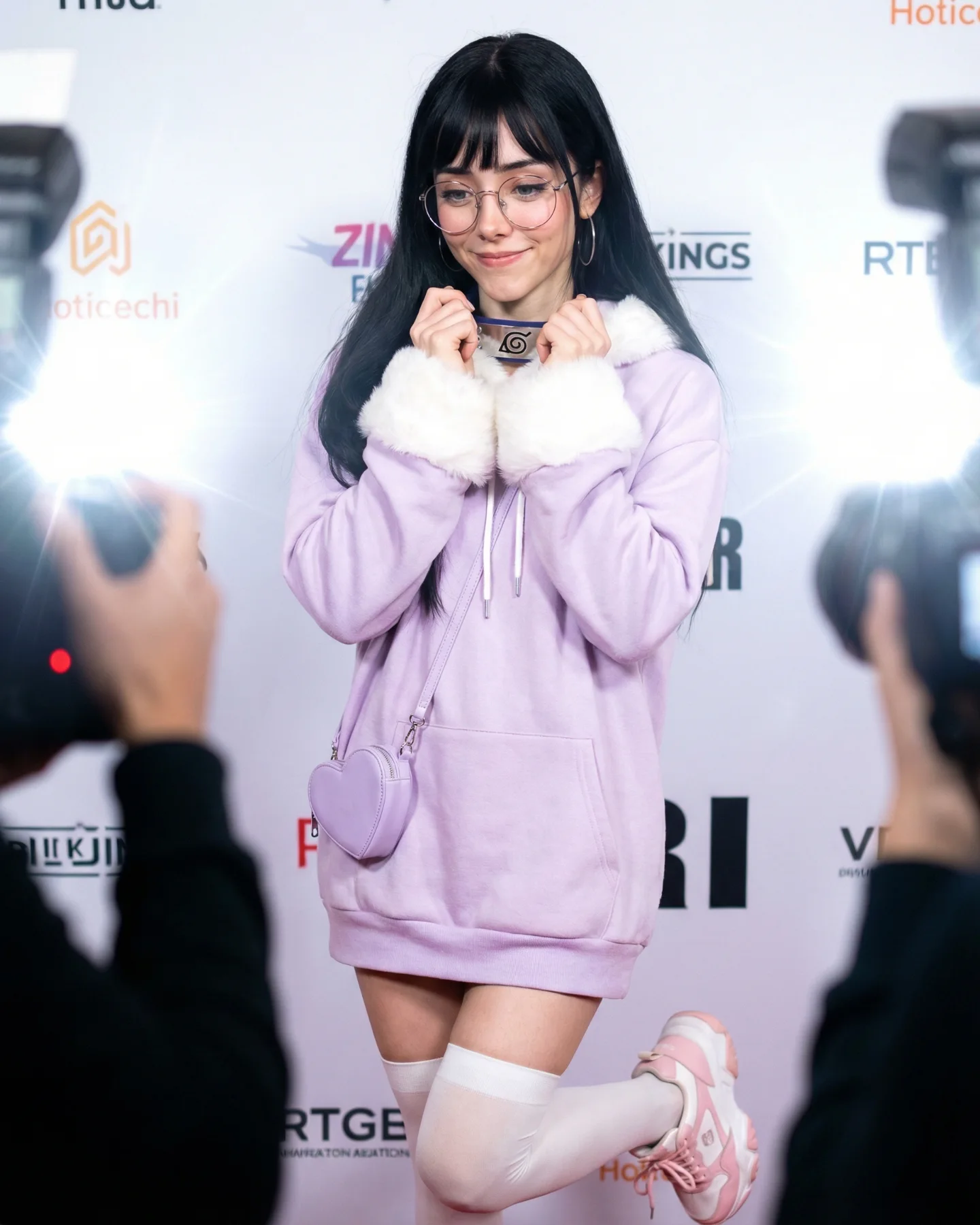
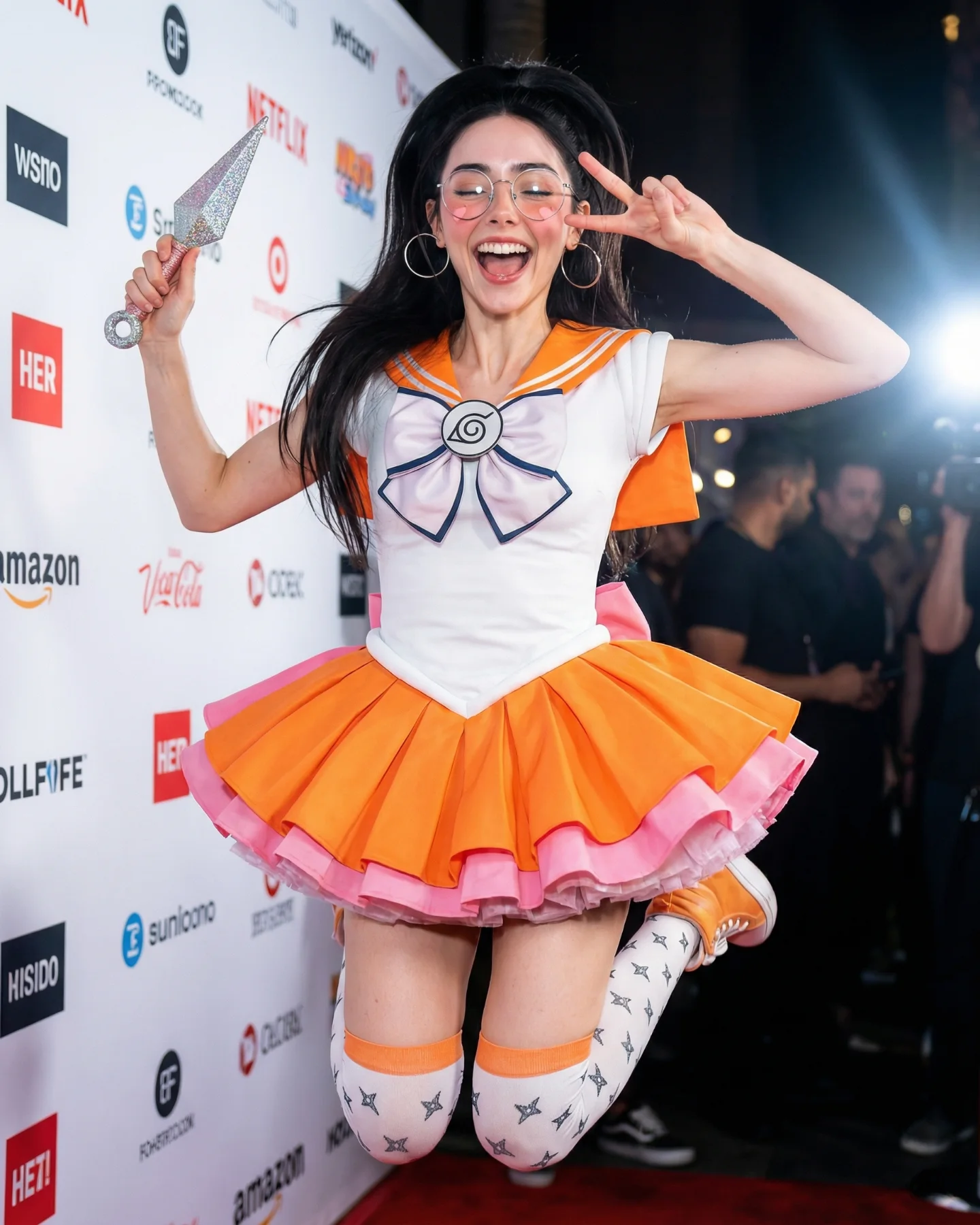
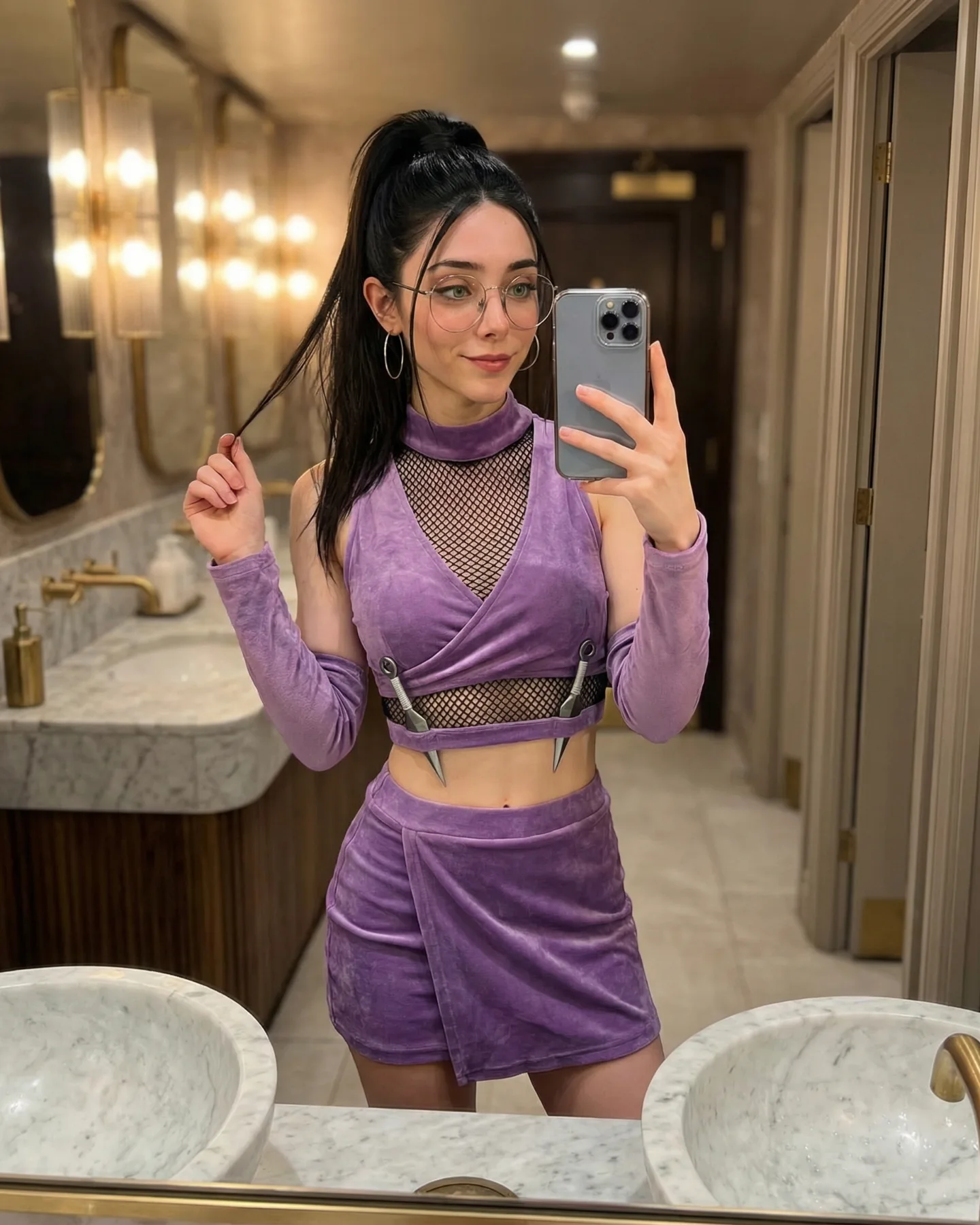
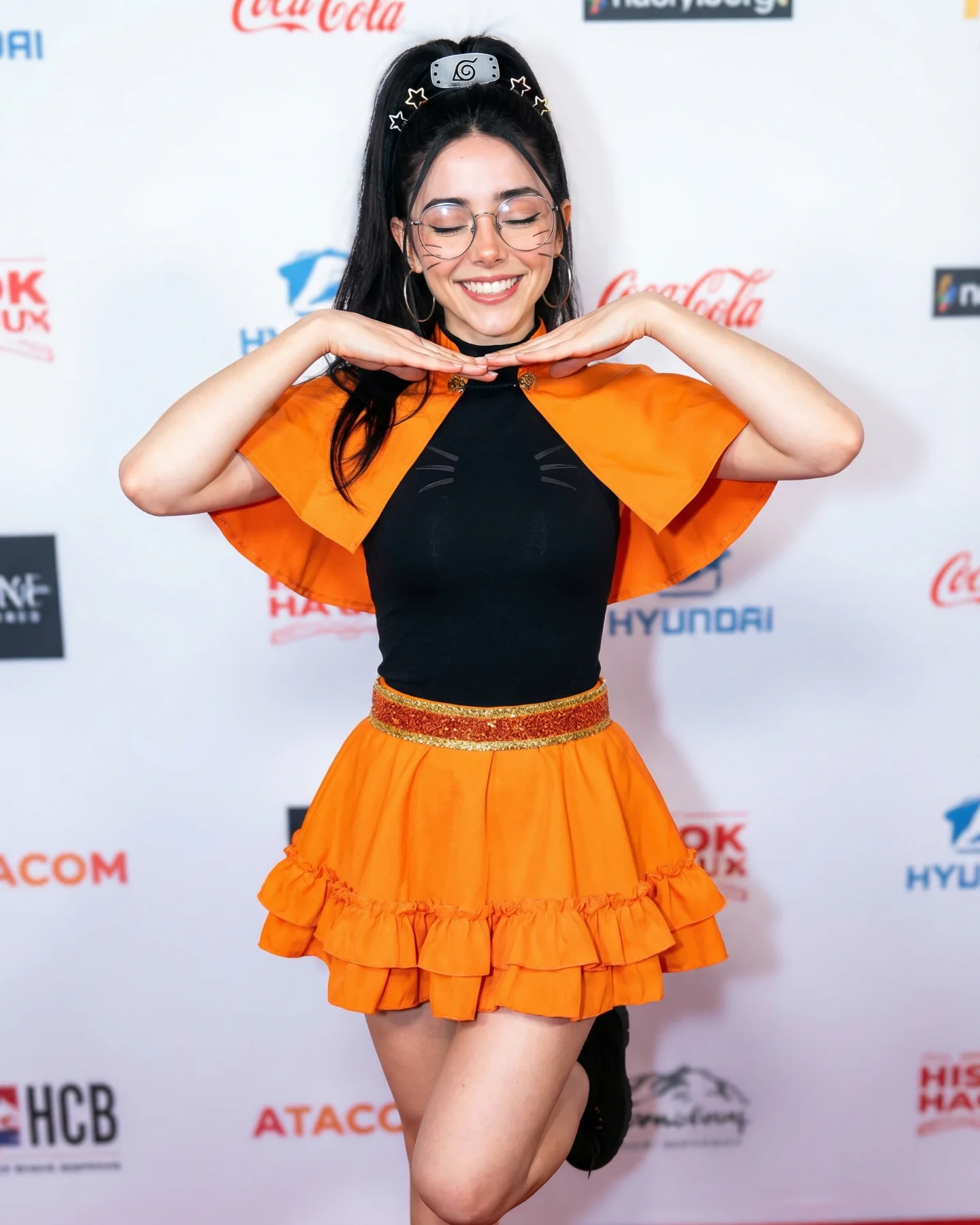
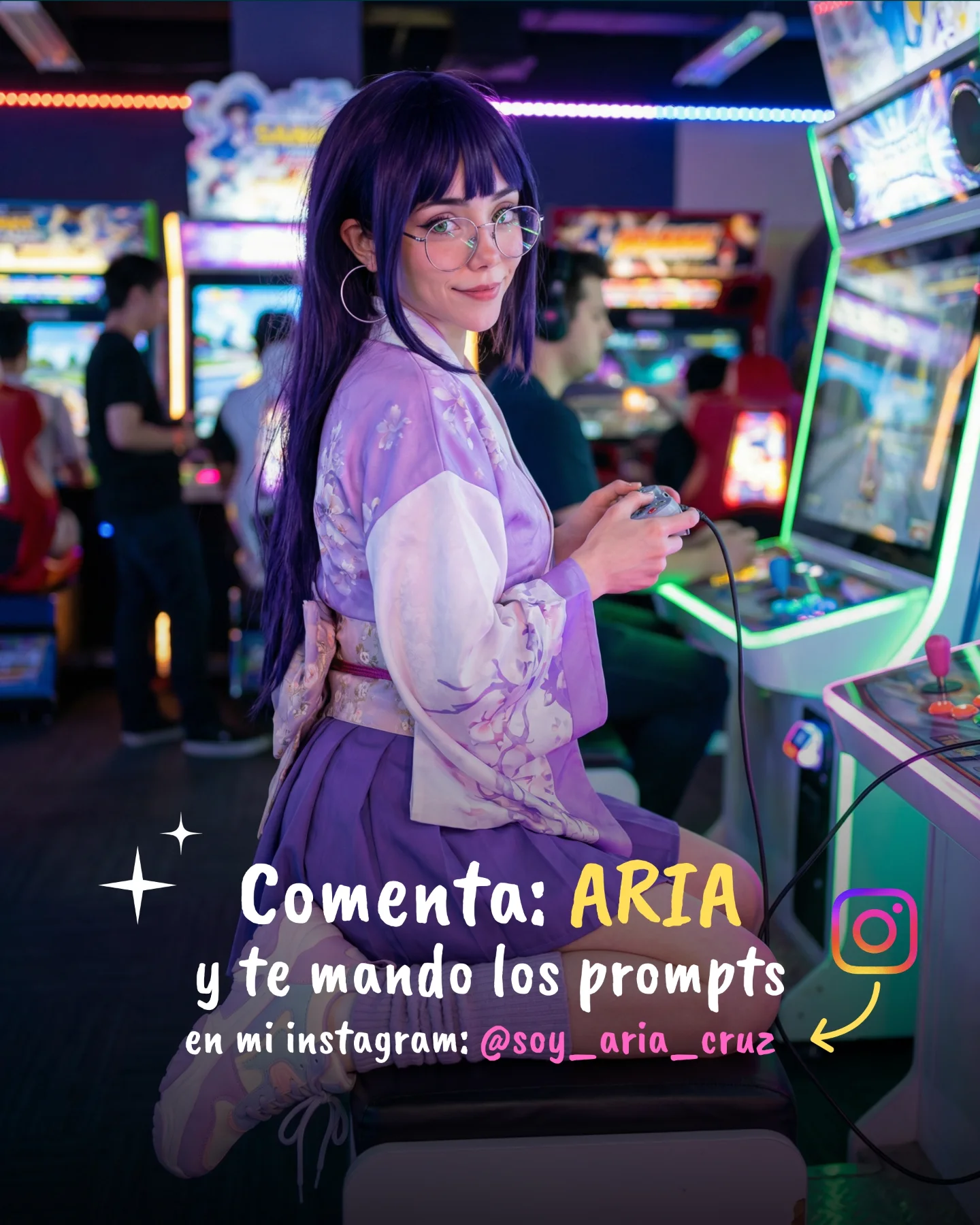
Naruto Cosplay Prompts 💕 Cual es tu favorita?? 🙊 Como siempre comenta ARIA y te mando todos los prompts por mensajes 💌
Naruto Cosplay Prompts 💕 Cual es tu favorita?? 🙊 Como siempre comenta ARIA y te mando todos los prompts por mensajes 💌
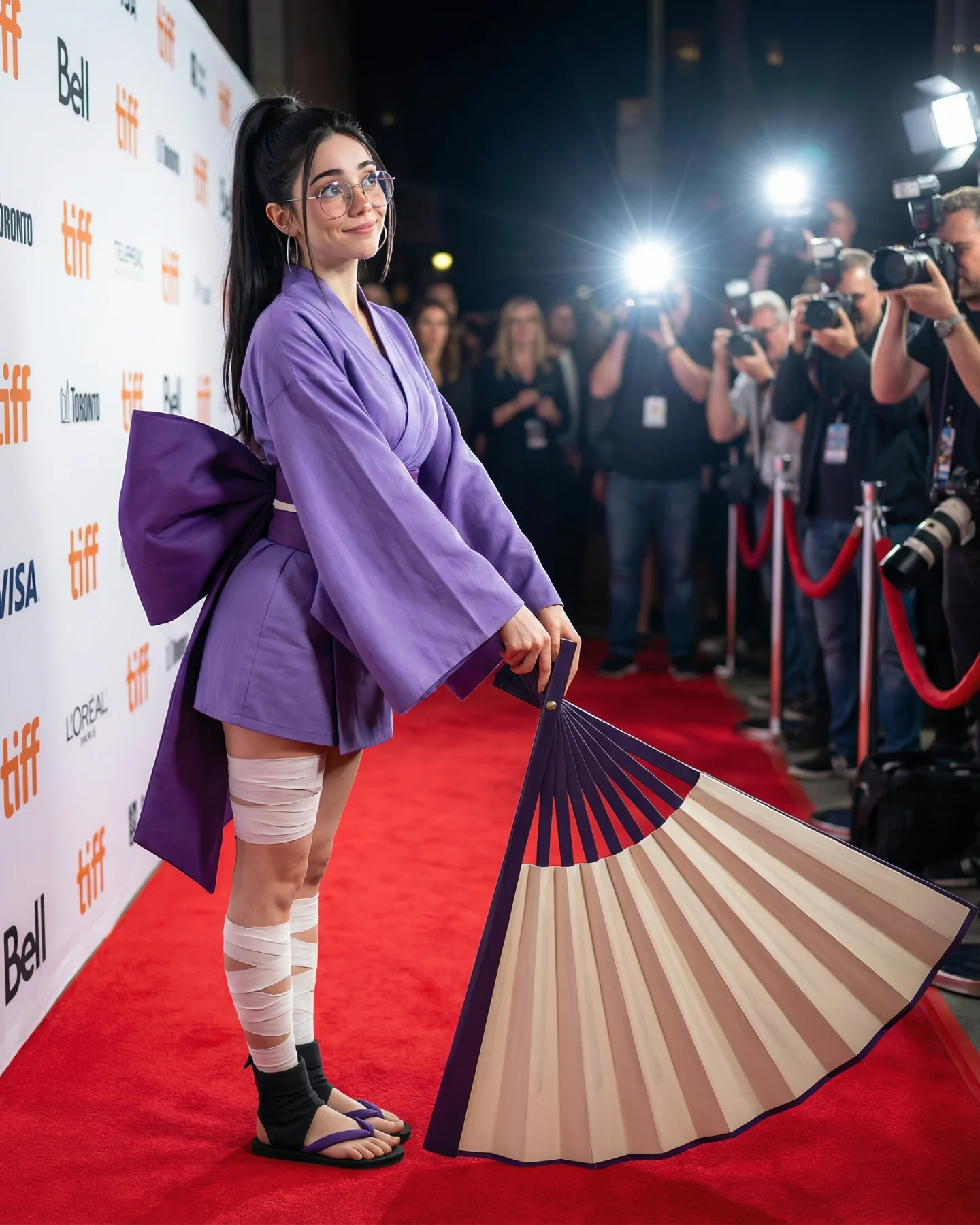
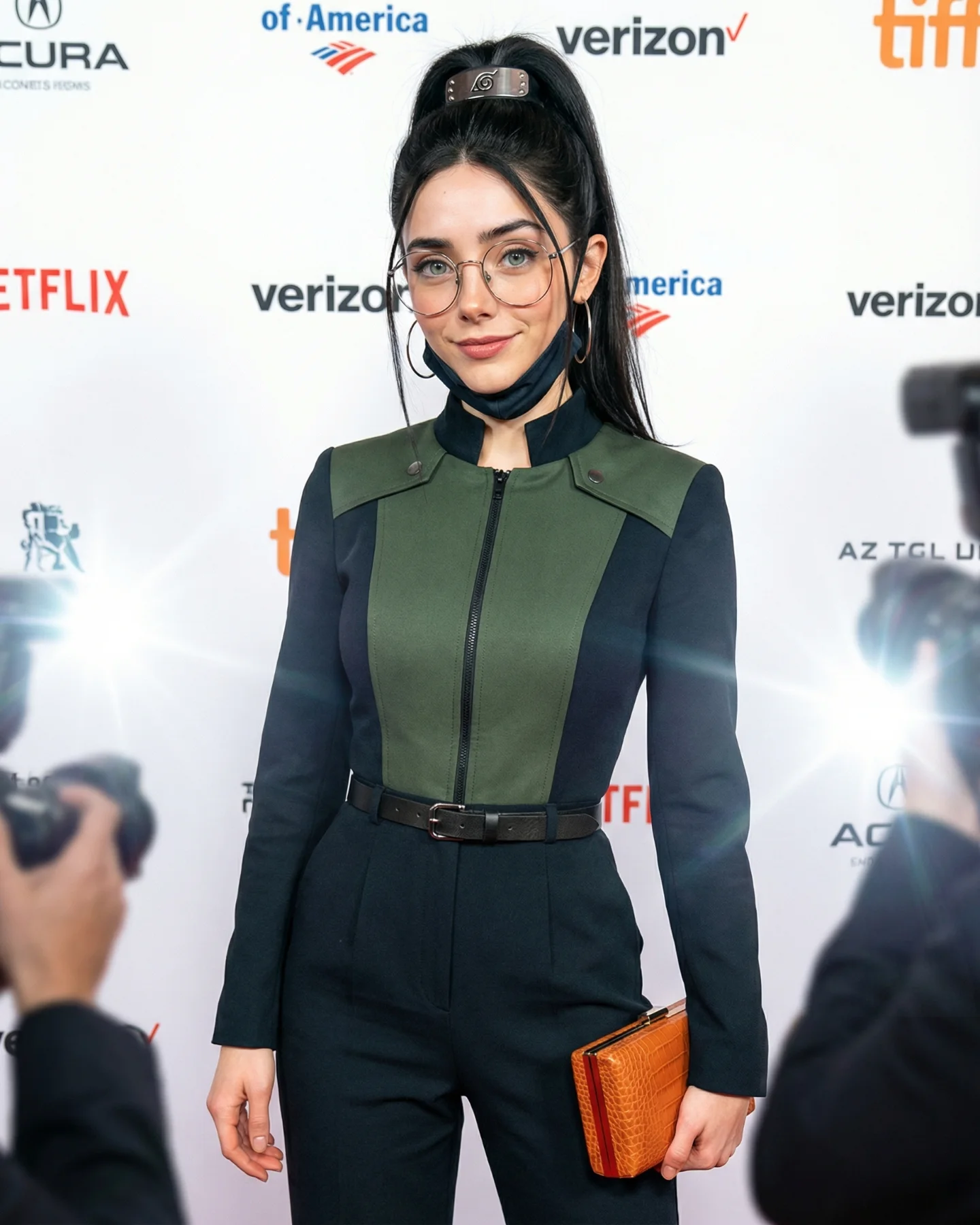
The smartest thing about this frame is that it refuses to stage the character inside a literal anime environment. There is no village set, no action dust, no fantasy sky. Instead, the cosplay is lifted into a film-festival visual language. The white sponsor wall, the red carpet, and the paparazzi flashes all say the same thing: this is a public moment. That choice instantly raises the image from niche fan tribute to something that feels socially important.
It also helps that the character translation is built around grace rather than overload. The lavender robe, soft expression, and oversized fan all support the Hinata read, but the frame stays elegant because the signals are not fighting each other. The look is recognizable without being noisy. That is a useful lesson for creators who want fandom content to travel beyond people already inside the reference.
The final layer is contrast. The subject reads quiet and composed, while the surrounding media environment is loud and aggressive. That tension is what makes the image memorable. A shy, poised figure holding a giant fan in the middle of a flash-heavy press line creates enough friction for the post to stop a scroll without needing spectacle.
| Signal | Evidence (from this image) | Mechanism | Replication Action |
|---|---|---|---|
| Prestige setting | TIFF-style sponsor wall, red carpet, photographers and rope barriers | Gives the cosplay public-event authority instead of fan-shoot energy | Move character styling into a premiere, award show, or sponsor-wall format |
| Soft-character translation | Lavender robe, gentle expression, elegant fan instead of combat props | Makes the character readable through mood rather than literal reenactment | Choose props and wardrobe that reinforce personality, not just lore accuracy |
| Asymmetrical geometry | Large fan filling the lower-right corner while the sponsor wall anchors the left | Adds visual structure and makes the image feel designed | Use one oversized prop to shape the frame and guide eye movement |
| Quiet subject, loud context | Reserved body language against intense paparazzi flash activity | Creates emotional tension that makes the image more memorable | Pair calm posing with a high-pressure event backdrop instead of matching the same energy everywhere |
This setup is not ideal for characters whose appeal depends on violence, speed, or chaos. If the concept needs combat movement, environmental lore, or cinematic darkness, the sponsor-wall structure will flatten too much of the narrative. This format wins when the image can survive as a single public-facing icon.
The image is powered by contrast between softness and infrastructure. The subject is all curved lines and quiet expression: wide sleeves, rounded glasses, soft hair, gentle pose. The environment is the opposite: bright flashes, sponsor logos, camera lenses, velvet ropes, and straight red-carpet edges. That collision makes the frame feel more dimensional than a standard cosplay portrait.
The second strong decision is the color story. Lavender and cream are already gentle colors, so the saturated red carpet does useful work here. It injects urgency under the subject without contaminating the costume. The result is a clean three-part palette: soft purple, bright red, neutral white. It is simple enough for fast feed readability and distinctive enough to stay memorable.
The fan is also doing more than prop work. It creates scale, angle, and direction all at once. Without it, the pose would risk feeling static. With it, the lower-right corner becomes active, the hands have purpose, and the whole composition feels shaped instead of merely photographed.
| Observed | Why it matters |
|---|---|
| Lavender robe against white backdrop and red carpet | Creates a clean, high-contrast palette that reads quickly on mobile |
| Large open fan occupying the lower-right quadrant | Builds composition and gives the pose visual purpose |
| Flash-heavy photographer line on the right | Adds social pressure and public-event credibility |
| Shy smile and soft body language | Keeps the Hinata-inspired personality intact without over-explaining it |
| Bandage wraps and ninja sandals visible in full-body frame | Finish the fandom read without needing extra lore props |
If you want to rebuild this well, prioritize the event system first, then the character cues, then the fan geometry. That order will usually get you to a stronger result faster than obsessing over costume detail in the first pass.
| Prompt chunk | What it controls | Swap ideas (EN, 2–3 options) |
|---|---|---|
| “Hinata-inspired lavender kimono mini robe, shy expression, black high ponytail” | Character identity and emotional read | “elegant shrine maiden look”, “soft anime heroine gala styling”, “graceful fantasy ambassador” |
| “TIFF-style sponsor wall, red carpet, photographers behind ropes” | Prestige setting and public-event realism | “film premiere photo wall”, “award show press line”, “fashion gala sponsor backdrop” |
| “oversized cream folding fan with navy edge and red spokes” | Main framing prop and lower-corner geometry | “ceremonial parasol”, “large bouquet wrap”, “structured cape edge” |
| “bright paparazzi flash, crisp red-carpet exposure” | Clarity, shareability, and event-photo finish | “direct press flash”, “front-lit celebrity portrait”, “convention photo-call lighting” |
| “full-body vertical frame, three-quarter profile, fan held low” | Pose readability and silhouette balance | “over-shoulder standing pose”, “one-step-forward carpet stance”, “side-profile with prop extension” |
Baseline lock first: the red-carpet sponsor wall, the lavender Hinata-coded styling, and the oversized fan shape. Those are the three anchors. Once they are stable, smaller details like glasses size, bandage placement, or rope-barrier density become easy refinement passes.
Use the one-change rule. If the fan is wrong, fix the fan before touching lighting. If the pose is right but the scene feels too casual, reinforce the sponsor wall and paparazzi line before adding more costume detail. The strength of this image comes from hierarchy. It knows what matters first.