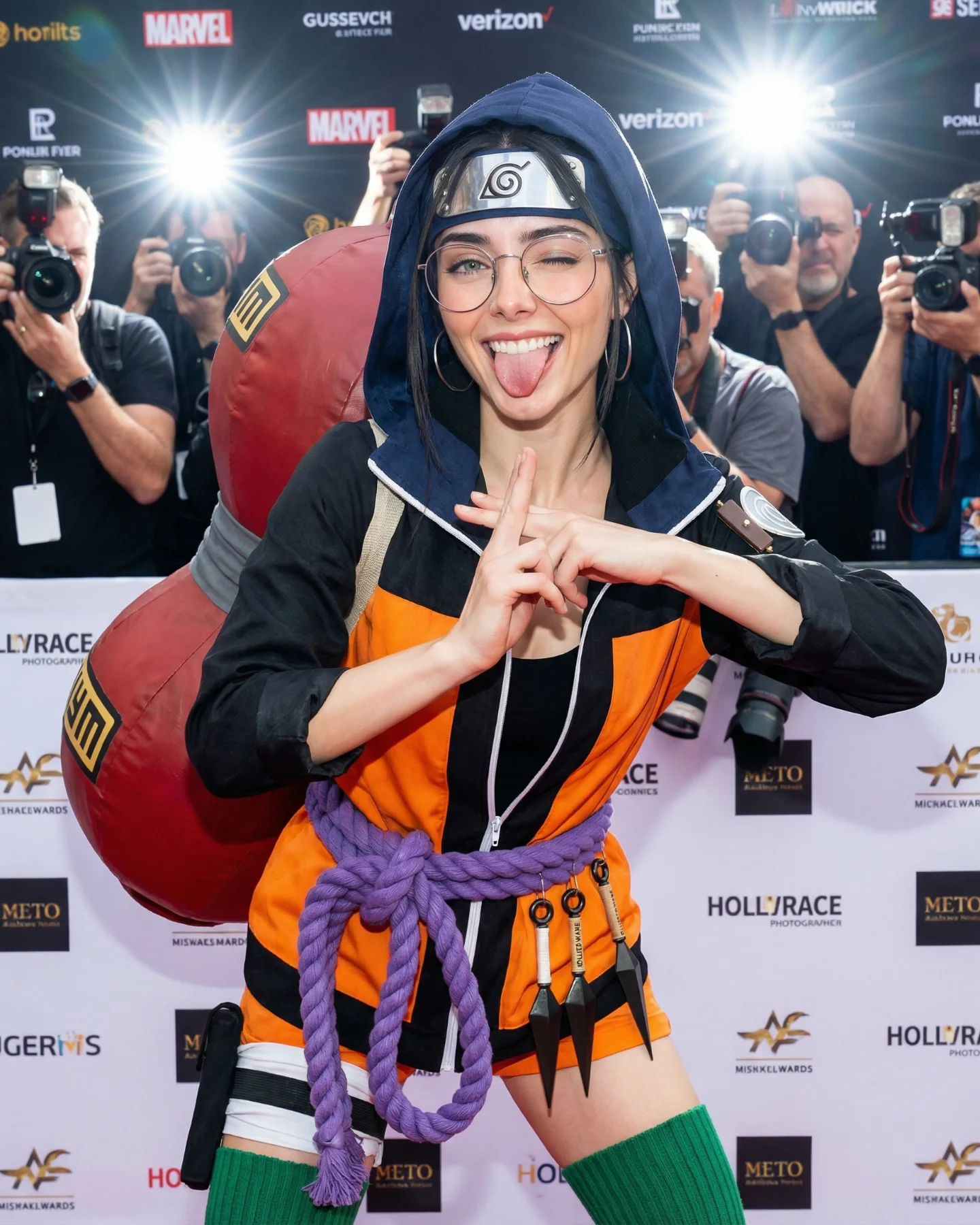
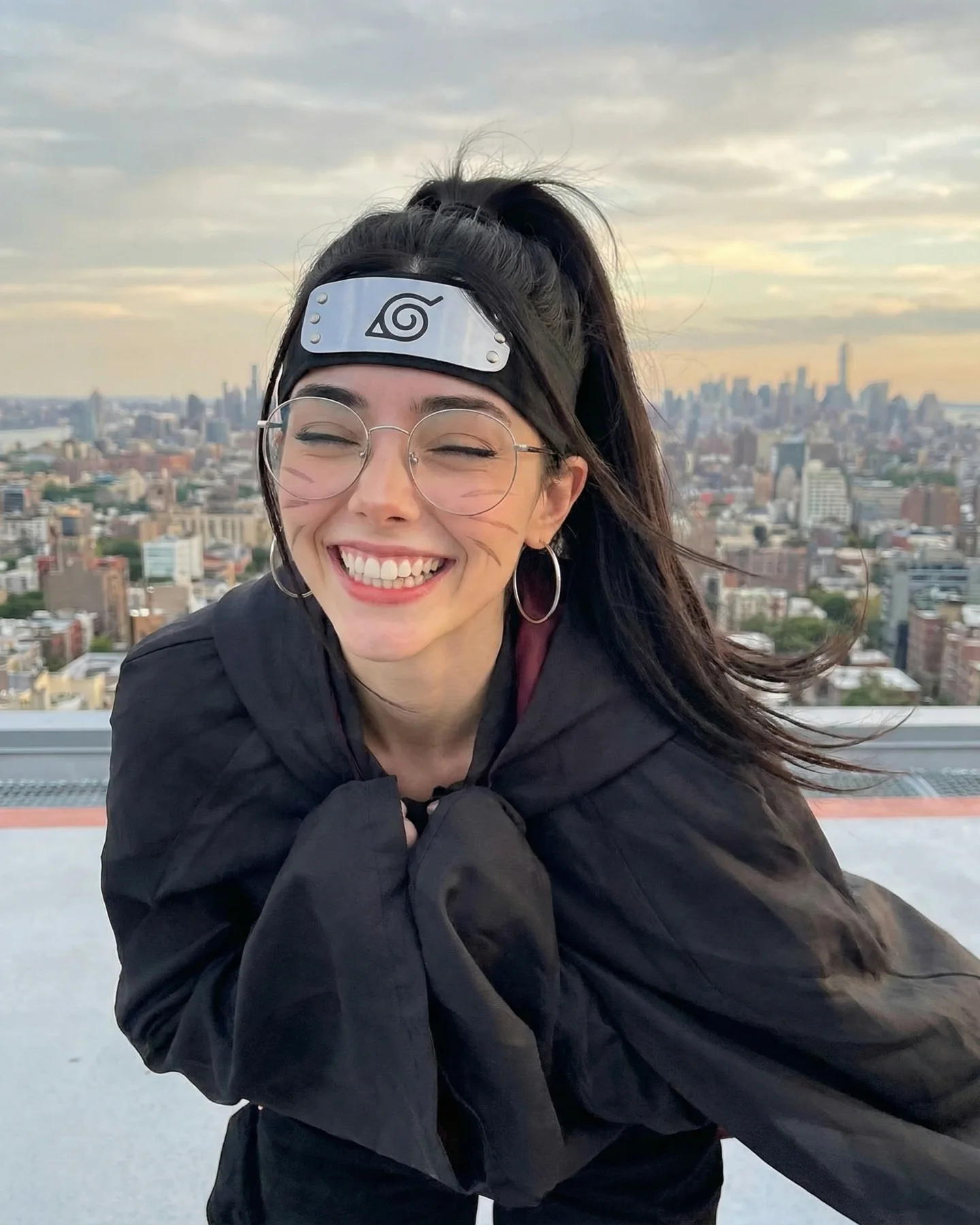
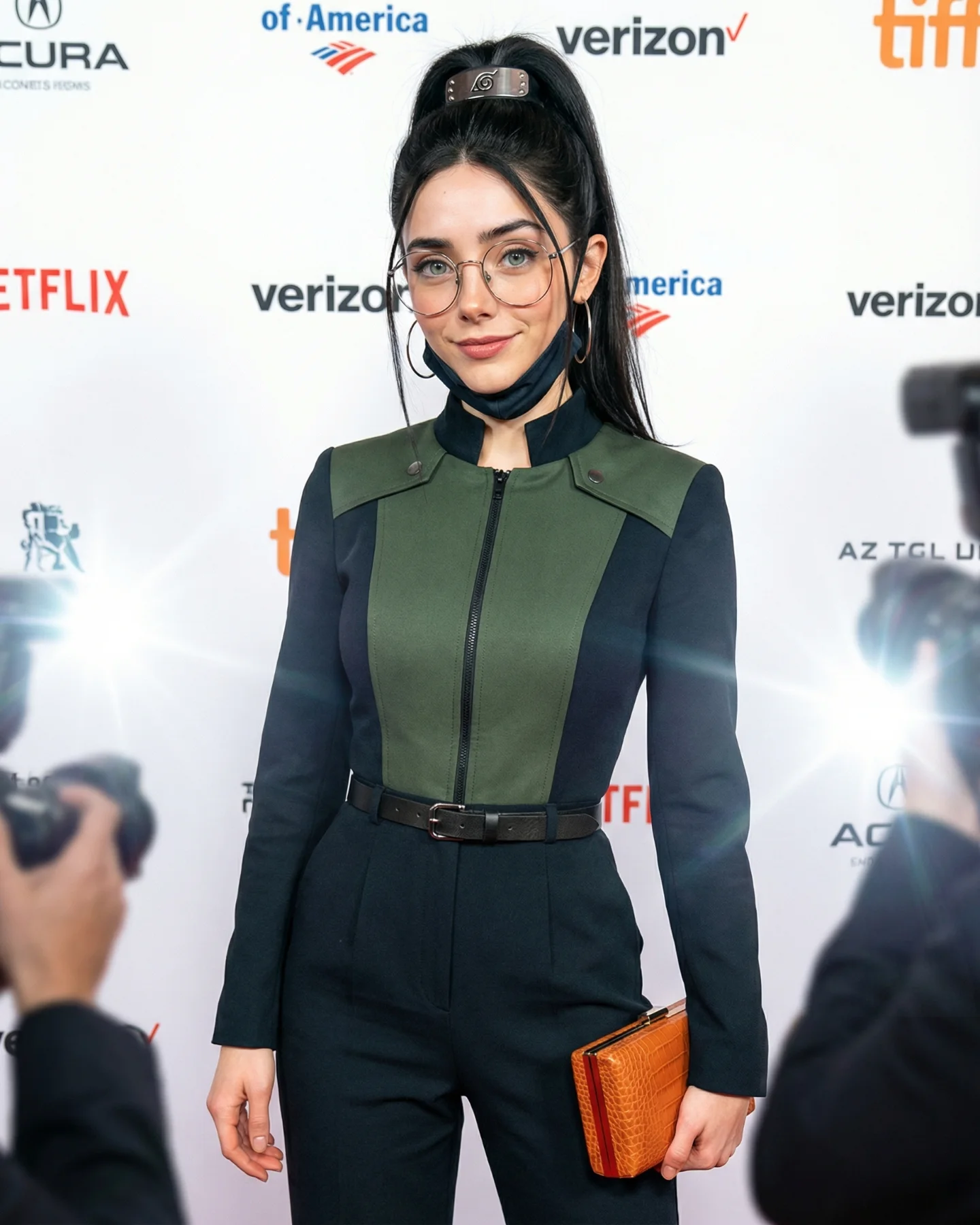
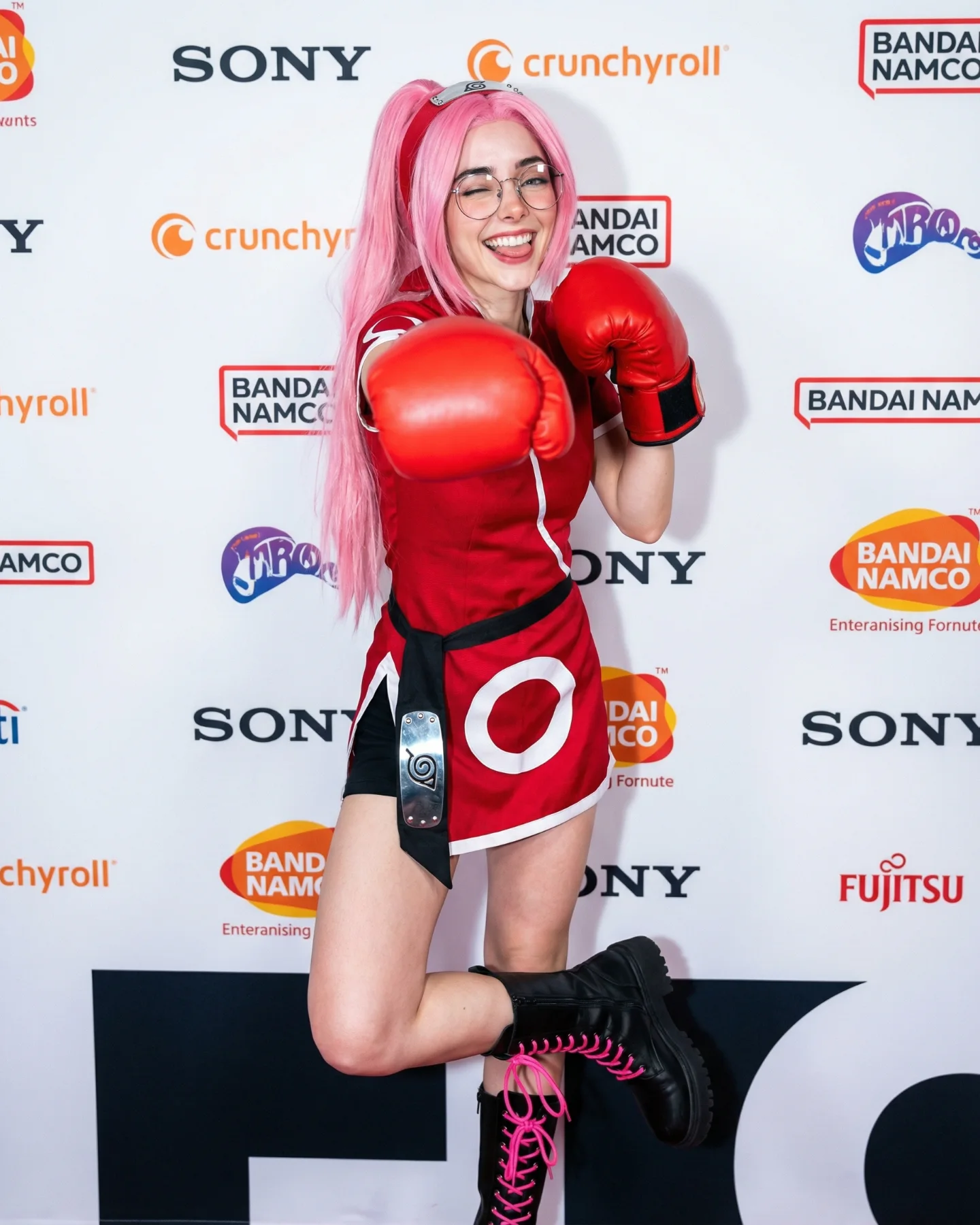
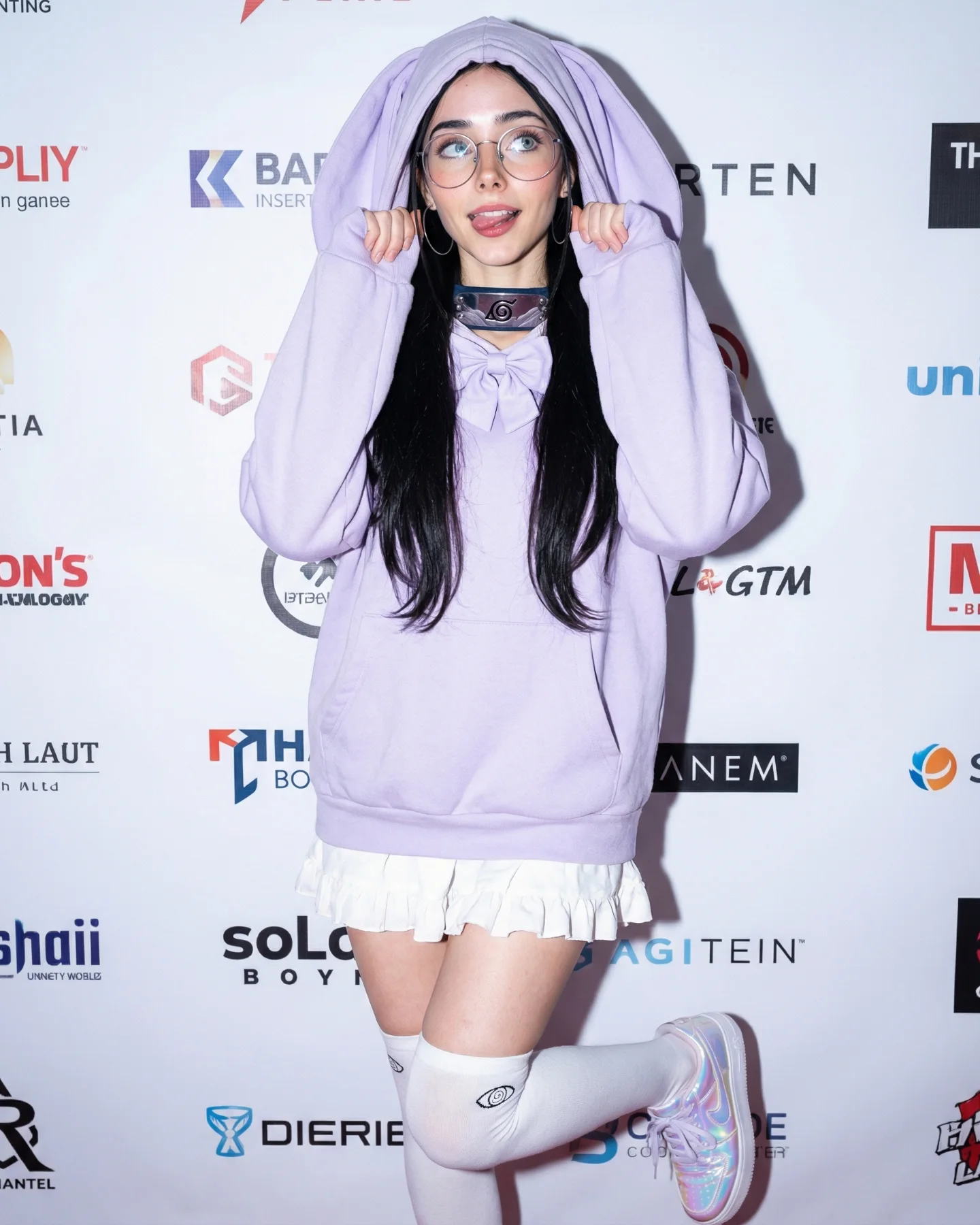
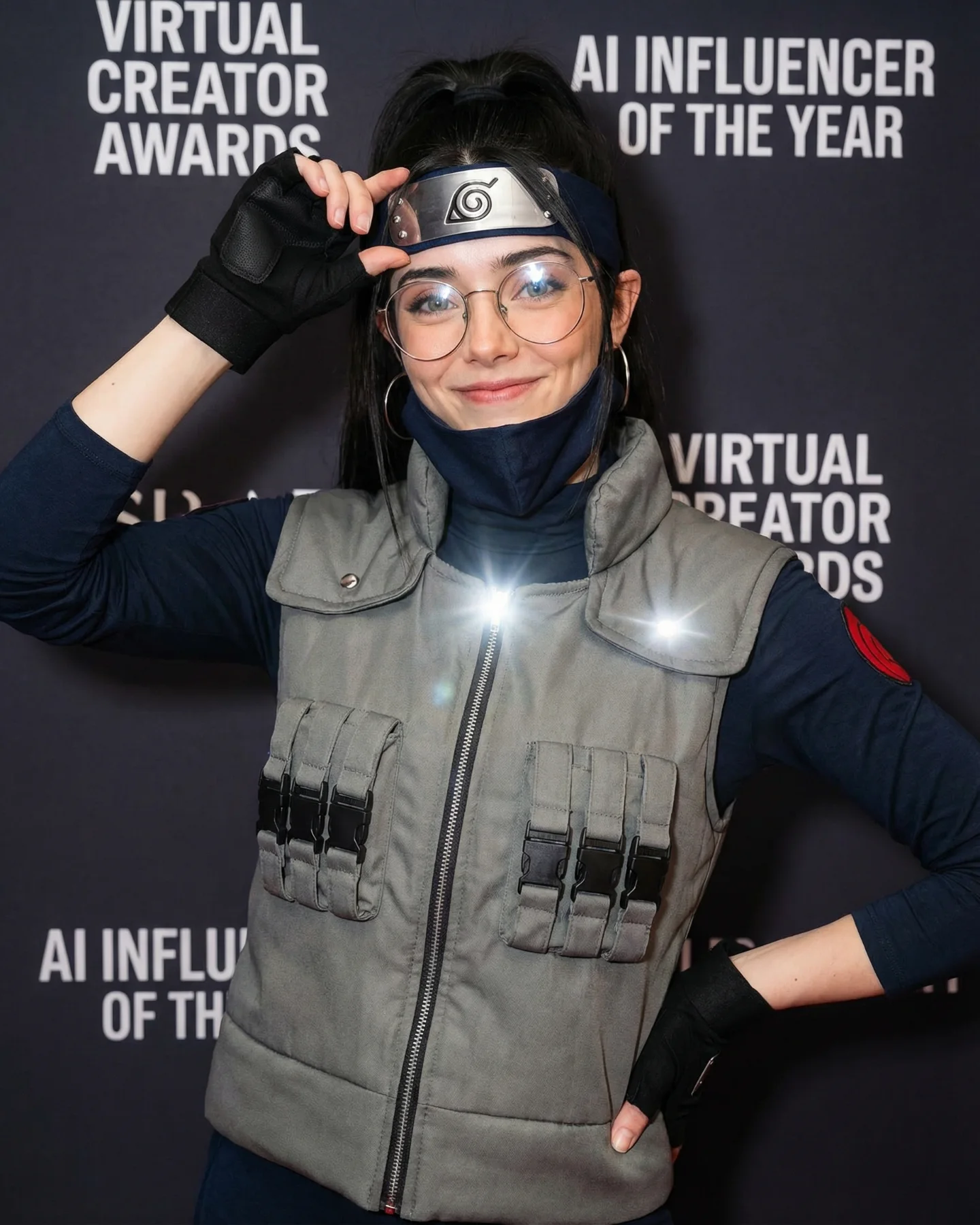
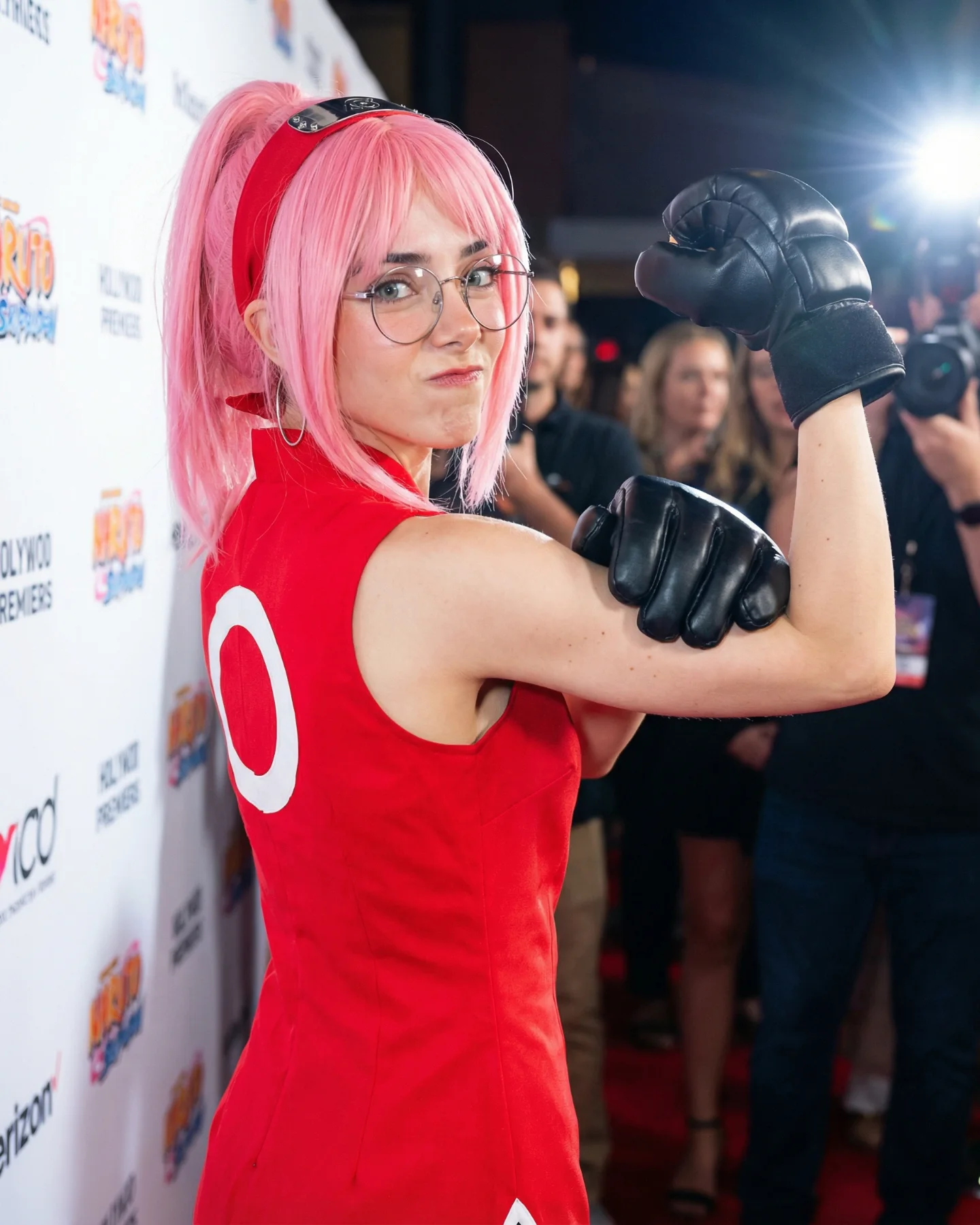
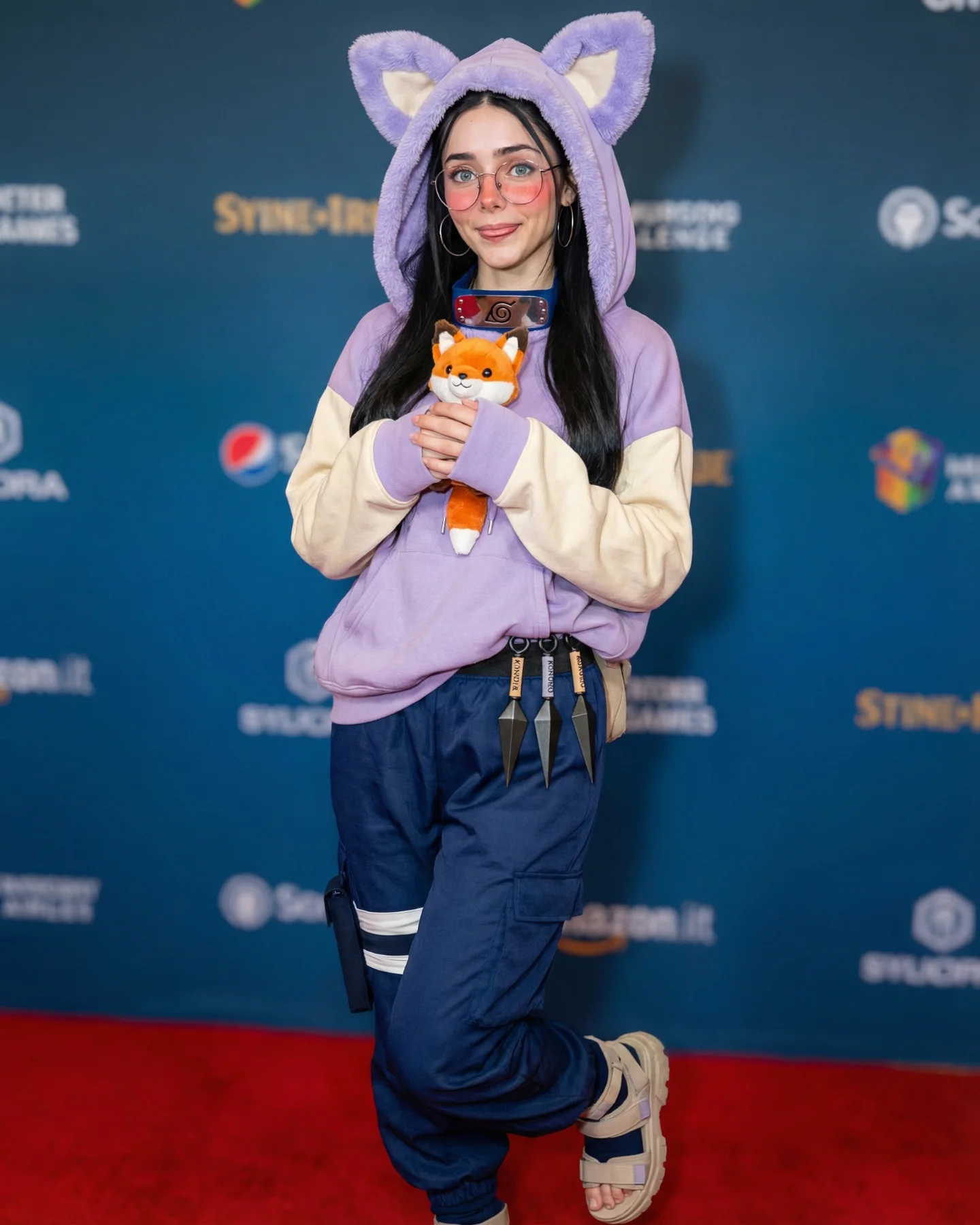
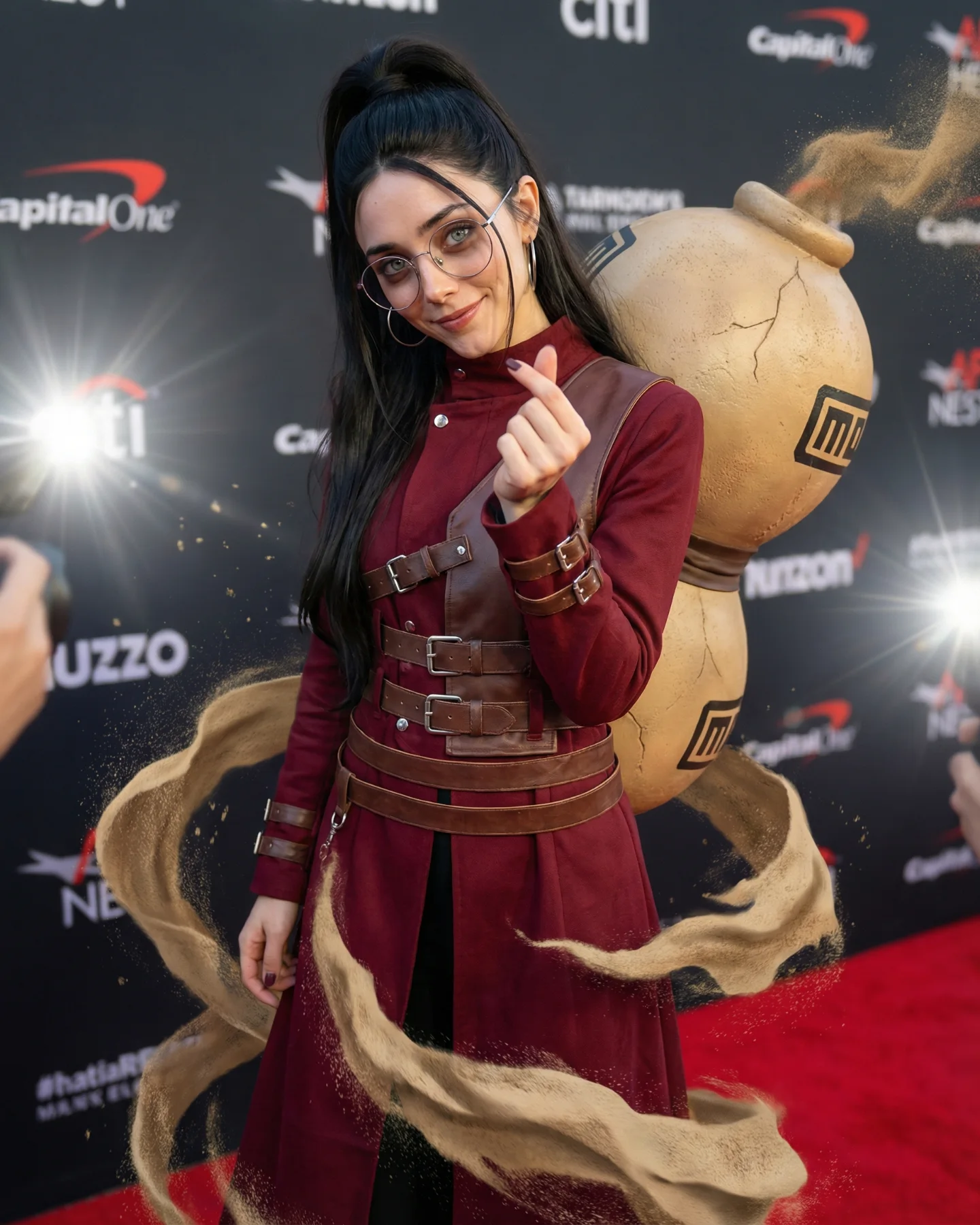
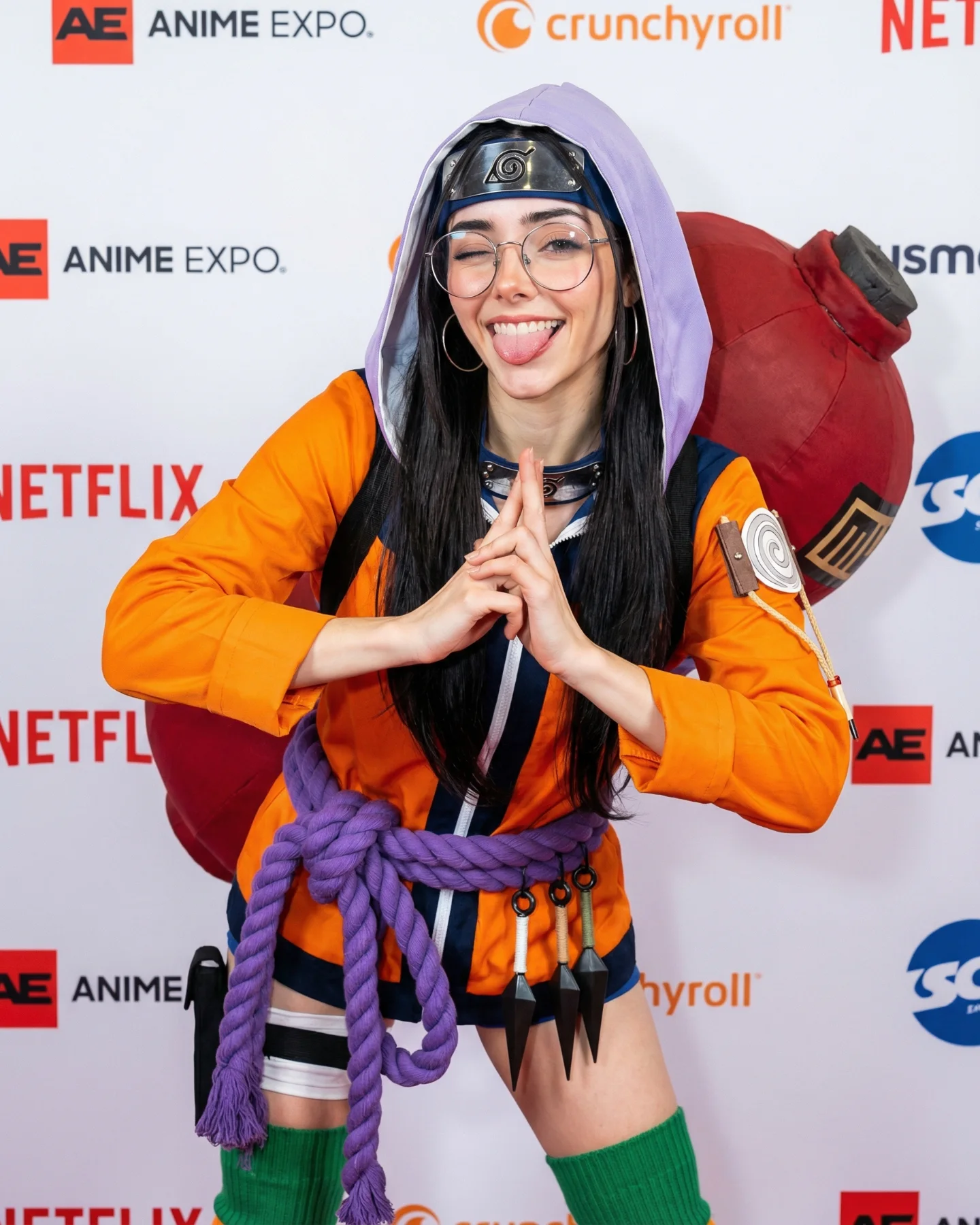
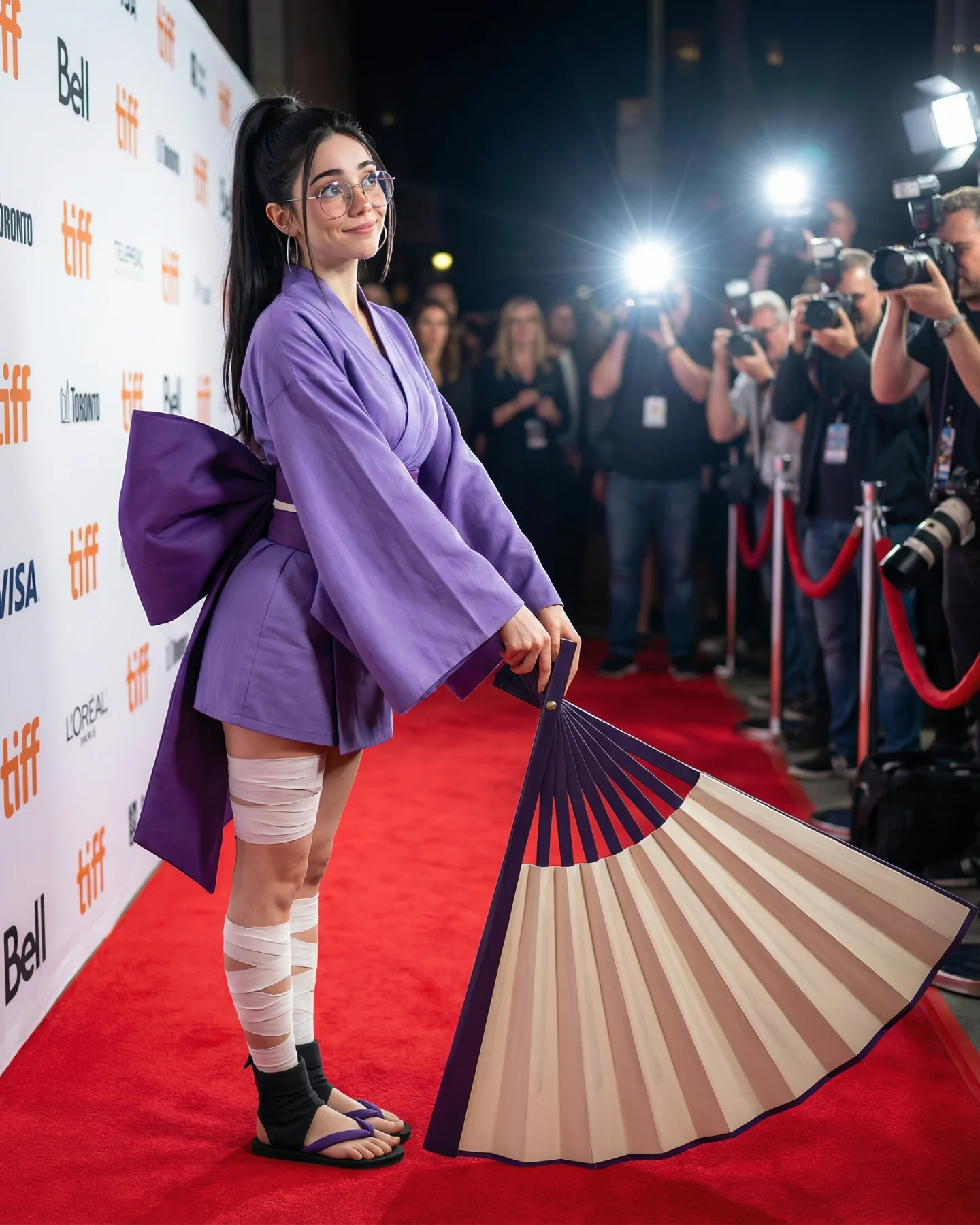
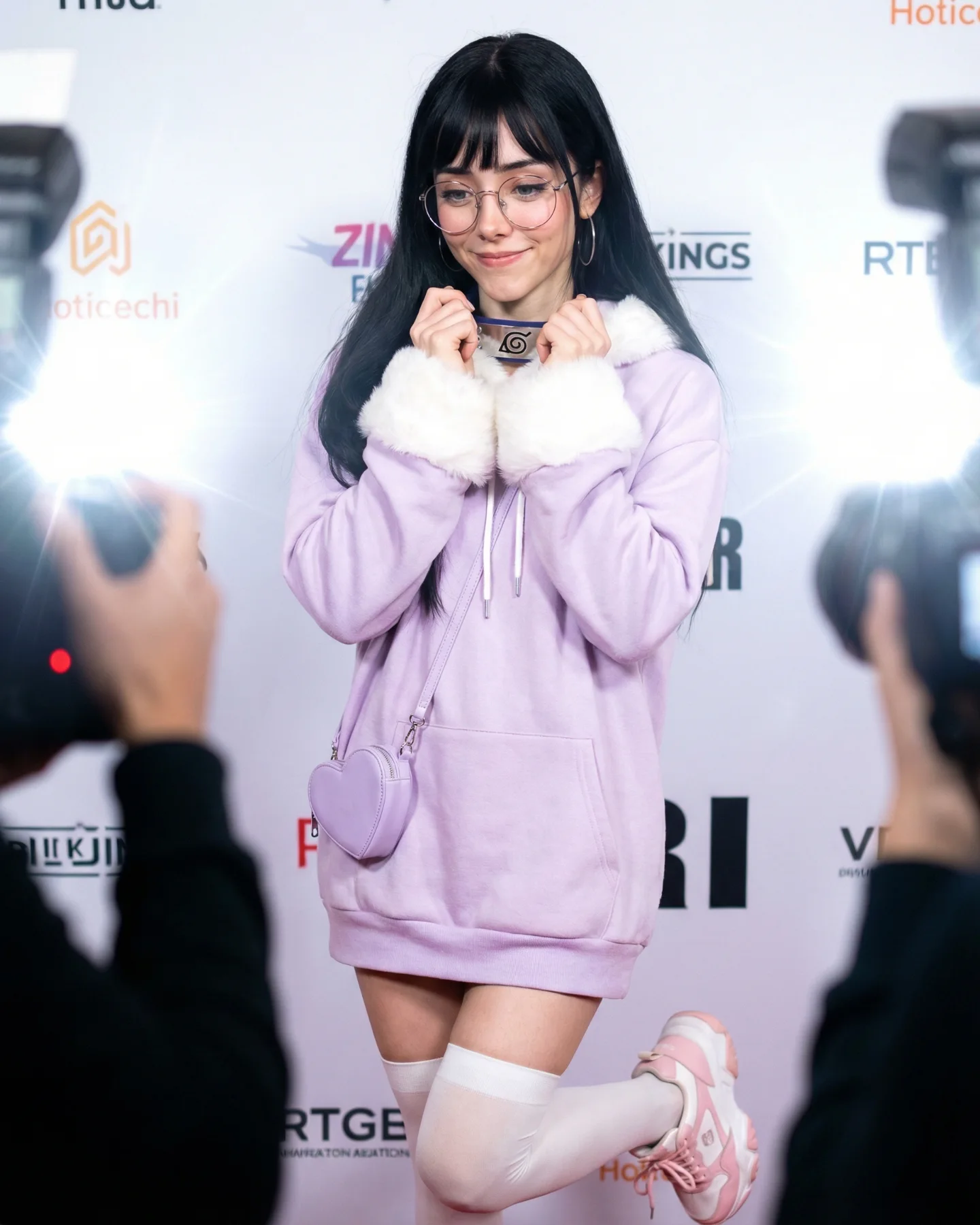
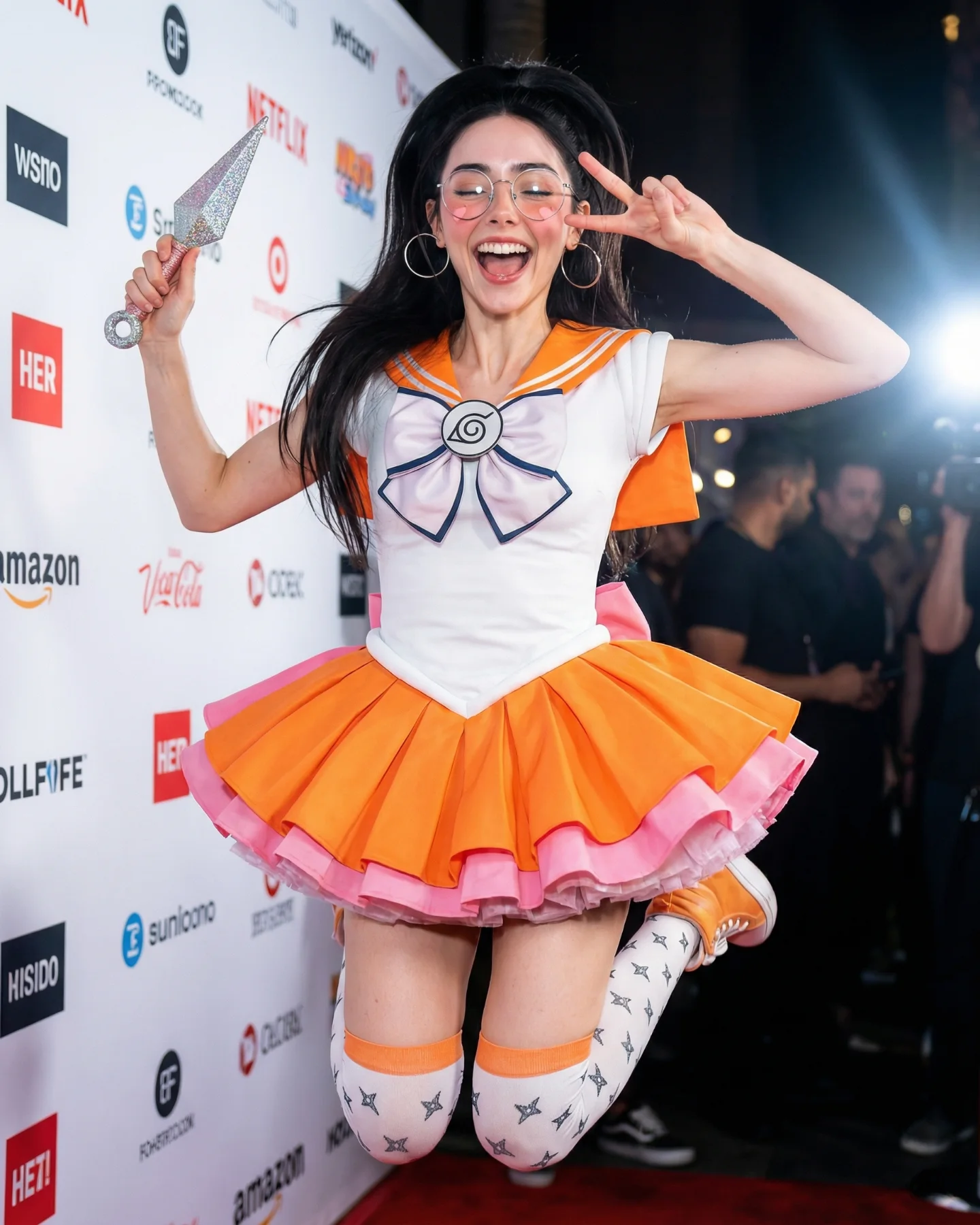
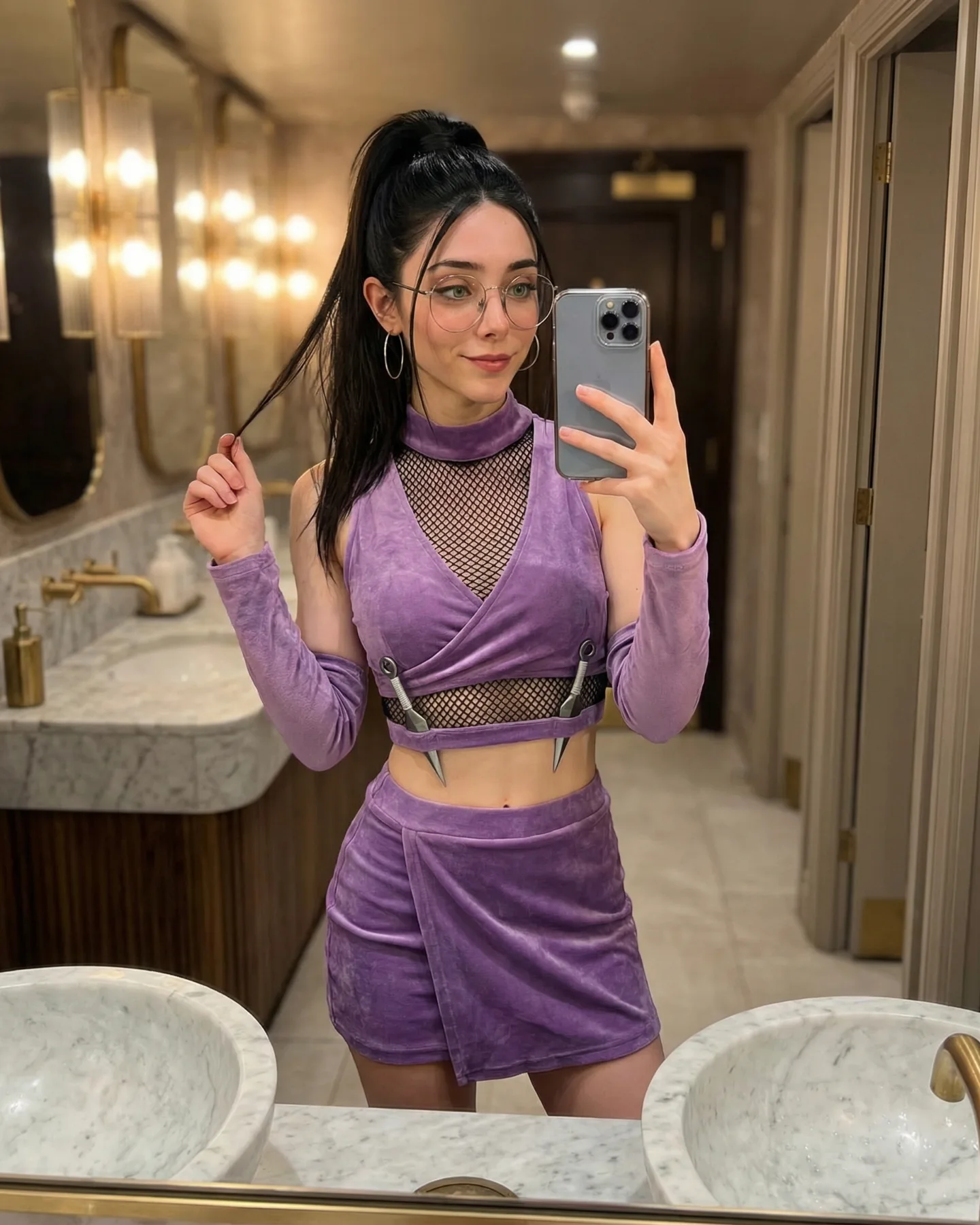
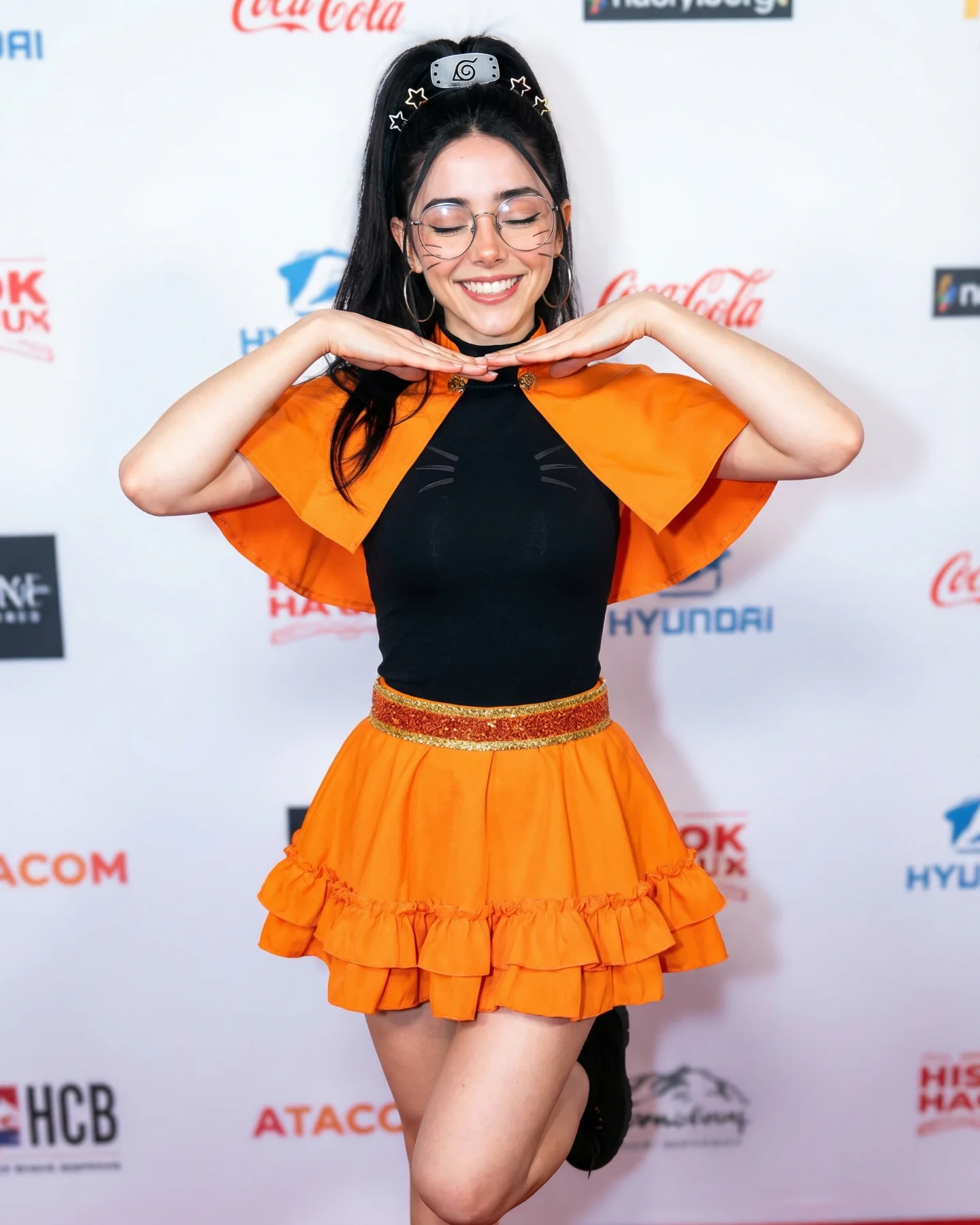
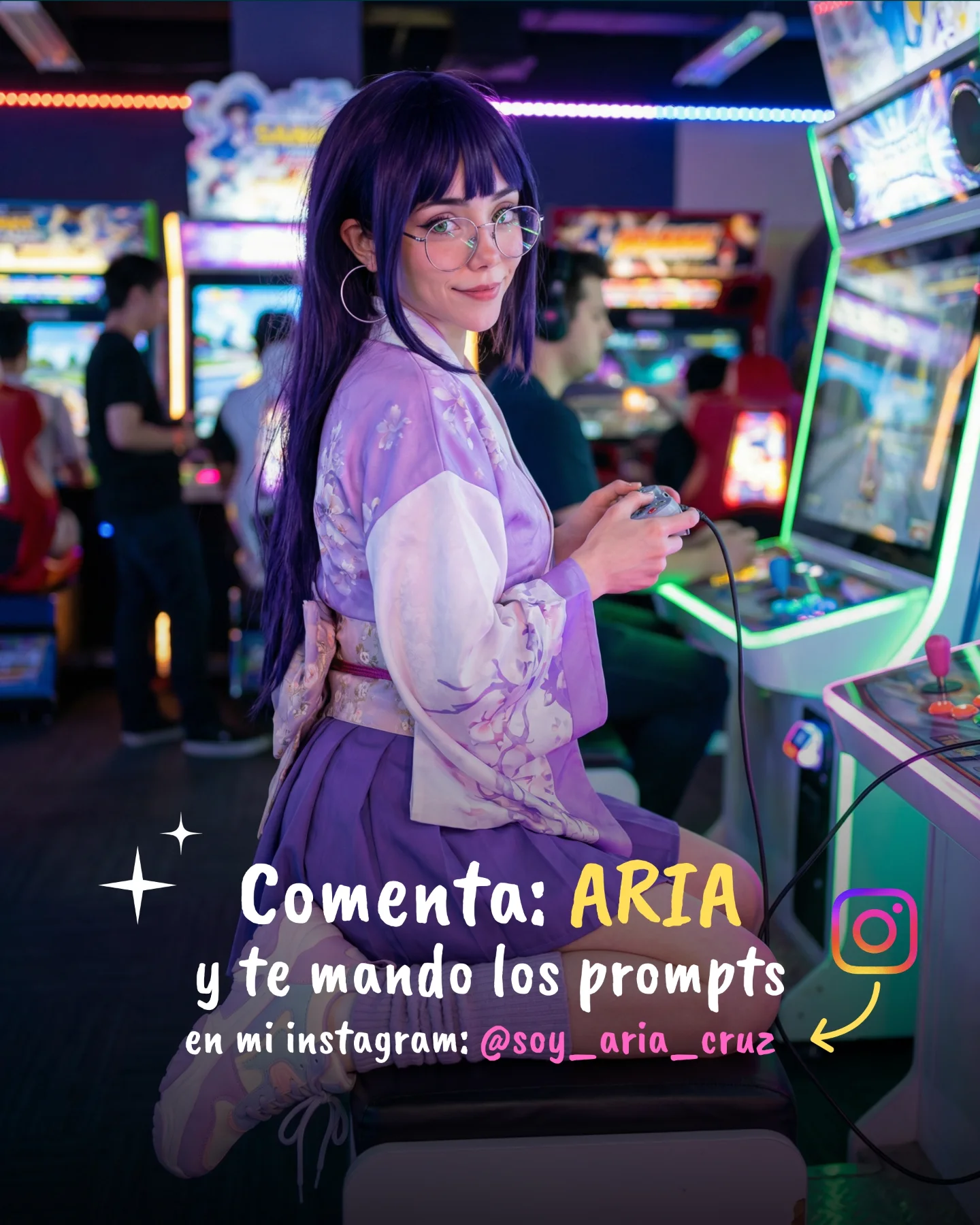
Naruto Cosplay Prompts 💕 Cual es tu favorita?? 🙊 Como siempre comenta ARIA y te mando todos los prompts por mensajes 💌
Naruto Cosplay Prompts 💕 Cual es tu favorita?? 🙊 Como siempre comenta ARIA y te mando todos los prompts por mensajes 💌
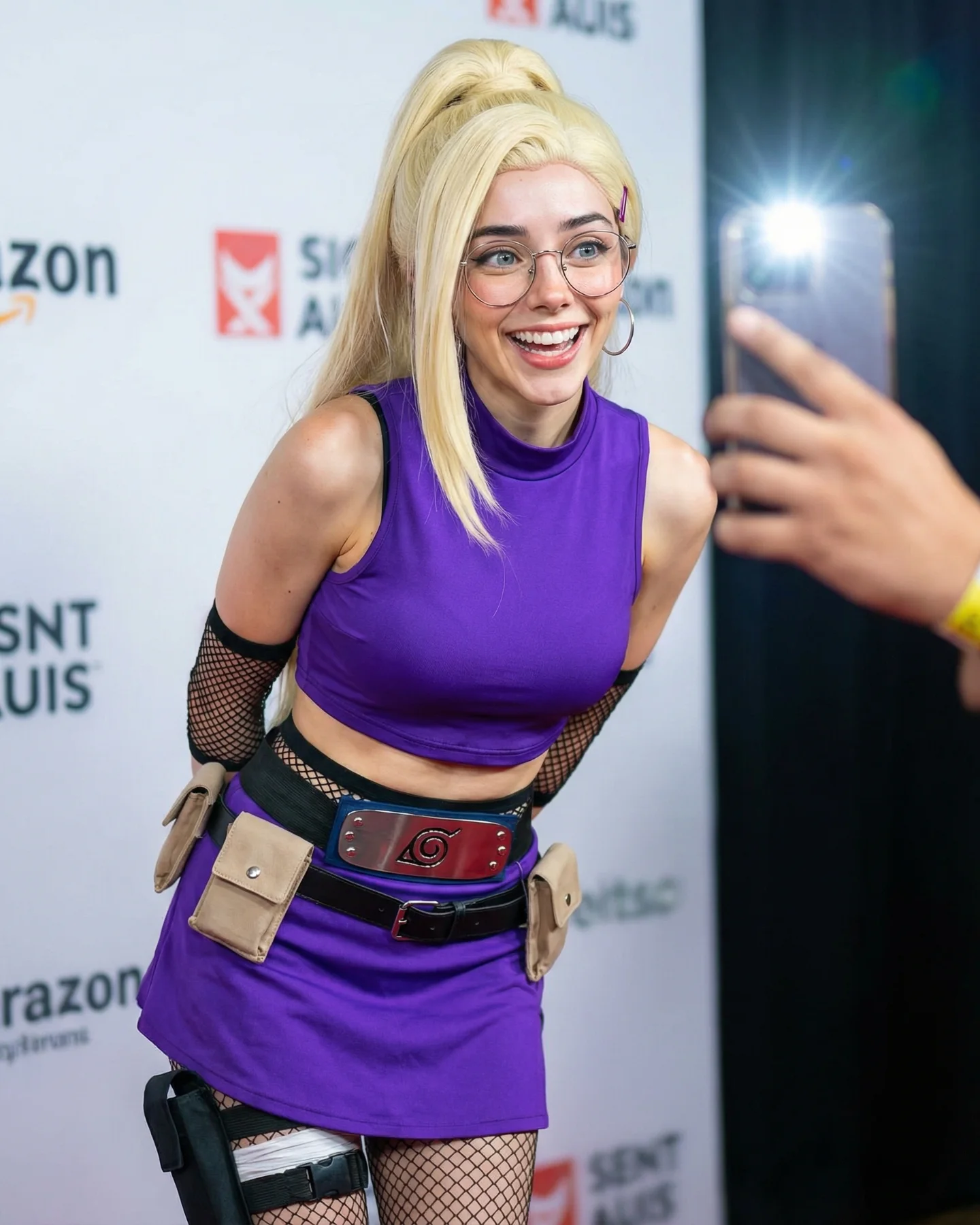
This image succeeds because it captures cosplay as social behavior, not only costume display. The subject is not standing alone in a fantasy scene. She is at an event backdrop, leaning toward someone taking a picture, smiling in the middle of a fan interaction. That is a much richer use of the character than a simple static pose.
The caption says the creator is sharing Naruto cosplay prompts and asking viewers which one they prefer. That interactive framing matches the image perfectly. A convention-style photo wall and a visible phone flash reinforce the sense that this is part of a larger public sequence, not just one isolated costume render.
The first reason is fast character recognition. The blonde ponytail, purple outfit, fishnet sleeves, and Leaf Village emblem all point clearly toward the inspiration. Even people who are not deep Naruto fans can tell this is a recognizable anime-derived look.
The second reason is the event-photo realism. The sponsor backdrop and visible phone flash create instant public-context credibility. This makes the image feel like it happened, not just like it was generated.
The third reason is the personality of the pose. Leaning forward with a bright smile adds warmth and charm. That matters because convention and cosplay content perform better when the subject feels approachable rather than locked into a solemn character imitation.
| Signal | Evidence (from this image) | Mechanism | Replication Action |
|---|---|---|---|
| Immediate character cue set | Blonde high ponytail, purple outfit, fishnet layers, and ninja-symbol belt read quickly | Clear silhouette and color signals improve recognition at feed speed | Prioritize the 4 strongest franchise markers before refining minor costume details |
| Public-event proof | The step-and-repeat wall and foreground phone flash make the image feel like a live convention moment | Real-world context increases believability and viewer engagement | Use event backdrops and fan-camera cues when the goal is social-native cosplay content |
| Friendly creator energy | The subject smiles openly and leans toward the camera instead of staying stoic | Approachability broadens the image beyond core fandom audiences | Choose a warm, slightly playful body language cue even inside strong character styling |
| Candid framing layer | The photographer's hand and phone appear inside the composition | Foreground evidence makes the image feel immediate and documentary | Let one foreground object from the interaction remain visible instead of cleaning it away |
This format works especially well for convention recap posts, cosplay prompt packs, event-photo-inspired fandom series, and creator content built around audience participation. It is also useful for SEO pages because it demonstrates how to place character styling inside believable social environments.
This style is less ideal for cinematic fan art, battle-scene recreations, or collectible-poster imagery. Its advantage comes from social realism and convention energy. If you move it into a fantasy battlefield, you lose that specificity.
Three transfer recipes are especially useful. Keep the event backdrop, the fan-camera foreground, and the character-coded wig-and-outfit silhouette. Change the franchise shell. A magical-girl version can replace the purple ninja outfit with a sailor-style costume and moon colors. A superhero version can keep the step-and-repeat structure while swapping in a cape or mask. A gaming-character version can preserve the same lean-forward friendly pose but shift to armor-lite fantasy styling. Slot template: {franchise-recognition cues} at {public event backdrop} photographed by {visible fan-camera foreground}.
The smartest choice here is including the phone and hand on the right. That small detail completely changes the image. It turns the viewer into part of the interaction and makes the moment feel social rather than staged.
Another strong move is keeping the backdrop plain and branded. That neutral white wall gives the costume room to read while still signaling place. It is a more efficient environment than a busy fantasy set would be for this kind of post.
The forward lean also matters. It softens the costume and brings the face closer to the audience. That is why the image feels lively instead of museum-like.
| Observed | Why it matters | How to recreate it |
|---|---|---|
| Phone flash visible in the foreground | Creates documentary realism and fan-interaction energy | Leave one photographer element inside the frame instead of cropping it out |
| Blonde ponytail and purple silhouette | Make the character readable before the viewer studies details | Use one strong hair cue and one dominant costume color for quick recognition |
| White sponsor backdrop | Anchors the image in a convention-like public setting | Use a step-and-repeat wall when the goal is social-event authenticity |
| Friendly forward lean | Makes the character feel approachable and alive | Prompt a body angle that moves toward the camera, not away from it |
| Utility pouches and belt plate | Support the Naruto influence without overcomplicating the frame | Keep one or two franchise props around the waist where they remain easy to read |
To recreate this style reliably, separate the prompt into franchise silhouette, event context, fan-camera cue, pose attitude, and accessory block. Character images like this become generic quickly when the environment is under-specified.
| Prompt chunk | What it controls | Swap ideas (EN, 2-3 options) |
|---|---|---|
| Franchise-cue block | Defines recognition speed and clarity | blonde ponytail and purple ninja outfit, sailor bow and buns, hero mask and cape |
| Event-context block | Gives the image public-social credibility | sponsor wall, convention photo area, branded event backdrop |
| Fan-camera block | Adds immediacy and documentary realism | phone flash, compact camera hand, foreground photographer arm |
| Pose block | Shapes the emotional tone of the image | leaning-forward smile, side glance, playful wave |
| Accessory-detail block | Support the character without cluttering the whole body | utility pouches, emblem plate, arm fishnets |
| Identity-marker block | Keep the creator visible underneath the cosplay shell | round glasses, hoop earrings, bright smile |
Baseline lock first: keep the event-photo-wall context, keep the phone-flash foreground, and keep the top 4 franchise-recognition cues. Those three choices create most of the image's value. After that, change only one or two controls per generation.
The broader lesson is that cosplay images often get stronger when they show the social ritual around the costume. This one does that well. It feels like a public memory, not just a designed character sheet, and that makes it much more engaging.