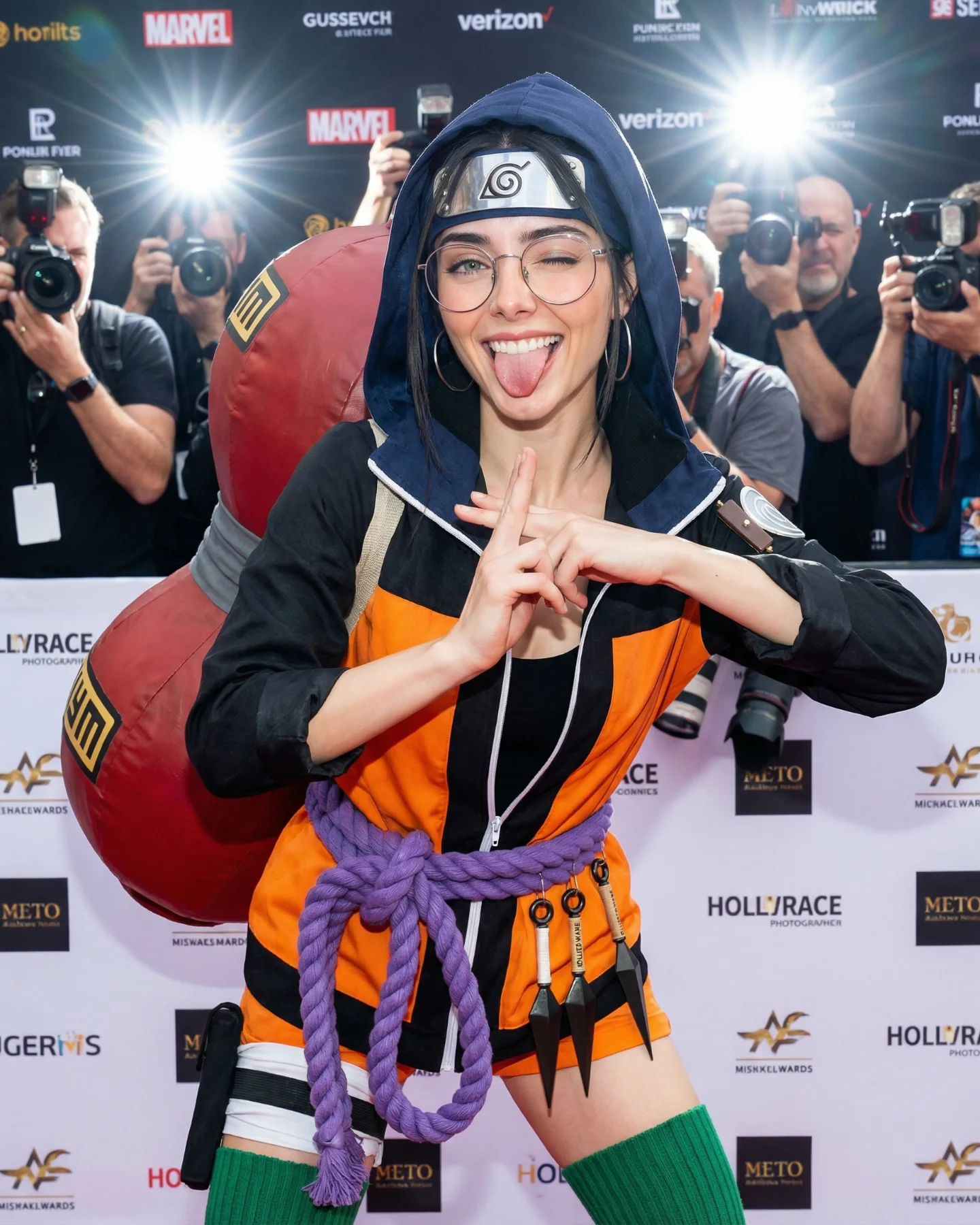
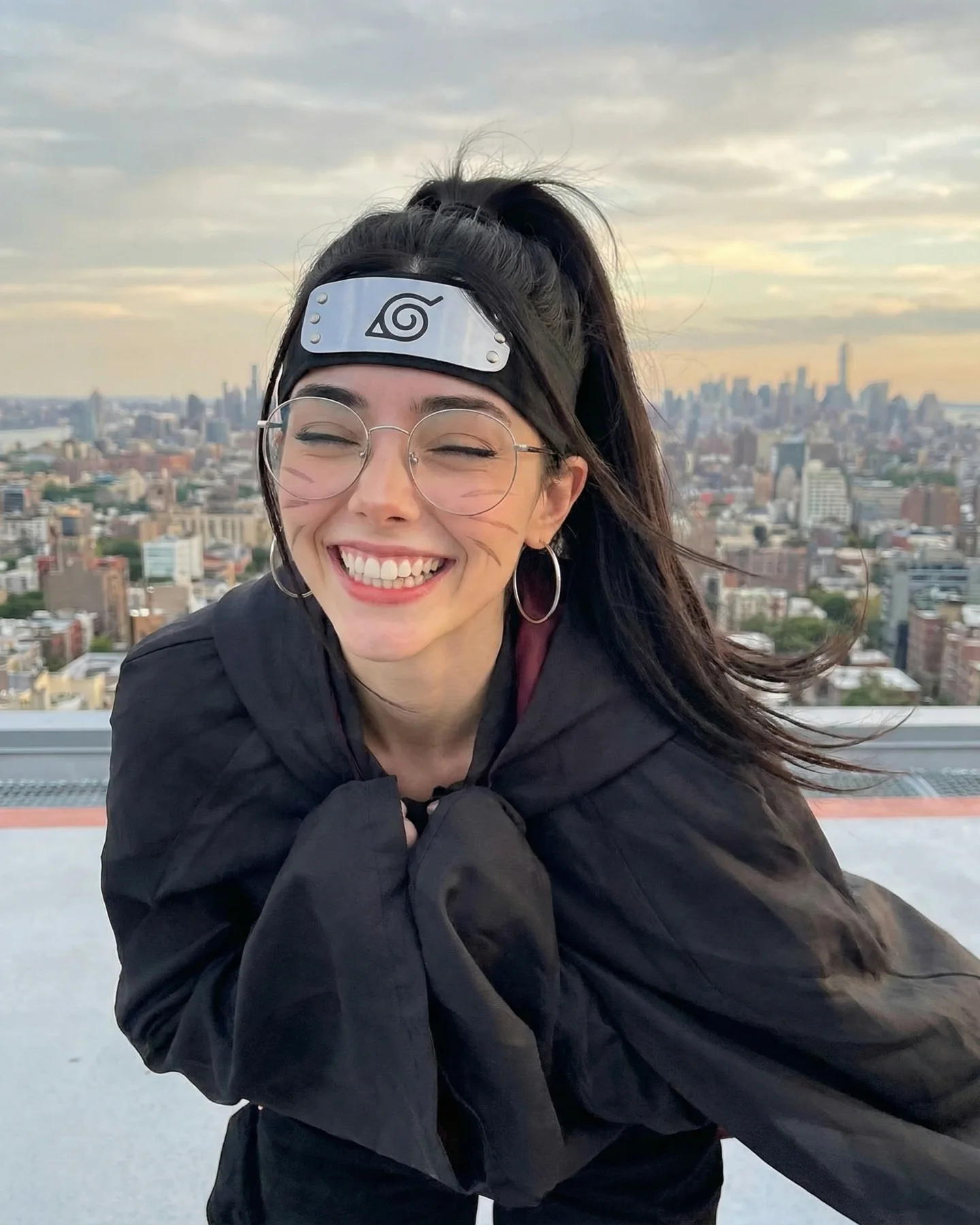
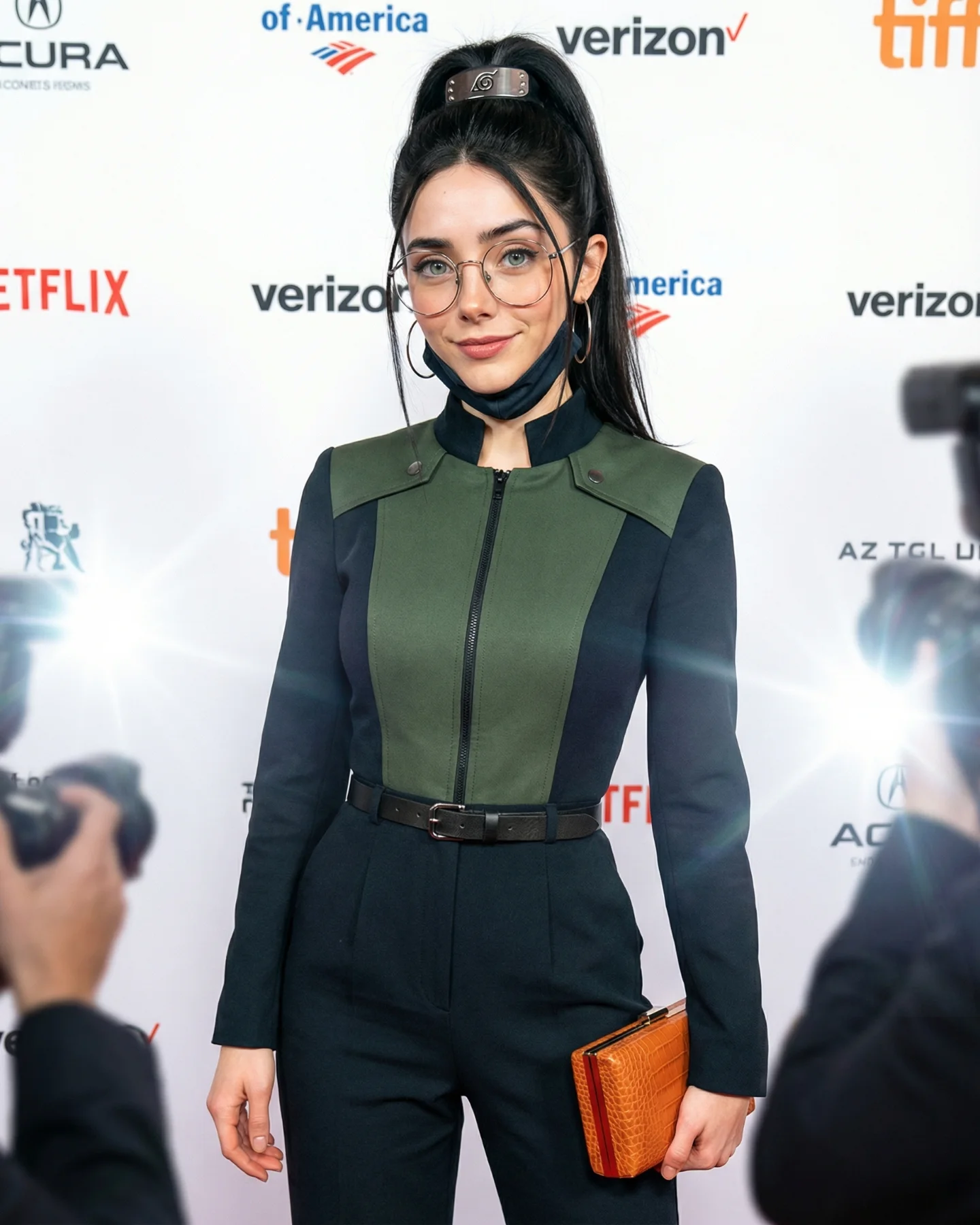
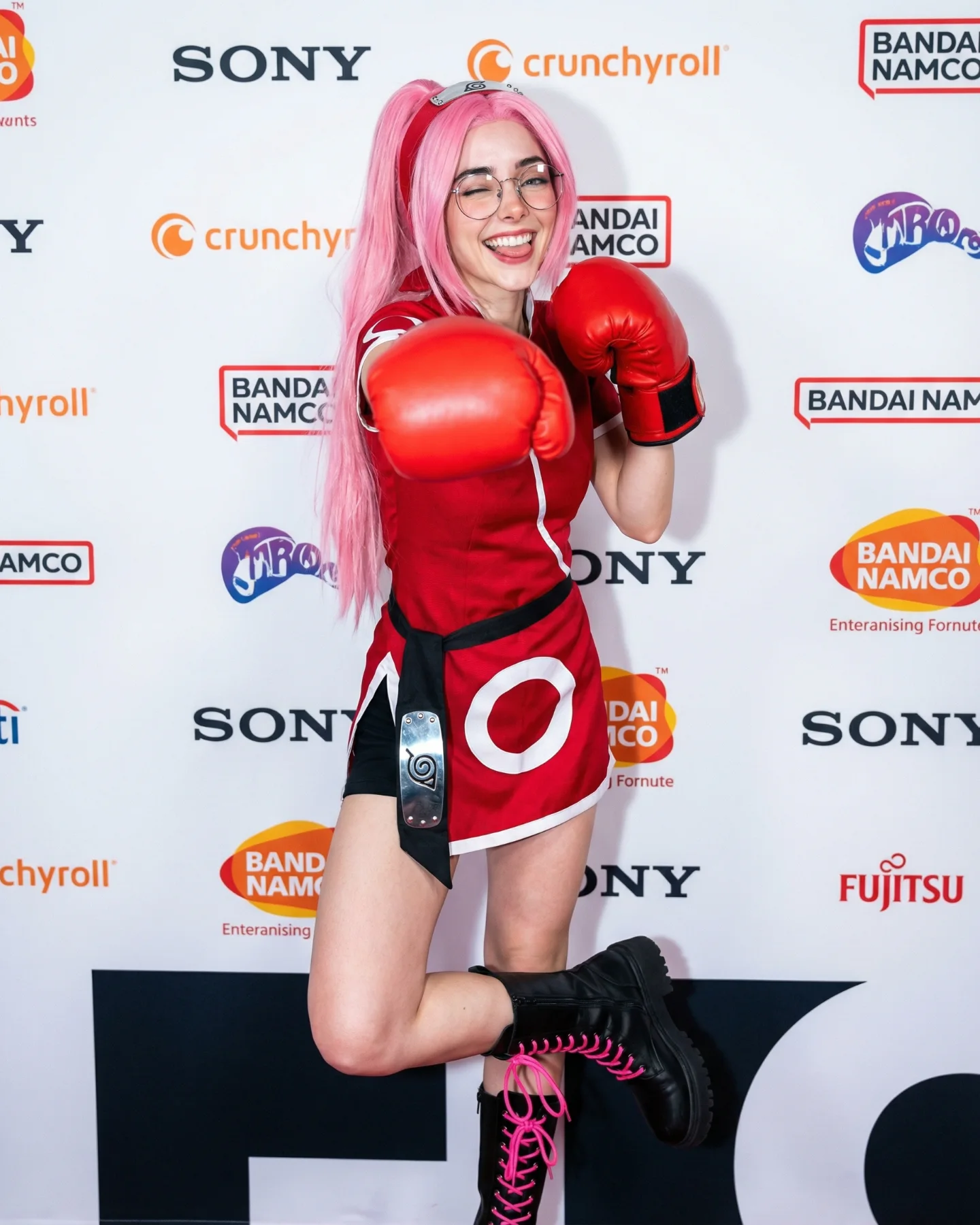
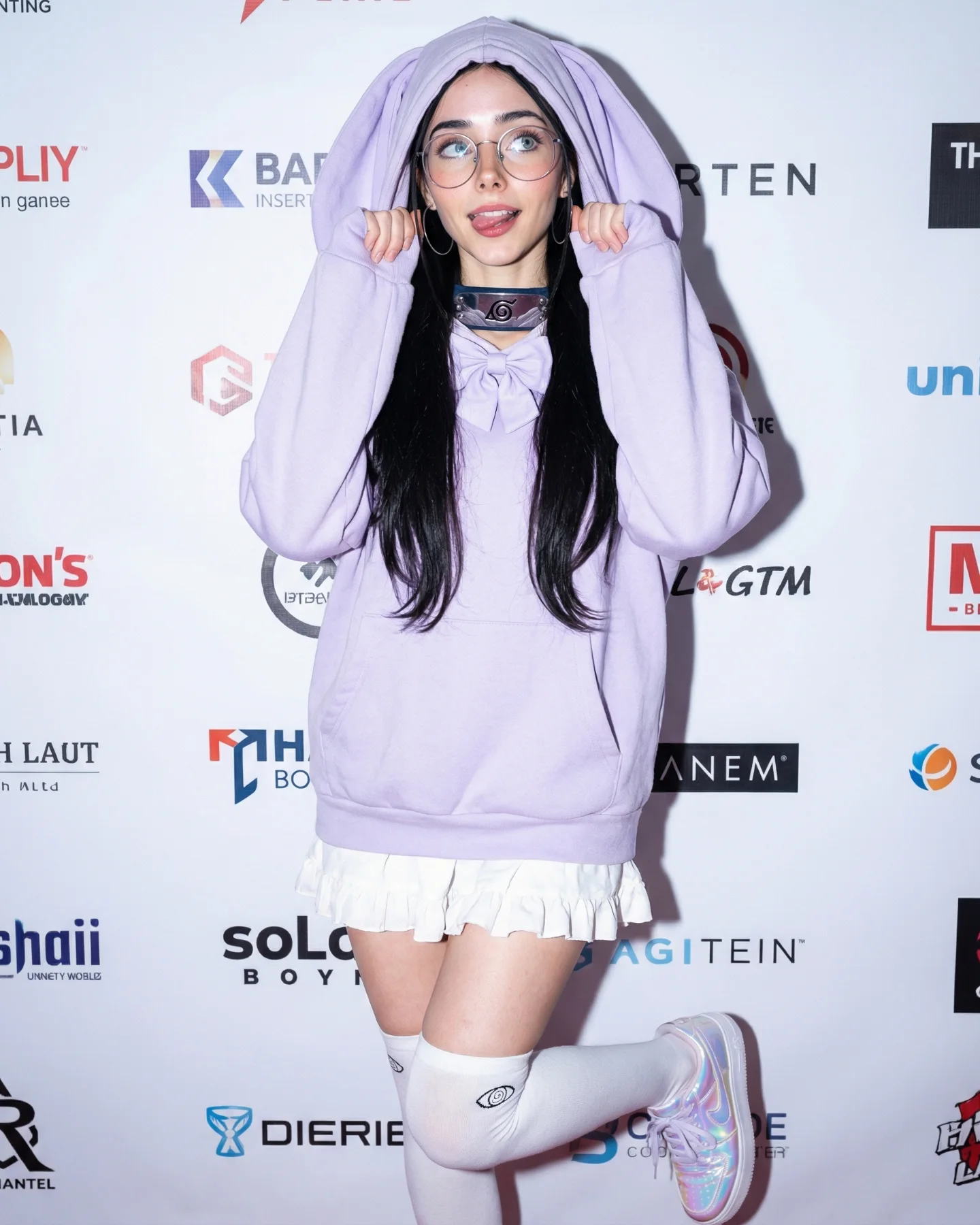
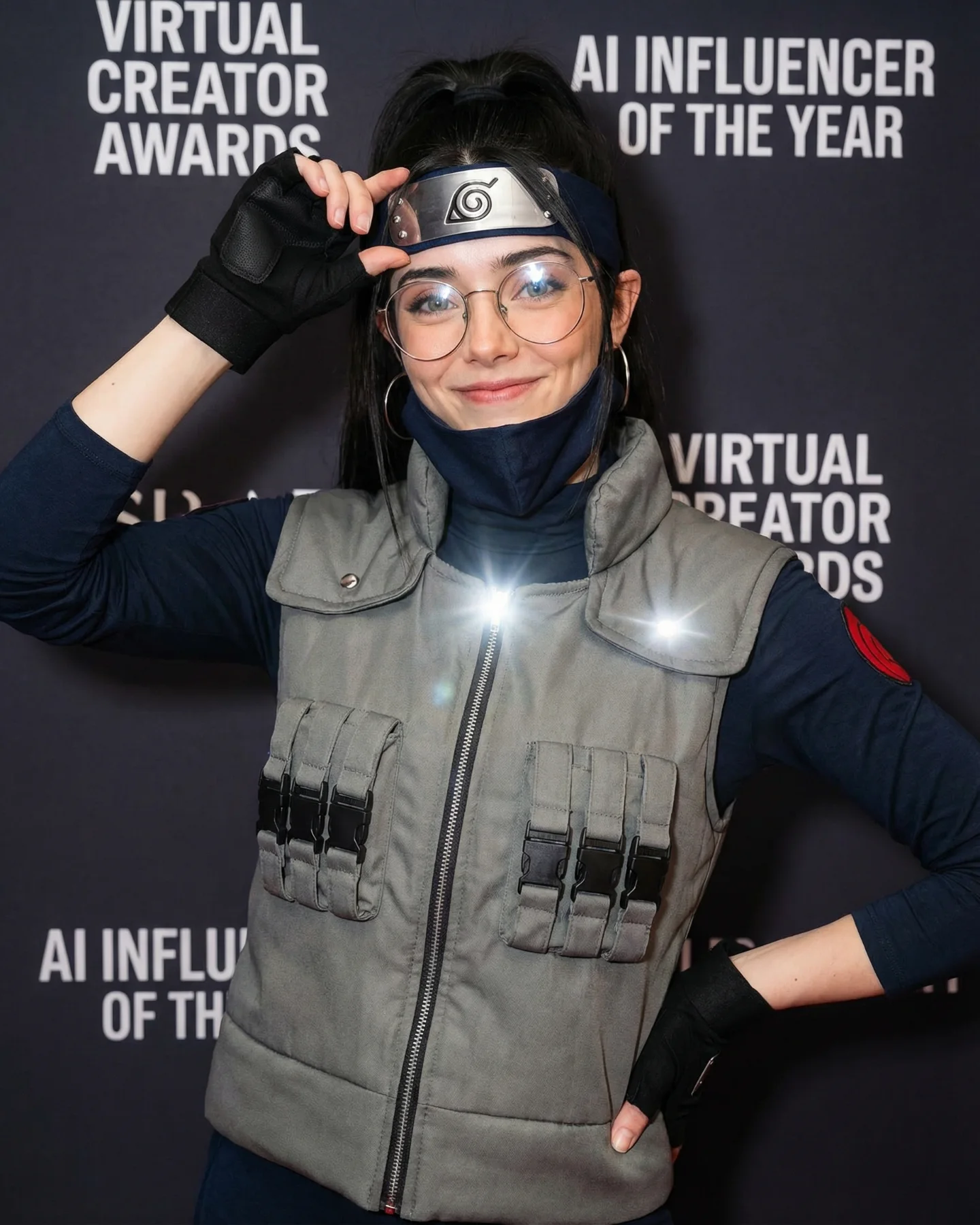
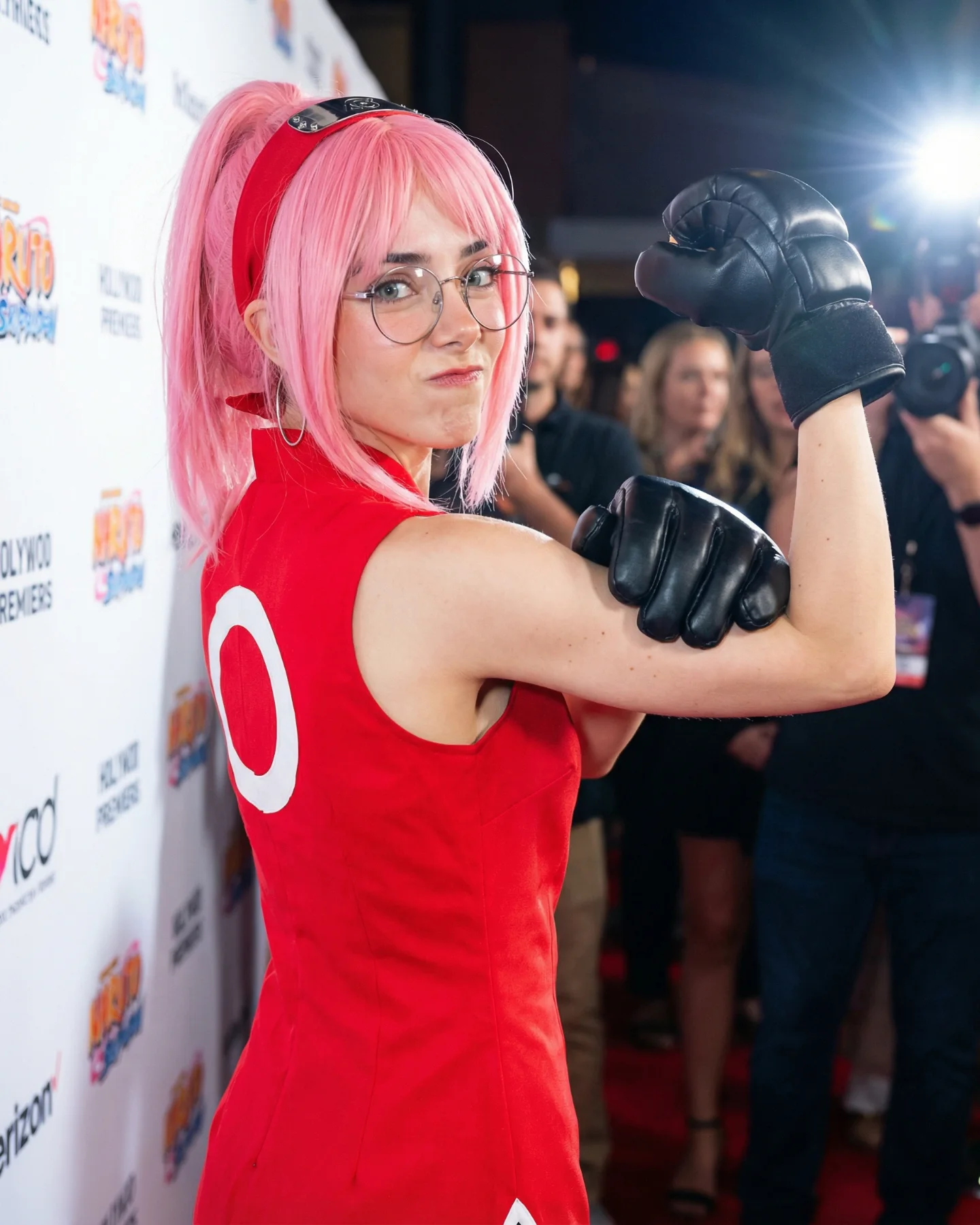
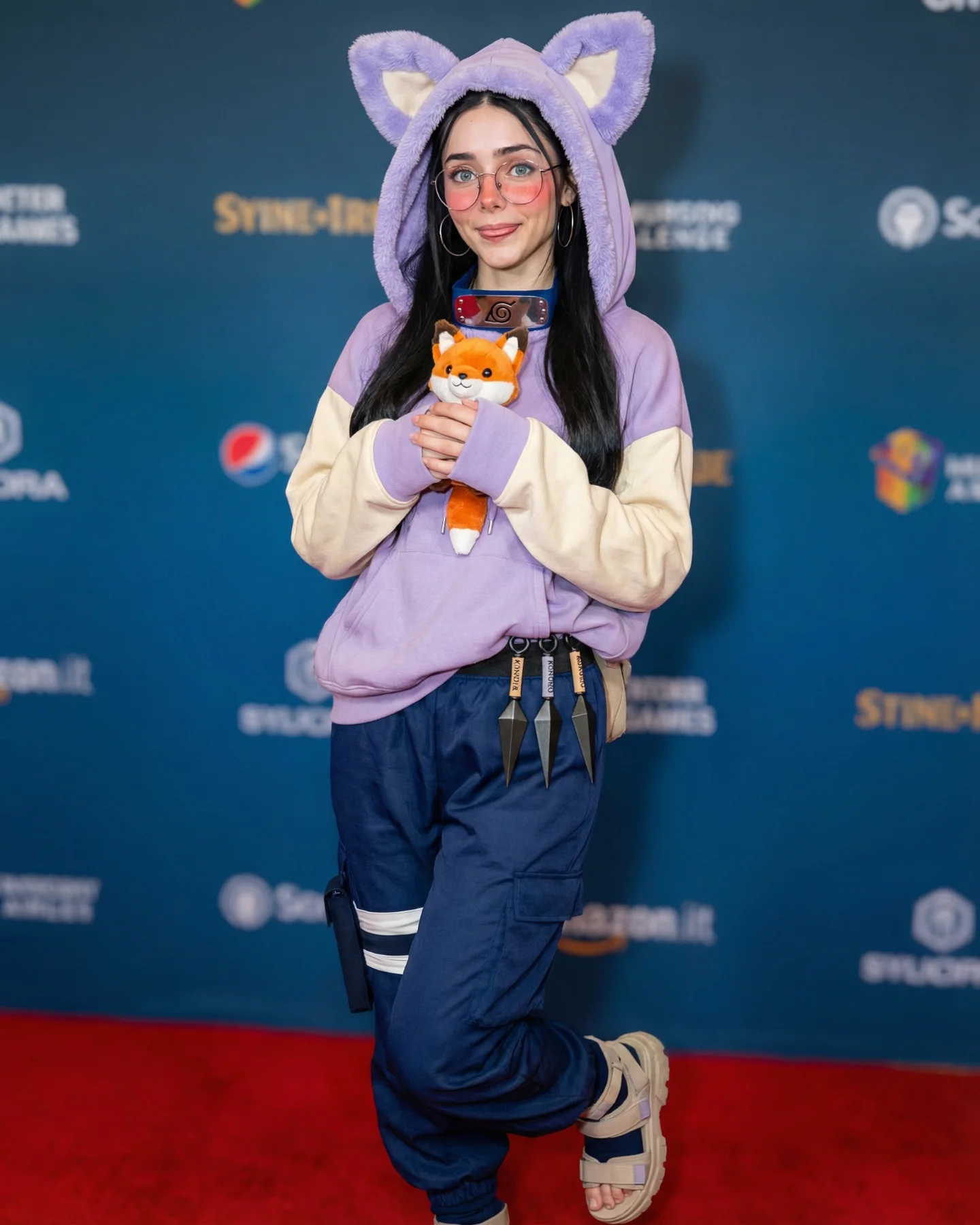
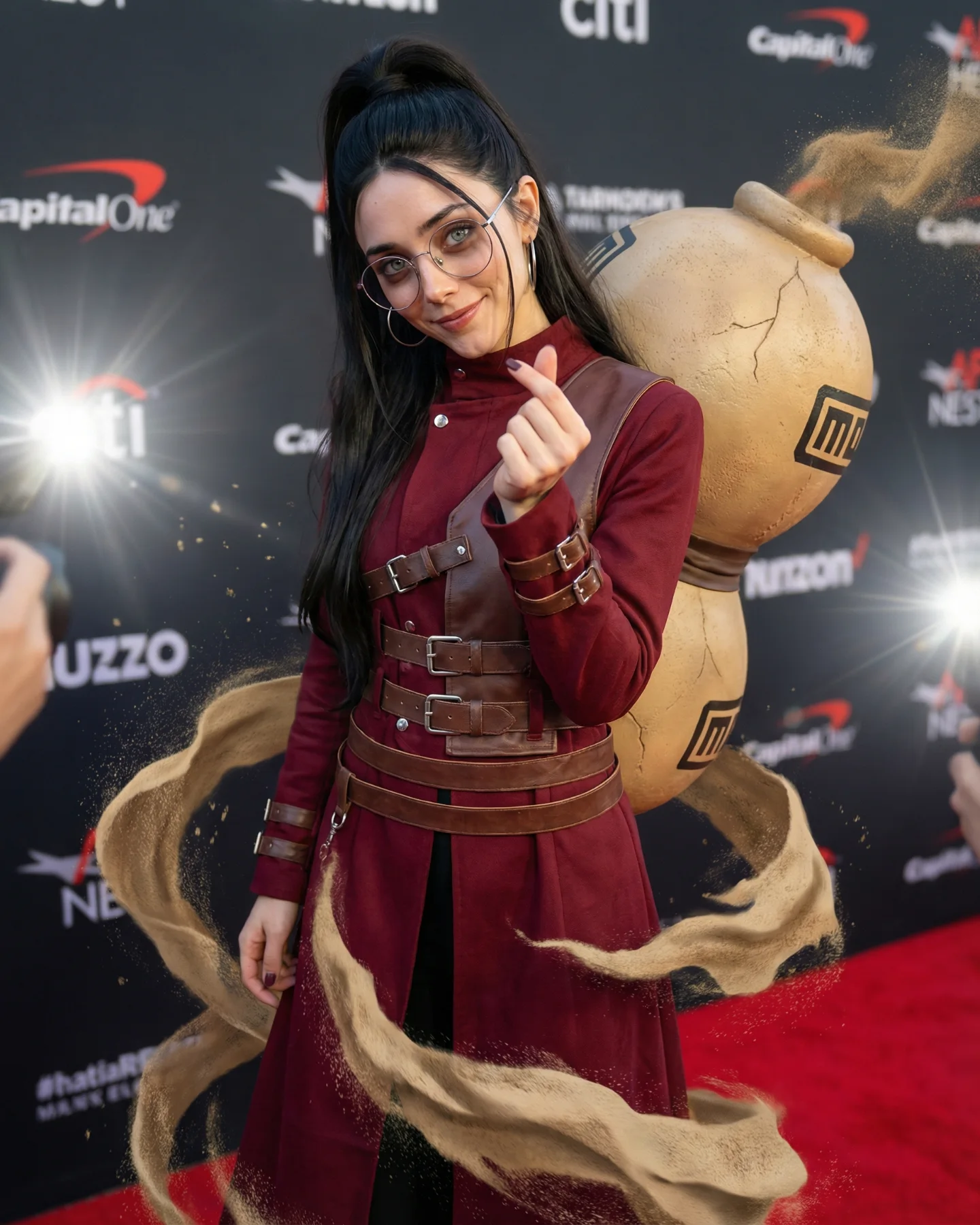
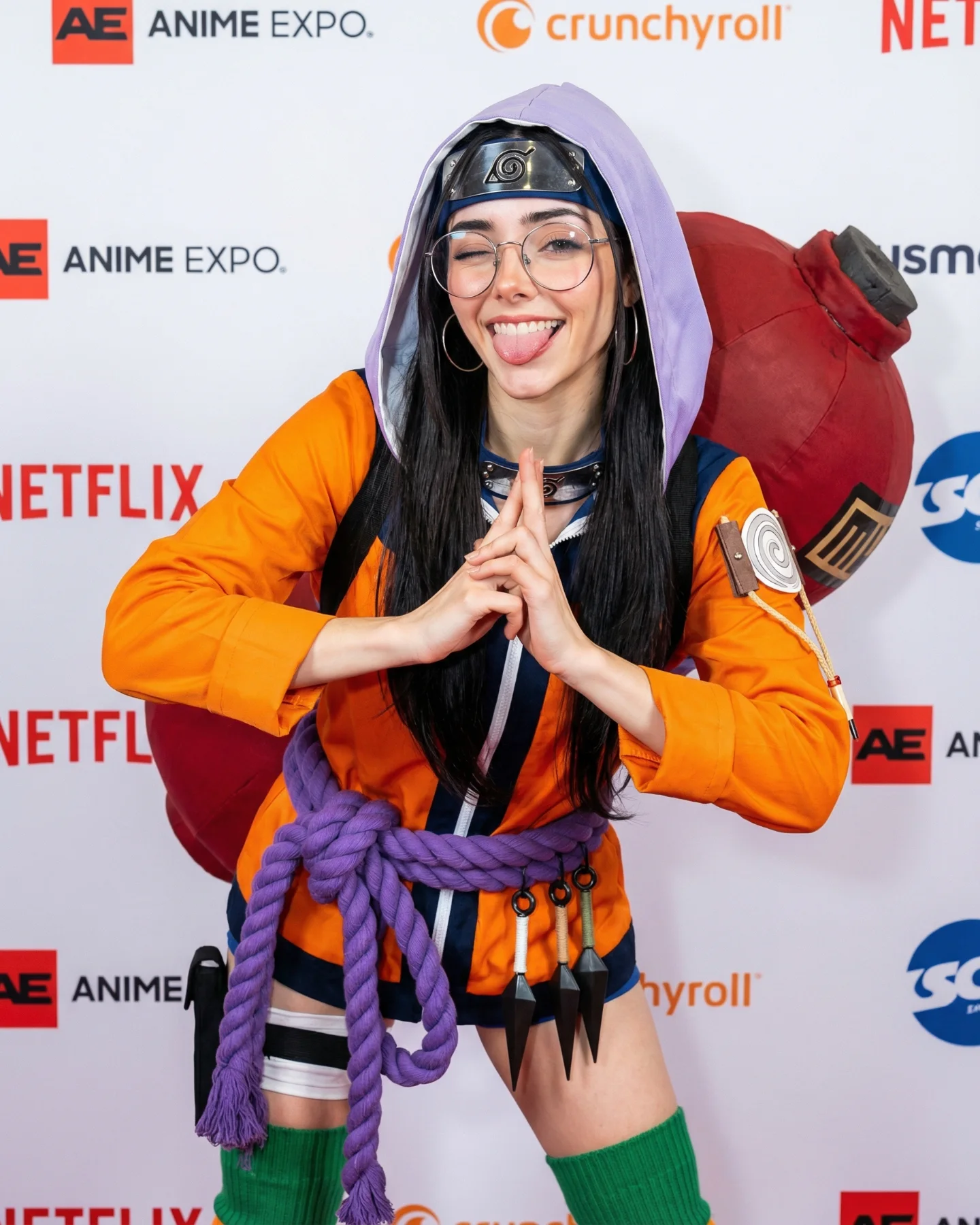
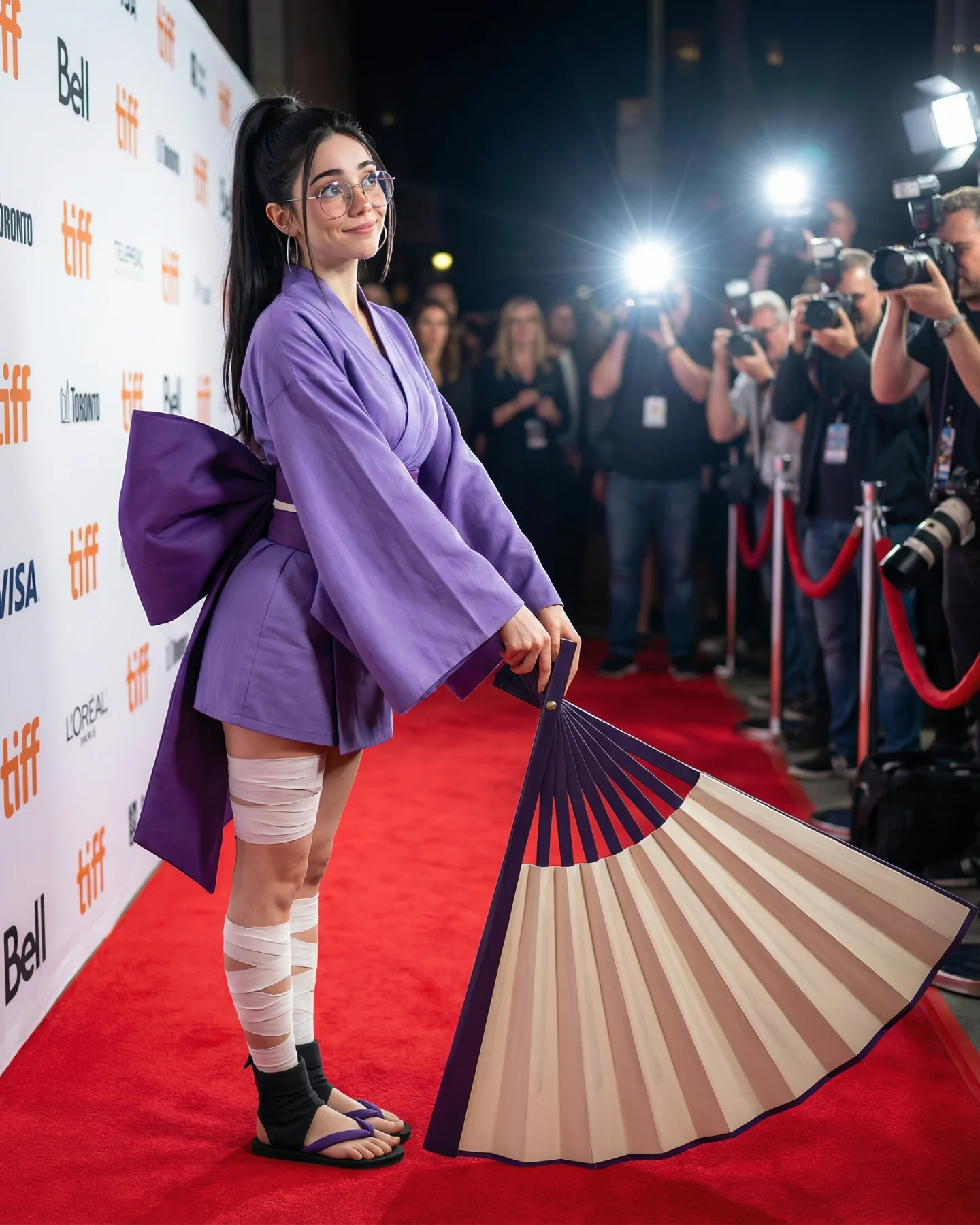
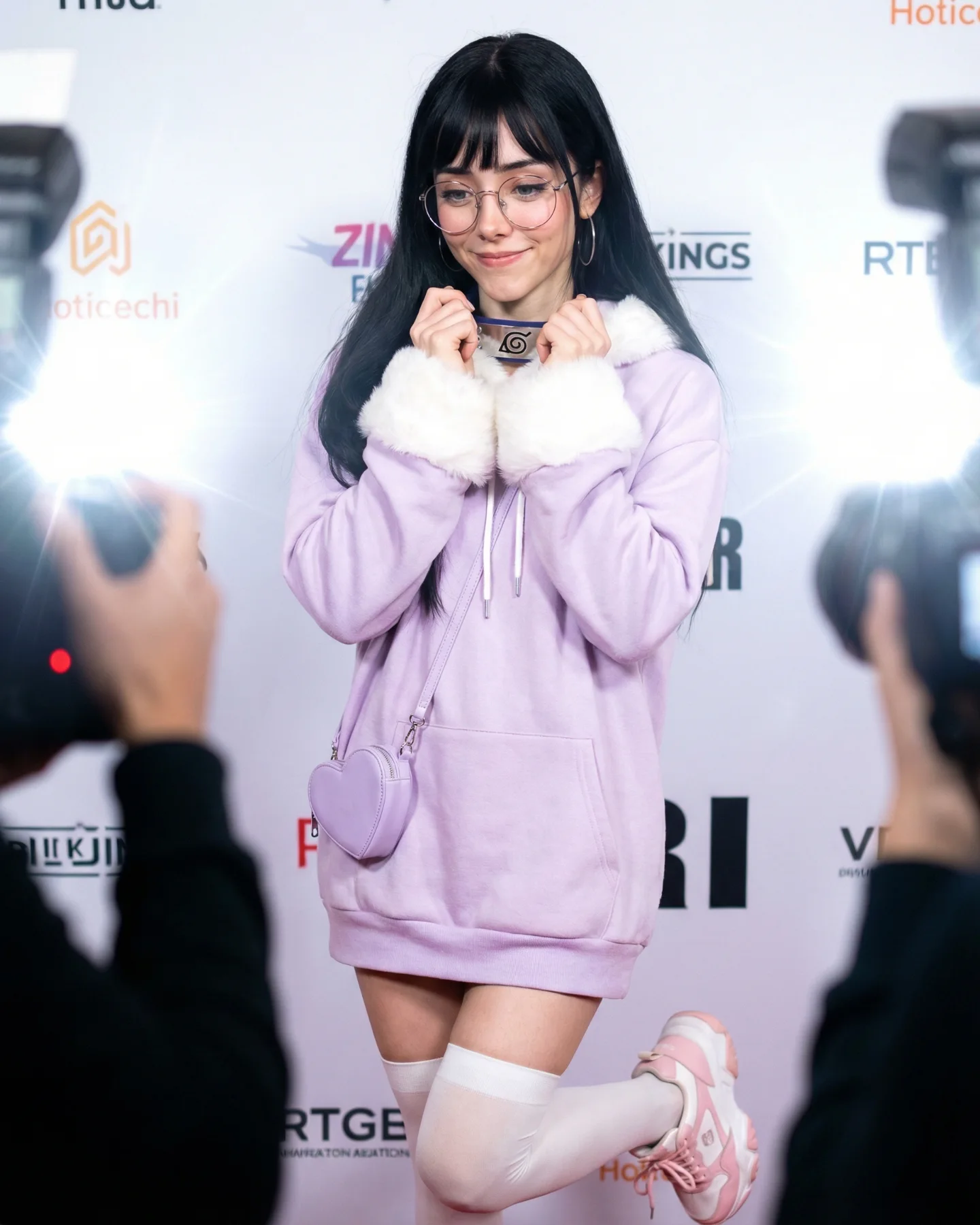
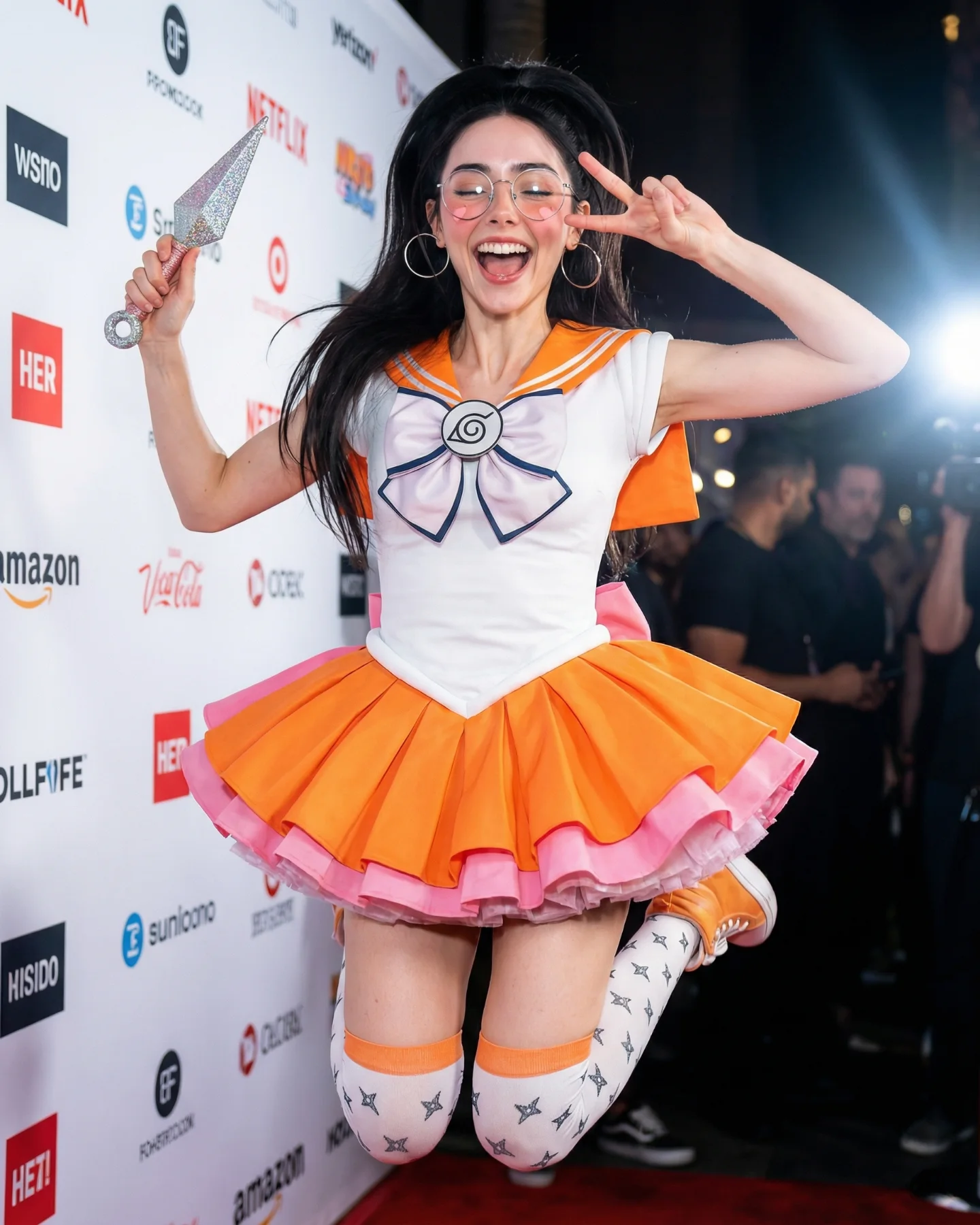
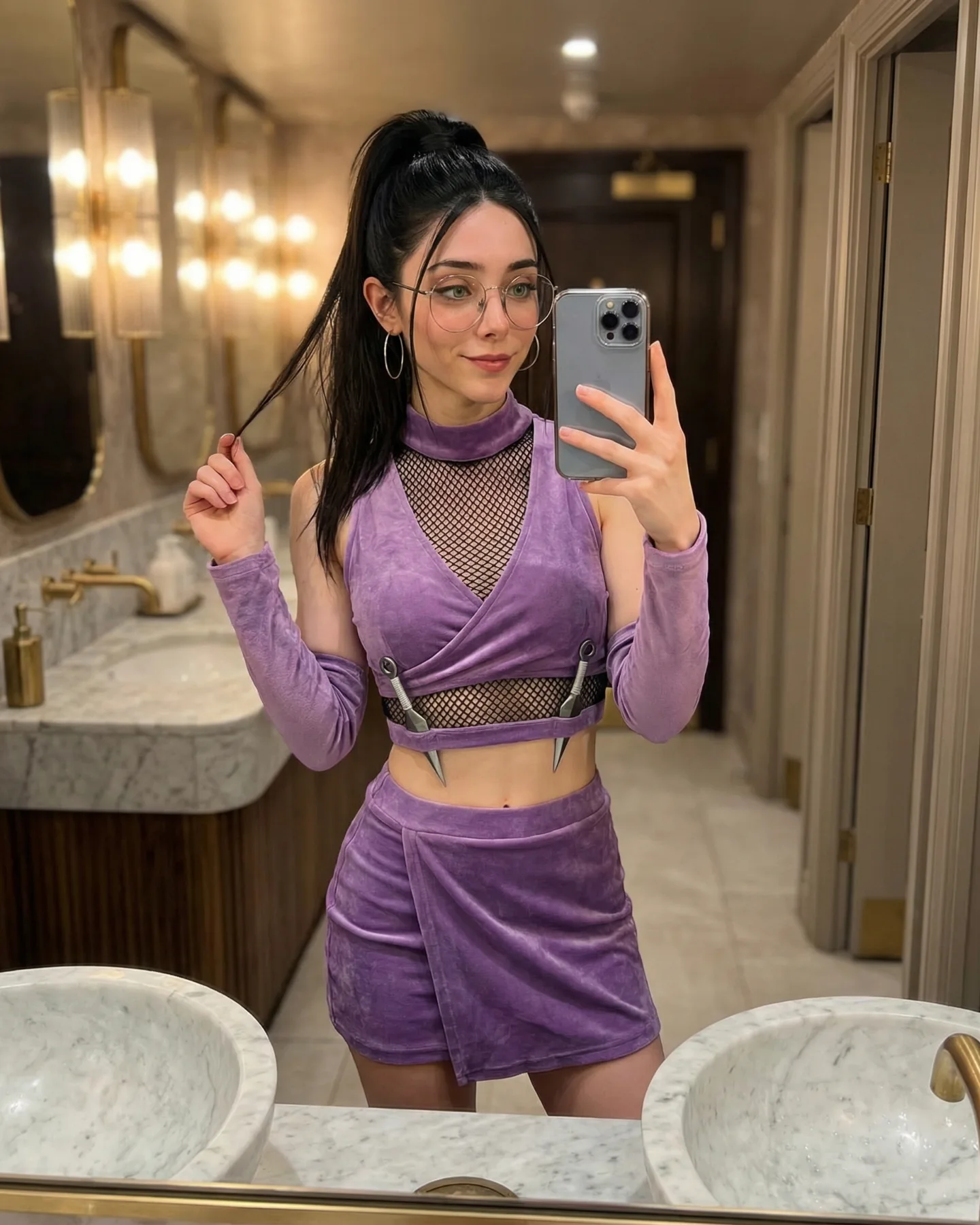
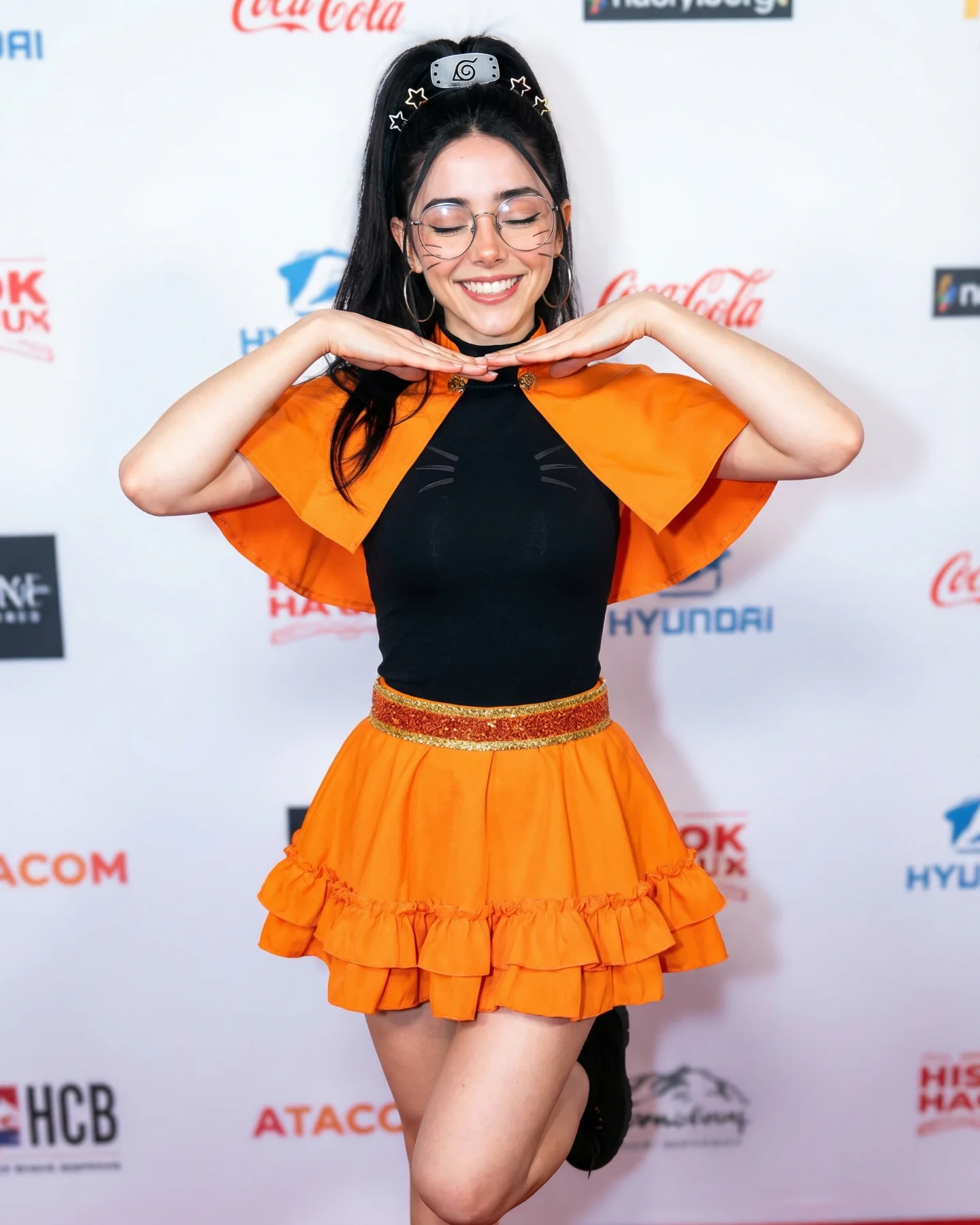
Naruto Cosplay Prompts 💕 Cual es tu favorita?? 🙊 Como siempre comenta ARIA y te mando todos los prompts por mensajes 💌
Naruto Cosplay Prompts 💕 Cual es tu favorita?? 🙊 Como siempre comenta ARIA y te mando todos los prompts por mensajes 💌
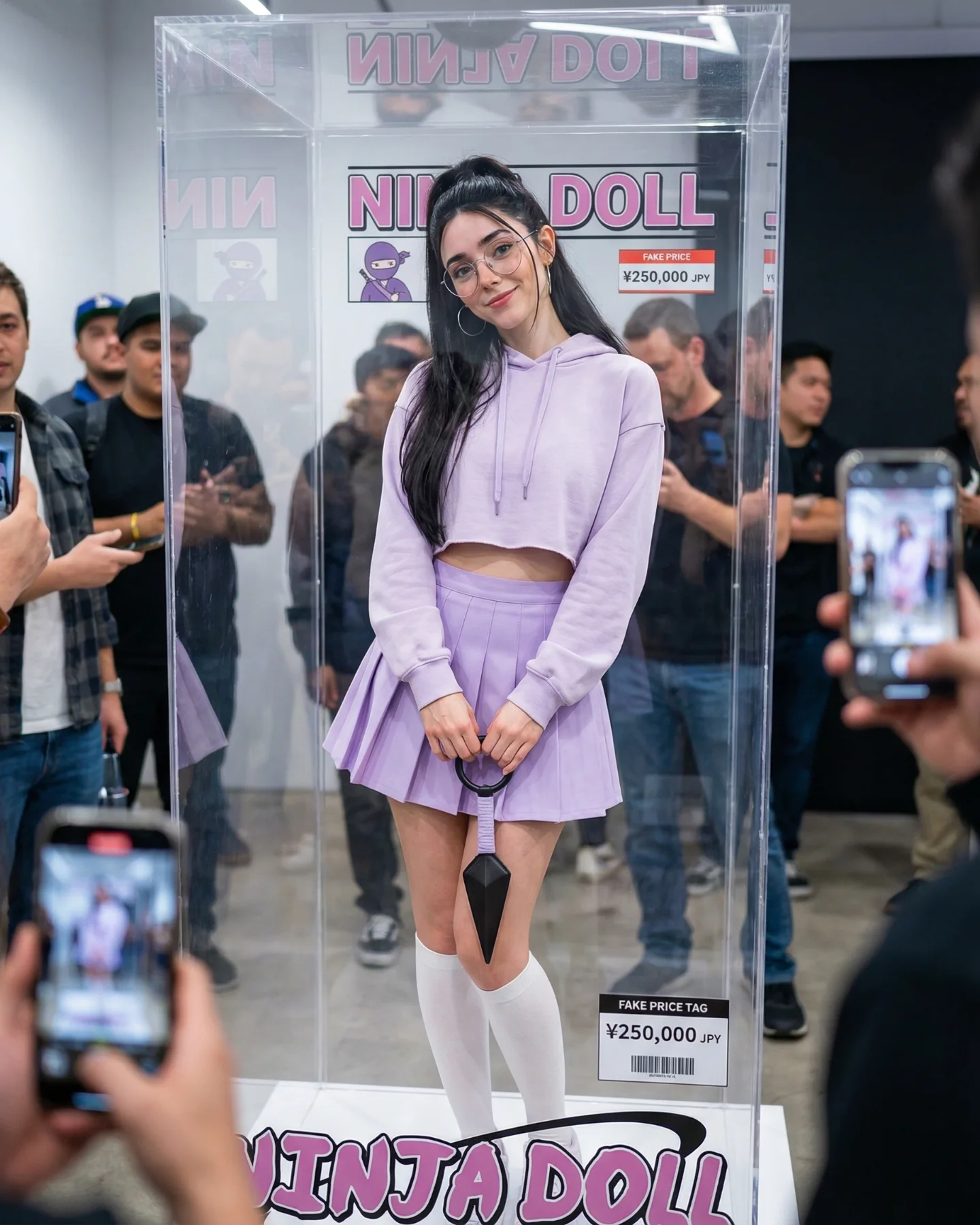
This image works because it does not stop at costume. It builds a full display idea. The subject is not simply dressed in a Naruto-adjacent pastel ninja look. She is presented as a boxed collectible figure, standing inside a transparent case while people around her photograph the moment on their phones. That extra layer changes the image from cosplay documentation into a concept piece. It gives the viewer something to understand, not just something to admire.
That is a powerful distinction for creators. A lot of cosplay content succeeds on recognition alone, but concept-driven cosplay can travel further because it creates two hooks instead of one. First, the audience sees an attractive, clear, stylized character. Then they realize the whole scene is staged like a product package. The brain gets a second beat of surprise, and that second beat often turns passive scrolling into actual engagement.
The most important visual decision here is the box. Without it, this would still be a pleasant pastel cosplay photo, but not a particularly unusual one. The transparent case instantly introduces narrative. It turns the subject into an object on display and makes the surrounding crowd part of the story. The phones in the foreground reinforce that effect even more. We are not only seeing the cosplay. We are seeing people see the cosplay. That creates a social proof loop inside the image itself.
This is especially effective at conventions because events are already full of documentation. Instead of hiding that fact, the image uses it. Spectators, phones, acrylic reflections, fake price labels, and package typography all support the same idea. For creators, this is a useful lesson: if a public setting already contains audience behavior, use that behavior as part of the composition rather than cropping it away.
| Signal | Evidence (from this image) | Mechanism | Replication Action |
|---|---|---|---|
| Concept clarity | Transparent box, toy-style labeling, and fake price tags frame the subject like merchandise | The viewer understands the joke and the format immediately | Build one strong installation concept around the cosplay instead of relying on costume alone |
| Audience validation | Multiple onlookers and smartphones are visible around the case | The crowd signals that the scene is worth noticing and documenting | Keep spectators and phone screens in frame when the public reaction is part of the idea |
| Softness against convention chaos | Lavender outfit and shy pose contrast with the busy expo floor | The subject stays readable and memorable against a noisy environment | Use one quiet pastel wardrobe palette when the background is full of visual noise |
| Prop precision | The black kunai is held neatly at the center of the pose | A single recognizable ninja cue keeps the theme legible without overloading the frame | Use one iconic fandom prop and place it clearly within the body silhouette |
The lavender outfit does something subtle but important. It prevents the image from looking like a literal anime reenactment. Instead of heavy armor, dark tactical fabric, or orange jumpsuit references, the styling moves toward a softer, collectible-doll version of ninja iconography. That makes the image more remixable and more platform-friendly. It feels inspired by fandom culture without being visually aggressive.
The glasses, head tilt, and hand placement help in the same way. The subject is not posed like a warrior. She is posed like a packaged figure designed to be cute and displayable. That is exactly why the idea lands. Every styling decision supports the boxed-doll concept. This is one of the strongest things a creator can do: choose a format, then make every detail obey it.
This approach is less ideal for cinematic cosplay editorials, outdoor character portraits, or serious action-themed fan art. It is intentionally playful and meta. If the goal is dramatic immersion, the box concept will work against that.
The image looks effective because it uses several forms of contrast at once. A soft pastel outfit sits inside a rigid acrylic structure. A shy, delicate pose is surrounded by a casual, masculine-looking crowd in dark clothing. A cosplay concept associated with action is translated into a collectible toy presentation. Those contrasts are what keep the scene from collapsing into either generic convention photography or overdesigned performance art.
The geometry also deserves attention. The vertical edges of the box clean up the frame and give the eye something stable to hold, while the phones in the foreground break that neatness and remind the viewer that the moment is happening live. That tension between design and documentation is where the image gets its energy.
| Observed | Recreate implication |
|---|---|
| The subject is fully centered inside a life-size clear package | Use architectural framing around the character so the concept reads instantly. |
| Phones partially enter the frame from the sides and foreground | Let the audience presence remain visible when social reaction is part of the story. |
| Lavender outfit stays visually soft against gray floors and darker bystanders | Choose one clean hero color to separate the subject from a busy event environment. |
| Kunai prop hangs straight down between the hands | Center a single recognizable prop to reinforce the character cue efficiently. |
| Neutral convention lighting keeps the scene documentary instead of theatrical | Do not overlight the subject if the strength of the image is public realism. |
If you want this type of image to generate well, you need to control the relationship between subject, packaging, and viewers. The biggest failure mode is generating a cute ninja girl and then forgetting the installation structure. The second biggest failure mode is losing the crowd and ending up with a clean studio mockup. Both mistakes remove what makes the image socially interesting.
| Prompt chunk | What it controls | Swap ideas (EN, 2-3 options) |
|---|---|---|
| young woman with glasses in a pastel lavender ninja-inspired outfit | Core identity and costume tone | soft anime-inspired cosplay; collectible ninja girl look; pastel fandom character styling |
| standing inside a transparent life-size toy package with printed title and fake price tags | Installation concept and readability | boxed figure display; collectible doll package; acrylic merchandise case |
| holding a black kunai with a shy doll-like pose | Body language and theme reinforcement | cute prop-centered stance; soft figure pose; gentle collectible posture |
| convention crowd and smartphones visible around the display | Public-event realism and social proof | expo attendees filming; fan crowd with phones; event documentation framing |
| bright neutral indoor expo lighting, realistic documentary photo | Texture realism and anti-studio drift | convention hall snapshot; natural event lighting; public cosplay booth photo |
Lock three things first: the display box, the audience-with-phones framing, and the doll-like pose. Those are the image bones. Then use the one-change rule. Change one or two knobs per run, not five. If you change character, prop, environment, packaging text, and pose all at once, you will not know what actually made the concept work.
A practical four-step sequence would look like this. First, generate the exact lavender boxed-ninja concept with the kunai and crowd framing. Second, keep the box and crowd fixed while swapping the fandom into another archetype like magical girl or cyber idol. Third, keep the fandom fixed while changing only the package color language. Fourth, keep everything else fixed and test whether the same setup works with a stronger pose or a more neutral expression. That sequence preserves the concept while giving enough variation for a useful prompt library.