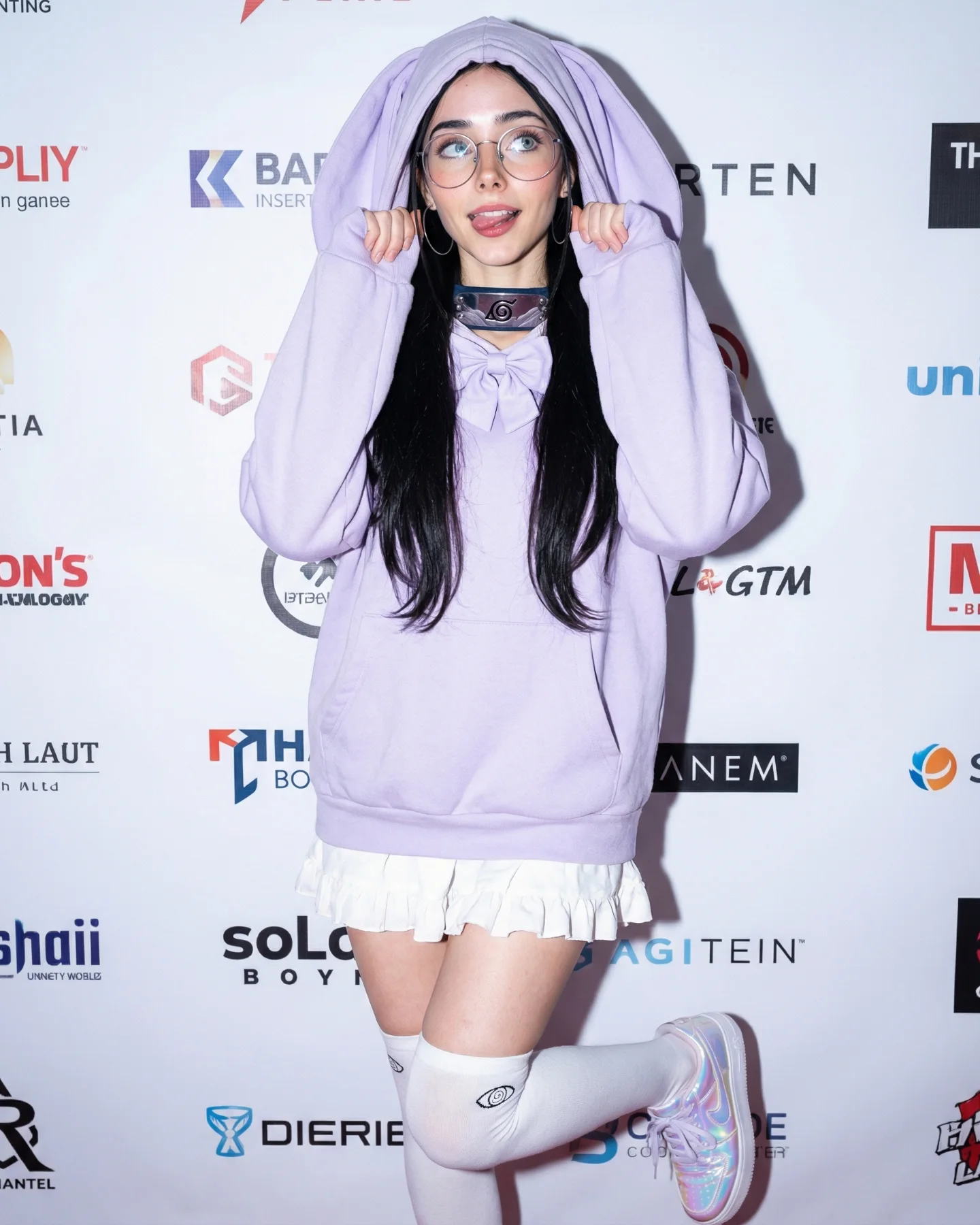
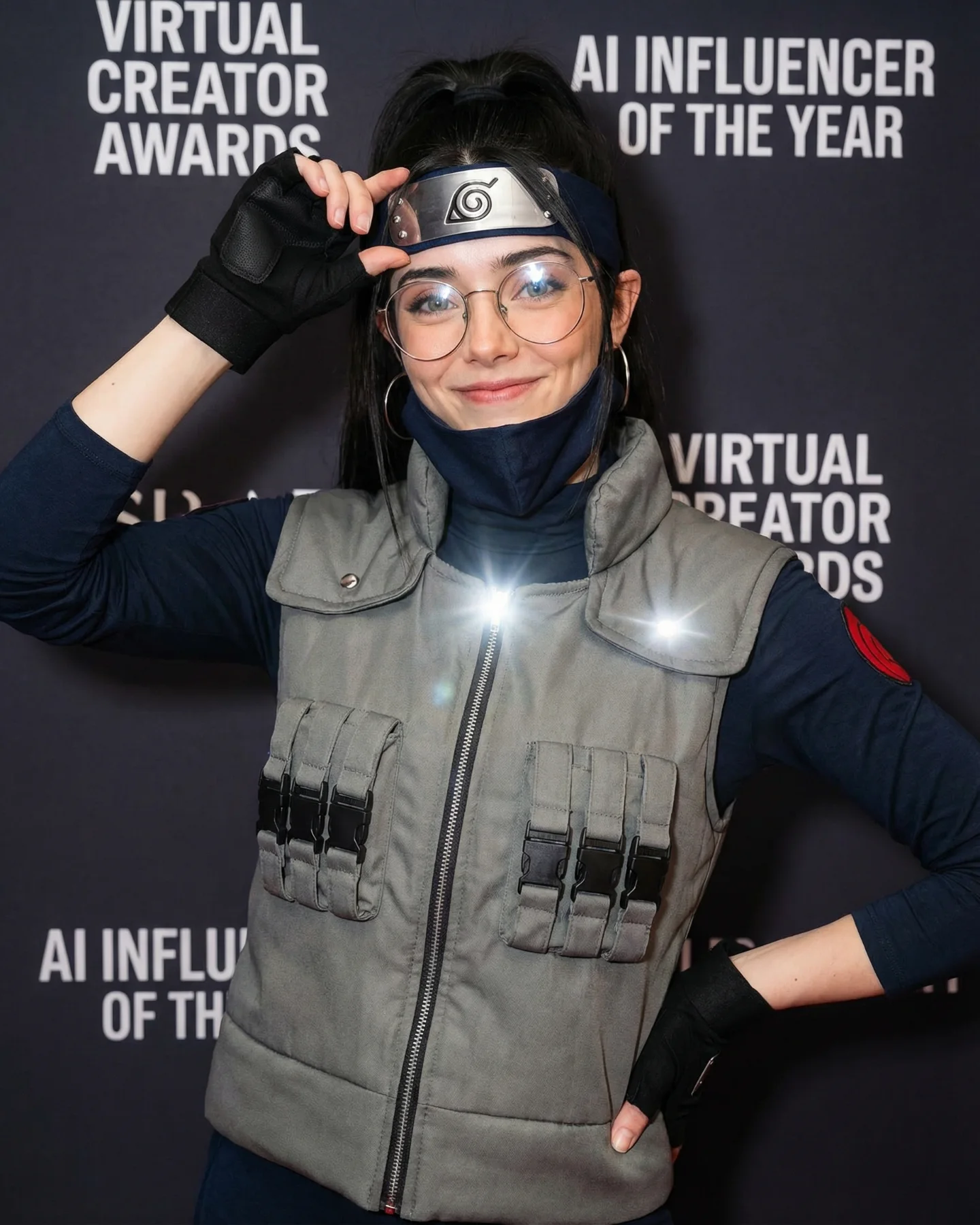
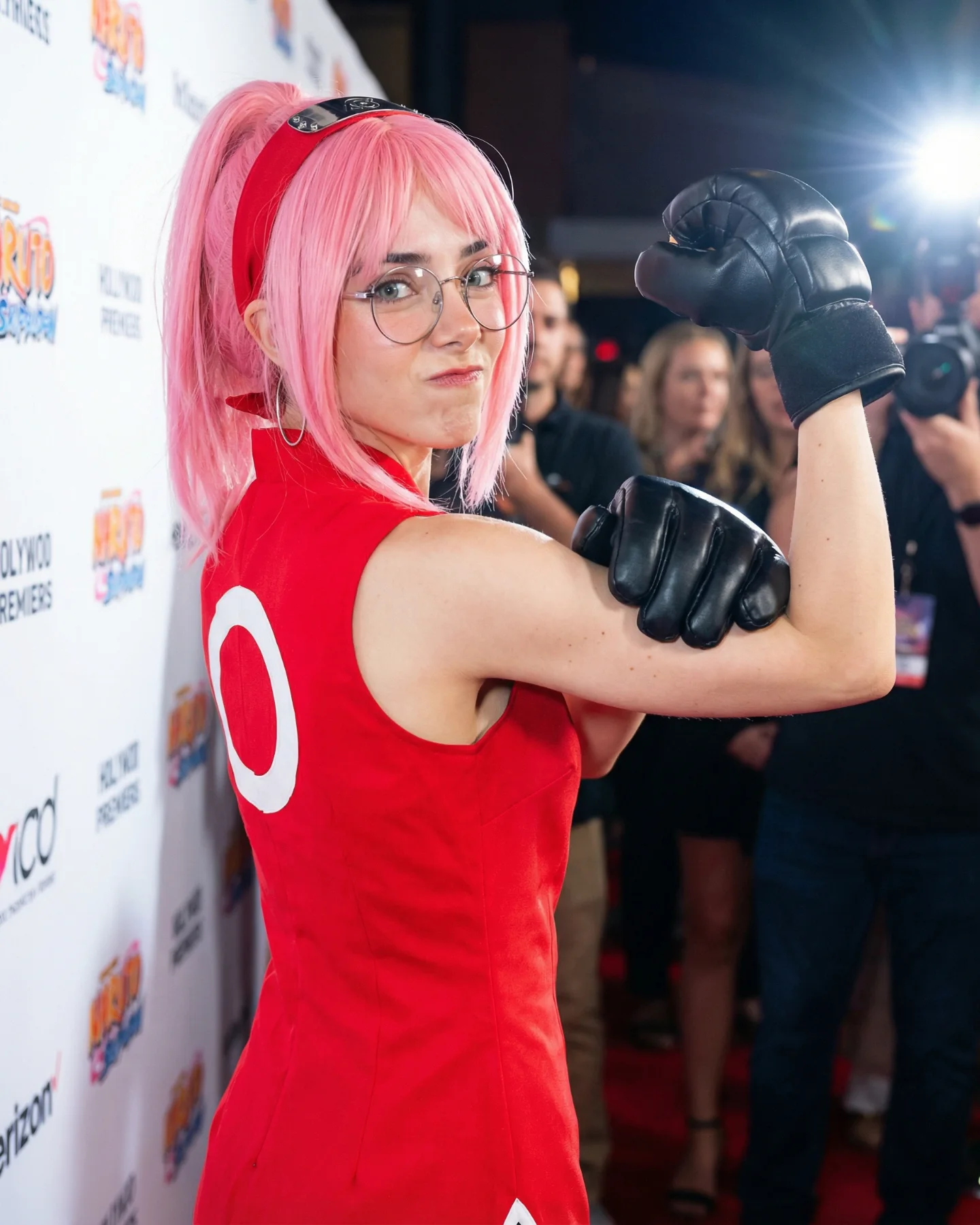
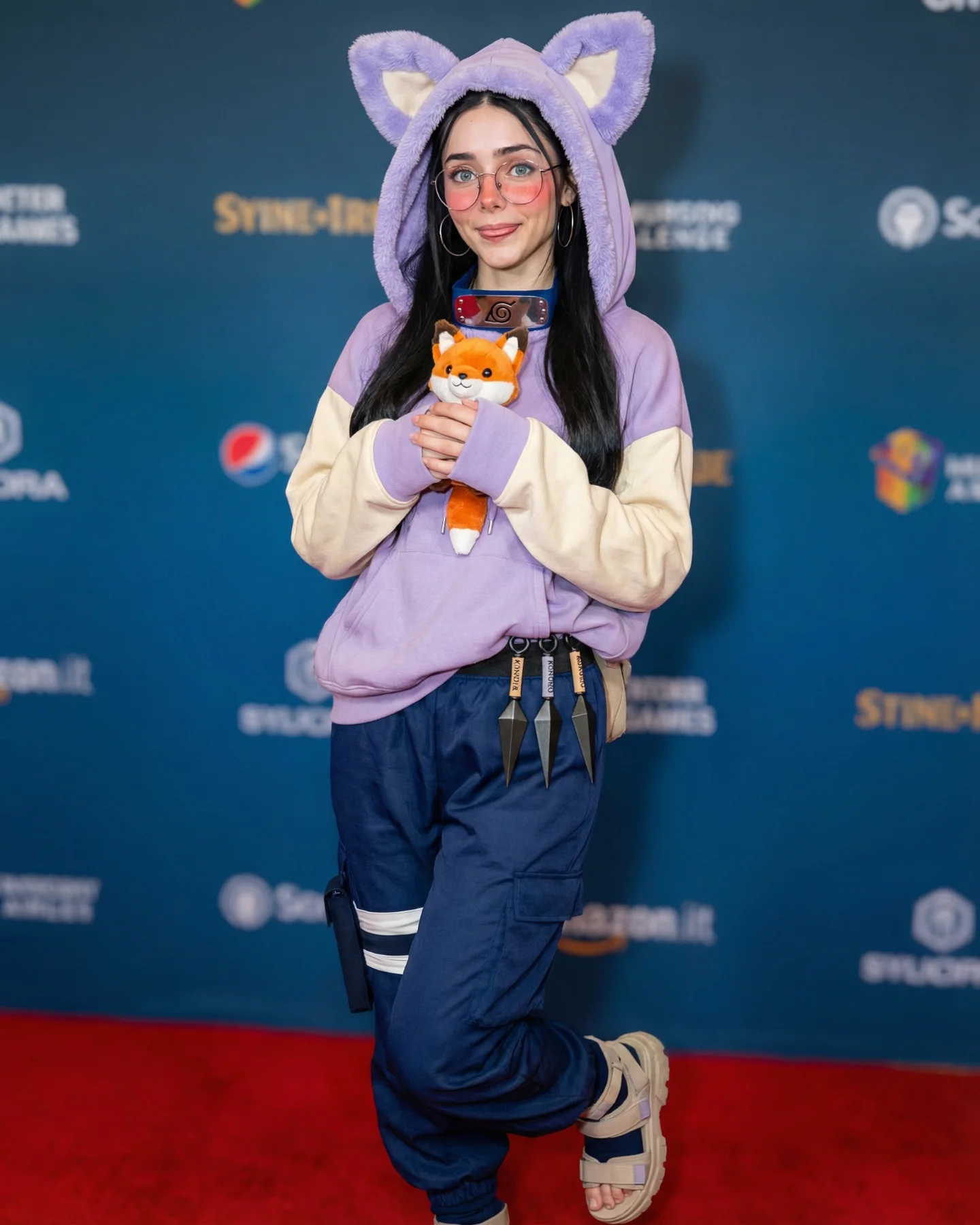
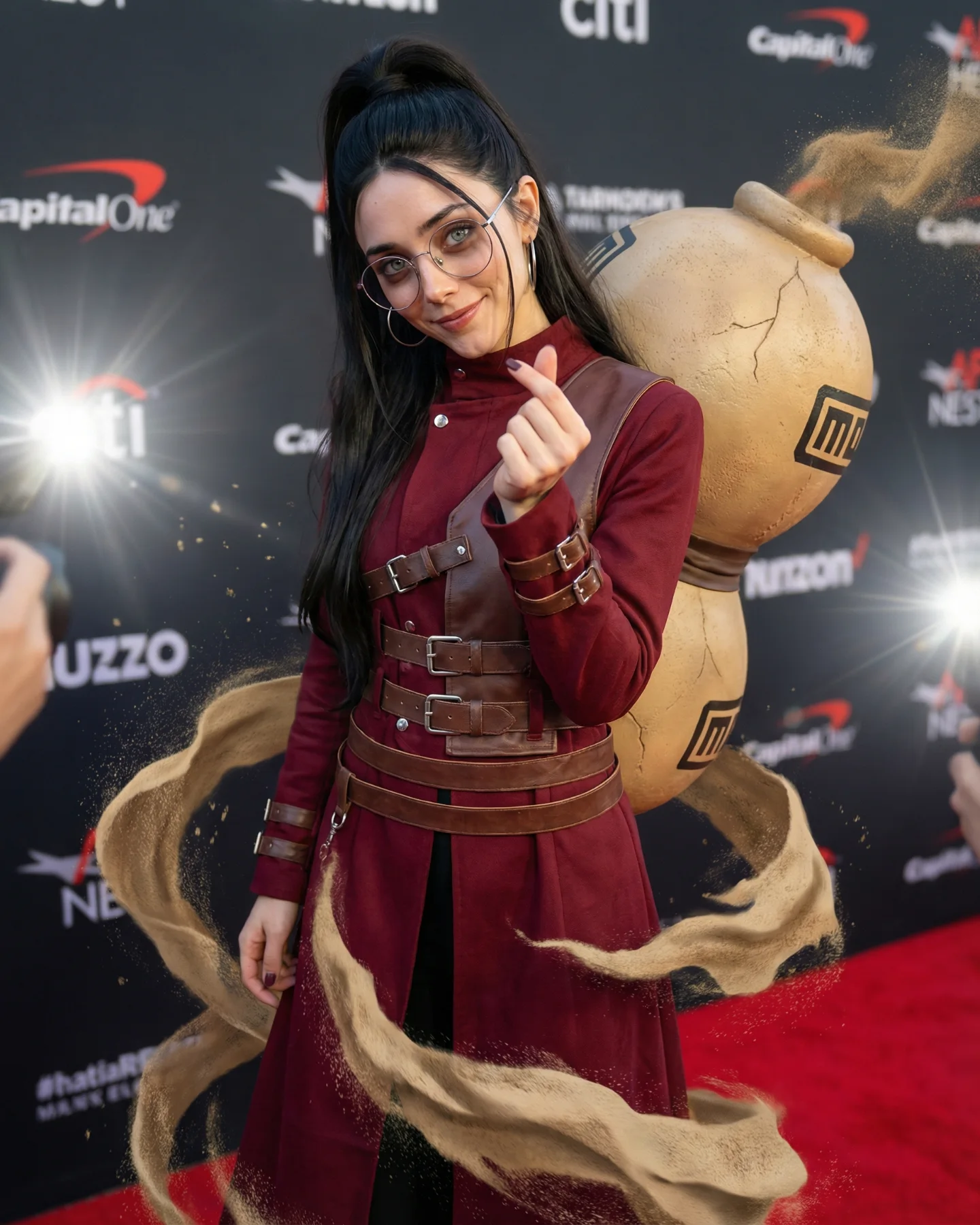
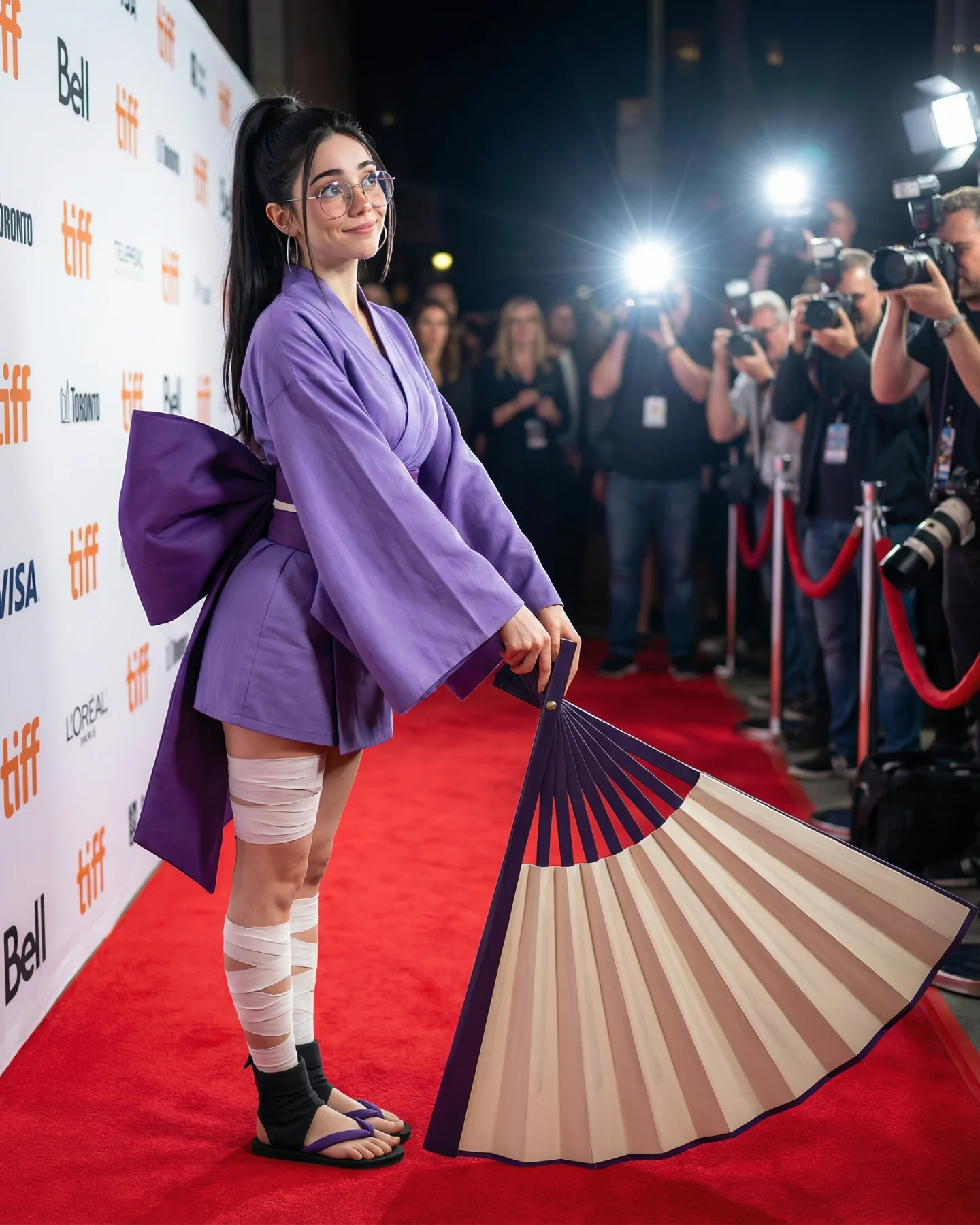
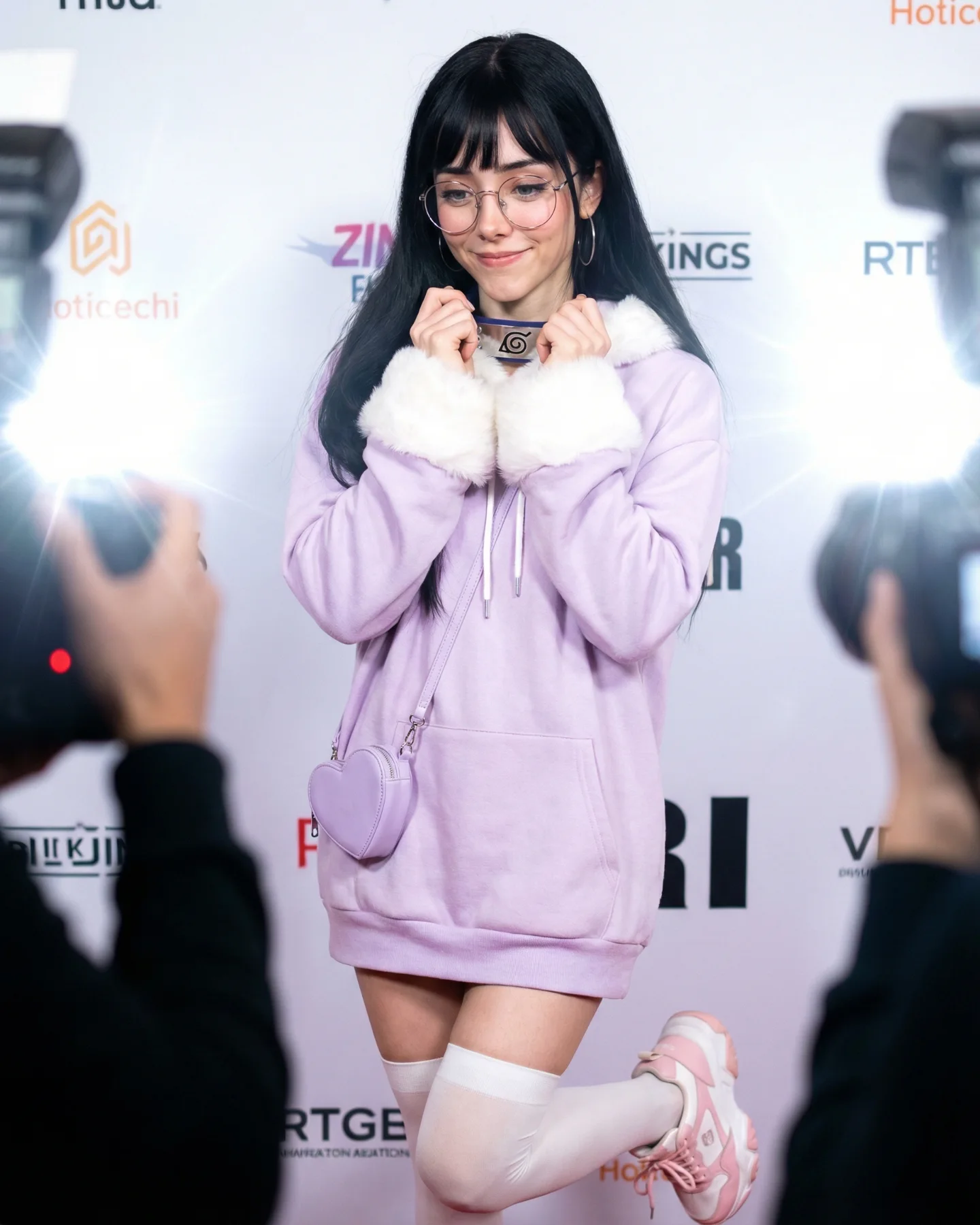
Naruto Cosplay Prompts 💕 Cual es tu favorita?? 🙊 Como siempre comenta ARIA y te mando todos los prompts por mensajes 💌
Naruto Cosplay Prompts 💕 Cual es tu favorita?? 🙊 Como siempre comenta ARIA y te mando todos los prompts por mensajes 💌
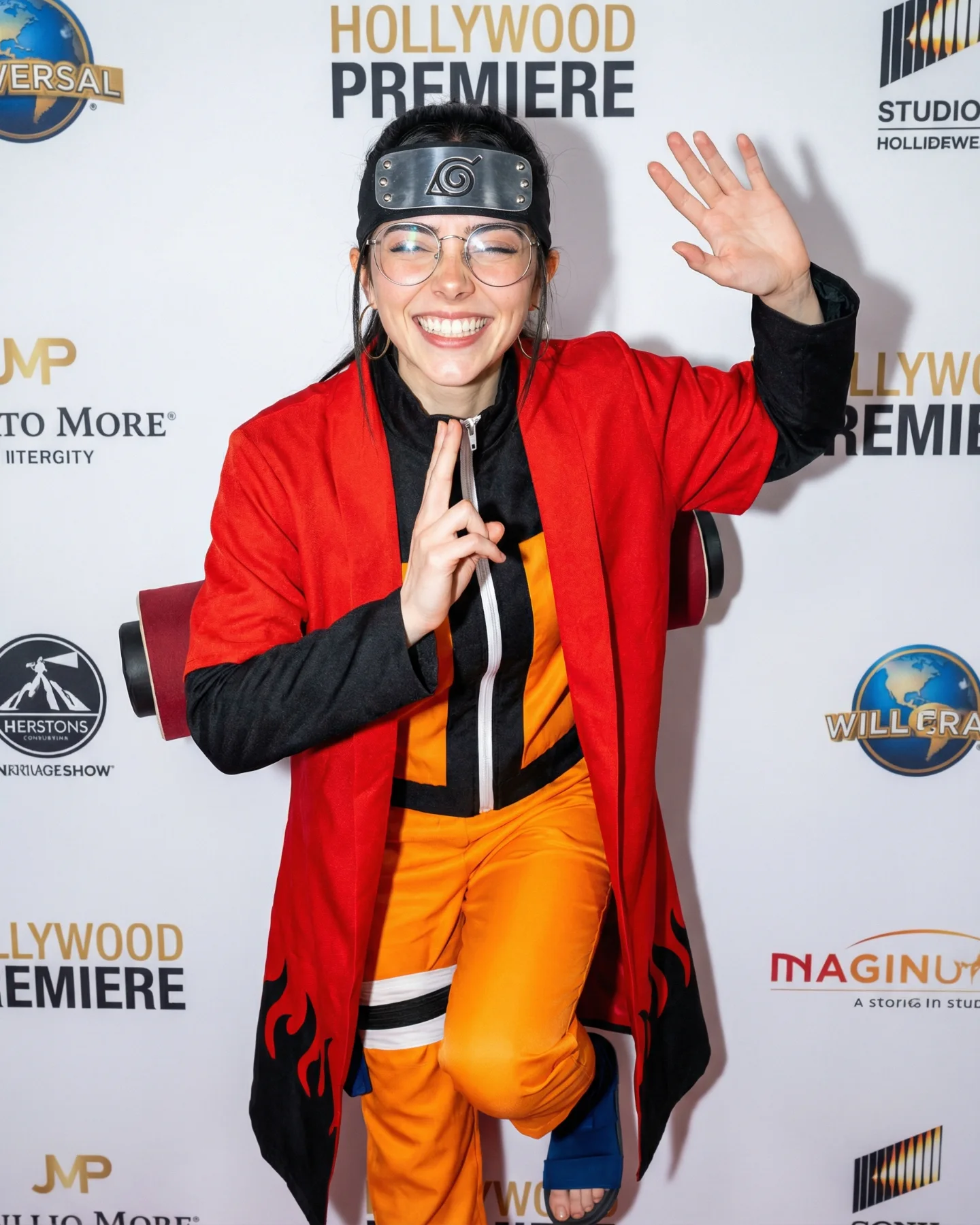
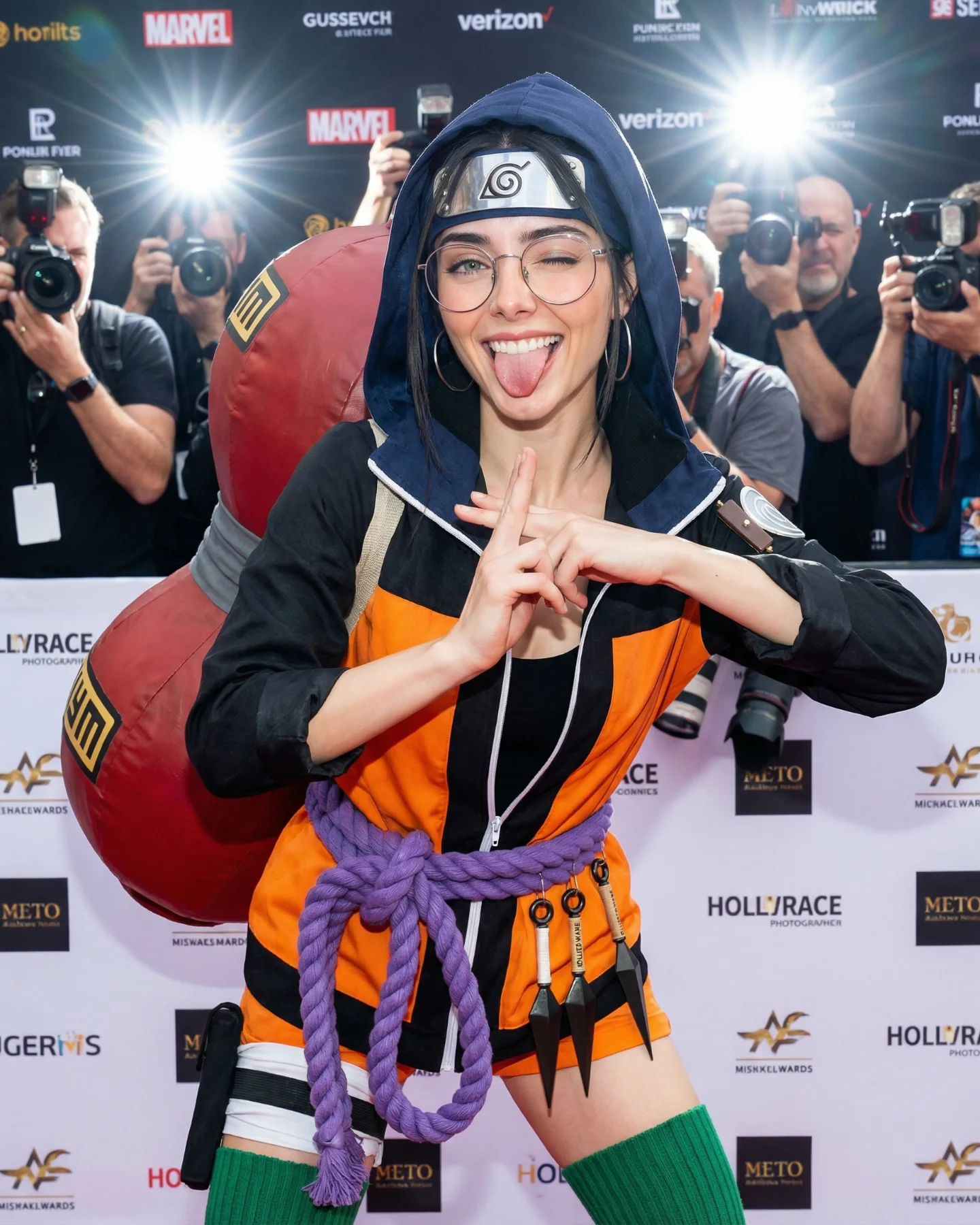
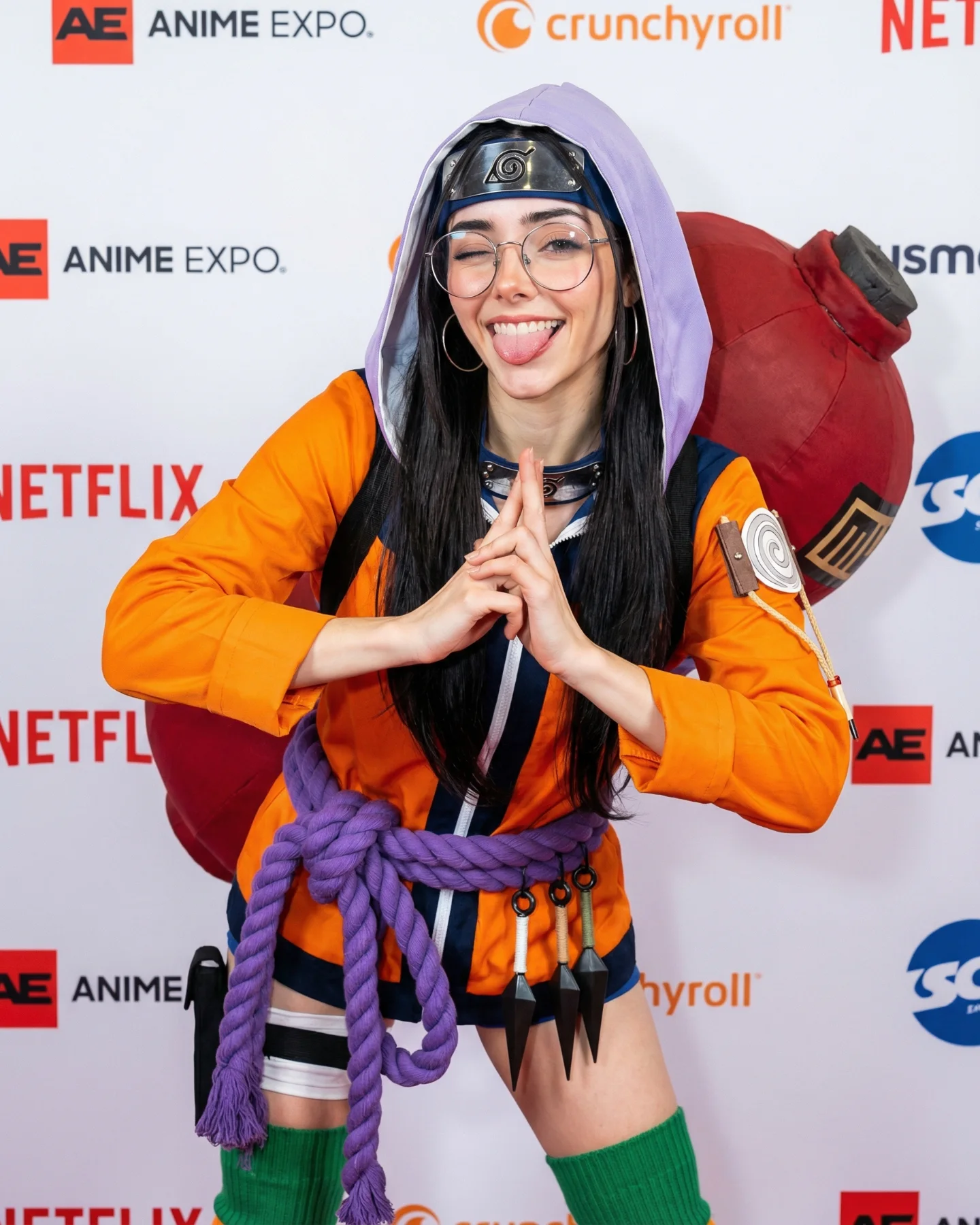
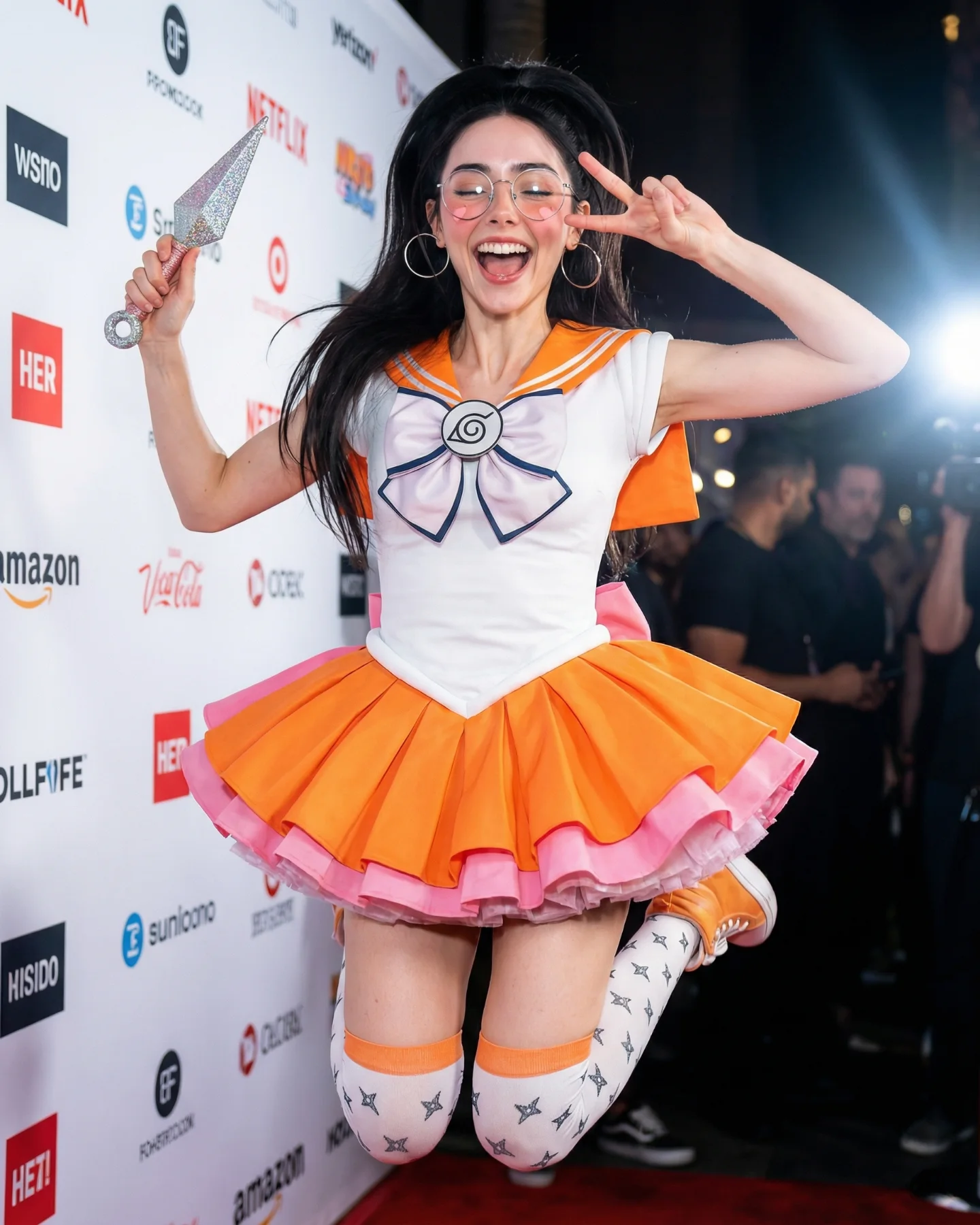
This image works because it treats cosplay as celebration. The subject is not trying to look grim or battle-ready. She is visibly having fun in front of a public event wall, and that changes the whole energy of the frame. The costume is still recognizable, but the mood is joyful and fan-facing rather than dramatic.
The caption asks viewers which Naruto-inspired image they like best, and that makes this event-photo format especially effective. It feels like part of a larger set, a sequence meant to be compared, ranked, and shared. A high-energy red-carpet-style pose gives the series variety without sacrificing clear character recognition.
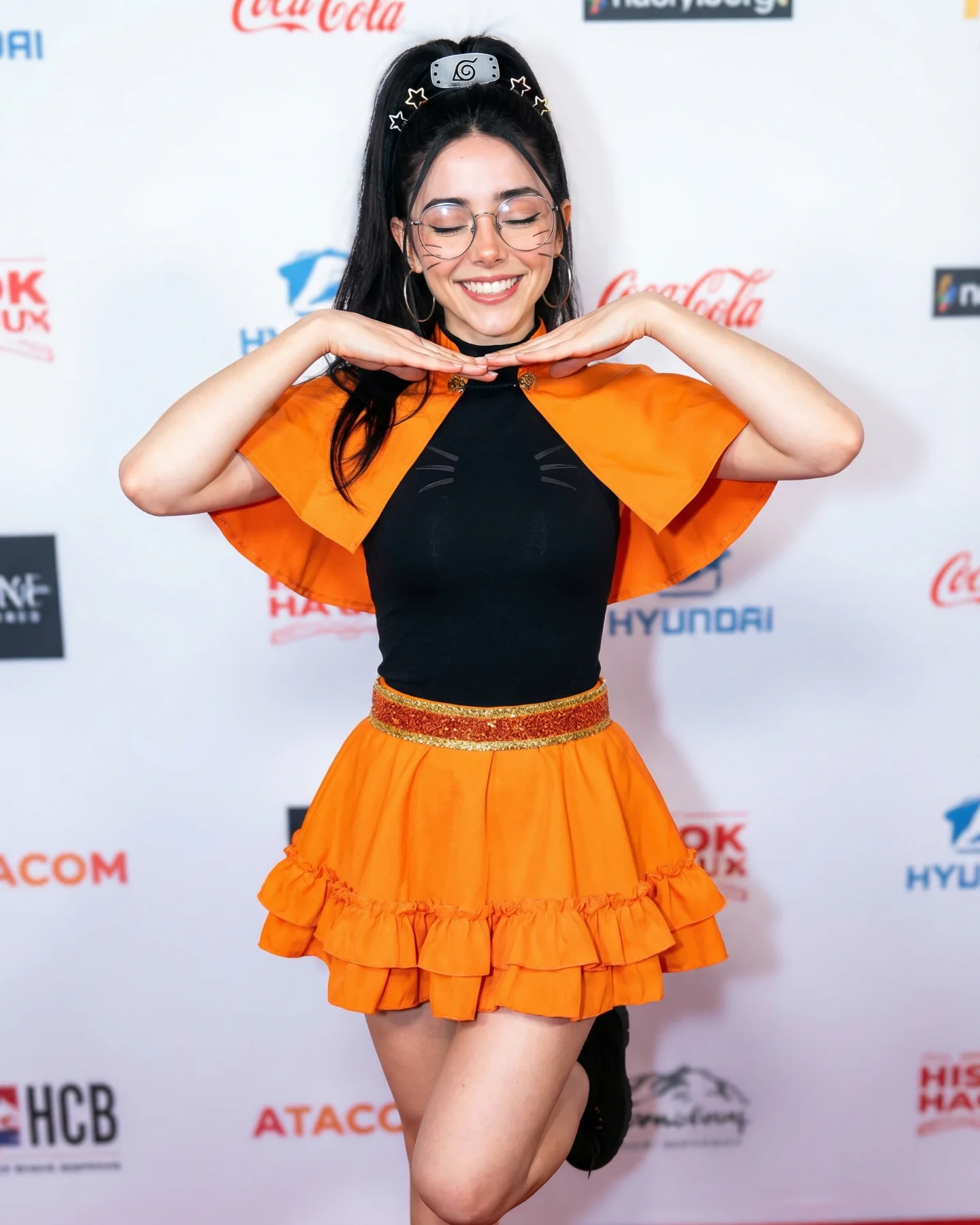
The first reason is instant recognition through color and silhouette. Orange, black, the Leaf Village headband, and the red flame-trimmed cloak tell the viewer what world they are in immediately. That kind of fast read is important for fandom content in a scrolling feed.
The second reason is emotional openness. The subject is smiling widely and waving. That makes the image feel welcoming. A lot of anime cosplay content leans on intensity, but warmth often performs better because it feels more social and more personal.
The third reason is the event-wall context. The sponsor backdrop turns the image into a public moment rather than a private bedroom cosplay. That gives the image more credibility and more visual variety than a plain wall would.
| Signal | Evidence (from this image) | Mechanism | Replication Action |
|---|---|---|---|
| Fast franchise coding | Leaf headband, orange-black outfit, and red flame cloak identify the reference quickly | Strong costume markers improve recognition at thumbnail size | Lead with the top 3 to 4 iconic cues before refining accessory details |
| High-energy public pose | Wave, hand sign, and raised knee create an active red-carpet moment | Playful body language makes the character feel alive and sharable | Use one exaggerated but readable event pose when building public cosplay images |
| Event-photo-wall realism | The sponsor backdrop and logos make the scene feel like a convention or premiere | Public context increases believability and social-media interest | Use step-and-repeat backdrops when you want cosplay to feel like part of an event |
| Bright direct lighting | The costume colors remain vivid and the subject stands out clearly | Clean event lighting improves readability and makes the frame feel official | Favor bright convention-style lighting over moody drama for red-carpet cosplay shots |
This format works especially well for convention recap posts, fandom prompt packs, character-series comparisons, and creator content that needs to feel public and upbeat. It is also a good fit for SEO pages because the image shows how costume cues behave in a real event-photo environment.
This style is less ideal for cinematic narrative scenes, battle recreations, or dark atmospheric fan art. Its strength comes from public-event energy and joyful recognition, not tension or immersion.
Three transfer recipes are especially useful. Keep the event backdrop, the bright front lighting, and the dynamic full-body pose. Change the franchise. A magical-girl version can swap the cloak and orange suit for a sailor silhouette and wand-free wave. A superhero version can keep the step-and-repeat and raised-knee pose while trading the ninja cues for cape-and-emblem design. A game-character version can preserve the sponsor wall and cheerful energy while adjusting armor or accessory shape. Slot template: {franchise icon cues} in {event photo wall context} with {high-energy full-body pose} under {bright convention lighting}.
The smartest decision here is not the costume itself. It is the choice to keep the frame bright, clean, and friendly. That immediately changes the tone of the cosplay from imitation to celebration.
Another strong move is the raised-knee pose. It gives the image motion and joy without breaking the readability of the costume. That balance is hard to get right, and it matters a lot for event shots.
The backdrop also does useful work beyond branding. It flattens the environment just enough that the subject and costume remain the star. For fandom content, that kind of controlled neutrality is often more effective than a noisy themed set.
| Observed | Why it matters | How to recreate it |
|---|---|---|
| Orange-black costume plus red flame cloak | Delivers instant franchise recognition with a clear silhouette | Use one high-contrast costume base and one strong outer-layer cue |
| Visible sponsor-wall text | Places the image firmly in a public event context | Keep the backdrop readable enough to suggest place without overpowering the subject |
| Raised knee and waving hand | Create joyful movement without reducing legibility | Choose one energetic pose that still preserves the full costume outline |
| Bright even lighting | Makes colors vivid and the expression easy to read | Use convention-style frontal lighting when the goal is public-event clarity |
| Round glasses on a recognizable face | Keep the creator identity present inside the character shell | Leave 1 or 2 personal markers visible even in a high-recognition cosplay |
To recreate this style reliably, separate the prompt into franchise silhouette, event context, gesture language, lighting style, and creator markers. Cosplay images like this become generic quickly when the public-event setting is not clearly defined.
| Prompt chunk | What it controls | Swap ideas (EN, 2-3 options) |
|---|---|---|
| Franchise-cue block | Sets recognition speed and silhouette clarity | Leaf headband and orange suit, sailor bow and buns, cape and hero emblem |
| Event-context block | Gives the frame public-photo legitimacy | premiere backdrop, convention wall, sponsor step-and-repeat |
| Gesture block | Shapes emotion and shareability | wave and knee raise, playful peace sign, fan-facing pose |
| Lighting block | Controls whether the image reads official or moody | bright convention flash, clean frontal event lighting, high-key photo-wall light |
| Outer-layer block | Adds dramatic silhouette without cluttering the frame | flame-trim cloak, cape, jacket drape |
| Identity-marker block | Keeps the creator recognizable across franchises | round glasses, hoop earrings, joyful smile |
Baseline lock first: keep the event-photo-wall context, keep the top 4 franchise-recognition cues, and keep the energetic full-body pose. Those three choices create most of the image's value. After that, change only one or two controls per generation.
The broader lesson is that cosplay content can gain strength when it borrows the language of public celebration. This image gets that right. It feels like a moment fans would actually photograph, not just a character posed in isolation.