Naruto Cosplay Prompts 💕 Cual es tu favorita?? 🙊 Como siempre comenta ARIA y te mando todos los prompts por mensajes 💌
Naruto Cosplay Prompts 💕 Cual es tu favorita?? 🙊 Como siempre comenta ARIA y te mando todos los prompts por mensajes 💌
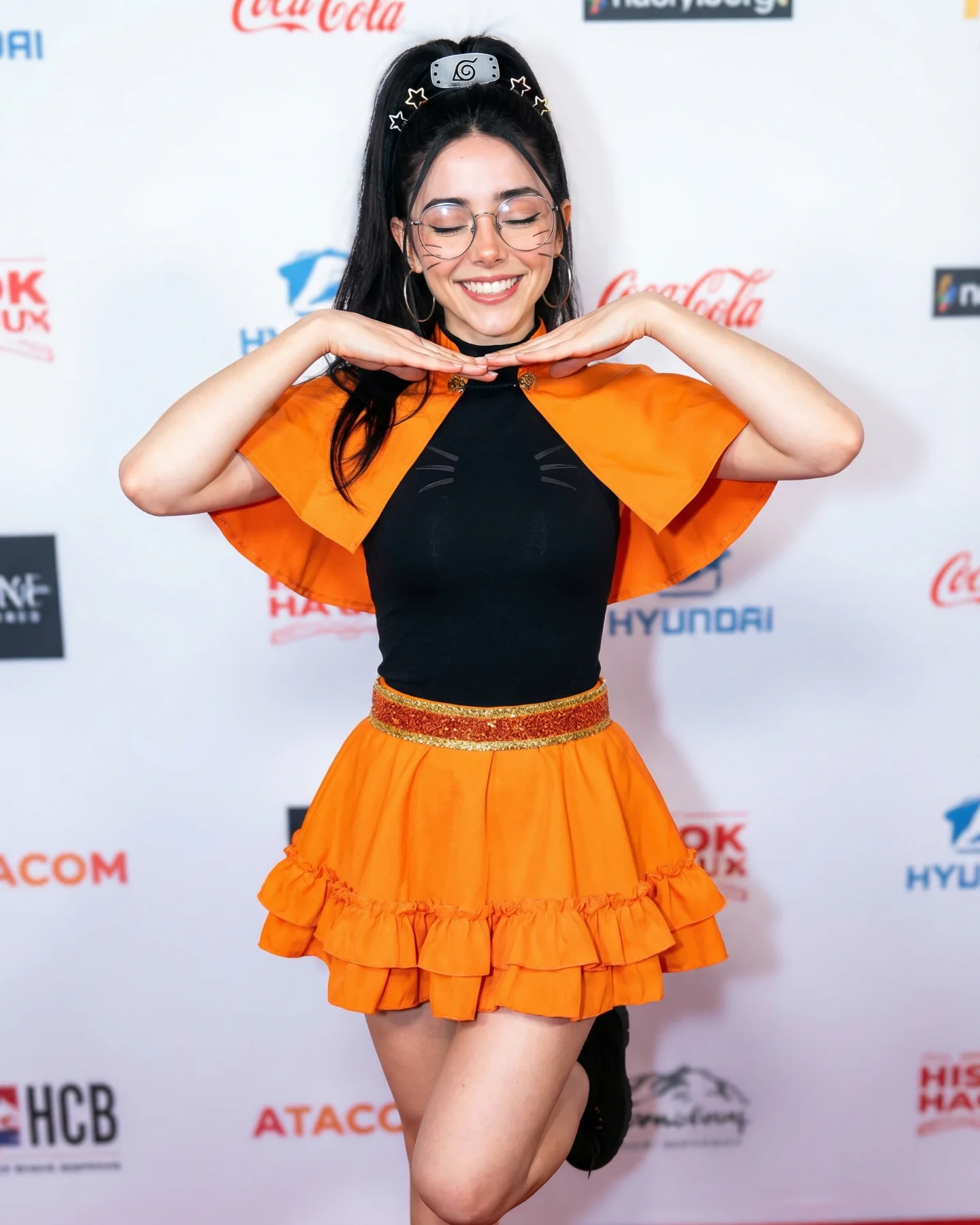
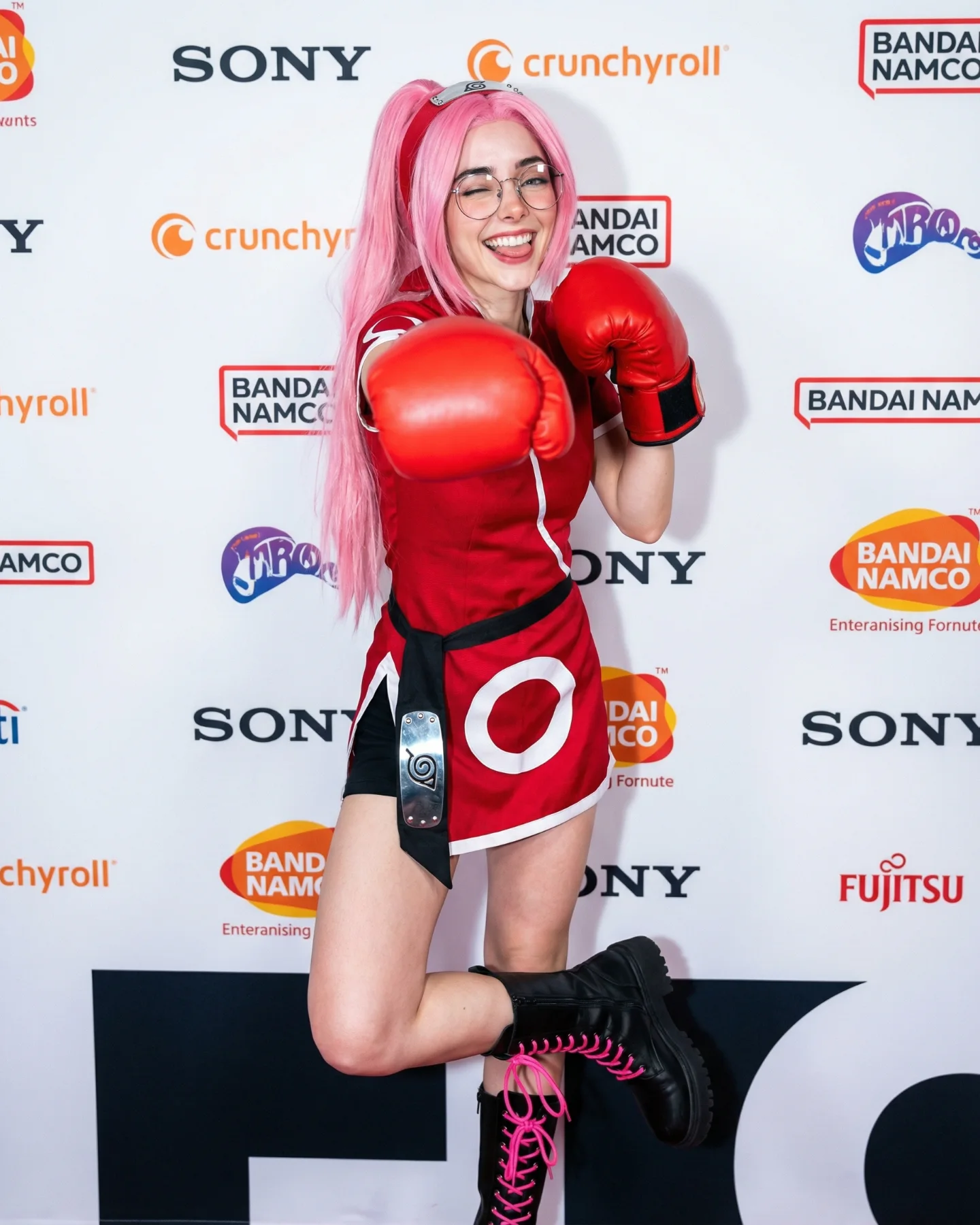
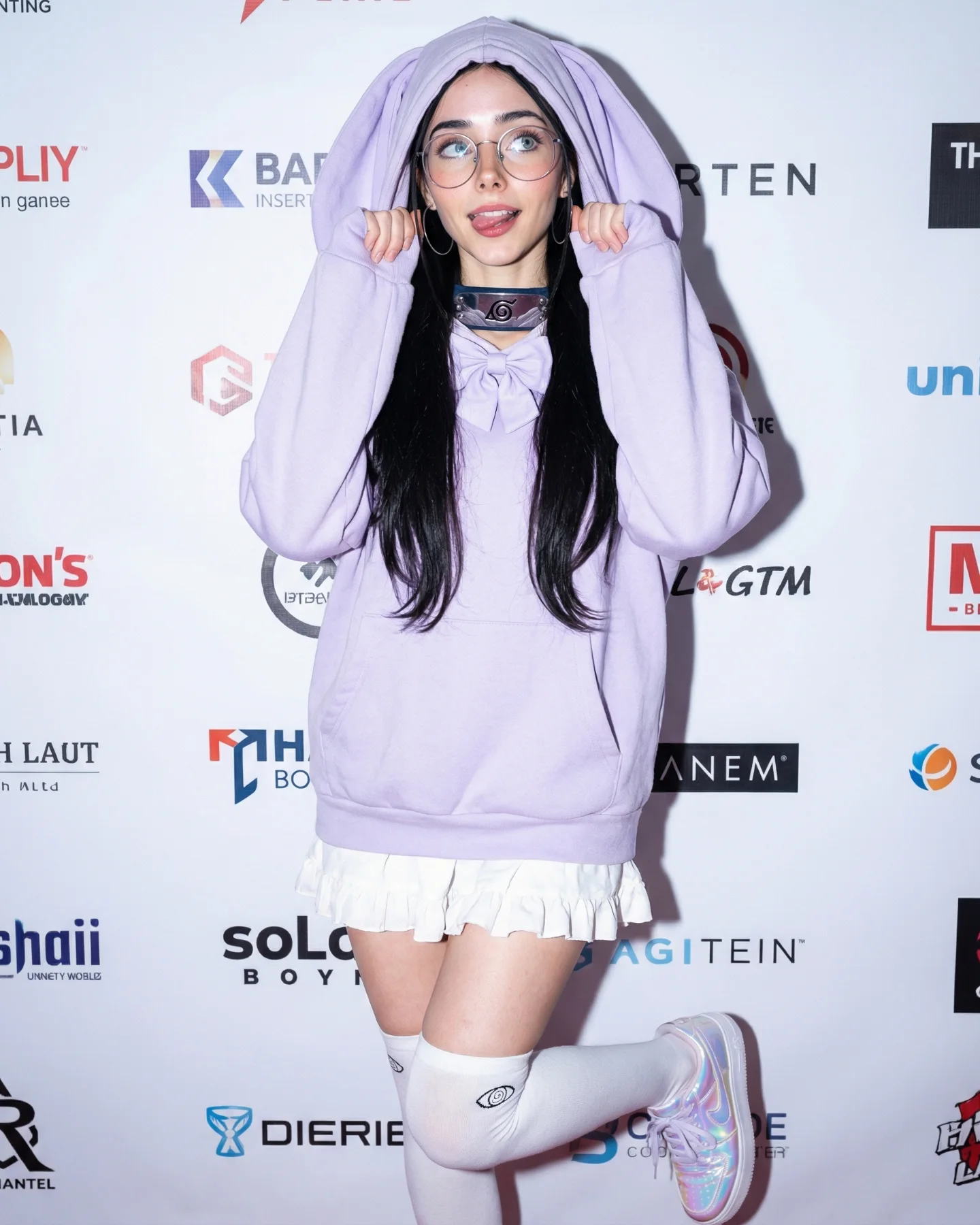
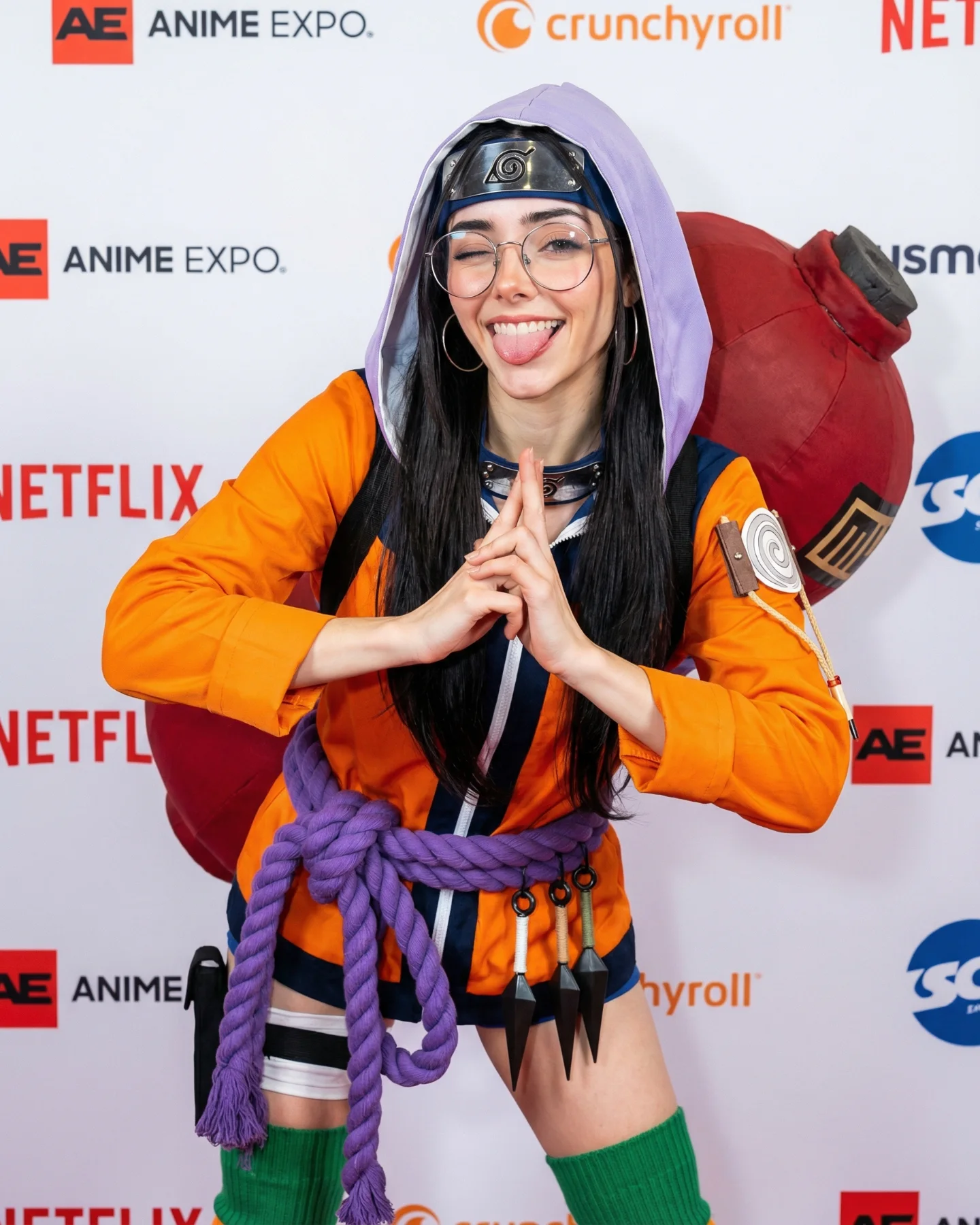
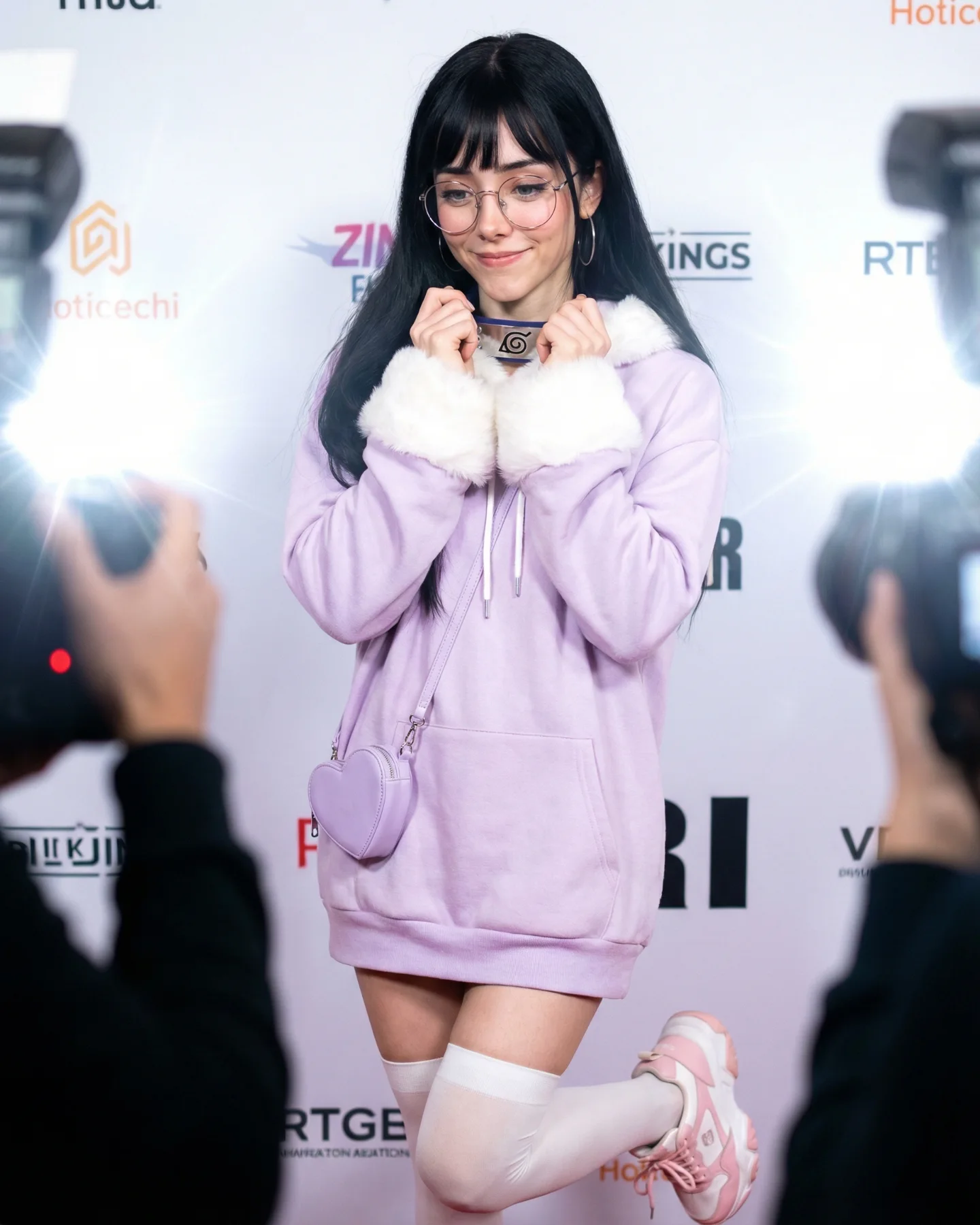
This image works because it takes a character known for softness and translates that softness into event photography without losing visual clarity. The orange-and-black outfit catches attention immediately, but the real emotional hook is the pose. Closed eyes, hands under the chin, and a slight bent knee create an intentionally cute silhouette that matches the character energy better than a generic smile-to-camera stance would.
The red-carpet backdrop also upgrades the image in a useful way. Instead of a convention corridor or themed set, the subject is placed in a media-facing environment. That gives the cosplay more polish and makes it feel socially elevated. For creators, this is a strong tactic when they want fandom content to feel both recognizable and broadly shareable.
The biggest strength is consistency between character tone and body language. Hinata-inspired styling should not only appear in color or headband cues. It should also show up in softness, shyness, and sweetness. This image gets that right. The pose is almost as important as the costume for making the reference land.
The second strength is the balance between costume adaptation and real-world wearability. The outfit is not a literal anime uniform. It is a simplified red-carpet reinterpretation. That makes it easier to like even for people who are not hardcore fans, because it still works as a cohesive event look. That wider appeal matters when the goal is reach, not only fandom fidelity.
| Signal | Evidence (from this image) | Mechanism | Replication Action |
|---|---|---|---|
| Character-tone alignment | Shy closed-eye smile and hands-under-chin pose | Body language reinforces the reference more deeply than wardrobe alone | Choose a pose that matches the character’s emotional signature, not just their costume |
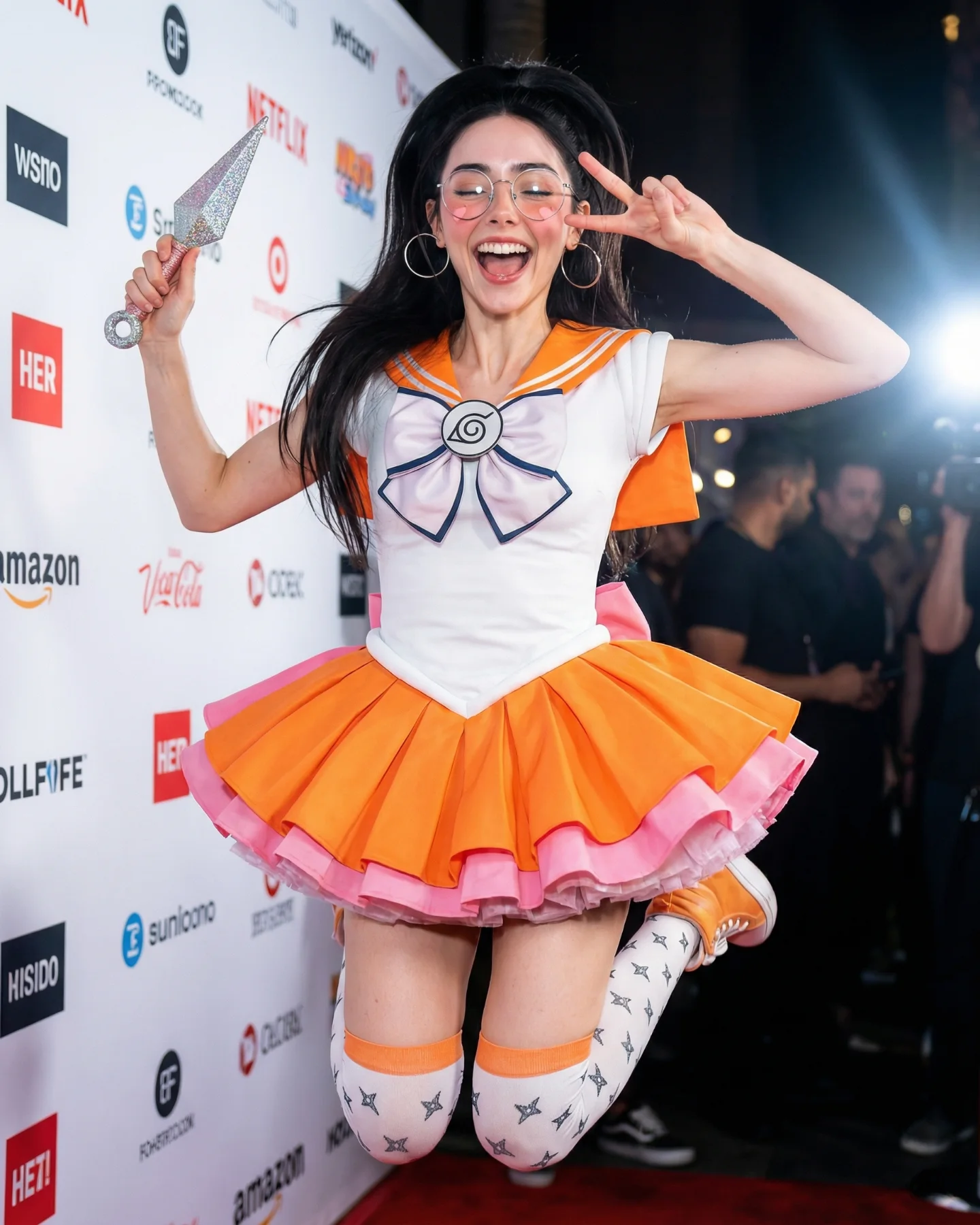
| Bright graphic palette | Orange skirt and shoulder cape against black bodice and white backdrop | Makes the image readable instantly in the feed | Use one bold dominant color plus one neutral anchor against a simple background |
| Event polish | White sponsor wall and clean press-photo lighting | Gives fandom content a more elevated and shareable presentation | Use red-carpet grammar when you want cosplay to travel beyond niche audiences |
| Icon cue without overload | Leaf Village headband used as a hair accessory | Signals the source material fast without requiring a full prop kit | Pick one unmistakable franchise marker and place it near the face |
The strongest design choice is the plain sponsor wall. It creates a stable neutral stage for the orange costume to pop. That matters because the pose already adds enough personality. A busier background would compete with the expression and disrupt the clean read.
The second smart move is silhouette control. The top half of the body forms a symmetrical framing gesture around the face, while the lower half introduces a cute asymmetry through the bent knee. That combination makes the picture feel intentional and polished. For prompt writing, this is a useful lesson: a single strong silhouette often matters more than adding more costume detail.
| Observed | Why it matters for the look | How to recreate it |
|---|---|---|
| Hands framing the face | Keeps attention on expression and character softness | Use a pose that pulls the eye directly toward the face |
| Leaf headband near the hairline | Quickly signals the fandom source | Place franchise markers where they read early in the visual scan |
| Orange against white backdrop | Strengthens contrast and visibility | Use a simple background whenever the costume already carries high color energy |
| Closed-eye smile | Creates sweetness and emotional specificity | Prompt a gentle bashful expression rather than a generic posed grin |
| Minimal event environment | Supports the subject without distraction | Let the media wall do just enough to establish place and nothing more |
This approach is weaker if the character cue is too subtle or if the pose becomes generic. It also loses clarity when the background grows too busy, because the image relies on one clean costume signal and one clean emotional signal.
{character-inspired outfit} {red-carpet setting} {emotion-matched pose} {single franchise marker}{cosplay on sponsor wall} {clear body-language statement} {graphic palette} {live-event realism}{single subject} {character-coded color} {simple backdrop} {pose-led recognition}To recreate this style reliably, separate the prompt into character cue, event grammar, silhouette pose, and color hierarchy. If those layers are too broad, the image usually drifts into either generic cosplay portraiture or plain red-carpet fashion.
| Prompt chunk | What it controls | Swap ideas (EN, 2–3 options) |
|---|---|---|
| Hinata-inspired cosplay on a red carpet | Core concept and audience context | anime character at media wall; event-ready fandom portrait; convention gala cosplay |
| orange-and-black mini outfit with Leaf headband | Fast visual recognition | color-coded character reinterpretation; signature anime accessory; bold fandom palette |
| hands under chin, eyes closed, shy smile | Emotional authenticity to the character | cute bashful pose; soft face-framing gesture; sweet idol-like stance |
| white sponsor backdrop and press-photo lighting | Location grammar and polish | step-and-repeat wall; media-line portrait; clean flash-lit event photo |
| high ponytail, glasses, hoop earrings | Personal identity continuity | glasses-on cosplay styling; real-person markers; casual glam details |
| one bent knee with centered body | Silhouette variation and charm | playful leg bend; soft asymmetry; cute standing pose |
Lock three things first: the event backdrop, the character-matched pose, and the bright hero color. Those are the backbone of the frame. After that, change only one layer at a time. If you swap the character, the setting, and the pose simultaneously, the image often loses the tight emotional clarity that makes it work.
If the result becomes too generic, strengthen the headband and facial expression. If it becomes too costume-heavy, simplify the garment details and let pose carry more of the character tone. The best version feels like a real event portrait that understands the character emotionally, not only visually.